The oil change business remains one of the most durable segments of the American automotive aftermarket. Every day, millions of drivers rely on quick lube shops, independent garages, dealership service lanes, and mobile mechanics to keep their engines running. Behind that routine maintenance is a multi-billion-dollar industry with thousands of small business owners, tens of thousands of technicians, and a steady stream of repeat customers that most retail categories can only envy.
For entrepreneurs evaluating an oil change business, for current owners benchmarking their shop against the market, and for lenders and investors sizing up the space, the 2026 data tells a compelling story. This report collects the most important oil change business statistics for 2026, covering market size, revenue benchmarks, shop counts, pricing trends, employment, and the forces reshaping the industry, including electric vehicles and extended oil life.
In This Article
- Oil Change Industry Overview
- Market Size and Revenue Statistics
- Number of Oil Change Businesses in the U.S.
- Pricing and Average Ticket Data
- Consumer Behavior and Demand Trends
- Franchise vs. Independent Shops
- Employment and Labor Data
- Electric Vehicles and the Future of the Industry
- Profit Margins and Owner Earnings
- Startup Costs and Financing
- Real-World Scenarios
- Frequently Asked Questions
- How to Get Started
Oil Change Industry Overview
Oil change services sit inside the broader automotive repair and maintenance industry, but they occupy a unique niche: high-frequency, low-ticket, repeat-purchase work. Unlike collision repair or transmission rebuilds, an oil change is a scheduled, predictable service that brings customers back every few months. That cadence makes the category attractive to operators because customer lifetime value compounds quickly even though each individual visit is modest.
The industry is served by several distinct business models. Quick lube chains such as Jiffy Lube, Valvoline Instant Oil Change, and Take 5 dominate the drive-through segment. Independent shops and regional franchises handle a large share of the market. Dealership service departments capture warranty-adjacent work, and a fast-growing mobile segment sends technicians to customer driveways and fleet yards. Each model has different cost structures, average tickets, and growth rates, but all draw from the same underlying demand pool.
Demand is anchored by the size of the American vehicle fleet. There are roughly 290 million vehicles in operation in the United States as of 2026, and the average age of those vehicles has climbed past 12.5 years, a record high. Older vehicles need more frequent service, and every internal combustion and hybrid vehicle on the road needs regular oil changes. Even as electric vehicles gain share, the installed base of oil-burning vehicles guarantees decades of remaining demand.
The oil change business also benefits from a behavioral shift that accelerated after 2020: Americans are keeping cars longer and driving them more. Total vehicle miles traveled recovered to pre-pandemic levels and continued climbing, and the average driver now covers close to 13,500 miles per year. More miles and older vehicles translate directly into more service visits.
Market Size and Revenue Statistics
The U.S. oil change services market generates approximately $8.5 billion to $9 billion in annual revenue as of 2026, according to industry research firms that track the category. That figure covers dedicated quick lube shops and oil change-focused operations; when dealership service lanes and general repair shops that perform oil changes are included, the total value of oil change services performed each year exceeds $20 billion.
Growth has been steady rather than explosive. The category has expanded at roughly 2% to 3% per year over the past five years, driven by a combination of modest unit growth, rising average ticket prices, and the increasing share of higher-margin synthetic oil services. Synthetic oil changes, which carry tickets 60% to 80% higher than conventional services, now account for a majority of revenue at most modern shops even though they represent a smaller share of visit count.
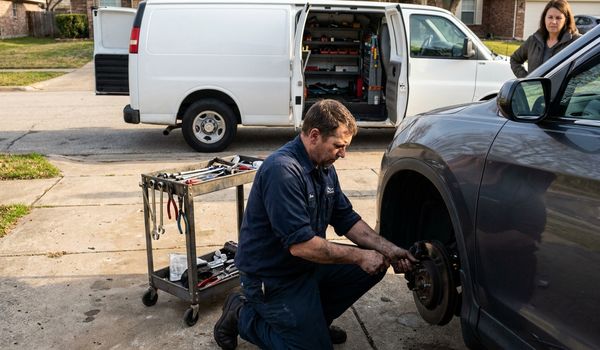
Revenue per location varies widely by format. A well-run quick lube shop in a suburban corridor typically generates between $700,000 and $1.2 million in annual revenue. High-performing Valvoline and Take 5 franchise locations regularly exceed $1.5 million. Independent single-bay shops in rural markets may generate $250,000 to $450,000. Mobile oil change operators, with lower overhead, typically run $150,000 to $400,000 per van per year but keep a larger share of each dollar.
Key Stat: The average American driver spends roughly $120 to $180 per year on oil changes, and households with two or more vehicles spend more than $300 annually. Multiply that across more than 230 million licensed drivers and the result is one of the most predictable revenue pools in the entire automotive aftermarket.
Looking ahead, most forecasts project the oil change services market growing at a compound annual rate of 2.5% to 3.5% through 2030. The primary tailwinds are rising vehicle complexity, which pushes more drivers toward professional service rather than DIY, and the continued aging of the fleet. The primary headwind is electric vehicle adoption, which we cover in detail below, though its impact on total industry volume will remain modest through the end of the decade.
Number of Oil Change Businesses in the U.S.
Counting oil change businesses requires separating dedicated quick lube operations from the broader repair universe tracked in the U.S. Census Bureau's County Business Patterns data. Industry estimates place the number of dedicated oil change and lubrication shops in the United States at approximately 26,000 to 30,000 establishments in 2026. When general auto repair shops that offer oil changes are included, the number of locations where a driver can get an oil change exceeds 160,000.
The quick lube segment is more consolidated than most automotive categories. The five largest chains, led by Jiffy Lube with more than 2,000 locations and Valvoline Instant Oil Change with roughly 1,900, account for a substantial share of dedicated shop count. Take 5 Oil Change has been the fastest grower, expanding from a few hundred locations a decade ago to more than 1,000 by 2026 through aggressive franchise development and acquisitions. Midas, Meineke, and Grease Monkey add several thousand more branded locations.
Independent operators still represent the majority of total shops. Industry surveys consistently show independents holding roughly 55% to 60% of oil change locations, though chains capture a disproportionate share of total revenue thanks to higher throughput per store. For entrepreneurs, that fragmentation matters: local markets frequently have room for a well-run independent or a new franchise unit even where a national chain already operates.
Geographically, shop density tracks population and vehicle ownership. Texas, California, and Florida collectively host more than a quarter of all U.S. oil change locations, reflecting their large fleets and long driving distances. On a per-capita basis, the Southeast and Southwest show the highest shop density, driven by heat-related service needs and car-dependent development patterns. For anyone researching how many oil change businesses operate in the U.S., the practical takeaway is that the category is large, fragmented, and still locally contestable.
Thinking About Opening or Expanding a Shop?
Crestmont Capital finances oil change equipment, real estate buildouts, and working capital for automotive businesses nationwide.
Apply Now →Pricing and Average Ticket Data
Pricing is where the industry's economics come into focus. As of 2026, the average conventional oil change at a quick lube shop runs between $45 and $65. A full synthetic service averages $75 to $105, and synthetic blend sits in between at $60 to $80. Premium European formulations and diesel truck services routinely exceed $130. Prices have climbed roughly 15% to 20% since 2021, driven by higher oil costs, rising wages, and general inflation.
The average ticket across all oil change visits in the U.S. now sits near $85, up from roughly $70 five years ago. That increase reflects the mix shift toward synthetic oil far more than price hikes on identical services. Modern engines increasingly require synthetic oil by specification, and vehicles that once accepted conventional oil are aging out of the fleet. For shop owners, that shift is a quiet gift: synthetic services deliver better margins on both the oil itself and the labor, and customers buying synthetic tend to be less price-sensitive.
Add-on services are where ticket expansion really happens. Air filters, cabin filters, wiper blades, fluid exchanges, and tire rotations attach to oil change visits at rates between 20% and 40% depending on the shop's process and training. A shop averaging a $90 base ticket with a 30% attachment rate on $35 add-ons effectively operates at a $100-plus average ticket. Top-performing chains build their entire economic model around this attach rate discipline.
Couponing and discounting remain widespread, particularly among independents competing against chains, but the data shows discount dependence eroding margins without building loyalty. Shops that compete on speed, convenience, and trust metrics like online reviews consistently out-earn shops that compete on price. The average ticket statistic that matters most for an operator is not the list price but the realized revenue per vehicle after add-ons, which separates strong operators from struggling ones.
Consumer Behavior and Demand Trends
Understanding who gets oil changes and why explains most of the industry's structure. Roughly 70% of U.S. drivers now outsource their oil changes to professionals rather than doing the work themselves, a share that has climbed steadily for two decades. The DIY segment, once nearly half the market, continues shrinking as vehicles become harder to service at home and used-oil disposal rules tighten. Every point of DIY decline transfers directly into professional shop volume.
Service interval behavior is also changing. The old 3,000-mile rule is effectively dead. Modern vehicles running synthetic oil carry manufacturer-recommended intervals of 7,500 to 10,000 miles, and some exceed 15,000 miles. Counterintuitively, longer intervals have not reduced total industry revenue because the mix shift to synthetic raised the ticket faster than visit frequency fell. The average customer now visits a shop about 1.7 times per year, down from 2.3 a decade ago, but spends more per visit.
Convenience now drives shop selection more than any other factor, a pattern consistent with broader consumer service trends tracked by CNBC's autos coverage. Survey data consistently shows that location, speed, and no-appointment availability outrank price for the majority of oil change customers. The stay-in-your-car model pioneered by Valvoline and scaled aggressively by Take 5 has reset customer expectations, and operators who still require appointments and waiting rooms are losing share. Online reviews function as the new word of mouth: a half-star difference in average rating measurably shifts volume in competitive corridors.
Fleet and rideshare demand represents a growing secondary channel. Delivery vehicles, rideshare cars, and small commercial fleets accumulate miles three to five times faster than personal vehicles and need service far more often. Shops that build fleet accounts with local contractors, delivery operators, and municipal vehicles create a stable base of high-frequency volume that smooths out consumer seasonality. Mobile oil change services have carved out a niche almost entirely on this convenience logic, serving both fleets and time-pressed consumers at their location.
By the Numbers
Oil Change Business Statistics 2026: Key Data Points
$8.5B+
Annual U.S. oil change services market size
28,000
Approximate number of dedicated oil change shops in the U.S.
$85
Average ticket per oil change visit in 2026
290M
Vehicles in operation in the United States
70%
Share of drivers who pay a shop instead of DIY
3%
Projected annual market growth rate through 2030
Franchise vs. Independent Shops
One of the first decisions an oil change entrepreneur faces is whether to buy into a franchise or build an independent shop. The 2026 data shows both models working, but with different economics and risk profiles.
Franchise units benefit from brand recognition, proven operating systems, negotiated supply pricing, and national marketing. Valvoline Instant Oil Change franchise locations report average unit volumes well above the industry median, and Take 5's stay-in-your-car format produces some of the highest per-bay revenue figures in the category. In exchange, owners pay royalties typically ranging from 5% to 7% of gross sales plus advertising fund contributions of 2% to 4%, and initial franchise fees of $30,000 to $50,000 per unit.
Independent shops keep every dollar of margin and control their own pricing, branding, and service menu. They avoid royalties entirely and can adapt to local conditions faster than a franchisee bound by system standards. The tradeoff is that independents must build trust from zero, negotiate their own supply contracts, and create their own marketing. Independent average unit volumes run lower than top franchise brands, but net margins can be comparable or better because there is no royalty drag.
The acquisition market is active on both sides. Existing quick lube shops trade at multiples of roughly 2.5 to 4 times seller discretionary earnings, with franchise-branded units commanding the higher end because of transferable systems and brand equity. For buyers, acquiring an existing shop with an established customer base is often a faster path to cash flow than a greenfield buildout, and lenders generally view acquisitions of operating shops more favorably than startups because there is verifiable revenue history.
Pro Tip: If you are comparing a franchise purchase against an independent startup, model the royalty cost over ten years, not one. A 6% royalty on $900,000 in annual revenue is $54,000 per year, which compounds to well over half a million dollars across a decade. That figure often exceeds the entire startup cost difference between the two paths.
Employment and Labor Data
The oil change and quick lube segment employs tens of thousands of technicians, service writers, and managers across the United States. Within the broader automotive repair and maintenance sector, which employs more than 900,000 people nationally, oil change-focused operations account for an estimated 90,000 to 110,000 jobs. The typical quick lube shop runs lean: a standard two-bay operation staffs five to eight employees, while high-volume four-bay stores may carry twelve or more.
Wages have risen sharply since 2021. Entry-level lube technicians now start at $15 to $18 per hour in most markets, up from $12 to $14 a few years ago, and experienced technicians and assistant managers earn $20 to $26 per hour. Shop managers at chain locations commonly earn $55,000 to $75,000 annually with bonus structures tied to ticket averages and attachment rates. Labor now represents 25% to 32% of revenue at most shops, up several points from pre-2021 levels, making staffing efficiency one of the most important management levers in the business.
Turnover is the industry's persistent labor challenge. Quick lube work is physically demanding, entry-level wages compete with warehousing and fast food, and annual technician turnover above 60% is common at chain stores. Operators who invest in training pathways, promote from within, and tie pay to certifications and performance consistently report lower turnover and higher attachment rates. The connection is direct: experienced technicians sell more filters and fluid services because they know how to inspect, document, and explain recommendations without pressuring customers.
Certification trends are also shifting the labor mix. While oil changes themselves require no certification, shops increasingly cross-train technicians for state inspections, brake work, and fluid services, which raises both wages and revenue per employee. The most efficient operators structure their shops so that every labor hour generates multiple service opportunities rather than a single commodity transaction.
Ready to Fund Your Next Phase of Growth?
Whether you are hiring technicians, adding bays, or acquiring a competitor, fast access to capital keeps momentum on your side.
Apply Now →Electric Vehicles and the Future of the Industry
No honest look at oil change business statistics in 2026 can skip the electric vehicle question. EVs have no engine oil, and their rise will eventually shrink the addressable market. The real question for owners and investors is timing, and the data says the cliff is much further away than headlines suggest.
Electric vehicles represent roughly 9% to 10% of new vehicle sales in the United States, according to Reuters automotive industry coverage, but new sales share is not the number that matters for service demand. What matters is the installed base, and EVs still account for only about 3% of vehicles in operation. Because the average vehicle stays on the road for more than 12 years, even a rapid acceleration of EV sales would leave well over 250 million oil-burning vehicles in service through the mid-2030s. Fleet turnover mathematics guarantee the industry a long runway.
Hybrids complicate the picture in the industry's favor. Hybrid vehicles, which still need regular oil changes, have been outselling pure EVs and growing faster in recent model years. Every hybrid sold is another oil change customer. Plug-in hybrids similarly retain combustion engines and service needs. The transition period, far from being a dead zone, actually features a growing total pool of vehicles needing oil service as population and vehicle counts rise even while EV share climbs.
Forward-looking operators are not ignoring the shift; they are hedging it. Many quick lube chains now offer EV-adjacent services such as tire rotations, cabin filters, wiper service, fluid checks, and battery health inspections. The shops that struggle in the 2030s will be the ones that treated oil changes as their only competency. The shops that thrive will be the ones that used the next decade of healthy oil change cash flow to build a broader maintenance relationship with their customers. For anyone entering the industry today, the statistics support a confident ten-plus-year horizon with a deliberate diversification plan.
Profit Margins and Owner Earnings
Profitability is where oil change business statistics get personal for owners. Industry benchmarks show well-run quick lube shops generating net operating margins between 15% and 25% of revenue. Gross margins on the service itself are much higher, often 50% to 65%, but rent, labor, supplies, and marketing consume most of the difference. The gap between a 15% shop and a 25% shop is usually explained by ticket discipline, labor scheduling, and attachment rates rather than by location luck.
Owner earnings follow from those margins. A single-shop owner doing $800,000 in annual revenue at a 20% margin takes home roughly $160,000 before debt service. Multi-unit operators build real scale: five average shops can produce $4 million in revenue and $700,000 to $900,000 in owner earnings, which is why so much of the industry's consolidation is driven by operators rolling up additional locations. Franchise disclosure documents from the major brands show top-quartile franchisees operating portfolios of ten or more units.
Cost structure matters as much as revenue. Oil and filter inventory typically runs 18% to 24% of revenue. Labor, as noted, runs 25% to 32%. Occupancy costs vary enormously by market but average 8% to 12%. Marketing absorbs 3% to 6% for independents, plus franchise advertising fund contributions where applicable. Insurance, utilities, waste oil disposal, and supplies make up most of the remainder. Operators who track these ratios monthly catch margin erosion early; operators who only look at the bank balance discover problems a year late.
The breakeven math is more forgiving than most retail categories. A typical two-bay shop breaks even at roughly 18 to 25 cars per day depending on ticket and cost structure, while healthy shops in decent corridors see 30 to 50. Because demand is non-discretionary and repeat-driven, revenue is unusually stable month to month once a shop establishes its customer base, which typically takes 12 to 24 months in a new location. That stability is precisely why lenders view the category favorably compared to trend-sensitive retail.
Startup Costs and Financing
Opening an oil change shop requires meaningful capital, and the range depends on the path chosen. A greenfield ground-up buildout with two to three bays typically costs $400,000 to $900,000 including land, construction, equipment, and working capital. Converting an existing building runs $200,000 to $450,000. Acquiring an operating shop ranges widely from $250,000 for a small independent to $1.5 million or more for a high-volume franchise unit with real estate. Mobile oil change operations are the low-capital entry point at $60,000 to $120,000 per equipped van.
Equipment is a significant line item regardless of format. Lifts or pits, fluid handling systems, tanks, compressors, and diagnostic tools run $75,000 to $150,000 for a standard buildout. Many owners reduce upfront cash strain by financing equipment rather than buying it outright, preserving working capital for the slow first year of customer acquisition. Crestmont Capital works with automotive business owners on exactly this kind of financing, including equipment financing for shop buildouts and upgrades, and a business line of credit for ongoing inventory and payroll flexibility.
Working capital is the most commonly underestimated need. New shops rarely reach breakeven in their first six months, and the operators who run out of cash are usually the ones who budgeted for the buildout but not for the ramp. A prudent startup budget carries at least six months of operating expenses in reserve. For owners who need to bridge that gap, unsecured working capital loans can cover the early months without tying up personal assets, and SBA loans remain the lowest-cost option for acquisitions and real estate-heavy projects where the timeline allows.
Financing approval in this category leans heavily on the same fundamentals as any small business loan: credit history, experience, cash flow or credible projections, and the quality of the business plan. Automotive service experience carries real weight with underwriters. First-time owners with industry management backgrounds get approved at meaningfully higher rates than first-time owners entering cold, which is worth factoring into any acquisition or franchise decision.
Key Stat: According to the U.S. Small Business Administration, automotive repair and maintenance businesses have among the highest five-year survival rates of any retail service category, reflecting the non-discretionary, repeat-purchase nature of vehicle maintenance demand.
Real-World Scenarios: How the Data Plays Out
Statistics become useful only when they inform decisions. Here are five realistic scenarios showing how the 2026 oil change business data applies to actual owners and buyers.
Scenario 1: The first-time buyer evaluating an acquisition. A technician with twelve years of dealership experience finds an independent two-bay shop listed at $375,000 with $620,000 in annual revenue and verified owner earnings of $145,000. Against industry benchmarks, the asking price sits at roughly 2.6 times earnings, inside the normal 2.5 to 4 range. The shop services about 28 cars per day at an $82 average ticket, slightly below the $85 national average, which signals upside from attachment-rate improvements rather than a pricing problem. With a strong personal credit profile and industry experience, this buyer is a natural fit for acquisition financing and can realistically project reaching the $90 ticket range within eighteen months through filter and fluid service training alone.
Scenario 2: The franchise candidate comparing systems. An investor with $600,000 in liquid capital is choosing between a Take 5-style stay-in-car franchise and an independent conversion of a former transmission shop. The franchise path carries a $35,000 franchise fee, 6% royalties, and proven unit economics averaging above $1 million per store. The independent path saves roughly $60,000 per year in royalties at that volume but requires building a brand from scratch in a corridor that already has two national chains. The deciding statistic: franchise units in competitive corridors reach breakeven roughly eight months faster on average because brand recognition imports customers on day one.
Scenario 3: The existing owner adding a second location. A single-shop owner doing $950,000 in revenue at a 22% margin wants to open a second unit three miles away. The expansion budget is $480,000 for a conversion buildout, and the owner needs to preserve the first shop's working capital rather than drain it. Equipment financing covers the $120,000 equipment package, and a working capital facility funds the ramp. The owner's existing shop performance, with two years of clean financials, makes this one of the easiest expansion profiles to finance in the small business lending market.
Scenario 4: The mobile operator scaling a fleet. A mobile oil change operator runs two vans generating $310,000 in combined annual revenue serving office parks and small fleets. Demand supports a third and fourth van, and each van costs about $95,000 equipped. Because mobile operations carry no rent and minimal fixed costs, margins run near 30%, and each additional van pays back its cost in roughly twenty months. Fleet accounts with local contractors provide the base load that makes the unit economics predictable enough to finance the expansion vehicles. Owners exploring this model often start by reviewing our guide to quick lube business financing for context on how lenders view the category.
Scenario 5: The shop owner preparing for the EV transition. A three-unit operator reads the same EV statistics covered above and decides to hedge deliberately. Rather than selling, the owner invests in training and equipment for tire service, brake work, and cabin air systems, raising the non-oil share of revenue from 22% to 35% over three years while oil change volume stays flat. The shops are now diversified maintenance businesses that happen to specialize in fast oil service, which is exactly the profile that will hold value through the 2030s. Similar strategic thinking appears in our coverage of auto mechanic business financing, where service mix diversification consistently separates durable shops from fragile ones.
Get the Capital Your Shop Needs
From acquisitions to equipment to working capital, Crestmont Capital funds automotive businesses in as little as 24 hours.
Apply Now →Frequently Asked Questions
How big is the oil change industry in the United States?+
The U.S. oil change services market generates approximately $8.5 billion to $9 billion in annual revenue through dedicated quick lube shops. When dealership service departments and general repair shops performing oil changes are included, total annual spending on oil change services exceeds $20 billion. The market has grown at roughly 2% to 3% per year and is projected to continue at a similar pace through 2030.
How many oil change businesses are there in the U.S.?+
There are approximately 26,000 to 30,000 dedicated oil change and lubrication shops operating in the United States in 2026. Including general auto repair facilities that offer oil changes, drivers can get the service at more than 160,000 locations nationwide. Independent operators hold roughly 55% to 60% of dedicated shop count, while national chains capture a disproportionate share of total revenue.
How much does the average oil change cost in 2026?+
The average conventional oil change costs $45 to $65 at a quick lube shop, while full synthetic service averages $75 to $105. The blended average ticket across all oil change visits in the U.S. is approximately $85, up from about $70 five years ago, driven primarily by the mix shift toward synthetic oil rather than pure price increases.
How profitable is an oil change shop?+
Well-run quick lube shops generate net operating margins of 15% to 25% of revenue. A single shop doing $800,000 in annual sales at a 20% margin produces roughly $160,000 in owner earnings before debt service. Gross margins on the service itself run 50% to 65%, with labor, occupancy, and inventory consuming most of the difference.
How much does it cost to open an oil change business?+
A ground-up quick lube buildout typically costs $400,000 to $900,000 including construction, equipment, and working capital. Converting an existing building runs $200,000 to $450,000. Acquiring an operating shop ranges from $250,000 to $1.5 million depending on volume and whether real estate is included. Mobile oil change operations are the lowest-cost entry at $60,000 to $120,000 per equipped van.
How much revenue does a typical quick lube shop generate?+
A well-run quick lube shop in a suburban corridor typically generates $700,000 to $1.2 million in annual revenue. High-performing franchise locations exceed $1.5 million, while small independent shops in rural markets may generate $250,000 to $450,000. Mobile operators typically run $150,000 to $400,000 per van per year.
Is the oil change industry growing or shrinking?+
The industry is growing modestly at roughly 2% to 3% per year. Growth is driven by rising average tickets from the synthetic oil mix shift, an aging vehicle fleet that needs more frequent service, and a growing total number of vehicles in operation. Electric vehicle adoption is a long-term headwind but affects only about 3% of the installed vehicle base as of 2026.
Will electric vehicles kill the oil change business?+
Not on any planning horizon that matters for a business decision today. EVs are about 3% of vehicles in operation, and with average vehicle age above 12 years, more than 250 million oil-burning vehicles will remain on U.S. roads well into the 2030s. Hybrids, which still need oil changes, are currently outselling pure EVs. Smart operators are using the healthy next decade to diversify into tires, brakes, and filters rather than exiting.
How many cars per day does an oil change shop need to break even?+
A typical two-bay quick lube shop breaks even at roughly 18 to 25 cars per day depending on average ticket and cost structure. Healthy shops in decent corridors service 30 to 50 vehicles daily. Because oil change demand is non-discretionary and repeat-driven, daily volume is unusually stable once a shop establishes its customer base, typically within 12 to 24 months of opening.
What is the average age of vehicles on U.S. roads?+
The average age of vehicles in operation in the United States has climbed past 12.5 years, a record high. Americans are keeping cars longer due to improved vehicle durability, higher new car prices, and economic caution. Older vehicles require more frequent maintenance, which directly benefits oil change and general repair shops.
How often do drivers get their oil changed?+
The average customer visits an oil change shop about 1.7 times per year, down from 2.3 visits a decade ago as synthetic oil extended service intervals to 7,500 to 10,000 miles. Industry revenue kept growing anyway because the shift to synthetic raised average tickets faster than visit frequency declined.
Is buying a quick lube franchise worth it?+
It depends on your capital, experience, and market. Franchise units carry fees of $30,000 to $50,000 plus royalties of 5% to 7% of sales, but they deliver brand recognition, proven systems, and faster ramp times, often reaching breakeven eight months sooner than independents in competitive corridors. Independent shops keep all margin but must build trust and systems from scratch. Model the ten-year royalty cost before deciding.
What share of drivers change their own oil?+
Roughly 30% of U.S. drivers still change their own oil, meaning about 70% pay a professional shop. The DIY share has declined steadily for two decades as vehicles have become harder to service at home, disposal rules have tightened, and time-pressed consumers have prioritized convenience. Each point of DIY decline transfers directly into professional shop volume.
How many employees does a typical oil change shop have?+
A standard two-bay quick lube shop employs five to eight people, while high-volume four-bay stores may carry twelve or more. Entry-level technicians start at $15 to $18 per hour in most markets, experienced technicians earn $20 to $26, and shop managers commonly earn $55,000 to $75,000 annually. Labor represents 25% to 32% of revenue at most shops.
How can I finance an oil change shop purchase or expansion?+
Common options include equipment financing for lifts and fluid systems, working capital loans for ramp-period expenses, business lines of credit for ongoing flexibility, and SBA loans for acquisitions and real estate-heavy projects. Lenders favor the category because of its stable, repeat-driven demand. Automotive industry experience, verifiable cash flow, and a solid business plan materially improve approval odds and pricing.
How to Get Started
Complete our quick application at offers.crestmontcapital.com/apply-now - takes just a few minutes.
A Crestmont Capital advisor will review your needs and match you with the right financing option for your shop.
Receive your funds and put them to work - often within days of approval.
The Bottom Line on Oil Change Business Statistics in 2026
The oil change business statistics for 2026 describe an industry that is mature, stable, and quietly attractive. An $8.5 billion core market, roughly 28,000 dedicated shops, a record-old vehicle fleet, and a decades-long runway of combustion vehicles give owners and buyers a demand foundation that few small business categories can match. The operators winning in this environment share a common playbook: synthetic-driven ticket growth, disciplined attachment rates, convenience-first formats, and deliberate diversification ahead of the EV curve.
For entrepreneurs evaluating entry, the data supports both acquisition and franchise paths, provided the unit economics are modeled honestly and working capital is not an afterthought. For current owners, the benchmarks in this report offer a clear scorecard: if your average ticket is below $85, your attachment rate is under 25%, or your margins are under 15%, the gap is operational, not structural, and it is fixable. And for anyone in the category, access to the right capital at the right time remains the difference between watching trends and acting on them. When you are ready to fund your next move, Crestmont Capital is ready to help.
Disclaimer: The information provided in this article is for general educational purposes only and is not financial, legal, or tax advice. Funding terms, qualifications, and product availability may vary and are subject to change without notice. Crestmont Capital does not guarantee approval, rates, or specific outcomes. For personalized information about your business funding options, contact our team directly.

Allan Garfinkle
Allan Garfinkle is the Chief Revenue Officer at Crestmont Capital, where he has spent more than a decade leading revenue strategy, business development, and operational growth. With 28 years of experience building and advising startups and small businesses, Allan has helped more than 10,000 business owners navigate financing decisions, growth opportunities, and changing economic conditions. He earned a Bachelor of Science in Economics and an MBA with a concentration in Finance from Northeastern University, as well as a Juris Doctor from New England Law, where his studies focused on contracts and business law. His writing draws on extensive practical experience in small-business lending, equipment financing, business credit, and commercial finance.