The auto detailing industry has quietly become one of the most resilient corners of the automotive service economy. As Americans hold onto their vehicles longer and consumers spend more on appearance and protection services, detailing businesses are capturing a growing share of automotive aftercare spending. For current shop owners, mobile operators, and entrepreneurs evaluating this space, understanding the latest auto detailing industry statistics is the first step toward making smart decisions about pricing, staffing, equipment, and growth capital.
This report compiles the most important 2026 data points on the auto detailing industry, from market size and establishment counts to revenue benchmarks, startup costs, and the trends shaping the next several years. Where the numbers point to opportunity, we also explain how financing tools can help detailing businesses act on them.
In This Article
- What Is the Auto Detailing Industry?
- Market Size and Growth in 2026
- Key Auto Detailing Industry Statistics
- How Detailing Businesses Make Money
- Types of Auto Detailing Businesses
- Who Thrives in This Industry
- Startup Costs and Equipment Budgets
- Financing Options for Detailing Businesses
- How Crestmont Capital Helps
- Real-World Scenarios
- Frequently Asked Questions
- How to Get Started
What Is the Auto Detailing Industry?
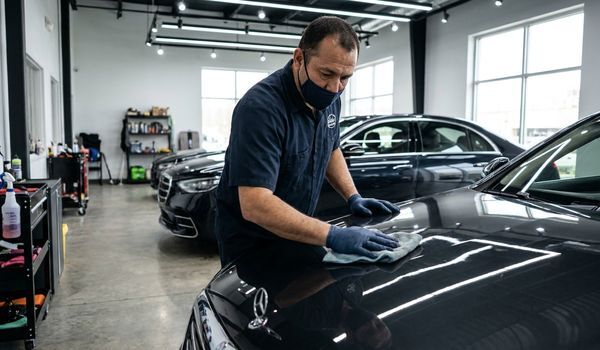
Auto detailing is the professional cleaning, restoration, and protection of a vehicle's interior and exterior. Unlike a basic car wash, which focuses on removing surface dirt, detailing involves deep cleaning, paint correction, polishing, waxing, ceramic coating, interior shampooing, leather conditioning, and protective treatments that preserve a vehicle's appearance and resale value.
In federal data, detailing businesses sit within NAICS code 811192, the car washes category tracked by the U.S. Census Bureau's County Business Patterns program. That category covers conveyor washes, self-service bays, standalone detail shops, and mobile detailing operations, which means detailing-specific figures are usually reported alongside the broader car wash market.
The industry serves a massive addressable market. With more than 280 million registered vehicles on American roads and the average vehicle age now exceeding 12 years, millions of owners are investing in maintenance and appearance services rather than trading in for new cars. That dynamic directly benefits detailers, because older vehicles need more cosmetic care, more interior restoration, and more protective services.
Detailing also sits at the premium end of automotive cleaning. Where an express tunnel wash might charge $10 to $25 per visit, a full interior and exterior detail typically runs $150 to $350, and paint correction or ceramic coating packages can exceed $1,000 per vehicle. That pricing power is a core reason the industry attracts both lifestyle entrepreneurs and serious investors.
Auto Detailing Industry Market Size and Growth in 2026
Industry research firms estimate the combined U.S. car wash and auto detailing market at roughly $14 to $15 billion in annual revenue heading into 2026, with detailing services representing a substantial and growing share of that total. On a global basis, the car detailing services market is estimated in the range of $37 to $40 billion, with projected compound annual growth rates of roughly 5 to 6 percent through the end of the decade.
Several forces are driving that growth:
- Aging vehicle fleet. The average age of vehicles on U.S. roads has climbed past 12 years. Older cars need more paint correction, interior restoration, and protective coatings to hold their value.
- High used vehicle prices. When replacement vehicles are expensive, owners spend more to maintain what they have. Detailing is one of the most visible forms of that investment.
- Premium service adoption. Ceramic coatings, paint protection film, and graphene sealants have moved from enthusiast niches into mainstream consumer awareness, lifting average tickets across the industry.
- Subscription and membership models. Recurring revenue programs, proven at scale by express car wash chains, are now being adopted by detailing businesses through maintenance plans and membership packages.
- Rideshare and commercial demand. Drivers for rideshare and delivery platforms depend on clean, presentable vehicles for ratings and customer experience, creating a steady commercial customer base for detailers.
Key Stat: Between 2019 and 2022, private equity firms invested an estimated $10 billion into the U.S. car wash and detailing sector, betting on recurring revenue models and a highly fragmented market. Roughly 80 percent of the industry remains independently owned, which means consolidation and professionalization are still in early innings.
That fragmentation matters for independent operators. It means local reputation, service quality, and smart capital investment still win market share, and it means well-run detailing shops remain attractive acquisition and growth targets. Coverage from outlets like CNBC's small business desk has tracked how service businesses with recurring revenue and strong unit economics continue to attract both customers and capital in 2026.
Thinking About Starting or Expanding a Detailing Business?
Get fast, flexible financing from the #1 business lender in the U.S. No obligation, apply in minutes.
Apply Now →Key Auto Detailing Industry Statistics for 2026
The following figures bring together Census Bureau data, industry research, and operator-reported benchmarks to paint a current picture of the detailing industry in 2026.
Industry Size and Structure
- The U.S. car wash and auto detailing industry generates an estimated $14 to $15 billion in annual revenue.
- Approximately 58,000 establishments operate in the U.S. car wash and detailing category, according to Census Bureau business pattern data.
- The industry employs an estimated 200,000 or more workers nationwide.
- The global car detailing services market is estimated at $37 to $40 billion, with projected annual growth around 5 to 6 percent through 2030.
- Average annual revenue per establishment works out to roughly $240,000 to $260,000, though full-service detail shops with premium services frequently exceed that average.
- An estimated 80 percent of industry locations remain independently owned, keeping the door open for new entrants with professional operations.
Pricing and Revenue Benchmarks
- A basic exterior wash and wax package typically prices between $50 and $125.
- A full interior and exterior detail generally runs $150 to $350, depending on vehicle size and condition.
- Paint correction services commonly start around $300 to $600 and climb higher for multi-stage work.
- Ceramic coating packages typically range from $500 to $2,000 or more, making them one of the highest-margin services in the industry.
- Maintenance plan memberships, often priced between $40 and $100 per month, are becoming a major recurring revenue driver for established shops.
- At leading express car wash chains, subscription members now account for 60 to 75 percent of wash revenue, a model detailers are increasingly adapting for their own businesses.
Costs and Profitability
- Well-managed owner-operated detailing businesses commonly report net profit margins between 15 and 25 percent.
- Mobile detailing startups can launch for $5,000 to $15,000, while fixed-location shops typically require $50,000 to $250,000 or more depending on build-out and equipment.
- Labor, chemicals, and insurance are the three largest recurring expense categories for most detailing businesses.
- Equipment upgrades, such as professional-grade extractors, polishers, steam cleaners, and coating curing systems, represent the most common capital investment for growing shops.
Pro Tip: The single biggest profitability lever in detailing is service mix. A shop that shifts even 20 percent of its volume from basic washes to ceramic coatings and paint correction can nearly double its average ticket without adding a single new customer.
How Detailing Businesses Make Money
Revenue in the detailing industry comes from four primary streams, and the strongest operators build all four deliberately.
1. Core detailing services. Interior and exterior packages are the foundation. These range from quick express details to full-day restorative work, and they generate the majority of transaction volume for most shops.
2. Premium protection services. Ceramic coatings, paint protection film, and paint correction carry the highest margins. These services require training, certification, and specialized equipment, which creates a barrier to entry that protects pricing.
3. Recurring maintenance plans. Monthly membership programs convert one-time customers into predictable recurring revenue. This model smooths seasonality, raises customer lifetime value, and makes the business far more attractive to lenders and buyers.
4. Commercial and fleet accounts. Dealerships, rental agencies, rideshare fleets, and corporate vehicle programs provide steady contracted volume. Fleet work trades lower per-unit pricing for consistency and utilization, and it often fills schedule gaps during slow retail periods.
The data block below summarizes the numbers that matter most for anyone evaluating this industry in 2026.
By the Numbers
Auto Detailing Industry - Key Statistics for 2026
$14B+
Estimated annual U.S. car wash and detailing industry revenue
58,000
Car wash and detailing establishments operating in the United States
5-6%
Projected annual growth rate for the global detailing services market
$150-$350
Typical price range for a full interior and exterior detail
Types of Auto Detailing Businesses
The industry supports several distinct business models, each with different capital requirements, pricing power, and growth profiles.
Mobile Detailing Operations
Mobile detailers bring services directly to the customer's home or workplace. This model has the lowest barrier to entry, typically launching for $5,000 to $15,000 covering a reliable vehicle, a water tank or access arrangements, a generator or battery power system, a professional polisher, an extractor, and initial chemical inventory. Mobile operators enjoy minimal overhead and strong margins, but their growth is constrained by the owner's schedule until they add vehicles and crews.
Fixed-Location Detail Shops
A dedicated shop supports higher volume, controlled working conditions, and premium services that require dust-free environments, such as ceramic coatings and paint correction. Startup costs typically range from $50,000 to $250,000 or more once you account for lease deposits, build-out, lifts or work bays, lighting, ventilation, and professional equipment. Fixed shops scale by adding bays, technicians, and service tiers.
Full-Service Car Wash with Detailing
Hybrid operations pair an express or full-service wash with detailing bays. The wash generates daily traffic and membership revenue, while the detailing side captures high-margin upgrades from that existing customer base. This model requires the most capital but delivers the most diversified revenue.
Specialty and Boutique Studios
The fastest-growing niche is the high-end studio focused exclusively on paint correction, ceramic coatings, and paint protection film for luxury, exotic, and enthusiast vehicles. These businesses run fewer jobs at much higher tickets, often $1,000 to $5,000 per vehicle, and compete on certification, reputation, and portfolio rather than price.
Who Thrives in the Auto Detailing Industry
The statistics favor operators who treat detailing as a business rather than a side hustle. The traits shared by the shops capturing the most growth in 2026 include:
- A premium service mix. Owners who invest in certification for coatings and paint correction capture tickets that basic wash competitors cannot touch.
- Recurring revenue discipline. Shops with membership or maintenance plans show steadier cash flow and higher valuations than purely transactional operations.
- Professional presentation. Online booking, branded vehicles or facilities, review management, and before-and-after portfolios now separate professional shops from hobbyists in the eyes of customers.
- Commercial accounts. Dealership and fleet contracts smooth out the seasonality that hurts retail-only shops in colder markets.
- Willingness to invest. The gap between shops that upgrade equipment and those that do not shows up directly in the revenue benchmarks above. Detailers who finance polishers, extractors, steam systems, and coating equipment early tend to move up the pricing ladder fastest.
For entrepreneurs weighing an entry, the industry's structure is unusually friendly: fragmented competition, rising consumer demand, low relative startup costs, and multiple proven business models. For existing owners, the same statistics point toward reinvestment as the clearest path to a stronger market position.
Startup Costs and Equipment Budgets for 2026
How much capital you need depends almost entirely on which business model you choose. The table below compares realistic 2026 startup budgets across the three most common paths.
| Cost Category | Mobile Operation | Fixed Detail Shop | Boutique Coating Studio |
|---|---|---|---|
| Vehicle or facility | $3,000 - $8,000 (used van/trailer) | $10,000 - $60,000 (deposit and build-out) | $15,000 - $80,000 (controlled-environment bays) |
| Core equipment | $1,500 - $4,000 | $15,000 - $80,000 | $20,000 - $100,000 |
| Chemicals and inventory | $500 - $1,500 | $3,000 - $10,000 | $5,000 - $15,000 |
| Licensing, insurance, marketing | $1,000 - $2,500 | $5,000 - $20,000 | $8,000 - $25,000 |
| Typical total | $5,000 - $15,000 | $50,000 - $250,000+ | $75,000 - $300,000+ |
Two budgeting realities catch new owners off guard. First, working capital matters as much as equipment: most shops need three to six months of operating expenses in reserve while they build a customer base. Second, equipment quality directly determines the services you can sell. A $400 polisher and a $2,000 professional system are not interchangeable when a customer is paying $1,500 for paint correction.
Financing Options for Auto Detailing Businesses
Because the industry is capital-light at the entry level but capital-intensive at the growth stage, detailing businesses use a wider range of financing tools than most owners expect. The main options in 2026 include:
Equipment financing. Purpose-built for the exact purchases detailing shops make most: extractors, polishers, steam cleaners, air compressors, coating curing lamps, pressure washers, and service vehicles. Terms typically match the useful life of the equipment, and the equipment itself serves as collateral, which keeps qualification accessible. Crestmont Capital's equipment financing programs are designed for precisely these purchases.
Business lines of credit. A revolving business line of credit covers the expenses that fluctuate month to month: chemical inventory restocking, seasonal marketing pushes, and payroll during slow weeks. You draw only what you need and pay interest only on what you use.
Working capital loans. Unsecured working capital loans fund growth moves that do not fit neatly into an equipment category, such as hiring and training technicians, launching a membership program, or covering lease deposits on a second location.
SBA loans. For larger projects like acquiring an existing shop or building out a full-service facility, SBA-backed financing offers longer terms and lower rates in exchange for a more involved application. The SBA's loan programs page outlines current options, and resources like Forbes Advisor's business loan coverage are useful for comparing structures before you apply.
If you are weighing which structure fits your situation, our complete guide to auto detailing business loans walks through qualification requirements, documentation, and typical terms for each option. For operators who pair detailing with wash services, our companion report on car wash industry statistics adds the numbers for that side of the business.
How Crestmont Capital Helps Detailing Businesses Grow
Crestmont Capital is the #1 rated business lender in the United States, and automotive service businesses are among the most common companies we fund. For detailing business owners, the practical advantages come down to speed, flexibility, and an understanding of how this industry actually operates.
- Fast decisions. Applications take minutes, and funding decisions typically arrive within hours rather than the weeks a traditional bank requires.
- Equipment expertise. We finance the full range of detailing equipment, from mobile rigs and extractors to coating booth systems and shop build-outs.
- Flexible structures. Equipment financing, lines of credit, and working capital can be combined to match your growth plan instead of forcing it into a single product.
- Real-world qualification. We evaluate the health of your business, not just a credit score, which matters in a cash-flow-driven industry like detailing.
Ready to Invest in Your Detailing Business?
Whether you need a new polisher, a second van, or a full shop build-out, Crestmont Capital can fund it. Apply in minutes.
Apply Now →Real-World Scenarios: Putting the Numbers to Work
Statistics only matter if they change decisions. Here is how the 2026 data plays out for four typical detailing business situations.
Scenario 1: The mobile operator hitting a ceiling. A solo mobile detailer in Texas books out three weeks in advance at $225 per average ticket, but cannot grow without a second van and a hired technician. A $35,000 equipment and vehicle financing package covers the van, wrap, and duplicate equipment. At the industry's average ticket and a conservative 12 jobs per week for the new crew, the added unit pays for its own financing in under a year while doubling capacity.
Scenario 2: The shop adding ceramic coatings. A fixed-location shop owner in Ohio sees the pricing data and invests $28,000 in coating certification, curing lamps, and a dust-controlled bay. With ceramic packages priced at $900 to $1,500 and just six coating jobs per month, the investment generates $5,400 to $9,000 in new high-margin monthly revenue, recovering the capital in roughly a quarter.
Scenario 3: The membership model conversion. A full-service detailer in Florida converts 150 regular customers onto a $60 per month maintenance plan, creating $9,000 in predictable recurring revenue before the doors open each day. A working capital loan funds the marketing and booking software to build the program, and the recurring base immediately stabilizes cash flow through the off-season.
Scenario 4: The acquisition opportunity. With 80 percent of the industry still independently owned, retirement-age owners regularly list profitable shops for sale. An operator in Arizona uses acquisition financing to buy a $400,000-revenue detail shop with an established book of dealership accounts, stepping directly into cash flow that would have taken years to build from scratch.
Frequently Asked Questions
How big is the auto detailing industry in 2026? +
The combined U.S. car wash and auto detailing industry generates an estimated $14 to $15 billion in annual revenue. The global car detailing services market is estimated at $37 to $40 billion and is projected to keep growing at roughly 5 to 6 percent per year through the end of the decade.
How many auto detailing businesses operate in the United States? +
Census Bureau business pattern data shows approximately 58,000 establishments in the U.S. car wash and detailing category, employing an estimated 200,000 or more workers. Around 80 percent of those locations remain independently owned.
How much revenue does the average detailing business make? +
Average revenue per establishment works out to roughly $240,000 to $260,000 per year. Shops with premium services such as ceramic coatings and paint correction frequently exceed that average, while solo mobile operators often run below it until they add crews.
Is the auto detailing industry growing? +
Yes. Industry research points to continued growth of roughly 5 to 6 percent annually for detailing services, driven by an aging vehicle fleet, high used car prices, premium protection services, and the spread of membership-based revenue models.
How much does it cost to start an auto detailing business? +
A mobile detailing operation can launch for $5,000 to $15,000. A fixed-location shop typically requires $50,000 to $250,000 or more. A boutique coating studio with controlled-environment bays can run $75,000 to $300,000 or higher depending on market and build-out.
What is the difference between a car wash and auto detailing? +
A car wash removes surface dirt in minutes, usually for $10 to $25. Detailing is a deep cleaning, restoration, and protection service that can take hours and typically costs $150 to $350 for a full package, with premium services like ceramic coating running $500 to $2,000 or more.
How profitable is an auto detailing business? +
Well-managed owner-operated detailing businesses commonly report net margins between 15 and 25 percent. Profitability depends heavily on service mix, with premium coatings and paint correction delivering far higher margins than basic wash and wax packages.
What are the biggest expenses for a detailing business? +
Labor, chemicals, and insurance are the three largest recurring expense categories. For fixed locations, rent and utilities join that list. Equipment purchases are the most common capital expense and the most common reason detailing businesses seek financing.
Do you need a license to start an auto detailing business? +
Requirements vary by state and city, but most detailing businesses need a general business license, liability insurance, and in some areas a water discharge or environmental permit for runoff. Mobile operators should also check local rules on washing vehicles in driveways and commercial lots.
What is mobile detailing and how fast is it growing? +
Mobile detailing brings services to the customer's home or workplace using a equipped van or trailer. It is one of the fastest-growing segments of the industry because of its low startup cost, scheduling convenience for customers, and minimal overhead compared with fixed locations.
How much can mobile detailing businesses charge? +
Mobile detailers typically charge $100 to $250 for standard packages and $300 or more for premium work, often at a modest premium to shop pricing because of the convenience factor. Established mobile operators with strong reviews routinely maintain average tickets above $200.
What financing options exist for auto detailing businesses? +
The most common options are equipment financing for polishers, extractors, and vehicles, business lines of credit for inventory and seasonal expenses, working capital loans for hiring and marketing, and SBA loans for acquisitions or major build-outs. Many growing shops combine two or more of these tools.
Can I finance detailing equipment with no money down? +
In many cases, yes. Because the equipment itself serves as collateral, equipment financing frequently covers up to 100 percent of the purchase price for qualified borrowers. Approval depends on time in business, revenue, and credit profile rather than a fixed down payment rule.
How does a business line of credit help a detailing shop? +
A line of credit smooths out the revenue swings that come with seasonality and weather. Shops use it to restock chemicals, cover payroll during slow stretches, and fund marketing pushes before peak season, then pay it down when volume returns. You pay interest only on what you draw.
What credit score do you need to finance detailing equipment? +
There is no single cutoff. Lenders like Crestmont Capital evaluate the overall health of the business, including revenue and time in operation, alongside credit. Stronger credit secures better rates, but many detailing businesses qualify with less-than-perfect credit because the equipment secures the financing.
Get the Capital Your Detailing Business Needs
Join thousands of business owners who trust the #1 rated lender in the U.S. Fast approvals, flexible terms, real support.
Apply Now →How to Get Started
Complete our quick application at offers.crestmontcapital.com/apply-now - it takes just a few minutes.
A Crestmont Capital advisor will review your needs and match you with the right financing option for your detailing business.
Receive your funds and put them to work, often within days of approval.
Conclusion
The auto detailing industry statistics for 2026 tell a consistent story: a $14 billion-plus market, nearly 58,000 establishments, steady 5 to 6 percent growth, and pricing power concentrated in premium services. For owners willing to invest in equipment, training, and recurring revenue programs, the data points toward durable opportunity rather than saturation.
The operators capturing the most of that growth share one habit: they reinvest before they feel ready. Whether that means a second mobile unit, a ceramic coating bay, or the working capital to build a membership base, access to fast, flexible financing is what turns industry statistics into your shop's results. When you are ready to make that move, Crestmont Capital is ready to fund it.
Disclaimer: The information provided in this article is for general educational purposes only and is not financial, legal, or tax advice. Funding terms, qualifications, and product availability may vary and are subject to change without notice. Crestmont Capital does not guarantee approval, rates, or specific outcomes. For personalized information about your business funding options, contact our team directly.

Allan Garfinkle
Allan Garfinkle is the Chief Revenue Officer at Crestmont Capital, where he has spent more than a decade leading revenue strategy, business development, and operational growth. With 28 years of experience building and advising startups and small businesses, Allan has helped more than 10,000 business owners navigate financing decisions, growth opportunities, and changing economic conditions. He earned a Bachelor of Science in Economics and an MBA with a concentration in Finance from Northeastern University, as well as a Juris Doctor from New England Law, where his studies focused on contracts and business law. His writing draws on extensive practical experience in small-business lending, equipment financing, business credit, and commercial finance.