
 (800) 949-0401
No-Money-Down Equipment Financing: The Complete Guide for Business Owners
Getting the equipment your business needs to grow should not depend on whether you have thousands of dollars sitting in a bank account right now. No-money-down equipment financing makes it possible to acquire the machinery, vehicles, technology, and tools your business needs today without draining your cash reserves. For small business owners facing tight operating budgets, this type of financing can be the difference between seizing a growth opportunity and watching it pass by.
Whether you run a construction company, a restaurant, a medical practice, or a logistics fleet, equipment is likely one of your biggest operational costs. No-money-down programs, also called 100% equipment financing or zero-down equipment financing, allow you to fund the full purchase price of equipment through a loan or lease without putting any money down at closing. The result is that your cash stays in your business where it can support payroll, inventory, marketing, and other daily needs.
In This Article
What Is No-Money-Down Equipment Financing?
No-money-down equipment financing is a funding arrangement in which a lender covers 100% of the cost of new or used equipment, requiring no initial down payment from the borrower. Unlike traditional equipment loans that often require a 10% to 20% down payment, zero-down financing preserves your working capital by keeping all of the purchase cost in the loan or lease structure.
The equipment itself typically serves as collateral, which means lenders can offer this type of financing with relatively flexible terms compared to unsecured business loans. Repayment is structured in monthly installments over a fixed term, usually ranging from 24 to 84 months depending on the equipment type, loan size, and borrower qualifications.
There are two primary forms of no-money-down equipment financing: equipment loans and equipment leases. An equipment loan transfers ownership of the asset to you immediately, while a lease keeps ownership with the lender and gives you the right to use the equipment for a set period, often with a purchase option at the end. Both can be structured as zero-down arrangements, and both are widely available through alternative lenders like Crestmont Capital.
Important Note: "No money down" refers to zero cash at closing. You may still encounter origination fees, documentation fees, or soft costs depending on the lender and program. Always review the full loan terms before signing.
How It Works
The process for obtaining no-money-down equipment financing is straightforward compared to bank loans or SBA financing. Here is how it typically unfolds from start to funding:
Step 1: Identify the equipment you need. You choose the specific equipment you want to acquire, whether it is a commercial oven, a dump truck, medical imaging equipment, or industrial machinery. You gather a quote or invoice from the vendor or seller.
Step 2: Submit an application. You apply through an equipment financing lender, providing basic business information, time in business, monthly revenue, and the equipment details. Many lenders, including Crestmont Capital, can process applications with minimal documentation for deals under certain thresholds.
Step 3: Lender underwrites the deal. The lender reviews your credit profile, business revenue, time in business, and the value of the equipment. Because the equipment serves as collateral, lenders can often approve applicants who might not qualify for other loan types.
Step 4: Terms are issued and accepted. You receive a term sheet outlining the loan amount, interest rate, monthly payment, and term length. If no down payment is required, that will be clearly stated. You review and accept the terms.
Step 5: Lender pays the vendor directly. Upon final approval and signed agreements, the lender pays the equipment vendor directly, or funds are deposited so you can complete the purchase. You take delivery of the equipment and begin making monthly payments.
The entire process can take as little as one to three business days for smaller deals. Larger or more complex transactions may require additional review but still move faster than traditional bank financing.
Types of No-Money-Down Equipment Financing
Not all zero-down equipment financing programs work the same way. Understanding your options helps you choose the structure that best fits your business needs, tax strategy, and cash flow situation.
100% Equipment Loans (Zero-Down): This is a straightforward loan where the lender funds the full purchase price of the equipment. You own the equipment from day one. Monthly payments reduce the principal balance plus interest. At the end of the term, you own the equipment free and clear with no remaining obligation.
Fair Market Value (FMV) Leases: An FMV lease covers the full cost of the equipment with no money down. At the end of the lease, you can purchase the equipment at its fair market value, renew the lease, or return the equipment. FMV leases typically offer the lowest monthly payments of any zero-down option, making them popular for technology equipment that depreciates quickly.
$1 Buyout Leases: Also called a capital lease or finance lease, this structure is essentially a loan disguised as a lease. At the end of the term, you purchase the equipment for $1. Monthly payments are slightly higher than FMV leases, but you are guaranteed ownership at the end. This option works well for equipment you plan to keep and use long-term.
10% Put Deferred Leases: Some programs allow you to defer any soft costs or fees rather than eliminating them entirely. If a lender describes a program as "no down payment required," confirm whether fees are included or added to the loan balance. The latter still requires no out-of-pocket cash at closing, which is the key benefit.
Section 179 Financing: Many businesses pair zero-down financing with the Section 179 tax deduction, which allows businesses to deduct the full purchase price of qualifying equipment in the year it was placed in service. This means you can acquire equipment with no money down, start using it immediately, and potentially offset the financing cost with a significant tax deduction.
Need Equipment Without Tying Up Capital?
Crestmont Capital offers 100% equipment financing with flexible terms. Get a fast decision and preserve your working capital.
Apply Now →Key Benefits of No-Money-Down Equipment Financing
The most obvious benefit is cash preservation, but no-money-down financing delivers several additional advantages that make it one of the most strategic financing tools available to small and mid-size businesses.
Preserve Working Capital: Every dollar you do not spend on a down payment stays in your business. That capital can fund payroll, purchase inventory, cover marketing expenses, or serve as an emergency reserve. According to a study cited by CNBC, cash flow problems are among the top three reasons small businesses fail. No-money-down financing directly addresses this risk.
Faster Acquisition: Saving up for a 10% to 20% down payment on a $100,000 piece of equipment means accumulating $10,000 to $20,000 before you can act. With zero-down financing, you can acquire that equipment today, put it to work generating revenue, and repay the loan from the profits it produces.
Tax Advantages: Equipment loans and leases often come with significant tax benefits. Section 179 allows you to deduct up to $1.16 million in equipment purchases in a single year. Bonus depreciation rules can further reduce your tax liability. When paired with zero-down financing, these benefits can make the effective cost of equipment significantly lower than the sticker price.
Inflation Hedge: Locking in today's equipment price with fixed monthly payments is a natural hedge against inflation. If equipment prices rise in future years, you will have acquired your assets at current rates while paying for them over time at a fixed cost.
Credit Building: Timely repayment of an equipment loan helps build your business credit profile, which improves your terms on future financing. This creates a positive cycle where disciplined use of equipment financing opens doors to better capital access over time.
Keeps Credit Lines Open: Using equipment-specific financing rather than drawing on a business line of credit preserves your revolving credit capacity for short-term operational needs. This is a fundamental principle of smart capital stack management.
Did You Know: According to the Equipment Leasing and Finance Association (ELFA), approximately 8 in 10 U.S. businesses use some form of equipment financing or leasing to acquire business-critical assets. Zero-down options represent a growing segment of that market.
Who Qualifies for No-Money-Down Equipment Financing?
Zero-down equipment financing is not as restrictive as some business owners assume. While requirements vary by lender and deal size, here is a general profile of what most equipment lenders look for in applicants.
Credit Score: Most lenders offering zero-down programs prefer a personal credit score of 620 or higher, with better terms typically available at 680 and above. Some programs are specifically designed for borrowers in the 580 to 640 range, though they may carry higher rates. If your credit needs work, our guide on equipment financing with bad credit covers what to expect and how to improve your odds.
Time in Business: Most lenders prefer at least 12 months in business, though some programs accept startups with strong credit profiles or with a larger down payment (which would not qualify as zero-down). Established businesses with two or more years of operating history have access to the widest range of zero-down programs.
Annual Revenue: Lenders generally look for annual revenue that is at least 2x to 3x the annual loan payment. For example, if your monthly payment would be $2,000 (annual: $24,000), most lenders want to see at least $48,000 to $72,000 in annual revenue. Stronger revenue profiles can qualify for larger loan amounts.
Equipment Type: Lenders care about the collateral value of the equipment. Assets that hold their value well (such as commercial trucks, construction equipment, and medical devices) are easier to finance at zero down than assets with rapid depreciation (such as computers or restaurant supplies). High-value, durable equipment typically qualifies for the most favorable zero-down terms.
Debt Service Coverage: Lenders calculate whether your existing business income can comfortably cover the new monthly payment. A healthy debt service coverage ratio (DSCR) of 1.25 or above signals to lenders that your business has sufficient cash flow to support additional debt.
The beauty of equipment financing is that the equipment itself serves as collateral, which reduces the risk for lenders and allows them to extend financing to a wider range of borrowers than conventional loans would permit. For a deeper overview of how this asset class works, see our Equipment Financing 101 guide.
Industries That Benefit Most from Zero-Down Equipment Financing
No-money-down equipment financing is used across virtually every industry that relies on capital-intensive assets. Here are some of the business types that see the greatest benefit from zero-down programs:
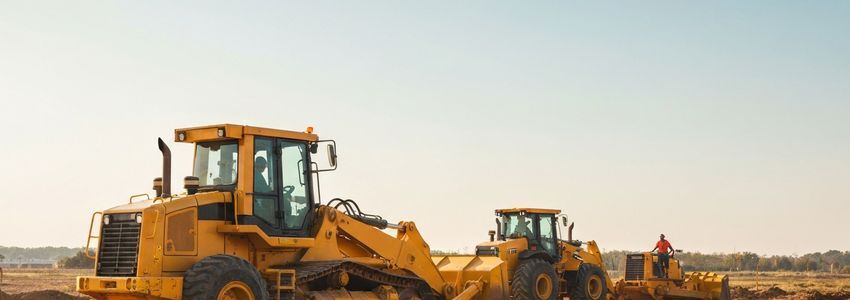
Construction and Contracting: Excavators, bulldozers, cranes, forklifts, and heavy machinery represent six- and seven-figure investments. Zero-down financing allows contractors to bid on larger jobs without tying up capital. Read more at our construction equipment financing page.
Transportation and Trucking: Semi trucks, box trucks, and commercial fleets are ideally suited for zero-down financing due to their strong collateral value. Owner-operators and fleet operators regularly use this structure to scale their operations without massive upfront investment.
Healthcare and Medical: MRI machines, diagnostic imaging equipment, dental chairs, and surgical tools can cost hundreds of thousands of dollars. Medical practices use zero-down financing to acquire the equipment they need to serve patients while maintaining cash flow for operational expenses.
Manufacturing: CNC machines, laser cutters, injection molding equipment, and industrial generators are all commonly financed with zero-down programs. Manufacturers use this approach to modernize production lines without large capital outlays.
Restaurant and Food Service: Commercial ovens, refrigeration systems, kitchen ventilation, and espresso machines are financed regularly through zero-down restaurant equipment financing programs.
Agriculture: Tractors, harvesters, irrigation systems, and other farm equipment qualify for zero-down financing through agricultural equipment lenders, allowing farms to upgrade their operations without depleting seasonal cash reserves.
By the Numbers
No-Money-Down Equipment Financing in 2026
$1.02T
U.S. equipment finance market in 2025, projected to grow 4-6% in 2026
80%
of U.S. businesses use equipment financing or leasing to acquire business assets
$1.16M
Section 179 deduction limit, allowing full write-off of financed equipment
1-3 Days
Typical funding timeline for zero-down equipment financing approvals
How Crestmont Capital Helps with No-Money-Down Equipment Financing
Crestmont Capital is a leading U.S. business lender offering equipment financing solutions designed for small and mid-size businesses. Our equipment financing programs are built to move fast, offer competitive rates, and remove the barriers that prevent growing businesses from getting the assets they need.
We work with businesses across all major industries and offer both equipment loans and equipment leasing solutions. Whether you need to finance a $15,000 commercial refrigerator or a $500,000 excavator, our team structures deals that fit your cash flow and growth objectives.
What sets Crestmont Capital apart is the combination of speed and flexibility. Many of our equipment financing approvals are issued in 24 to 48 hours, and funding can follow within one to three business days. We work with borrowers across a wide credit range and take a relationship-based approach that goes beyond simply looking at credit scores.
Our lending specialists take time to understand your industry, your equipment needs, and your current financial picture before recommending a structure. That means you get a financing solution that genuinely works for your business, not a one-size-fits-all product. Explore our full suite of small business financing options to see everything we offer.
Ready to Get Your Equipment Funded?
Apply in minutes and get a decision in as little as 24 hours. No down payment required for qualified applicants.
Start Your Application →How to Apply for No-Money-Down Equipment Financing
Applying for zero-down equipment financing is significantly simpler than applying for a bank loan or SBA financing. Here is what you will typically need to prepare:
Equipment Details: The make, model, year, and purchase price of the equipment, along with a quote or invoice from the vendor. For used equipment, condition reports or appraisals may be requested on larger deals.
Business Information: Legal business name, business address, type of entity (LLC, corporation, sole proprietorship), and employer identification number (EIN). Most lenders also ask for time in business and general industry type.
Financial Documentation: For deals under $150,000, many lenders require only a one-page application and a credit pull. Larger deals may require three to six months of business bank statements, and occasionally tax returns for deals over $500,000.
Personal Information: Name, address, Social Security number, and ownership percentage for each principal with 20% or more ownership in the business. A personal credit check is standard.
The application process with Crestmont Capital starts at offers.crestmontcapital.com/apply-now and takes just a few minutes to complete. Once submitted, a lending specialist will reach out to discuss your options and guide you through the remaining steps.
Pro Tip: Prepare a vendor quote or purchase invoice before applying. Having the exact equipment information ready significantly speeds up the approval process and helps lenders structure the most accurate terms for your deal.
Real-World Scenarios: Zero-Down Equipment Financing in Action
Understanding how no-money-down financing works in practice helps business owners recognize when and how to use it strategically. Here are several real-world scenarios illustrating the value of zero-down programs.
Scenario 1: The Growing Landscaping Company
A landscaping business owner in Ohio has an opportunity to bid on a large commercial property contract, but it requires a new zero-turn mower and a commercial-grade truck-mounted spreader totaling $85,000. The owner has $40,000 in the bank, but spending it would leave the business vulnerable during slower winter months. By using zero-down equipment financing with a 60-month term, the owner acquires both pieces of equipment, wins the contract, and uses the ongoing revenue from the contract to cover the monthly payments. Cash reserves remain intact.
Scenario 2: The Restaurant Expansion
A restaurant owner in Florida is opening a second location and needs a full commercial kitchen setup valued at $120,000. Rather than waiting 18 months to save a 20% down payment ($24,000), she applies for zero-down equipment financing. The deal closes in four days, kitchen equipment is installed, and the second location opens on schedule. The new location generates enough revenue to cover payments within the first month of operation.
Scenario 3: The Medical Practice Upgrade
A chiropractic practice is growing rapidly and needs to add a digital X-ray system and two new treatment tables totaling $78,000. The practice owner has strong credit and two years in business. He qualifies for zero-down financing at a competitive rate on a 48-month term. By combining the financing with a Section 179 deduction, the tax savings in year one offset a significant portion of the interest cost, making the effective financing rate very low.
Scenario 4: The Trucking Fleet Expansion
A regional trucking company needs two additional semi trucks to fulfill a new shipper contract. Each truck costs $150,000. Using zero-down financing for both vehicles preserves $60,000 in working capital that would have gone toward a 20% down payment. The new trucks generate revenue immediately, and the financing is structured so that each truck is effectively paying for itself through the contract revenue it generates.
Scenario 5: The Construction Startup
A general contractor who recently launched a business needs a skid steer loader to take on larger jobs. With only 14 months in business and a 660 credit score, he applies through Crestmont Capital. Rather than a zero-down standard program, he qualifies for a program that requires a small soft cost payment (approximately 5% of the equipment value). The deal closes, he gets the equipment, and consistent repayment helps him qualify for better terms within 12 months.
Each of these scenarios illustrates a core truth: no-money-down equipment financing is not just for well-capitalized businesses. It is a practical tool for any business that wants to grow without sacrificing financial stability.
According to the U.S. Small Business Administration, maintaining adequate working capital is one of the most critical factors in small business survival. Equipment financing that eliminates down payment requirements directly supports this objective.
Research from Forbes consistently shows that businesses with access to flexible capital tend to grow faster, hire more employees, and weather economic disruptions more effectively than cash-constrained competitors.
Frequently Asked Questions
No Down Payment. No Waiting. Just Equipment.
Get 100% equipment financing from Crestmont Capital. Decisions in 24-48 hours, funding in days. Rates designed for real businesses.
Apply Now and Get Funded →How to Get Started
Get a vendor quote or invoice for the equipment you need. You will need the make, model, year (if applicable), and purchase price to start the application.
Complete our quick application at offers.crestmontcapital.com/apply-now. Most applications take less than five minutes to complete.
A Crestmont Capital specialist will review your application and issue an approval with clear terms including rate, monthly payment, and term length. No surprises.
Once you accept your terms, we pay the vendor directly and you take delivery of your equipment. Payments begin the following month.
Conclusion
No-money-down equipment financing is one of the most practical tools available for business owners who need to grow without depleting their cash reserves. By structuring 100% of the equipment cost into a loan or lease, businesses can acquire revenue-generating assets today and pay for them over time from the profits those assets help produce.
The key is working with a lender who understands your business, moves quickly, and offers competitive terms. Crestmont Capital has helped thousands of businesses across the country acquire the equipment they need through zero-down financing programs built for the real world. Whether you need a single piece of equipment or an entire fleet, our team is ready to help you get funded fast.
If you are considering no-money-down equipment financing for your business, the first step is a quick application. There is no obligation to accept any offer, and our specialists are available to answer questions and guide you through every stage of the process.
Disclaimer: The information provided in this article is for general educational purposes only and is not financial, legal, or tax advice. Funding terms, qualifications, and product availability may vary and are subject to change without notice. Crestmont Capital does not guarantee approval, rates, or specific outcomes. For personalized information about your business funding options, contact our team directly.








