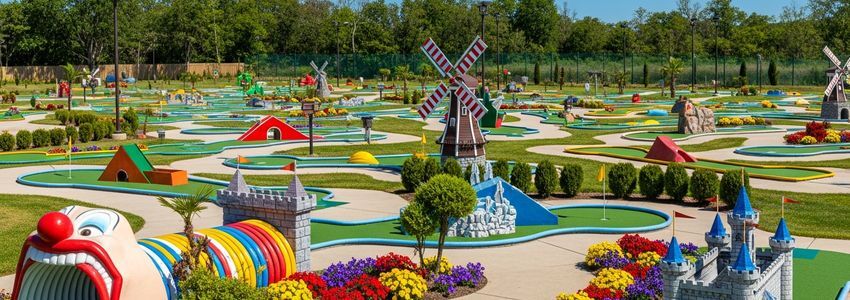
Mini golf business loans give course owners, entertainment venue operators, and family fun center entrepreneurs the capital they need to build, expand, and modernize their facilities. Whether you're launching a brand-new 18-hole course or upgrading an aging attraction with new obstacles, lighting systems, and landscaping, financing helps you move forward without draining your reserves. Mini golf businesses operate in a growing segment of the U.S. entertainment economy — and access to the right loan at the right time can be the difference between a thriving local landmark and a missed opportunity.
In This Article
- What Are Mini Golf Business Loans?
- Key Benefits of Financing Your Mini Golf Business
- How Mini Golf Business Loans Work
- Types of Financing Available
- Who Qualifies for Mini Golf Business Loans?
- Comparing Your Financing Options
- How Crestmont Capital Helps Mini Golf Owners
- Real-World Scenarios
- Frequently Asked Questions
- How to Get Started
What Are Mini Golf Business Loans?
Mini golf business loans are financing products designed for owners and operators of miniature golf courses, adventure golf venues, family entertainment centers, and indoor/outdoor putting greens. These loans can cover a wide range of business needs — from building a new course from scratch to purchasing new hole equipment, adding an arcade, installing night lighting, or refinancing existing debt at a better rate.
Like other small business loans, mini golf financing comes in various forms including term loans, business lines of credit, SBA loans, equipment financing, and merchant cash advances. Lenders evaluate your revenue, credit profile, time in business, and the strength of your business plan when making approval decisions. Because mini golf venues generate consistent, trackable revenue — especially in spring and summer — they can be attractive borrowers for lenders who understand the seasonal entertainment industry.
Mini golf is not just a childhood pastime anymore. Modern mini golf venues have evolved into elaborate entertainment destinations with themed courses, blacklight indoor environments, food and beverage offerings, and event hosting capabilities. This evolution has driven capital needs upward — and with it, the demand for smart business financing solutions.
Industry Snapshot: According to IBISWorld, the mini golf industry in the U.S. generates over $700 million in annual revenue. With more than 10,000 courses nationwide, the segment has shown consistent demand as consumers seek affordable family entertainment options.
Key Benefits of Financing Your Mini Golf Business
Securing a mini golf business loan offers several strategic advantages for course owners at every stage of growth. The most immediate benefit is preserving working capital — instead of spending your cash reserves on a major renovation or equipment purchase, you can finance the project and keep cash available for payroll, inventory, and daily operations.
- Preserve liquidity: Keep cash in your business for day-to-day operations during peak season.
- Fund major projects: Build a new course, add attractions, or renovate an existing layout without delays.
- Manage seasonality: Bridge cash flow gaps during off-peak winter months with a line of credit.
- Buy equipment upfront: Finance specialty equipment — golf obstacles, scoring systems, lighting arrays — without waiting to save.
- Competitive advantage: Upgrade facilities before competitors do, capturing customers looking for premium experiences.
- Build business credit: Regular loan payments improve your business credit profile, enabling better terms in the future.
- Tax advantages: Interest on business loans may be tax-deductible (consult your CPA for specifics).
Mini golf businesses also benefit from the entertainment industry's cash-intensive nature. Venues that accept cash and card payments have strong, documentable revenue streams that lenders can verify quickly — often speeding up approval timelines for working capital loans.
Ready to Grow Your Mini Golf Business?
Get fast, flexible financing from the #1 business lender in the U.S. No obligation — apply in minutes.
Apply Now →How Mini Golf Business Loans Work
The process of securing a mini golf business loan follows a straightforward path, especially when working with an alternative lender like Crestmont Capital. Understanding each step helps you prepare the right documents and set realistic expectations for timeline and costs.
First, you submit an application with basic information about your business: legal name, time in operation, annual revenue, and how much you need to borrow. You'll also provide recent bank statements, business tax returns, and sometimes a brief explanation of how you plan to use the funds.
From there, a lender reviews your application using a combination of automated tools and human underwriting. Key factors include monthly revenue consistency, credit score (personal and business), existing debt obligations, and debt service coverage ratio — your ability to repay the loan from operating income. Seasonal businesses like mini golf venues may need to show lenders 12 months of revenue data to account for slower months.
Once approved, funds are typically disbursed within 1-5 business days for alternative lenders, or 30-90 days for SBA loans. You then repay the loan on a fixed or variable schedule — weekly, biweekly, or monthly — depending on the product.
Quick Guide
How Mini Golf Business Loans Work — At a Glance
Submit a quick application with your business details, revenue, and funding needs — takes just minutes.
Underwriters evaluate revenue, credit, time in business, and debt obligations to determine eligibility and terms.
Review your loan offer, including amount, rate, repayment term, and any fees — compare options before accepting.
Funds arrive in your account within 1-5 business days. Use them to build, upgrade, or stabilize your business.
Types of Financing Available for Mini Golf Businesses
Mini golf course owners have access to a range of business financing products. The right choice depends on your specific needs, timeline, and financial profile. Here's a breakdown of the most common options:
Term Loans
A term loan provides a lump sum of capital repaid over a fixed period — typically 1-5 years for short-to-medium term loans, or 5-25 years for SBA-backed products. Term loans are well-suited for large capital expenditures like building a new course, major renovations, or purchasing land. Interest rates range from 6% to 30%+ depending on creditworthiness and lender type.
SBA Loans
The U.S. Small Business Administration guarantees loans made by approved lenders, reducing lender risk and enabling better rates and longer repayment terms for borrowers. SBA 7(a) loans (up to $5 million) and SBA 504 loans (for real estate and major equipment) are both viable for mini golf businesses. SBA loans require strong credit (650+ FICO), 2+ years in business, and solid financials — but offer the best long-term terms available. Learn more about SBA loans for small businesses.
Business Line of Credit
A business line of credit gives you access to revolving funds you can draw on as needed and repay over time. This is ideal for seasonal businesses like mini golf courses — you can draw funds in fall and winter to cover operating costs, then repay during your peak spring and summer season. Lines of credit offer maximum flexibility for managing cash flow. Explore business lines of credit with Crestmont Capital.
Equipment Financing
Equipment financing is specifically designed to fund the purchase of physical assets. For mini golf businesses, this includes obstacle systems, golf carts, scoring kiosks, commercial landscaping equipment, lighting arrays, and arcade machines. The equipment itself typically serves as collateral, making approval easier even for borrowers with imperfect credit. Crestmont Capital offers competitive equipment financing with fast approvals.
Working Capital Loans
Working capital loans provide short-term funds to cover everyday operational expenses — payroll, utilities, inventory, insurance, and marketing during slow periods. These loans are typically repaid within 3-18 months and are best for bridging temporary revenue gaps rather than major capital projects. Unsecured working capital loans from Crestmont Capital require no collateral.
Merchant Cash Advance
A merchant cash advance (MCA) provides upfront capital in exchange for a percentage of future daily credit and debit card sales. MCAs are fast — often funded within 24-48 hours — and don't require perfect credit. However, they carry higher costs (factor rates of 1.1-1.5x or more) and are best suited for short-term needs with quick payoff timelines. Use MCAs strategically, not as a primary long-term financing vehicle.
Commercial Real Estate Financing
If your mini golf course operates on land you own or are purchasing, commercial real estate loans can fund that acquisition or refinance existing property debt at better rates. These loans are typically long-term (10-30 years) and require significant equity or down payment. Crestmont Capital offers commercial real estate financing for qualified borrowers.
By the Numbers
Mini Golf Business Financing — Key Statistics
$700M+
Annual U.S. mini golf industry revenue (IBISWorld)
10,000+
Mini golf courses operating across the U.S.
1-5 Days
Typical funding timeline with alternative lenders
$50K-$5M
Typical loan range for entertainment venue owners
Who Qualifies for Mini Golf Business Loans?
Qualification requirements vary by lender and loan type, but most mini golf business owners can find a financing option that fits their situation. Here's a general overview of what lenders look for:
Time in Business
Most traditional lenders require 2+ years in operation. Alternative lenders and some SBA microloan programs may work with businesses as young as 6 months. Startups building a new course may need to rely on SBA 7(a) loans with strong business plans, personal credit, and possibly collateral.
Revenue
Lenders want to see consistent, verifiable revenue. For working capital loans, many alternative lenders require a minimum of $10,000-$15,000 per month in gross revenue. SBA loans often require 2 years of tax returns showing business profitability or a clear trajectory to profitability. Seasonal revenue is acceptable if you can demonstrate consistent annual patterns.
Credit Score
Personal FICO scores of 600+ qualify for most alternative lending products. SBA loans typically require 650-680+. The better your credit score, the lower your interest rate and the more favorable your loan terms. If your score needs improvement, focus on paying down existing balances and ensuring no missed payments before applying.
Collateral
Many small business loans — especially SBA loans — require collateral such as business equipment, real estate, or personal assets. Equipment financing uses the purchased equipment itself as collateral. Working capital loans and MCAs are often unsecured, making them accessible to owners who lack significant assets to pledge.
Business Plan
For larger loans or startup financing, a detailed business plan outlining your projected revenue, competitive analysis, marketing strategy, and management team can significantly strengthen your application. Lenders want to see that you have a clear path to profitability and loan repayment.
Pro Tip: Seasonal businesses often face skepticism from traditional bank lenders. When applying for financing, present 12-24 months of bank statements to demonstrate your full-year revenue cycle. Show that your peak season revenue is sufficient to service the debt even during slower months.
Comparing Mini Golf Financing Options
Choosing the right financing product requires comparing key factors: speed, cost, flexibility, and eligibility requirements. The table below summarizes the major options for mini golf business owners.
| Loan Type | Best For | Typical Rate | Speed | Credit Required |
|---|---|---|---|---|
| SBA 7(a) Loan | Major projects, land, construction | 6.5-11% | 30-90 days | 650+ |
| Term Loan (Alt. Lender) | Renovations, expansion | 10-35% | 1-7 days | 600+ |
| Equipment Financing | Course equipment, tech purchases | 7-25% | 2-5 days | 580+ |
| Line of Credit | Seasonal cash flow, flex spending | 8-30% | 3-10 days | 620+ |
| Working Capital Loan | Payroll, operations, supplies | 12-45% | 1-3 days | 580+ |
| Merchant Cash Advance | Emergency needs, fast access | Factor rate 1.15-1.5 | Same day - 48 hrs | 500+ |
How Crestmont Capital Helps Mini Golf Business Owners
Crestmont Capital is rated the #1 business lender in the United States, offering a full suite of financing solutions tailored to entertainment venue owners, including mini golf courses, family fun centers, and recreation businesses. Our team understands the seasonal nature of the mini golf industry and works with you to structure a repayment plan that aligns with your revenue cycles.
We offer fast approvals — often within 24-48 hours — and fund qualified borrowers in as little as one business day. Our product lineup covers everything from short-term working capital to long-term SBA-backed financing, so whether you need $25,000 to refresh your course or $1 million to build a new entertainment complex, we have a solution.
Beyond traditional lending, our advisors help you evaluate the true cost of different financing options, compare terms, and select the product that best positions your business for long-term success. We work with mini golf owners who have good credit, challenged credit, limited time in business, and everything in between.
Mini golf and recreation business owners interested in exploring their funding options can also read our complete guide to recreation center business loans or learn more about small business financing products available through Crestmont Capital.
Build the Mini Golf Course of Your Vision
Crestmont Capital specializes in entertainment and recreation business financing. Apply in minutes, get funded fast.
Apply Now →Real-World Scenarios: How Mini Golf Owners Use Business Loans
To illustrate how mini golf business loans work in practice, here are several scenarios based on common situations course owners face:
Scenario 1: Launching a New Indoor Mini Golf Venue
A family entertainment entrepreneur in suburban Ohio wants to open a 12,000-square-foot indoor blacklight mini golf venue. The project requires $350,000 for leasehold improvements, themed obstacle installation, lighting systems, point-of-sale technology, and working capital for the first three months. She secures an SBA 7(a) loan for $300,000 over 10 years at 9% interest and supplements with a $50,000 equipment financing line for the golf obstacles and arcade machines. Her combined monthly payment is $3,200 — well within projections based on 500+ weekly rounds at $8 per round.
Scenario 2: Renovating an Aging Outdoor Course
A second-generation owner of a classic outdoor mini golf course in North Carolina inherited an aging 18-hole layout with deteriorating obstacles, faded turf, and outdated lighting. He applies for a $125,000 term loan through an alternative lender to completely overhaul the course — new fiberglass obstacles, LED night lighting, repaved pathways, and a refreshed clubhouse. The project is completed over two off-season months, and the renovated course opens in April with a 40% increase in revenue compared to the previous year's spring season. You can learn more about how course owners can use recreation business loans for renovation projects.
Scenario 3: Bridging a Seasonal Cash Flow Gap
A mini golf operator in Wisconsin has strong summers but nearly zero revenue from November through March. Each winter, she struggles to cover insurance premiums, equipment maintenance, staff retention bonuses, and preseason marketing costs. She establishes a $75,000 business line of credit with Crestmont Capital. Each fall, she draws $40,000-$60,000 to cover off-season expenses, then repays the full balance by August using summer revenues. The line of credit costs her about $4,500 annually in interest — far less than the cost of cutting corners during the off-season and losing revenue the following spring.
Scenario 4: Adding a Mini Golf Course to an Existing Business
A restaurant owner in coastal Florida notices that tourists in her area are constantly looking for entertainment within walking distance of their accommodations. She decides to add a nine-hole outdoor putting green to her property. Using a $90,000 equipment financing loan, she installs pre-fabricated modular mini golf holes and landscaping within six weeks. The addition increases her average ticket size by 25% as customers who come for golf also stay for food and drinks. The loan pays for itself within 18 months.
Scenario 5: Buying Out a Business Partner
Two cousins co-own a popular family entertainment center with mini golf, go-karts, and laser tag in Texas. One cousin wants to exit the business. The remaining owner uses an SBA 7(a) loan structured as a partner buyout loan to purchase the departing partner's 50% stake for $500,000. The loan is structured over 10 years, preserving the buyer's cash flow while allowing both parties to reach a clean resolution. For more on this type of financing, see our guide to acquisition financing considerations.
Scenario 6: Expanding to a Second Location
A successful mini golf operator in Georgia wants to open a second course 30 miles away. She needs $600,000 for land lease improvements, construction, equipment, and working capital at the new location. Using a combination of an SBA 504 loan for the build-out ($400,000) and a working capital loan ($200,000) from Crestmont Capital, she successfully opens Location 2 during peak season. The second location reaches profitability within 14 months, ahead of projections.

Frequently Asked Questions
What types of mini golf businesses can get financing?
Most types of mini golf and miniature golf businesses qualify for financing, including outdoor traditional courses, indoor blacklight venues, adventure golf parks, family entertainment centers with mini golf as one attraction, and resort or hotel mini golf facilities. Whether you're a sole proprietor, LLC, S-Corp, or C-Corp, you can apply for business financing as long as your business meets basic eligibility requirements for revenue, time in operation, and creditworthiness.
How much can I borrow for my mini golf business?
Loan amounts vary significantly by product and lender. Working capital loans and MCAs typically range from $10,000 to $500,000. Equipment financing can cover 100% of the purchase price of qualifying assets, often up to $5 million. SBA 7(a) loans go up to $5 million. Your specific loan amount will depend on your annual revenue, credit profile, debt obligations, and the purpose of the funds. Many mini golf operators borrow between $50,000 and $750,000 for renovation and expansion projects.
Can I get a mini golf business loan with bad credit?
Yes, options are available for business owners with challenged credit. Alternative lenders and MCAs typically work with FICO scores as low as 500-550, though costs will be higher. Equipment financing is also more accessible for borrowers with lower credit scores since the purchased equipment serves as collateral. If your credit is below 600, focus on presenting strong revenue documentation, a solid business history, and ideally some form of collateral to improve your chances of approval.
How do lenders view seasonal mini golf revenue?
Experienced small business lenders understand seasonal revenue patterns. When applying, provide at least 12 months of bank statements to show your full annual revenue cycle, including peak and off-peak periods. A lender who specializes in small business loans will evaluate your annualized revenue — not just a single month's deposits. Be prepared to explain your seasonal model and demonstrate that peak revenues are sufficient to service your debt even accounting for slower months.
What documents do I need to apply for a mini golf business loan?
Requirements vary by loan type, but most lenders ask for: 3-6 months of business bank statements, the last 1-2 years of business tax returns, a government-issued ID, proof of business ownership (articles of incorporation or LLC operating agreement), and basic business information (EIN, business address, years in operation). For larger SBA loans, you may also need a full business plan, profit-and-loss statements, balance sheet, and a personal financial statement.
How quickly can I get funded?
Funding timelines depend heavily on the loan type. Merchant cash advances and working capital loans from alternative lenders can fund within 24-72 hours of approval. Equipment financing typically takes 2-5 business days. Business lines of credit are usually established within 3-10 business days. SBA loans have the longest timeline — typically 30 to 90 days from application to funding, due to additional underwriting and government guarantee processing requirements.
Can I use a business loan to build a new mini golf course from scratch?
Yes. SBA 7(a) loans and commercial construction loans are designed for startup and build-out projects. If you have a solid business plan, relevant industry experience, strong personal credit (680+), and the ability to make a 10-20% down payment, SBA lenders will consider new construction financing. Alternative lenders may also provide startup or pre-revenue financing in smaller amounts, particularly if you have a strong personal credit profile and can demonstrate industry experience or prior business success.
What is the interest rate on mini golf business loans?
Interest rates vary widely. SBA 7(a) loans currently range from approximately 7-11% (prime rate + 2.75-4.75%), making them the most affordable long-term option. Traditional bank term loans for qualified borrowers run 7-15%. Alternative lenders charge 12-35%+ APR for short-term loans. Equipment financing rates are typically 7-25%. Merchant cash advances don't have a traditional interest rate but carry effective APRs of 40-150%+ due to their factor rate structure. Your personal and business credit score is the biggest driver of your rate.
Do I need collateral for a mini golf business loan?
It depends on the loan type. SBA loans above $25,000 typically require collateral — usually business assets, real estate, or a personal guarantee. Equipment financing uses the purchased equipment as collateral. Working capital loans and MCAs from alternative lenders are often unsecured, requiring no collateral pledge, though a personal guarantee is common. If you want to avoid pledging collateral, focus on unsecured working capital products or equipment financing where the asset secures the loan automatically.
Can a mini golf startup get financing?
Startups have fewer loan options than established businesses, but financing is possible. SBA 7(a) startup loans are available for businesses with less than two years of history if the owner has relevant industry experience, strong personal credit, and a compelling business plan. SBA microloans (up to $50,000) are another avenue for new mini golf ventures. Personal business loans, business credit cards, and home equity lines of credit are also options if traditional business financing isn't accessible. Some alternative lenders work with businesses as young as 6 months.
What are the best uses of a business loan for a mini golf course?
The most effective uses include: renovating or replacing aging course obstacles and turf, adding LED night lighting to extend operating hours, launching a marketing campaign to drive preseason awareness, purchasing new point-of-sale and scoring technology, adding complementary revenue streams (arcade, food and beverage, birthday party packages), hiring and training seasonal staff, and bridging cash flow gaps during the off-season. Loans that directly increase revenue capacity or reduce operational costs tend to generate the best return on investment.
How does equipment financing work for mini golf equipment?
Equipment financing for mini golf covers the purchase of physical assets used in your business: modular hole systems, fiberglass obstacles, scoring kiosks, point-of-sale equipment, commercial mowers, golf carts, and arcade machines. The lender provides 80-100% of the equipment cost, and you repay over 1-7 years with the equipment serving as collateral. At the end of the term, you own the equipment outright. This structure often has lower interest rates than unsecured loans because the asset reduces lender risk. Crestmont Capital offers equipment financing for entertainment and recreation equipment.
Should I choose leasing or financing for mini golf equipment?
Leasing and financing each have advantages. Leasing offers lower monthly payments, no large down payment, and the flexibility to upgrade equipment at lease end — ideal for technology that depreciates quickly (POS systems, scoring kiosks). Financing builds equity in the asset and is typically better for long-lived infrastructure like obstacles, structures, and landscaping elements. For most mini golf owners, a hybrid approach works best: finance the long-term physical course elements and lease technology and point-of-sale equipment that may need to be upgraded in 3-5 years.
How do I strengthen my loan application as a mini golf owner?
To strengthen your application: organize your financial documents before applying, ensure bank statements and tax returns are accurate and up to date, improve your personal credit score by paying down balances and eliminating missed payments, demonstrate consistent revenue trends (even if seasonal), prepare a clear explanation of how you'll use the funds and how it will benefit your business, and consider applying with a co-signer if your personal credit is weak. Working with a lender like Crestmont Capital who specializes in small business financing gives you access to advisors who can help you structure the strongest possible application.
What is the difference between a business loan and a personal loan for my mini golf course?
Business loans are issued to your business entity and are underwritten based on your business's financial health — revenue, business credit, cash flow, and assets. Personal loans are issued to you as an individual based on your personal credit and income. Business loans typically offer higher loan amounts, longer terms, and potentially lower rates for established businesses. They also help build your business credit profile separately from your personal credit. For mini golf course expenses, a business loan is almost always the right choice once your business is established — it keeps business and personal finances properly separated and gives your company access to higher capital limits.
How to Get Started
Complete our quick application at offers.crestmontcapital.com/apply-now — takes just a few minutes and requires no commitment.
A Crestmont Capital advisor will review your mini golf business's financial profile and match you with the right financing option for your goals and timeline.
Receive your funds and put them to work — often within days of approval. Build your course, upgrade your facilities, and grow your business.
Conclusion
Mini golf business loans are a practical and accessible tool for course owners and entertainment venue operators who want to grow without exhausting their cash reserves. Whether your priority is building a new course, renovating an aging layout, managing seasonal cash flow, or purchasing new equipment, the right financing product can accelerate your timeline and protect your operational stability.
The key is matching your specific needs to the right loan type — and working with a lender who understands the entertainment and recreation industry. Crestmont Capital has helped thousands of small business owners across the U.S. access the capital they need to build thriving businesses. As the #1 rated business lender in the country, we're ready to help your mini golf course reach its full potential.
Don't wait for your competition to renovate and upgrade while you stand still. Apply today and discover how mini golf business loans can put your growth plans in motion.
Disclaimer: The information provided in this article is for general educational purposes only and is not financial, legal, or tax advice. Funding terms, qualifications, and product availability may vary and are subject to change without notice. Crestmont Capital does not guarantee approval, rates, or specific outcomes. For personalized information about your business funding options, contact our team directly.