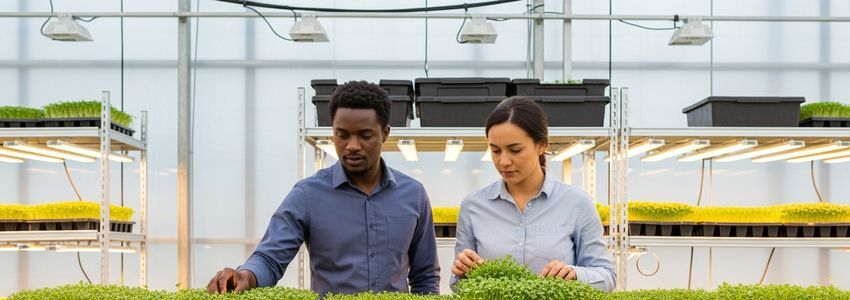
The microgreens industry is booming, transforming from a niche culinary garnish into a mainstream agricultural powerhouse. These nutrient-dense seedlings are celebrated for their intense flavors, vibrant colors, and rapid growth cycles, making them a profitable venture for urban and traditional farmers alike. As consumer demand for fresh, locally-sourced produce continues to surge, many microgreens farm owners find themselves at a critical juncture: the need to scale. Expanding operations, purchasing advanced equipment, and meeting larger orders requires significant capital-a resource that can be challenging to access.
This is where microgreens farm business loans become an essential tool for growth. Whether you're a startup looking to purchase your first set of grow racks or an established farm aiming to automate your irrigation system, securing the right financing is the key to unlocking your business's full potential. A well-structured loan can provide the necessary funds to increase production capacity, improve efficiency, and ultimately boost your revenue and market share. Navigating the world of commercial lending can seem complex, but with the right guidance, you can find a funding solution tailored to the unique needs of your agricultural business.
This comprehensive guide will walk you through every aspect of microgreens farm business loans. We will explore the different types of financing available, outline the qualification requirements, and provide real-world examples of how this capital can be used to propel your farm forward. From understanding interest rates to preparing your application, you will gain the knowledge needed to make informed financial decisions and cultivate a thriving, successful microgreens enterprise.
In This Article
- What Is a Microgreens Farm Business Loan?
- Why Microgreens Farmers Need Financing
- Types of Business Loans for Microgreens Farmers
- How Much Can Microgreens Farmers Borrow?
- How to Qualify for a Microgreens Farm Business Loan
- Best Uses for Microgreens Farm Financing
- Understanding Costs and Interest Rates
- Microgreens Industry At a Glance
- Loan Type Comparison Table
- Real-World Scenarios
- Next Steps to Secure Financing
- Frequently Asked Questions
- Conclusion
What Is a Microgreens Farm Business Loan?
A microgreens farm business loan is a specific category of commercial financing designed to meet the capital needs of businesses that cultivate and sell microgreens. Unlike a generic business loan, these financial products are often structured with an understanding of the agricultural sector's unique characteristics, such as crop cycles, seasonal demand fluctuations, and specific equipment requirements. The funds from these loans are provided by a lender-like a bank, credit union, or alternative lender such as Crestmont Capital-to a farm owner in a lump sum or as a line of credit. In return, the farm owner agrees to repay the borrowed amount, plus interest and any associated fees, over a predetermined period.
The core purpose of these loans is to bridge the financial gap between a farm's current operational capacity and its growth potential. Microgreens farming, while often less land-intensive than traditional agriculture, is highly dependent on technology and controlled environments. This includes specialized equipment like LED grow lights, vertical shelving systems, climate control technology (HVAC), and automated irrigation. These investments are crucial for maintaining quality, consistency, and yield, but they come with a significant upfront cost.
A business loan provides the immediate capital necessary to make these investments without depleting the farm's operational cash flow. This allows the business to scale production, improve efficiency, and secure larger contracts with restaurants, grocery stores, and distributors-activities that ultimately lead to increased profitability. These loans are not a one-size-fits-all solution; they come in various forms, each suited for different business needs, timelines, and financial situations.
Why Microgreens Farmers Need Financing
The path from a small-scale microgreens hobby to a commercial-grade operation is paved with strategic investments. While the initial startup costs for a microgreens business can be relatively low compared to other agricultural ventures, scaling up requires substantial capital. Financing becomes not just a helpful tool but a necessary catalyst for growth and long-term sustainability. Here are the primary reasons microgreens farmers seek business loans.
1. Purchasing Specialized Equipment
High-quality, consistent microgreens production relies on specialized equipment. As a farm grows, manual processes become inefficient and limit output. Financing allows farmers to invest in:
- Vertical Farming Racks: To maximize growing space within a limited footprint, especially in urban settings.
- LED Grow Lights: Full-spectrum, energy-efficient lighting is critical for optimal growth, flavor, and nutrient density.
- Climate Control Systems: Advanced HVAC and dehumidification systems maintain the perfect temperature and humidity, preventing mold and ensuring healthy crops.
- Automated Irrigation and Fertigation Systems: These systems save immense labor hours and ensure precise watering and nutrient delivery, leading to more consistent yields.
- Seeding and Harvesting Tools: Mechanical seeders and specialized harvesters can dramatically increase efficiency and reduce labor costs.
An equipment financing agreement is a popular choice for these purchases, as the equipment itself often serves as collateral for the loan.
2. Expanding Operations and Facilities
When demand outstrips supply, it's time to expand. This could mean leasing a larger warehouse, building a dedicated greenhouse, or retrofitting an existing space. Financing can cover the costs associated with:
- Lease Deposits and Renovations: Securing a larger commercial space and customizing it with proper insulation, plumbing, and electrical systems.
- Greenhouse Construction: Building a climate-controlled greenhouse for year-round production.
- Walk-in Coolers: Essential for post-harvest storage to maintain freshness and extend shelf life, a key requirement for commercial clients.
3. Managing Cash Flow and Working Capital
Even profitable farms can face cash flow challenges. There is often a lag between paying for supplies (seeds, soil, trays) and receiving payment from clients. A working capital loan or a business line of credit provides a crucial buffer to:
- Purchase Bulk Inventory: Buying seeds, growing medium, and packaging materials in bulk can significantly reduce per-unit costs, but it ties up cash.
- Cover Payroll and Operating Expenses: Ensuring staff and bills are paid on time, especially during slower sales periods or while waiting for large invoices to be paid.
- Bridge Seasonal Gaps: While many microgreens are grown indoors year-round, demand can fluctuate seasonally. A line of credit helps manage these peaks and valleys.
4. Investing in Marketing and Sales
Growing great microgreens is only half the battle; you also have to sell them. A dedicated marketing budget can accelerate growth and brand recognition. Financing can be used for:
- Developing a Professional Website and E-commerce Platform: To facilitate direct-to-consumer sales or wholesale ordering.
- Digital Marketing Campaigns: Running targeted ads on social media and search engines to reach local chefs, restaurant owners, and health-conscious consumers.
- Hiring a Salesperson: A dedicated sales professional can build relationships with grocery chains, distributors, and other large-volume buyers.
- Branding and Packaging: Investing in high-quality, food-safe packaging that enhances brand appeal and meets regulatory standards.
Types of Business Loans for Microgreens Farmers
There is a diverse landscape of small business financing options available to microgreens farmers. The best choice depends on your farm's specific needs, financial health, and growth plans.
SBA Loans
Backed by the U.S. Small Business Administration, SBA loans are a top-tier option for qualified businesses. They offer long repayment terms and low interest rates because the government guarantee reduces the lender's risk.
- SBA 7(a) Loans: Highly versatile, these loans can be used for a wide range of purposes, including working capital, equipment purchase, and facility expansion. Loan amounts can be substantial, up to $5 million.
- SBA Microloans: For smaller needs, these loans go up to $50,000 and are excellent for startups or for purchasing a few key pieces of equipment.
- Best For: Established farms with strong credit and financials looking for significant capital with favorable terms for major expansion projects. The application process is thorough and can take longer than other options.
Traditional Term Loans
A traditional term loan is what most people picture when they think of a business loan. You receive a lump sum of cash upfront and repay it in fixed monthly installments over a set period (the "term").
- Features: Terms can range from one to ten years or more. Interest rates can be fixed or variable. They are offered by traditional banks and alternative lenders like Crestmont Capital.
- Best For: Large, one-time investments where the total cost is known in advance, such as building a new greenhouse, purchasing a delivery vehicle, or a major facility overhaul.
Equipment Financing
This type of loan is specifically for purchasing new or used equipment. The equipment you buy serves as the collateral for the loan, which can make it easier to qualify for than an unsecured loan.
- Features: Terms are typically aligned with the expected lifespan of the equipment. It allows you to acquire necessary assets without a large cash outlay, preserving your working capital for other needs.
- Best For: Purchasing grow racks, LED lights, HVAC systems, walk-in coolers, or automated harvesting machines. It's a direct and secured way to fund your farm's technological upgrades.
Business Line of Credit
A business line of credit is a flexible form of financing that gives you access to a set amount of capital that you can draw from as needed. You only pay interest on the funds you use.
- Features: It functions like a credit card for your business. As you repay the amount you've drawn, your available credit is replenished. This makes it a reusable financial tool.
- Best For: Managing ongoing operational expenses, bridging cash flow gaps, handling unexpected costs (like equipment repairs), or seizing opportunities that require quick access to cash, such as a bulk inventory deal.
Working Capital Loans
These are short-term loans designed to cover everyday business expenses rather than long-term assets. They provide a quick infusion of cash to keep operations running smoothly.
- Features: They typically have shorter repayment terms (often under 24 months) and are designed for fast funding. The focus is on the business's cash flow and revenue rather than just credit scores.
- Best For: A microgreens farm that needs to fund a large seed and soil order to fulfill a new contract, cover payroll during a slow month, or launch a short-term marketing campaign.
Ready to Grow Your Business?
Get fast, flexible financing from the #1 business lender in the U.S. Apply in minutes.
Apply Now →How Much Can Microgreens Farmers Borrow?
The amount of financing a microgreens farm can secure varies widely, ranging from a few thousand dollars for a microloan to several million for a major expansion funded by an SBA loan. Lenders assess several key factors to determine the loan amount for which you are eligible.
Factors Influencing Loan Amount
- Annual Revenue: This is one of the most critical metrics. Lenders see strong, consistent revenue as an indicator of your ability to repay a loan. Higher revenue generally qualifies you for larger loan amounts. Many lenders look for a minimum annual revenue, often starting around $100,000, though some programs are more flexible.
- Credit Score: Both your personal and business credit scores play a significant role. A higher credit score (typically 650+) demonstrates a history of responsible borrowing and reduces the lender's risk, making them more willing to offer a larger sum at a better rate.
- Time in Business: Lenders prefer to work with established businesses. Most traditional lenders and SBA programs require at least two years of operational history. Newer businesses may have better luck with alternative lenders or specific startup loan programs, though the loan amounts might be smaller.
- Cash Flow and Profitability: Lenders will analyze your bank statements and financial documents (profit and loss statements, balance sheets) to assess your cash flow. Positive, predictable cash flow shows that you have the liquidity to handle monthly loan payments.
- Collateral: For secured loans, the value of the collateral you can offer will directly impact the loan amount. This could be the equipment you're purchasing, real estate, or other business assets.
- Purpose of the Loan: A well-defined plan for the funds can also influence the loan amount. A request for $100,000 to purchase specific, high-ROI equipment is often viewed more favorably than a vague request for "working capital."
Typical Loan Ranges
- Microloans & Startups: $5,000 - $50,000
- Working Capital & Short-Term Loans: $25,000 - $500,000
- Equipment Financing: $10,000 - $2,000,000+ (dependent on equipment value)
- Term Loans & SBA Loans: $50,000 - $5,000,000
It's crucial to borrow responsibly. Only seek the amount of capital you truly need and can comfortably repay. Over-leveraging your business can create financial strain that hinders growth rather than helping it.
How to Qualify for a Microgreens Farm Business Loan
Qualifying for a business loan requires preparation and a clear understanding of what lenders are looking for. While specific requirements vary by lender and loan type, most will evaluate your application based on a common set of criteria.
Key Qualification Criteria
1. Credit Score:
Lenders will check both your personal FICO score and your business credit score. For most loans, a personal credit score of 650 or higher is preferred. SBA loans may require scores of 680+. If your credit is lower, you may still qualify with alternative lenders, but likely at a higher interest rate.
2. Time in Business:
Most lenders, especially traditional banks, want to see a track record of success. A minimum of two years in business is a common requirement. Startups or businesses operating for less than a year will have fewer options but can look into SBA microloans, lines of credit from fintech lenders, or personal loans.
3. Annual Revenue:
Consistent revenue is proof that your business model works. Lenders typically have a minimum annual revenue threshold, which could be anywhere from $100,000 to $250,000 or more for larger loans. You will need to provide bank statements and tax returns to verify your income.
4. Business Plan:
For startups or significant expansion projects, a comprehensive business plan is essential. It should detail your business model, market analysis, management team, and, most importantly, financial projections. This document shows lenders that you have a clear strategy for using the funds and generating enough revenue to repay the loan.
5. Financial Documents:
Be prepared to provide a package of financial documents, which may include:
- 3-6 months of business bank statements
- 2-3 years of business and personal tax returns
- Profit & Loss (P&L) statement
- Balance sheet
- A list of existing business debts
Having these documents organized and ready will significantly speed up the application process.
6. Collateral:
For secured loans like equipment financing or some term loans, you will need to pledge assets as collateral. This reduces the lender's risk. The asset could be the equipment being purchased, commercial real estate, inventory, or accounts receivable.
Pro Tip
A strong business plan is your narrative. It's not just numbers; it's the story of your farm's potential. Clearly articulate how the loan will generate a return on investment. For example, show how a $50,000 investment in new LED lights will increase your yield by 30%, allowing you to service three new restaurant contracts and increase monthly revenue by $5,000.
Best Uses for Microgreens Farm Financing
Securing a business loan is about making strategic investments that will generate a positive return. The goal is to use the capital in ways that increase revenue, improve efficiency, or reduce costs. Here are some of the most effective ways to deploy funds in a microgreens business.
Investing in High-ROI Equipment
Prioritize equipment that directly impacts your bottom line.
- Automated Seeding and Harvesting: A mechanical seeder can reduce labor time by hours per day, while an automated harvester improves consistency and speed. The labor savings alone can often justify the cost of the equipment within a year.
- Energy-Efficient LED Grow Lights: While the upfront cost is higher, modern LEDs consume significantly less electricity than older lighting technologies, reducing your monthly utility bills. They also provide optimized light spectrums that can improve crop quality and shorten growth cycles.
- Walk-in Cooler: This is a game-changer for any commercial microgreens farm. It allows you to harvest in larger batches and store produce for several days, extending shelf life and enabling you to fulfill larger, more consistent orders from distributors and grocery stores.
Scaling Production Capacity
Use funds to physically grow your operation.
- More Vertical Racks: The most straightforward way to increase output in an indoor farm is to add more vertical growing space. Financing allows you to purchase and install a large number of racks at once to meet growing demand.
- Facility Expansion: Lease a larger warehouse or build a dedicated greenhouse. This allows for not just more growing space but also designated areas for seeding, harvesting, packing, and storage, which improves workflow and food safety compliance.
Improving Logistics and Distribution
Getting your product to customers efficiently is key.
- Refrigerated Delivery Van: A dedicated, refrigerated vehicle ensures your delicate microgreens arrive at restaurants and stores in perfect condition, maintaining quality and client satisfaction. This investment opens up a wider delivery radius and larger potential client base.
- Packaging Automation: Investing in machinery that automates the weighing and sealing of clamshell packages can drastically increase the speed of your packing line, a common bottleneck for growing farms.
Acquiring Certifications
Certifications can open doors to premium markets.
- USDA Organic Certification: The process can be costly and time-consuming, involving application fees, inspections, and potential changes to your growing process. A loan can cover these costs, and the certification can allow you to charge a premium for your products.
- Food Safety Certifications (e.g., GAP): Many larger distributors and grocery chains require their suppliers to have Good Agricultural Practices (GAP) or other food safety certifications. Financing can pay for the necessary facility upgrades and consultant fees to achieve compliance.
Strategic Insight
When evaluating how to use loan funds, always calculate the potential return on investment (ROI). Ask yourself: "How will this purchase help me make more money or save more money?" Prioritize investments that offer the quickest and most significant financial returns.
Understanding Costs and Interest Rates
When you take out a business loan, you're repaying more than just the principal amount you borrowed. It's essential to understand all the associated costs to accurately assess the affordability of the loan and compare offers from different lenders.
Key Cost Components
Interest Rate:
This is the percentage of the principal that the lender charges for borrowing the money. It's the primary cost of the loan. Rates can be:
- Fixed: The rate stays the same for the entire life of the loan, resulting in predictable monthly payments. This is common for term loans and equipment financing.
- Variable: The rate can fluctuate over the loan term, typically tied to a benchmark index like the Prime Rate. This means your payments could go up or down. Lines of credit often have variable rates.
Interest rates are determined by your creditworthiness, the loan type, the loan term, and prevailing market conditions.
Annual Percentage Rate (APR):
APR is a more comprehensive measure of a loan's cost. It includes the interest rate plus any additional fees the lender charges, expressed as an annual percentage. Comparing the APR from different loan offers is the most accurate way to understand the true cost of each option.
Origination Fees:
This is a one-time fee charged by the lender to process the loan application. It's usually a percentage of the total loan amount and is often deducted from the loan proceeds before they are disbursed to you.
Other Potential Fees:
Depending on the lender and loan type, you might encounter other fees:
- Application Fee: A fee to apply for the loan, whether you are approved or not.
- Prepayment Penalty: A fee charged if you pay off the loan early. This is more common with traditional banks and some long-term loans.
- Late Payment Fees: Fees incurred if you miss a payment deadline.
- Closing Costs: For loans secured by real estate, you may have to pay for appraisals, title searches, and other closing services.
Always ask for a complete fee schedule before signing any loan agreement. A reputable lender like Crestmont Capital will be transparent about all costs involved.
Microgreens Industry At a Glance
Microgreens Industry Snapshot
$1.7 Billion
Projected Global Market Size by 2028
8.5%
Compound Annual Growth Rate (CAGR)
7-21 Days
Average Crop Cycle from Seed to Harvest
40x
Higher Nutrient Density Than Mature Plants (on average)
Sources: Market research reports from firms like Grand View Research and Allied Market Research, as cited in publications like Forbes.
Loan Type Comparison Table
Choosing the right loan can be easier when you see the options side-by-side. This table compares the most common types of financing for microgreens farms.
| Loan Type | Typical Amount | Repayment Term | Interest Rate | Best Use Case for Microgreens |
|---|---|---|---|---|
| SBA 7(a) Loan | $50k - $5M | 7-25 years | Low (Variable) | Major expansion, purchasing commercial property, debt refinancing. |
| Equipment Financing | $10k - $2M+ | 2-7 years | Low to Moderate | Buying grow lights, racks, HVAC systems, delivery vans. |
| Term Loan | $25k - $500k | 1-10 years | Moderate (Fixed) | Planned projects like facility renovations or a large marketing launch. |
| Business Line of Credit | $10k - $250k | Revolving | Moderate to High | Managing cash flow, unexpected expenses, buying inventory. |
| Working Capital Loan | $5k - $250k | 3-24 months | Moderate to High | Quick cash for payroll, bulk seed orders, or bridging invoice gaps. |
Find the Right Loan for Your Farm
Our lending experts can help you compare options and find the perfect fit. See what you qualify for today.
Get Pre-Qualified →Real-World Scenarios
To better understand how microgreens farm business loans work in practice, let's explore a few hypothetical scenarios based on common challenges and opportunities that farm owners face.
Scenario 1: The Startup - "Urban Sprouts"
Business: Sarah has been growing microgreens in her basement for a year, selling at a local farmers market. Demand is high, and she wants to turn her hobby into a full-time business by leasing a small commercial space.
Challenge: Sarah needs capital for the security deposit, first month's rent, and the initial build-out, plus basic equipment like racks and lights. As a new business, she has limited revenue history.
Solution: Sarah applies for an SBA Microloan of $35,000. She prepares a detailed business plan with conservative revenue projections based on her farmers market sales and interest from local restaurants.
Outcome: The loan is approved. Sarah uses $10,000 for the lease and initial renovations, $20,000 for 20 commercial-grade grow racks and LED lights, and keeps $5,000 for her first bulk purchase of seeds and growing medium. The loan allows her to establish a legitimate commercial operation and begin building a client base beyond the farmers market.
Scenario 2: The Scaler - "Green Thumb Farms"
Business: Mark has been running Green Thumb Farms for three years out of a 1,500 sq. ft. warehouse. He has consistent contracts with 15 local restaurants and a high-end grocery store. He is at maximum production capacity and is turning away new clients.
Challenge: Mark wants to lease an adjacent 3,000 sq. ft. warehouse unit and purchase an automated irrigation system and a walk-in cooler to triple his production and improve efficiency. The total project cost is $150,000.
Solution: With three years of strong tax returns and bank statements, Mark is a prime candidate for an SBA 7(a) Loan or a Traditional Term Loan. He chooses a 7-year term loan from an alternative lender for its faster funding timeline.
Outcome: Mark secures a $150,000 loan. He uses it to expand his facility, install the cooler and automation systems, and hire two new part-time employees. Within six months, he has onboarded ten new restaurant clients and secured a contract with a regional grocery chain, and his increased profits easily cover the monthly loan payments.
Scenario 3: The Tech Adopter - "Future Greens LLC"
Business: A five-year-old microgreens farm, Future Greens, is profitable but struggling with high labor costs associated with harvesting and packaging. The owner, Maria, wants to invest in a state-of-the-art automated harvester to improve efficiency.
Challenge: The harvester costs $75,000, a significant cash outlay that would deplete her working capital.
Solution: Maria applies for Equipment Financing. The harvester itself serves as the collateral for the loan, making the application process straightforward. The lender offers 100% financing for the machine.
Outcome: Maria gets the $75,000 loan with a 5-year term. The new harvester reduces her team's harvesting time by 70%, allowing her to reallocate labor to sales and business development. The increased productivity and labor savings result in a net profit increase that is more than double the monthly loan payment.
Scenario 4: The Cash Flow Manager - "CityHarvest Microfarm"
Business: CityHarvest is a successful farm that just landed its largest client ever: a regional food distributor. The distributor pays on Net 60 terms, meaning CityHarvest won't see payment for two months.
Challenge: To fulfill the massive first order, CityHarvest needs to spend $25,000 immediately on seeds, soil, and packaging materials, and also needs to cover payroll for the next two months. This creates a temporary but critical cash flow gap.
Solution: The owner, David, applies for a Business Line of Credit with a $50,000 limit. Because it's a short-term, recurring need, a line of credit is more suitable than a term loan.
Outcome: David is approved and immediately draws $30,000 to cover the upfront costs. He fulfills the large order. Sixty days later, when the distributor's payment arrives, he repays the $30,000 plus interest. The line of credit remains open with the full $50,000 available for future cash flow needs, providing a permanent financial safety net for the business.
Ready to Grow Your Business?
Get fast, flexible financing from the #1 business lender in the U.S. Apply in minutes.
Apply Now →Next Steps to Secure Financing
Ready to take the next step toward funding your microgreens farm's growth? Follow this structured approach to navigate the application process smoothly and increase your chances of approval.
Before you apply, determine exactly how much money you need and what you will use it for. Create a detailed budget for your project. At the same time, pull your personal and business credit reports and gather your key financial documents (bank statements, tax returns, P&L statements). Knowing your numbers is the first step.
Don't just go to the first lender you find. Compare options from traditional banks, credit unions, and reputable alternative lenders like Crestmont Capital. Look at their loan products, qualification requirements, interest rates, and customer reviews. An alternative lender may offer faster funding and more flexible requirements, which can be ideal for a fast-moving business.
Organize all your required documents into a complete application package. This includes your financial statements, tax returns, bank statements, a copy of your driver's license, and voided business check. If required, write or update your business plan, ensuring the financial projections are realistic and well-supported. A complete and organized application makes a strong first impression.
Submit your application. Many modern lenders, including Crestmont Capital, offer a simple online application process that can be completed in minutes. Once you receive offers, review them carefully. Look beyond the interest rate and compare the APR, total repayment amount, term length, and any fees or penalties. Choose the offer that provides the best overall value for your business.
Start Your Application Today
The entire process is fast, simple, and secure. See how much your microgreens farm can qualify for.
Apply Now →Frequently Asked Questions
Can I get a business loan for a new microgreens farm startup?
Yes, it is possible, but options are more limited. Startups should look into SBA Microloans, which are designed for new and small businesses, or seek funding from lenders who specialize in startup financing. A very strong business plan and good personal credit are essential.
What is the minimum credit score needed for a microgreens farm loan?
It varies by lender. For traditional bank loans or SBA loans, you'll likely need a personal credit score of 680 or higher. Alternative lenders can be more flexible, with some programs accepting scores as low as 600, though the rates will be higher.
How long does it take to get funded?
The funding timeline depends on the loan type and lender. SBA loans and traditional bank loans can take several weeks to months. Alternative lenders like Crestmont Capital can often provide funding in as little as 24-48 hours for products like working capital loans and equipment financing.
Do I need collateral to get a loan for my microgreens farm?
Not always. Unsecured loans, like many working capital loans and lines of credit, do not require specific collateral. However, secured loans, such as equipment financing or larger term loans, will require you to pledge assets. Secured loans often come with lower interest rates.
Can I use a business loan to buy seeds and growing medium?
Absolutely. A working capital loan or a business line of credit is perfect for purchasing inventory like seeds, soil, coco coir, and packaging supplies. This helps you manage cash flow, especially when buying in bulk to reduce costs.
Are there specific government grants for microgreens farms?
While business loans must be repaid, grants do not. You can search for grants through the USDA, particularly programs focused on specialty crops, urban agriculture, or value-added producer grants. However, grants are highly competitive and should not be relied upon as a primary funding source.
What's the difference between an interest rate and an APR?
The interest rate is the cost of borrowing the principal amount. The Annual Percentage Rate (APR) is a broader measure that includes the interest rate plus all associated fees (like origination fees). APR gives you a more accurate picture of the total cost of the loan.
Can I refinance an existing microgreens farm business loan?
Yes. If your business's financial health has improved since you took out your original loan, you may be able to refinance it to get a lower interest rate or a longer repayment term, which would lower your monthly payments.
Will a business loan application affect my personal credit score?
Most lenders will perform a hard credit inquiry when you formally apply for a loan, which can cause a small, temporary dip in your personal credit score. Many lenders, including Crestmont Capital, offer a pre-qualification process with a soft credit pull, which does not affect your score.
What kind of revenue do I need to show to qualify?
This varies significantly. Some online lenders may work with businesses making $10,000 per month ($120,000 annually), while larger bank loans may require $250,000 or more in annual revenue. The key is to show consistent cash flow through your business bank statements.
Is it better to get a loan from a bank or an alternative lender?
It depends on your priorities. Banks may offer lower rates but have stricter requirements and a slower process. Alternative lenders often provide faster funding, more flexible qualification criteria, and a wider range of products, making them an excellent choice for businesses that need capital quickly.
Can a loan be used for marketing and advertising?
Yes, a term loan or working capital loan can be used for marketing purposes. This includes building a website, running digital ad campaigns, hiring a sales team, or designing new packaging to attract more customers.
What documents do I need to apply?
Typically, you will need 3-6 months of business bank statements, your most recent business tax return, your personal tax return, a year-to-date profit and loss statement, and a balance sheet. For simpler applications, some lenders may only require bank statements.
What if my loan application is denied?
If your application is denied, the lender is required to provide a reason. Use this feedback to improve your application. Common reasons for denial include low credit score, insufficient revenue, or a short time in business. You can work on improving these areas before reapplying or seek out lenders with more lenient requirements.
Are microgreens farms considered 'high-risk' by lenders?
The agriculture sector can sometimes be viewed as higher risk due to factors like crop failure or price volatility. However, the controlled-environment nature of indoor microgreens farming mitigates many of these risks. Lenders who understand the industry, like those who offer vertical farm business loans, see it as a stable and growing sector.
Conclusion
The microgreens industry represents a significant opportunity for agricultural entrepreneurs. With high demand, fast crop cycles, and strong profit margins, a well-run microgreens farm has immense potential for growth. However, scaling from a small operation to a commercial enterprise requires strategic investment, and that's where financing plays a pivotal role.
From purchasing state-of-the-art equipment and expanding your facilities to managing cash flow and launching marketing campaigns, microgreens farm business loans provide the essential capital to turn your growth ambitions into reality. By understanding the different types of loans available, preparing your financial documents, and partnering with a lender who understands your industry, you can secure the funding you need to cultivate a more profitable and sustainable business. Don't let a lack of capital be the barrier that holds your farm back. Explore your financing options today and take the next step toward a bountiful future.
Disclaimer: The information provided in this article is for general educational purposes only and is not financial, legal, or tax advice. Funding terms, qualifications, and product availability may vary and are subject to change without notice. Crestmont Capital does not guarantee approval, rates, or specific outcomes. For personalized information about your business funding options, contact our team directly.

Allan Garfinkle
Allan Garfinkle is the Chief Revenue Officer at Crestmont Capital, where he has spent more than a decade leading revenue strategy, business development, and operational growth. With 28 years of experience building and advising startups and small businesses, Allan has helped more than 10,000 business owners navigate financing decisions, growth opportunities, and changing economic conditions. He earned a Bachelor of Science in Economics and an MBA with a concentration in Finance from Northeastern University, as well as a Juris Doctor from New England Law, where his studies focused on contracts and business law. His writing draws on extensive practical experience in small-business lending, equipment financing, business credit, and commercial finance.