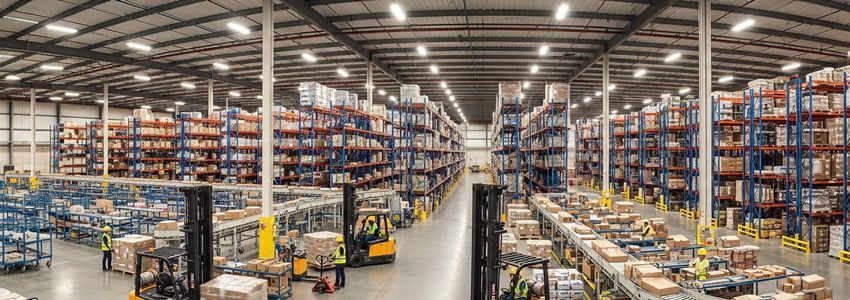
In the fast-paced world of logistics, manufacturing, and warehousing, efficiency is the currency of success. The backbone of this efficiency is your material handling equipment (MHE). From forklifts navigating busy warehouse aisles to complex conveyor systems automating production lines, this machinery is essential for moving goods, reducing manual labor, and keeping your operations running smoothly. However, acquiring this critical equipment often comes with a significant capital expenditure that can strain a company's cash flow. This is where material handling equipment financing becomes a strategic tool for growth.
Material handling equipment financing is a specialized financial product designed to help businesses acquire the necessary machinery without the burden of a large, upfront cash payment. Instead of depleting capital reserves, businesses can spread the cost of the equipment over a set period with predictable monthly payments. This approach not only preserves precious working capital for other critical needs-like payroll, inventory, or marketing-but also allows companies to access the latest, most efficient technology immediately. By leveraging financing, you can improve productivity, enhance safety, and scale your operations to meet growing demand, all while maintaining a healthy financial position.
In This Article
- What Is Material Handling Equipment?
- Why Finance Instead of Buying Outright?
- How Material Handling Equipment Financing Works
- Types of Material Handling Equipment Financing Options
- Who Qualifies for Material Handling Equipment Financing?
- Financing vs. Leasing vs. Traditional Bank Loans
- How Crestmont Capital Streamlines Your Financing
- Real-World Scenarios: MHE Financing in Action
- Your Next Steps to Acquiring Essential Equipment
- Frequently Asked Questions
- Conclusion: Powering Your Business Forward
What Is Material Handling Equipment?
Material Handling Equipment (MHE) encompasses a broad range of machinery, vehicles, tools, and storage units used for moving, storing, controlling, and protecting materials, goods, and products throughout the processes of manufacturing, distribution, consumption, and disposal. The primary goal of MHE is to improve efficiency, increase safety, and reduce the costs associated with handling physical goods. The equipment can be categorized into several major groups, each serving a specific function within the supply chain. Understanding these categories is crucial when considering which assets to acquire through material handling equipment financing.
Transport Equipment
This is perhaps the most recognized category of MHE. Transport equipment is used to move materials from one location to another within a facility or between locations. The efficiency of your entire operation often hinges on the reliability and capability of your transport equipment.
- Forklifts: These are the workhorses of most warehouses and manufacturing plants. Forklifts are industrial trucks used to lift and move materials over short distances. They come in various types, including counterbalance forklifts for general use, reach trucks for high-level racking, and pallet jacks for ground-level transport. Investing in the right fleet of forklifts can dramatically increase productivity, and forklift financing is one of the most common forms of MHE financing.
- Conveyor Systems: Conveyors are essential for automating the movement of goods along a fixed path. They are prevalent in assembly lines, packaging centers, and large distribution hubs. Types include belt conveyors, roller conveyors, and overhead conveyors. They significantly reduce manual labor and the risk of injury while increasing throughput.
- Cranes: For heavy-duty lifting, cranes are indispensable. Overhead cranes (bridge cranes), gantry cranes, and jib cranes are used in manufacturing, shipping yards, and construction to lift and move extremely heavy loads that are beyond the capacity of forklifts.
- Automated Guided Vehicles (AGVs) and Autonomous Mobile Robots (AMRs): These represent the cutting edge of material handling technology. AGVs follow predetermined paths, while AMRs can navigate environments more dynamically. They are used to transport materials automatically, reducing reliance on human operators and improving accuracy.
Positioning Equipment
Positioning equipment is used to handle material at a single location. Its purpose is to position, orient, and manipulate items to make them more accessible for workers or subsequent handling, thereby improving ergonomics and efficiency.
- Lift Tables and Work Positioners: These devices raise, lower, and tilt materials to an optimal height and angle for a worker. This reduces physical strain, minimizes the risk of back injuries, and can speed up tasks like assembly or inspection.
- Hoists and Balancers: These are used for lifting and lowering loads, often in conjunction with cranes or other support structures. They provide precise control over the positioning of heavy items.
Unit Load Formation Equipment
This category includes equipment used to restrict materials so that they maintain their integrity when handled as a single load. Proper unit load formation is key to efficient transport and storage.
- Palletizers: These machines automatically stack cases or products onto a pallet in a predetermined pattern. Robotic palletizers offer high speed and flexibility for various product types.
- Stretch Wrap Machines: Once a pallet is loaded, a stretch wrap machine tightly wraps it in plastic film to secure the load for transport and protect it from damage and dust.
Storage and Retrieval Equipment
Effective use of vertical space is a hallmark of a modern warehouse. Storage and retrieval equipment is designed to maximize storage density and provide easy access to inventory.
- Racking Systems: This includes selective pallet racks, drive-in racks, and cantilever racks. The right racking system depends on the type of product, inventory turnover rate, and the MHE used for transport.
- Automated Storage and Retrieval Systems (AS/RS): An AS/RS is a sophisticated, computer-controlled system that automatically stores and retrieves loads from defined storage locations. According to a report highlighted by Forbes, AS/RS technology can increase storage capacity by up to 85% and improve order picking accuracy to over 99.9%. These systems are a significant investment, making them prime candidates for financing.
- Shelving and Bins: For smaller items and piece-picking operations, industrial shelving and storage bins are fundamental for organization and easy access.
Each piece of this equipment plays a vital role in the operational ecosystem of a business. Whether you're a small business looking to purchase your first forklift or a large corporation implementing a fully automated warehouse, material handling equipment financing provides the financial pathway to acquire these essential assets without compromising your financial stability.
Ready to Upgrade Your Equipment?
Don't let capital constraints hold your business back. Get the material handling equipment you need now with Crestmont Capital's flexible financing solutions.
Apply Now in MinutesWhy Finance Instead of Buying Outright?
The decision to acquire new or used material handling equipment presents a critical financial crossroads for any business owner: pay with cash or use financing? While paying cash might seem like the simplest route, avoiding debt and interest payments, it's often not the most strategic move. Financing offers a host of compelling advantages that can significantly benefit your company's financial health, operational flexibility, and long-term growth trajectory. Let’s explore the key reasons why financing is frequently the superior choice for acquiring essential MHE.
Preservation of Working Capital
Cash is the lifeblood of any business. It covers day-to-day operating expenses like payroll, rent, inventory, and marketing. A large, outright purchase of expensive equipment, such as a fleet of new forklifts or a conveyor system, can instantly drain a significant portion of your liquid capital. This can leave your business vulnerable to unexpected expenses or unable to capitalize on time-sensitive opportunities, such as a bulk inventory discount or a strategic marketing campaign.
By opting for equipment financing, you convert a massive one-time expense into a series of manageable, predictable monthly payments. This preserves your cash reserves, ensuring you have the working capital necessary to run and grow your business effectively. This financial cushion provides stability and agility, which are invaluable in today's dynamic market.
Significant Tax Advantages
One of the most powerful financial incentives for financing equipment is the potential for substantial tax deductions. The IRS tax code, particularly Section 179, is designed to encourage businesses to invest in themselves by purchasing equipment.
Under Section 179, businesses may be able to deduct the full purchase price of qualifying new or used equipment in the year it is placed into service, rather than depreciating the cost over several years. For 2024, the deduction limit is $1,220,000. This can lead to a significant reduction in your company's tax liability for the year. When you finance the equipment, you can often take this full deduction while still only having made a few monthly payments. This creates a powerful cash-flow advantage. It's crucial to consult with a tax professional to understand how Section 179 and other depreciation rules apply to your specific situation, as explained by resources from the Small Business Administration (SBA).
Industry Insight: The U.S. manufacturing sector, a primary user of material handling equipment, shipped goods worth over $6 trillion in recent years, according to the U.S. Census Bureau. Maintaining competitiveness in this massive industry requires continuous investment in modern, efficient equipment, making financing a critical growth strategy.
Flexibility and Technology Upgrades
The world of material handling is constantly evolving. New technologies in automation, robotics, and software integration emerge regularly, offering greater efficiency, safety, and productivity. When you purchase equipment outright, you are locked into that technology for its entire useful life. If a newer, more efficient model comes out, you're faced with the choice of either sticking with outdated equipment or absorbing the loss on selling the old machinery to fund a new purchase.
Financing, particularly through leasing options, provides incredible flexibility. Lease agreements can be structured with shorter terms, allowing you to upgrade your equipment every few years. This ensures your facility is always equipped with the latest technology, keeping you ahead of the competition. At the end of a lease term, you often have several options: purchase the equipment, return it and upgrade to a new model, or extend the lease. This adaptability is a significant strategic advantage that a cash purchase simply cannot offer.
Predictable Budgeting and Improved Cash Flow Management
Financing structures your equipment costs into a fixed monthly payment. This predictability makes budgeting and financial forecasting much simpler and more accurate. You know exactly how much you need to allocate to your MHE each month, eliminating the financial uncertainty that comes with planning for large, intermittent capital outlays. This stable expense structure allows for better management of your overall cash flow, enabling you to allocate resources more effectively across all areas of your business.
How Material Handling Equipment Financing Works
Navigating the financing process for the first time can seem daunting, but reputable lenders like Crestmont Capital have streamlined the journey to make it fast, transparent, and straightforward. The core idea is simple: a lender provides the funds to acquire the equipment, and your business repays the lender over a predetermined term with regular payments. While specifics can vary slightly between lenders, the fundamental steps are consistent. Here’s a breakdown of how material handling equipment financing typically works from start to finish.
The Financing Process: A Step-by-Step Guide
Submit a Simple Application
The process begins with a quick and easy online application. You'll provide basic information about your business, such as your company name, time in business, and estimated annual revenue, along with details about the equipment you wish to finance.
Review Your Financing Options
After a swift review of your application, a financing specialist will contact you to discuss your specific needs and present you with tailored financing options. This includes different loan terms, payment structures, and lease types that best fit your budget and business goals.
Provide Documentation
Once you select an option, you'll provide the necessary documentation. For many transactions, this is minimal-often just the equipment invoice from the vendor of your choice and a signed financing agreement. For larger amounts, a few months of bank statements may be required.
Funding and Equipment Acquisition
With the paperwork complete, the lender pays the equipment vendor directly. The vendor then releases the equipment to you for delivery and installation. You get the machinery you need to start generating revenue immediately, and your predictable monthly payments begin.
The entire process, especially with a dedicated equipment financing company, is designed for speed and convenience. Unlike traditional bank loans that can take weeks or even months and involve mountains of paperwork, specialized lenders can often provide approvals in hours and funding in as little as 24-48 hours. This allows you to react quickly to business needs, replacing a broken-down forklift or scaling up for a new contract without delay.
Types of Material Handling Equipment Financing Options
When you decide to finance MHE, you'll encounter several different financial products. Each is structured differently to meet various business needs regarding ownership, cash flow, and tax strategy. Understanding these options is key to selecting the one that aligns perfectly with your company's financial goals. The two primary categories are equipment loans and equipment leases, with several variations within leasing.
Equipment Finance Agreement (EFA)
An Equipment Finance Agreement, often simply called an equipment loan, is a straightforward financing option. It functions much like a traditional loan for a car or home.
- How it Works: The lender provides you with the funds to purchase the material handling equipment. You are the owner of the equipment from day one, and the lender holds a security interest (lien) on it until the loan is fully paid off.
- Ownership: You own the equipment. Once the final payment is made, the lien is released, and you own the asset free and clear.
- Best For: Businesses that plan to use the equipment for its entire useful life and want to build equity in their assets. This is ideal for long-lasting, durable machinery like heavy-duty forklifts, cranes, or permanent conveyor systems.
- Tax Implications: Because you are the owner, you can typically take advantage of Section 179 deductions and bonus depreciation, potentially writing off the full cost of the equipment in the first year. You can also deduct the interest paid on the loan as a business expense.
Equipment Leasing
Equipment leasing is essentially a long-term rental agreement. The finance company (the lessor) purchases the equipment and rents it to your business (the lessee) for a specific period. At the end of the lease term, you have several options depending on the type of lease.
$1 Buyout Lease (or Capital Lease)
- How it Works: This lease is structured to function very similarly to an EFA. You make regular lease payments over the term, and at the end of the term, you have the option to purchase the equipment for a nominal amount, typically $1.
- Ownership: For all practical and tax purposes, this is treated as a purchase. You are building equity with each payment and will own the equipment at the end.
- Best For: Companies that want the benefits of ownership and Section 179 deductions but prefer the specific payment structure of a lease. It provides the same end result as an equipment loan.
Fair Market Value (FMV) Lease (or Operating Lease)
- How it Works: An FMV lease offers the lowest monthly payments because you are only paying for the depreciation of the equipment during the lease term, not its full value. At the end of the term, you have three main options: 1) Return the equipment to the lessor. 2) Purchase the equipment for its then-current Fair Market Value. 3) Renew the lease.
- Ownership: The lessor retains ownership of the equipment throughout the term. You are simply paying to use it.
- Best For: Businesses that want to maintain a fleet of the latest technology and avoid the risks of obsolescence. It's perfect for equipment with a high rate of technological advancement, like robotic systems or advanced scanners. It's also ideal for companies that need lower monthly payments and prefer to treat the expense as an operating cost rather than a capital expenditure.
- Tax Implications: Lease payments are typically treated as an operating expense and can be fully deducted from your business income, which can simplify accounting.
Working Capital Loans
While not a direct form of equipment financing, a working capital loan can sometimes be used to acquire less expensive material handling equipment. This is a more flexible type of financing that provides a lump sum of cash to be used for various business needs.
- How it Works: You receive a sum of cash that can be used for anything from inventory purchases to equipment. These are often shorter-term loans.
- Best For: Purchasing smaller, less expensive MHE like pallet jacks, hand trucks, or used equipment where a dedicated equipment loan might not be necessary. It's also an option if you need to cover soft costs like training and installation in addition to the equipment itself.
Choosing the right financing structure is a critical decision. An EFA or $1 Buyout Lease is best for long-term ownership, while an FMV Lease offers flexibility and lower payments. A knowledgeable financing partner like Crestmont Capital can walk you through the pros and cons of each option to help you make the most strategic choice for your business.
Who Qualifies for Material Handling Equipment Financing?
One of the significant advantages of working with a specialized equipment financing company over a traditional bank is the flexibility in qualification criteria. While banks often have rigid, conservative lending standards, alternative lenders like Crestmont Capital are designed to serve a broader spectrum of businesses, from established corporations to growing startups. The focus is on the overall health and potential of your business, not just a single metric. Here are the key factors that lenders typically consider when evaluating an application for material handling equipment financing.
Credit Score
Your personal and business credit scores are important indicators of your financial history and reliability. However, a perfect score is not always required.
- Prime Borrowers: Businesses with strong credit scores (typically 680+) will qualify for the best rates and most favorable terms. They represent a lower risk to the lender.
- Near-Prime and Subprime Borrowers: Many specialized lenders have programs for businesses with less-than-perfect credit. If your business has a solid revenue stream and a clear path to profitability, you can often still secure financing, though the rates may be slightly higher to compensate for the increased risk. The equipment itself serves as collateral, which provides security for the lender and opens up opportunities for businesses with lower credit scores.
Time in Business
The length of time your business has been operational is another key factor.
- Established Businesses (2+ years): Companies with a proven track record of at least two years in business are generally viewed as stable and are more likely to be approved quickly with minimal documentation. Their history provides a reliable indicator of future performance.
- Startups and New Businesses (Under 2 years): Securing financing can be more challenging for startups, but it is far from impossible. Many lenders, including Crestmont Capital, have specific programs designed for new businesses. In these cases, the owner's personal credit history, a solid business plan, and industry experience play a more significant role. The application may require more detailed documentation, but financing is still very accessible.
Market Trend: The push for supply chain resilience has led to increased investment in domestic warehousing and logistics. A CNBC report highlights a "manufacturing boom" in the U.S., which directly translates to a higher demand for efficient material handling equipment to support these new and expanding facilities.
Annual Revenue
Lenders need to see that your business generates enough revenue to comfortably handle the additional monthly payment for the new equipment. There isn't a single magic number, as the requirement is relative to the size of the financing request. A business seeking to finance a $15,000 pallet stacker will have a lower revenue requirement than a company financing a $500,000 automated conveyor system. Lenders will typically review recent bank statements or financial statements to verify cash flow and ensure the loan is affordable and sustainable for your business.
Equipment Type and Cost
The equipment itself plays a role in the qualification process.
- Collateral Value: MHE is an excellent form of collateral because it has a strong resale value. This inherent value reduces the lender's risk, making it easier to approve financing compared to unsecured loans.
- New vs. Used: Financing is available for both new and used equipment. Financing used equipment can be a cost-effective strategy, and lenders are very comfortable with it, provided the equipment is in good working condition and sourced from a reputable dealer.
- Vendor Choice: You are typically free to choose the equipment vendor of your choice, whether it's a national manufacturer, a local dealer, or a private seller. The lender simply needs an official invoice to process the funding.
The bottom line is that material handling equipment financing is designed to be accessible. If you have a legitimate business need for the equipment and a reasonable ability to make the payments, there is likely a financing solution available for you.
Financing vs. Leasing vs. Traditional Bank Loans
When seeking funds for material handling equipment, you have several avenues to consider. The three most common are specialized equipment financing (including loans and capital leases), operating leases (like an FMV lease), and traditional loans from a commercial bank. Each has distinct features, and the best choice depends on your business's specific priorities, such as speed, flexibility, cost, and ownership goals.
| Feature | MHE Financing (Specialty Lender) | Equipment Leasing (FMV Lease) | Traditional Bank Loan |
|---|---|---|---|
| Approval Speed | Very Fast (Hours to 1-2 days) | Very Fast (Hours to 1-2 days) | Slow (Weeks to Months) |
| Documentation | Minimal (Application, invoice, maybe bank statements) | Minimal (Application, invoice) | Extensive (Business plans, tax returns, financials) |
| Ownership | You own the equipment from day one. | Lender owns the equipment; you have usage rights. | You own the equipment from day one. |
| Down Payment | Often 0% down or first/last month's payment. | Typically first month's payment. | Often requires a significant down payment (10-20%). |
| Monthly Payment | Moderate; based on full equipment cost. | Lowest; based on depreciation during the term. | Low to Moderate; depends on rate and term. |
| End of Term | You own the equipment free and clear. | Options: Return, Purchase at FMV, or Renew. | You own the equipment free and clear. |
| Flexibility | High. Flexible terms and payment structures. | Highest. Easy to upgrade to new technology. | Low. Rigid terms and covenants. |
| Tax Benefit | Section 179 / Bonus Depreciation. | Payments are often 100% deductible as an operating expense. | Section 179 / Bonus Depreciation. |
| Credit Requirements | Flexible. Programs for various credit profiles. | Flexible. Focus on business viability. | Strict. Typically requires excellent credit and history. |
Key Takeaways from the Comparison
Choose Specialized MHE Financing/Leasing if:
- Speed is critical. You need the equipment now and cannot afford to wait weeks for a bank's decision.
- You want to preserve cash. The low-to-no down payment options keep your working capital free.
- You value flexibility. You need tailored payment plans or want the option to upgrade technology easily (with an FMV lease).
- Your credit is not perfect or your business is new. Specialty lenders are more willing to work with a wider range of business profiles.
Consider a Traditional Bank Loan if:
- You are not in a hurry. You have the time to go through a lengthy application and underwriting process.
- You have a long-standing, strong relationship with your bank.
- You have pristine business and personal credit and extensive financial documentation.
- You are seeking the absolute lowest interest rate and are willing to meet strict requirements and provide a significant down payment to get it.
For the vast majority of businesses, the speed, flexibility, and accessibility of working with a specialized lender like Crestmont Capital make it the superior choice for acquiring essential material handling equipment. It allows you to get the assets you need to grow your business on your timeline, not the bank's.
How Crestmont Capital Streamlines Your Financing
In a competitive market, you need a financing partner who understands the urgency and unique challenges of your industry. Crestmont Capital isn't just a lender; we are a strategic partner dedicated to helping your business acquire the material handling equipment necessary for growth and efficiency. Our entire process is built around three core principles: speed, simplicity, and expert guidance.
We've stripped away the bureaucracy and red tape common in traditional lending. Our simple online application takes only a few minutes to complete. From there, our team of dedicated financing specialists works quickly to understand your needs and secure an approval, often within a few hours. We know that when a critical piece of equipment fails or a new opportunity arises, you don't have time to wait. Our rapid funding process-often in as little as 24 hours-ensures you get your equipment delivered and operational with minimal downtime.
Furthermore, we believe in a consultative approach. We don't offer a one-size-fits-all solution. Our experts take the time to learn about your business, your cash flow cycle, and your long-term goals. We'll explain the differences between an EFA, a $1 Buyout Lease, and an FMV Lease in clear, simple terms, helping you select the structure that provides the maximum financial benefit for your company. With a vast network of lending partners and programs tailored for businesses of all sizes and credit profiles, we can find a solution that works for you. From your first forklift to a fully automated warehouse system, Crestmont Capital is here to power your progress.
Experience the Crestmont Capital Difference
Fast approvals, flexible terms, and expert advice. Let us help you secure the financing you need to take your operations to the next level.
Learn More About Our SolutionsReal-World Scenarios: MHE Financing in Action
Theory is helpful, but seeing how material handling equipment financing works in practice provides the clearest picture of its value. Here are a few real-world scenarios illustrating how different businesses can leverage financing to solve problems and seize opportunities.
Scenario 1: The Expanding Distribution Center
The Business: "SwiftLogistics," a third-party logistics (3PL) company, just landed a major new client. To service the contract, they need to increase their throughput by 50%. This requires three new high-reach forklifts and 500 feet of roller conveyor system, a total investment of $180,000.
The Challenge: While profitable, SwiftLogistics doesn't have $180,000 in free cash. Tying up that much capital would prevent them from hiring the additional warehouse staff needed to manage the new contract.
The Solution: The owner applies for material handling equipment financing with Crestmont Capital. They are approved for a 60-month Equipment Finance Agreement (EFA). This allows them to acquire all the necessary equipment with zero money down. Their monthly payment is a manageable $3,600.
The Outcome: SwiftLogistics gets the equipment installed within a week. They use their preserved cash to hire and train five new employees. The new machinery allows them to service the contract efficiently from day one, and the revenue generated from the new client more than covers the monthly financing payment. They also work with their accountant to take a significant Section 179 deduction, lowering their tax bill for the year.
Scenario 2: The Manufacturing Plant with Aging Equipment
The Business: "Precision Parts Inc." is a metal fabrication company that has been using the same two forklifts for over 15 years. One of them is constantly breaking down, causing production delays and costly repairs. A new, more efficient electric forklift would cost $45,000.
The Challenge: The owner is hesitant to spend a large sum on a new forklift when they are also planning to upgrade a CNC machine next year. They are also concerned about being locked into this specific forklift model for another decade.
The Solution: They opt for a 36-month Fair Market Value (FMV) lease. The monthly payment is significantly lower than a loan payment because they are only paying for the machine's use over three years.
The Outcome: The new electric forklift eliminates downtime and reduces their fuel and maintenance costs. The low monthly lease payment fits easily into their operating budget. In three years, they can simply return the forklift and lease a brand-new model with the latest safety and efficiency features, ensuring their plant remains modern and productive. This flexibility allows them to save their capital for the strategic CNC machine upgrade.
Scenario 3: The Startup Brewery
The Business: "CraftKettle Brewing," a new brewery, has been in business for 18 months. They are growing rapidly and need to move from manual keg handling to a more efficient system. They need a used pallet stacker and a semi-automated pallet wrapper, costing a total of $20,000.
The Challenge: As a relatively new business, they have been turned down by their local bank for a loan due to their limited operating history.
The Solution: The owner, who has a good personal credit score, applies to Crestmont Capital's startup financing program. Based on their six months of business bank statements showing consistent revenue and the owner's credit, they are approved for financing on the used equipment.
The Outcome: CraftKettle Brewing gets the equipment they need to streamline their packaging and distribution process. This allows them to fulfill larger orders for local distributors, accelerating their growth. The financing provides a critical stepping stone that their bank was unwilling to offer, proving essential to their early-stage scaling.
What's Your Growth Story?
Every business has a unique need. We create unique financing solutions to match. Let's write your success story together.
Get Your Free Quote TodayYour Next Steps to Acquiring Essential Equipment
Feeling empowered with knowledge is the first step. Now, it's time to take action. Acquiring the material handling equipment your business needs is a straightforward process when you break it down. Follow these steps to move from planning to production.
Identify Your Equipment Needs
Assess your current operations to pinpoint bottlenecks and inefficiencies. Determine the exact type of MHE that will solve these problems. Research different models and brands to find the best fit for your application and budget. Get a formal quote or invoice from your preferred vendor-you'll need this for the financing application.
Gather Basic Financial Information
Prepare for the application by having key information ready. This typically includes your business's legal name, address, tax ID number (EIN), time in business, and recent revenue figures. For larger financing amounts, having the last 3-6 months of your business bank statements on hand will expedite the process.
Submit Your Application
Complete our secure, one-page online application. It's designed to be quick and easy, taking only a few minutes. This initial step provides us with the information we need to start finding the best financing options for you, with no obligation.
Consult with a Financing Specialist
Once your application is received, a Crestmont Capital financing expert will reach out to you. This is your opportunity to discuss your specific needs, ask questions, and review the tailored financing terms we've prepared. We'll ensure you understand all your options so you can make an informed decision that benefits your business.
Frequently Asked Questions
What is the minimum credit score required for material handling equipment financing?
While a higher credit score (typically 650+) will result in better rates and terms, many specialized lenders, including Crestmont Capital, have programs for a wide range of credit profiles. We often have solutions for business owners with credit scores in the low 600s or even high 500s, especially if the business shows strong cash flow. The equipment itself serves as strong collateral, which allows for more flexibility than unsecured loans. We look at the overall health of your business, not just a single number.
Can I finance used material handling equipment?
Absolutely. Financing is available for both new and used equipment. Opting for used MHE can be a very cost-effective strategy, allowing you to acquire the assets you need at a lower price point. Lenders are very comfortable financing used equipment, provided it is in good working order and has a reasonable useful life remaining. We can finance equipment purchased from a certified dealer or a private seller.
How quickly can I get approved and receive funding?
The process with a specialized lender is designed for speed. After submitting a simple online application, you can often receive an approval within a few hours. Once you've selected your terms and provided the necessary documents (like the equipment invoice), funding can happen in as little as 24 to 48 hours. This is a stark contrast to traditional bank loans, which can take weeks or months to be approved and funded.
What are the typical interest rates for MHE financing?
Interest rates vary based on several factors, including your credit score, time in business, the amount being financed, and the length of the term. Businesses with strong credit and a long history can expect very competitive, low rates. Businesses that are newer or have challenged credit will see higher rates. A financing specialist can provide you with a precise quote based on your specific situation with no obligation.
Are there any down payment requirements?
Many material handling equipment financing programs are structured to require little to no money down. This is a major advantage, as it allows you to preserve your working capital. Some programs may ask for the first and last month's payment upfront, but 100% financing is very common, especially for well-qualified borrowers. This means you can get the equipment you need and have it start generating revenue before your first full payment is due.
What is the difference between an equipment loan and a lease?
The primary difference is ownership. With an equipment loan (or a $1 buyout lease), you are the owner of the equipment from the start and build equity with each payment. At the end of the term, you own it free and clear. With a true lease (like an FMV lease), the lender owns the equipment, and you pay to use it for a set term. At the end, you can return it, buy it, or renew the lease. Loans are for businesses that want to own assets long-term, while leases are for those who prioritize lower payments and the ability to upgrade technology.
Does financing cover "soft costs" like delivery, installation, and training?
Yes, in many cases, financing can be structured to include soft costs. These are the ancillary expenses associated with acquiring and implementing new equipment. Rolling these costs into the total financing package simplifies the process by consolidating everything into one easy monthly payment. This prevents you from having to pay for these significant expenses out-of-pocket.
What is Section 179 and how does it apply to financing?
Section 179 of the IRS tax code is a powerful incentive for businesses. It allows you to deduct the full purchase price of qualifying equipment in the year it's placed in service, rather than depreciating it over many years. When you finance equipment with an EFA or a capital lease, you can still take this full deduction, even if you've only made a few payments. This can lead to significant tax savings that can improve your cash flow for the year. Always consult with your tax advisor for details specific to your business.
Can a startup or new business get financing for material handling equipment?
Yes. While traditional banks are often hesitant to lend to businesses with less than two years of history, many specialized lenders have dedicated programs for startups. For these applications, more weight is given to the owner's personal credit history, industry experience, and a well-structured business plan. Getting essential equipment early is critical for growth, and startup financing programs are designed to make that possible.
What happens if I want to pay off my loan early?
This depends on the specific terms of your financing agreement. Some loans have prepayment penalties, while others do not. It's an important question to ask your financing specialist during the review process. Crestmont Capital is transparent about all terms and will ensure you understand the details of your agreement before you sign, including any provisions related to early payoff.
What types of material handling equipment can be financed?
Virtually any type of new or used material handling equipment can be financed. This includes, but is not limited to: forklifts of all types, conveyor systems, pallet jacks, cranes, hoists, automated guided vehicles (AGVs), automated storage and retrieval systems (AS/RS), palletizers, stretch wrappers, industrial shelving, and more. If it's a tangible asset used in your business operations, it can likely be financed.
Do I have to buy from a specific dealer?
No. One of the great flexibilities of working with a lender like Crestmont Capital is that you are free to choose your own vendor. You can purchase your equipment from any reputable national manufacturer, local dealer, or even through a private party sale. Once you've chosen your equipment and have an invoice, we handle the payment directly with the seller, making the process seamless for you.
What documents are typically required for an application?
For financing amounts under $250,000, the process is often very simple. You'll typically only need to provide a completed one-page application and a copy of the equipment invoice. For larger transactions or for businesses with more complex financial situations, you may be asked to provide the last 3-6 months of business bank statements to verify revenue.
How long are the typical repayment terms?
Repayment terms are flexible and can be tailored to fit your budget. Standard terms for material handling equipment financing usually range from 24 to 72 months (2 to 6 years). Shorter terms mean higher monthly payments but less total interest paid. Longer terms result in a lower, more manageable monthly payment, which can be beneficial for cash flow. We can model different term lengths to help you find the perfect balance for your business.
What happens at the end of a Fair Market Value (FMV) lease?
At the conclusion of an FMV lease term, you have several options, providing maximum flexibility. You can: 1) Purchase the equipment for its current Fair Market Value, which is determined at that time. 2) Return the equipment to the leasing company with no further obligation. 3) Renew or extend the lease, often at a reduced monthly payment. This flexibility is ideal for businesses that want to avoid equipment obsolescence and always have access to modern technology.
Ready to Upgrade Your Material Handling Operations?
Get fast, flexible equipment financing from the #1 business lender in the U.S. No obligation - apply in minutes.
Apply Now →Conclusion: Powering Your Business Forward
In today's competitive landscape, operational efficiency is not a luxury-it's a necessity. Your material handling equipment is the engine of that efficiency, directly impacting your productivity, safety, and profitability. Delaying essential equipment upgrades or acquisitions due to capital constraints is a strategic error that can put you at a significant disadvantage.
Material handling equipment financing provides a powerful, intelligent solution. It transforms a prohibitive capital expense into a manageable operating cost, preserving your cash for growth while giving you immediate access to the tools you need to succeed. Whether through a loan that builds equity or a lease that offers maximum flexibility, financing empowers you to modernize your operations, scale to meet demand, and improve your bottom line.
Don't let an outdated or insufficient equipment fleet hold your business back. By partnering with a dedicated financing expert like Crestmont Capital, you can navigate the process with confidence, securing a solution that is perfectly aligned with your financial and operational goals. Take control of your growth trajectory and invest in the equipment that will power your business into the future.
Disclaimer: The information provided in this article is for general educational purposes only and is not financial, legal, or tax advice. Funding terms, qualifications, and product availability may vary and are subject to change without notice. Crestmont Capital does not guarantee approval, rates, or specific outcomes. For personalized information about your business funding options, contact our team directly.