
 (800) 949-0401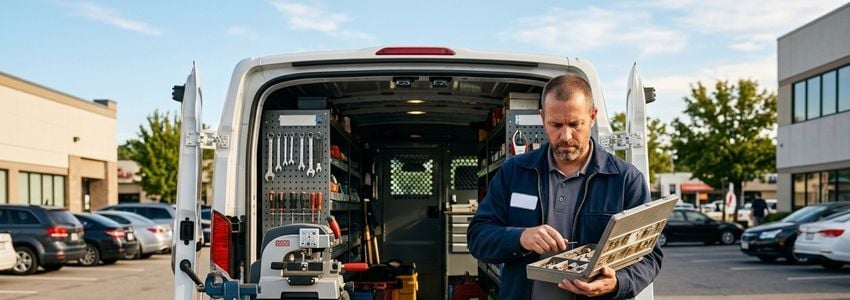
Locksmith Van Equipment Financing: The Complete Guide for Business Owners
Locksmith van equipment financing gives mobile locksmiths and security professionals a way to build out a fully equipped service vehicle without draining cash reserves. A properly outfitted locksmith van, complete with key cutting machines, transponder programming tools, lock hardware inventory, and secure storage, can easily run $15,000 to $60,000 once the vehicle itself is factored in. Financing spreads that cost over manageable monthly payments so the van starts generating service calls and revenue almost immediately.
Whether you are a solo locksmith upgrading from a trunk full of tools to a proper mobile shop, or an established locksmith company adding a second or third van to the fleet, this guide walks through exactly how locksmith van equipment financing works, what it costs, how to qualify, and how to choose the right financing structure for your business. By the end, you will know what to ask a lender and how to put together the strongest possible application.
In This Article
What Is Locksmith Van Equipment Financing?
Locksmith van equipment financing is a business loan or lease structured to help locksmiths and security companies purchase or upgrade the vehicle and equipment they use to run mobile service calls. This typically covers the van itself, the interior racking and storage systems, key cutting and duplication machines, transponder and key fob programming units, lock hardware inventory, and the electrical or generator systems that keep everything running on-site.
Rather than paying cash upfront or slowly building out a van piece by piece over several years, a locksmith works with a lender to structure monthly payments that align with the revenue new service capacity is expected to generate. Because the van and its equipment have resale value, they typically serve as collateral, which is one reason locksmith van equipment financing tends to carry more favorable terms than an unsecured business loan.
This type of financing is not limited to large locksmith companies with dozens of vans on the road. Independent locksmiths just getting started, family-owned security businesses, and companies expanding into commercial and automotive locksmith services all regularly use equipment financing to add mobile capacity without disrupting cash flow needed for payroll, inventory, and day-to-day operations.
Ready to Outfit Your Locksmith Van?
Get fast, flexible equipment financing from the #1 business lender in the U.S. No obligation, apply in minutes.
Apply Now →Key Benefits of Financing a Locksmith Van
Financing a locksmith van and its equipment offers several advantages over paying cash or gradually assembling a mobile shop over time.
- Preserve working capital. Keep cash available for payroll, key blank inventory, and everyday operating costs instead of tying it up in one vehicle build-out.
- Start earning immediately. A fully outfitted van can begin generating service call revenue and emergency lockout fees the day it hits the road, often covering the monthly payment well before the loan matures.
- Match payments to revenue. Structured monthly payments align with the income the new van produces, rather than requiring a large upfront outlay before a single job is booked.
- Access newer technology. Financing makes it realistic to buy current-generation key cutting and transponder programming equipment instead of settling for outdated tools that cannot handle newer vehicle and lock systems.
- Scale the fleet faster. Financing lets an established locksmith company add a second or third van in the same year demand justifies it, rather than waiting years to self-fund each new vehicle.
- Protect your credit lines. Using equipment-specific financing instead of a business credit card or line of credit keeps those revolving accounts open for other needs.
Key Stat: According to U.S. Census Bureau data, the services and repair industry that includes locksmiths continues to see steady small business formation, and mobile service capacity is consistently cited as a key driver of revenue growth for owner-operated trade businesses.
How Locksmith Van Equipment Financing Works
The mechanics of locksmith van equipment financing are similar to financing any other piece of commercial equipment, though a few details are specific to locksmith vans because of the combination of a vehicle plus specialized tools and inventory.
- Step 1: Get quotes. Get a written quote for the van itself (new or used), plus a separate itemized quote from your equipment and racking supplier for the interior build-out, key machines, and programming tools.
- Step 2: Apply for financing. Submit a short application with basic business information, the vehicle and equipment quotes, and financial documentation such as recent bank statements.
- Step 3: Underwriting and approval. A lender reviews time in business, credit profile, and cash flow, then issues an approval with proposed rate, term, and monthly payment.
- Step 4: Sign and fund. Once you accept the terms, the lender typically funds the vehicle purchase and equipment vendor directly, and build-out installation is scheduled.
- Step 5: Build-out and first payment. Racking, shelving, key machines, and programming tools are installed, security systems are wired in, and your first payment usually begins 30 to 45 days after funding, giving you time to get the van fully operational.
Because a locksmith van combines a depreciating vehicle with specialized equipment that has a smaller resale market, some lenders structure the deal as two components: a vehicle loan for the van chassis and a separate equipment loan for the interior build-out and tools. Other lenders will finance the entire package as one loan if the total project cost is itemized clearly. Either approach can work, but knowing which structure a lender prefers before you apply helps you gather the right documentation the first time.
Timing matters here as well. Van manufacturers and equipment suppliers frequently run promotional pricing tied to model-year changeovers or end-of-quarter sales targets. Having financing pre-approved before you start shopping gives you the flexibility to move quickly when the right vehicle or equipment package appears, and it gives you a firm budget number to compare against multiple quotes rather than negotiating price before knowing your monthly payment.
What Goes Into a Locksmith Van and What It Costs
Not every locksmith van needs the same build-out, and the equipment you choose drives both the price tag and the financing structure that makes sense. Understanding these categories before requesting quotes will help you finance the right amount, not too little and not more than your business actually needs.
- The van itself. A new cargo van (Ford Transit, Mercedes Sprinter, RAM ProMaster) typically runs $35,000 to $55,000, while a reliable used cargo van in good condition can be found in the $18,000 to $30,000 range.
- Interior racking and shelving. Custom shelving, drawer units, and secure lock-box storage for a locksmith van generally costs $3,000 to $8,000 installed, depending on how extensively the interior is customized.
- Key cutting and duplication machines. Mechanical and computerized key cutting machines suitable for mobile use range from $1,500 for basic units to $8,000 or more for high-volume electronic cutting systems.
- Transponder and key fob programming equipment. Modern automotive key programming tools that handle transponder chips, smart keys, and remote fobs typically cost $2,000 to $10,000 depending on vehicle coverage and update subscriptions.
- Lock hardware and inventory. Stocking a van with common residential, commercial, and automotive lock hardware, pins, and cylinders generally requires $2,000 to $6,000 in initial inventory investment.
- Generator and electrical systems. A quiet inverter generator or upfitted electrical system to power equipment on remote job sites runs $800 to $3,000 depending on capacity.
By the Numbers
Locksmith Van Equipment Financing — Key Figures
$15K-$60K
Typical full van build-out cost range
24-72 Mo
Common financing term lengths
1-2 Days
Average time to funding decision
4.4K+
Monthly searches for mobile locksmith services (national)
Who Locksmith Van Equipment Financing Is Best For
Locksmith van equipment financing tends to make the most sense for a specific set of business owners, though the details vary by business stage and specialty.
- Solo locksmiths upgrading from a trunk-based operation who need a proper mobile shop to take on higher-value commercial and automotive jobs that require more equipment than a car trunk can hold.
- Established locksmith companies adding fleet capacity that want to add a second, third, or fourth van as call volume grows beyond what the current fleet can handle.
- Automotive locksmith specialists who need to finance transponder programming equipment capable of handling a wide range of makes and models, which tends to be the most expensive category of locksmith equipment.
- Commercial and access control locksmiths expanding into electronic lock installation and access control systems, which often requires additional specialized tools beyond traditional mechanical locksmithing.
- Security companies diversifying into locksmith services that already run vans for alarm or camera installation and want to add locksmith capability to the same vehicles or fleet.
If your projected monthly service call revenue, emergency lockout fees, and key duplication income cover the projected monthly payment with room to spare, financing typically makes more sense than waiting years to save up the full build-out cost in cash.
Financing Options Compared
Locksmiths generally choose between three structures when financing a van and its equipment: an equipment/vehicle loan, an equipment lease, and a business line of credit. Each has trade-offs worth understanding before you sign anything.
| Feature | Equipment/Vehicle Loan | Equipment Lease | Business Line of Credit |
|---|---|---|---|
| Ownership | You own the van and equipment from day one | Lender owns equipment; option to buy at term end | You own it outright with drawn funds |
| Down payment | Typically 0-20% | Often $0 down | None; draw as needed |
| Best for | Locksmiths planning to keep the van long-term | Companies that upgrade equipment every few years | Locksmiths wanting flexibility across multiple purchases |
| Payment structure | Fixed monthly payment over term | Fixed monthly lease payment | Interest only on amount drawn |
How Crestmont Capital Helps You Finance a Locksmith Van
Crestmont Capital works with locksmiths and security company owners across the country to structure equipment financing that fits their revenue cycle rather than forcing a one-size-fits-all payment plan. Because a locksmith van build-out combines a vehicle with specialized tools and inventory, our underwriting team looks beyond a credit score alone, factoring in time in business, seasonal call volume patterns, and the revenue potential of the added mobile capacity.
We also understand that a locksmith van purchase rarely happens in isolation. Owners often need to finance the commercial van itself alongside the interior racking, key machines, and programming tools, and trying to finance those pieces separately creates unnecessary complexity. Structuring one clean financing package that covers the full project, vehicle and equipment together, tends to be easier to manage and easier to budget around from month one.
If your business needs additional working capital alongside the van purchase, for example to stock initial lock hardware inventory or cover marketing for a new service area, a business line of credit can supplement the equipment financing without adding a second hard credit pull down the road. Locksmiths who have already gone through the process of financing security equipment often find van and equipment financing follows a very similar underwriting path.
Many of our locksmith clients also finance a used van as a more budget-friendly starting point before upgrading to a new vehicle once revenue grows. Our guide to used equipment financing covers how that structure typically works. And if you are still building out your broader business financing strategy, our locksmith business loans guide covers financing options beyond the van alone, including working capital and expansion funding for growing locksmith companies.
Turn Idle Service Calls Into Revenue
Crestmont Capital structures equipment financing around your locksmith business's real cash flow. Apply in minutes, no obligation.
Apply Now →Real-World Scenarios
Scenario 1: The solo locksmith outgrowing a trunk-based setup. A locksmith who had been running jobs out of a sedan trunk for three years financed a used cargo van, interior racking, and a mid-range key cutting machine for a combined $32,000 over 48 months. Within the first two months, the ability to take on commercial rekey jobs, which required carrying far more hardware than a trunk allowed, more than covered the new monthly payment.
Scenario 2: The locksmith company adding a second van. An established residential and commercial locksmith business was turning away same-day emergency calls because its single van was always booked. The owner financed a new cargo van with a full equipment build-out for $58,000 over 60 months. The second van paid for itself within five months purely from emergency lockout calls the first van previously had to decline.
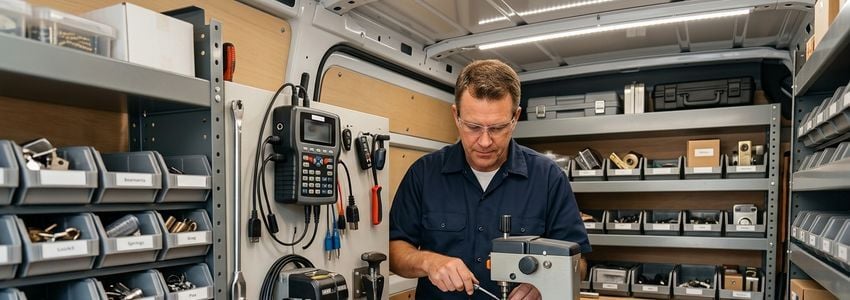
Scenario 3: The automotive locksmith upgrading key programming equipment. An automotive-focused locksmith was losing newer-model key fob jobs to competitors because his programming equipment could not handle late-model vehicles. He financed a current-generation transponder and fob programming system for $9,500 over 36 months, which immediately opened up jobs on vehicle makes he previously had to turn down.
Scenario 4: The security company adding locksmith services. A security camera and alarm installation company wanted to diversify revenue by adding locksmith services to its existing service vans. The company financed key cutting equipment, lock hardware inventory, and interior racking upgrades for its two existing vans for a combined $22,000 over 42 months, turning existing routes into dual-service calls.
Scenario 5: The commercial locksmith expanding into access control. A commercial locksmith specializing in office buildings financed $40,000 in electronic lock installation tools, access control programming equipment, and a van upgrade to carry the additional inventory. The move let the business bid on larger commercial contracts that required both traditional and electronic lock expertise.
Pro Tip: Ask your equipment supplier for a written quote that separates the van build-out, key machines, programming tools, and initial hardware inventory into line items. Lenders can often finance the full project cost, but only if it's itemized clearly on the quote you submit with your application.
How to Qualify for Locksmith Van Equipment Financing
Qualification requirements for locksmith van equipment financing are generally in line with other commercial vehicle and equipment financing, though lenders pay attention to a few specifics given the combination of a vehicle and specialized tools.
- Time in business. Most lenders prefer at least one to two years of operating history, though newer locksmiths with strong owner credit and a detailed business plan can sometimes qualify with a larger down payment.
- Credit profile. A personal credit score in the mid-600s or higher generally opens access to the widest range of rates and terms; scores below that range can still qualify but may see a higher rate or require additional collateral.
- Cash flow documentation. Recent business bank statements (typically three to six months) help lenders confirm the business generates enough consistent revenue to support the new payment.
- Vehicle and equipment quotes. A formal, itemized quote covering the van itself and a separate quote from your equipment supplier for racking, key machines, and programming tools.
- Business licensing. Many states require locksmiths to hold a license or registration; having this documentation ready can speed up underwriting and demonstrates business legitimacy to lenders.
Beyond the core underwriting factors, some lenders will also ask how the additional van or equipment fits into your existing service mix. A locksmith who already handles residential, commercial, and automotive work presents a clearer revenue story than a brand-new operator with no track record. If you fall into the newer-operator category, it can help to outline in your application how you plan to generate business, whether through local advertising, partnerships with property managers, or a listing on locksmith service directories.
The application walkthrough typically looks like this:
Request written, itemized quotes for the van and the equipment build-out separately.
Provide basic business details and recent bank statements.
Compare rate, term, and monthly payment against projected service revenue.
Funds go to the vehicle and equipment vendors, and installation gets scheduled.
Frequently Asked Questions
Stop Turning Away Service Calls
Finance the van and equipment your locksmith business needs to say yes to every job. Apply in minutes.
Apply Now →Next Steps
New or used vehicle, key machines, programming tools, and inventory, based on the services you plan to offer.
Get separate quotes for the vehicle and the equipment build-out.
Have the last three to six months ready to speed up underwriting.
Review the rate, term, and payment against your projected service revenue before signing.
Conclusion
Locksmith van equipment financing turns a five-figure vehicle and equipment build-out into a manageable monthly payment that new service capacity can cover from month one. Whether you are a solo locksmith outgrowing a trunk-based operation, an established company adding fleet capacity, or an automotive specialist upgrading key programming tools, financing lets you build out the van you need now instead of waiting years to save up the full cost. The key is matching the right vehicle and equipment package to your business's actual service plans and projected revenue, then working with a lender who understands the locksmith and security trade well enough to structure terms that fit.
According to Forbes Advisor coverage of small business equipment financing trends, structured equipment loans remain one of the most common ways growth-focused trade businesses fund major vehicle and tool purchases without disrupting operating cash flow. The U.S. Small Business Administration similarly notes that equipment financing is one of the most accessible funding paths for established small businesses looking to add revenue-generating capacity without taking on unsecured debt.
Disclaimer: The information provided in this article is for general educational purposes only and is not financial, legal, or tax advice. Funding terms, qualifications, and product availability may vary and are subject to change without notice. Crestmont Capital does not guarantee approval, rates, or specific outcomes. For personalized information about your business funding options, contact our team directly.








