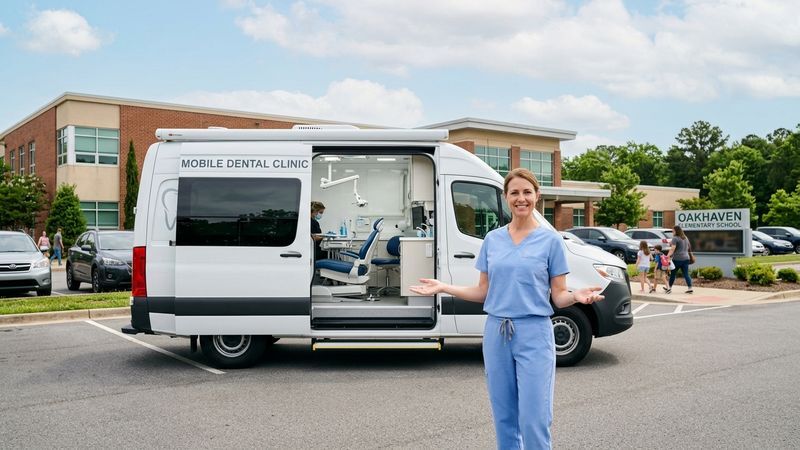
Private schools operate in a competitive environment where exceptional facilities, modern technology, and well-maintained campuses are not luxuries - they are expectations. Whether your institution is planning to build a new science wing, outfit classrooms with the latest digital learning tools, or modernize athletic and performing arts spaces, private school loans provide the capital necessary to make those improvements without disrupting day-to-day operations. Understanding how these financing solutions work, what qualifies, and how to choose the right lender is essential for any school administrator, board member, or owner looking to stay competitive.
In This Article
What Are Private School Loans?
Private school loans are business financing products designed specifically for privately operated educational institutions. These include independent K-12 schools, charter schools, faith-based schools, military academies, and specialty education programs. Unlike student loans - which help families pay tuition - private school loans provide capital directly to the institution itself to fund operational needs, infrastructure upgrades, technology investments, and growth initiatives.
At their core, these are commercial loans extended to the school as a business entity. The funds can be used for almost any legitimate institutional expense: renovating classrooms, purchasing computer labs, expanding libraries, upgrading athletic facilities, improving security systems, or even hiring additional staff to support new programs. Most lenders treat private schools similarly to any other small business, evaluating the institution's financial health, revenue, and repayment capacity.
Private schools that operate as for-profit entities, nonprofit organizations with revenue-generating operations, or hybrid tuition-based institutions may all qualify for various forms of business financing. The key is demonstrating consistent revenue - typically tuition income, enrollment fees, and program revenue - sufficient to service the debt.
Industry Snapshot: According to U.S. Census Bureau education data, there are more than 30,000 private elementary and secondary schools in the United States, educating approximately 4.7 million students. With tuition and facility expectations rising each year, access to capital has become a strategic priority for school administrators nationwide.
Need Capital for Your School?
Crestmont Capital offers flexible financing solutions for private schools. No obligation - apply in minutes and get a decision fast.
Apply Now →Types of Financing Available for Private Schools
Private schools have access to several types of business financing. The right choice depends on the school's specific needs, how quickly it needs funds, and its overall financial profile.
Traditional Term Loans
A term loan provides a lump sum of capital upfront, repaid in fixed installments over a set period. Term loans are ideal for large, one-time investments like building construction, major renovations, or fleet purchases. Repayment periods typically range from one to ten years, with longer terms available for commercial real estate projects. Interest rates are either fixed or variable depending on the lender and the borrower's creditworthiness.
Business Lines of Credit
A business line of credit functions like a revolving credit facility. The school draws funds as needed and only pays interest on what is actually used. This makes it an excellent tool for managing cash flow during enrollment gaps, covering unexpected expenses, or funding smaller projects on a rolling basis. Lines of credit are particularly useful during summer months when tuition income drops but operating costs remain constant.
Equipment Financing
Equipment financing is purpose-built for purchasing specific assets. For private schools, this might include computer hardware, projectors, audiovisual systems, laboratory equipment, athletic gear, or even specialty vehicles. The equipment itself often serves as collateral, making this type of loan easier to qualify for than unsecured options. Repayment terms typically align with the useful life of the equipment.
SBA Loans
The U.S. Small Business Administration offers loan programs that private schools may qualify for, particularly for-profit institutions. SBA loans offer some of the most competitive interest rates and longest repayment terms available in the market, though the application process takes longer than alternative options. SBA 7(a) loans can fund up to $5 million and are suitable for construction, real estate, and major capital expenditure projects.
Working Capital Loans
Working capital loans help cover short-term operational needs without requiring collateral. Schools facing a cash shortfall between enrollment periods, planning for a new school year, or navigating unexpected expenses can use working capital loans to stay on track. These loans are typically faster to approve and fund compared to traditional term loans.
Revenue-Based Financing
Some private schools may qualify for revenue-based financing, where repayment is tied to a percentage of monthly revenue rather than a fixed payment. This structure provides flexibility during lower-revenue months and can be particularly beneficial for schools that experience significant seasonal fluctuations in enrollment or program fees.
| Loan Type | Best For | Funding Speed | Terms |
|---|---|---|---|
| Term Loan | Facility renovations, large purchases | 1-5 business days | 1-10 years |
| Line of Credit | Cash flow, ongoing expenses | 1-3 business days | Revolving |
| Equipment Financing | Tech, lab gear, vehicles | Same day - 3 days | 2-7 years |
| SBA Loan | Major capital projects | 30-90 days | Up to 25 years |
| Working Capital | Payroll, operational gaps | Same day - 2 days | 3-18 months |
How Private Schools Use Loan Funds
The most successful private school financing projects are those where the investment directly improves the student experience, strengthens the school's competitive position, or increases operational efficiency. Here are the most common and high-impact uses of private school loans.
Technology Infrastructure and Digital Learning
Modern students expect technology-enabled learning environments. Private schools invest in one-to-one device programs, interactive whiteboards, learning management systems, high-speed network infrastructure, and cybersecurity solutions. The cost of a comprehensive technology upgrade across a school of 500 students can range from $200,000 to over $1 million. Equipment financing and term loans are commonly used to fund these initiatives without draining reserves.
Beyond hardware, many schools are also investing in software subscriptions, STEM lab equipment, 3D printers, robotics kits, and virtual reality tools that support curriculum innovation. These technology investments directly affect enrollment by attracting families who prioritize forward-thinking educational environments.
Facility Renovations and Capital Improvements
Aging buildings require ongoing maintenance and periodic renovation. Private schools use loans to fund roofing projects, HVAC replacements, classroom renovations, library expansions, and accessibility improvements required by code. Capital improvement projects that enhance the school's physical environment also improve property values and signal institutional stability to prospective families.
Athletic Facilities and Performing Arts Upgrades
Competitive athletics programs and arts facilities are powerful enrollment drivers for private schools. Gym expansions, turf field installations, auditorium renovations, and recording studios attract families seeking well-rounded educational experiences. These projects often require significant capital and are well-suited for longer-term financing structures.
Important Note: Many private schools qualify for equipment financing with approval rates that rival traditional business borrowers. Schools with at least 2 years of operating history, consistent tuition revenue, and solid enrollment numbers are often strong candidates for fast approvals with competitive terms.
Science and Laboratory Facilities
Science education demands specialized spaces. New or upgraded chemistry, biology, and physics labs require custom cabinetry, safety equipment, ventilation systems, and precision instruments. These projects are capital-intensive but critical for schools seeking accreditation, competitive academic rankings, or differentiation in university placement outcomes.
Security and Campus Safety Systems
Post-pandemic and in today's security-conscious environment, private schools are investing heavily in access control systems, surveillance cameras, visitor management technology, and emergency communication systems. These are often non-negotiable for boards, parents, and insurance carriers. Working capital loans and lines of credit can fund rapid deployment of these systems.
Staff Hiring and Professional Development
Attracting and retaining exceptional teachers is perhaps the most important competitive advantage for any school. Some schools use working capital financing to fund signing bonuses, professional development programs, or expanded benefits packages for new hires. These investments pay dividends in retention rates and educational quality.
By the Numbers
Private School Financing - Key Statistics
30K+
Private K-12 schools in the U.S.
4.7M
Students enrolled in private schools
$1-5M
Typical facility improvement project range
48 hrs
Average approval time with alternative lenders
How the Application Process Works
Securing a business loan for a private school follows a similar process to any commercial loan application, but there are nuances specific to educational institutions worth understanding before you begin.
Step 1: Define Your Funding Need
Before approaching any lender, get precise about what you need and why. Create a detailed project scope that includes estimated costs, timelines, and expected outcomes. Lenders want to see that you have done your homework and that the investment is well-considered. Whether it is a $50,000 computer lab or a $2 million gymnasium, a clear project narrative strengthens your application significantly.
Step 2: Gather Financial Documentation
Most lenders will request two to three years of financial statements, including income statements, balance sheets, and cash flow statements. For private schools, this typically includes tuition revenue records, enrollment data, operating expense summaries, and any existing debt obligations. Having these documents organized and ready accelerates the underwriting process considerably.
Step 3: Choose the Right Loan Type
Match your financing need to the appropriate product. Short-term cash flow needs are best served by lines of credit or working capital loans. Major capital projects require term loans or SBA financing. Equipment purchases are most efficiently financed through dedicated equipment loans. Choosing the wrong product structure can cost you in unnecessary interest or repayment inflexibility.
Step 4: Apply and Undergo Underwriting
Submit your application along with supporting documentation. Underwriters will review your school's revenue stability, debt-to-income ratios, time in operation, and creditworthiness. Some lenders can provide decisions within 24-48 hours for smaller loan amounts, while larger projects involving SBA loans may require 30-90 days of review.
Step 5: Review and Accept Terms
Carefully review all loan terms before signing. Pay particular attention to the annual percentage rate (APR), repayment schedule, prepayment penalties, and any covenants that might restrict how you use the funds. Understanding these terms ensures you select the financing structure that best supports your school's long-term financial health.
Create a detailed scope with costs, timeline, and expected outcomes.
Compile 2-3 years of financial statements, enrollment data, and revenue records.
Submit your application online. Get decisions in as little as 24 hours.
Receive your funds and begin your project on schedule.
Qualification Requirements for Private School Loans
Qualification requirements vary by lender and loan type, but most commercial lenders evaluating private school financing look at similar core criteria.
Time in Business
Most lenders require a minimum of 1-2 years of operating history. Schools with 3 or more years of consistent enrollment and financial records are typically considered strong candidates. Newer schools may still qualify for certain products but may face higher rates or require stronger collateral.
Annual Revenue
Lenders typically want to see a minimum of $100,000 to $250,000 in annual revenue, though this threshold varies by loan size and type. For larger projects, expect to need substantially higher revenue to demonstrate repayment capacity. Schools with stable, multi-year tuition income are viewed favorably by underwriters.
Credit Profile
Both the institution's business credit and the personal credit of the school's owners or principals may be evaluated. A personal credit score of 620 or higher is typically sufficient for most alternative lenders. Banks and SBA lenders may require 680 or above. If credit is a concern, there are still options available - see our related guide on equipment financing with bad credit for strategies that can apply to school operators as well.
Cash Flow and Debt Service Coverage
Lenders analyze your school's ability to service new debt alongside existing obligations. A Debt Service Coverage Ratio (DSCR) of 1.25 or higher is generally preferred, meaning your net operating income covers debt payments by 125%. Schools with strong enrollment pipelines and predictable tuition income often excel in this area.
Collateral
Some loan types require collateral - either the asset being purchased (for equipment financing) or a general lien on business assets. Unsecured options are available for working capital and lines of credit, particularly for schools with strong financial profiles. Real estate-backed loans offer the most favorable rates for large facility projects.
Ready to Upgrade Your School?
Crestmont Capital specializes in flexible financing for educational institutions. Get pre-qualified today with no impact to your credit score.
Get Pre-Qualified →
How Crestmont Capital Helps Private Schools
Crestmont Capital is a leading business lender specializing in flexible, fast financing for small and medium-sized enterprises across all industries - including private educational institutions. Our team understands the unique financial cycles of private schools, the seasonal nature of tuition revenue, and the long-term nature of capital investment decisions in education.
We offer a full spectrum of small business financing products, including term loans, equipment financing, working capital loans, and lines of credit tailored to fit the needs of school operators. Our streamlined application process means decisions in as little as 24 hours and funding in as few as 1-3 business days for qualified applicants.
Our advisors work directly with private school administrators and board members to understand project timelines, budget constraints, and operational goals. We structure financing to align repayment schedules with tuition cycles, reducing financial strain on the institution during lower-revenue periods. This personalized approach sets Crestmont apart from generalist lenders who may not fully understand the educational operating model.
Schools that have worked with Crestmont Capital have funded computer labs, facility renovations, athletics complexes, and technology-enhanced classrooms - all while maintaining financial stability and preserving reserve funds for emergency use. Our goal is to help your institution compete, grow, and deliver the excellence your families expect.
To explore how we have helped similar institutions, review our published resources on equipment financing fundamentals and business expansion loan strategies.
Real-World Scenarios: Private Schools Using Financing
Understanding how other private schools approach financing can help administrators and board members make more confident decisions. Here are several realistic scenarios that reflect common use cases.
Scenario 1: The Technology Refresh
A 300-student K-8 private school in the mid-Atlantic region needed to replace aging classroom computers and deploy new tablets for a 1:1 learning initiative. The project cost was $185,000. Rather than depleting reserves, the administration used equipment financing with a 4-year term at a competitive rate. Monthly payments fit comfortably within their operating budget, and the technology upgrade contributed to a 12% enrollment increase the following year as families responded positively to the improved learning environment.
Scenario 2: The Athletic Complex Expansion
A faith-based high school with 450 students needed to replace its deteriorating gymnasium and add a weight training facility to support its growing athletics program. The board approved a $1.4 million construction project funded through a combination of a 7-year term loan and a fundraising campaign. The new facility attracted two new varsity sports programs and became a major differentiator in the school's enrollment marketing.
Scenario 3: The Science Lab Modernization
A college-preparatory independent school sought to modernize its science wing to meet the demands of its AP Biology and Chemistry programs. The renovation, which included new lab benches, fume hoods, and instrument stations, cost $620,000. The school secured SBA financing over 10 years at a low rate, significantly reducing annual debt service compared to shorter-term commercial options.
Scenario 4: The Cash Flow Bridge
A private elementary school experienced a six-week gap between summer program revenue and fall tuition collections. During this window, payroll, utilities, and vendor payments were due. Rather than drawing down reserves, the business manager established a $150,000 line of credit the previous spring. The line was drawn in August and repaid in full by late September when fall tuition came in. The school paid interest only for six weeks - a fraction of what a short-term loan would have cost.
Scenario 5: The Security Infrastructure Upgrade
After a board-directed security audit revealed significant gaps in campus safety infrastructure, a 200-student private school needed to install keycard access, security cameras, and a new visitor management system. The $75,000 project was financed through a working capital loan with a 12-month repayment term. The investment immediately satisfied parent and insurer concerns and was fully repaid within the academic year.
Pro Tip: Private schools often benefit most from establishing a line of credit before they need it. Approved credit lines can sit unused without accruing interest, providing a safety net for unexpected expenses without the urgency of applying mid-crisis.
Comparing Private School Financing Options: Bank vs. Alternative Lender
Choosing between a traditional bank and an alternative lender like Crestmont Capital involves trade-offs in speed, qualification requirements, flexibility, and cost. Understanding these differences helps school administrators make informed decisions aligned with their timeline and financial situation.
Traditional banks typically offer the lowest interest rates for highly qualified borrowers, but approval timelines can extend to 30-90 days. Documentation requirements are extensive, and approval rates for schools without real estate collateral can be lower. Banks work best for large, long-horizon projects where rate optimization is the priority and timeline flexibility exists.
Alternative lenders like Crestmont Capital offer dramatically faster approvals - often within 24-48 hours - with more flexible qualification standards. While rates may be somewhat higher than bank products, the speed, convenience, and accessibility often justify the difference, particularly for time-sensitive projects or institutions that do not meet bank qualification thresholds. For school administrators managing competing priorities, the ability to execute quickly often outweighs marginal rate differences.
Hybrid solutions also exist: many schools use alternative financing for immediate needs while pursuing SBA or bank financing for large long-term projects, effectively managing their capital stack across multiple products and timelines.
How to Get Started
Complete our quick application at offers.crestmontcapital.com/apply-now - takes just a few minutes.
A Crestmont Capital advisor will review your school's needs and match you with the right financing product and structure.
Receive your funds and begin your facility or technology project - often within days of approval.
Build a Better School with Crestmont Capital
Whether you need $50,000 for a tech upgrade or $2 million for a facility expansion, we have the right financing solution. Apply in minutes.
Apply Now →Conclusion
Private school financing is not a luxury - it is a strategic imperative for institutions committed to delivering exceptional education in competitive markets. Whether your school is investing in technology, facilities, athletics, or campus safety, the right financing structure allows you to execute your vision without compromising financial stability. Private school loans from Crestmont Capital provide the speed, flexibility, and personalized service that educational institutions need to move forward with confidence.
According to the U.S. Small Business Administration, educational service providers are among the fastest-growing categories of small business loan applicants. AP News has also reported on how private schools nationwide are navigating increased costs and capital demands as enrollment rebounds post-pandemic. Private schools continue to serve millions of students nationwide, and the expectations families bring to these institutions have never been higher. Access to capital is what allows schools to meet and exceed those expectations year after year. With the right financing partner, your next major project does not have to wait.
Explore your options today by completing a quick application at Crestmont Capital. Our team will work with you to find the best financing solution for your institution's specific goals, timeline, and budget.
Frequently Asked Questions
Can private schools qualify for business loans?
Yes. Private schools that operate as businesses - whether for-profit or nonprofit with tuition revenue - can qualify for commercial business loans. Lenders evaluate the school's revenue stability, time in operation, credit profile, and debt service capacity. Both traditional banks and alternative lenders work with private schools across the country.
What can private school loans be used for?
Private school loans can be used for a wide range of institutional needs including technology upgrades, facility renovations, athletic complex construction, laboratory equipment, security systems, curriculum development resources, payroll during enrollment gaps, fleet vehicle purchases, and general working capital. The specific eligible uses depend on the loan type and lender requirements.
How much can a private school borrow?
Loan amounts for private schools can range from $25,000 for small equipment purchases or working capital needs to several million dollars for major construction or real estate projects. SBA loans can go up to $5 million or more for qualifying institutions. The amount a school can borrow is largely determined by annual revenue, existing debt obligations, and the type of collateral available.
Do nonprofit private schools qualify for business loans?
Nonprofit private schools can qualify for certain types of business financing, particularly if they generate consistent tuition revenue and have strong institutional financials. Some lenders have specific programs for nonprofit organizations. Additionally, nonprofits may qualify for tax-exempt bond financing or grants that supplement or replace commercial debt. Speaking with a financial advisor familiar with nonprofit financing is recommended.
What is the minimum credit score to qualify for private school financing?
Most alternative lenders accept personal credit scores of 600 or higher for working capital and equipment financing. Banks and SBA lenders typically prefer 660 or above. Higher credit scores generally result in better rates and terms. If credit is a concern, Crestmont Capital can review your specific situation and explore available options that may not rely solely on credit score as a qualifying factor.
How fast can a private school get approved for a loan?
With alternative lenders like Crestmont Capital, private schools can receive approval decisions in as little as 24 hours and funding within 1-3 business days for qualified applicants. Equipment financing and working capital loans typically process the fastest. SBA loans require more documentation and may take 30-90 days from application to funding. The speed of approval depends on the completeness of your application and the size of the loan.
Is equipment financing a good option for school technology upgrades?
Yes, equipment financing is one of the most efficient ways to fund technology upgrades for private schools. The equipment itself serves as collateral, which simplifies approval and often results in better rates compared to unsecured alternatives. Terms typically align with the useful life of the technology - usually 3-5 years for computing equipment - making monthly payments manageable within the school's operational budget.
Can private schools use loans to fund payroll?
Yes. Working capital loans and business lines of credit can be used to cover payroll during periods when tuition revenue is delayed or lower than usual - such as summer months or between enrollment periods. This allows schools to retain their teaching staff and maintain continuity without disrupting operations. A line of credit is particularly effective for this purpose because it can be drawn as needed and repaid when tuition arrives.
What financial documents are required to apply?
Standard documentation for a private school business loan application typically includes 2-3 years of financial statements, recent bank statements (3-6 months), enrollment records, tax returns, a description of the project or use of funds, and information about any existing debt. Some lenders may also request a business plan or project proposal for larger financing requests. Crestmont Capital's advisors can guide you through the specific requirements for your chosen loan product.
How do interest rates on private school loans compare to other business loans?
Interest rates on private school loans are generally comparable to rates for other service-industry businesses. Well-qualified schools with strong revenue and good credit can access rates in the range of 6-15% depending on loan type and lender. Equipment financing often carries lower rates due to collateral. Working capital loans may carry higher rates but compensate with speed and accessibility. SBA loans typically offer the most favorable long-term rates for larger projects.
Can a new private school get financing?
New private schools can qualify for certain types of startup financing, though options may be more limited than for established institutions. Startup equipment financing, SBA microloans, and some alternative working capital products are available to newer businesses. Having a strong business plan, personal assets to offer as collateral, and a solid personal credit profile improves approval odds for newly opened schools. After 1-2 years of documented revenue, a broader range of products becomes accessible.
Are there tax benefits to financing school equipment?
For-profit private schools may be eligible for Section 179 tax deductions, which allow businesses to deduct the full cost of qualifying equipment in the year it is placed in service rather than depreciating it over time. This can significantly reduce the after-tax cost of technology and equipment investments. Consult with a qualified tax advisor to determine how Section 179 and bonus depreciation rules apply to your specific institution and financing structure.
What is the difference between a business loan and a lease for school equipment?
With an equipment loan, the school borrows money to purchase the equipment outright and owns the asset at the end of the repayment period. With a lease, the school makes payments for the right to use the equipment but typically does not own it at the end. Loans are generally better for equipment with long useful lives, while leases offer flexibility for technology that becomes obsolete quickly. Both options can serve private schools depending on budget structure and upgrade cycles.
How do I know if my school is financially ready to take on debt?
Key indicators of financial readiness include a Debt Service Coverage Ratio above 1.25, consistent enrollment growth or stability over the past 2-3 years, positive net operating income, adequate cash reserves (typically 60-90 days of operating expenses), and a clear project ROI. If your school meets most of these criteria, taking on strategic debt to fund high-impact investments is generally a sound financial decision when managed within a defined repayment framework.
Can private school loans be refinanced?
Yes, private school loans can typically be refinanced when better terms become available or when the institution's financial profile has improved. Refinancing can lower your interest rate, extend repayment terms to reduce monthly payments, or consolidate multiple obligations into a single loan. It is worth reviewing refinancing options annually, particularly if your school has seen enrollment growth, improved credit, or reduced debt since the original loan was originated.
Disclaimer: The information provided in this article is for general educational purposes only and is not financial, legal, or tax advice. Funding terms, qualifications, and product availability may vary and are subject to change without notice. Crestmont Capital does not guarantee approval, rates, or specific outcomes. For personalized information about your business funding options, contact our team directly.