When a loading dock or overhead door fails, a warehouse, distribution center, or retail loading area can grind to a halt within hours. Loading dock repair financing gives business owners a fast way to cover emergency repair or replacement costs without draining cash reserves or pausing shipments and receiving.
In This Article
- What Is Loading Dock and Overhead Door Repair Financing?
- Why Loading Docks and Overhead Doors Fail
- Key Benefits of Financing the Repair
- How the Financing Process Works
- Loading Dock Downtime by the Numbers
- Types of Financing Available
- Who This Financing Is Best For
- Comparing Your Options
- How Crestmont Capital Can Help
- Real-World Scenarios
- Frequently Asked Questions
- How to Get Started
What Is Loading Dock and Overhead Door Repair Financing?
Loading dock and overhead door repair financing is a category of business funding used to cover the cost of repairing or replacing a warehouse's dock levelers, dock plates, overhead doors, dock seals, hydraulic lifts, and related loading area equipment. Rather than paying out of pocket or waiting weeks to save up the cash, a business owner uses a loan, line of credit, or equipment financing product to get the repair crew on-site immediately.
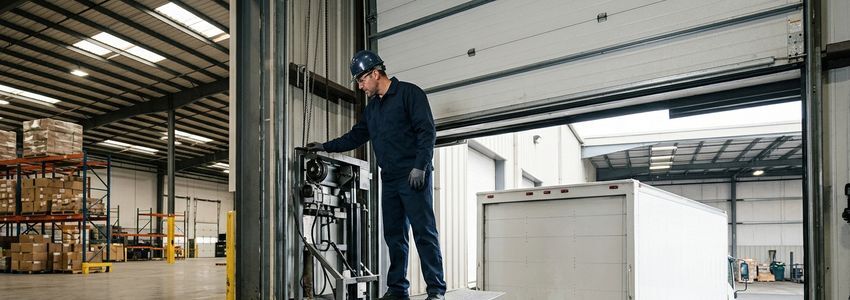
These failures are almost never optional expenses. A warehouse with a jammed overhead door or a collapsed dock leveler cannot safely load or unload trucks, which means deliveries stop, outbound shipments get delayed, and customer commitments are at risk. Financing exists specifically to close the gap between "the equipment just failed" and "the repair company has been paid and is on-site."
Unlike a routine maintenance budget line, loading dock repair financing is typically arranged on short notice, often within 24 to 48 hours of application, because the underlying business problem (a stalled loading operation) is time-sensitive. Lenders that specialize in working capital and equipment financing understand this urgency and structure their underwriting and funding timelines accordingly.
Loading Dock Down? Get Funded Fast.
Apply in minutes and get a decision quickly so your dock repair or overhead door replacement doesn't stall your operations any longer than it has to.
Apply Now →Why Loading Docks and Overhead Doors Fail
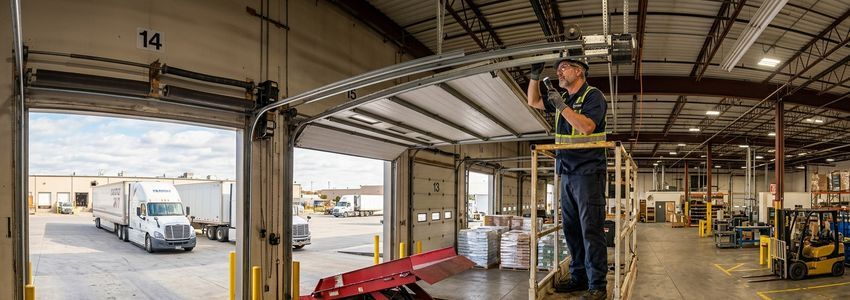
Loading dock systems and overhead doors are some of the hardest-working equipment in any warehouse or distribution facility. They cycle open and closed dozens or even hundreds of times a day, absorb the weight and impact of forklifts and trucks, and are exposed to weather, moisture, and temperature swings. Understanding why these systems fail helps business owners anticipate the expense and plan financing before an emergency hits.
Mechanical Wear on Dock Levelers
Hydraulic and mechanical dock levelers see constant stress from the weight of loaded pallet jacks and forklifts driving across the lip plate. Over years of use, hydraulic cylinders leak, springs fatigue, and the lip hinge mechanism wears down until the leveler can no longer safely bridge the gap between the dock and the trailer bed.
Overhead Door Spring and Track Failure
Commercial overhead doors rely on torsion springs, cables, and steel tracks to raise and lower heavy door panels. A snapped torsion spring or a bent track can jam a door in the open or closed position instantly, and because these components are under significant tension, they can also pose a safety hazard if not repaired by a qualified technician.
Impact Damage
Loading docks are high-traffic areas, and it is common for a forklift, trailer, or pallet jack to strike a door panel, dock bumper, or leveler lip plate. A single impact can bend a track, crack a panel, or throw a door off its rollers, requiring immediate professional repair before the door can be operated safely again.
Weather and Corrosion
Facilities in coastal, humid, or freeze-thaw climates see accelerated corrosion on hinges, springs, and steel components. Rust weakens metal parts over time, and a door or leveler that has been quietly corroding for years can fail suddenly and without warning during a routine cycle.
Age and Deferred Maintenance
Dock equipment installed 10 to 20 years ago is approaching or past its expected service life. When routine maintenance has been deferred due to tight budgets, small issues compound into major failures, often at the worst possible time, such as during a peak shipping season.
Key Insight: The U.S. Census Bureau's manufacturing and trade data shows warehousing and logistics remain a critical backbone of the American supply chain, meaning even a single dock going offline can create ripple effects across delivery schedules and customer relationships.
Key Benefits of Financing a Loading Dock or Overhead Door Repair
Financing an emergency dock or door repair rather than paying cash outright, or worse, delaying the repair, offers several practical advantages for a business owner managing tight operating margins.
- Preserve working capital. Keep cash on hand for payroll, inventory, and day-to-day operations instead of draining reserves on a single repair bill.
- Get the repair crew scheduled faster. Many repair contractors prioritize jobs with confirmed payment, and financing gives you the ability to commit immediately.
- Avoid shipping and receiving delays. Every day a dock is down is a day of delayed inbound inventory and outbound orders, which can cascade into missed customer deadlines.
- Spread the cost over time. Instead of a single large hit to cash flow, structured financing lets you match repayments to your monthly revenue.
- Fund a full replacement, not just a patch. If the leveler or door is beyond repair, financing can cover a complete replacement so you are not back in the same position again in six months.
- Protect safety and compliance. Overhead doors and dock levelers involve OSHA-relevant safety considerations; financing removes the temptation to keep operating unsafe equipment because of cost concerns.
How the Financing Process Works
Getting funded for a loading dock or overhead door repair follows a fairly straightforward path, especially when working with a lender that understands equipment and working capital financing for warehouse and industrial operations.
Step 1: Get a Repair or Replacement Estimate
Contact a qualified dock and door repair contractor for an inspection and written estimate. Having a specific dollar figure in hand speeds up the financing process considerably, since lenders can size the funding request accurately.
Step 2: Choose the Right Financing Product
Depending on whether you need to cover a repair invoice, fund a full equipment replacement, or simply need working capital to bridge the gap until the job is paid, you will select from options such as a working capital loan, a business line of credit, or equipment financing.
Step 3: Submit an Application
Most alternative business lenders require basic business information, recent bank statements, and time-in-business details rather than a lengthy application packet. This can typically be completed online in under 15 minutes.
Step 4: Receive an Underwriting Decision
Because emergency repairs are time-sensitive, many lenders can return a decision within hours rather than days, especially for smaller funding amounts tied to a clear, documented repair need.
Step 5: Get Funded and Pay the Contractor
Once approved, funds are typically deposited directly into your business bank account, often within one to two business days, allowing you to pay your repair contractor and get the work scheduled immediately.
By the Numbers
Loading Dock and Overhead Door Downtime - Key Statistics
33M+
Small businesses in the U.S. rely on timely deliveries and shipments, per the SBA
1-2 Days
Typical funding turnaround for emergency equipment repair financing
10-20 Yrs
Typical service life of dock levelers and overhead doors before major repair needs increase
24-48 Hrs
Typical window lenders target for approving urgent equipment repair funding requests
Types of Financing Available for Dock and Door Repairs
Not every business needs the same financing structure for an emergency repair. The right product depends on the size of the repair, how quickly funds are needed, and how the business prefers to manage repayment.
Working Capital Loans
A lump-sum working capital loan is often the fastest way to cover a specific repair invoice. Funds are deposited as a single amount, and repayment is structured over a fixed term, making it easy to budget around the expense.
Business Line of Credit
A business line of credit gives you a revolving pool of available funds you can draw from as needed. This is a strong option if you anticipate multiple maintenance issues across your facility over the coming months, not just this one repair.
Equipment Financing
If the dock leveler or overhead door needs to be fully replaced rather than repaired, equipment financing allows you to spread the cost of the new equipment over its useful life, often with the equipment itself serving as collateral, which can lead to more favorable terms.
SBA Loans
For larger facility upgrades that go beyond a single door or leveler, such as retrofitting an entire loading dock area, an SBA loan may offer longer terms and lower payments, though the application timeline is typically longer than alternative financing.
Keep Trucks Moving Through Your Dock
Whether it's a quick repair or a full equipment replacement, Crestmont Capital can help you fund it without disrupting your cash flow.
Apply Now →Who This Financing Is Best For
Loading dock and overhead door repair financing is most valuable for businesses where the loading area is directly tied to revenue and operational continuity.
- Warehousing and distribution companies that depend on multiple daily truck cycles through their dock doors.
- Manufacturers that receive raw materials and ship finished goods through a single loading dock, where downtime halts production scheduling.
- Retail and grocery distribution centers operating on tight delivery windows tied to store restocking schedules.
- Third-party logistics (3PL) providers whose contractual service level agreements depend on consistent dock availability.
- Cold storage and food distribution facilities where a stuck door can also compromise temperature control inside the warehouse.
- Any business owner who does not have $5,000 to $50,000 in immediately available cash reserves to cover an unplanned repair bill.
Comparing Your Options: Financing vs. Cash vs. Delay
| Approach | Speed to Repair | Cash Flow Impact | Business Risk |
|---|---|---|---|
| Pay Cash Reserves | Immediate | Severe, one-time hit | Leaves business exposed if another expense hits |
| Financing | Fast (1-2 days) | Manageable, spread over time | Preserves reserves for other needs |
| Delay the Repair | Weeks to months | Avoided short-term, but risk grows | Lost shipments, safety hazards, higher eventual repair cost |
How Crestmont Capital Can Help
Crestmont Capital works with warehouse operators, manufacturers, distributors, and logistics companies across the country to provide fast, flexible funding for exactly this kind of unplanned operational expense. As one of the top-rated business lenders in the United States, we understand that a broken overhead door or a failed dock leveler is not a problem that can wait for a slow, traditional bank loan process.
Our small business financing solutions are built for speed and flexibility. A working capital loan can get a specific repair invoice paid within days, while a business line of credit gives you standing access to funds for this repair and any future facility issues that come up. If the equipment needs full replacement, our equipment financing programs can structure payments around the new equipment's useful life.
We also work with transportation and logistics companies and manufacturers financing new equipment on a regular basis, which means our underwriting team already understands the operational urgency behind a loading dock going down. If you have previously explored a broader emergency funding need, our guide on emergency business loans outlines additional options that may complement dock-specific financing, and our Equipment Financing 101 guide explains how equipment-secured funding works in more detail.
Pro Tip: Apply for financing as soon as you receive your repair estimate, rather than waiting for the contractor to finish the work. This way, funds are typically available by the time the invoice is due, avoiding any gap in your cash flow.
Real-World Scenarios
Scenario 1: Distribution Center With a Snapped Torsion Spring
A regional beverage distributor had an overhead door torsion spring snap on a Friday afternoon, jamming the door shut on one of only three loading bays. With weekend deliveries scheduled and no cash reserve set aside for the $4,200 repair, the operations manager applied for a short-term working capital loan online in 10 minutes. Funds arrived the next business day, the repair crew was on-site by Monday morning, and the third bay was back in service before the next scheduled truck arrival.
Scenario 2: Manufacturer With a Failing Dock Leveler
A metal fabrication shop noticed its hydraulic dock leveler was leaking fluid and no longer holding trucks level, creating a safety hazard for forklift operators. Rather than risk an injury or continue operating unsafe equipment, the owner used equipment financing to replace the leveler entirely with a new mechanical unit, spreading the $11,000 cost over 36 months instead of paying it as a lump sum.
Scenario 3: 3PL Facility Facing Multiple Aging Doors
A third-party logistics company operating an older leased warehouse discovered that three of its eight overhead doors needed significant repair within the same quarter due to age and corrosion. Instead of applying separately each time, the company secured a business line of credit sized to cover all three repairs plus a buffer for the remaining five doors, which were also showing early signs of wear.
Don't Let a Broken Door Stall Your Business
Get a fast funding decision and keep your loading dock running. No obligation to apply.
Apply Now →Frequently Asked Questions
What is loading dock and overhead door repair financing?
It is business funding used specifically to pay for the repair or replacement of dock levelers, overhead doors, dock seals, and related loading area equipment, typically arranged quickly given the operational urgency of a stalled loading dock.
How fast can I get funded for an emergency dock repair?
Many alternative business lenders can approve and fund emergency repair requests within 24 to 48 hours, especially when a specific repair estimate is provided with the application.
What is the typical cost to repair a dock leveler or overhead door?
Minor repairs such as spring or cable replacement can run $500 to $2,500, while major repairs or full leveler and door replacements often range from $5,000 to $15,000 or more depending on the equipment size and warehouse configuration.
Should I repair or replace an aging dock leveler?
If the leveler is more than 15 years old or has required multiple repairs in the past two years, a full replacement often makes more financial sense than continuing to invest in patchwork repairs on aging equipment.
What type of financing works best for a single repair invoice?
A lump-sum working capital loan is usually the simplest fit for a single, defined repair invoice, since it provides one deposit matched to one fixed repayment schedule.
Is a business line of credit better than a loan for this type of expense?
A line of credit is a better fit if you anticipate multiple maintenance issues over time, since it gives you ongoing access to funds without reapplying for each new repair need.
Can equipment financing be used for a used or refurbished overhead door?
Yes, equipment financing can typically be structured for both new and used equipment purchases, including refurbished dock levelers and overhead door systems, as long as the equipment has clear resale or collateral value.
What documentation do I need to apply for repair financing?
Most alternative lenders ask for basic business information, several months of recent business bank statements, and time-in-business details. A repair estimate or invoice from your contractor helps speed up underwriting but is not always required.
Do I need good credit to qualify for emergency dock repair financing?
Alternative lenders often weigh business revenue and cash flow more heavily than personal credit score, which means businesses with less-than-perfect credit can still qualify based on consistent monthly revenue.
Can financing cover both the repair and a temporary rental door?
Yes, working capital financing is flexible enough to cover related costs such as a temporary door rental or a portable dock plate while the permanent repair is completed, as long as the total funding amount is sized appropriately.
How long are repayment terms for this type of financing?
Working capital loans for repairs typically range from 6 to 24 months, while equipment financing for a full replacement can extend to 36 to 60 months depending on the equipment's useful life and total cost.
What happens if I keep operating with a damaged overhead door?
Operating with damaged springs, cables, or tracks creates a real safety hazard for employees and can result in a more severe and costly failure later, along with potential OSHA compliance concerns in a warehouse environment.
Can financing be secured against the dock equipment itself?
Yes, with equipment financing the new or replacement dock leveler or door frequently serves as collateral for the loan itself, which can result in more favorable interest rates compared to unsecured funding.
Is an SBA loan a good fit for a single dock repair?
An SBA loan is generally better suited for larger, planned facility upgrades rather than a single emergency repair, since the application and approval process is typically longer than alternative financing options designed for urgent needs.
How do I start the application process for dock repair financing?
Start by getting a written repair estimate from a qualified contractor, then complete a short online application with your business details and recent bank statements to receive a funding decision quickly.
How to Get Started
Contact a qualified dock and door repair contractor for an inspection and a written cost estimate.
Decide between a working capital loan, a business line of credit, or equipment financing based on the size and nature of the repair.
Complete a short application at offers.crestmontcapital.com/apply-now - it takes just minutes.
Once approved, funds are typically deposited within one to two business days so your contractor can get to work right away.
Ready to Get Your Loading Dock Back in Service?
Crestmont Capital, the #1 rated business lender in the U.S., can help you fund an emergency dock or overhead door repair fast. No obligation to apply.
Apply Now - Free, No Obligation →A failed loading dock or overhead door does not have to bring your operations to a standstill. With the right loading dock repair financing in place, you can get your contractor paid, your equipment fixed or replaced, and your trucks moving again without draining the cash reserves your business needs for everything else. Whether you need a quick working capital loan, a standing line of credit, or full equipment financing, matching the right funding tool to the size and urgency of the repair keeps your warehouse running and your customer commitments on track.
For more on how supply chain disruptions affect small businesses, see Reuters business coverage and the U.S. Census Bureau's economic indicators on manufacturing and trade. The U.S. Small Business Administration also offers general guidance on financing options for equipment and facility needs.
Disclaimer: The information provided in this article is for general educational purposes only and is not financial, legal, or tax advice. Funding terms, qualifications, and product availability may vary and are subject to change without notice. Crestmont Capital does not guarantee approval, rates, or specific outcomes. For personalized information about your business funding options, contact our team directly.