The agricultural landscape is undergoing a technological revolution. To stay competitive, increase yields, and operate more sustainably, modern farmers and agribusinesses are turning to advanced equipment and software. However, the high upfront cost of this technology can be a significant barrier. This is where precision agriculture technology leasing offers a powerful financial solution, allowing you to access cutting-edge tools without draining your capital. This comprehensive guide will explore how leasing can transform your operations, detail the process from start to finish, and show why it's a strategic move for growth in today's demanding market.
In This Article
- What Is Precision Agriculture Technology?
- Types of Precision Agriculture Technology You Can Lease
- Key Benefits of Leasing vs. Buying
- How Precision Agriculture Technology Leasing Works
- The Growth of Precision Agriculture: By the Numbers
- Who Qualifies for Precision Ag Technology Leasing?
- How Crestmont Capital Helps Farmers and Agribusinesses
- Leasing vs. Loan vs. Cash: A Comparison
- Real-World Scenarios: Precision Ag Leasing in Action
- How to Get Started with Leasing
- Conclusion: Cultivating Success with Smart Financing
- Frequently Asked Questions (FAQ)
What Is Precision Agriculture Technology?
Precision agriculture, often called "smart farming," is a modern farm management concept that uses information technology to ensure that crops and soil receive exactly what they need for optimum health and productivity. Instead of applying the same amount of water, fertilizer, and pesticides across entire fields, precision agriculture leverages data to target specific areas, often down to the square meter. This approach aims to increase efficiency, reduce waste, and improve sustainability.
The core principle is to "do the right thing, in the right place, at the right time." This is achieved by collecting and analyzing vast amounts of data from various sources. Sensors on the ground, in the equipment, and even on satellites or drones gather information about soil composition, moisture levels, pest presence, crop health, and weather patterns. This data is then processed by specialized software to create detailed field maps and actionable insights. Farmers can use these insights to make highly informed decisions about planting, fertilizing, irrigating, and harvesting.
Key components of this technological ecosystem include:
- Data Collection: GPS receivers, soil sensors, drones with multispectral cameras, and yield monitors on harvesters.
- Data Analysis: Farm management software (FMS), geographic information systems (GIS), and AI-powered analytics platforms.
- Precise Application: Variable Rate Technology (VRT) applicators, GPS-guided autosteer systems for tractors, and robotic systems for weeding or harvesting.
The impact of this technology is profound. It transforms farming from a practice based on historical averages and intuition into a data-driven science. By optimizing resource use, farmers can significantly cut input costs for things like seeds, fuel, fertilizer, and water. Simultaneously, by addressing the specific needs of different zones within a field, they can boost crop yields and improve quality. The environmental benefits are also substantial, as targeted application reduces chemical runoff and minimizes the farm's overall carbon footprint. As the U.S. Department of Agriculture (USDA) notes, these technologies are crucial for meeting the global food demand in a sustainable way.
Types of Precision Agriculture Technology You Can Lease
The range of precision agriculture equipment is vast and constantly evolving. Fortunately, most of this high-value technology is eligible for leasing, making it accessible to farms of all sizes. Here are some of the most common types of precision ag tech you can finance through a lease.
1. GPS and Guidance Systems (Autosteer)
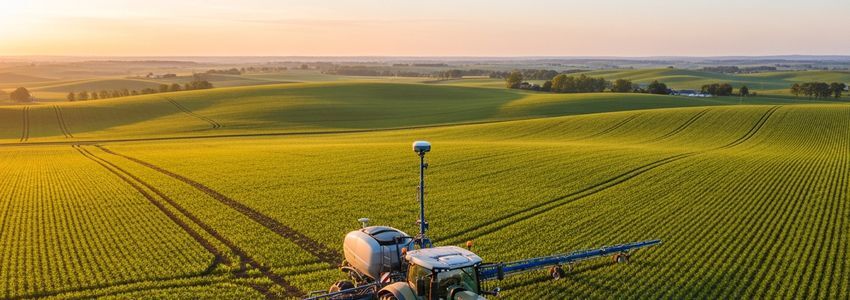
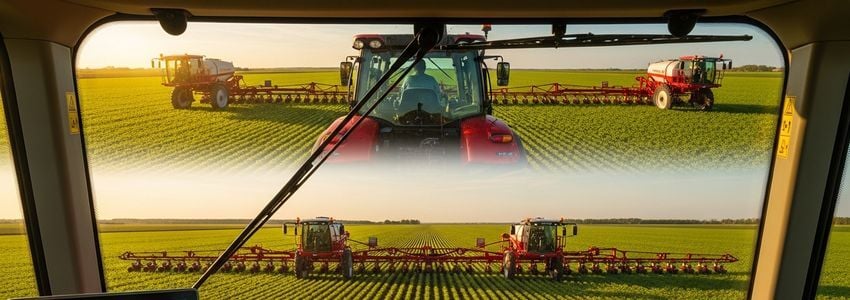
Global Positioning System (GPS) technology is the backbone of modern precision farming. GPS receivers mounted on tractors, sprayers, and combines provide precise location data, enabling a host of applications. The most popular is autosteer, a system that automatically guides the vehicle along a predetermined path with centimeter-level accuracy. This eliminates human error, reduces operator fatigue, and ensures perfect row spacing. The benefits include minimized overlap and skips during planting, fertilizing, and spraying, which leads to significant savings on fuel, seeds, and chemicals.
2. Variable Rate Technology (VRT)
VRT equipment allows farmers to apply inputs at a variable rate across a field, rather than a uniform rate. Working in conjunction with GPS and prescription maps created from soil or sensor data, VRT controllers adjust the amount of seed, fertilizer, or pesticide being applied in real-time. For example, a VRT seeder might plant more seeds in an area with rich soil and fewer in a less fertile zone. This optimizes input usage, improves crop health by preventing over- or under-application, and maximizes yield potential for each specific management zone.
3. Drones and Unmanned Aerial Vehicles (UAVs)
Agricultural drones are powerful data-gathering tools. Equipped with high-resolution and multispectral cameras, they can quickly survey vast areas to monitor crop health, identify pest infestations, assess irrigation issues, and estimate yields. The data they collect can create detailed NDVI (Normalized Difference Vegetation Index) maps, which highlight variations in plant health that are invisible to the naked eye. Drones can also be used for precise application, such as targeted spraying of pesticides on problem spots, which is far more efficient and environmentally friendly than broad-acre spraying.
4. Soil and Crop Sensors
In-field sensors provide real-time data about the growing environment. Soil sensors can measure moisture levels, temperature, and nutrient content, allowing for highly efficient irrigation and fertilization schedules. Crop-mounted sensors, such as GreenSeeker technology, can assess plant health on the go by measuring light reflectance, enabling real-time VRT application of nitrogen fertilizer. This ensures plants get nutrients exactly when and where they need them, boosting growth and preventing waste.
5. Yield Monitoring and Mapping Systems
Installed on harvesters, yield monitors use sensors to measure and record the amount of grain being harvested at any given point in the field. Combined with GPS data, this creates a detailed yield map that shows which areas of the field were most and least productive. This historical data is invaluable for future planning. Farmers can analyze these maps to understand the impact of their management practices, identify problem areas, and create data-driven strategies for the next growing season.
6. Farm Management Software (FMS) and Platforms
The hardware is only one part of the equation. FMS is the central hub that collects, stores, and analyzes all the data from sensors, drones, and equipment. These powerful software platforms help farmers visualize field data, create prescription maps for VRT, track field operations, manage inventory, and generate detailed financial reports. Leasing can often bundle the cost of software subscriptions and hardware into a single, manageable payment, simplifying the adoption of a complete smart farming ecosystem.
7. Robotic and Automated Systems
The cutting edge of precision ag includes robotics. This category covers a wide range of equipment, from automated milking systems in dairies to robotic weeders that can identify and remove weeds without chemicals. While still a significant investment, these systems address labor shortages, increase operational efficiency, and perform tasks with a level of precision that is impossible for humans to replicate. Leasing makes these transformative but expensive technologies attainable for forward-thinking agribusinesses.
By leveraging an agricultural equipment financing plan, you can acquire any combination of these technologies to build a system tailored to your farm's specific needs.
Key Benefits of Leasing vs. Buying
When it comes to acquiring precision agriculture technology, the decision often comes down to leasing versus buying. While ownership has its appeal, leasing offers a unique set of strategic advantages that are particularly well-suited to the fast-paced, capital-intensive world of modern farming. Here’s a detailed look at the key benefits of choosing a lease.
1. Conservation of Working Capital
This is arguably the most significant advantage. Purchasing advanced technology outright requires a massive cash outlay, which can tie up capital that is crucial for other operational needs like payroll, seed, fertilizer, and unexpected repairs. Leasing requires little to no down payment, typically just the first and last month's payment. This allows you to preserve your cash reserves and maintain healthy liquidity, ensuring your agribusiness can weather market fluctuations and seize new opportunities without being cash-strapped.
2. Access to the Latest Technology (Avoiding Obsolescence)
Precision agriculture technology evolves at a staggering pace. A state-of-the-art GPS system or drone purchased today could be outdated in just a few years. When you buy, you are locked into that technology for its entire useful life, and its value depreciates rapidly. Leasing completely mitigates this risk. With typical lease terms of 2-5 years, you can regularly upgrade to the newest, most efficient equipment at the end of each term. This ensures your farm always has a competitive edge without the financial burden of constant reinvestment.
3. Predictable, Fixed Monthly Payments
Leasing replaces a large, unpredictable capital expenditure with a fixed, manageable monthly payment. This makes budgeting and financial forecasting significantly easier. You know exactly what your equipment costs will be each month for the duration of the lease term, which helps stabilize your cash flow. This predictability is invaluable in an industry like agriculture, where revenue can be seasonal and subject to many external factors.
4. Potential Tax Advantages
Leasing can offer significant tax benefits. In many cases, lease payments can be fully deducted as an operating expense, which can lower your overall taxable income. This is often more advantageous than the depreciation deductions you would take on purchased equipment. Furthermore, certain lease structures may allow you to take advantage of Section 179 of the IRS tax code, which allows businesses to deduct the full purchase price of qualifying equipment financed during the tax year. It's essential to consult with your tax advisor to understand the specific benefits for your operation, but the potential savings are a major draw for leasing.
5. Flexible Terms and End-of-Lease Options
Unlike a rigid bank loan, an equipment lease offers a high degree of flexibility. You can structure the lease term to match your needs, and many lenders offer payment plans that align with agriculture's seasonal cash flow, such as deferred or seasonal payments. At the end of the lease, you have multiple options:
- Purchase the equipment: Often for a pre-determined price (like a $1 buyout) or its fair market value.
- Upgrade to new technology: Start a new lease with the latest models.
- Return the equipment: Simply hand it back with no further obligation.
- Extend the lease: Continue using the equipment, often at a reduced rate.
This flexibility allows you to adapt your equipment strategy as your business needs and technology change.
6. Easier and Faster Approval Process
Securing a traditional bank loan for farm equipment can be a lengthy and cumbersome process, often requiring extensive documentation, high credit standards, and significant collateral. Independent lenders specializing in equipment leasing, like Crestmont Capital, typically have a much more streamlined process. Applications are often simple, credit decisions can be made in hours, and funding can be available in a day or two. This speed allows you to acquire the technology you need quickly and get it working in your fields without delay.
Ready to Upgrade Your Farm?
Access the latest precision ag technology without the upfront cost. Crestmont Capital offers flexible, fast financing solutions tailored for the agricultural industry.
Apply for Financing TodayHow Precision Agriculture Technology Leasing Works
The process of leasing precision agriculture technology is straightforward and designed to be much faster than traditional financing routes. While specifics can vary slightly between lenders, the core steps remain consistent. Here’s a breakdown of how you can go from identifying a need to having new technology operational on your farm.
Step 1: Identify Your Technology Needs and Select a Vendor
The process begins with you, the farmer or agribusiness owner. First, determine exactly what technology will provide the best return on investment for your operation. Is it a GPS autosteer system to reduce input costs, a drone for better crop scouting, or a full suite of soil sensors for optimized irrigation? Once you know what you need, you can shop around and select the equipment from your preferred vendor or manufacturer. Get a formal quote for the total cost of the equipment, including any software, installation, and training.
Step 2: Complete a Simple Lease Application
With your equipment quote in hand, the next step is to apply for financing. Lenders like Crestmont Capital offer a simple, one-page online application that can be completed in minutes. You'll provide basic information about your business, such as its legal name, address, time in business, and estimated annual revenue. You will also provide details about the equipment you wish to lease and its total cost.
Step 3: Credit Review and Approval
Once your application is submitted, the lender's underwriting team will review your business's financial profile. This is typically a much faster process than a bank loan review. Lenders specializing in small business financing often use a combination of credit scores, time in business, and cash flow analysis to make a decision. For most equipment leases under $250,000, a decision can be reached within a few hours, often without requiring extensive financial statements or tax returns.
Step 4: Review and Sign Lease Documents
Upon approval, the lender will present you with a lease agreement. This document will outline all the key terms, including:
- Lease Term: The length of the lease (e.g., 24, 36, 48, or 60 months).
- Monthly Payment: The fixed amount you will pay each month.
- End-of-Lease Option: The terms for what happens when the lease concludes (e.g., $1 Buyout, Fair Market Value purchase, or return).
It is crucial to review these documents carefully. Your financing specialist will walk you through the agreement to ensure you understand all the terms before you sign. Most documents can be signed electronically for maximum convenience.
Step 5: Funding and Equipment Delivery
After you sign the lease agreement, the lender handles the rest. They will coordinate directly with your chosen equipment vendor to issue a purchase order and pay them the full amount for the technology. Once the vendor receives payment, they will arrange for the delivery and installation of the equipment at your farm. Your lease payments typically begin after you have received and accepted the equipment. From there, you can put your new technology to work immediately, generating revenue and efficiency gains while making one predictable monthly payment.
Key Stat: According to a report by Reuters, precision agriculture technologies can offer a return on investment ranging from improved efficiency to direct yield increases of up to 15%, depending on the technology and farm operation.
The Growth of Precision Agriculture: By the Numbers
A Data-Driven Revolution in Farming
The adoption of smart farming technology is not just a trend; it's a fundamental shift in the agricultural industry, driven by clear economic and operational benefits.
$20.8B
The projected size of the global precision agriculture market by 2030, showcasing massive industry investment and growth.
Source: Grand View Research
10-15%
Average input savings (fertilizer, fuel, seed, and chemicals) reported by farms using GPS guidance systems.
Source: USDA ERS
>50%
Of U.S. corn and soybean farms are already using GPS guidance systems, with adoption rates for VRT also rising steadily.
Source: USDA
90%
Reduction in herbicide use reported in some studies using camera-guided, "see and spray" robotic weeding technology.
Source: Industry Studies
Who Qualifies for Precision Ag Technology Leasing?
One of the most common misconceptions about business financing is that it's only available to large, long-established corporations with perfect credit. In reality, a wide range of farms and agribusinesses can qualify for precision agriculture technology leasing. Lenders like Crestmont Capital specialize in working with small and medium-sized businesses and have flexible criteria designed to accommodate the unique nature of the agricultural sector.
While exact requirements vary, here are the general factors that lenders consider:
Time in Business
Most lenders prefer to see a business that has been operational for at least two years. This demonstrates a track record of stability and the ability to manage operations over time. However, programs are available for newer businesses and startups, especially if the owner has strong personal credit and industry experience. Startup farms, particularly in high-growth sectors like vertical farming or organic produce, can often find specialized financing solutions.
Personal and Business Credit Score
Credit history is a key indicator of financial responsibility. Lenders will look at both the business credit profile and the personal credit scores of the owner(s). While a high score (700+) will secure the best rates and terms, many lenders have programs for a wide spectrum of credit profiles. It is possible to get approved with fair or "second chance" credit, though the rates may be higher. The strength of your application in other areas, like revenue and time in business, can often offset a lower credit score.
Annual Revenue
Lenders want to see that your agribusiness generates sufficient revenue to comfortably handle the monthly lease payments. There isn't always a strict minimum, as the required revenue will be proportional to the size of the lease. The key is demonstrating consistent cash flow. For larger leases, you may be asked to provide bank statements or financial statements to verify your revenue and profitability.
The Equipment Itself
In an equipment lease, the technology being financed serves as its own collateral. This significantly reduces the lender's risk, which is why leasing is often easier to qualify for than an unsecured loan. The value, type, and expected lifespan of the precision ag equipment will be a factor in the approval process. New or slightly used equipment from reputable manufacturers is typically the easiest to finance.
The best way to know if you qualify is to have a conversation with a financing specialist. They can quickly assess your situation and guide you to the right farm equipment financing program for your specific needs, even if you don't fit the perfect "bankable" profile. Many resources are also available through the Small Business Administration (SBA) to help farmers prepare their business for financing.
How Crestmont Capital Helps Farmers and Agribusinesses
Navigating the world of financing can be complex, but partnering with the right lender makes all the difference. Crestmont Capital stands out as the #1 business lender in the U.S. because we understand the unique challenges and opportunities within the agricultural industry. We are more than just a source of capital; we are a financial partner dedicated to helping your farm grow and thrive.
Our approach to precision agriculture technology leasing is built on three pillars: Speed, Flexibility, and Expertise.
Unmatched Speed and Simplicity
In farming, timing is everything. When you need a new piece of technology, you often need it before the next planting or harvesting season begins. We've streamlined our entire process to be as fast and efficient as possible. Our one-page application takes minutes to complete, and we often provide credit decisions in as little as two hours. Once approved, funding can be in place within 24-48 hours, meaning we pay your equipment vendor directly so you can get your technology delivered without delay.
Flexible Financing Tailored to Agriculture
We know that a one-size-fits-all approach doesn't work for agriculture. Farm revenue is often cyclical, and cash flow can be tight during certain parts of the year. That's why we offer a variety of flexible payment structures designed specifically for agribusinesses:
- Seasonal Payments: Make larger payments during your peak revenue months and smaller payments during the off-season.
- Deferred Payments: Get your equipment now and defer your first few payments, allowing the technology to start generating a return before you have to pay for it.
- Customized Terms: We offer lease terms from 24 to 72 months, allowing you to choose a payment that fits your budget.
- Flexible End-of-Lease Options: Choose to purchase your equipment, upgrade to new technology, or simply return it. The choice is yours.
Deep Industry Expertise
Our team of financing specialists has extensive experience working with farmers, ranchers, and agribusinesses across the country. We understand the difference between a VRT controller and a yield monitor. This expertise allows us to provide knowledgeable guidance and structure a financing solution that makes sense for your specific operation. We work with a wide network of equipment vendors and can help you finance everything from a single GPS unit to a complete, integrated smart farming system.
At Crestmont Capital, we are committed to providing the equipment financing that powers American agriculture. We believe in the future of farming and are here to provide the capital you need to invest in that future.
Get Farm-Ready Financing Today
Partner with a lender who understands agriculture. Our specialists are ready to build a custom financing plan for your precision ag technology needs.
Speak with a SpecialistLeasing vs. Loan vs. Cash: A Comparison
Choosing the right acquisition method for your precision ag technology is a critical financial decision. Each option-leasing, a traditional bank loan, or an outright cash purchase-has distinct implications for your cash flow, balance sheet, and long-term strategy. The table below provides a clear comparison to help you determine the best path for your agribusiness.
| Feature | Equipment Leasing | Bank Loan | Cash Purchase |
|---|---|---|---|
| Upfront Cost | Very low. Typically first and last month's payment. Preserves working capital. | Moderate. Requires a significant down payment, usually 10-20% of the total cost. | Highest. Requires 100% of the equipment cost upfront, depleting cash reserves. |
| Ownership | Lender retains ownership during the lease term. Options to purchase at the end. | You own the equipment from the start, with the bank holding a lien until the loan is paid. | You own the equipment outright immediately. |
| Technology Obsolescence | Low risk. Easy to upgrade to new technology at the end of a short lease term. | High risk. You are stuck with aging technology until you can sell it and buy new. | Highest risk. You bear the full financial burden of depreciation and obsolescence. |
| Tax Implications | Lease payments are often 100% tax-deductible as an operating expense. Consult your tax advisor. | You can deduct the interest paid and the equipment's depreciation over time. | You can deduct depreciation over the equipment's useful life. Possible Section 179 deduction. |
| Balance Sheet Impact | An operating lease does not appear as a liability, improving financial ratios. | The loan is a long-term liability, which can impact your ability to secure other credit. | Reduces cash assets, but does not add liability. |
| Approval Speed & Process | Fast and simple. Application-only up to $250k+, approval in hours, funding in 1-2 days. | Slow and complex. Requires extensive paperwork, financials, and can take weeks or months. | Instantaneous. No approval process is needed if you have the cash available. |
| Flexibility | Highly flexible with custom payment plans (e.g., seasonal) and multiple end-of-term options. | Inflexible. Fixed repayment schedule with significant penalties for early payoff. | No flexibility. The cash is spent and cannot be reallocated. |
Real-World Scenarios: Precision Ag Leasing in Action
Theory is helpful, but seeing how leasing plays out in real-world situations provides the clearest picture of its benefits. Here are a few detailed scenarios illustrating how different types of agricultural operations use leasing to their advantage.
Scenario 1: The Midwest Corn and Soybean Farm
The Operation: A 2,500-acre family farm in Iowa looking to combat rising input costs and improve efficiency.
The Challenge: Fertilizer and fuel prices have been volatile. The farm manager knows that reducing overlap during planting and fertilizing could save tens of thousands of dollars per year, but the upfront cost for a new integrated autosteer system and a VRT-enabled spreader is over $85,000. Paying cash would deplete their operating reserves right before planting season.
The Solution: The farm partners with Crestmont Capital to lease the entire technology package. They secure a 48-month lease with a $1 buyout option at the end. The upfront cost is minimal, just the first and last month's payment. They also opt for a seasonal payment plan, with higher payments due in the months following harvest when cash flow is strongest.
The Outcome: The new system is installed within two weeks. In the first year alone, the farm reduces its fertilizer usage by 12% and fuel consumption by 8%. The savings from reduced inputs more than cover the monthly lease payments. At the end of four years, they own the equipment for $1, having paid for it with the efficiency gains it generated. They have also preserved their capital for other needs throughout the lease term.
Scenario 2: The California Specialty Crop Grower
The Operation: A 500-acre vineyard in Napa Valley focused on producing premium wine grapes.
The Challenge: Water conservation is a critical issue, and early detection of disease like powdery mildew is essential for crop quality. The vineyard owner wants to implement a drone-based scouting program using multispectral imaging to monitor vine stress and identify problem areas before they spread. The cost for a high-end agricultural drone, sensors, and the accompanying analytics software subscription is $45,000.
The Solution: The vineyard chooses a 36-month Fair Market Value (FMV) lease. This type of lease offers the lowest possible monthly payment because they are only paying for the depreciation of the drone over three years, not its full value. They know that drone technology is evolving rapidly and do not want to be stuck with an outdated model.
The Outcome: The drone program allows for highly targeted irrigation, reducing water use by 20%. The early detection of pest and disease hotspots enables precise, localized spraying, cutting pesticide costs and improving the overall health of the vineyard. After 36 months, they return the old drone and lease a brand new, more advanced model with better sensors and longer flight times, ensuring they always have the best technology available to protect their high-value crop.
Scenario 3: The East Coast Dairy Farm
The Operation: A 300-cow dairy farm in Pennsylvania struggling with labor shortages and looking to improve herd health and milk production.
The Challenge: Finding reliable farm labor is a constant struggle. The farm wants to invest in two robotic milking systems to automate the milking process, which would free up labor for other critical tasks and provide valuable health data on each cow. The total project cost is $350,000, an amount far too large for a cash purchase and a difficult ask for their local bank.
The Solution: The dairy farm works with an equipment financing specialist to structure a 72-month lease for the robotic systems. Because of the size of the transaction, some financial documentation is required, but the process is still significantly faster than a traditional bank loan. The lender understands the long-term ROI of the equipment and approves the deal.
The Outcome: The robotic milkers are installed and operational. Milk production increases by 10% due to more frequent and consistent milking. The system's sensors provide early warnings for health issues, reducing veterinary costs. The farm is able to reallocate its labor force to focus on animal care and feed management. The predictable monthly lease payment is easily serviced by the increased revenue and operational savings, transforming the dairy's long-term viability.
Pro Tip: Partner with a lender who understands the seasonality of agriculture. They can structure payments to align with your cash flow, such as offering seasonal or deferred payment options that traditional banks may not provide.
How to Get Started with Leasing
Taking the first step toward acquiring new precision agriculture technology through leasing is simple and straightforward. Follow this process to get the equipment you need working for you as quickly as possible.
Identify Your Needs & Get a Quote
Determine the specific technology that will benefit your farm most. Research different brands and models, then contact your preferred dealer or vendor to get a formal quote for the full equipment package, including any software or installation fees.
Complete Our Simple Application
Fill out our secure, one-page online application. It takes just a few minutes and requires only basic information about your business and the equipment you want to finance. There's no cost or obligation to apply.
Receive a Quick Credit Decision
Our team will review your application immediately. For most transactions under $250,000, you can expect to receive a credit decision within just a few hours. A dedicated financing specialist will contact you to discuss your approval and the available terms.
Review and Sign Your Documents
Once you've chosen the terms that work best for you, we'll send you the lease documents for review. We use electronic signatures to make the process fast and convenient. Your specialist will be available to answer any questions you have.
Get Your Equipment
As soon as the documents are signed, we pay your vendor directly. They will then schedule the delivery and installation of your new precision agriculture technology. You can put it to work right away, boosting your farm's efficiency and productivity.
Start Your Application Today
The path to a more efficient and profitable farm is just a few clicks away. Our simple, no-obligation application is the first step.
Apply Now in 60 SecondsConclusion: Cultivating Success with Smart Financing
The future of agriculture is undeniably digital and data-driven. Precision agriculture technology is no longer a luxury for the largest corporate farms; it is an essential toolkit for any modern agribusiness aiming for increased profitability, sustainability, and long-term viability. However, the barrier to entry often isn't a lack of ambition but a lack of accessible capital.
This is precisely the gap that precision agriculture technology leasing is designed to fill. By converting a prohibitive upfront cost into a manageable operating expense, leasing empowers farmers to adopt the latest innovations without compromising their financial stability. It offers a strategic path to staying competitive, mitigating the risk of technological obsolescence, and optimizing cash flow in a notoriously unpredictable industry. Whether you are a small family farm or a large commercial enterprise, leasing provides the flexibility and speed you need to adapt and grow. By partnering with a knowledgeable lender who understands the rhythms of agriculture, you can cultivate not just your crops, but also your success for generations to come.
Frequently Asked Questions (FAQ)
1. What is the minimum and maximum amount I can finance for precision ag tech?
Financing amounts are very flexible. At Crestmont Capital, we can typically finance equipment starting from $5,000 with no practical upper limit. Whether you need a single GPS receiver or a fleet of autonomous tractors, we can structure a solution to fit your needs.
2. What happens at the end of my lease term?
You have several options, depending on your lease agreement. Common choices include: purchasing the equipment for a predetermined price (like a $1 buyout), renewing the lease, upgrading to new technology on a new lease, or simply returning the equipment with no further obligation.
3. Can I lease used precision agriculture equipment?
Yes, in many cases you can lease used equipment. Lenders will typically consider the age, condition, and expected useful life of the technology. Leasing used equipment can be a great way to lower your monthly payments even further.
4. What credit score do I need to qualify for a lease?
While a strong credit score (680+) will secure the best rates, we have programs for a wide range of credit profiles. We look at the overall health of your business, including time in business and revenue, not just a single credit score. We encourage you to apply even if your credit is not perfect.
5. How long does the entire leasing process take?
The process is designed for speed. After submitting a simple online application, you can receive a credit decision in as little as a few hours. Funding can be completed and your vendor paid within 24 to 48 hours, allowing you to get your equipment quickly.
6. Can I bundle software, installation, and training costs into the lease?
Absolutely. We can finance the "soft costs" associated with your technology acquisition, including software subscriptions, delivery fees, installation, and operator training. This allows you to roll the total cost into one simple monthly payment.
7. What is the difference between a $1 Buyout lease and a Fair Market Value (FMV) lease?
A $1 Buyout lease (or capital lease) is structured for you to own the equipment at the end of the term for a nominal fee. An FMV lease (or operating lease) offers lower monthly payments, and at the end, you can buy the equipment for its fair market value, return it, or upgrade. FMV leases are ideal for technology that becomes obsolete quickly.
8. Are there tax benefits to leasing?
Yes, leasing can offer significant tax advantages. Operating lease payments are often fully deductible as a business expense. Some leases may also qualify for the Section 179 deduction. We always recommend consulting with your tax advisor to understand the specific benefits for your business.
9. Can I lease technology from any vendor I choose?
Yes. Our financing is independent, which means you can choose the equipment you want from the vendor or private seller of your choice. Once you're approved, we work directly with your selected seller to handle the payment.
10. Do I need to provide a down payment?
Most of our lease programs require little to no money down. Typically, you will only need to provide the first and last month's payment at the start of the lease, which helps you conserve your valuable working capital for other business needs.
11. What if my farm's revenue is seasonal?
We understand the cyclical nature of agriculture. We specialize in creating flexible payment plans, such as seasonal or deferred payment options, that align with your cash flow. You can make larger payments after harvest and smaller payments during the growing season.
12. Who is responsible for maintenance and repairs on leased equipment?
Similar to leasing a car, the lessee (your business) is generally responsible for the regular maintenance and repair of the equipment. Many businesses choose to add a maintenance package from the vendor, which can sometimes be included in the financed amount.
13. Can a new farm or startup agribusiness qualify for a lease?
Yes, we have financing programs available for new businesses and startups. While a longer time in business is preferred, we can often approve startups based on the owner's strong personal credit, industry experience, and a solid business plan.
14. Does the equipment lease show up as debt on my balance sheet?
An operating lease (like an FMV lease) is not considered a long-term debt and does not appear as a liability on your balance sheet. This can help improve your business's financial ratios and preserve your ability to obtain other forms of credit.
15. What types of precision ag technology can be leased?
Virtually any type of new or used precision agriculture technology can be leased. This includes GPS guidance systems, VRT applicators, drones/UAVs, soil and crop sensors, yield monitors, farm management software, robotic systems, and more.
Disclaimer: The information provided in this article is for general educational purposes only and is not financial, legal, or tax advice. Funding terms, qualifications, and product availability may vary and are subject to change without notice. Crestmont Capital does not guarantee approval, rates, or specific outcomes. For personalized information about your business funding options, contact our team directly.