Community outreach programs and nonprofit organizations are the backbone of vibrant, supportive communities, yet they often operate on tight budgets where every dollar is critical. Acquiring essential assets like delivery vans can present a significant financial hurdle, diverting funds from core services. This guide provides a comprehensive overview of leasing delivery vans for community outreach programs, a strategic financing solution that preserves capital while expanding your operational capacity.
In This Article
- What Is Van Leasing for Community Outreach?
- Key Benefits of Leasing Vans for Nonprofits
- How Van Leasing Works Step-by-Step
- Types of Vans and Vehicles Available
- Leasing vs. Buying Delivery Vans
- Who Qualifies for Van Leasing?
- How Crestmont Capital Helps
- Real-World Scenarios
- How to Get Started
- Frequently Asked Questions
What Is Van Leasing for Community Outreach?
Van leasing is a financial arrangement that allows a nonprofit or community organization to use a delivery van for a set period in exchange for regular monthly payments. Instead of purchasing the vehicle outright with a large capital expenditure, the organization pays for the vehicle's depreciation during the lease term. This structure is fundamentally different from a traditional loan, where the goal is ownership.
For community outreach programs, this means gaining access to a new or late-model, reliable vehicle without draining precious donor funds or operational reserves. The lease agreement, typically lasting from 24 to 60 months, outlines the terms of use, including mileage limits, maintenance responsibilities, and end-of-term options. It is a strategic tool for managing assets and cash flow effectively, allowing organizations to focus on their mission.
Think of it as a long-term rental designed for commercial use. The leasing company, like Crestmont Capital, purchases the van your organization selects and then leases it back to you. This partnership provides the mobility you need to deliver food, transport community members, or run mobile services, all within a predictable and manageable budget.
Key Benefits of Leasing Vans for Nonprofits
Choosing to lease a delivery van offers numerous advantages that are particularly beneficial for the unique financial and operational structure of nonprofits and community-focused organizations. These benefits extend beyond simple cost savings, impacting efficiency, reliability, and the ability to scale services.
Preservation of Capital: The most significant benefit is the minimal upfront cash required. Instead of a large down payment that could deplete your operating budget, leasing typically requires only the first and last month's payment. This frees up capital for program development, staffing, and other mission-critical expenses.
Predictable Monthly Expenses: Leases come with fixed monthly payments, making budgeting simple and predictable. This financial stability is crucial for organizations that rely on grants and donations, as it eliminates the risk of unexpected vehicle-related capital costs. You know exactly what your transportation expenses will be each month for the entire term.
Access to Newer, More Reliable Vehicles: Leasing allows you to operate a new or nearly new van, which translates to better fuel efficiency, enhanced safety features, and significantly lower maintenance and repair costs. A reliable vehicle means fewer breakdowns, less downtime, and more consistent service delivery to the community you serve. This reliability builds trust and ensures your programs run without interruption.
Reduced Maintenance Worries: New vehicles are covered by manufacturer warranties for the majority of the lease term, covering most major repairs. This drastically reduces the risk of facing a large, unexpected repair bill that could derail your budget. Some lease agreements can even bundle routine maintenance into the monthly payment for ultimate peace of mind.
Key Insight: According to reports from financial analysts at Bloomberg, businesses that lease their vehicle fleets often see a 10-20% reduction in total transportation costs over a five-year period due to lower maintenance and higher fuel efficiency.
Flexibility and Scalability: Community needs can change. Leasing provides the flexibility to upgrade or change vehicles at the end of the term. If your program expands and you need a larger van or a second vehicle, you can easily adjust your fleet to meet new demands without the hassle of selling an old vehicle.
Tax Advantages: For many organizations, lease payments can be treated as an operating expense and may be fully tax-deductible. This can provide a significant financial advantage compared to the depreciation schedules associated with purchasing. It is always recommended to consult with a tax professional to understand the specific benefits for your organization's structure.
How Van Leasing Works Step-by-Step
The process of leasing a delivery van for your community outreach program is designed to be straightforward and efficient. At Crestmont Capital, we've refined our process to get you the vehicle you need with minimal administrative burden, allowing you to stay focused on your mission. Here’s a breakdown of the typical steps involved from application to delivery.
First, you identify the need and the type of vehicle that will best serve your program. Next, you partner with a lender that understands the unique needs of nonprofits. The process then moves through a simple application, a quick approval, vehicle selection, and finalization of the lease agreement. Our goal is to make this journey as seamless as possible.
Quick Guide
How Van Leasing Works - At a Glance
Apply & Consult
Submit a simple online application. A Crestmont Capital specialist will then contact you to discuss your organization's specific needs, budget, and vehicle requirements.
Approval & Terms
Receive a credit decision, often within a few hours. We'll present clear, transparent lease terms, including the monthly payment, term length, and any mileage considerations.
Select Your Van
Choose the exact van from any dealership or private seller nationwide. We coordinate the purchase, handling the transaction with the vendor on your behalf.
Sign & Drive
Review and sign the final lease documents electronically. Once complete, we fund the seller, and you can take delivery of your van and put it to work for your community.
Ready to Expand Your Program's Reach?
Get the delivery van you need with a flexible lease designed for nonprofits. See your options today.
Apply NowTypes of Vans and Vehicles Available
The term "delivery van" covers a wide range of vehicles, and the right choice depends entirely on the specific needs of your community outreach program. Leasing provides access to virtually any type of new or used commercial van available on the market. This flexibility ensures you get a vehicle that is perfectly suited to your mission, not just a one-size-fits-all solution.
Here are some of the most common types of vans leased by nonprofits and community organizations:
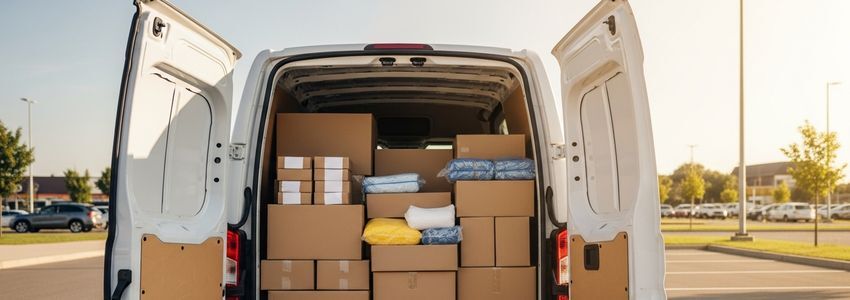
Standard Cargo Vans: These are the workhorses of the delivery world. Models like the Ford Transit, Ram ProMaster, and Mercedes-Benz Sprinter offer vast, customizable cargo areas. They are ideal for food banks transporting non-perishable goods, organizations delivering supplies, or as a base for a mobile workshop.
Refrigerated Vans: For programs that handle perishable food, such as meal delivery services for seniors or mobile food pantries, a refrigerated or "reefer" van is essential. These vans are upfitted with insulation and a cooling unit to maintain a specific temperature, ensuring food safety and compliance with health regulations.
Passenger Vans: If your mission involves transporting people, passenger vans are the ideal choice. Organizations running after-school programs, senior transportation services, or shuttle services for community events can lease vans that safely accommodate anywhere from 8 to 15 passengers.
High-Roof Vans: Models like the high-roof Sprinter or Transit offer standing room inside, making them perfect for mobile services. They can be converted into mobile health clinics, counseling offices, pet adoption centers, or educational classrooms, bringing services directly to underserved populations.
Cutaway or Box Trucks: For organizations with large-scale delivery needs, such as furniture banks or disaster relief operations, a small box truck may be more suitable. These offer significantly more cargo space than a standard van and often come equipped with a loading ramp or liftgate to handle heavy items.
Leasing vs. Buying Delivery Vans
The decision between leasing and buying a van is a critical one for any organization, with long-term financial and operational implications. There is no single right answer; the best choice depends on your organization's cash flow, long-term plans, and tolerance for risk. Understanding the key differences is the first step toward making an informed decision that aligns with your mission.
Buying a van means ownership and building equity, but it requires a substantial upfront investment and saddles you with the responsibilities of long-term maintenance and eventual disposal. Leasing, on the other hand, is about usage. It offers lower initial costs and predictable payments, but you don't own the asset at the end. The following table breaks down the core differences to help you evaluate which path is better for your program.
| Feature | Leasing a Van | Buying a Van |
|---|---|---|
| Upfront Cost | Very low. Typically first/last month's payment and security deposit. | High. Requires a significant down payment (10-20%) or full cash purchase. |
| Monthly Payments | Generally lower than loan payments as you only pay for depreciation. | Higher, as you are paying off the entire value of the vehicle to build equity. |
| Ownership | No ownership. The vehicle is returned at the end of the term, or you may have a purchase option. | Full ownership. The van becomes a long-term asset on your balance sheet. |
| Maintenance | Often covered by manufacturer warranty for most of the term. Predictable and low-cost. | Organization is responsible for all maintenance and repairs, especially after the warranty expires. |
| Flexibility | High. Easy to upgrade to a new vehicle every few years to meet changing needs. | Low. You must sell or trade-in the old vehicle, which can be time-consuming and result in a loss. |
| Best For | Organizations wanting low upfront costs, predictable payments, and access to modern vehicles. | Organizations with strong cash reserves that plan to use the vehicle for many years. |
Who Qualifies for Van Leasing?
Financial institutions evaluate several factors when considering a lease application from a nonprofit or community organization. While the requirements are similar to those for for-profit businesses, lenders who specialize in the nonprofit sector, like Crestmont Capital, understand the unique financial structures and revenue streams involved. We look beyond simple profit and loss to see the stability and community impact of your organization.
Generally, the stronger your organization's financial health and operational history, the more favorable your lease terms will be. However, even new or smaller organizations can often qualify for leasing programs designed to support their growth. Key factors we typically review include time in operation, revenue consistency, and the organization's credit history.
Here are the primary qualifications lenders consider:
- Time in Operation: Most lenders prefer to work with organizations that have been operating for at least two years. This history demonstrates stability and a track record of managing finances and programs effectively.
- Financial Documentation: Be prepared to provide financial statements, such as annual budgets, income statements (or statements of activities), and bank statements. Lenders use these to verify consistent revenue, whether from donations, grants, or program fees.
- Credit History: The organization's credit profile, as well as that of its principal officers, may be reviewed. While a perfect score is not required, a history of responsible financial management is important.
- Clear Vehicle Need: A well-defined plan for how the van will be used to further your mission can strengthen your application. Lenders want to see that the asset will generate value for the organization and the community.
For Startups & Newer Nonprofits: Don't be discouraged if your organization is less than two years old. Crestmont Capital offers specialized programs for newer entities. We may consider factors like the experience of the leadership team, a strong business plan, or secured grant funding as compensating factors.
How Crestmont Capital Helps Nonprofits and Outreach Organizations
At Crestmont Capital, we believe in the missions of community outreach programs and nonprofits. We see ourselves as a financial partner dedicated to helping you achieve your goals by providing accessible and flexible funding solutions. Our expertise in commercial van financing and leasing is specifically tailored to address the challenges that mission-driven organizations face.
We understand that a nonprofit's financial profile looks different from a traditional business. Our underwriting process is designed to recognize the value of consistent grant funding and donor support as stable revenue. This allows us to approve organizations that might be overlooked by conventional banks. We offer a range of nonprofit business loans and leasing products to fit diverse needs.
Our dedicated account executives work with you one-on-one to structure a lease that fits your budget and operational needs. Whether you need a single passenger van or a small fleet of delivery vehicles, our commercial vehicle financing options are designed for maximum flexibility. We can accommodate various mileage needs, upfitting requirements, and end-of-term options to ensure the solution works for you now and in the future.
Beyond vehicle leasing, we offer a suite of financial products. Our equipment leasing programs can help you acquire other essential assets, from office technology to program-specific equipment. For more immediate needs or to bridge a gap in funding, our working capital loans provide quick access to cash. Our goal is to be a comprehensive financial resource for your organization. To get started, you can Apply Now online or contact our team to discuss your unique situation.
Get Your Custom Van Lease Quote
Our specialists are ready to build a financing plan that fits your nonprofit's budget and mission.
Request a Free QuoteReal-World Scenarios
To better illustrate the practical impact of leasing, let's explore a few detailed scenarios where community organizations leveraged van leasing to expand their services and enhance their community impact. These examples highlight the versatility of leasing as a financial tool for different types of outreach programs.
Scenario 1: The Urban Food Bank
The Challenge: City Harvest Food Bank, a nonprofit operating for five years, was struggling to meet increasing demand. Their single, aging cargo van was unreliable and lacked refrigeration, limiting them to collecting only non-perishable goods and forcing them to turn down valuable donations of fresh produce and dairy from local grocers. Purchasing a new $65,000 refrigerated van was not feasible without a major capital campaign that would take months, if not years.
The Solution: City Harvest partnered with Crestmont Capital to lease a new, medium-sized refrigerated van. The application process was completed online, and with their stable donation history, they were approved within 24 hours. The lease required only the first and last month's payments upfront, a total of about $1,800, instead of a $13,000 down payment for a loan. Their fixed monthly lease payment was a manageable $900 for a 48-month term.
The Outcome: With the new van, City Harvest immediately expanded its partnerships with five local supermarkets, rescuing thousands of pounds of fresh food each week that would have otherwise gone to waste. They were able to launch a "Mobile Fresh Market" program, delivering healthy produce directly to food-insecure neighborhoods. The reliable, new van eliminated downtime from repairs, and the improved community service helped them secure a new annual grant worth $50,000.
Scenario 2: The Rural Youth Center
The Challenge: "Future Leaders," a youth center in a rural county, wanted to launch an after-school program for middle school students. A major barrier was transportation; many students lived miles away with no access to public transit. The center's budget was tight, focused almost entirely on programming and staff, leaving no room for a large vehicle purchase.
The Solution: The center's director contacted Crestmont Capital to explore options for a 15-passenger van. Despite being a relatively young organization (3 years in operation), their clear mission and a letter of support from the school district strengthened their application. They were approved for a 36-month lease on a low-mileage, certified pre-owned passenger van. The lease structure kept the monthly payment under $650, an amount they could cover through a small, dedicated transportation fee and fundraising.
The Outcome: The leased van enabled the Future Leaders program to launch successfully, serving 30 students in its first year. The reliable transportation was a key selling point for parents, leading to full enrollment. The program's success has not only provided a safe and enriching environment for local youth but has also increased the center's visibility and reputation, leading to a 40% increase in individual donations in the following year.
Scenario 3: The Mobile Health Initiative
The Challenge: A public health nonprofit, "Community Wellness Connect," received a three-year federal grant to provide basic health screenings and vaccinations to homeless and low-income populations in their city. The grant covered staff and supplies but did not include funds for a vehicle. They needed a vehicle that could be customized into a mobile clinic, a project that required a high-roof cargo van and an additional $20,000 for upfitting.
The Solution: Crestmont Capital structured a specialized lease that bundled the cost of the van and the custom upfitting into a single monthly payment. This is known as a finance lease or a capital lease, which is ideal for highly specialized equipment. The nonprofit chose a new Ram ProMaster high-roof van and selected a certified upfitter to install cabinetry, a sink, an examination chair, and medical-grade flooring.
The Outcome: The all-in-one lease allowed Community Wellness Connect to get their mobile clinic on the road within two months of receiving the grant. They were able to serve over 2,000 individuals in their first year, providing critical services in homeless shelters, community centers, and public parks. The van became a recognizable symbol of their mission, and the program's success has positioned them to apply for grant renewals and expansion funding from a solid foundation of proven impact, something data from the U.S. Census Bureau on underserved populations helped them justify.
How to Get Started (Next Steps)
Taking the next step toward leasing a delivery van for your organization is a simple, three-part process. We've designed our system to be fast and transparent, so you can get the vehicle you need and get back to what matters most: serving your community. Follow these steps to begin your journey.
Apply Online in Minutes
Fill out our secure, one-page online application. It's quick, easy, and requires no hard credit pull to see your options. Tell us about your organization and the type of van you're looking for.
Speak with a Specialist
A dedicated financing specialist will contact you to review your application, discuss your specific needs, and answer any questions. We'll present you with clear, customized lease options tailored to your budget.
Get Your Van
Once you approve the terms and sign the documents, we handle the rest. We coordinate payment with the dealership or seller, and you take delivery of your new van, ready to expand your community outreach.
Frequently Asked Questions
Navigating financing options can bring up many questions. Here are answers to some of the most common inquiries we receive from community outreach programs and nonprofits about leasing delivery vans.
What exactly is van leasing for a nonprofit? +
Van leasing is a financing agreement where your nonprofit pays a fixed monthly fee to use a van for a predetermined period (e.g., 2-5 years). You get the full use of a new or late-model vehicle without the high upfront cost of purchasing it. At the end of the term, you can typically return the van, lease a new one, or sometimes purchase it.
How does the application process work for a community organization? +
The process is designed to be simple. You start by filling out a short online application. A financing specialist then contacts you to discuss your needs and request basic financial documents, such as bank statements or annual budgets. We focus on your organization's overall financial health and stability, not just traditional profit metrics.
What are typical interest rates or lease factors for nonprofits? +
Lease payments are determined by a "lease factor" or "money factor," not a traditional interest rate. This factor is based on your organization's credit profile, time in operation, and the cost and type of the van. Crestmont Capital offers highly competitive rates because we specialize in this sector and understand how to assess the risk and stability of nonprofits.
What are the minimum qualifications for leasing a van? +
While qualifications vary, lenders typically look for at least two years of operational history, consistent revenue (from grants, donations, or services), and a reasonable credit history. However, Crestmont Capital has programs for newer organizations and can consider compensating factors like a strong leadership team or secured long-term funding.
Can we lease any type of van? +
Yes. You can lease almost any new or used commercial-grade van, including standard cargo vans, refrigerated vans, passenger vans, and even small box trucks. You choose the exact vehicle from any dealership or private seller in the country, and we handle the financing.
Is leasing better than buying for a nonprofit? +
It depends on your financial situation and goals. Leasing is often better for preserving capital, maintaining a predictable budget, and having a modern, reliable vehicle without maintenance headaches. Buying is better if you have ample cash reserves and plan to keep the vehicle for a very long time (7+ years).
How should we budget for a van lease? +
When budgeting, consider the fixed monthly lease payment, insurance costs, fuel, and potential routine maintenance not covered by warranty (like oil changes and tires). Because the lease payment is fixed, it's much easier to incorporate into your annual operating budget than the unpredictable costs of owning an older vehicle.
Are there tax benefits to leasing for a 501(c)(3) organization? +
While 501(c)(3) organizations are generally tax-exempt, the financial treatment of a lease can still be beneficial. Lease payments are typically classified as an operating expense, which can be simpler for accounting and grant reporting than depreciating a purchased asset. Always consult with your accountant or tax advisor for specifics related to your organization.
Can we lease more than one van? +
Absolutely. Many organizations lease a small fleet of vehicles to support various programs. We can structure a master lease agreement that allows you to add vehicles as your needs grow, simplifying the process and paperwork for future acquisitions.
What if our organization has poor or limited credit? +
Crestmont Capital works with organizations across the credit spectrum. While credit is a factor, we take a holistic view, considering your revenue stability, time in operation, and community impact. We have financing programs designed to help organizations that may not qualify for traditional bank loans.
Do you work with startup or new nonprofit organizations? +
Yes, we have programs for startup organizations (under two years old). For newer nonprofits, we may look at the personal credit and experience of the founders, a detailed business or program plan, and any secured grants or funding commitments. Our goal is to support promising new missions.
What happens at the end of the lease term? +
You have several flexible options. You can (1) return the van and walk away, (2) lease a brand new van with the latest technology and safety features, or (3) purchase the van you've been using at a predetermined price. This flexibility is a key advantage of leasing.
Can the van be customized or upfitted? +
Yes. We can finance the vehicle as well as the cost of any necessary customizations, such as shelving, refrigeration units, wheelchair lifts, or custom wraps with your organization's logo. The cost of this upfitting can be rolled into your single, convenient monthly lease payment.
How long does the entire process take? +
The financing part of the process is very fast. We can often provide an approval within hours of receiving your application and documents. The total time until you get your van typically depends on vehicle availability at the dealership. We can often fund the transaction within 24-48 hours once you've selected your van.
Why should we choose Crestmont Capital for our van lease? +
Crestmont Capital specializes in financing for small businesses and nonprofits, so we understand your unique needs. We offer a fast, streamlined process, flexible underwriting, and dedicated support. Our goal is to be a long-term financial partner that helps your organization grow and succeed in its mission.
Start Your Mission-Critical Funding Today
A simple application is all that stands between your program and the vehicle it needs to grow.
Apply in 60 SecondsDisclaimer: The information provided in this article is for general educational purposes only and is not financial, legal, or tax advice. Funding terms, qualifications, and product availability may vary and are subject to change without notice. Crestmont Capital does not guarantee approval, rates, or specific outcomes. For personalized information about your business funding options, contact our team directly.