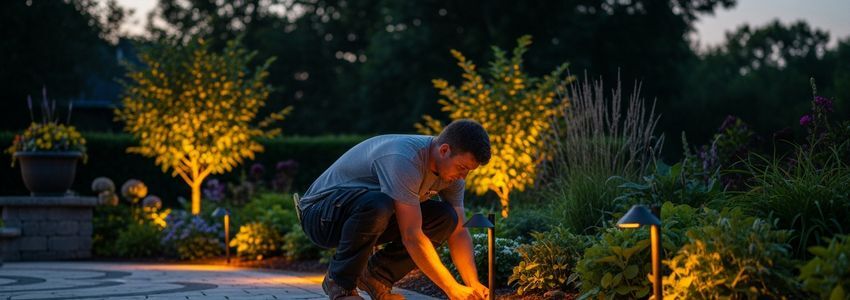
The landscape lighting industry is booming. Homeowners and commercial property managers across the United States are investing heavily in outdoor lighting systems, transforming driveways, gardens, patios, and architectural facades into stunning nighttime environments. For landscape lighting contractors, this surge in demand represents a tremendous opportunity — but seizing it requires capital. Whether you need to purchase new equipment, expand your crew, build out your inventory, or bridge gaps between large projects, landscape lighting business loans can provide the financial fuel to grow your company on your terms.
This guide covers everything landscape lighting contractors need to know about business financing: the types of loans available, what lenders look for, how to qualify, and where to apply. Whether you are a solo operator looking to scale or an established company ready to expand into commercial contracts, the right loan can accelerate your growth.
In This Article
- The Landscape Lighting Industry: Market Overview and Growth
- Why Landscape Lighting Contractors Need Business Financing
- Types of Loans for Landscape Lighting Businesses
- How to Qualify for a Landscape Lighting Business Loan
- How Much Can You Borrow?
- Key Industry Stats: Landscape Lighting Financing at a Glance
- The Loan Application Process Step by Step
- Smart Ways to Use Your Landscape Lighting Business Loan
- Managing Seasonal Cash Flow with Financing
- Frequently Asked Questions
- Next Steps: Getting Funded
The Landscape Lighting Industry: Market Overview and Growth
The landscape lighting market has experienced consistent growth over the past decade, driven by falling LED costs, growing interest in outdoor living spaces, and increased security awareness among homeowners. According to industry data, the global landscape lighting market is projected to grow at a compound annual growth rate of over 6% through 2030, with the United States representing the largest regional market.
For contractors, this translates into a steady pipeline of residential and commercial projects. A typical residential installation might range from $2,000 to $15,000, while commercial and hospitality projects frequently exceed $50,000 or more. The profitability of landscape lighting work is notable — material costs for LED systems have dropped dramatically, while labor rates remain strong in most markets.
The landscape lighting sector overlaps significantly with broader outdoor services. Many successful contractors have backgrounds in general landscaping, electrical work, or irrigation before specializing in lighting. According to the U.S. Census Bureau, there are tens of thousands of landscaping and outdoor service businesses operating across the country, and the lighting specialization segment continues to grow as consumers invest more in curb appeal and outdoor entertainment spaces.
Despite this growth, many landscape lighting businesses face real financial challenges: equipment costs are substantial, projects require upfront material purchases, and payment cycles can be slow, especially on commercial jobs. That is where business financing becomes essential.
Ready to Grow Your Landscape Lighting Business?
Get pre-qualified for a landscape lighting business loan in minutes. Flexible terms, fast decisions, and funding in as little as 24 hours.
Apply Now — It Takes 2 MinutesWhy Landscape Lighting Contractors Need Business Financing
Running a landscape lighting business involves significant upfront costs that can strain cash flow even for well-established companies. Understanding the specific financial pressures contractors face helps clarify when and why a business loan makes sense.
Equipment and Tool Costs
Landscape lighting contractors need a range of specialized tools and equipment: wire locators, voltage meters, boring machines for underground wire runs, trenching tools, vehicle-mounted equipment racks, and an ever-expanding inventory of fixtures, transformers, timers, and low-voltage cable. A full set of professional-grade tools can easily cost $10,000 to $30,000 or more. As your business grows and you add crews, these costs multiply quickly.
Inventory and Material Costs
Commercial-grade LED fixtures, transformers, low-voltage cable, and control systems must often be purchased before a job begins, especially for larger contracts. On a $50,000 commercial installation, you might need $20,000 to $25,000 in materials upfront. If you are managing multiple projects simultaneously, carrying adequate inventory becomes a significant cash requirement.
Vehicle and Fleet Needs
Most landscape lighting contractors need at least one well-equipped work vehicle, and expanding to multiple crews means additional trucks. A properly equipped service van or pickup with tool storage, ladder racks, and materials can cost $50,000 to $80,000 or more new. Fleet expansion is one of the most common reasons lighting contractors seek financing.
Hiring and Payroll
Growing your crew is how you scale revenue — but payroll must be met every two weeks regardless of when clients pay invoices. If you have recently hired additional lighting technicians or are expanding from one to two crews, a working capital loan or line of credit can ensure payroll never becomes a crisis.
Marketing and Business Development
Competing for high-end residential and commercial lighting contracts requires a strong brand presence: a professional website with gallery photos, social media advertising, yard signs, vehicles with wraps, and potentially showroom or demo displays. Marketing investments can range from a few thousand dollars to $25,000 or more for comprehensive campaigns.
Industry Insight
Landscape lighting contractors who invest in professional-grade equipment and marketing consistently report higher close rates on premium residential projects, where the average ticket size can exceed $8,000. Financing these investments strategically can accelerate revenue growth significantly.
Types of Loans for Landscape Lighting Businesses
There is no single "best" loan for every landscape lighting contractor. The right financing depends on your business stage, credit profile, how you plan to use the funds, and how quickly you need the money. Below are the primary options available.
Term Loans
A term loan provides a lump sum upfront that you repay over a fixed period with regular payments. Terms typically range from 1 to 10 years. Term loans are ideal for larger purchases like vehicles, equipment, or business expansion. Rates vary based on your credit history, time in business, and revenue. You can explore small business loans at Crestmont Capital to see what amounts and terms might fit your needs.
Equipment Financing
Equipment financing is specifically designed for purchasing business equipment, and the equipment itself serves as collateral. For landscape lighting contractors, this is an excellent option for purchasing transformers, boring machines, service vehicles, and specialized tools. Because the loan is secured by the equipment, qualification requirements are often more flexible than unsecured loans.
Business Line of Credit
A business line of credit works like a revolving credit account: you draw funds as needed, repay them, and draw again. This is particularly useful for landscape lighting contractors who have seasonal revenue swings or need to purchase materials for specific projects. You only pay interest on what you use, making it a flexible and cost-effective tool for managing cash flow.
Short-Term Business Loans
Short-term business loans are designed for contractors who need capital quickly and can repay within 3 to 18 months. They are often easier to qualify for than traditional term loans and fund much faster, sometimes within 24 to 48 hours. This makes them ideal for seizing a time-sensitive contract or covering an unexpected expense.
Fast Business Loans
When opportunity knocks — a large commercial bid, a chance to purchase equipment from a closing competitor — waiting weeks for approval is not an option. Fast business loans from alternative lenders can often be approved and funded within one business day. Speed comes at a cost (rates are typically higher), but for the right opportunity, the math often works out strongly in your favor.
SBA Loans
Small Business Administration loans offer some of the best rates and terms available to small business owners. SBA loans are government-backed loans issued by approved lenders. The SBA 7(a) program is the most popular option for landscape lighting contractors seeking $50,000 to $5 million for equipment, working capital, or expansion. The application process takes longer (4 to 12 weeks typically), but the resulting terms — lower rates, longer repayment periods — can be significantly better than alternative lending. You can learn more about SBA loan programs directly at SBA.gov.
Revenue-Based Financing
Revenue-based financing ties your loan repayment to your monthly revenue — when business is slower, you pay less; when revenue is higher, you pay more. This can be a good fit for landscape lighting businesses with seasonal revenue patterns.
Invoice Financing
For contractors who do significant commercial work, waiting 30 to 60 days for invoice payment can create serious cash flow stress. Invoice financing allows you to unlock the cash tied up in outstanding invoices, typically advancing 70% to 90% of the invoice value immediately. This can eliminate the gap between project completion and client payment.

How to Qualify for a Landscape Lighting Business Loan
Lender requirements vary significantly depending on the loan type, but understanding the key qualification factors helps you prepare your application and maximize your approval odds.
Credit Score
Your personal credit score is one of the most important factors in qualifying for a business loan, especially for younger businesses. Most traditional lenders prefer scores of 680 or higher for term loans and SBA products. Alternative lenders work with scores as low as 550 or 600, though rates will be higher. For equipment financing, requirements are often more flexible because the collateral reduces lender risk. If your credit needs work, consider visiting the resources at SBA.gov's credit building guide.
Time in Business
Most lenders want to see at least 6 months to 1 year in business, though SBA loans typically require 2 years. Alternative lenders are generally more flexible. Newer businesses often qualify for equipment financing or short-term loans more easily than traditional term loans.
Annual Revenue
Lenders want to see sufficient revenue to service the loan comfortably. For most business loans, lenders look for annual revenue of at least $100,000 to $250,000, though requirements vary. The loan amount is typically calibrated to 10% to 15% of annual revenue for term loans.
Cash Flow
Beyond raw revenue, lenders examine your cash flow — the money actually flowing in and out of your business accounts. Consistent positive cash flow is a strong signal that you can service loan payments. Three to six months of bank statements are typically required.
Collateral
Some loans require collateral: business assets like vehicles, equipment, or real estate that the lender can claim if you default. Equipment loans use the equipment itself as collateral. For unsecured loans, no collateral is required, but rates are higher to compensate for the lender's increased risk. Many landscape lighting contractors use their vehicle fleet or equipment inventory as collateral.
Pro Tip: Prepare Your Documents in Advance
Having your financial documents organized before you apply dramatically speeds up the process. Gather: 3-6 months of business bank statements, your most recent tax return, a copy of your business license, and a brief description of how you plan to use the funds. Some alternative lenders can approve and fund same-day with just bank statements and a driver's license.
How Much Can You Borrow?
Loan amounts for landscape lighting contractors vary widely based on the type of financing, your revenue, and your creditworthiness:
- Micro loans and starter loans: $5,000 to $50,000 — ideal for solo operators purchasing initial equipment or covering early growth expenses
- Working capital and short-term loans: $10,000 to $500,000 — used for payroll, materials, and cash flow management
- Equipment financing: $10,000 to $5 million — tied to specific equipment purchases
- SBA 7(a) loans: Up to $5 million — for established businesses with strong credit and revenue
- Business lines of credit: $10,000 to $500,000 — revolving credit for ongoing cash flow needs
As a general guideline, you can typically borrow up to 10% to 15% of your annual gross revenue in an unsecured term loan. Equipment financing can allow you to finance up to 100% of the equipment's purchase price. For reference, if your landscape lighting business generates $400,000 annually, you might qualify for $40,000 to $60,000 in a working capital loan, or significantly more with equipment collateral or SBA backing.
Key Industry Stats: Landscape Lighting Financing at a Glance
Landscape Lighting Industry: Fast Facts for Contractors
$6B+
U.S. Landscape Lighting Market Size
6%+
Annual Market Growth Rate (CAGR)
$2K-$50K+
Typical Residential to Commercial Project Range
24 hrs
Fast Loan Funding Available
$5K-$5M
Typical Business Loan Range for Contractors
550+
Minimum Credit Score for Alternative Lenders
Expand Your Crew, Equipment, or Territory
Crestmont Capital works with landscape lighting contractors at every stage. Get a same-day quote with no obligation.
Get My QuoteThe Loan Application Process Step by Step
Applying for a landscape lighting business loan is straightforward when you know what to expect. Here is a step-by-step walkthrough of the process.
Step 1: Define Your Funding Need
Before you approach any lender, be clear about exactly what you need and why. How much capital do you require? What will you use it for? How will the investment generate return? Lenders appreciate clarity, and knowing your numbers improves your credibility and helps match you to the right product.
Step 2: Check Your Credit
Pull your personal credit report and check your score before applying. This gives you time to dispute any errors and understand where you stand. If your score is below 600, you may want to focus on alternative lenders or equipment financing first, then work toward SBA or traditional bank products over time.
Step 3: Gather Your Documents
Typical documentation requirements include:
- Business bank statements (last 3-6 months)
- Business and personal tax returns (last 1-2 years)
- Government-issued ID and business license
- Profit and loss statement
- Accounts receivable aging report (if applicable)
- Equipment quotes or invoices (for equipment financing)
Step 4: Choose Your Lender Type
Traditional banks offer the best rates but require strong credit and extensive documentation. SBA lenders offer excellent terms but take time. Alternative online lenders fund quickly with more flexible requirements but at higher rates. Match your lender type to your current credit profile, urgency, and loan size. For many landscape lighting contractors, an alternative lender is the fastest path to capital, and refinancing to a better rate after building your credit profile is a smart strategy.
Step 5: Submit Your Application
Most online lenders offer a 5 to 10-minute application. You will enter basic business information, financial details, and upload or connect your bank statements. Many alternative lenders provide a decision within hours.
Step 6: Review and Accept Your Offer
Read the loan offer carefully, paying attention to the interest rate, APR, total cost of the loan, prepayment penalties, and repayment schedule. Ask questions if anything is unclear. According to a Forbes analysis of small business loans, comparing at least two to three offers significantly improves the terms borrowers ultimately receive.
Step 7: Receive Funding and Deploy Capital
Once approved and signed, funds are typically deposited within 1 to 3 business days for alternative lenders, or 2 to 4 weeks for SBA products. Deploy your capital according to your plan — purchase equipment, hire staff, order materials, or invest in marketing.
Smart Ways to Use Your Landscape Lighting Business Loan
Thoughtful use of loan proceeds is the difference between a loan that pays for itself many times over and one that creates financial stress. Here are the highest-ROI applications for landscape lighting contractors.
Purchase Specialized Equipment
Investing in professional-grade equipment increases your efficiency, quality, and the range of work you can bid on. Directional boring machines, commercial cable reels, advanced lighting control systems, and high-quality demonstration equipment all directly expand what your business can do and what it can charge.
Expand Your Vehicle Fleet
Each new service crew you add has the potential to double or triple your revenue from a single vehicle investment. Financing a new work truck through equipment financing rather than depleting cash reserves allows you to preserve liquidity while growing capacity.
Build Out Your Inventory
Contractors who carry deep inventory can respond to project opportunities faster, negotiate better with suppliers by buying in volume, and complete projects without costly supply chain delays. A working capital loan or line of credit can fund a meaningful inventory build-out.
Invest in Marketing and Lead Generation
For landscape lighting contractors, visual marketing is everything. A well-designed website with professional nighttime photography, targeted Google Ads for local search terms, and social media profiles showcasing completed projects can generate a consistent stream of inbound leads. Related reading: see how electrical contractors use business loans for similar growth initiatives.
Hire and Train Your Team
Skilled lighting technicians are the limiting resource for most growing contractors. Using loan proceeds to hire and train additional technicians expands your revenue-generating capacity. Consider that a well-trained crew can produce $150,000 to $250,000 or more in annual revenue — the math on financing that payroll investment is often compelling.
Bridge Seasonal Cash Flow
If you operate in a region with cold winters or extreme summers, your revenue will be lumpy. A line of credit or short-term working capital loan can bridge the gap between slow seasons and high-revenue installation months, ensuring you can keep your team employed year-round.
Cross-Industry Insight
Smart home and outdoor technology contractors face similar growth challenges. If you are expanding into automated lighting control systems, check out our guide on smart home installation business loans for additional context on financing technology-driven outdoor services.
Managing Seasonal Cash Flow with Financing
Seasonality is one of the most significant financial challenges for landscape lighting contractors. Installation demand spikes in spring and fall when clients are preparing for the outdoor season and holiday entertaining. Winter months may be slow for new installations in colder climates, though service and maintenance work can smooth some of the revenue variability.
Effective financial management during peak and off-peak seasons requires planning. Here are strategies that experienced contractors use:
Establish a Line of Credit Before You Need It
A business line of credit is best opened when your business is performing well, not when you are already struggling with cash flow. Establishing a credit line during a strong revenue period gives you a ready source of capital to draw on during slow months without the pressure of a new loan application.
Use Financing to Lock In Supplier Pricing
Many lighting suppliers offer early-order discounts for contractors who purchase inventory in advance of the season. Using a short-term loan or line of credit to take advantage of these discounts can yield a meaningful savings percentage on material costs across a full season's worth of projects.
Offer Annual Maintenance Contracts
Recurring revenue from maintenance contracts smooths out seasonal variability. Financing can fund the staffing and systems needed to offer professional maintenance programs, which in turn create year-round cash flow that makes your business more financeable in the future.
Align Loan Repayment with Revenue Cycles
If possible, structure loan repayment to align with your high-revenue months. Revenue-based financing does this automatically. For term loans, consider requesting a seasonal payment schedule that reduces obligations during known slow periods — some lenders offer this flexibility for contractors.
Stop Letting Cash Flow Slow You Down
From equipment purchases to seasonal bridging, Crestmont Capital has a landscape lighting business loan solution designed for your needs.
Apply Now — No ObligationLandscape Lighting Loans for Bad Credit
If your credit score is below average, you still have options. The landscape lighting industry's strong growth and high project revenue make many contractors more fundable than their credit scores alone might suggest.
Alternative lenders and online financing platforms use expanded underwriting criteria that go beyond credit scores. They look at your recent bank statements, revenue trends, time in business, and the overall health of your business operations. Bad credit business loans are available from lenders who specialize in working with contractors who have had past financial challenges.
Equipment financing is particularly accessible for contractors with imperfect credit because the collateral (the equipment itself) reduces the lender's risk. You may pay a higher rate, but you can often finance trucks, boring equipment, or specialized tools even with a credit score in the 550 to 600 range.
The key is to be transparent, demonstrate consistent revenue, and have a clear plan for how the loan will be used and repaid. Many contractors who start with higher-rate alternative financing refinance to better products within 12 to 24 months after building a stronger payment history.
Frequently Asked Questions About Landscape Lighting Business Loans
1. What is the best type of loan for a landscape lighting contractor?
The best loan type depends on your specific need. For equipment purchases, equipment financing is usually the best fit because the equipment serves as collateral and rates are competitive. For ongoing cash flow management, a business line of credit provides flexible access to funds. For larger expansion projects, an SBA loan or term loan may offer the best combination of rate and repayment term.
2. How much can a landscape lighting business borrow?
Loan amounts range from $5,000 for small micro-loans to $5 million or more for SBA-backed loans. Most landscape lighting contractors qualify for $25,000 to $500,000 through alternative or traditional lenders, depending on annual revenue, credit score, and time in business. Equipment financing can often exceed these amounts when major purchases are involved.
3. What credit score do I need to get a landscape lighting business loan?
Requirements vary by lender. Traditional banks typically require 680 or higher. SBA lenders generally want 650 or above. Alternative online lenders work with scores as low as 550 to 600. Equipment financing is often accessible with scores in the 580 to 620 range because of the collateral involved.
4. How fast can I get a landscape lighting business loan?
Speed depends on the lender type. Alternative online lenders can approve and fund within 24 to 48 hours in many cases. Traditional banks typically take 2 to 6 weeks. SBA loans take 4 to 12 weeks. If speed is critical, an alternative lender or fast business loan provider is your best option.
5. Can a startup landscape lighting business get a loan?
Yes, though options are more limited than for established businesses. Equipment financing is often available to businesses with as little as 3 to 6 months of operating history. SBA Microloans (up to $50,000) are specifically designed for new and early-stage businesses. Business credit cards and personal loans are also options for true startups with limited business history.
6. Is a personal guarantee required for landscape lighting business loans?
Most small business loans, especially for smaller companies without substantial business assets, require a personal guarantee from the business owner. This means you are personally responsible for repaying the loan if the business cannot. Equipment loans secured by the equipment may have more flexibility, but personal guarantees are standard for most business lending below a certain size.
7. What documents do I need to apply for a landscape lighting business loan?
Requirements vary by lender. For alternative lenders, you typically need: a government-issued ID, 3 to 6 months of business bank statements, and basic business information. For traditional bank or SBA loans, you will also need: 1 to 2 years of business and personal tax returns, a profit and loss statement, balance sheet, and potentially a business plan.
8. Can I use a business loan to purchase lighting fixtures and materials?
Yes. Working capital loans, lines of credit, and short-term loans are commonly used to purchase inventory including lighting fixtures, transformers, low-voltage cable, and installation materials. Some lenders also offer inventory financing specifically for this purpose. There are generally no restrictions on using general business loan proceeds for materials and supplies.
9. How do SBA loans work for landscape lighting contractors?
SBA loans are not issued directly by the government — the SBA guarantees a portion of the loan, reducing lender risk and enabling better rates and terms. You apply through an SBA-approved lender (bank, credit union, or online lender). The SBA 7(a) program offers up to $5 million for working capital, equipment, real estate, and business acquisition. The SBA 504 program is specifically for major fixed asset purchases. Processing takes 4 to 12 weeks, and strong credit and documentation are required.
10. What interest rates should I expect on a landscape lighting business loan?
Rates vary widely: SBA loans currently range from approximately 10% to 13% APR; traditional bank term loans run 7% to 15%; equipment financing rates are typically 6% to 18%; alternative online lenders charge 15% to 50%+ APR; and merchant cash advances can carry effective rates of 40% to 150% or more. The right rate for your situation depends on your credit profile, collateral, and how quickly you need the funds.
11. Can I get a business loan if I have a sole proprietorship or LLC?
Yes. Both sole proprietors and LLCs can qualify for business loans. Many landscape lighting contractors operate as sole proprietors early on and transition to an LLC as they grow. Most lenders work with both structures, though you will likely need an EIN (Employer Identification Number) and a dedicated business bank account. Operating as an LLC can sometimes improve your access to credit because it demonstrates formal business structure.
12. How does invoice financing work for landscape lighting contractors?
Invoice financing allows you to borrow against outstanding invoices rather than waiting for clients to pay. The lender typically advances 70% to 90% of the invoice value immediately, and you receive the remaining balance (minus fees) when your client pays. This is particularly useful for commercial landscape lighting contractors who have net-30 or net-60 payment terms with property managers, HOAs, or general contractors.
13. What is the difference between equipment financing and a term loan for buying a work vehicle?
Equipment financing is a loan specifically secured by the vehicle or equipment you are purchasing, which reduces lender risk and typically results in better rates. The vehicle is collateral — if you default, the lender can repossess it. A general term loan can also be used to purchase a vehicle, but it may be unsecured and carry higher rates. For most landscape lighting contractors purchasing a service vehicle, equipment financing or a commercial auto loan is the better-structured, more cost-effective choice.
14. How do I build business credit to access better financing in the future?
Building business credit starts with opening a business bank account, getting an EIN, and registering with business credit bureaus like Dun & Bradstreet. Pay all business obligations on time, open vendor credit accounts that report to bureaus, and consider a small business credit card used responsibly. Over 12 to 24 months of strong payment history, your business credit profile will strengthen, giving you access to larger loans at better rates.
15. Is Crestmont Capital a good fit for landscape lighting contractors?
Crestmont Capital works with contractors across the green and outdoor services industry, including landscape lighting businesses. We offer a range of financing products designed for contractors: working capital loans, equipment financing, lines of credit, and fast-funding options. Our team understands the unique seasonality, project cycles, and cash flow patterns of contractor businesses. Apply online in minutes and receive a same-day decision.
Next Steps: How to Get Your Landscape Lighting Business Funded
Your Path to Funding in 5 Steps
- Define your funding need: Determine exactly how much you need and what you will use it for. Equipment? Working capital? Expansion? Having clarity makes the application process faster and helps match you to the right product.
- Check your credit: Pull your personal and business credit reports. Know your score before applying so there are no surprises, and dispute any errors in advance.
- Gather your documents: Collect your last 3 to 6 months of bank statements, most recent tax return, and business license. For equipment financing, get quotes for what you want to purchase.
- Apply online: Submit your application at Crestmont Capital. Our application takes less than 5 minutes, and you can receive a decision on the same day.
- Deploy your capital: Once funded, put the money to work immediately. Whether you are buying equipment, adding to your team, or building inventory, every dollar deployed strategically accelerates your business growth.
The landscape lighting industry rewards contractors who invest strategically. The right business loan, deployed wisely, can be the catalyst that takes your company from a local operation to a dominant player in your market. Whether you need $25,000 for equipment, $100,000 to expand your crew, or a revolving line of credit to manage seasonal cash flow, financing options exist for landscape lighting contractors at every stage of growth.
If you are ready to explore your options, Crestmont Capital's team of small business financing specialists understands the landscape lighting industry and can help you find the right product for your specific situation. Apply today and take the next step toward building the business you envision.
Disclaimer: The information provided in this article is for general educational purposes only and is not financial, legal, or tax advice. Funding terms, qualifications, and product availability may vary and are subject to change without notice. Crestmont Capital does not guarantee approval, rates, or specific outcomes. For personalized information about your business funding options, contact our team directly.