
 (800) 949-0401
Kettle Corn Equipment Financing: The Complete Guide
The sweet and savory aroma of freshly popped kettle corn is a powerful draw at farmers' markets, street fairs, and festivals across the country. This simple, nostalgic treat has turned into a lucrative business opportunity for entrepreneurs who can master the craft. But turning that delicious dream into a profitable reality requires more than just a good recipe-it requires the right equipment. From industrial-sized kettles to mobile vending carts, the initial investment can be a significant hurdle. That's where kettle corn equipment financing comes in, providing the capital you need to get popping without draining your personal savings.
Whether you're starting a weekend side hustle or building a full-scale confectionery empire, understanding your financing options is crucial. This comprehensive guide will walk you through every aspect of funding your kettle corn venture. We'll break down the types of equipment you'll need, explore the true costs involved, compare different financing products, and outline the exact steps to get approved. At Crestmont Capital, we've helped countless food and beverage entrepreneurs launch and scale their businesses, and we're here to show you how to secure the funding that turns your kettle corn business from an idea into a cash-flowing operation.
In This Article
- What is Kettle Corn Equipment? A Complete Breakdown
- The True Cost of Starting a Kettle Corn Business
- Why Finance Kettle Corn Equipment Instead of Paying Cash?
- Top Kettle Corn Equipment Financing Options Explained
- How to Qualify for Kettle Corn Equipment Financing
- The Step-by-Step Application Process for Equipment Financing
- Financing Scenarios: From Pop-Up to Permanent Storefront
- Choosing the Right Lender for Your Kettle Corn Business
- Frequently Asked Questions About Kettle Corn Equipment Financing
What is Kettle Corn Equipment? A Complete Breakdown
Before you can secure financing, you need a clear picture of the equipment required to run a successful kettle corn operation. The specific items you need will depend on your business model-a small pop-up tent at a local market has different needs than a permanent kiosk in a busy mall. Here’s a detailed look at the essential gear.
Core Popping Equipment: The Heart of Your Operation
This is the most critical and often most expensive part of your setup. The quality of your popper directly impacts your product's consistency and your production volume.
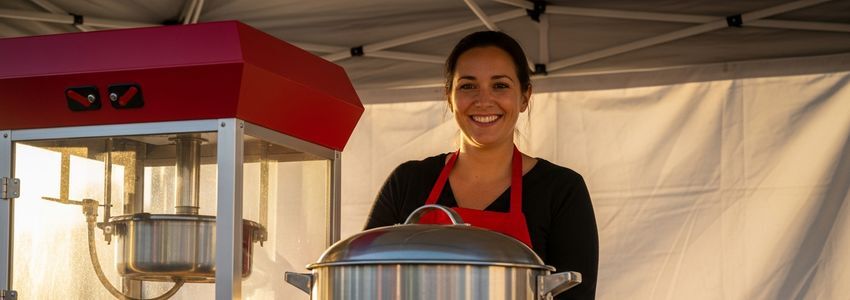
- Kettle Corn Poppers: Unlike standard popcorn machines, these are large, open-top kettles, typically made of stainless steel or copper. They are designed for continuous stirring while sugar and other ingredients are added. They range in size from 80-quart models suitable for smaller events to massive 160-quart machines for high-volume production. They can be gas-powered (propane) for outdoor use or electric for indoor locations.
- Caramel Corn Cooker Mixers: If you plan to expand your menu to include caramel corn, you'll need a specialized cooker mixer. These machines heat and mix ingredients to create a perfect caramel coating without burning.
Sifting and Cooling Tables
Once the kettle corn is popped, it needs to be processed quickly to ensure a quality product. This is where sifting and cooling tables become indispensable.
- Sifting Tables: These tables have a perforated surface that allows unpopped kernels (also known as "old maids") and smaller broken pieces to fall through, leaving only the best-quality popcorn for bagging. This is a crucial step for customer satisfaction.
- Cooling Tables: Hot kettle corn fresh from the popper is sticky due to the melted sugar. A large, flat cooling table allows you to spread the corn out in a thin layer, letting it cool rapidly. This prevents clumping and creates the light, crispy texture customers love.
Bagging and Sealing Equipment
Presentation and preservation are key to maximizing profits. Professional packaging not only looks better but also extends the shelf life of your product.
- Baggers and Funnels: Simple stainless steel funnels and scoops help you efficiently fill bags without making a mess. Some systems are more automated for higher volume.
- Heat Sealers: An impulse heat sealer creates a professional, airtight seal on your bags. This keeps the kettle corn fresh for days or even weeks, allowing you to sell pre-packaged products and reduce waste.
Tents, Carts, and Mobile Setups
For most kettle corn businesses, mobility is the name of the game. Your setup needs to be durable, portable, and compliant with local health and safety regulations.
- Vending Tents: A 10x10 foot or 10x20 foot pop-up tent is standard. Look for a heavy-duty, fire-retardant model to protect you, your equipment, and your customers from the elements.
- Vending Carts or Trailers: A custom-built cart or trailer can house your entire operation, making setup and teardown much faster. These often include built-in storage, sinks for handwashing (a common health department requirement), and a professional appearance that can attract more customers.
Ancillary Supplies and Support Equipment
Beyond the main machinery, there are several other items you'll need to budget for:
- Propane Tanks: If you're using a gas-powered popper.
- Fire Extinguishers: A non-negotiable safety requirement.
- Cash Handling System: A cash box or a modern POS system that accepts credit cards.
- Signage and Banners: Professional branding to attract customers from a distance.
- Ingredients and Consumables: Bulk supplies of kernels, sugar, oil, salt, and specialty flavorings, plus bags, twist ties, and labels.
Financing can often cover a complete package, bundling the main popper with all the necessary support equipment into a single, manageable monthly payment.
Ready to Grow Your Business?
Get fast, flexible financing from the #1 business lender in the U.S. No obligation - apply in minutes.
Apply Now →The True Cost of Starting a Kettle Corn Business
The total investment for a kettle corn business can vary dramatically, from a few thousand dollars for a basic, used setup to over $50,000 for a top-of-the-line, fully-equipped trailer. Understanding these costs is the first step toward creating a realistic budget and determining how much financing you need.
Here’s a breakdown of typical cost ranges for new equipment:
| Equipment Item | Low-End Cost (Basic/Used) | High-End Cost (New/Commercial Grade) |
|---|---|---|
| Kettle Corn Popper (80-160 qt) | $2,000 | $8,000+ |
| Sifting/Cooling Table | $500 | $2,500+ |
| Vending Tent & Signage | $400 | $1,500+ |
| Bagging/Sealing Equipment | $100 | $700+ |
| Initial Ingredients & Supplies | $500 | $2,000+ |
| Licenses, Permits, Insurance | $300 | $1,000+ |
| Estimated Total (Basic Tent Setup) | $3,800 | $15,700+ |
| Fully-Equipped Vending Trailer | $25,000 - $50,000+ | |
As you can see, even a "basic" setup requires a significant upfront investment. For a serious entrepreneur looking to make this a full-time business, a professional trailer is often the goal. A $30,000 equipment package is a common target for those who want a reliable, efficient, and health-department-compliant mobile operation. Attempting to pay this out-of-pocket can be a major barrier to entry.
Pro Tip: Don't Forget Soft Costs
When applying for financing, remember to include "soft costs" in your total funding request. These are non-physical costs associated with your equipment purchase, such as shipping, installation, and training. Many equipment financing agreements allow you to bundle these expenses, ensuring you have one simple payment for the entire project.
Why Finance Kettle Corn Equipment Instead of Paying Cash?
Even if you have the cash on hand, financing your kettle corn equipment is often the smarter financial decision. Successful business owners understand the power of leverage and cash flow management. Here are the key advantages of using financing.
- Preserve Working Capital: Cash is the lifeblood of any business, especially a new one. Tying up thousands of dollars in equipment leaves you vulnerable to unexpected expenses. By financing, you keep your cash free for inventory, marketing, event fees, payroll, and other operational costs that generate immediate revenue.
- Get Better Equipment Now: Financing allows you to acquire the high-quality, efficient equipment you need to be competitive from day one, rather than settling for a cheaper, less reliable setup. A larger, faster popper means you can serve more customers during peak hours, directly increasing your sales potential.
- Predictable Monthly Payments: An equipment financing agreement gives you a fixed, predictable monthly payment. This makes budgeting and financial forecasting simple and straightforward, eliminating the risk of a large, unexpected capital outlay.
- Potential Tax Advantages: In the U.S., Section 179 of the IRS tax code allows businesses to deduct the full purchase price of qualifying equipment from their gross income. This can provide a significant tax benefit. Both equipment loans and certain types of leases can qualify. It is essential to consult with a tax professional to understand how this applies to your specific situation.
- Build Business Credit: Making timely payments on an equipment loan or lease helps build a strong credit profile for your business. This will make it easier and cheaper to secure other types of financing-like a business line of credit-as your company grows.
Top Kettle Corn Equipment Financing Options Explained
When you seek kettle corn equipment financing, you'll encounter several different products. Each has its own structure, benefits, and best-use cases. Here’s a breakdown of the most common options offered by lenders like Crestmont Capital.
Equipment Financing Agreements (EFA)
An EFA is a straightforward loan specifically for purchasing equipment. The equipment itself serves as the collateral for the loan, which often makes it easier to qualify for than a traditional bank loan. You make regular payments for a set term (e.g., 2-5 years), and at the end of the term, you own the equipment outright. This is the most popular choice for business owners who want to build equity in their assets.
Equipment Leasing
With an equipment lease, you are essentially renting the equipment for a specific period. Monthly payments are typically lower than with an EFA because you are only paying for the depreciation of the equipment during the lease term, not its full value. At the end of the lease, you usually have several options:
- Purchase the equipment for a predetermined price (e.g., a $1 buyout lease or a Fair Market Value lease).
- Return the equipment and upgrade to a newer model.
- Renew the lease for an additional term.
Leasing is an excellent option if you want lower initial payments or if you anticipate needing to upgrade your equipment in a few years.
Small Business Loans (Term Loans)
A traditional small business loan provides you with a lump sum of cash that you can use for various business purposes, including purchasing equipment. While they can be used for kettle corn machines, they are often less streamlined than a dedicated EFA. The application process may be more intensive, requiring a detailed business plan and more documentation. However, they can be a good option if you need funding for equipment plus additional working capital.
Business Line of Credit
A business line of credit works like a credit card for your business. You are approved for a certain credit limit and can draw funds as needed, only paying interest on the amount you use. While not ideal for a single large equipment purchase, a line of credit is an excellent tool for covering ongoing expenses like ingredient restocking, event fees, or minor equipment repairs and upgrades.
How to Qualify for Kettle Corn Equipment Financing
Lenders evaluate several factors to assess the risk of lending to your business. While requirements vary, especially between traditional banks and alternative lenders like Crestmont Capital, these are the key areas they will review.
Credit Score
Your personal credit score is a primary factor, especially for new businesses. A score of 620 or higher is generally preferred, but options are available for those with lower scores. Lenders look at your credit history to gauge your reliability in repaying debts. Having a business credit score is also beneficial but not always required for startups.
Time in Business
Most lenders prefer to work with businesses that have been operating for at least 6 months to a year. This demonstrates a track record and reduces the perceived risk. However, many lenders, including Crestmont Capital, have specific programs designed for startups with strong business plans and good personal credit.
Annual Revenue
For existing businesses, lenders will want to see your monthly or annual revenue. This shows them you have the cash flow to support a new monthly payment. A common minimum is around $10,000 in monthly revenue, but this can be flexible depending on the lender and the strength of your overall application.
Business Plan and Projections
For startups with no revenue history, a solid business plan is critical. It should outline your business model, target market (e.g., specific festivals, farmers' markets), marketing strategy, and realistic financial projections. Show the lender how the new equipment will generate enough revenue to cover the loan payments and turn a profit. A quote from an equipment vendor for the specific items you want to finance is also essential.
Financing with Bad Credit or as a Startup
Don't be discouraged if you have a low credit score or are just starting out. Because the equipment itself acts as collateral, equipment financing is one of the most accessible types of funding. Lenders are more focused on the value of the asset and its ability to generate revenue. At Crestmont Capital, we offer specialized bad credit business loans and startup financing programs designed to help new entrepreneurs get the gear they need.
The Step-by-Step Application Process for Equipment Financing
One of the biggest advantages of working with a modern lender is the speed and simplicity of the application process. Gone are the days of waiting weeks for a decision from a bank. Here’s what the typical process looks like.
Your 4-Step Path to Equipment Funding
Get a Quote
Select the kettle corn equipment you need and get a formal quote from the vendor. This is the basis of your funding request.
Apply Online
Complete a simple one-page online application, which usually takes less than five minutes. Basic business and personal info is all that's needed.
Review Offers
Receive your financing offers, often within a few hours. A dedicated funding specialist will walk you through the terms and rates.
Get Funded
Once you sign the documents, the lender pays the equipment vendor directly. Your new equipment is shipped, and you start popping!
The key to a smooth process is preparation. Before you apply, have the following ready:
- Equipment Quote: A detailed invoice from your chosen vendor listing all the items and the total cost.
- Business Information: Your business's legal name, address, tax ID (EIN), and time in business.
- Personal Information: Your name, address, and Social Security Number (for credit check purposes).
- Bank Statements: For existing businesses, the last 3-6 months of business bank statements are often required to verify revenue.
With this information on hand, you can complete the application and move toward funding in as little as 24 hours.
See Your Financing Options in Minutes
Our simple online application has no impact on your credit score. Find out how much you qualify for today.
Apply Now →Financing Scenarios: From Pop-Up to Permanent Storefront
The right financing strategy depends on your business goals. Let's look at three common scenarios for kettle corn entrepreneurs and the best financing approach for each.
Scenario 1: The Weekend Warrior
- Business Model: A side hustle operating at a local farmers' market or a few community events per month.
- Equipment Needs: A basic, portable setup: an 80-quart popper, a small sifting table, a 10x10 tent, and basic bagging supplies.
- Total Cost: Approximately $5,000 - $8,000.
- Best Financing Option: A short-term equipment financing agreement (24-36 months). The payments will be low and manageable, and the revenue from just a few successful weekends a month should easily cover the cost. This allows the business owner to test the market without a huge personal financial risk.
Scenario 2: The Full-Time Event Vendor
- Business Model: A full-time operation focused on larger, multi-day events like state fairs, music festivals, and corporate functions.
- Equipment Needs: A high-capacity, durable setup. This likely includes a 160-quart popper, a large sifting/cooling table, professional signage, a credit card processing system, and perhaps a small enclosed trailer for transport and storage.
- Total Cost: Approximately $15,000 - $25,000.
- Best Financing Option: A 3-5 year equipment financing agreement or a $1 buyout lease. The longer term keeps monthly payments affordable, which is crucial for a business with seasonal revenue fluctuations. The ability to own the equipment at the end provides a long-term asset for the business. As a leading source for fast business loans, Crestmont can get vendors like this funded in time for their next big event.
Scenario 3: The Retail Shop Owner
- Business Model: A permanent location, such as a mall kiosk, a storefront, or a dedicated section within a larger candy shop.
- Equipment Needs: An all-electric, commercial-grade setup that meets stringent indoor health and fire codes. This includes an electric popper with a ventilation hood, stainless steel counters, a caramel corn cooker, commercial sinks, and retail display cases.
- Total Cost: Approximately $30,000 - $50,000+.
- Best Financing Option: A combination of financing products. A 5-year equipment financing agreement for the core production machinery is ideal. Additionally, a business line of credit would be invaluable for managing inventory, payroll, and the marketing expenses associated with a grand opening. This diversified funding approach supports both the large capital investment and the day-to-day operational needs of a retail business. This mirrors strategies used in similar industries, like those seeking bakery equipment financing.
Choosing the Right Lender for Your Kettle Corn Business
Not all lenders are created equal. The partner you choose for your kettle corn equipment financing can have a significant impact on your business's success. While your local bank might be the first place you think to go, alternative lenders often provide a better experience for small business owners.
Here’s what to look for in a financing partner:
- Speed: The world of events and opportunities moves fast. A lender who can provide a decision and funding within 24-48 hours is a massive advantage over a bank that might take weeks or months.
- Flexibility: Look for a lender with a wide range of products (loans, leases, lines of credit) and flexible qualification criteria. They should be willing to work with startups and business owners with less-than-perfect credit.
- Industry Experience: A lender familiar with the food and beverage or mobile vendor industry will better understand your business model, the value of the equipment, and your unique challenges. This expertise, recognized by outlets like Forbes, leads to a smoother, faster approval process.
- Transparency: Your lender should be upfront about interest rates, fees, and the total cost of financing. There should be no hidden surprises. A dedicated account manager who can walk you through the terms is a sign of excellent customer service.
- Customer Reviews: Look for a lender with a proven track record of helping businesses like yours. Check online reviews and testimonials to gauge their reputation and commitment to customer success.
At Crestmont Capital, we pride ourselves on checking all these boxes. As the nation's #1 business lender, we combine the speed and flexibility of a fintech company with the expertise and service of a dedicated financial partner. We understand the hustle of entrepreneurs in the food and events space and are committed to providing the capital you need to succeed.
Partner with the Best in the Business
Join thousands of entrepreneurs who trust Crestmont Capital for their equipment financing needs. Get your personalized quote today.
Get Started →Frequently Asked Questions About Kettle Corn Equipment Financing
1. What is the minimum credit score needed for kettle corn equipment financing?
While a higher credit score (650+) will result in better rates, many lenders, including Crestmont Capital, can offer financing for scores as low as 550. Because the equipment itself serves as collateral, lenders are often more flexible with credit requirements compared to unsecured loans.
2. Can I get financing for a new startup kettle corn business?
Yes, startup financing is available. Lenders will place more emphasis on your personal credit score and may require a detailed business plan with financial projections. Having some personal investment or "skin in the game" can also strengthen your application.
3. Can I finance used kettle corn equipment?
Absolutely. Financing used equipment is a great way to lower your startup costs. Lenders will typically finance used equipment as long as it is in good working condition and has a reasonable useful life remaining. The lender may want to see an invoice from a reputable seller or an appraisal to verify its value.
4. How much of a down payment is required?
One of the major benefits of equipment financing is that it often requires little to no down payment. Many programs offer 100% financing. For startups or those with challenged credit, a down payment of 10-20% might be requested to lower the lender's risk.
5. How long are the repayment terms?
Repayment terms for kettle corn equipment typically range from 24 to 60 months (2 to 5 years). Longer terms result in lower monthly payments but higher total interest paid, while shorter terms have higher payments but save you money on interest.
6. What's the difference between an equipment loan and a lease?
With an equipment loan (or EFA), you are the owner of the equipment from day one and are paying it off over time. With a lease, the lender owns the equipment, and you pay to use it. Leases often have lower monthly payments and offer flexibility at the end of the term, such as upgrading to new equipment.
7. Can I finance a complete trailer or mobile kitchen?
Yes. Lenders can finance a complete, custom-built vending trailer or food truck. The financing can cover the trailer itself plus all the equipment installed inside, providing a turnkey solution with a single monthly payment.
8. How quickly can I get funded?
With alternative lenders like Crestmont Capital, the process is very fast. After submitting a simple online application, you can receive an approval within hours and have the funds sent directly to your equipment vendor in as little as 24 hours.
9. Will applying for financing affect my credit score?
Most modern lenders, including Crestmont Capital, use a "soft pull" for the initial application and pre-approval. A soft pull does not impact your credit score. A "hard pull" is typically only performed once you decide to move forward with a specific financing offer.
10. Can I pay off my equipment loan early?
This depends on the lender and the specific terms of your agreement. Some loans have prepayment penalties, while others do not. It's an important question to ask your financing specialist before signing any documents.
11. What interest rates can I expect?
Interest rates vary widely based on your credit score, time in business, and the lender. They can range from single digits for well-qualified businesses to higher rates for startups or those with poor credit. The best way to know for sure is to get a no-obligation quote.
12. Can I bundle shipping and installation costs into the financing?
Yes, most equipment financing agreements allow you to include "soft costs" like taxes, shipping, and installation fees into the total amount financed. This simplifies the process and helps you conserve even more of your working capital.
13. What happens if the equipment breaks down while I'm still paying for it?
You are still responsible for making your loan or lease payments. This is why it's crucial to buy from a reputable manufacturer that offers a solid warranty. Some lenders may also offer equipment protection plans for an additional cost.
14. What documents do I need to apply?
For most applications under $100,000, you will only need a simple one-page application and a quote for the equipment. For larger amounts or more complex situations, you may be asked for 3-6 months of business bank statements and basic financial information.
15. Can I get financing if my business is seasonal?
Yes. Many lenders understand the seasonal nature of businesses like kettle corn vendors. Some may even offer flexible payment structures, such as lower payments during your off-season and higher payments during your peak season, to match your cash flow. The Small Business Administration (SBA.gov) offers resources on planning for seasonal cash flow.
Disclaimer: The information provided in this article is for general educational purposes only and is not financial, legal, or tax advice. Funding terms, qualifications, and product availability may vary and are subject to change without notice. Crestmont Capital does not guarantee approval, rates, or specific outcomes. For personalized information about your business funding options, contact our team directly.








