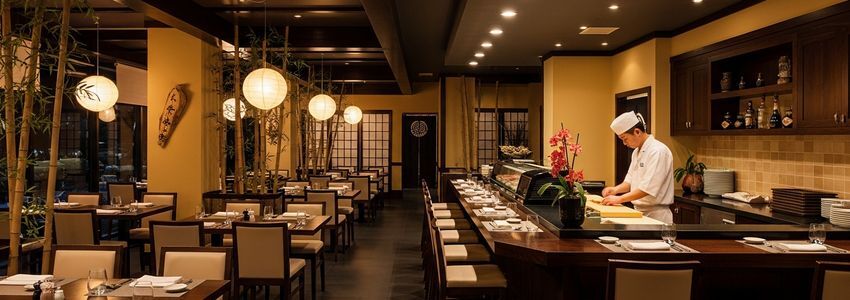
Japanese restaurant business loans give owners the capital they need to launch, expand, and compete in one of the fastest-growing segments of the U.S. food service industry. Whether you are opening your first ramen shop, upgrading a sushi bar, or scaling an established izakaya, the right financing solution can make the difference between stagnation and sustainable growth. Crestmont Capital has helped hundreds of restaurant owners across the country secure the funding they need quickly and with flexible terms.
In This Article
What Are Japanese Restaurant Business Loans?
Japanese restaurant business loans are funding products specifically applied to the operational and growth needs of Japanese cuisine establishments. These include everything from small sushi counters and ramen shops to full-service kaiseki dining rooms and teppanyaki steakhouses. Unlike generic business financing, lenders familiar with the restaurant space understand the specific cash flow cycles, equipment costs, and seasonal demands these businesses face.
Owners can access these funds through traditional banks, the U.S. Small Business Administration, and alternative lenders like Crestmont Capital. Loan proceeds can be used for virtually any business purpose, from purchasing commercial kitchen equipment to covering payroll during a slow season. The flexibility of modern small business loans makes them an ideal fit for the unpredictable nature of restaurant ownership.
According to the U.S. Census Bureau, full-service restaurants generate hundreds of billions in annual revenue, and Japanese cuisine has grown significantly as consumer interest in Asian dining continues to expand. This growth trajectory makes Japanese restaurants a strong candidate for business lending, as lenders see the category as both resilient and upwardly mobile.
Key Stat: Japanese restaurants represent one of the top-performing segments in the U.S. specialty dining market, with consistent year-over-year revenue growth driven by rising consumer demand for authentic Asian cuisine.
Benefits of Financing Your Japanese Restaurant
Access to capital gives Japanese restaurant owners the ability to move fast when opportunity arises. Whether a competitor's space becomes available or a supplier offers a bulk discount on wagyu beef, having a funded line of credit or a lump-sum loan means you can act without delay. Business financing transforms reactive decision-making into proactive growth strategy.
Working capital loans help smooth out the inevitable cash flow gaps that restaurant owners face between payroll cycles, vendor invoices, and seasonal lulls. A traditional restaurant may see 30 to 40 percent revenue drops during slower months, and a loan or credit line bridges those gaps without disrupting operations. This kind of financial stability also improves your ability to retain skilled staff and maintain food quality standards.
Beyond immediate needs, financing allows owners to reinvest in the customer experience in ways that build long-term loyalty. Upgraded interiors, modernized point-of-sale systems, and expanded delivery infrastructure all require capital that most small restaurants cannot fund out of pocket. According to Forbes, restaurant owners who invest in their guest experience consistently outperform competitors in customer retention and average ticket size.
Ready to Fund Your Japanese Restaurant?
Get fast, flexible financing from the #1 business lender in the U.S. No obligation - apply in minutes.
Apply Now →How Much Can You Borrow?
The amount a Japanese restaurant owner can borrow depends on several factors, including annual revenue, time in business, credit profile, and the type of loan product selected. At Crestmont Capital, loan amounts range from $10,000 to $5 million, giving businesses of all sizes a viable path to funding. Newer restaurants with less than two years of operating history may qualify for smaller amounts, while established businesses with strong revenue streams can often access seven-figure funding.
Term loans for larger investments such as a full kitchen renovation or a second location typically range from $100,000 to $1 million and are repaid over one to five years. Equipment financing allows you to fund the exact cost of a commercial sushi case, induction cooktop, or industrial dishwasher without touching your working capital. A business line of credit gives you a revolving pool of funds you can draw from as needed, which is ideal for managing daily cash flow.
Merchant cash advances offer a flexible alternative for restaurants with strong credit card sales, allowing borrowing based on a percentage of monthly revenue rather than a fixed amount. This option suits high-volume sushi restaurants or delivery-focused operations where daily sales volume is predictable. Regardless of the product, Crestmont Capital works with each owner to find a loan size and repayment structure that fits the actual cash flow of the business.
Types of Financing Options
Japanese restaurant owners have access to a broad range of financing tools, each suited to different needs and business profiles. Understanding the full landscape of options ensures you choose the right product rather than the most convenient one. Below is an overview of the most common financing types available to restaurant operators.
Term Loans: A lump-sum disbursement repaid over a fixed period, typically between one and five years. Term loans work well for major investments such as a full restaurant buildout, large-scale renovation, or expansion to a second location. They offer predictable monthly payments and are often available with competitive interest rates for businesses with strong financials.
SBA Loans: The SBA 7(a) loan program offers government-backed financing with favorable terms, longer repayment schedules, and lower down payment requirements. While the application process is more involved and approval timelines are longer, the cost of capital is often lower than alternative lenders. Japanese restaurant owners with solid credit and two or more years in business are frequently good candidates for SBA products.
Equipment Financing: This product funds the purchase of specific equipment, using the equipment itself as collateral. For a Japanese restaurant, this could cover a commercial sushi display case, ramen broth equipment, teppanyaki grills, or refrigeration units. With equipment financing, you preserve working capital while acquiring the tools you need to deliver a consistent dining experience.
Business Line of Credit: A revolving credit facility that allows you to draw funds up to a pre-approved limit, repay them, and borrow again. A business line of credit is ideal for ongoing operational needs such as inventory purchasing, payroll coverage, and marketing expenses. You only pay interest on the amount drawn, making it a cost-efficient tool for managing cash flow gaps.
Merchant Cash Advance: A cash advance against future credit card sales, repaid automatically as a percentage of daily card receipts. This is a fast-funding option with minimal paperwork, though the effective cost can be higher than traditional loans. It works best for Japanese restaurants with high daily transaction volumes and seasonal cash flow needs.
Bad Credit Business Loans: Owners with less-than-perfect credit are not automatically disqualified from financing. Bad credit business loans are structured around revenue performance rather than credit score alone, giving owners a path to capital even after financial setbacks. Crestmont Capital evaluates the full picture of your business, not just a three-digit score.
Fast Business Loans: When you need capital quickly, fast business loans can deliver funding in as little as 24 to 48 hours. These products are designed for urgent needs such as equipment failure, unexpected repairs, or a time-sensitive lease opportunity. The approval process is streamlined, and in many cases approval is based primarily on recent bank statements.
Key Insight: Most Japanese restaurant owners benefit most from a combination of products. A term loan for a major capital project paired with a revolving line of credit for day-to-day operations is a common and effective financing structure.
How Crestmont Capital Helps
Crestmont Capital was founded in 2015 with a single mission: make business financing accessible, fast, and fair for American small business owners. Since then, the company has grown to become the #1 rated business lender in the United States, funding thousands of businesses across every industry and state. The restaurant sector is one of Crestmont Capital's most active lending verticals, and the team understands the unique financial dynamics that restaurant owners face.
The application process is designed for busy owners who do not have time to navigate complex paperwork or wait weeks for a decision. Most applicants receive a decision within 24 hours, and funding can be in your bank account within one to three business days of approval. There are no hidden fees, no prepayment penalties on most products, and no obligation to accept any offer.
Crestmont Capital works with businesses across a wide range of credit profiles, revenue levels, and operating histories. Whether you are a first-year ramen shop looking for your first $25,000 line of credit or a multi-location sushi chain seeking $2 million in expansion capital, the team structures a solution around your actual business. For a broader look at funding options across the full restaurant category, see the complete guide to restaurant business loans.
Ready to Fund Your Japanese Restaurant?
Get fast, flexible financing from the #1 business lender in the U.S. No obligation - apply in minutes.
Apply Now →Common Uses of Funds
Japanese restaurant financing can be applied to nearly any legitimate business expense. The most common use cases reflect the specific capital demands of food service operations, where equipment costs are high, build-out expenses are significant, and working capital needs are constant.
Kitchen Equipment Purchases: Commercial-grade Japanese restaurant equipment carries a high price tag. A professional sushi display case can cost $5,000 to $30,000, while a commercial ramen broth system or teppanyaki grill may run $15,000 to $50,000 or more. Equipment financing lets you acquire what you need without depleting your operating reserves.
Restaurant Renovations: Interior design is a critical component of the Japanese dining experience. From shoji screens and tatami-inspired seating to modern minimalist decor, the physical environment communicates quality and authenticity to guests. Renovation loans fund the materials, contractors, and design work needed to create an experience that commands premium pricing.
Staffing and Payroll: Skilled sushi chefs, ramen masters, and experienced front-of-house staff are difficult to find and expensive to retain. Working capital financing ensures you can meet payroll obligations on time, fund training programs, and offer competitive compensation packages that attract top talent.
Inventory and Food Costs: High-quality Japanese ingredients including fresh fish, wagyu beef, specialty sake, and imported rice vinegar require significant upfront purchasing. Financing allows you to buy in larger quantities for better pricing from suppliers, or to stock up before peak seasons such as New Year celebrations or summer tourism months.
Marketing and Digital Presence: Online visibility drives restaurant discovery. Funding a professional website, search engine optimization, social media advertising, and food photography can generate a measurable return on investment. Many Japanese restaurant owners also use loan proceeds to build out delivery and online ordering infrastructure.
Opening a Second Location: Expanding from one to two locations requires significant upfront capital for lease deposits, build-out, equipment, and pre-opening staffing. A well-structured term loan provides the foundation for a successful multi-unit expansion without stretching the original location's cash flow to the breaking point.
Technology Upgrades: Modern point-of-sale systems, reservation management platforms, and kitchen display technology improve efficiency and reduce errors. Financing these upgrades allows restaurants to operate at a higher level of service without a large cash outlay.
How to Qualify
Qualifying for a Japanese restaurant business loan at Crestmont Capital is a straightforward process built around the actual performance of your business rather than rigid eligibility criteria. While specific requirements vary by product, the following factors are most commonly evaluated during the underwriting process.
Time in Business: Most loan products require a minimum of six months to two years of operating history. Newer businesses may qualify for smaller loan amounts or may be directed toward products like merchant cash advances that focus on recent revenue rather than long-term history. SBA loans typically require at least two years in business.
Annual Revenue: Lenders look at your gross annual revenue to determine your capacity to repay. For most Crestmont Capital products, a minimum of $100,000 in annual revenue is preferred. Higher revenue generally unlocks access to larger loan amounts and more favorable terms.
Credit Score: While credit score is one factor in the approval process, it is not the sole determinant. Crestmont Capital works with business owners across a wide range of credit profiles, and many of its products are available to borrowers with scores below 640. Strong revenue and consistent cash flow can often offset a lower credit score.
Bank Statements: Three to six months of business bank statements are typically required. These documents give lenders a real-time view of your cash flow, average daily balance, and deposit frequency. Consistent, predictable deposits signal a healthy business to underwriters.
Business Plan or Purpose Statement: For larger loans, lenders may request a brief explanation of how you intend to use the funds. This helps underwriters assess risk and structure the loan appropriately. A clear, specific use of funds statement increases the probability of approval and may improve your offered terms.
How to Apply for a Japanese Restaurant Business Loan
Complete the Application
Fill out the online form in under 5 minutes with basic business details.
Submit Documents
Provide 3-6 months of bank statements and basic business information.
Receive Your Offer
Get a tailored loan offer within 24 hours with clear terms and no hidden fees.
Get Funded
Approved funds are deposited directly to your account within 1-3 business days.
Real-World Scenarios
Understanding how other Japanese restaurant owners have used financing can help you identify the right solution for your own business. The following scenarios illustrate common situations where a well-structured loan delivered meaningful results.
Scenario 1: Sushi Restaurant Equipment Upgrade
A six-year-old sushi restaurant in Los Angeles was generating $800,000 in annual revenue but operating with aging refrigeration equipment that required constant repairs. The owner applied for $75,000 in equipment financing through Crestmont Capital. The new commercial refrigeration units and updated sushi display cases reduced energy costs, eliminated repair expenses, and improved food safety compliance. The monthly equipment loan payment was less than the average monthly repair bill, delivering an immediate return on investment.
Scenario 2: Ramen Shop Expansion
A ramen shop owner in Chicago had built a loyal customer base over three years but was losing revenue due to limited seating. With $150,000 in term loan financing, the owner expanded into an adjacent retail space, doubling seating capacity and adding a private dining room for corporate events. Monthly revenue increased by 65 percent within the first year of operation in the expanded space, covering the loan payment and significantly improving profitability.
Scenario 3: Working Capital for Seasonal Slowdown
A Japanese fusion restaurant in a tourist-heavy coastal town experienced significant revenue drops during the winter off-season. The owner established a $50,000 business line of credit before the slow season began, drawing on it strategically to cover payroll and supplier invoices during the three-month slowdown. The line was fully repaid by April when tourist traffic returned. This approach allowed the owner to retain full staff year-round and avoid the costly cycle of seasonal layoffs and rehiring.
Scenario 4: Opening a Second Location
An established Japanese steakhouse owner in Atlanta used a $500,000 SBA-backed loan secured through Crestmont Capital to open a second location in a suburban market. The loan covered lease deposits, full interior buildout, kitchen equipment, and pre-opening marketing. The second location reached profitability within 14 months, and the owner is now planning a third location using the equity built in the first two.
Next Steps
Your Path to Funding Starts Here
- Assess your funding need. Identify the specific business purpose you want to fund and estimate the amount required. A clear use of funds increases approval probability.
- Gather your documents. Collect three to six months of business bank statements, your most recent tax return, and basic business registration information.
- Compare loan types. Review the financing options in this guide and identify one or two products that align with your timeline, credit profile, and repayment capacity.
- Submit your application. Complete the online application at Crestmont Capital in under five minutes. There is no obligation and no impact to your credit score for checking your options.
- Review your offer. Once approved, review the terms carefully including the total repayment amount, payment frequency, and any fees. Ask questions before signing.
- Accept funding and execute your plan. Once funds are in your account, put them to work according to your business plan and track the results to measure return on investment.
FAQ
What types of Japanese restaurants qualify for business loans?
Most types qualify, including sushi restaurants, ramen shops, izakayas, teppanyaki steakhouses, Japanese fusion concepts, and Japanese-style fast casual operations. Lenders evaluate business performance and cash flow rather than the specific cuisine category. As long as your business has consistent revenue and meets basic eligibility requirements, you have a strong chance of qualifying.
How fast can I get funding for my Japanese restaurant?
With Crestmont Capital, many borrowers receive approval within 24 hours and funding within one to three business days. The timeline depends on the loan product selected and how quickly you can provide required documentation. For the fastest funding, prepare your last three to six months of bank statements before you apply.
Can I get a Japanese restaurant loan with bad credit?
Yes. Crestmont Capital offers loan products designed for business owners with imperfect credit histories. Many of these products are underwritten based on monthly revenue rather than credit score alone. Owners with scores as low as 500 may still qualify depending on their revenue, time in business, and overall cash flow performance.
How much can I borrow for my Japanese restaurant?
Loan amounts at Crestmont Capital range from $10,000 to $5 million. The amount you qualify for depends on your annual revenue, time in business, credit profile, and the loan product you select. Most restaurant owners find that they can borrow one to two times their average monthly revenue through working capital products.
What documents do I need to apply?
Most loan applications require three to six months of business bank statements, a government-issued ID, and basic business information such as your EIN and legal business name. For larger loan amounts, lenders may also request business tax returns, a profit and loss statement, or a business plan.
Can I use a business loan to open a new Japanese restaurant?
Yes, though startups face more limited options than established businesses. SBA microloans, equipment financing, and some alternative lenders work with newer businesses or pre-revenue startups. If you already operate a business in any industry, you may be able to leverage that history to fund a new restaurant venture.
What interest rates should I expect?
Interest rates vary significantly by product, lender, and borrower profile. SBA loans typically carry the lowest rates, ranging from approximately 7 to 12 percent. Alternative lender term loans may range from 10 to 35 percent. Merchant cash advances are priced differently using a factor rate rather than an interest rate. Crestmont Capital provides full transparency on all costs before you accept any offer.
Is collateral required to get a restaurant business loan?
Not always. Many alternative lender products including merchant cash advances and revenue-based loans are unsecured, meaning no specific collateral is required. Equipment financing is secured by the equipment itself. Larger term loans and SBA loans may require a personal guarantee or a lien on business assets, but the specifics depend on the loan size and lender.
How long does the application process take?
The Crestmont Capital online application takes approximately five minutes to complete. Once submitted with supporting documents, most applicants receive a decision within one business day. SBA loan applications take longer, typically two to eight weeks depending on the program and the volume of applications being processed.
Can a Japanese restaurant with seasonal revenue qualify for a loan?
Yes. Seasonal cash flow is very common in the restaurant industry, and lenders familiar with food service understand this dynamic. Providing bank statements that cover both peak and off-peak months helps underwriters see the full picture. A revolving line of credit is often the best product for seasonal businesses because you only draw and repay as needed.
Does applying affect my credit score?
Checking your options with Crestmont Capital involves a soft credit pull that does not impact your credit score. A hard inquiry is only performed after you agree to proceed with a specific loan product. This means you can explore your options, compare offers, and make an informed decision without any credit score consequences during the shopping phase.
What if I need funding very quickly for my restaurant?
If you need capital urgently, Crestmont Capital offers express funding options that can deliver approved funds within 24 hours in some cases. Merchant cash advances and short-term working capital loans are the fastest products, with minimal documentation requirements and same-day approval possible for qualified borrowers. Having three months of bank statements ready will speed up the process significantly.
Can I use financing to hire and train staff?
Yes. Working capital loans and lines of credit can be used for staffing, payroll, and training expenses. This is especially valuable when opening a new location or preparing for a major expansion where you need to hire and train a team before revenue begins flowing from the new operation. Crestmont Capital does not restrict how approved funds are used within the scope of your business.
What is the minimum revenue requirement for a Japanese restaurant loan?
Most Crestmont Capital loan products require a minimum of $100,000 in annual gross revenue, which equates to approximately $8,300 per month. Some products are available at lower revenue thresholds for businesses with strong growth trajectories. Restaurant owners who fall below this threshold may qualify for SBA microloans or equipment financing that is secured by the equipment itself rather than revenue alone.
Can I refinance an existing restaurant loan through Crestmont Capital?
Yes. If you currently have a high-cost business loan or merchant cash advance and your business has grown since you first borrowed, refinancing through Crestmont Capital may reduce your effective cost of capital and improve your monthly cash flow. The refinancing process follows the same application steps as a new loan, and the team will evaluate whether refinancing makes financial sense for your specific situation.
Ready to Fund Your Japanese Restaurant?
Get fast, flexible financing from the #1 business lender in the U.S. No obligation - apply in minutes.
Apply Now →Conclusion
Japanese restaurant business loans provide the capital infrastructure that owners need to build, grow, and sustain competitive food service operations. From equipment upgrades and location expansions to working capital and staffing support, the right financing solution can unlock opportunities that would otherwise remain out of reach. The key is matching the right loan product to the specific need and choosing a lender with deep experience in the restaurant space.
Crestmont Capital has served thousands of restaurant owners since 2015, delivering fast approvals, flexible terms, and transparent pricing across a full range of loan products. Whether your credit is excellent or imperfect, whether you need $20,000 or $2 million, the team works to find a financing solution that fits your business rather than forcing you into a one-size-fits-all product.
The Japanese restaurant industry continues to grow, and owners who invest strategically in their operations today will be positioned to capture a larger share of that growth tomorrow. Apply now to explore your financing options and take the next step toward achieving your business goals.
Remember: Financing is a tool. The most successful restaurant owners treat capital as an investment in revenue generation, not a cost. When the return on your funded project exceeds your cost of borrowing, the loan pays for itself.
Disclaimer: The information provided in this article is for general educational purposes only and does not constitute financial, legal, or investment advice. Loan products, terms, interest rates, and eligibility requirements vary by lender and are subject to change. Always consult with a qualified financial advisor before making borrowing decisions. Crestmont Capital does not guarantee loan approval or specific loan terms for any individual applicant.

Allan Garfinkle
Allan Garfinkle is the Chief Revenue Officer at Crestmont Capital, where he has spent more than a decade leading revenue strategy, business development, and operational growth. With 28 years of experience building and advising startups and small businesses, Allan has helped more than 10,000 business owners navigate financing decisions, growth opportunities, and changing economic conditions. He earned a Bachelor of Science in Economics and an MBA with a concentration in Finance from Northeastern University, as well as a Juris Doctor from New England Law, where his studies focused on contracts and business law. His writing draws on extensive practical experience in small-business lending, equipment financing, business credit, and commercial finance.