
 (800) 949-0401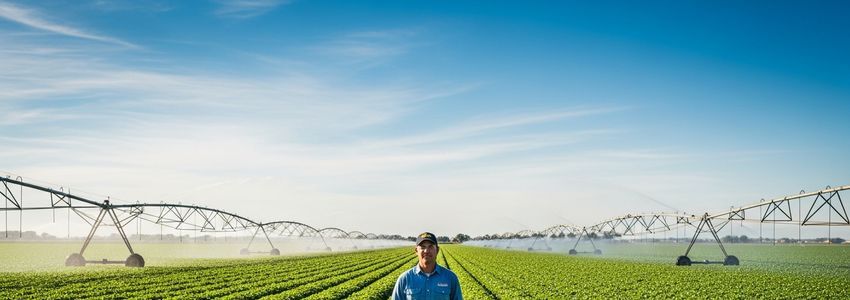
Farm Irrigation System Financing: The Complete Guide for Farm Owners
Efficient water management is the lifeblood of modern agriculture. For farm owners across the United States, a reliable and advanced irrigation system is not a luxury; it is a fundamental asset for maximizing crop yields, ensuring consistency, and maintaining profitability against unpredictable weather patterns. However, the initial investment for these sophisticated systems can be substantial, creating a significant capital hurdle. This is where strategic irrigation system financing for farm operations becomes an essential tool. Securing the right funding allows you to acquire critical water management technology without depleting your working capital, paving the way for sustainable growth and long-term success. This comprehensive guide is designed to walk you through every aspect of financing an agricultural irrigation system. We will explore the different types of systems available, the tangible benefits of financing, the various loan and lease options, and the step-by-step process for securing the capital you need. Whether you are upgrading an outdated setup, expanding your acreage, or installing a system for the first time, understanding your financing choices is the first step toward a more productive and resilient farming operation. Crestmont Capital specializes in providing tailored financial solutions that help farmers like you invest in the future of their land.In This Article
- What is Farm Irrigation System Financing?
- Types of Irrigation Systems You Can Finance
- Key Benefits of Financing Your Irrigation System
- Farm Irrigation Financing Options: Loans, Leases, and More
- How the Financing Process Works: A Step-by-Step Guide
- Qualification Requirements for Farm Irrigation Loans
- Understanding the Costs and Rates of Irrigation Financing
- How Crestmont Capital Helps Farmers Get Funded
- Real-World Scenarios: How Farmers Use Irrigation Financing
- Comparison: Financing vs. Leasing vs. Paying Cash
What is Farm Irrigation System Financing?
Farm irrigation system financing is a specific category of business funding designed to help agricultural enterprises purchase, install, or upgrade water management equipment. Unlike a generic business loan, this type of financing is structured around the asset itself. The loan or lease is secured by the irrigation equipment, which often makes the approval process more straightforward and can lead to more favorable terms compared to unsecured loans.
This financing covers the total project cost, not just the price of the hardware. A comprehensive funding package can include:
- The Core Equipment: This includes pumps, pipes, sprinklers, center pivots, drip lines, and control panels.
- Installation Costs: Labor, trenching, electrical work, and professional setup are often significant expenses that can be rolled into the financing.
- Software and Technology: Modern systems rely on sophisticated software for automation, soil moisture monitoring, and efficient water distribution. These technology costs can be included.
- Shipping and Delivery Fees: The logistics of getting heavy equipment to your farm can be financed as part of the total package.
- Related Infrastructure: This may include costs for well drilling, reservoir construction, or power unit installation required to support the new system.
The primary goal of irrigation system financing for farm owners is to enable the acquisition of yield-boosting assets while preserving cash flow. By spreading the cost over a period of several years, you can let the new equipment generate revenue and pay for itself over time, rather than facing a massive upfront capital expenditure that could strain your operational budget.
Types of Irrigation Systems You Can Finance
Lenders can finance a wide variety of irrigation systems, each suited to different crops, topographies, and water sources. Understanding the options helps you select the right system for your needs and communicate those needs effectively to a financing partner. Here are some of the most common types of systems financed:
Center Pivot Irrigation Systems
Center pivot systems are a common sight in large-scale agriculture, especially for field crops like corn, soybeans, and wheat. A long, elevated pipeline rotates around a central pivot point, watering crops in a large circle. They are highly efficient in terms of water distribution and labor. Due to their size and complexity, they represent a significant investment, with costs often ranging from $75,000 to $150,000 or more, making financing a very popular acquisition method.
Drip Irrigation Systems
Drip or trickle irrigation is one of the most water-efficient methods available. It involves a network of pipes and tubes with emitters that deliver water slowly and directly to the root zone of each plant. This minimizes evaporation and runoff. It is ideal for high-value row crops, orchards, and vineyards. While the per-acre cost can be high- sometimes $1,000 to $2,500 per acre- the water savings and increased yield often provide a strong return on investment. Financing helps manage this intensive initial setup cost.
Sprinkler Irrigation Systems
This broad category includes various methods where water is sprayed through the air to mimic rainfall. It includes solid-set systems with fixed sprinklers, portable hand-move systems, and traveling gun sprinklers. They are versatile and can be adapted to different field shapes and soil types. Financing can cover everything from a few sprinkler heads for a small plot to a comprehensive, automated system for hundreds of acres.
Subsurface Drip Irrigation (SDI)
SDI is an advanced form of drip irrigation where the drip lines are buried beneath the soil surface. This delivers water directly to the roots with almost no evaporative loss, making it incredibly efficient. It is a long-term investment as the system is designed to last for many years. The installation is more complex and costly than surface drip, making financing an essential component for adoption.
Furrow (Gravity) Irrigation Systems
While one of the oldest methods, modern furrow irrigation can be enhanced with technology. Financing can cover the cost of laser land leveling, gated pipes, and surge valves that significantly improve the efficiency of traditional gravity-fed systems. These upgrades help conserve water and ensure more uniform application across a field.
Linear Move Irrigation Systems
Similar to a center pivot, a linear move system consists of a long pipeline with sprinklers. However, instead of rotating, it moves linearly back and forth across a rectangular field. This is ideal for maximizing water coverage in non-circular fields. These are complex machines and carry a price tag similar to center pivots, making them prime candidates for Equipment Financing.
Ready to Fund Your Farm's Future?
Get the capital you need for a new irrigation system in as little as 24 hours. See your financing options now.
Apply Now →Key Benefits of Financing Your Irrigation System
Choosing to finance an irrigation system instead of paying with cash offers numerous strategic advantages that can positively impact your farm's financial health and operational efficiency.
1. Preserve Working Capital
The most immediate benefit is cash preservation. A new irrigation system is a major capital expense. Paying for it outright can deplete cash reserves needed for other essential operating costs like payroll, seed, fertilizer, fuel, and unexpected repairs. Financing allows you to keep your cash on hand for day-to-day operations and emergencies.
2. Immediate Return on Investment (ROI)
A new, efficient irrigation system can increase crop yields by 200-400% compared to non-irrigated land. By financing the system, you can start reaping these rewards immediately. The increased revenue generated by higher yields can often exceed the monthly financing payment, meaning the equipment starts paying for itself from the very first season.
3. Improved Water Efficiency and Sustainability
Modern irrigation technology uses significantly less water than older methods. This not only reduces your water and pumping costs but also promotes sustainable farming practices. In regions with water scarcity, investing in efficient irrigation is crucial for long-term viability, and financing makes this investment accessible.
4. Flexible and Predictable Payments
Financing provides a fixed, predictable monthly payment, which makes budgeting and financial forecasting much simpler. Many lenders, including Crestmont Capital, understand the seasonal nature of agriculture and can offer flexible payment structures, such as seasonal or deferred payments, that align with your farm's cash flow cycle.
5. Potential Tax Advantages
Financing and leasing irrigation equipment can offer significant tax benefits. Under Section 179 of the IRS tax code, you may be able to deduct the full purchase price of qualifying equipment in the year it is put into service. Additionally, the interest paid on a loan is typically tax-deductible. An equipment lease payment may also be treated as a fully deductible operating expense. (Consult with your tax advisor to understand the specific benefits for your business).
6. Access to Better Technology
Financing empowers you to acquire the best and most current technology, rather than settling for a cheaper, less effective system that fits within a limited cash budget. This means you can invest in systems with advanced features like variable rate irrigation (VRI), remote monitoring, and automated controls, which further enhance efficiency and yields.
7. Build Business Credit
Successfully managing and paying off an equipment loan or lease helps build a strong credit history for your farm. This can make it easier and more affordable to secure financing for future equipment purchases or other business needs.
Farm Irrigation Financing Options: Loans, Leases, and More
When seeking irrigation system financing for a farm, you have several avenues to explore. Each has its own structure, benefits, and ideal use case. The best choice depends on your farm's financial situation, long-term goals, and preference for ownership.
Equipment Loans
An equipment loan is a straightforward financing product where a lender provides you with the capital to purchase the irrigation system. You make regular payments over a set term, and at the end of the term, you own the equipment outright. The irrigation system itself serves as collateral for the loan.
- Best for: Farmers who want to own their equipment long-term and build equity in their assets.
- Pros: Full ownership at the end of the term, potential tax benefits from depreciation and Section 179, no mileage or usage restrictions.
- Cons: Typically requires a down payment, monthly payments may be slightly higher than a lease.
Equipment Leasing
With an equipment leasing agreement, you pay a monthly fee to use the irrigation system for a specific period. At the end of the lease term, you generally have the option to purchase the equipment (often for a predetermined price, like $1), renew the lease, or return the equipment.
- Best for: Farmers who want lower monthly payments, need to conserve cash with little to no down payment, or plan to upgrade technology every few years.
- Pros: Lower upfront costs, potentially lower monthly payments, payments may be fully tax-deductible as an operating expense.
- Cons: You do not own the equipment during the lease term, potential for mileage or usage restrictions (less common for stationary equipment like irrigation).
SBA Loans
The U.S. Small Business Administration (SBA) does not lend money directly but guarantees a portion of loans made by partner lenders like banks and financial institutions. This guarantee reduces the lender's risk, making it easier for small businesses, including farms, to qualify for funding.
- SBA 7(a) Loans: A versatile loan program that can be used for a variety of purposes, including equipment purchases. They offer long repayment terms and competitive interest rates.
- SBA 504 Loans: Designed for purchasing major fixed assets, which can include large-scale irrigation systems. They offer long-term, fixed-rate financing.
- Pros: Favorable terms, long repayment periods (up to 25 years), and potentially lower down payments.
- Cons: The application process can be more documentation-intensive and take longer than other options. Learn more about SBA loan programs on their official site.
USDA Loans
The U.S. Department of Agriculture (USDA) offers loan programs specifically for farmers and rural businesses through its Farm Service Agency (FSA). These loans are designed to help with the financial needs of agricultural operations.
- Direct and Guaranteed Farm Ownership Loans: These can be used to buy or improve farmland, which can include the installation of irrigation systems as part of the overall farm improvement.
- Pros: Specifically designed for agricultural needs, often have very favorable terms and interest rates, targeted at family farms.
- Cons: Can have strict eligibility requirements related to farm size, experience, and inability to secure credit elsewhere. The application process can be lengthy. For more details, visit the USDA's Farm Loan Programs page.
Working Capital Loans
While not specifically for equipment, small business loans or lines of credit can provide flexible capital that can be used to purchase a smaller irrigation system or cover related costs. These are often unsecured and based on the overall financial health of your farm. They are best for smaller projects or when you need fast, flexible funding.
Irrigation by the Numbers: The Impact on U.S. Farms
55+ Million
Acres of U.S. farmland are irrigated, highlighting its critical role in national food production. (Source: USDA)
200-400%
Potential increase in crop yields with effective irrigation compared to purely rain-fed farming.
$500-$2,000+
The average installation cost per acre, making financing a practical necessity for many projects.
Investing in irrigation is investing in yield, stability, and growth. Let us help you finance this critical asset with terms of 24-84 months tailored to your farm's needs.
How the Financing Process Works: A Step-by-Step Guide
Securing financing for your irrigation system can be a straightforward process, especially when working with a lender experienced in agricultural equipment. Here is a typical breakdown of the steps involved:
- Step 1: Determine Your Needs and Budget. Before applying, have a clear idea of the type of irrigation system you need, its total estimated cost (including installation), and how it fits into your farm's budget. Get a quote from one or more equipment vendors.
- Step 2: Complete a Simple Application. Most modern lenders, like Crestmont Capital, offer a simple one-page online application. You will provide basic information about your farm (name, address, time in business) and yourself (name, contact info).
- Step 3: Submit Required Documents. For smaller financing amounts (e.g., under $250,000), a simple application may be all that is needed. For larger requests, you may be asked to provide additional documentation, such as:
- Bank statements (typically 3-6 months)
- Recent tax returns (personal and business)
- A quote or invoice for the irrigation equipment
- Financial statements (profit and loss, balance sheet)
- Step 4: Underwriting and Review. The lender's underwriting team will review your application and documents. They assess your farm's financial health, your credit history, and the value of the equipment being financed. This is where they determine your eligibility, interest rate, and terms. With a streamlined lender, this step can take as little as a few hours.
- Step 5: Receive and Accept Your Offer. If approved, you will receive a formal financing offer detailing the loan amount, interest rate, term length, and monthly payment. Review the terms carefully. Once you accept and sign the financing documents, the process moves to the final stage.
- Step 6: Funding. The lender will coordinate payment directly with your equipment vendor. Once the vendor is paid, you can schedule the delivery and installation of your new irrigation system. Your first payment will typically be due 30 days later.
Qualification Requirements for Farm Irrigation Loans
While every lender has slightly different criteria, most evaluate a similar set of factors to determine your creditworthiness. Understanding these requirements can help you prepare a stronger application.
- Credit Score: Lenders will look at both your personal and business credit scores. While a high score (680+) is ideal and will secure the best rates, many alternative lenders can work with scores in the lower 600s. A clean credit history with no recent major delinquencies is important.
- Time in Business: Most lenders prefer to see at least two years of operational history. This demonstrates stability and a track record of generating revenue. However, programs exist for newer farms, especially if the owner has strong personal credit and industry experience.
- Annual Revenue: Your farm's revenue is a key indicator of its ability to handle new debt. Lenders will look at your gross annual sales to ensure the new loan payment is manageable. A common threshold is $150,000+ in annual revenue, but this can vary.
- Cash Flow: Beyond total revenue, underwriters will analyze your bank statements to assess your average daily balance and cash flow patterns. They want to see consistent deposits and a healthy buffer to cover expenses and the new loan payment.
- Collateral: For an equipment loan, the irrigation system itself serves as the primary collateral. This reduces the lender's risk and can make it easier to qualify compared to an unsecured loan. Lenders may also file a UCC lien on your business assets.
- Industry Experience: Especially for newer farms, the owner's direct experience in agriculture can play a significant role in the lending decision. A strong background demonstrates you have the expertise to run a profitable operation.
Understanding the Costs and Rates of Irrigation Financing
The cost of financing is a critical factor in your decision-making process. Several components determine the total cost of your loan or lease.
- Interest Rate: This is the percentage the lender charges for borrowing the money. It is the primary cost of the loan. Rates are determined by your credit profile, time in business, the loan term, and overall market conditions. Rates can be fixed or variable.
- Annual Percentage Rate (APR): The APR is a broader measure of the cost of borrowing. It includes the interest rate plus any additional lender fees (like origination fees). APR gives you a more complete picture of the total cost.
- Loan Term: This is the length of time you have to repay the loan, typically ranging from 24 to 84 months (2 to 7 years) for equipment. Longer terms result in lower monthly payments but higher total interest paid over the life of the loan. Shorter terms have higher payments but save you money on interest.
- Down Payment: Some loans, particularly for businesses with weaker credit or less time in business, may require a down payment, typically 10-20% of the equipment cost. Many financing programs, however, offer 100% financing with no money down.
- Origination Fees: Some lenders charge an upfront fee for processing and funding the loan. This fee is often rolled into the total loan amount. It is important to ask if any such fees apply.
As of late, a recent Forbes article on agricultural inflation highlights the rising costs of farm inputs. Financing essential equipment like irrigation systems can be a strategic move to lock in today's prices and manage costs in an inflationary environment.
How Crestmont Capital Helps Farmers Get Funded
Navigating the world of business financing can be complex, but you do not have to do it alone. Crestmont Capital specializes in providing fast, flexible, and reliable funding solutions for the agricultural industry. We understand the unique challenges and opportunities that farmers face, from seasonal cash flow to the need for specialized equipment.
Here is how we simplify the process of getting irrigation system financing for your farm:
- Expertise in Agriculture: We are not generalist lenders. Our team has deep experience in farm equipment financing. We understand the value and ROI of a center pivot, a drip system, or a high-efficiency water pump. This expertise allows us to make common-sense underwriting decisions.
- Streamlined Application Process: Our one-page application takes just minutes to complete. We have eliminated the mountains of paperwork and long wait times associated with traditional banks.
- Fast Approvals and Funding: Time is critical in farming. We can provide approvals in as little as a few hours and funding in as fast as 24 hours. This speed allows you to acquire your equipment and get it operational without delay.
- Flexible Terms and Structures: We offer a wide range of financing and leasing options with terms from 24 to 84 months. We can also structure payments to match your farm's seasonal revenue cycle, offering deferred or seasonal payment plans to ease cash flow pressure during the off-season.
- Financing for All Credit Profiles: We work with a broad spectrum of credit profiles. Whether you have excellent credit or have faced challenges in the past, we have programs designed to help you secure the funding you need.
- Dedicated Financing Specialists: When you work with Crestmont Capital, you get a dedicated account executive who will guide you through the entire process, from application to funding. They are your single point of contact, ready to answer your questions and find the best possible solution for your farm.
Our goal is to be more than just a lender; we aim to be a long-term financial partner for your farm's growth. Explore our specific irrigation equipment financing solutions to learn more.
Partner with Agricultural Financing Experts
Don't let a complex financing process slow you down. Our specialists make it easy to get the right funding for your farm.
Get Started Today →Real-World Scenarios: How Farmers Use Irrigation Financing
To better understand the practical application of this financing, let's look at a few hypothetical scenarios based on common situations farmers face.
Scenario 1: The Expanding Corn and Soybean Farm
The Farm: A 1,500-acre family farm in Nebraska that has been in operation for three generations. They recently acquired an adjacent 320-acre parcel of dryland.
The Challenge: To make the new parcel as productive as their existing land, they need to install two new center pivot irrigation systems. The total cost for the pivots, well drilling, and electrical installation is quoted at $280,000.
The Solution: The farmer applies for equipment financing. Because the farm has a long, successful history, strong revenue, and good credit, they are quickly approved for 100% financing. They choose a 7-year (84-month) loan term to keep the monthly payments low and manageable. The loan is structured with semi-annual payments that align with their revenue from harvests in the fall and spring.
The Outcome: The new pivots are installed before the spring planting season. The irrigated land produces a significantly higher yield in the first year, and the increased revenue more than covers the loan payments. The farm successfully expanded its operation without a major cash outlay.
Scenario 2: The High-Value Vineyard
The Farm: A 50-acre vineyard in California growing premium wine grapes.
The Challenge: The vineyard's existing sprinkler system is inefficient, leading to high water usage and inconsistent grape quality. In the face of ongoing drought conditions, they need to upgrade to a high-efficiency subsurface drip irrigation (SDI) system to conserve water and improve fruit quality. The project cost is $125,000.
The Solution: The vineyard owner opts for an equipment lease. They have been in business for eight years but want to preserve as much working capital as possible for marketing and distribution. They secure a 5-year lease with a $1 buyout option at the end. The lower monthly payments of the lease are attractive, and their accountant confirms they can write off the entire payment as an operating expense.
The Outcome: The new SDI system cuts their water usage by 40%. The precise water delivery to the vine roots results in more uniform grape development and higher sugar content, leading to a better-quality wine that commands a higher price. The water savings and increased revenue make the lease payment easily affordable.
Scenario 3: The New Organic Vegetable Farm
The Farm: A new 20-acre organic vegetable farm in North Carolina, in its second year of operation.
The Challenge: The farmer has been using a labor-intensive hand-move sprinkler system. To scale up production and meet demand from local restaurants and farmers' markets, they need to install a more permanent and automated drip and solid-set sprinkler system. The cost is $45,000.
The Solution: With only two years in business, the farm doesn't qualify for a traditional bank loan. They apply with an alternative lender like Crestmont Capital that specializes in financing for newer businesses. Based on the owner's strong personal credit, solid business plan, and consistent revenue in the first year, they are approved for an equipment loan. They choose a 4-year (48-month) term.
The Outcome: The new irrigation system dramatically reduces the time spent on watering, freeing up the farmer to focus on cultivation, harvesting, and sales. The consistent watering leads to healthier plants and a 30% increase in marketable produce in the first season, allowing them to easily service the loan and grow their business.
Comparison: Financing vs. Leasing vs. Paying Cash
Choosing how to acquire your irrigation system is a major financial decision. This table provides a side-by-side comparison to help you weigh the options.
| Feature | Equipment Financing (Loan) | Equipment Leasing | Paying Cash |
|---|---|---|---|
| Ownership | You own the equipment at the end of the loan term. | The lender owns the equipment. You have an option to buy at the end of the term. | You own the equipment immediately. |
| Upfront Cost | Low to moderate. May require a down payment (10-20%), but 100% financing is common. | Lowest. Often only requires the first and last month's payment upfront. | Highest. Requires 100% of the total cost upfront. |
| Monthly Payments | Typically higher than a lease payment for the same term. | Typically lower than a loan payment as you are only paying for the depreciation. | No monthly payments. |
| Tax Implications | You can deduct interest payments and depreciate the asset. Potential for Section 179 deduction. | Lease payments are often treated as a 100% tax-deductible operating expense. | You can depreciate the asset and may take a Section 179 deduction. |
| Balance Sheet Impact | The equipment is listed as an asset and the loan as a liability. | An operating lease may not appear on the balance sheet, improving financial ratios. | The equipment is an asset, and cash is reduced. |
| Flexibility | You can sell or trade in the equipment at any time (after paying off the loan). | Easy to upgrade to new technology at the end of the lease term. | Total flexibility, but your capital is tied up in the asset. |
Frequently Asked Questions About Farm Irrigation Financing
1. What exactly is irrigation system financing for a farm?
It is a type of business funding specifically used to purchase and install irrigation equipment for agricultural use. It can be structured as a loan, where you own the equipment at the end, or a lease, where you pay to use it for a set term. The financing typically covers the full project cost, including hardware, software, and installation.
2. How much can I borrow for an irrigation system?
Loan amounts can range from as little as $10,000 for smaller projects to over $1 million for large-scale, multi-pivot systems. The amount you can borrow depends on your farm's revenue, credit history, and the cost of the equipment you intend to purchase.
3. What are the typical interest rates and terms?
Interest rates vary based on your creditworthiness, time in business, and the lender. They can range from single digits for highly qualified applicants to higher rates for those with challenged credit. Terms typically range from 24 to 84 months (2 to 7 years).
4. What are the basic qualifications to get approved?
Generally, lenders look for at least 1-2 years in business, a fair to good credit score (typically 620+), and sufficient annual revenue to support the loan payments. However, specialized lenders often have programs for newer farms or those with less-than-perfect credit.
5. What types of irrigation systems can be financed?
Virtually any type of commercial-grade irrigation system can be financed. This includes center pivot systems, linear move systems, drip and micro-drip lines, solid-set sprinklers, traveling guns, pumps, control panels, and related software and infrastructure.
6. Is a down payment required?
Not always. Many lenders, including Crestmont Capital, offer 100% financing, meaning no down payment is required. This allows you to acquire the equipment with minimal upfront cash. A down payment may be requested for riskier applications or very large projects.
7. How long does the approval and funding process take?
With modern alternative lenders, the process is very fast. An application can be completed in minutes, approval can be granted in as little as 2-4 hours, and funding can be sent to the equipment vendor within 24-48 hours.
8. What is the minimum credit score needed?
While a score of 680+ will get you the best rates, many financing programs are available for business owners with credit scores in the low 600s. Lenders often look at the complete financial picture, including cash flow and revenue, not just the credit score.
9. Can new or startup farms get financing?
Yes, it is possible. While more challenging than for established farms, some lenders offer programs for businesses with as little as 6 months of operating history. These programs may rely more heavily on the owner's personal credit score, industry experience, and a strong business plan.
10. Are there SBA loan options for irrigation systems?
Yes. The SBA 7(a) and 504 loan programs can be used to finance major equipment purchases like irrigation systems. These loans offer excellent long-term rates but typically involve a more extensive application process and longer timeline compared to direct equipment financing. Crestmont Capital can help you explore SBA loans.
11. What is the difference between leasing and financing?
Financing (a loan) means you are borrowing money to buy the equipment, and you own it at the end of the term. Leasing is like renting; you pay to use the equipment for a set period and typically have an option to buy it at the end. Leases often have lower monthly payments and can offer tax advantages.
12. How do I apply for irrigation equipment financing?
The easiest way is to use an online application from a lender like Crestmont Capital. You will fill out a short form with basic business and personal information. A financing specialist will then contact you to discuss your needs and the next steps.
13. What documents will I need to provide?
For financing under $250,000, often just the application is needed. For larger amounts, you will likely need the equipment invoice/quote, 3-6 months of business bank statements, and possibly your most recent business tax return.
14. Can I get seasonal payment options?
Yes. Many lenders who work with the agricultural industry understand seasonal cash flow. They can structure payment plans that require smaller or no payments during your off-season and larger payments after your harvest when revenue is highest.
15. Can I finance used irrigation equipment?
Yes, most lenders will finance used equipment, provided it is in good working condition and its value can be reasonably assessed. Financing used equipment can be a cost-effective way to upgrade your farm's capabilities.
Your Next Steps to Securing Funding
Ready to take control of your farm's water management and boost your productivity? Follow these three simple steps to get the financing you need for your new irrigation system.
See Your Personalized Rates Today
Find out how affordable a new irrigation system can be. Our simple application provides you with real, no-obligation offers.
Apply in 30 Seconds →Conclusion
Investing in a modern, efficient irrigation system is one of the most impactful decisions a farm owner can make to secure their future. It leads to higher yields, greater crop consistency, significant water and cost savings, and increased resilience against drought. While the upfront cost can be intimidating, a wide array of financing and leasing options are available to make this critical technology accessible to farms of all sizes.
By understanding the types of systems, the benefits of financing, and the various funding paths available, you can make an informed decision that aligns with your operational needs and financial goals. The key is to partner with a lender that understands the agricultural industry and can provide a fast, flexible, and transparent process. Strategic irrigation system financing for farm operations is not just about buying equipment; it is about investing in the long-term profitability and sustainability of your land. When you are ready to explore your options, Crestmont Capital is here to help you cultivate success.
Disclaimer: The information provided in this article is for general educational purposes only and is not financial, legal, or tax advice. Funding terms, qualifications, and product availability may vary and are subject to change without notice. Crestmont Capital does not guarantee approval, rates, or specific outcomes. For personalized information about your business funding options, contact our team directly.








