
 (800) 949-0401
Grain Dryer Financing: The Complete Guide for Farm and Business Owners
When harvest season arrives, timing and grain quality can mean the difference between profit and loss. Wet grain spoils quickly, invites mold, and can cost farmers thousands of dollars in rejected loads. A grain dryer solves this problem by reducing moisture content to safe storage levels, giving you control over when and how you sell your crop. But grain dryers are major capital investments, often ranging from $10,000 for a small portable unit to over $500,000 for a large commercial tower dryer. That is where grain dryer financing comes in.
This guide covers everything farm operators and agribusiness owners need to know about financing a grain dryer, from understanding the types of equipment and their costs, to comparing loan and lease options, to qualifying criteria and seasonal payment structures. Whether you are a small family farm or a large commercial operation, the right financing can help you protect your investment in every harvest.
- What Is Grain Dryer Financing?
- Types of Grain Dryers and Cost Ranges
- Why Farmers Finance Grain Dryers
- Grain Dryer Financing Options Explained
- Down Payment Requirements
- How to Qualify for Grain Dryer Financing
- New vs. Used Grain Dryer Financing
- Seasonal Payment Structures
- How Crestmont Capital Helps Farm Operators
- Frequently Asked Questions
What Is Grain Dryer Financing?
Grain dryer financing is a type of agricultural equipment financing that allows farmers, grain elevators, and agribusiness operators to purchase or lease a grain dryer by spreading the cost over monthly or seasonal payments. Instead of paying the full price upfront, you work with a lender to fund the equipment, then repay the loan or lease over a set term.
Just like equipment financing for any other major piece of farm machinery, grain dryer financing uses the dryer itself as collateral in most cases. This means lenders can often approve farmers even when their credit history is not perfect, because the equipment secures the loan.
Grain dryer financing can be structured as:
- Equipment loans - You own the dryer from day one and repay principal plus interest
- Equipment leases - You use the dryer for a set term and may purchase at the end
- SBA or USDA-backed loans - Government-guaranteed financing with favorable terms
- Ag-specific lenders - Farm credit institutions with agricultural expertise
According to the USDA's farm credit programs, agricultural lending continues to grow as farm operators invest in productivity-enhancing equipment like grain handling systems, storage bins, and dryers.
Types of Grain Dryers and Cost Ranges
Grain dryers come in several configurations, each suited to different farm sizes and operational needs. Understanding the types helps you determine how much financing you will need and which loan products fit your situation.
Portable Grain Dryers
Portable or batch dryers are the entry-level option for smaller farms. They typically handle 100 to 500 bushels per batch and can be moved between locations. These units are ideal for farms with multiple storage sites or those just starting to bring drying in-house.
- Cost range: $10,000 to $30,000
- Best for: Small farms, 500 to 3,000 acres
- Fuel type: Propane or natural gas
Continuous Flow Grain Dryers
Continuous flow dryers run grain through a heated column continuously, drying large volumes faster than batch systems. They are the workhorse of mid-sized commercial operations and grain elevators. Capacities range from 1,000 to 10,000+ bushels per hour.
- Cost range: $50,000 to $150,000
- Best for: Mid-size operations, 3,000 to 15,000 acres
- Examples: GSI, Sukup, Farm Fans models
Tower or Column Dryers
Tower dryers are large, stationary systems designed for high-volume commercial grain operations. They handle massive throughput and are often paired with automated grain handling systems and large bin storage complexes. These are permanent infrastructure investments.
- Cost range: $200,000 to $500,000 and above
- Best for: Large commercial farms, grain elevators, cooperatives
- Installation costs: Add $20,000 to $80,000 for site prep, electrical, and installation
Mixed Flow Dryers
Mixed flow dryers combine features of column and cross-flow dryers to deliver even heat distribution. They are popular in regions with diverse crop types because they handle corn, soybeans, wheat, and other grains efficiently with minimal grain stress.
- Cost range: $80,000 to $250,000
- Best for: Multi-crop operations requiring flexibility
Why Farmers Finance Grain Dryers
The case for financing a grain dryer rather than paying cash is strong on multiple fronts. Here is why thousands of farm operators choose to finance this equipment each year.
Protecting Grain Quality and Value
Corn harvested at 20-25% moisture must be dried to 14-15% for safe storage. Every percentage point of excess moisture increases the risk of spoilage, mold, and aflatoxin contamination. Elevators often dock prices significantly for high-moisture grain, sometimes $0.02 to $0.05 per bushel per point of moisture above the base. On a 100,000 bushel harvest at 20% moisture, that dock can cost $10,000 to $25,000 or more.
Market Timing and Price Flexibility
Farmers who can dry and store their own grain choose when to sell. Rather than being forced to sell at harvest when prices are often lowest, you can hold grain for months and sell when markets improve. According to research published by agricultural economists, on-farm storage combined with drying capacity adds an average of $0.15 to $0.35 per bushel in annual price improvement for corn.
Reducing Dependence on Commercial Drying
Commercial drying at elevators costs $0.03 to $0.05 per bushel per point of moisture removed, plus handling charges. On large operations, these costs quickly justify on-farm equipment. A 500,000 bushel operation paying commercial drying fees can save $25,000 to $50,000 annually with its own dryer, often paying for the equipment within a few years.
Harvest Efficiency
Waiting for grain to field dry to safe moisture levels can delay harvest by weeks in a wet fall, increasing the risk of field losses from lodging, wildlife, and weather damage. A grain dryer lets you start harvest earlier at higher moisture, maximizing yield potential.
Grain Dryer Financing Options Explained
Farm operators have several financing routes to explore, each with distinct advantages depending on your operation size, credit profile, and financial goals. Understanding your options helps you choose the right structure for your needs.
Equipment Loans (Traditional Financing)
An equipment loan is the most straightforward option. You borrow the purchase price of the grain dryer, make monthly payments over a term of 3 to 7 years, and own the equipment outright. Interest rates for farm equipment loans typically range from 6% to 14% depending on creditworthiness, loan term, and lender type.
This is the best fit for farmers who want to build equity in their equipment and plan to use the dryer for many years. Crestmont Capital's equipment financing programs work well for grain dryers in this category.
Equipment Leasing
Equipment leasing lets you use a grain dryer without owning it. You pay monthly lease payments for a set term (typically 2 to 5 years) and at the end of the lease, you may purchase the equipment, return it, or upgrade to a newer model. Leases often have lower monthly payments than loans because you are not paying down the full purchase price.
Leasing works well for:
- Operations that want to upgrade equipment regularly
- Farmers who prefer off-balance-sheet financing
- Businesses with strong cash flow but limited capital reserves
Learn more about equipment leasing options through Crestmont Capital.
SBA Loans for Farm Equipment
The SBA 7(a) loan program and SBA 504 loans can be used for major farm equipment purchases. SBA loans offer favorable terms including lower interest rates, longer repayment periods (up to 10 years for equipment), and lower down payment requirements. However, the application process is more involved and approval timelines can stretch to 30-90 days.
SBA loans are best for:
- Large equipment purchases over $150,000
- Farmers who want the lowest possible interest rate
- Operations with solid financials and 2+ years of tax returns
USDA Farm Service Agency (FSA) Loans
The USDA's Farm Service Agency loan programs include direct and guaranteed loans specifically designed for farm equipment and infrastructure. FSA loans offer competitive rates and flexible terms for eligible farmers, including beginning farmers and those who cannot secure conventional credit.
FSA Operating Loans can cover grain handling equipment, while Farm Ownership Loans can fund infrastructure improvements including grain dryer installation costs. Loan limits and eligibility requirements apply.
Agricultural Lenders and Farm Credit Institutions
Farm Credit Services and other agricultural lenders specialize in farm equipment financing and understand the seasonal nature of farm income. They often offer crop-year payment structures that align with harvest cash flows. These lenders may require more documentation but generally understand farming operations better than traditional banks.
Manufacturer and Dealer Financing
Many grain dryer manufacturers (GSI, Sukup, Farm Fans, Brock) and their dealer networks offer in-house financing programs with promotional periods, low-rate offers, or deferred payment options. These can be competitive but always compare the effective cost against independent financing options before committing.
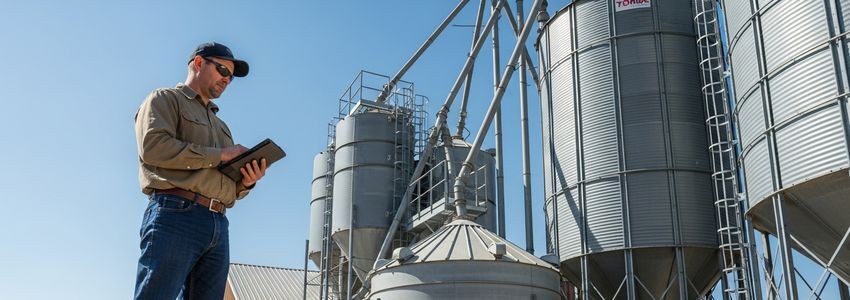
On-farm grain drying systems represent a major capital investment that most operators choose to finance over time.
Grain Dryer Financing: Key Stats at a Glance
Down Payment Requirements for Grain Dryer Financing
One of the most common questions farmers ask is how much cash they need upfront to finance a grain dryer. The answer varies by lender, loan type, and your financial profile.
Equipment Loans: 0-20% Down
Many equipment lenders offer 0% down financing for well-qualified borrowers with strong credit and established business history. This is known as 100% financing. More commonly, lenders ask for 10% to 20% down for equipment purchases, particularly for larger amounts or borrowers with less established credit.
SBA Loans: 10-20% Down
SBA 7(a) loans generally require 10% down for the equipment purchase portion. SBA 504 loans (used more for real property and large fixed assets) typically require 10-15% down from the borrower, with the SBA covering up to 40% and a conventional lender covering 50%.
FSA Loans: Flexible Requirements
USDA FSA loans have varying down payment requirements depending on the program. Direct operating loans for equipment may require little to no down payment, while guaranteed loans may follow conventional lender requirements of 10-20%.
Leases: Often No Down Payment
Equipment leases typically require little to no down payment. You may pay the first and last month's lease payment upfront as a security deposit, but there is generally no large cash outlay at signing. This makes leasing particularly attractive for farms managing tight seasonal cash flows.
If your operation is newer or you have had credit challenges, exploring bad credit equipment financing options may help you secure the grain dryer you need even without a perfect credit history.
How to Qualify for Grain Dryer Financing
Qualifying for grain dryer financing involves several factors that lenders evaluate when reviewing your application. Understanding these criteria helps you prepare a strong application and set realistic expectations.
Credit Score
For conventional equipment loans, most lenders look for a personal credit score of 600 or higher. Borrowers with scores of 700+ generally receive the most favorable rates and terms. Some agricultural lenders and specialized programs accept scores in the 550-599 range with additional documentation or collateral.
Time in Business
Lenders prefer farm operations with at least 2 years of operating history. Established farms with multiple years of tax returns demonstrating consistent income have the strongest applications. Beginning farmers may need to rely on USDA FSA programs designed specifically for newer operations.
Revenue and Income
Lenders will review your farm's gross revenue, net income, and debt service coverage ratio (DSCR). A DSCR of 1.25 or higher (meaning your income is 1.25 times your debt obligations) is the standard benchmark. Seasonal income patterns are normal for farm operations, and agricultural lenders factor this into their analysis.
Collateral
The grain dryer itself typically serves as collateral for the loan. For larger loans, lenders may also consider other farm assets, land, or equipment as additional security. Equipment loans are generally easier to obtain than unsecured business loans because the collateral reduces lender risk.
Documentation Required
- 2-3 years of personal and business tax returns
- Recent bank statements (3-6 months)
- Equipment quote or invoice from dealer
- Business financial statements (profit and loss, balance sheet)
- Farm Schedule F (for sole proprietors)
- Proof of farm ownership or lease agreement
For larger agricultural operations looking at multiple equipment needs, a business line of credit can complement equipment financing by covering operational costs during the equipment acquisition and installation process.
For more context on how agricultural businesses secure funding, read our guide on agricultural equipment financing and the full range of farm equipment financing options available to operators.
New vs. Used Grain Dryer Financing
The decision between financing a new or used grain dryer affects both the loan terms available and the long-term costs of ownership. Both options have merit depending on your budget and operational needs.
Financing a New Grain Dryer
New grain dryers come with manufacturer warranties, the latest technology, and full financing options from both independent lenders and dealer programs. Lenders are generally more willing to offer 100% financing, longer terms, and lower rates for new equipment because the collateral value is clear and the equipment has no unknown history.
Advantages of financing new:
- Full warranty protection reduces maintenance risk
- Best financing rates and terms
- Latest energy efficiency and automation features
- Easier to get 0% or low-interest dealer promotional financing
- Predictable depreciation for tax planning
Financing a Used Grain Dryer
Used grain dryers can represent significant savings, but financing options may be more limited. Many lenders restrict used equipment loans to units less than 7-10 years old or require the loan amount to fall within a percentage of appraised value. Down payment requirements for used equipment are often higher (15-25%).
Advantages of financing used:
- Lower purchase price reduces total financing need
- Faster depreciation already occurred (less immediate loss in value)
- Good option for budget-constrained operations
- Proven technology with known performance characteristics
When evaluating a used grain dryer, always request service records, inspect burner components and electrical systems, and have a qualified technician assess the unit before finalizing financing. Lenders may require an independent appraisal for used equipment over $50,000.
Seasonal Payment Structures for Farm Operations
One of the biggest challenges in farm equipment financing is matching loan payments to the seasonal cash flow cycle of agricultural operations. Unlike businesses with steady monthly revenue, farms generate most of their income during harvest and selling seasons.
Skip-Payment or Seasonal Payment Loans
Agricultural lenders often offer payment structures specifically designed for farm income cycles. These may include:
- Annual payments: One lump payment per year timed to post-harvest cash flows
- Semi-annual payments: Two payments per year aligned with selling seasons
- Skip-payment months: Lower or deferred payments during spring planting when cash is tight
- Balloon structures: Smaller regular payments with a larger balloon at crop year end
Matching Your Payment to Your Selling Season
Work with your lender to align payment due dates with when you expect to have cash from grain sales. If you typically sell corn in January-February after drying and storage, a February payment date makes more sense than monthly payments through spring planting season when operating cash is stretched.
Deferred First Payment
Many equipment lenders offer 60 to 90-day deferred first payment options, allowing farmers to acquire a grain dryer mid-summer in preparation for harvest without making the first payment until after harvest revenues arrive. This is particularly helpful for farms purchasing dryers before their first season of use.
Grain elevator and storage businesses may also benefit from exploring grain elevator business loans that cover a broader range of equipment and infrastructure needs.
Family farms and specialty operations should also review hobby farm business loans if their operation straddles commercial and smaller-scale production.
How Crestmont Capital Helps Farm Operators
Crestmont Capital is a direct lender with deep experience in agricultural equipment financing. We work with farm operators across all 50 states, from small family farms financing their first on-farm dryer to large commercial operations investing in full grain handling systems.
Our Grain Dryer Financing Programs
Crestmont Capital offers equipment loans and leases specifically structured for agricultural equipment including grain dryers, bin systems, aeration fans, and complete grain handling setups. Our programs include:
- Loan amounts from $10,000 to $5,000,000+
- Terms from 24 to 84 months
- Fixed and variable rate options
- Seasonal payment structures available
- Approvals in as little as 24-48 hours for qualified applicants
- Financing for new and used equipment
- Programs for farms with less-than-perfect credit
The Application Process
Getting started with Crestmont Capital is straightforward. You can apply online in minutes, and our agricultural financing specialists will reach out to discuss your specific needs and help you identify the best program for your situation.
We also offer small business loans for farm-related businesses that need working capital alongside their equipment purchase, helping you cover installation costs, grain handling upgrades, and operating expenses in a single funding relationship.
Why Farm Operators Choose Crestmont Capital
- Dedicated agricultural financing team with farm industry knowledge
- Fast decisions and minimal paperwork for routine equipment loans
- Flexible payment structures that match farm income cycles
- Competitive rates with transparent terms
- Rated #1 business lender by clients for responsiveness and service
Next Steps: Securing Your Grain Dryer Financing
- Assess your drying needs - Determine your bushel capacity requirements based on acres farmed and harvest window
- Get equipment quotes - Contact 2-3 grain dryer dealers for competitive equipment pricing and specifications
- Check your credit - Review your personal and business credit scores before applying
- Gather documentation - Prepare 2-3 years of tax returns, recent bank statements, and your equipment quote
- Compare financing options - Evaluate equipment loans, leases, SBA programs, and FSA loans for your situation
- Apply with Crestmont Capital - Submit your application online for a fast decision from our agricultural financing team
- Order your equipment - Once approved, work with your dealer to place the order and schedule installation before harvest
Frequently Asked Questions About Grain Dryer Financing
What credit score do I need to finance a grain dryer?
Most equipment lenders look for a minimum personal credit score of 600 for grain dryer financing. Borrowers with scores of 650-700 and above typically qualify for better rates and terms. Some agricultural programs and bad credit equipment financing options can work with scores below 600, often requiring additional collateral or a larger down payment.
Can I finance a used grain dryer?
Yes, many lenders offer financing for used grain dryers. Typically, the unit should be less than 10 years old and in good working condition. Lenders may require an independent appraisal and often ask for a higher down payment (15-25%) compared to new equipment financing. The loan amount is usually capped at a percentage of the appraised or market value.
How long are grain dryer loan terms?
Grain dryer loan terms typically range from 2 to 7 years (24 to 84 months). Smaller portable dryers under $30,000 often carry 2-3 year terms, while large tower dryers over $200,000 may qualify for 5-7 year terms. SBA loans for equipment can extend to 10 years, providing lower monthly payments for larger investments.
Do I need a down payment to finance a grain dryer?
Down payment requirements vary by lender and loan type. Many equipment lenders offer 0% down (100% financing) for well-qualified borrowers. Standard requirements are often 10-20% down. Equipment leases typically require little to no down payment. SBA loans generally require 10% from the borrower.
Can a beginning farmer qualify for grain dryer financing?
Yes, beginning farmers have several options. The USDA Farm Service Agency offers specific loan programs for beginning farmers with less than 10 years of farming experience, including direct loans with favorable terms. Some equipment lenders will also consider applications from newer operations with strong credit scores and adequate collateral. A co-signer or additional collateral can also strengthen an application.
Are grain dryer loan payments tax deductible?
The interest portion of grain dryer loan payments is generally tax deductible as a business expense for farm operations. Additionally, the equipment itself may qualify for Section 179 expensing or bonus depreciation, allowing you to deduct a significant portion of the purchase price in the year of acquisition. Consult your tax advisor or CPA for guidance specific to your situation.
Can I get seasonal or annual payment terms on a grain dryer loan?
Yes. Agricultural lenders including Crestmont Capital offer seasonal payment structures designed to match farm income cycles. Options include annual payments, semi-annual payments, skip-payment months during planting season, and deferred first payment periods of 60-90 days. Discuss your cash flow cycle with your lender when applying to find the best payment structure.
What is the difference between a grain dryer loan and a grain dryer lease?
With a loan, you own the grain dryer from day one and build equity as you make payments. At the end of the term, the equipment is fully yours. With a lease, you use the equipment for a set period but do not own it. At the end of the lease, you typically have the option to purchase the equipment at fair market value or a predetermined price, return it, or upgrade to a newer model. Loans build equity; leases offer flexibility and often lower monthly payments.
How much does a grain dryer cost?
Grain dryer costs range from approximately $10,000 for a small portable batch dryer to over $500,000 for a large tower dryer system. Mid-size continuous flow dryers typically cost $50,000 to $150,000. Mixed flow dryers range from $80,000 to $250,000. Total project costs including installation, site preparation, and electrical work can add 20-40% to the equipment price.
Can I finance a grain dryer with bad credit?
Yes, there are options for farmers with imperfect credit. Equipment financing uses the dryer as collateral, which reduces lender risk and makes approval more accessible. Specialized bad credit equipment financing programs, USDA FSA direct loans, and some agricultural lenders work with borrowers with credit challenges. A larger down payment, additional collateral, or a co-signer can improve your chances of approval.
How long does it take to get approved for grain dryer financing?
Approval timelines vary by lender and loan type. Private equipment lenders like Crestmont Capital can often provide decisions in 24-48 hours for straightforward applications. SBA loans take 30-90 days due to the government guarantee process. USDA FSA loans may also require several weeks. Preparing your documentation in advance significantly speeds up the process.
What is the USDA FSA loan program for grain dryers?
The USDA Farm Service Agency offers both direct loans and guaranteed loans for farm equipment including grain dryers. Direct loans are funded by FSA and offered to farmers who cannot obtain credit elsewhere. Guaranteed loans are made by commercial lenders with an FSA guarantee. Interest rates for FSA direct loans are set below market rates and adjusted periodically. Eligible uses include purchasing grain dryers, bins, and related handling equipment.
Can I include installation costs in my grain dryer financing?
Many lenders allow you to include installation costs, site preparation, and related equipment (aeration fans, conveyors, electrical upgrades) in the total financed amount. This is called a "soft cost" or "project financing" approach. Discuss with your lender upfront which costs can be included to avoid gaps between your loan amount and total project cost.
Is leasing or buying a grain dryer better for my farm?
The right answer depends on your financial situation and goals. Buying (loan financing) builds equity and may offer better long-term value for equipment you plan to use for 10+ years. Leasing offers lower monthly payments, keeps your options open for future upgrades, and may have off-balance-sheet accounting benefits. Many accountants and agricultural lenders can help you model both scenarios based on your specific tax and financial situation.
What grain dryer brands can I finance?
Equipment financing can be used for any major grain dryer brand including GSI (Grain Systems), Sukup, Farm Fans, Brock, Mathews Company, and others. Financing is brand-agnostic when obtained through an independent lender like Crestmont Capital. Manufacturer or dealer financing programs are specific to that brand's equipment and may offer promotional rates not available through independent lenders.








