
 (800) 949-0401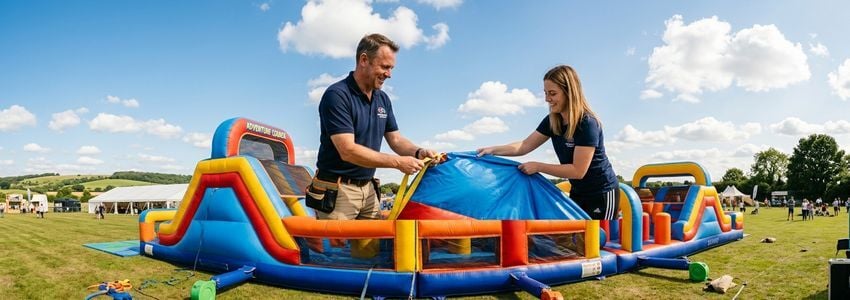
Inflatable Obstacle Course Equipment Financing: The Complete Guide for Business Owners
Inflatable obstacle course equipment financing gives party rental companies, mobile entertainment operators, and event businesses a way to acquire large-scale inflatable units without paying the full purchase price upfront. A single commercial-grade inflatable obstacle course can run anywhere from $8,000 to $40,000 or more, and most growing rental businesses need several units, a delivery trailer, blowers, and safety equipment before they can compete for the biggest bookings. Financing spreads that cost over time so cash flow keeps working for the business instead of sitting locked in a warehouse.
This guide breaks down everything a business owner needs to know about financing inflatable obstacle courses and related party rental equipment: what qualifies, how the different loan types work, what lenders look for, and how to structure a deal that actually fits a seasonal, weather-dependent business model. Whether the goal is launching a first unit or scaling a fleet to serve corporate events, schools, and festivals, understanding the financing landscape is the first step toward growth.
In This Article
- What Is Inflatable Obstacle Course Equipment Financing?
- Key Benefits of Financing
- How It Works
- Types of Financing Available
- Comparing Your Financing Options
- Who This Financing Is Best For
- How Crestmont Capital Helps
- Party Rental Industry Statistics
- How to Apply
- Real-World Scenarios
- Next Steps
- Frequently Asked Questions
What Is Inflatable Obstacle Course Equipment Financing?
Inflatable obstacle course equipment financing refers to business loans, leases, and lines of credit used specifically to purchase large inflatable units, delivery trailers, commercial blowers, tarps, stakes, and safety equipment for a party rental, mobile entertainment, or event services business. Because these inflatables are large, durable physical assets, they typically qualify as collateral for equipment financing, which makes approval more accessible than an unsecured loan.
Commercial obstacle course inflatables differ significantly from residential bounce houses. They are built with heavier-gauge vinyl, reinforced seams, and industrial blower systems designed to withstand daily setup, teardown, and transport. A 40-foot to 60-foot commercial obstacle course unit represents a serious capital investment, and financing lets an owner deploy that unit for revenue-generating bookings the same season it is purchased rather than waiting years to save enough cash.
This type of financing falls under the broader category of equipment financing and is closely related to financing used by other entertainment and event businesses, including trampoline park operators and companies running amusement and entertainment facilities.
Key Stat: According to the U.S. Small Business Administration, equipment loans remain one of the most commonly used financing tools for small businesses that need durable, income-producing assets, precisely because the equipment itself secures the loan and reduces lender risk.
Key Benefits of Financing Inflatable Obstacle Course Equipment
Business owners considering whether to finance or pay cash for new inflatable equipment should weigh the following advantages of financing:
- Preserve working capital. Keeping cash in the business means it stays available for marketing, staffing, insurance premiums, and unexpected repairs instead of being tied up in a single asset.
- Match payments to revenue. Structured loan and lease payments can be aligned with the seasonal cash flow patterns common in the party rental and event industry, so payments are manageable even during slower months.
- Expand inventory faster. Financing allows an operator to add two or three new obstacle course units in the same season instead of waiting years to save enough to buy one unit outright.
- Access newer, safer equipment. Financing makes it easier to upgrade to newer inflatable designs with better safety features, digital printing, and more durable materials that reduce liability exposure.
- Build business credit. Making consistent, on-time payments on an equipment loan helps establish a stronger business credit profile, which improves terms on future financing.
- Potential tax advantages. Many businesses can deduct equipment costs or lease payments as ordinary business expenses; a tax professional can confirm what applies to a specific situation.
How Inflatable Equipment Financing Works
The mechanics of inflatable obstacle course financing are similar to other types of commercial equipment financing, with a few industry-specific considerations:
Step 1: Determine the Total Equipment Cost
Lenders typically finance the full purchase price of the inflatable unit, plus related equipment such as blowers, tarps, stakes, sandbags, generators, and a delivery trailer. Bundling these related purchases into a single financing package is usually more efficient than financing each item separately.
Step 2: Choose a Loan Structure
Depending on the lender and the borrower's credit profile, the financing may be structured as an equipment loan (where the business owns the asset from day one and builds equity with each payment), an equipment lease (where the business makes payments to use the equipment, often with a buyout option at the end), or a business line of credit that can be drawn on as needed for equipment and operating costs.
Step 3: Underwriting and Approval
The lender reviews the business's credit profile, time in business, revenue, and the value of the equipment being financed. Because the inflatable equipment itself typically serves as collateral, approval decisions often come faster than for unsecured financing, and businesses with limited time in operation may still qualify.
Step 4: Funding and Delivery
Once approved, funds are either sent directly to the equipment vendor or advanced to the business to complete the purchase. Many alternative lenders can fund equipment purchases within a few business days, which matters for rental companies trying to get new inventory ready before a busy season.
Step 5: Repayment
Repayment is made in fixed monthly installments over a term typically ranging from 12 to 60 months, depending on the equipment's expected useful life and the loan amount. Some lenders offer seasonal payment structures with lower payments during slow months and higher payments during peak booking season.
Ready to Expand Your Inflatable Rental Fleet?
Crestmont Capital works with party rental and event entertainment businesses nationwide. Get a no-obligation quote in minutes.
Apply Now →Types of Financing for Inflatable Obstacle Course Businesses
1. Equipment Financing
Equipment financing is the most direct fit for purchasing inflatable obstacle courses, blowers, and delivery trailers. The equipment secures the loan, terms typically run 24 to 60 months, and the business owns the asset outright once the loan is paid off. This is generally the most cost-effective option for a business planning to keep and use the equipment for its full useful life.
2. Equipment Leasing
Equipment leasing can work well for operators who want to refresh their inventory more frequently, since inflatable designs and safety standards evolve. A lease often requires a lower upfront commitment and may include a purchase option at the end of the term, or the flexibility to upgrade to newer units when the lease expires.
3. SBA Loans
SBA loans, particularly the SBA 7(a) program, can be used to finance equipment purchases along with working capital for a growing event rental business. SBA loans typically offer longer repayment terms and lower rates than alternative financing, but the application and approval process takes longer and generally favors businesses with at least two years of operating history.
4. Business Line of Credit
A revolving business line of credit gives party rental operators flexible access to capital that can be used for equipment purchases, repairs, insurance premiums, or covering payroll during the slower winter months in many regions. Unlike a term loan, a line of credit can be drawn against repeatedly as needs arise.
5. Working Capital Loans
Unsecured working capital loans are useful for covering the operating costs that surround an equipment purchase, such as insurance, staff training, marketing for a new unit, or a booking software subscription, without tying up the equipment itself as collateral.
6. Vendor and Manufacturer Financing
Some commercial inflatable manufacturers offer in-house financing or partner with a lender to provide point-of-sale financing at the time of purchase. This can be convenient, but it is worth comparing the total cost against independent financing options, since manufacturer financing terms are not always the most competitive.
Comparing Your Financing Options
Choosing the right financing structure depends on how long the business plans to keep the equipment, how quickly funding is needed, and the business's current credit and revenue profile. The table below compares the most common options side by side.
| Financing Type | Typical Term | Best For | Funding Speed |
|---|---|---|---|
| Equipment Loan | 24-60 months | Owning equipment long-term | 2-7 days |
| Equipment Lease | 12-48 months | Upgrading inventory often | 2-7 days |
| SBA 7(a) Loan | Up to 10 years | Established businesses, lower rates | 30-90 days |
| Business Line of Credit | Revolving | Ongoing flexible capital needs | 1-5 days |
| Working Capital Loan | 3-24 months | Operating costs around a purchase | 1-3 days |
Who This Financing Is Best For
Inflatable obstacle course equipment financing serves a range of business types across the party rental and event entertainment industry:
- New party rental startups that need their first one or two inflatable units to begin booking weekend events without depleting personal savings.
- Established rental companies looking to expand inventory with additional obstacle courses, water slides, or interactive units to compete for larger corporate and festival contracts.
- Mobile entertainment operators who bundle inflatables with other services like DJ equipment, catering trailers, or photo booths and need financing across multiple asset categories.
- Event production companies adding inflatable attractions as a new revenue line alongside tents, staging, and audiovisual equipment.
- School, church, and community organizations operating a fundraising rental business that needs equipment but has limited access to large cash reserves.
How Crestmont Capital Helps Party Rental Businesses
Crestmont Capital works with entertainment and event service businesses across the country to structure financing that fits the seasonal, revenue-driven nature of the industry. Rather than forcing every borrower into the same rigid loan structure, Crestmont evaluates each business's cash flow patterns and equipment needs to recommend the right combination of products.
For a party rental business, that might mean an equipment loan for the inflatable units and trailer, paired with a business line of credit to cover insurance and marketing costs during the ramp-up to peak season. Businesses that have been operating for at least two years with strong revenue may also be good candidates for an SBA loan to fund a larger fleet expansion at a lower long-term cost.
Pro Tip: When comparing financing offers, ask about seasonal payment options. Many event and party rental businesses generate the majority of their revenue between late spring and early fall, and a lender who understands the industry may offer reduced payments during slower winter months.
Party Rental and Event Entertainment Industry Statistics
By the Numbers
Inflatable Equipment Financing - Key Figures
$8K-$40K
Typical cost range for a commercial obstacle course unit
2-7 Days
Typical funding time for equipment financing
24-60 Mo.
Common repayment term for equipment loans
$5M
Maximum SBA 7(a) loan amount available
The events and party rental industry has continued to recover and grow following the disruptions of the early 2020s, with consumer and corporate demand for in-person celebrations, festivals, and team-building events driving steady bookings for entertainment equipment rental companies. Coverage from Forbes has repeatedly highlighted how small, asset-based service businesses like event rental companies benefit from equipment financing structures that let owners scale inventory in step with demand rather than waiting to accumulate cash reserves.
How to Apply for Inflatable Equipment Financing
Step 1: Get a Quote From Your Equipment Vendor
Before applying, get a detailed quote from the manufacturer or dealer that includes the inflatable unit, blower, tarps, stakes, and any trailer or transport equipment needed. Lenders want to see an itemized breakdown of what is being purchased.
Step 2: Review Your Credit and Financial Documents
Check your personal and business credit scores ahead of time. Gather recent business bank statements, your most recent tax return, and a profit and loss statement if your business has been operating for at least six months.
Step 3: Compare Multiple Lenders
Request quotes from more than one financing source, including a traditional bank, an SBA lender, and an alternative lender specializing in equipment financing. Compare not just the interest rate but the total cost of the loan, any origination fees, and prepayment terms.
Step 4: Submit Your Application
Complete the lender's application with your business information, the equipment quote, and supporting financial documents. Most equipment financing applications can be completed online in under 15 minutes.
Step 5: Review and Sign Your Agreement
Once approved, carefully review the loan or lease agreement, including the payment schedule, any balloon payments, and what happens if a payment is missed during a slow season. Ask questions before signing.
Step 6: Take Delivery and Start Booking
Once funded, the equipment is delivered or picked up from the vendor, and the business can begin marketing and booking the new inventory right away.
Quick Guide
How to Finance New Inflatable Equipment - At a Glance
Obtain an itemized quote from your inflatable manufacturer or dealer.
Pull together bank statements, tax returns, and credit information.
Request quotes from at least two or three lenders before deciding.
Sign your agreement, take delivery, and start booking your new equipment.
Real-World Financing Scenarios
Scenario 1: First-Time Owner Launching a Rental Business
A first-time entrepreneur in Ohio wants to launch a weekend party rental business, starting with one 40-foot inflatable obstacle course, a delivery trailer, and a commercial blower. Total cost is approximately $18,000. With a 640 credit score and steady W-2 income supplementing the new venture, the owner qualifies for a 48-month equipment loan, keeping monthly payments low enough to stay profitable even while building a client base.
Scenario 2: Established Operator Expanding Inventory
A party rental company in Texas has been operating for four years with three inflatable units and wants to add two more obstacle courses plus a second delivery trailer to handle more simultaneous weekend bookings. Total expansion cost is $52,000. With strong revenue history and a 700 credit score, the owner secures equipment financing at a competitive rate with a 60-month term, allowing the business to take on significantly more bookings during peak season.
Scenario 3: Mobile Entertainment Company Diversifying
An event production company in Florida that primarily rents tents and staging wants to add inflatable obstacle courses as a new revenue category to serve corporate team-building events. The company uses a business line of credit to purchase two units, preserving the flexibility to draw additional funds for marketing the new service line without committing to a fixed loan amount upfront.
Scenario 4: Seasonal Cash Flow Gap
An established rental business in the Midwest lands a large festival contract in early spring but needs an additional obstacle course unit before the contract begins, while working capital is still tight from the winter off-season. The owner uses a working capital loan to bridge the gap, repaying it from the proceeds of the festival contract over the following months.
Scenario 5: Nonprofit Fundraising Program
A community youth sports league wants to launch a weekend inflatable rental program as an ongoing fundraiser, purchasing one obstacle course and basic transport equipment. With limited cash reserves but a clear business plan showing projected rental income covering loan payments, the organization secures a small equipment loan structured with a longer term to keep monthly payments manageable.
Grow Your Party Rental Business Today
Fast, flexible financing from the #1 business lender in the U.S. No obligation - see your options in minutes.
Apply Now →Common Financing Mistakes to Avoid
1. Underestimating Total Equipment Costs
Many first-time buyers finance the inflatable unit itself but forget to include the blower, trailer, tarps, sandbags, and safety equipment in their financing request, leaving them short on cash to complete the setup.
2. Ignoring Seasonal Cash Flow
Choosing a loan structure with flat monthly payments year-round can strain cash flow during the winter off-season in many regions. Ask lenders about seasonal or step payment structures designed for businesses with fluctuating revenue.
3. Not Comparing Total Cost of Financing
Focusing only on the monthly payment amount, rather than the total cost of the loan including fees and interest, can lead to choosing a more expensive financing option than necessary.
4. Skipping Insurance Planning
Commercial inflatable equipment typically requires specific liability insurance coverage. Failing to budget for insurance costs alongside loan payments can strain a new business's finances in its first year.
5. Overextending on Inventory Too Quickly
Adding more units than the business can realistically book and staff creates unnecessary debt service without matching revenue. Growing inventory in step with demonstrated booking demand is a more sustainable approach.
Next Steps
Contact commercial inflatable manufacturers or dealers for itemized quotes on the units and accessories your business needs.
Review your personal and business credit reports and address any issues before applying for financing.
Complete our quick application at offers.crestmontcapital.com/apply-now to see your financing options in minutes.
Get your new equipment on the road and start booking events with your expanded inventory.
Financing the Growth of Your Inflatable Rental Business
Inflatable obstacle course equipment financing gives party rental and event entertainment business owners a practical path to growth without draining their cash reserves. Whether the goal is launching a first unit, adding inventory to compete for bigger contracts, or bridging a seasonal cash flow gap, the right financing structure lets the equipment start paying for itself through bookings rather than sitting as a large upfront expense.
The party rental and entertainment industry rewards businesses that can respond quickly to demand, and financing is often the difference between turning down a lucrative booking and having the inventory ready to say yes. Comparing loan types, understanding what lenders look for, and matching payment structures to the seasonal nature of the business all contribute to a financing plan that supports sustainable growth.
For related financing options, explore our guides to equipment financing and trampoline park business loans for other entertainment industry operators.
Ready to Grow Your Rental Business?
Get fast, flexible financing from the #1 business lender in the U.S. No obligation - apply in minutes and see your options today.
Apply Now →Frequently Asked Questions About Inflatable Obstacle Course Equipment Financing
Disclaimer: The information provided in this article is for general educational purposes only and is not financial, legal, or tax advice. Funding terms, qualifications, and product availability may vary and are subject to change without notice. Crestmont Capital does not guarantee approval, rates, or specific outcomes. For personalized information about your business funding options, contact our team directly.








