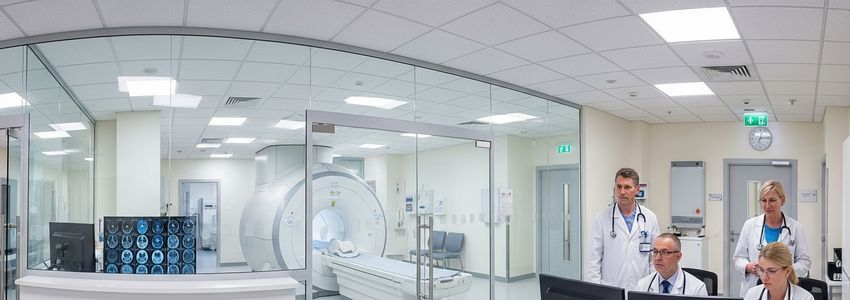
Running a medical imaging center is one of the most capital-intensive ventures in healthcare. From MRI machines and CT scanners to X-ray equipment and ultrasound systems, the cost of equipping and operating an imaging facility can reach well into the millions. Whether you are opening a new imaging center, expanding an existing practice, upgrading outdated equipment, or simply managing cash flow through fluctuating reimbursement cycles, imaging center business loans can provide the financial foundation your practice needs to thrive.
This guide covers everything you need to know about financing your medical imaging center - from the types of loans available, to qualification requirements, interest rates, and how to position your application for approval. We also highlight how Crestmont Capital can connect you with fast, flexible funding designed specifically for healthcare business owners like you.
In This Article
- What Are Imaging Center Business Loans?
- Types of Financing for Imaging Centers
- How Imaging Centers Use Business Loans
- Qualification Requirements
- Interest Rates and Loan Terms
- How to Apply for an Imaging Center Loan
- Imaging Center Financing - Key Statistics
- Tips to Improve Your Loan Approval Odds
- The Crestmont Capital Advantage
- Frequently Asked Questions
What Are Imaging Center Business Loans?
Imaging center business loans are commercial financing products specifically suited for the operational and growth needs of medical imaging facilities. These loans provide capital to purchase or lease diagnostic imaging equipment, fund facility expansions, hire staff, cover operational costs during slow reimbursement periods, and invest in technology upgrades.
Medical imaging is a specialized field that includes MRI (magnetic resonance imaging), CT (computed tomography), PET scans, X-ray services, ultrasound, mammography, fluoroscopy, and nuclear medicine. The equipment required for these services is extraordinarily expensive - a single MRI machine can cost between $150,000 and $3 million, while CT scanners typically range from $500,000 to $2.5 million. For independent imaging center owners and radiology groups, financing these assets is not just an option; it is a business necessity.
Unlike standard small business loans, imaging center financing often requires lenders with specific knowledge of healthcare reimbursements, HIPAA compliance costs, medical billing cycles, and the long-term asset values of imaging equipment. Specialized healthcare lenders - and alternative lenders like Crestmont Capital - understand these dynamics and can structure loans accordingly.
Ready to Fund Your Imaging Center?
Get fast, flexible financing from the #1 business lender in the U.S.
Apply NowTypes of Financing for Imaging Centers
Imaging centers have access to a variety of commercial financing products. The right choice depends on your specific need, timeline, credit profile, and how long you have been in business.
1. Equipment Financing
Equipment financing is arguably the most common type of loan used by imaging centers. With this structure, the imaging equipment itself serves as collateral, which allows lenders to offer competitive rates even for borrowers with moderate credit. MRI machines, CT scanners, X-ray systems, ultrasound units, and other diagnostic devices all qualify for equipment financing.
Loan terms typically range from 3 to 7 years and can cover up to 100% of the equipment's purchase price. Because the equipment secures the loan, approval rates tend to be higher than for unsecured business loans. Interest rates for healthcare equipment financing generally range from 6% to 15%, depending on your credit profile and the lender's assessment of the equipment's residual value.
Crestmont Capital's equipment financing program is well-suited for imaging centers looking to acquire new or used diagnostic devices without draining operating capital.
2. SBA Loans
The Small Business Administration offers several loan programs that can benefit imaging centers. The SBA 7(a) loan program is the most versatile, offering up to $5 million for working capital, equipment, or real estate. SBA 504 loans are ideal for purchasing commercial property - a significant consideration if you are building or buying an imaging facility.
SBA loans offer the lowest interest rates available, typically prime plus 2.25% to 4.75% depending on loan amount and term. However, the application process is documentation-heavy and approval can take 60 to 90 days. For imaging centers with strong financials and time to wait, SBA loans represent excellent long-term financing. Learn more about SBA loans for small businesses.
3. Business Lines of Credit
A business line of credit provides revolving access to funds up to a set limit, making it ideal for managing the cash flow gaps that imaging centers frequently experience. Insurance reimbursements from Medicare, Medicaid, and private payers can take 30 to 90 days to process, yet your payroll, rent, and supply costs are due immediately.
Lines of credit typically range from $25,000 to $500,000 for imaging centers, with draws available as needed. Interest is only charged on the drawn amount, making this an efficient tool for managing operational expenses without the burden of a fixed monthly payment on unused capital.
4. Term Loans
Traditional term loans provide a lump sum of capital repaid in fixed monthly installments over a set period. Short-term loans (6 to 24 months) work well for urgent needs like emergency equipment repairs or software upgrades. Long-term business loans (3 to 10 years) are better suited for major investments like building renovations or expanding into new service lines such as PET scanning or interventional radiology.
5. Working Capital Loans
Working capital loans help imaging centers bridge the gap between revenue and expenses during slow periods or insurance processing delays. These loans are typically unsecured and can fund quickly - sometimes within 24 to 48 hours with alternative lenders like Crestmont Capital. Unsecured working capital loans are accessible even to imaging centers with less-than-perfect credit.
6. Revenue-Based Financing
Revenue-based financing allows imaging centers to receive capital in exchange for a percentage of future revenue. Repayments flex with your income - when patient volume is high, you pay more; when it is slower, you pay less. This structure aligns well with the cyclical nature of healthcare billing and can be particularly useful for imaging centers dealing with seasonal fluctuations or payer mix variability.
7. Real Estate Loans
If your imaging center owns or plans to purchase its facility, commercial real estate loans can fund the acquisition, renovation, or build-out of your space. Imaging centers have specialized facility requirements - lead-lined walls for radiation shielding, reinforced flooring for heavy equipment, specialized HVAC systems, and compliance with ADA and healthcare regulations. These build-out costs often require significant financing.
How Imaging Centers Use Business Loans
Imaging center owners apply for business financing for a wide range of purposes. Understanding the most common uses can help you identify what type of loan best fits your current needs.
Equipment Purchases and Upgrades
The most obvious use of imaging center financing is acquiring diagnostic equipment. Technology in medical imaging evolves rapidly - newer MRI scanners offer higher field strengths and faster scan times; modern CT systems deliver lower radiation doses with improved image quality. Staying current with technology is both a competitive and clinical necessity. Business loans allow imaging centers to replace aging equipment before it fails or becomes obsolete, often funding the purchase through predictable monthly payments rather than large cash outlays.
According to the U.S. Food and Drug Administration, modern CT scanner technology has significantly reduced radiation doses compared to older systems, making upgrades clinically beneficial for patients as well as financially beneficial for practices through improved workflow efficiency.
Facility Expansion and Renovation
Adding new imaging modalities - such as a PET/CT suite, MRI unit, or digital fluoroscopy room - requires significant facility investment. Loans fund construction, lead shielding installation, specialized electrical upgrades, and the expansion of waiting areas and patient flow areas. This type of investment directly supports revenue growth by enabling your center to serve more patients and offer higher-reimbursed procedures.
Staffing and Payroll
Experienced radiologic technologists, radiology nurses, patient care coordinators, billing specialists, and radiologists are critical to an imaging center's success. Competitive compensation packages attract and retain qualified staff. Working capital loans and lines of credit help imaging centers maintain payroll during slower months or when expanding operations before revenue fully catches up.
Technology and IT Infrastructure
PACS (Picture Archiving and Communication Systems), RIS (Radiology Information Systems), EHR integrations, and cybersecurity infrastructure are significant capital expenditures for imaging centers. Business loans help cover these IT investments, which are essential for operational efficiency, regulatory compliance, and physician referral satisfaction.
Marketing and Business Development
Growing an imaging center requires building referral relationships with primary care physicians, specialists, and hospital systems. Funding for marketing campaigns, physician liaison programs, community outreach, and digital advertising can accelerate referral volume growth.
Insurance and Credentialing Costs
Medical malpractice insurance, accreditation fees (ACR, Joint Commission), and ongoing licensure costs are substantial fixed costs for imaging centers. Working capital financing helps manage these periodic lump-sum expenses without disrupting normal operations.
By the Numbers
Imaging Center Financing - Key Statistics
$150K+
Starting cost for entry-level MRI equipment
$2.5M
High-end CT scanner price range
30-90
Days typical insurance reimbursement delay
$147B
U.S. medical imaging market size (2024)
Qualification Requirements for Imaging Center Loans
Lenders evaluate imaging center loan applications using several key criteria. Understanding these requirements helps you prepare a strong application and improve your odds of approval.
Credit Score
For traditional bank loans and SBA programs, a personal credit score of 680 or higher is typically required. Alternative lenders like Crestmont Capital often work with imaging centers with scores as low as 550 to 600, particularly when other financial indicators are strong. Business credit scores (PAYDEX, Experian Business) are also reviewed for established practices.
Time in Business
Most traditional lenders require at least 2 years of operating history. Alternative lenders may work with imaging centers that have been operating for as little as 6 to 12 months, though rates and terms will reflect the shorter track record. For startups, SBA loans and equipment financing with the imaging equipment as collateral are often the most accessible options.
Annual Revenue
Lenders typically require minimum annual revenue of $100,000 to $250,000 for small working capital loans, and higher revenue thresholds for larger loan amounts. Imaging centers that can demonstrate consistent revenue growth - even if absolute volumes are modest - are viewed more favorably. Revenue documentation includes bank statements, tax returns, and practice management system reports.
Debt Service Coverage Ratio (DSCR)
Lenders calculate your Debt Service Coverage Ratio - the ratio of net operating income to total debt obligations - to ensure you can comfortably repay the loan. For healthcare practices, a DSCR of 1.25 or above is generally required, meaning your income exceeds your debt payments by at least 25%. Imaging centers with high fixed costs from equipment leases or facility rent should be prepared to demonstrate sufficient cash flow.
Business Documentation
Standard documentation requirements include:
- 2 to 3 years of business and personal tax returns
- Year-to-date profit and loss statement
- Balance sheet
- 3 to 6 months of business bank statements
- Business license and medical facility certification
- Equipment purchase agreements or vendor quotes (for equipment loans)
- Existing lease or real estate documentation
- Ownership/operating agreement
Collateral
Many imaging center loans use the diagnostic equipment itself as collateral, which makes qualification more accessible. For larger loans or lines of credit, lenders may require additional collateral such as real estate, accounts receivable, or personal guarantees. Bad credit business loans are also available for imaging center owners rebuilding their credit profile.
Interest Rates and Loan Terms for Imaging Center Financing
Interest rates and repayment terms vary significantly based on loan type, lender, and borrower profile. Here is a general overview of what imaging centers can expect:
| Loan Type | Rate Range | Term | Funding Speed |
|---|---|---|---|
| SBA 7(a) Loan | Prime + 2.25-4.75% | 7-25 years | 60-90 days |
| Equipment Financing | 6%-15% | 3-7 years | 1-7 days |
| Business Line of Credit | 8%-24% | Revolving | 1-5 days |
| Term Loan (Bank) | 7%-18% | 1-10 years | 7-30 days |
| Alternative Lender Term Loan | 9%-35% | 3 months-5 years | 24-72 hours |
| Revenue-Based Financing | Factor rate 1.1-1.5 | 3-18 months | 24-48 hours |
The Medical Group Management Association (MGMA) notes that access to capital is among the top operational challenges for independent physician practices and imaging centers, with financing costs directly impacting the ability to invest in technology that drives patient satisfaction and clinical outcomes.
How to Apply for an Imaging Center Business Loan
Applying for imaging center financing is straightforward when you are prepared. Here is a step-by-step breakdown of the process:
Step 1: Define Your Funding Need
Start by clearly articulating what the loan will fund and how much you need. Be specific - "I need $450,000 to purchase a refurbished 1.5T MRI system and fund the first 90 days of operational costs" is far more compelling than a vague request for capital. Lenders want to understand the purpose and expected return on the investment.
Step 2: Review Your Financials
Pull your business and personal credit reports from Experian, Equifax, and TransUnion. Dispute any errors. Calculate your DSCR by dividing your net operating income by your total annual debt service. Gather your last 2 years of tax returns and 6 months of bank statements.
Step 3: Identify the Right Loan Product
Use the rate and term table above to identify which loan type best fits your timeline and use of funds. For equipment purchases, equipment financing is typically the fastest and most cost-effective. For working capital, a line of credit or short-term business loan offers flexibility.
Step 4: Apply with Multiple Lenders
Apply with at least 2 to 3 lenders to compare offers. Working with a lender like Crestmont Capital that specializes in healthcare business financing saves time by matching you with appropriate products from a network of funding partners. Multiple applications within a 14 to 45-day window are typically counted as a single credit inquiry by FICO scoring models.
Step 5: Compare Offers Carefully
Look beyond the stated interest rate. Compare the Annual Percentage Rate (APR), total repayment amount, prepayment penalties, and any origination fees. According to the SBA, comparing total loan costs rather than just interest rates is critical to finding the most affordable option for your practice.
Step 6: Accept and Deploy Capital Strategically
Once funded, use the capital precisely as planned. Track the return on investment - improved patient throughput, higher reimbursement rates for newer modalities, reduced equipment downtime - to build a clear case for future financing rounds.
Ready to Grow Your Imaging Center?
Get fast, flexible financing from the #1 business lender in the U.S.
Apply NowTips to Improve Your Imaging Center Loan Approval Odds
Getting approved for imaging center financing requires preparation and strategic positioning. These proven tips will strengthen your application:
Separate Business and Personal Finances
Open a dedicated business bank account and business credit card if you have not already. Commingling personal and business funds raises red flags for lenders and makes it harder to document your practice's true financial performance.
Build Your Business Credit Profile
Establish trade lines with medical suppliers, office equipment vendors, and service providers that report payment history to business credit bureaus. Consistent on-time payments build your PAYDEX score and demonstrate financial responsibility. A strong business credit profile can unlock lower rates and higher loan amounts.
Document Insurance Reimbursement Revenue
Imaging centers often have complex revenue streams involving multiple payers - Medicare, Medicaid, and various commercial insurers. Provide clear documentation of your payer mix, average reimbursement rates, and accounts receivable aging. Lenders that understand healthcare billing will view a clean accounts receivable ledger as a strong positive indicator.
Optimize Your DSCR Before Applying
If your DSCR is below 1.25, consider paying down some existing debt, negotiating lower rates on current loans, or identifying ways to increase revenue before applying. Even a 3 to 6 month period of improved cash flow management can dramatically change your eligibility profile.
Offer Collateral Where Possible
While unsecured loans are available, offering the imaging equipment being purchased as collateral typically results in better interest rates and higher approval probability. For larger facilities, real estate collateral can unlock the lowest available rates.
Consider an Equipment Vendor Financing Program
Major imaging equipment manufacturers - including Siemens Healthineers, GE Healthcare, and Philips - offer vendor financing programs specifically for their equipment. These programs are often competitive but may require strong financials. Comparing vendor financing offers with independent lenders like Crestmont Capital ensures you secure the best available terms.
Work with a Healthcare-Focused Lender
Not all lenders understand the nuances of medical imaging center operations. Working with a lender experienced in healthcare financing means faster approvals, more appropriate loan structures, and less likelihood of being declined for reasons unrelated to your creditworthiness. Forbes notes that healthcare-specific lenders can provide more flexible underwriting criteria for medical practices with strong clinical performance but complex financials.
The Crestmont Capital Advantage for Imaging Centers
Crestmont Capital specializes in small business loans for healthcare professionals across the United States, including imaging centers, radiology groups, and diagnostic facilities of all sizes. Here is what sets our financing programs apart:
- Fast approvals: Get approved in as little as 24 hours and funded within 1 to 3 business days for most loan types.
- Flexible eligibility: We work with imaging centers with credit scores as low as 550 and as little as 6 months in business.
- Multiple loan products: From equipment financing and lines of credit to term loans and revenue-based financing, we match you with the right product for your specific need.
- No hidden fees: Transparent pricing with no surprise origination fees, prepayment penalties, or ongoing maintenance charges on most products.
- Dedicated advisors: Our team understands healthcare billing cycles, HIPAA compliance costs, and the capital requirements of running a modern imaging facility.
- Same-day business loans available: For urgent equipment failures or time-sensitive opportunities, same-day funding is available for qualified applicants.
We have helped hundreds of medical imaging centers across the country secure the capital they need to grow. Whether you are a solo radiologist launching a new outpatient imaging center, an established multi-modality facility expanding into PET services, or a radiology group looking to acquire a competitor, Crestmont Capital has a financing solution designed for you.
Related reading: Healthcare Business Loans: Financing for Medical and Healthcare Practices
Special Considerations for Imaging Center Financing
Medical imaging centers face several unique financial dynamics that set them apart from general small business borrowers. Understanding these factors helps you anticipate lender questions and structure your financing request more effectively.
Reimbursement Rate Volatility
CMS (Centers for Medicare and Medicaid Services) updates reimbursement rates for imaging procedures annually through the Physician Fee Schedule. Rate cuts - which have been a recurring trend over the past decade - directly impact revenue projections. Lenders familiar with imaging center finances will factor in potential reimbursement changes when evaluating loan sustainability. Having a clear payer diversification strategy (reducing dependence on Medicare and Medicaid by growing commercial payer volume) is a strong talking point in any loan discussion.
Certificate of Need (CON) States
Approximately 35 states have Certificate of Need laws that restrict the ability to establish new imaging centers or add major medical equipment without government approval. In CON states, your application must include CON documentation or demonstrate that the planned equipment falls below CON thresholds. Lenders need to verify that your expansion plans are legally permissible before funding. The National Conference of State Legislatures maintains an updated database of CON requirements by state.
Accreditation Requirements
Most insurance contracts require imaging centers to maintain accreditation from bodies such as the American College of Radiology (ACR) or The Joint Commission. Accreditation fees, quality assurance programs, and physicist consultations are ongoing costs that affect your bottom line. Include these in your financial projections when presenting to lenders.
Radiation Safety and Compliance Costs
Lead shielding, radiation monitoring programs, physicist surveys, and NRC (Nuclear Regulatory Commission) licensing fees for PET and nuclear medicine programs represent significant compliance costs. These should be clearly documented in your business financials and explained to lenders unfamiliar with imaging center operations.
Technology Refresh Cycles
Imaging equipment has a typical useful life of 7 to 10 years, though many centers upgrade sooner to remain competitive and capture higher reimbursement for newer technologies. Planning your equipment replacement cycle and the associated financing needs well in advance - rather than waiting until equipment fails - positions your practice for smoother operations and better loan terms.
Imaging Center Financing for Different Practice Sizes
The financing needs and optimal loan products differ significantly based on the size and structure of your imaging operation.
Independent Single-Site Imaging Centers
Solo and small-group imaging centers typically need $500,000 to $5 million for initial equipment and facility setup. Equipment financing, SBA loans, and long-term business loans are the primary tools. Working capital lines of credit are essential for managing the billing cycle gaps inherent in independent practice. Fast business loans provide a safety net for unexpected equipment failures or urgent facility repairs. Learn more about fast business loans for urgent healthcare financing needs.
Multi-Modality Imaging Centers
Centers offering multiple imaging services - MRI, CT, X-ray, ultrasound, mammography, bone density - have more complex financing needs and typically greater revenue stability from diversified service lines. Loan amounts of $2 million to $10 million are common for full-service outpatient imaging centers. SBA 504 loans for real estate, combined with equipment financing and a revolving credit facility, create a comprehensive capital structure for these practices.
Radiology Group Acquisitions
Radiology groups and private equity-backed imaging networks often require large acquisition financing - $5 million to $50 million or more - to acquire existing imaging centers or hospital outpatient radiology departments. These transactions typically involve commercial real estate loans, business acquisition loans, and mezzanine financing structures that go beyond standard small business lending.
Get Funded for Your Imaging Center Today
Apply in minutes. Get approved in 24 hours. Fund your growth with Crestmont Capital.
Apply NowImaging Center Business Loans vs. Equipment Leasing
One of the most common questions imaging center owners ask is whether to finance or lease diagnostic equipment. Both options have distinct advantages.
Equipment financing (loan): You own the equipment outright after repayment. Depreciation benefits apply, and there are no end-of-lease return or residual value concerns. Monthly payments may be slightly higher than leasing, but total cost of ownership over the equipment's life is typically lower. This is generally the better option for equipment you intend to use for 7 to 10 years.
Equipment leasing: Lower monthly payments preserve cash flow. At lease end, you can upgrade to newer technology without dealing with disposing of old equipment. Operating leases keep the equipment off your balance sheet, which can improve certain financial ratios. This option suits imaging centers in rapidly evolving modalities where technology changes quickly.
For most established imaging centers, a combination approach works best - finance core assets like MRI and CT systems, and lease ancillary equipment like ultrasound units and X-ray systems that tend to be upgraded more frequently.
Next Steps for Imaging Center Owners Seeking Financing
Ready to Apply? Follow These Steps:
- Pull your business and personal credit reports and address any errors
- Gather 2 years of tax returns and 6 months of bank statements
- Prepare a clear statement of funding purpose and projected ROI
- Calculate your current DSCR to understand where you stand
- Identify whether you need equipment financing, a term loan, or a line of credit
- Apply with Crestmont Capital for a fast, no-obligation decision
- Compare offers and select the best terms for your practice
- Deploy capital strategically and track your return on investment
Conclusion
Medical imaging centers require substantial capital investments to deliver state-of-the-art diagnostic services, maintain regulatory compliance, and compete effectively in the evolving healthcare landscape. Whether you need to finance a new MRI system, renovate your facility to add a CT suite, bridge a cash flow gap during insurance reimbursement delays, or fund a strategic acquisition, imaging center business loans provide the financial tools you need to succeed.
The right financing partner understands the complexities of healthcare operations - reimbursement cycles, accreditation requirements, CON regulations, and equipment replacement planning. Crestmont Capital has the expertise, products, and speed to serve imaging center owners across the United States, offering flexible loan programs that match the unique financial profile of medical imaging practices.
Do not let capital constraints limit your ability to provide exceptional care or grow your imaging center. Take the next step and apply for imaging center business financing today.
Frequently Asked Questions About Imaging Center Business Loans
What credit score do I need for an imaging center business loan?
Most traditional bank lenders require a personal credit score of 680 or higher for business loans. SBA loans generally require a minimum score of 640 to 680. Alternative lenders like Crestmont Capital can work with imaging centers with credit scores as low as 550, particularly when revenue, time in business, and cash flow are strong.
How much can I borrow for an imaging center business loan?
Loan amounts for imaging centers range from $25,000 for small working capital loans to $10 million or more for major equipment purchases, facility expansions, or acquisitions. SBA loans go up to $5 million. The amount you qualify for depends on your revenue, creditworthiness, collateral, and the specific loan product.
How quickly can I get an imaging center business loan?
Speed depends on the loan type and lender. Alternative lenders can fund in 24 to 72 hours. Equipment financing typically takes 1 to 7 business days. Bank term loans take 7 to 30 days, and SBA loans take 60 to 90 days. For urgent needs like emergency equipment replacement, Crestmont Capital offers same-day and next-day funding for qualified borrowers.
Can a new imaging center get a business loan?
Yes, though options are somewhat more limited for startups. Equipment financing is the most accessible path because the equipment serves as collateral. SBA loans also have startup-friendly programs. With strong personal credit, industry experience, and a detailed business plan showing projected revenue, new imaging centers can often secure funding within their first year of operation.
What documents do I need to apply for imaging center financing?
Standard documents include 2 years of business and personal tax returns, 6 months of business bank statements, a year-to-date profit and loss statement, balance sheet, business license, medical facility certification, and (for equipment loans) a vendor quote or purchase agreement. Some lenders also require proof of insurance, an ownership agreement, and existing lease documentation.
Can I finance used imaging equipment?
Yes. Used MRI machines, CT scanners, and other imaging equipment can be financed through equipment loans. Lenders will require an independent appraisal of the equipment's fair market value. Interest rates on used equipment financing are typically slightly higher than for new equipment, reflecting the shorter remaining useful life and residual value uncertainty.
Is a personal guarantee required for imaging center loans?
Most business loans for imaging centers require a personal guarantee, especially for smaller or newer practices. Personal guarantees mean you are personally responsible for repayment if the business defaults. Established imaging centers with strong business credit may be able to negotiate loans with limited or no personal guarantee, particularly for equipment financing where the asset itself provides sufficient collateral.
Can I get an imaging center loan with bad credit?
Yes. Alternative lenders, including Crestmont Capital, offer bad credit business loans for imaging centers with credit scores as low as 550. These loans typically carry higher interest rates than prime lending, but they provide essential access to capital for practices that may have faced past financial challenges. Demonstrating consistent recent revenue and improving credit are the most effective ways to qualify for better terms.
What is the difference between equipment financing and equipment leasing for imaging centers?
With equipment financing, you take out a loan to purchase the equipment and own it outright after repayment. With equipment leasing, you rent the equipment for a set period and return it at lease end (or buy it for a residual value). Financing typically has higher monthly payments but lower total cost of ownership. Leasing preserves cash flow and allows for easier technology upgrades but may cost more over time due to ongoing lease payments and residual value fees.
How do Certificate of Need (CON) laws affect imaging center financing?
In CON states, you must obtain state approval before purchasing major imaging equipment or opening a new imaging facility. Lenders in CON states will require documentation showing your CON has been approved or that your planned purchase falls below CON thresholds. Attempting to finance equipment without required CON approval can result in regulatory penalties and loan complications.
Can I use a business loan to fund imaging center accreditation costs?
Yes. ACR accreditation, Joint Commission certification, and other accreditation processes involve application fees, physicist surveys, quality assurance programs, and staff training costs that can total $15,000 to $50,000 or more. Working capital loans or business lines of credit are well-suited for funding these periodic compliance expenditures without disrupting day-to-day operations.
What is the best loan for opening a new imaging center?
For new imaging center startups, the best combination typically includes SBA 7(a) or 504 loans for the largest amounts at the lowest rates, supplemented by equipment financing for specific diagnostic equipment purchases. Having a detailed business plan, demonstrating industry experience, and offering personal collateral significantly improves approval odds for startup imaging center loans.
How does insurance reimbursement affect imaging center loan eligibility?
Insurance reimbursement is the primary revenue source for most imaging centers and is closely scrutinized by lenders. A diversified payer mix (not overly dependent on Medicare), low denial rates, fast accounts receivable cycles, and strong collections demonstrate financial stability. Lenders may discount projected revenue if a high percentage comes from payers with history of rate reductions.
Can I refinance an existing imaging center equipment loan?
Yes. Refinancing existing imaging center equipment loans can lower your monthly payments, reduce your interest rate, or free up equity in paid-down equipment. This is worth considering if your credit profile has improved since the original loan, if market rates have fallen, or if you want to consolidate multiple equipment loans into a single payment.
What is a typical down payment requirement for imaging center equipment loans?
Many imaging center equipment loans require no down payment (100% financing) when the equipment serves as adequate collateral. Some lenders require 10% to 20% down for used equipment or for borrowers with lower credit scores. SBA 7(a) loans typically require 10% down for equipment purchases. A larger down payment generally results in better interest rates and more favorable loan terms.
Disclaimer: The information provided in this article is for general educational purposes only and is not financial, legal, or tax advice. Funding terms, qualifications, and product availability may vary and are subject to change without notice. Crestmont Capital does not guarantee approval, rates, or specific outcomes. For personalized information about your business funding options, contact our team directly.

Allan Garfinkle
Allan Garfinkle is the Chief Revenue Officer at Crestmont Capital, where he has spent more than a decade leading revenue strategy, business development, and operational growth. With 28 years of experience building and advising startups and small businesses, Allan has helped more than 10,000 business owners navigate financing decisions, growth opportunities, and changing economic conditions. He earned a Bachelor of Science in Economics and an MBA with a concentration in Finance from Northeastern University, as well as a Juris Doctor from New England Law, where his studies focused on contracts and business law. His writing draws on extensive practical experience in small-business lending, equipment financing, business credit, and commercial finance.