
HVAC business loans give heating, ventilation, and air conditioning contractors the working capital they need to purchase equipment, hire technicians, cover payroll during slow seasons, and take on larger commercial contracts. For HVAC business owners, access to fast and flexible financing is not a luxury - it is a competitive requirement. The right loan can mean the difference between landing a major commercial account and losing it to a better-equipped competitor.
In This Article
What Are HVAC Business Loans?
HVAC business loans are financing products designed specifically for heating, ventilation, and air conditioning companies. These loans provide HVAC contractors, installers, and service businesses with capital to fund equipment purchases, fleet expansion, working capital needs, payroll, marketing, and business growth. They are available through traditional banks, credit unions, online lenders, and specialty business financing companies like Crestmont Capital.
Unlike personal loans, HVAC business loans are underwritten based on your company's revenue, cash flow, and business credit - not just your personal score. This means even HVAC owners with less-than-perfect personal credit can often access meaningful funding based on how their business actually performs.
The HVAC industry in the United States generates over $115 billion annually and employs more than 400,000 technicians across residential, commercial, and industrial sectors. With demand growing year over year - driven by aging infrastructure, climate change, and increased construction activity - HVAC companies are well-positioned for growth. But growth requires capital, and that is exactly what HVAC business loans provide.
Key Benefits for HVAC Contractors
HVAC business owners who secure financing gain a significant competitive edge. Here are the primary benefits that make HVAC business loans valuable:
- Purchase new equipment and service vans without depleting cash reserves - HVAC service requires expensive tools, refrigerants, and diagnostic equipment. Financing lets you acquire what you need while keeping cash for operations.
- Bridge seasonal cash flow gaps - HVAC demand peaks in summer and winter, leaving spring and fall as slower periods. A business line of credit or working capital loan keeps your team paid during the off-season.
- Scale your technician team - Labor is your biggest cost and biggest growth lever. Financing helps you hire and train new technicians before the busy season starts.
- Take on larger commercial contracts - Commercial HVAC projects often require significant upfront materials and labor costs. A term loan gives you the capital to bid on and execute bigger jobs.
- Upgrade to high-efficiency systems and technology - Modern HVAC diagnostics, HVAC software, and smart building system integration require technology investments that financing makes manageable.
- Respond fast to growth opportunities - When a competitor goes out of business or a major contract becomes available, having financing in place means you can move quickly.
- Build business credit - Responsibly managed business loans build your company credit profile, leading to better rates and higher limits over time.
Industry Fact: According to the U.S. Bureau of Labor Statistics, HVAC employment is projected to grow 9% from 2023 to 2033, faster than the average for all occupations. Growing demand means growing capital needs - HVAC companies that have financing in place are positioned to capture that growth.
Ready to Grow Your HVAC Business?
Get fast, flexible financing from the #1 business lender in the U.S. No obligation - apply in minutes and see your options today.
Apply Now →How HVAC Business Financing Works
Understanding the mechanics of HVAC business loans helps you choose the right product and get approved faster. Here is how the process typically works from application to funding:
Quick Guide
How HVAC Business Financing Works - At a Glance
Submit a simple application with your business details, revenue, and financing needs. Takes about 5-10 minutes.
Your lender evaluates your revenue, time in business, cash flow, and credit profile to determine loan amount and terms.
You receive loan options with clear terms - amount, rate, repayment schedule. No obligation to accept.
Once you accept and finalize documentation, funds are deposited into your business account - often within 24-72 hours for online lenders.
The key factors lenders evaluate when reviewing HVAC business loan applications include:
- Annual revenue: Most lenders want to see at least $100,000 to $150,000 in annual revenue, though some products have lower thresholds.
- Time in business: Established HVAC companies (2+ years) get the best terms, but startups and newer businesses have options too.
- Credit profile: Business credit and personal credit both matter. Better credit scores unlock lower rates and higher limits.
- Cash flow: Lenders want to see that your business generates enough cash to service the debt comfortably.
- Industry stability: HVAC is considered a strong, recession-resistant industry - this works in your favor with lenders.
Types of HVAC Business Loans
HVAC contractors can access multiple types of business financing depending on their specific needs. Understanding the differences helps you select the product that delivers the best value for your situation.
Term Loans
A term loan provides a lump sum of capital that you repay over a set period - typically 1 to 10 years - with fixed or variable monthly payments. Term loans work well for HVAC companies that need capital for a specific purpose: purchasing a fleet of service vans, expanding into a new market, or acquiring another HVAC company. Rates vary from around 6% to 30% depending on creditworthiness and lender type.
Business Line of Credit
A business line of credit gives you revolving access to funds up to a set limit. You draw only what you need, pay it back, and draw again. This is ideal for HVAC companies managing seasonal cash flow, covering payroll during slower months, or handling unexpected repair expenses. Lines of credit are flexible and reusable - making them one of the most popular financing tools for service businesses.
Equipment Financing
HVAC equipment financing allows you to purchase HVAC-specific equipment - diagnostic tools, service vehicles, refrigerant recovery machines, specialty tools - with the equipment itself serving as collateral. This often results in favorable rates and terms since the loan is secured. Equipment financing is a natural fit for HVAC businesses upgrading their fleet or adding new capabilities.
Working Capital Loans
Working capital loans are short-term financing products designed to cover day-to-day operating expenses. For HVAC businesses, these are most useful during the off-season when revenue drops but overhead continues. Terms typically range from 3 to 24 months, and approvals can happen within 24 hours at some lenders.
SBA Loans
SBA loans (specifically the SBA 7(a) program) offer some of the lowest interest rates available to small businesses. For HVAC companies with strong credit and established revenue, SBA loans can provide up to $5 million at rates often in the 6-10% range. The tradeoff is a longer approval process - often 30-90 days - and more documentation requirements.
Revenue-Based Financing
Revenue-based financing advances capital in exchange for a percentage of your future revenue until the advance is repaid. For HVAC businesses with strong and steady revenue but credit challenges, this can be a viable option. Repayments flex with your sales - lower during slow months and higher during peak season.
By the Numbers
HVAC Industry and Business Financing - Key Statistics
$115B+
U.S. HVAC industry annual revenue
9%
Projected HVAC job growth through 2033 (BLS)
24 hrs
Typical funding time with online lenders
400K+
HVAC technicians employed in the U.S.
Who Qualifies for HVAC Business Loans
Most HVAC businesses - from solo owner-operators to multi-crew commercial contractors - can qualify for some form of business financing. Here is a breakdown of general qualification criteria by loan type:
Online Lenders and Alternative Financing
Online lenders offer the most flexible qualification criteria. Typical minimums are:
- 6+ months in business (some products require 1-2 years)
- $8,000-$15,000 in monthly revenue
- Personal credit score of 550 or higher (some lenders go lower)
- Business bank account in good standing
Traditional Bank Loans
Banks have higher standards but offer lower rates:
- 2+ years in business
- Strong personal and business credit (680+)
- Clean financial records (bank statements, tax returns)
- Collateral may be required for larger loans
SBA Loans
SBA loans have the strictest requirements but the best terms:
- 2+ years in business
- U.S.-based business with for-profit operations
- Personal credit score of 650 or higher (typically 680+)
- Must demonstrate need and inability to get credit elsewhere
- No outstanding government debt or prior SBA loan defaults
Good News for HVAC Owners: Even if your personal credit is less than perfect, many HVAC businesses qualify for financing based on their revenue and cash flow alone. Crestmont Capital works with contractors across the credit spectrum to find the best available option for each business.
How HVAC Companies Use Business Financing
The most successful HVAC contractors use financing strategically - not as a last resort, but as a growth tool. Here are the most common and impactful ways HVAC businesses deploy loan capital:
Fleet Expansion and Vehicle Upgrades
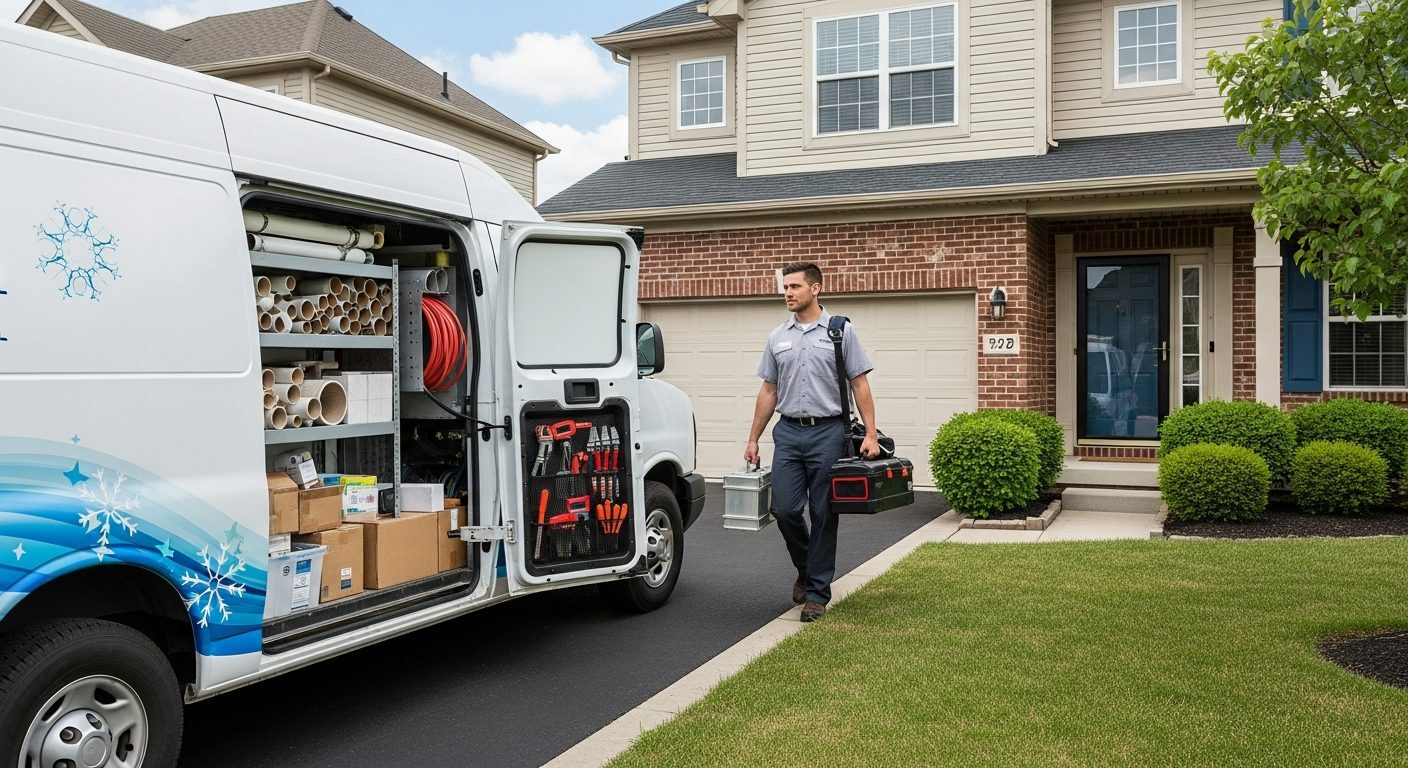
Service vehicles are the lifeblood of any HVAC business. Each technician needs a reliable, well-stocked van to run calls efficiently. A single new service van can cost $35,000 to $60,000 fully equipped. Equipment financing or term loans make fleet expansion manageable without draining your operating reserves.
Inventory and Parts Stocking
HVAC parts can be expensive - especially during peak season when supply chains tighten. Pre-stocking key components (compressors, coils, thermostats, refrigerant) before summer and winter rush periods can dramatically improve your service speed and customer satisfaction. Inventory financing is a direct solution for this need.
Seasonal Cash Flow Management
HVAC businesses face one of the most pronounced seasonal revenue patterns of any trade. Spring and fall are typically slow, while summer cooling and winter heating seasons drive demand. A revolving line of credit bridges the gap - covering payroll, insurance, and overhead during the shoulder seasons so your team stays intact and ready when demand spikes.
Hiring and Training Technicians
The HVAC technician shortage is real. Finding, hiring, and training skilled technicians takes time and money. Many HVAC business owners use working capital loans or lines of credit to front the cost of hiring ahead of demand - bringing on new technicians before the busy season so they are trained and ready when calls flood in.
Marketing and Lead Generation
HVAC is a highly local, relationship-driven business. Digital marketing, including Google Local Service Ads, paid search, and website optimization, generates consistent leads but requires sustained investment. Business financing lets you maintain a marketing budget even when cash flow is tight.
Commercial Contract Expansion
Commercial HVAC contracts are significantly more lucrative than residential work. A single commercial building management contract can be worth $50,000 to $200,000 annually. However, commercial work often requires upfront equipment, bonding, and materials costs. A term loan provides the capital to bid on and execute these larger contracts.
Find the Right Financing for Your HVAC Business
Crestmont Capital specializes in flexible business loans for contractors. Get matched with the best option for your revenue and goals.
Apply Now →Comparing HVAC Business Loan Options
Not all HVAC business loans are created equal. The right choice depends on your specific needs, timeline, and creditworthiness. Here is a side-by-side comparison of the most common options:
| Loan Type | Best For | Typical Rate | Speed | Credit Needed |
|---|---|---|---|---|
| Term Loan | Large purchases, expansion | 6-25% | 1-7 days (online); weeks (bank) | 600+ |
| Line of Credit | Seasonal cash flow, ongoing ops | 7-25% | 1-5 days | 580+ |
| Equipment Financing | Vans, tools, diagnostic equipment | 5-20% | 2-5 days | 550+ |
| SBA Loan | Large capital needs, lowest rates | 6-10% | 30-90 days | 650+ |
| Working Capital Loan | Payroll, overhead, off-season | 10-35% | Same day to 48 hrs | 500+ |
How Crestmont Capital Helps HVAC Businesses
Crestmont Capital has helped hundreds of contractors - including HVAC companies - access the funding they need to grow. As the #1 rated business lender in the U.S., Crestmont Capital offers a wide range of financing products tailored to the needs of small and mid-size businesses.
What sets Crestmont Capital apart for HVAC contractors:
- Fast approvals: Many HVAC business owners receive funding decisions within hours and money in their account within 1-3 business days.
- Multiple loan products: From small business loans to lines of credit and equipment financing, Crestmont matches each business with the right product.
- Flexible credit requirements: Crestmont works with HVAC owners across the full credit spectrum, including those who have been declined by traditional banks.
- No collateral required on many products: Unsecured working capital and lines of credit do not require you to pledge your home or assets.
- Dedicated advisors: A real person reviews your file and works with you to find the best option for your business - not just an algorithm.
Whether you need $25,000 to buy a new service van or $500,000 to expand into commercial HVAC contracting, Crestmont Capital has a financing solution designed for your needs. Our team understands the seasonal dynamics, equipment requirements, and growth challenges that HVAC business owners face every day.
You can also explore how other contractors use business financing in our guides on construction business loans and commercial cleaning business loans to see how businesses in related industries approach financing strategy.
Real-World Scenarios: HVAC Business Loans in Action
Understanding how other HVAC businesses have used financing can help you see the potential impact for your own company. Here are six realistic scenarios drawn from common HVAC business financing situations:
Scenario 1: Pre-Season Fleet Expansion
A residential HVAC contractor in Atlanta had four service vans and was turning away customers every summer because crews were overbooked. In March, he used a $120,000 equipment loan to purchase two fully equipped service vans. By the time the summer cooling season arrived, he had two additional crews in the field. Summer revenue was 40% higher than the prior year, and the loan paid for itself within one season.
Scenario 2: Surviving the Off-Season
A three-crew HVAC company in Wisconsin faced the same challenge every spring - revenue dropped to almost nothing while payroll continued. Rather than laying off skilled technicians (who would then find jobs elsewhere), the owner secured a $50,000 working capital line of credit in February. He drew on it to cover payroll through March and April, then repaid it from summer revenue. His team stayed intact, and he avoided the costly rehire-and-retrain cycle.
Scenario 3: Winning a Commercial Contract
A mid-size HVAC contractor was offered a $350,000 commercial building management contract by a regional property management company. The contract required $80,000 in upfront equipment purchases and an additional two full-time technicians. She used a combination of a $65,000 term loan and a $25,000 line of credit to fund the startup costs. The commercial contract added $350,000 in annual revenue and became the foundation for a significant expansion into commercial work.
Scenario 4: Emergency Equipment Replacement
During the height of summer, the lead technician's van broke down beyond repair. Without a replacement vehicle, the company would miss calls and disappoint customers. The owner applied for a $45,000 equipment loan online Monday morning and had a same-day approval. A replacement van was purchased and on the road by Wednesday, minimizing the disruption to operations.
Scenario 5: Expanding Into a New Market
An HVAC company based in a mid-sized metro area identified an underserved suburb 30 miles away with significant residential construction activity. To capture that market, they needed a dedicated crew, van, and local marketing investment. A $90,000 term loan funded the expansion. Within 18 months, the new market represented 35% of total company revenue.
Scenario 6: Investing in Technology and Training
A forward-thinking HVAC owner recognized that smart home and building automation was reshaping the industry. He used a $30,000 working capital loan to invest in technician training for smart HVAC systems and purchase the diagnostic tools needed to service them. Within one year, the company was positioning itself as a premium smart-HVAC installer - commanding higher margins and attracting a more affluent customer base.
Frequently Asked Questions
What is the best type of loan for an HVAC business?
The best loan depends on your specific need. For ongoing cash flow management, a business line of credit is usually the most flexible and cost-effective option. For purchasing vehicles or equipment, equipment financing typically offers the best rates because the purchase serves as collateral. For large expansion projects or acquisitions, an SBA loan or term loan may be the best fit. Crestmont Capital can help you compare options and choose the right product for your situation.
How much can an HVAC company borrow?
HVAC businesses can typically borrow from $10,000 to several million dollars depending on revenue, creditworthiness, and the type of loan. Working capital loans and lines of credit commonly range from $10,000 to $500,000. SBA loans can go up to $5 million. Equipment loans are generally sized to match the cost of the equipment being purchased. Most HVAC companies start with loans in the $25,000 to $300,000 range.
Can I get an HVAC business loan with bad credit?
Yes, many HVAC businesses with less-than-perfect credit can still access financing. Alternative lenders and online lenders evaluate your overall business health - revenue, cash flow, and time in business - not just your credit score. Working capital loans, revenue-based financing, and some equipment loans are available to businesses with credit scores in the 500-600 range. Crestmont Capital works with HVAC owners across the full credit spectrum.
How long does it take to get funded?
Funding timelines vary by lender and loan type. Online lenders and specialty business lenders like Crestmont Capital can often provide approval within hours and fund within 1-3 business days. Traditional bank loans typically take 2-4 weeks. SBA loans can take 30-90 days due to additional documentation and review requirements. If speed is a priority, working with an online lender or alternative lender is the fastest path to capital.
Do I need collateral to get an HVAC business loan?
Not always. Many working capital loans and business lines of credit are unsecured, meaning no collateral is required. Equipment financing uses the equipment itself as collateral. SBA loans and traditional bank term loans above a certain size typically require collateral, which may include business assets, vehicles, or real estate. Always review the collateral requirements before accepting a loan offer.
Can a new HVAC business get a loan?
Yes, though options are more limited for businesses under 6 months old. Newer HVAC businesses often have the best luck with equipment financing (secured by the equipment purchased), startup business loans from online lenders, or SBA Microloan programs. Having a solid business plan, relevant industry experience, and good personal credit significantly improves your chances. Once you reach 6-12 months in business with documented revenue, many more loan options become available.
What documents do I need to apply for an HVAC business loan?
Required documents vary by lender and loan type, but commonly include: 3-6 months of business bank statements, most recent 1-2 years of business tax returns, a government-issued ID, your business license and contractor's license, and basic business information (EIN, business address, legal entity type). Some online lenders only require bank statements and a quick application form. SBA loans require more extensive documentation including financial projections and a business plan.
What interest rates can I expect on HVAC business loans?
Interest rates for HVAC business loans vary widely. SBA loans typically offer the lowest rates at 6-10%. Traditional bank term loans range from 6-15%. Online lender term loans range from 8-30%. Working capital loans and lines of credit from alternative lenders range from 10-35%. Equipment financing for vehicles and HVAC tools typically falls in the 5-20% range. Your specific rate depends on your credit score, business revenue, time in business, and loan type.
Is HVAC a good industry for business financing?
Yes - HVAC is generally viewed favorably by lenders. It is a stable, recession-resistant industry (heating and cooling are necessities, not luxuries), with strong demand trends driven by construction growth, aging equipment, and climate change. HVAC companies have predictable revenue patterns and essential service demand, which makes them lower-risk borrowers compared to many other industries. These factors often translate to better loan terms for HVAC business owners.
What is the minimum revenue needed to qualify for an HVAC business loan?
Minimum revenue requirements vary by lender. Many online lenders and alternative lenders require as little as $8,000-$15,000 in monthly revenue (roughly $100,000-$180,000 annually). Some working capital lenders have even lower minimums, starting around $5,000 per month. Traditional banks and SBA programs typically require higher revenue levels. For larger loan amounts, lenders want to see revenue that comfortably supports the loan repayment - generally, your annual revenue should be at least 2-3x the loan amount you are requesting.
Can I use an HVAC business loan to hire employees?
Yes. Working capital loans and business lines of credit can be used for any business purpose, including hiring and paying employees. Many HVAC business owners use financing specifically to hire new technicians before the busy season starts - fronting the hiring, onboarding, and early payroll costs before summer or winter revenue arrives to cover those expenses. This is one of the most strategic uses of short-term business financing in the HVAC industry.
How do SBA loans work for HVAC businesses?
SBA loans are government-backed loans issued through approved banks and lenders. The SBA guarantees a portion of the loan, reducing the risk for lenders and allowing them to offer more favorable rates and longer terms than they might otherwise provide. The most popular SBA program for HVAC businesses is the SBA 7(a) loan, which can be used for working capital, equipment purchases, real estate, and business acquisition. Terms can extend up to 25 years for real estate and 10 years for other uses. The application process is more documentation-intensive but the lower rates can save significant money over the life of the loan.
What is the difference between a business loan and equipment financing for HVAC?
A business term loan provides general-purpose capital that can be used for any business expense. Equipment financing is specifically structured for purchasing physical equipment, with the equipment serving as collateral. Because equipment financing is secured, it typically offers lower interest rates than unsecured term loans. For HVAC businesses buying vans, diagnostic equipment, or HVAC tools, equipment financing often provides better terms. For general operating expenses, hiring, or marketing, a term loan or line of credit is usually more appropriate.
How does a business line of credit help with HVAC seasonality?
A business line of credit is revolving, meaning you can draw on it, repay it, and draw again as needed. This makes it perfect for seasonal businesses like HVAC, where revenue drops significantly in spring and fall. You draw from the line during slow months to cover payroll and overhead, then repay the drawn amount when busy season revenue comes in. You only pay interest on what you actually draw, making it a cost-effective way to smooth out seasonal cash flow without taking on a large term loan.
How can I improve my chances of getting approved for an HVAC business loan?
To improve approval odds: maintain clean business bank statements showing consistent deposits and no overdrafts; pay down existing debt to lower your debt utilization; ensure your business credit profile is established and accurate; file your tax returns on time; keep your contractor's license and business insurance current; and apply when your revenue is at its seasonal peak rather than during slow months. Working with a lender who specializes in small business financing (rather than a general bank) also helps, as they understand the HVAC business model and seasonal dynamics better.
Ready to Take Your HVAC Business to the Next Level?
Get the capital you need to grow your team, expand your fleet, and dominate your market. Apply today with no obligation.
Apply Now →How to Get Started
Complete our quick application at offers.crestmontcapital.com/apply-now. You will need basic business info and 3 months of bank statements. Takes about 5-10 minutes.
A Crestmont Capital advisor who understands the contractor business will review your application and match you with the right financing option for your HVAC company's needs and goals.
Once approved and documents are finalized, funds are deposited into your business account - often within 1-3 business days. Put that capital to work growing your HVAC business.
Conclusion
HVAC business loans are one of the most effective tools available to heating and cooling contractors who want to grow their operations, manage seasonal cash flow, or invest in the equipment and people needed to compete for larger contracts. With industry demand rising and technician shortages putting a premium on well-funded, well-equipped HVAC companies, having access to business financing is more important than ever.
Whether you need a business line of credit to smooth out your seasonal revenue, equipment financing for your next fleet expansion, or a small business loan to hire the technicians you need for a major commercial contract, Crestmont Capital is here to help. We specialize in fast, flexible financing for HVAC businesses and contractors across the country.
Apply today and find out how much your HVAC business qualifies for - with no obligation and no impact on your credit score to get started.
Disclaimer: The information provided in this article is for general educational purposes only and is not financial, legal, or tax advice. Funding terms, qualifications, and product availability may vary and are subject to change without notice. Crestmont Capital does not guarantee approval, rates, or specific outcomes. For personalized information about your business funding options, contact our team directly.