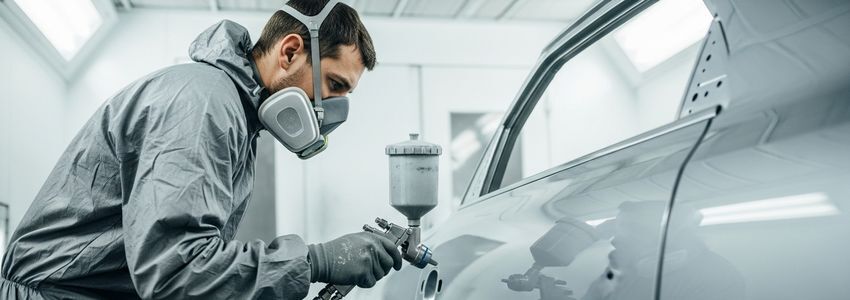
For any auto body shop, the paint booth is the heart of the operation. It's where the final, flawless finish is applied, turning a repaired vehicle back into a showroom-quality masterpiece. A modern, efficient paint booth not only improves the quality of your work but also dramatically increases your shop's throughput, safety, and profitability. However, this critical piece of equipment represents a significant capital investment, often ranging from tens of thousands to well over a hundred thousand dollars. For most shop owners, paying this amount in cash is not a viable or strategic option, which is where specialized financing comes into play.
Understanding the landscape of body shop financing is essential for growth. Whether you are starting a new shop, expanding your current location, or upgrading outdated equipment, securing the right funding is the key to acquiring the assets you need without depleting your working capital. A dedicated paint booth financing solution allows you to spread the cost of this revenue-generating asset over time, making the investment manageable and aligning its expense with the income it produces.
This comprehensive guide will walk you through every aspect of financing an auto body paint booth. We will explore the different types of booths and their associated costs, the significant benefits of financing, how the process works, and what lenders look for in an applicant. By the end, you will have a clear roadmap to navigate the financing process and make an informed decision that propels your auto body shop to the next level of success.
In This Article
What Is Auto Body Paint Booth Financing?
Auto body paint booth financing is a specific type of business funding designed to help shop owners purchase or lease a new or used paint booth. Instead of paying the full cost upfront, which can be a massive drain on cash reserves, financing allows you to acquire the equipment for a predictable monthly payment over a set term. This financial tool is a form of equipment financing where the paint booth itself typically serves as collateral for the loan, making it easier to secure than an unsecured business loan.
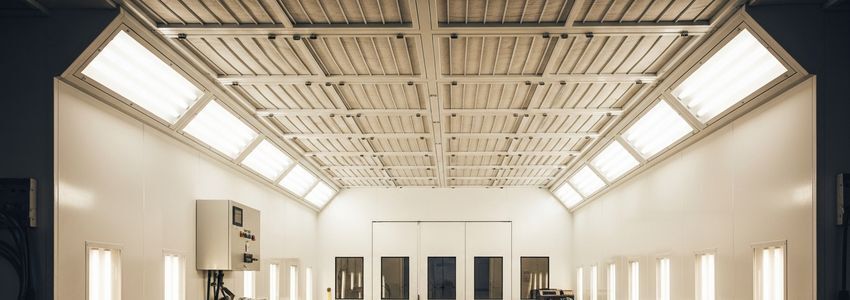
A spray paint booth is a highly engineered, enclosed environment designed for applying paint to vehicles. Its primary functions are to provide a clean, dust-free space for a perfect finish, control temperature and humidity for proper paint curing, and safely ventilate harmful fumes and overspray away from the technician and the environment. Modern booths are complex systems involving advanced airflow, filtration, heating, and lighting, all of which must comply with strict safety and environmental regulations set by agencies like OSHA and the EPA. This complexity and technology are what drive their significant cost.
The price of a paint booth can vary dramatically based on its size, features, and airflow design. A basic, open-faced or portable crossdraft booth might start around $15,000. However, most professional auto body shops require more advanced models. A semi-downdraft or side-downdraft booth can range from $25,000 to $50,000. For high-volume shops or those seeking OEM certifications, a premium full downdraft booth with integrated curing technology and drive-through capabilities can easily exceed $100,000, not including installation. These figures make it clear why financing is the preferred acquisition method for the vast majority of shop owners.
Financing is a strategic business decision. It preserves working capital-the lifeblood of any business-for day-to-day operational needs like payroll, marketing, inventory of paint and supplies, and unexpected repairs. By financing the booth, you can put this essential, revenue-generating asset to work immediately, letting the increased income it helps produce cover its own monthly cost. It turns a large, prohibitive capital expenditure into a manageable operating expense, facilitating better cash flow management and enabling sustainable business growth.
Ready to Finance Your Paint Booth?
Get fast, flexible financing from the #1 business lender in the U.S. No obligation - apply in minutes.
Apply Now ->Understanding Paint Booth Costs
When budgeting for a new paint booth, it is crucial to look beyond the sticker price of the unit itself. The total cost of a fully operational paint booth setup involves the equipment, installation, and necessary facility upgrades. Understanding this complete financial picture is the first step toward securing the right amount of financing and ensuring a smooth, successful project. The primary factor influencing cost is the type of booth, which is determined by its airflow design.
There are several main types of paint booths, each with a different price point and performance level. The most basic is the crossdraft booth (typically $15,000 - $30,000), where air enters through the front doors and is exhausted out the back. While affordable, they are more prone to contamination. A step up is the semi-downdraft or side-downdraft booth ($25,000 - $50,000), where air enters through the ceiling at the front and is exhausted at the rear or sides, offering a cleaner environment. The gold standard is the full downdraft booth ($50,000 - $100,000+), where filtered air enters through the entire ceiling and is pulled down through a grated floor into an excavated pit or raised basement. These provide the cleanest possible painting environment and are often required for high-end work and manufacturer certifications. Pressurized booths, which maintain positive internal air pressure, add to the cost but further prevent contaminants from entering.
Installation is a significant and often underestimated expense. It is not a DIY project. Professional installation is required to ensure safety, performance, and compliance with local codes. Costs can range from $5,000 to over $25,000, depending on the booth's complexity and your location. This includes assembling the structure, sealing panels, and installing the filtration and exhaust systems. For downdraft booths, significant concrete work is required to create the exhaust pit, adding substantially to the installation cost and timeline. It is essential to get a detailed installation quote from a certified technician when planning your budget.
Beyond the booth and its assembly, your facility will likely need major upgrades. Most high-performance booths require three-phase electrical power, which can necessitate a costly service upgrade by your utility company and an electrician. The ventilation system requires extensive ductwork to be run through your roof, which must be properly sealed and installed to meet fire codes. A fire suppression system, often mandated by law, is another critical and expensive component. These systems can add another $10,000 to $30,000 or more to the total project cost. Finally, there are ongoing operating costs to consider, including electricity for lights and fans, natural gas or propane for heating and curing cycles, and regular replacement of intake and exhaust filters, which can cost several hundred dollars per set. When analyzing the return on investment (ROI), factor in these ongoing costs against the increased revenue from higher job throughput and quality.
Industry Insight: A quality paint booth can increase an auto body shop's throughput by 30-50%, allowing technicians to complete more jobs per week and dramatically improving revenue potential. The equipment often pays for itself within 12-18 months.
Key Benefits of Financing Your Paint Booth
Choosing to finance a paint booth instead of purchasing it outright with cash offers a multitude of strategic advantages that can significantly impact your shop's financial health and growth trajectory. These benefits extend far beyond simply making a large purchase more affordable; they are about smart capital management and positioning your business for long-term success. By leveraging financing, you can acquire the best possible equipment while maintaining financial flexibility.
The most immediate and critical benefit is the preservation of working capital. Cash is the fuel that runs your daily operations. It pays for technician salaries, rent, utilities, paint, supplies, and marketing efforts. Tying up a massive sum of cash-potentially over $100,000-in a single piece of equipment can leave your business vulnerable to unexpected expenses or slow periods. Financing allows you to keep your cash reserves liquid and available for these essential needs, ensuring smooth operation and providing a safety net for your business.
Financing offers significant tax advantages, which can lower the net cost of the equipment. Under Section 179 of the IRS tax code, businesses can often deduct the full purchase price of qualifying new or used equipment in the year it is placed into service, up to a certain limit. Bonus depreciation may also be available. This can lead to substantial tax savings that directly improve your bottom line. An equipment finance agreement or a $1 buyout lease is typically structured to allow you to take full advantage of these deductions. As always, it is essential to consult with your tax advisor to understand how these benefits apply to your specific financial situation.
The auto body industry is constantly evolving, with new paint technologies and repair procedures emerging regularly. Financing, particularly leasing, provides upgrade flexibility. At the end of a lease term, you have the option to purchase the equipment, return it, or-most importantly-upgrade to a newer, more advanced model. This ensures your shop can always have state-of-the-art technology without being locked into owning an aging asset. This ability to stay current gives you a powerful competitive advantage, allowing you to meet stringent OEM certification requirements, work on newer vehicles with complex finishes, and attract more high-value insurance work.
Finally, financing provides predictable, fixed monthly payments that simplify budgeting and cash flow management. You know exactly what your equipment expense will be each month for the entire term of the loan or lease. This stability makes financial planning much easier than dealing with the large, unpredictable expenses associated with equipment breakdowns or the lump-sum cost of a cash purchase. Most importantly, financing allows for immediate revenue generation. Your new paint booth starts producing income from day one, and in many cases, the additional profit generated by the increased efficiency and capacity can meet or even exceed the monthly finance payment, making the equipment effectively pay for itself.
How Auto Body Shop Financing Works
The process of securing financing for an auto body paint booth is typically more straightforward and faster than obtaining a traditional bank loan. Lenders who specialize in equipment financing understand the needs of businesses like yours and have streamlined their processes to get you the funding you need quickly. While every lender's exact procedure may vary slightly, the journey from application to a fully installed paint booth generally follows a clear, four-step path.
The first step is the application. This is usually a simple online form that can be completed in minutes. You will provide basic information about your business, such as its legal name, address, years in operation, and annual revenue. You will also need to provide details about the equipment you intend to purchase, including the vendor's name, the total cost of the booth, and any associated installation expenses. Some lenders may also ask for the last few months of your business bank statements to verify revenue. For most equipment loans under $150,000, this is often all the documentation that is required.
Once your application is submitted, it moves to the review and approval stage. The lender will evaluate your business's financial health and creditworthiness. Key factors include your business and personal credit scores, time in business, and demonstrated cash flow. Because the paint booth itself acts as collateral, the requirements are often less stringent than for unsecured loans. Many specialized lenders can provide a credit decision within a few hours, and most approvals are granted within 24 to 48 hours. The lender will then present you with a financing offer detailing the approved amount, interest rate, term length, and monthly payment.
After you accept the financing terms, the next step is documentation and funding. You will receive a set of financing documents to review and sign electronically. This agreement will formalize the terms of the loan or lease. The lender will coordinate with your chosen paint booth supplier to verify the final invoice and equipment details. Once the signed documents are returned and verified, the lender will wire the funds directly to the equipment vendor. This direct payment system is efficient and secure, ensuring the vendor is paid promptly so they can release the equipment for shipment and installation.
The final step is receiving and installing your equipment. With the vendor paid, they will schedule the delivery of your new paint booth. You can then have your installation team begin the setup process. Your first payment to the lender is typically not due for 30 days, giving you time to get the booth operational and start generating revenue with it. The entire process, from application to the vendor being funded, can often be completed in just a few business days. Typical financing terms range from 24 to 84 months (two to seven years), allowing you to choose a payment plan that best fits your shop's budget.
Quick Guide
How Paint Booth Financing Works - At a Glance
Apply online with basic business info and equipment details - takes under 10 minutes.
Lenders review your application and credit. Many approvals come within 24-48 hours.
Accept your financing terms and confirm equipment details with your supplier.
Funds go directly to your vendor. Your paint booth arrives and your shop starts producing more revenue.
Types of Financing for Auto Body Shop Equipment
When seeking funding for a paint booth, auto body shop owners have several distinct financing products to choose from. Each option has its own structure, benefits, and ideal use case. Understanding the differences between these types of financing will help you select the one that best aligns with your business goals, whether you prioritize ownership, low monthly payments, or flexibility.
The most common option is an equipment loan. This is a straightforward financing agreement where a lender provides you with the capital to purchase the paint booth, and you make regular payments (principal plus interest) over a fixed term. At the end of the term, you own the equipment free and clear. The primary advantages of an equipment loan are ownership equity and typically lower overall costs compared to leasing if you plan to keep the equipment for a long time. The paint booth itself serves as collateral, which often results in competitive interest rates. This is the best choice for established shops that want a long-term asset on their balance sheet.
An alternative is an equipment lease. With a lease, you pay a monthly fee to use the equipment for a specified period. At the end of the lease term, you may have several options depending on the lease structure: you can purchase the equipment for its fair market value (FMV lease), buy it for a pre-determined low price like $1 ($1 Buyout lease, which functions much like a loan), or return it and upgrade to a new model. Leases often feature lower monthly payments than loans and may require less money down. They are an excellent option for shops that want to maintain access to the latest technology or prefer to treat the equipment as an operating expense rather than a capital asset.
For larger projects or business expansions, SBA loans can be an attractive option. Loans backed by the Small Business Administration, such as the 7(a) and 504 loan programs, offer long repayment terms and very low interest rates. An SBA loan can be used to finance the paint booth, installation, facility upgrades, and even provide additional working capital. The main drawback is the application process, which is significantly longer and more documentation-intensive than a standard equipment loan, often taking several weeks or months to get approved and funded.
Other financing tools can supplement your primary equipment purchase. A working capital loan is a short-term, unsecured loan that provides a lump sum of cash for general business purposes. While not ideal for the full cost of a paint booth due to higher rates, it can be perfect for covering the down payment, installation costs, or initial supply purchases. A business line of credit provides access to a revolving pool of funds you can draw from as needed. This is best for managing ongoing or unexpected expenses, such as booth maintenance or filter replacements, rather than the initial acquisition.
Pro Tip: Equipment loans typically offer lower interest rates than unsecured loans because the paint booth serves as collateral. If you plan to own the equipment long-term, an equipment loan is usually the most cost-effective choice.
Who Qualifies for Paint Booth Financing?
Qualifying for paint booth financing is generally accessible for a wide range of auto body shops, from established businesses to newer ventures. Lenders who specialize in equipment financing understand the value of the asset they are funding and often have more flexible criteria than traditional banks. However, they still evaluate several key factors to assess risk and determine the terms of the financing offer. Understanding these requirements can help you prepare your application and increase your chances of a swift approval.
The primary factors lenders consider are credit score, time in business, and annual revenue. For a credit score, most lenders look for a personal FICO score of 600 or higher. Applicants with scores above 650 or 700 will typically qualify for the best rates and terms. However, options are available for business owners with lower scores. Lenders may approve applicants with "fair" or "bad" credit, but this will likely come with higher interest rates, shorter terms, or a request for a larger down payment to mitigate their risk.
Time in business is another crucial metric. Most lenders prefer to work with businesses that have been operating for at least one to two years. An established operational history demonstrates stability and a proven ability to generate revenue. For startup auto body shops (less than one year in business), securing financing can be more challenging but is not impossible. Startups with a strong business plan, industry experience, and good personal credit may qualify for specialized startup financing programs. These programs often require a more detailed application and may have higher rates.
Annual revenue and cash flow are also carefully reviewed. Lenders want to see that your business generates enough consistent income to comfortably afford the new monthly payment. They will typically review your last three to six months of business bank statements to verify your revenue and assess your average daily balance. While there is no universal minimum revenue requirement, a healthy and consistent cash flow is one of the strongest indicators of your ability to repay the loan. The required documentation is usually minimal: a completed application, a quote or invoice for the paint booth, and recent bank statements are often sufficient for most applications under $250,000. For larger requests or more complex situations, lenders may ask for financial statements like a profit and loss statement and a balance sheet.
Not Sure If You Qualify?
Crestmont Capital works with auto body shops across the country - including newer businesses and those rebuilding credit. Let us find your best option.
Check My Options ->How Crestmont Capital Helps Auto Body Shop Owners
As the #1 business lender in the U.S., Crestmont Capital has a deep understanding of the unique challenges and opportunities within the auto body repair industry. We recognize that a high-quality paint booth is not just a piece of equipment; it's a cornerstone of your business that drives quality, efficiency, and profitability. Our mission is to provide auto body shop owners with fast, flexible, and transparent financing solutions tailored to their specific needs, helping them acquire the critical assets necessary for growth without compromising their financial stability.
Our core specialty is equipment financing, and we have helped countless shops across the country fund everything from state-of-the-art downdraft booths to frame machines and diagnostic tools. Our streamlined application process takes only minutes to complete, and we can often provide approvals within hours. We work with a vast network of lending partners, which allows us to find competitive rates and flexible terms for businesses of all sizes and credit profiles-including startups and those with less-than-perfect credit. We can finance up to 100% of the equipment cost, and in many cases, we can also roll the costs of shipping, installation, and training into the total financing package.
Beyond just equipment, we offer a full suite of funding products to support every aspect of your business. Our small business loans can provide the capital needed for expansion, renovation, or hiring more technicians. For shop owners who need flexible access to cash for ongoing expenses or unexpected opportunities, a business line of credit is an ideal solution. When speed is the top priority, our fast business loans can deliver funding in as little as 24 hours.
What truly sets Crestmont Capital apart is our commitment to personalized service. When you partner with us, you are assigned a dedicated financing advisor who will take the time to understand your business goals. They will guide you through every step of the process, from application to funding, answering your questions and ensuring you secure the best possible financing solution for your paint booth and your shop's future. We handle the complexities of the financing world so you can focus on what you do best: delivering exceptional collision repair services.
Real-World Scenarios
To better illustrate how paint booth financing works in practice, let's explore a few real-world scenarios that auto body shop owners commonly face. These examples showcase how different financing solutions can be applied to meet specific business needs, from upgrading existing equipment to launching a new facility.
Scenario 1: The Established Shop Seeking Certification. Dynamic Collision is a successful, 15-year-old auto body shop with a strong local reputation. To join a direct repair program (DRP) with a major insurance carrier and become certified for a luxury car brand, they need to upgrade their aging semi-downdraft booth to a modern, full downdraft model with an integrated curing system. The total cost for the booth and installation is $95,000. The owner decides to use an equipment loan to finance the purchase. With a strong business credit history and financials, they are approved for a 60-month (5-year) loan at a competitive interest rate. The monthly payment is approximately $1,900. The new booth allows them to reduce cycle time by 25% and take on higher-paying insurance and OEM-certified repairs. The additional revenue generated per month is over $8,000, easily covering the loan payment and significantly boosting the shop's profitability.
Scenario 2: The New Entrepreneur's First Shop. Maria, a master painter with 12 years of experience, decides to open her own custom and collision shop. As a startup, she has a limited budget but knows a professional booth is non-negotiable. She finds a high-quality, lightly used crossdraft paint booth for $25,000. Because her business is new, traditional bank loans are not an option. She works with a specialized lender like Crestmont Capital that offers financing for startups and used equipment. Based on her strong personal credit (720 FICO) and a solid business plan, she is approved for a 48-month equipment finance agreement. The financing covers the full cost of the booth plus $5,000 for installation. Her monthly payment is manageable, and financing allows her to preserve her remaining cash for initial marketing and operating expenses. She is able to open her doors with professional-grade equipment, attracting clients from day one.
Scenario 3: The Growing Business with Imperfect Credit. A family-owned shop has been in business for five years and is steadily growing, but the owner's personal credit score is 615 due to some past financial difficulties. Their current paint booth is inefficient and failing, creating a production bottleneck. They need a reliable replacement quickly to avoid losing business. They need to finance a new $40,000 semi-downdraft booth. While they are declined by their local bank, they apply with a lender that specializes in working with fair-credit businesses. They are approved for a 36-month loan. The interest rate is higher than it would be for a top-tier credit applicant, but the affordable monthly payment allows them to replace the failing equipment immediately. This keeps their business running smoothly and prevents a catastrophic loss of revenue. By making on-time payments, the owner also begins to rebuild their business credit, setting them up for better financing terms in the future.
Did You Know? Many body shop owners who finance their paint booth equipment report that the additional revenue generated from faster turnaround times and larger jobs covers their monthly payments - sometimes within the first few months.
Frequently Asked Questions
What exactly is an auto body paint booth?
An auto body paint booth is a specially designed, enclosed and ventilated structure that provides a clean, safe, and temperature-controlled environment for painting vehicles. It uses powerful fans and filtration systems to remove contaminants from the air and exhaust harmful fumes, ensuring a flawless finish and compliance with safety regulations.
How much does a professional paint booth cost?
Costs vary widely. A basic crossdraft booth might start around $15,000, while a high-end, full downdraft booth required for OEM certifications can exceed $100,000. This price does not include installation and facility upgrades, which can add tens of thousands of dollars to the total project cost.
What is the difference between financing and leasing a paint booth?
Financing (an equipment loan) means you borrow money to buy the booth, and you own it at the end of the payment term. Leasing is essentially a long-term rental; you pay to use the equipment and may have an option to buy it, return it, or upgrade at the end of the term. Leasing often has lower monthly payments, while financing builds equity.
What credit score do I need for paint booth financing?
Most lenders look for a minimum credit score of around 600-620. Applicants with scores of 680 and above will qualify for the most favorable rates and terms. However, specialized lenders like Crestmont Capital have programs available for business owners with lower credit scores.
How long does it take to get approved and funded?
The process is very fast. With a streamlined online application, you can often get a credit decision within a few hours. The entire process, from application to the vendor being paid, can be completed in as little as 24-48 hours.
Can I finance a used paint booth?
Yes, many lenders, including Crestmont Capital, offer financing for used equipment. This can be a cost-effective way for new or budget-conscious shops to acquire a professional-grade booth. The lender may have some restrictions on the age or condition of the equipment.
How do the monthly payments work?
You will have a fixed monthly payment for the entire term of the loan or lease (e.g., 36, 48, 60 months). This amount is determined by the total financed amount, the interest rate, and the length of the term. The predictability of fixed payments makes budgeting simple.
Can a new auto body shop qualify for financing?
Yes, it's possible. While most lenders prefer at least 1-2 years in business, there are special financing programs for startups. These often rely more heavily on the owner's personal credit score, industry experience, and a comprehensive business plan.
What documents are needed to apply?
For most applications under $250,000, the process is simple. You will typically need to provide a completed one-page application, a quote or invoice from the equipment vendor, and your last 3-4 months of business bank statements.
Are SBA loans a good option for a paint booth?
SBA loans can be an excellent option due to their low rates and long terms. They are ideal for large projects that include the booth, installation, and other business expenses. However, the application process is much longer and more complex than a standard equipment loan.
Is the financing tax-deductible?
Yes, in most cases. Under Section 179 of the IRS code, you may be able to deduct the full cost of the equipment in the year you purchase it. Lease payments are also typically deductible as an operating expense. You should always consult with a tax professional for advice specific to your business.
Can I finance the installation costs as well?
Yes. Most equipment financing agreements can be structured to include "soft costs" such as installation, shipping, and training. This allows you to finance the entire project with a single, convenient monthly payment.
How should I compare offers from different lenders?
When comparing offers, look at the interest rate (or factor rate), the term length, the fixed monthly payment, and the total cost of financing over the life of the loan. Also, consider the lender's reputation, speed of funding, and customer service.
Can financing cover the cost of installation and electrical work?
Absolutely. This is a common practice. Lenders understand that the booth is not operational without proper installation and facility upgrades. You can typically roll these "soft costs" into the total financed amount for one simple monthly payment.
What happens if I need to upgrade my booth before the loan is paid off?
You have a few options. You could sell the existing booth and use the proceeds to pay off the remaining loan balance. Alternatively, some lenders may allow you to roll the remaining balance into a new loan for the upgraded equipment. This is a common scenario that your financing advisor can help you navigate.
How to Get Started
Complete our quick application at offers.crestmontcapital.com/apply-now - takes just a few minutes.
A Crestmont Capital advisor will review your needs and match you with the right financing option.
Receive your funds and put them to work - often within days of approval.
Investing in a modern paint booth is one of the most impactful decisions you can make for the future of your auto body shop. It is a direct investment in quality, speed, and capacity. With the right body shop financing partner, this crucial upgrade is well within reach for any ambitious shop owner.
Disclaimer: The information provided in this article is for general educational purposes only and is not financial, legal, or tax advice. Funding terms, qualifications, and product availability may vary and are subject to change without notice. Crestmont Capital does not guarantee approval, rates, or specific outcomes. For personalized information about your business funding options, contact our team directly.