
 (800) 949-0401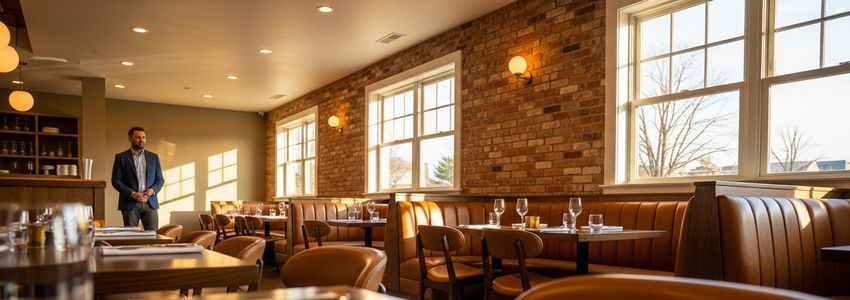
Restaurant Remodel Financing: The Complete Guide for Restaurant Owners
Restaurant remodel financing is one of the most impactful investments a restaurant owner can make. In a competitive industry where ambiance, functionality, and customer experience drive repeat business, a well-planned renovation can mean the difference between a thriving establishment and one that slowly loses ground to newer competitors. But renovations are expensive - and figuring out how to pay for them without draining your operating capital is the real challenge most owners face.
This guide covers everything you need to know about financing a restaurant remodel in 2026, from the most effective loan products to qualification requirements, real-world scenarios, and how Crestmont Capital can help you get funded fast.
In This Article
- What Is Restaurant Remodel Financing?
- Why Restaurants Need to Renovate
- Financing Options for Restaurant Remodels
- Comparing Your Financing Options
- How Restaurant Remodel Financing Works
- By the Numbers: Restaurant Renovation Stats
- Who Qualifies for Restaurant Renovation Financing?
- How Crestmont Capital Helps
- Real-World Scenarios
- How to Get Started
- Frequently Asked Questions
What Is Restaurant Remodel Financing?
Restaurant remodel financing refers to the use of business loans, credit lines, equipment leases, or other funding tools to cover the cost of renovating a restaurant - whether that means a full build-out, a partial refresh, kitchen upgrades, or technology installations. Unlike commercial real estate loans that fund property purchases, remodel financing is specifically designed to cover the costs of improving an existing space.
Renovation costs vary enormously. A minor cosmetic refresh might run $20,000 to $50,000. A full dining room redesign with new flooring, lighting, seating, and fixtures can easily reach $150,000 to $300,000. A complete kitchen overhaul - with new commercial cooking equipment, ventilation, and refrigeration - can exceed $500,000 for a large operation. For most restaurant owners, financing is not optional; it is the practical path forward.
The right financing product depends on the scope of the project, your current cash flow, your credit profile, and how quickly you need to move. Understanding your options is the first step toward making the smartest decision for your business.
Key Stat: According to the National Restaurant Association, the average cost of a full restaurant remodel ranges from $150 to $750 per square foot, depending on the type of renovation, location, and materials used. For a 2,000-square-foot restaurant, that represents a potential investment of $300,000 to $1.5 million.
Why Restaurants Need to Renovate
Restaurants operate in one of the most competitive industries in the United States. More than 60 percent of restaurants fail within their first year, and those that survive face the constant pressure to modernize and refresh their spaces to meet evolving customer expectations. Renovations are not just about aesthetics - they directly impact revenue, operational efficiency, and long-term survival.
There are several compelling business reasons why restaurant owners decide to remodel:
- Increasing revenue per square foot: A refreshed dining room with better table layouts and improved ambiance can increase covers per shift and average check size.
- Meeting health and safety codes: Local health departments routinely update requirements for commercial kitchens. Non-compliance can lead to fines or closure.
- Energy efficiency upgrades: Modern commercial equipment uses significantly less energy than older models. Upgrading can reduce utility costs by 15 to 30 percent.
- Technology integration: New POS systems, self-ordering kiosks, kitchen display systems, and wireless ordering tools require physical infrastructure upgrades.
- Brand refresh: Customer tastes evolve. A restaurant that looked modern in 2015 may feel dated in 2026. A remodel is a direct investment in brand perception.
- Expanding capacity: Adding outdoor seating, expanding a bar area, or reconfiguring a kitchen to handle higher volume can directly increase revenue potential.
- Attracting and retaining staff: A well-designed, functional kitchen improves the working environment for kitchen staff, reducing turnover and improving food quality.
Each of these scenarios represents a legitimate business case for financing a remodel rather than waiting until capital accumulates organically - which may never happen in the cash-intensive restaurant environment.
Ready to Renovate Your Restaurant?
Get fast, flexible restaurant remodel financing from the #1 business lender in the U.S. No obligation - apply in minutes.
Apply Now →Financing Options for Restaurant Remodels
Restaurant owners have more financing options today than at any previous point in history. The rise of alternative lenders and online platforms has opened up funding channels that were previously unavailable to small business operators. Here is a breakdown of the most effective financing tools for restaurant renovations.
1. Term Loans
A business term loan provides a lump sum of capital that you repay over a fixed period - typically 1 to 10 years - with fixed or variable monthly payments. Term loans are well-suited to large, one-time renovation projects where you know the total cost upfront.
Term loans from alternative lenders like Crestmont Capital can be approved and funded in as little as 24 to 72 hours, compared to weeks or months with traditional banks. Loan amounts typically range from $25,000 to $5 million, making them appropriate for renovations of virtually any scale.
For a restaurant owner funding a $200,000 dining room renovation, a 5-year term loan at a competitive rate would spread payments into manageable monthly installments while the improved space begins generating higher revenue almost immediately.
2. Business Line of Credit
A business line of credit is a revolving credit facility that lets you draw funds as needed, up to a set limit. Unlike a term loan, you only pay interest on the amount you actually use. This makes a line of credit ideal for renovation projects where costs may come in stages or where unexpected expenses arise during construction.
For example, a restaurant owner might draw $80,000 to cover initial construction, then draw another $40,000 when the kitchen equipment arrives, and a final $30,000 when furniture and fixtures are installed. As you repay each draw, the credit line replenishes, giving you ongoing financial flexibility.
3. Equipment Financing
Equipment financing is specifically designed to fund the purchase of physical assets - commercial ovens, refrigeration units, dishwashers, POS systems, ventilation hoods, and more. The equipment itself serves as collateral, which often allows for more favorable terms than unsecured loans.
For a restaurant remodel that includes significant equipment upgrades, equipment financing can cover 80 to 100 percent of the equipment cost, preserving your working capital for construction, labor, and other remodel expenses that do not qualify for equipment-specific loans.
4. SBA Loans
SBA loans are government-backed loans offered through approved lenders. The SBA 7(a) loan program can be used for renovation purposes and offers some of the most competitive interest rates and longest repayment terms available in the small business lending market. SBA loans can fund renovations up to $5 million, with repayment terms of up to 25 years for real estate improvements.
The trade-off is time. SBA loans require extensive documentation and can take 30 to 90 days or more to fund. For restaurant owners who need to move quickly or who cannot wait for a lengthy underwriting process, alternative financing solutions may be more practical.
5. Revenue-Based Financing
Revenue-based financing provides capital in exchange for a percentage of your future daily or weekly sales. Repayment is tied to your revenue, so during slow periods you pay less, and during busy periods you pay more. This structure can be helpful for seasonal restaurants or operations with highly variable revenue patterns.
6. Working Capital Loans
Working capital loans are short-term financing solutions designed to cover operational expenses during a renovation period when your restaurant may be partially closed or operating at reduced capacity. They can be used alongside other financing to bridge cash flow gaps during the remodel.
Comparing Your Financing Options
| Financing Type | Best For | Loan Amount | Approval Speed | Repayment Term |
|---|---|---|---|---|
| Term Loan | Full renovations with known costs | $25K - $5M | 24-72 hours | 1-10 years |
| Line of Credit | Phased renovations, flexibility needed | $10K - $250K | 1-5 days | Revolving |
| Equipment Financing | Kitchen equipment, POS, tech upgrades | $5K - $2M | 24-72 hours | 2-7 years |
| SBA 7(a) Loan | Large projects, lowest rate priority | Up to $5M | 30-90 days | Up to 25 years |
| Revenue-Based Financing | Seasonal or variable revenue restaurants | $10K - $500K | 24-72 hours | Variable |
| Working Capital Loan | Cash flow bridge during renovation | $5K - $250K | 24-72 hours | 3-18 months |
How Restaurant Remodel Financing Works
The restaurant remodel financing process is straightforward when you work with an experienced lender. Here is what to expect from application to funding:
Step 1 - Assess your remodel scope and budget. Before applying for financing, have a clear picture of what the renovation will cost. Get contractor bids, equipment quotes, and architect or designer estimates. Lenders will want to see that you have a plan, and knowing your number prevents you from over- or under-borrowing.
Step 2 - Review your financial profile. Lenders assess your creditworthiness based on factors including your personal credit score, business revenue, time in business, and existing debt obligations. Most alternative lenders require a minimum of 6 to 12 months in business and $10,000 or more in monthly revenue. Strong applicants will have a credit score of 600 or higher, though some products are available to borrowers with lower scores.
Step 3 - Gather your documentation. Typical requirements include 3 to 6 months of business bank statements, recent tax returns, a business plan or renovation plan summary, and basic business identification documents (EIN, business license). The documentation requirements vary by lender and product type.
Step 4 - Submit your application. With Crestmont Capital, the application process is entirely online and takes minutes to complete. Our team reviews applications and provides a decision within hours in most cases.
Step 5 - Review your offer. Once approved, you will receive a financing offer outlining the loan amount, interest rate, repayment term, and any fees. Review carefully and ask questions before signing.
Step 6 - Receive funding and begin renovation. Funds are typically deposited directly into your business bank account within 24 to 72 hours of approval and agreement signing. You can then pay contractors, vendors, and equipment suppliers immediately.

By the Numbers
Restaurant Renovation - Key Statistics
$750
Max per sq ft for upscale remodel (National Restaurant Association)
3-5x
Revenue multiplier effect after major renovation (industry estimates)
72 hrs
Typical funding timeline with alternative lenders like Crestmont
30%
Potential energy cost reduction with modern kitchen equipment upgrades
Who Qualifies for Restaurant Renovation Financing?
Qualification requirements vary by lender and product type, but most restaurant owners who have been in business for at least one year and generating steady revenue have viable financing options available to them.
General qualification criteria for alternative lenders:
- Time in business: 6 months to 1 year minimum (most products)
- Monthly revenue: $10,000 or more
- Personal credit score: 550 or higher for most products (600+ for better rates)
- No recent bankruptcies (within past 1-2 years)
- Active business bank account
For SBA loans, additional requirements apply:
- For-profit business operating in the U.S.
- Owner equity invested in the business
- Exhausted other financing options
- Reasonable creditworthiness as determined by the SBA
- Business must fall within SBA size standards
Pro Tip: Even if your credit score is not ideal, many lenders will weigh your restaurant's revenue and cash flow more heavily when evaluating your application. Strong monthly deposits and consistent revenue can overcome a lower credit score in many cases.
Restaurant owners with existing equipment that has residual value, or who own their building, may also have access to asset-based financing options that allow them to leverage existing assets for renovation capital. This can be especially helpful for established restaurants that have been operating for 5 or more years.
New restaurant owners - those who have been open for less than 6 months - have fewer options but are not completely without resources. Some lenders offer startup financing for restaurants, though requirements are stricter and amounts may be lower. Connecting with a lender early and understanding what milestones will unlock better financing terms can help new owners plan their remodel timeline strategically.
How Crestmont Capital Helps Restaurant Owners Finance Renovations
Crestmont Capital has been helping restaurant owners access capital for renovations, equipment upgrades, and business growth since our founding. As the #1 rated business lender in the U.S., we specialize in fast, flexible funding solutions tailored to the unique cash flow patterns and operational realities of the restaurant industry.
What sets Crestmont Capital apart for restaurant remodel financing:
- Fast approvals: Most applications receive a decision within hours, not weeks. Funding is typically available within 24 to 72 hours of approval.
- Flexible structures: We offer term loans, lines of credit, revenue-based financing, and equipment financing - often in combination - to match the specific needs of your remodel project.
- Restaurant-specific expertise: Our team understands the seasonal revenue patterns, food cost challenges, and operational disruptions that come with running a restaurant. We structure financing with those realities in mind.
- No prepayment penalties on many products: If your remodel drives significant revenue growth, you can pay off your loan early without penalty fees on many of our financing products.
- Relationship-based lending: We build long-term relationships with restaurant owners. Clients who complete successful projects with us often return for future expansions, equipment upgrades, and second-location financing.
Whether you are financing a $50,000 dining room refresh or a $500,000 full-service kitchen renovation, Crestmont Capital has a financing solution that can work within your budget and cash flow constraints. Explore our restaurant business loans and restaurant equipment financing pages for more details on the products available to you.
Ready to Fund Your Restaurant Renovation?
Crestmont Capital works with restaurant owners nationwide. Apply online in minutes and get a decision within hours.
Start Your Application →Real-World Scenarios: Restaurant Remodel Financing in Action
Understanding how restaurant remodel financing works in practice helps restaurant owners see what is realistic and how to structure their own projects. Here are six scenarios representing common situations restaurant owners face.
Scenario 1: Family Restaurant Refreshes Its Dining Room After 10 Years
A family-owned Italian restaurant in suburban Ohio had been operating for 12 years without a major update to its dining room. Booth seating was worn, lighting was outdated, and the decor felt stuck in the early 2010s. The owners wanted to refresh the space without closing during their busy summer season.
Solution: They secured a $75,000 term loan through Crestmont Capital. With funding in hand within 48 hours, they contracted the renovation work to be completed in phases during their Monday-Wednesday closure. The project took six weeks and cost $68,000. Within three months, they reported a 22 percent increase in dinner covers, which they attributed largely to positive online reviews mentioning the improved ambiance.
Scenario 2: Fast-Casual Chain Expands Kitchen Capacity
A fast-casual restaurant with three locations in the Pacific Northwest needed to expand kitchen production at its flagship location to support a new catering division. The kitchen was bottlenecking operations during lunch rushes, limiting revenue potential.
Solution: A $180,000 equipment financing package covered new commercial cooking equipment, an expanded prep area, and updated ventilation. The equipment loan was structured over 5 years at a fixed monthly payment. The catering division launched within 90 days of the kitchen upgrade and added $40,000 per month in new revenue within its first year.
Scenario 3: Bar and Grill Adds Outdoor Seating Deck
A sports bar and grill in Texas wanted to capitalize on the state's favorable climate by building a covered outdoor deck with seating for 60 additional guests. The project required permitting, construction, lighting, heating elements, and outdoor-rated furniture.
Solution: A $120,000 business line of credit allowed the owner to draw funds as construction milestones were reached. The phased draw structure saved approximately $8,000 in interest compared to taking the full amount upfront. The outdoor space opened in spring and generated $95,000 in additional revenue during the first summer season alone.
Scenario 4: Fine Dining Restaurant Upgrades Technology Infrastructure
An upscale fine dining restaurant in Chicago wanted to install a new reservation management system, integrated POS, kitchen display systems, and upgraded point-of-sale terminals throughout the dining room. The technology investment was estimated at $85,000.
Solution: A combination of equipment financing for the hardware ($55,000) and a short-term working capital loan ($30,000) for installation, training, and integration costs allowed the restaurant to implement the full technology upgrade in one coordinated effort. Staff training was completed over two weeks, and the owners reported reducing food waste by 18 percent and improving table turn times by an average of 12 minutes.
Scenario 5: Pizza Delivery Operation Opens Dine-In Location
A successful pizza delivery operation had been running for seven years with strong revenues but no dine-in presence. The owner leased a 2,500-square-foot space and needed $350,000 to transform it into a full-service dine-in restaurant with a wood-fired oven, full bar, and modern dining room.
Solution: An SBA 7(a) loan was the right product given the size of the project and the owner's excellent credit history. With Crestmont Capital guiding the application process, the SBA loan was funded in 45 days - faster than the owner expected. The long repayment term kept monthly payments manageable as the new location built its customer base.
Scenario 6: Seasonal Coastal Restaurant Prepares for Peak Season
A seafood restaurant on the Gulf Coast generated 70 percent of its annual revenue during the spring and summer tourist season. The owner wanted to renovate before peak season but needed to preserve cash for seasonal payroll and inventory increases.
Solution: Revenue-based financing of $90,000 was structured with repayment tied to a percentage of daily sales. During the slow fall and winter months when the restaurant was operating at reduced capacity, repayment slowed accordingly. The renovation was completed before peak season, and the owner was able to increase seating by 30 percent, generating significantly higher peak-season revenue than prior years.
Important Note: The specific loan terms, rates, and timelines in these scenarios are illustrative. Actual terms depend on your credit profile, revenue, business history, and the specific lender product selected. Contact a Crestmont Capital specialist for a personalized assessment of your financing options.
How to Get Started
Complete our quick application at offers.crestmontcapital.com/apply-now - takes just a few minutes.
A Crestmont Capital advisor will review your renovation needs and match you with the right financing option for your project.
Receive your funds and put them to work - often within days of approval. Start your renovation on schedule.
Don't Let Financing Delays Stall Your Renovation
Crestmont Capital provides fast, flexible restaurant remodel financing with decisions in hours and funding in days. Apply now - no obligation.
Apply Now →Frequently Asked Questions
Disclaimer: The information provided in this article is for general educational purposes only and is not financial, legal, or tax advice. Funding terms, qualifications, and product availability may vary and are subject to change without notice. Crestmont Capital does not guarantee approval, rates, or specific outcomes. For personalized information about your business funding options, contact our team directly.








