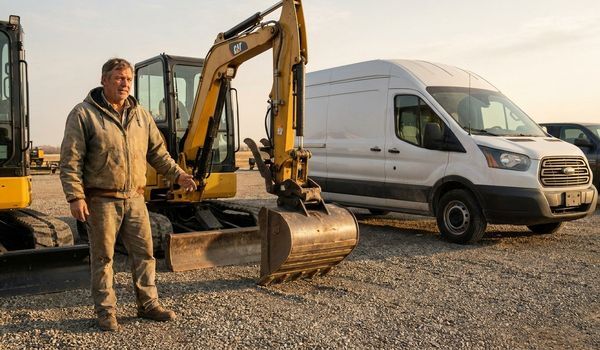
For businesses that rely on transportation, fleet vehicle financing is a critical tool for growth, enabling companies to acquire essential vehicles without depleting cash reserves. Whether you operate a logistics company, a construction firm, or a local delivery service, understanding how to finance fleet vehicles is fundamental to scaling operations and maintaining a competitive edge. This guide provides a comprehensive overview of commercial fleet financing, from the basic concepts to advanced strategies for securing the capital your business needs.
In This Article
What Is Fleet Vehicle Financing?
Fleet vehicle financing is a specialized form of business lending that allows companies to acquire multiple commercial vehicles through loans or leases. Unlike a standard auto loan for a single car, business fleet financing is structured to accommodate the purchase of several vehicles at once-from two or three work vans to a hundred long-haul trucks. This financing covers a wide array of vehicles, including light-duty trucks, cargo vans, semi-trucks, box trucks, construction vehicles, and specialized service vehicles. The core purpose is to provide businesses with the rolling assets they need to operate and generate revenue without the immense capital outlay required for an outright cash purchase.
The structure of these financial products recognizes that commercial vehicles are income-generating assets. Lenders evaluate the application based not only on the business's creditworthiness but also on the potential revenue the new vehicles will create. This approach makes financing accessible to a broader range of businesses, including small businesses and startups that might struggle to secure traditional bank loans for large capital expenditures. The vehicles themselves often serve as collateral for the loan, which can simplify the approval process and lead to more favorable terms.
Essentially, commercial fleet financing acts as a strategic partnership between a business and a lender. The lender provides the upfront capital, and the business repays it over a set term with regular, predictable payments. This arrangement allows the business to immediately put the vehicles to work, generating the income needed to cover the financing costs and produce a profit. Whether a business is looking to expand its existing fleet, replace aging vehicles, or start a new transportation-dependent venture, fleet financing provides the necessary financial leverage to achieve its goals efficiently.
Key Benefits of Fleet Vehicle Financing
Opting for fleet vehicle financing over a cash purchase offers numerous strategic advantages that can significantly impact a company's financial health and operational capacity. These benefits extend beyond simple cash preservation, influencing everything from tax liability to the ability to scale. For any business owner considering how to finance fleet vehicles, understanding these advantages is the first step toward making a sound financial decision.
Here are the key benefits of using business fleet financing:
- Preserves Working Capital: This is the most significant advantage. Large cash purchases can drain a company's liquidity, leaving little room for other critical expenses like payroll, marketing, or unexpected repairs. Financing allows you to keep your cash on hand for daily operations and strategic investments, ensuring financial stability and flexibility.
- Accelerates Business Growth: Fleet financing for small business enables rapid expansion. Instead of waiting months or years to save enough capital, you can acquire the vehicles needed to take on new clients, expand service areas, or fulfill larger contracts immediately. This ability to scale on demand is a powerful competitive advantage.
- Offers Significant Tax Advantages: Both loans and leases come with potential tax benefits. With a loan, you can often deduct the interest payments and take advantage of depreciation, including Section 179 deductions, which may allow you to deduct the full purchase price in the first year. With a lease, your monthly payments are typically treated as a fully deductible operating expense. (Always consult a tax professional for advice specific to your business.)
- Provides Predictable, Fixed Payments: Fleet vehicle loans and leases are structured with fixed monthly payments over a set term. This predictability simplifies budgeting and financial forecasting. You know exactly what your vehicle costs will be each month, which helps in managing cash flow and pricing your services accurately.
- Enables Access to Newer, More Reliable Vehicles: Operating an older fleet can lead to high maintenance costs, poor fuel efficiency, and costly downtime. Financing makes it possible to acquire new or late-model vehicles that are more reliable, fuel-efficient, and equipped with the latest technology. This reduces repair bills, improves driver safety, and enhances your company's professional image.
- Simplifies Fleet Management: When you finance your entire fleet through a single lender, you streamline your administrative processes. You have one point of contact, one monthly payment, and a clear overview of your fleet's financing structure. This is far more efficient than managing multiple individual loans from different sources.
- Builds Strong Business Credit: Successfully managing and paying off a fleet vehicle loan demonstrates financial responsibility and builds a positive credit history for your business. This can make it easier to secure other types of financing in the future at more favorable rates.
- Offers Flexible and Customized Terms: Lenders specializing in fleet financing, like Crestmont Capital, understand that every business is unique. They offer flexible terms, payment schedules, and financing structures tailored to your company's specific cash flow cycles and operational needs. This can include seasonal payment options for businesses with fluctuating revenue.
By leveraging these benefits, business owners can transform a major capital expense into a manageable operating cost. This strategic use of capital allows for smarter, more agile business management, positioning the company for sustained growth and long-term success. Financing is not just about acquiring assets; it is about optimizing your financial resources to build a stronger, more resilient business.
Need to Finance Your Business Fleet?
Crestmont Capital offers flexible fleet financing with competitive rates. Get funded fast - often within 24-48 hours.
Apply Now →How Fleet Vehicle Financing Works
The process of securing fleet vehicle financing is more streamlined than many business owners assume, especially when working with an experienced alternative lender. While the specific steps can vary slightly between financial institutions, the overall journey from application to acquisition follows a clear and logical path. Understanding this process demystifies the experience and helps you prepare for a smooth and successful funding outcome.
First, the process begins with an assessment of your business needs. You must determine the number and type of vehicles required to meet your operational goals. Are you buying new or used? What kind of upfitting or specialization is necessary? At this stage, you should also calculate a budget for the total acquisition cost and determine how much you can comfortably afford for a monthly payment. Having a clear plan and a specific vehicle quote from a dealer will strengthen your application and demonstrate to lenders that you have a well-defined strategy.
Next, you will choose a lender and complete an application. Traditional banks often have a lengthy application process with stringent requirements, while alternative lenders like Crestmont Capital offer a simplified online application that can be completed in minutes. You will need to provide basic information about your business, such as its legal name, time in business, and annual revenue, along with personal information for the business owners. You will also need to gather key financial documents, which typically include the last three to six months of business bank statements, and potentially business tax returns for larger funding requests.
Once your application is submitted, it enters the underwriting phase. The lender's underwriting team will review your company's financial health, credit history, and the details of your financing request. They analyze your bank statements to verify revenue and assess cash flow patterns. Because the vehicles themselves serve as collateral, the underwriting process for fleet vehicle loans is often faster and has higher approval rates than for unsecured business loans. Lenders are primarily concerned with your ability to make the monthly payments based on your current and projected revenue.
After a successful review, you will receive a financing offer. This document will outline the approved loan amount, interest rate, term length, and monthly payment. It is crucial to review these terms carefully to ensure they align with your budget and business plan. With an alternative lender, this entire process from application to offer can happen within a few hours. Upon accepting the offer and signing the financing agreements, the lender will coordinate directly with the vehicle dealership or seller to disburse the funds. You can then take possession of your new vehicles and put them to work, with your first payment typically due 30 days later.
By the Numbers
Fleet Vehicle Financing in the U.S. - Key Statistics
$50B+
Annual U.S. commercial fleet financing market
83%
Of businesses with 5+ vehicles use financing rather than cash
24-48 hrs
Typical approval timeline with alternative lenders
$500K+
Maximum fleet financing available for established businesses
Types of Fleet Vehicle Financing
When exploring how to finance fleet vehicles, business owners will encounter several different financing products. Each type is designed to meet different business needs, ownership goals, and financial strategies. Choosing the right one depends on factors like how long you plan to use the vehicles, your cash flow, and your tax situation. Understanding the nuances of these options is key to selecting the most advantageous path for your company.
1. Equipment Financing Agreements (EFAs) / Fleet Vehicle Loans This is the most straightforward option and functions much like a traditional auto loan. With an EFA or a standard fleet vehicle loan, the lender provides the capital to purchase the vehicles, and you make regular principal and interest payments over a predetermined term, typically two to seven years. The vehicles are titled in your business's name from the beginning, and they serve as the collateral for the loan. Once the loan is fully paid off, you own the vehicles outright with no further obligations. This option is ideal for businesses that intend to use their vehicles for the long term and want to build equity in their assets. The interest paid on the loan is tax-deductible, and you can also benefit from depreciation deductions under Section 179.
2. Capital Leases (Finance Leases) A capital lease is structured as a lease but functions more like a loan. It is often referred to as a "lease-to-own" agreement. The monthly payments are typically lower than a loan, but at the end of the lease term, you have the option to purchase the vehicles for a nominal amount, often just $1. For accounting and tax purposes, a capital lease is treated as a purchase. This means you can still claim depreciation and interest deductions, just as you would with a loan. This option is beneficial for businesses that want the lower initial payments of a lease but still intend to own the vehicles at the end of the term.
3. Operating Leases (Fair Market Value Leases) An operating lease is a true rental agreement. You pay a monthly fee to use the vehicles for a set period, usually two to five years. These payments are typically lower than loan or capital lease payments because you are only paying for the vehicle's depreciation during the lease term, not its full value. At the end of the term, you do not own the vehicles. You can choose to return them, renew the lease, or purchase them at their current fair market value (FMV). This option is perfect for businesses that want to maintain a modern fleet with the latest technology and avoid the hassles of vehicle disposal. The monthly lease payments are generally 100% tax-deductible as an operating expense, which can be a significant advantage.
4. TRAC Leases (Terminal Rental Adjustment Clause) A TRAC lease is a specialized type of operating lease designed specifically for commercial trucks and over-the-road vehicles. It combines the benefits of leasing with more flexibility. At the beginning of the lease, the business and the lender agree on an estimated residual value for the vehicles. At the end of the term, the vehicles are sold. If the sale price is higher than the predetermined residual value, the business receives the surplus. If it is lower, the business is responsible for paying the difference. This structure gives businesses more control and a stake in the vehicle's condition, often resulting in lower monthly payments than a standard operating lease.
5. Business Lines of Credit While not a direct fleet financing product, a business line of credit can be a powerful tool for managing fleet needs. It provides a revolving credit limit that you can draw from as needed to purchase vehicles, cover maintenance, or pay for upfitting. You only pay interest on the amount you use. This flexibility is ideal for businesses with fluctuating or ongoing vehicle acquisition needs. You can secure a line of credit and then purchase vehicles one at a time as opportunities arise, without needing to apply for a new loan for each purchase.
Key Insight: According to the American Transportation Research Institute (ATRI), transportation businesses that use fleet financing rather than cash purchases report 31% higher cash flow availability, which allows them to take on more projects and grow faster.

Who Qualifies for Fleet Vehicle Financing?
One of the most common questions from business owners is whether they will qualify for commercial fleet financing. The qualifications are often more flexible than those for traditional bank loans, particularly when working with alternative lenders that specialize in financing for small and medium-sized businesses. Lenders look at a holistic picture of your business's health, not just a single credit score. Understanding the key criteria can help you prepare a strong application and increase your chances of approval.
The primary factors lenders evaluate include:
1. Credit Score Both personal and business credit scores are considered, but the requirements can be accommodating. While traditional banks may require a FICO score of 700 or higher, many alternative lenders can provide fleet financing for small business owners with scores as low as 600. Lenders understand that a credit score is just one piece of the puzzle. A strong history of revenue and consistent cash flow can often outweigh a less-than-perfect credit profile. If you have challenged credit, be prepared to explain any past issues and demonstrate your business's current financial stability.
2. Time in Business Lenders want to see a track record of stability. Most prefer to work with businesses that have been in operation for at least one to two years. However, specialized programs are available for newer businesses and startups, especially if the owner has strong industry experience and a solid business plan. Some lenders, including Crestmont Capital, can offer financing to businesses with as little as six months of operational history, provided they can show consistent revenue.
3. Annual Revenue Your business's revenue is a direct indicator of your ability to repay the loan. Lenders will analyze your bank statements to verify your monthly and annual income. While there is no universal revenue requirement, a common minimum is around $10,000 to $25,000 in monthly revenue, or $120,000 to $300,000 annually. The higher and more consistent your revenue, the larger the financing amount you can typically qualify for. The key is to demonstrate that your cash flow can comfortably support the new monthly payment in addition to your existing operating expenses.
4. Industry and Vehicle Type Nearly every industry that uses commercial vehicles can qualify for fleet financing. This includes transportation and logistics, construction, plumbing, HVAC, electrical services, landscaping, delivery services, and many more. Lenders are very familiar with the revenue models of these industries. The type of vehicle also matters. Standard vehicles like cargo vans and light-duty trucks are very easy to finance. Specialized or heavily modified vehicles may require a more detailed review, but financing is readily available for these as well.
5. Required Documentation To expedite the approval process, it is essential to have your documentation in order. For most fleet financing requests under $250,000, the process is streamlined. You will typically need:
- A completed one-page application.
- The last 3-6 months of your business bank statements.
- A quote or invoice from the dealership or seller for the vehicles you intend to purchase.
For larger requests, lenders may also ask for business tax returns, profit and loss statements, and a balance sheet. Having these documents ready will demonstrate your professionalism and allow the lender to make a quick and informed decision.
| Financing Type | Best For | Term | Vehicle Ownership |
|---|---|---|---|
| Equipment Loan | Long-term fleet ownership | 2-7 years | You own after payoff |
| Commercial Lease | Regular vehicle upgrades | 2-5 years | Lender retains title |
| Line of Credit | Ongoing fleet needs | Revolving | Flexible |
| Working Capital Loan | Fleet maintenance/repairs | 3-18 months | Vehicles already owned |
Did You Know? The SBA 7(a) loan program can be used for commercial vehicle purchases, with loan amounts up to $5 million and terms up to 10 years for vehicle-related assets. However, approval can take 30-90 days. For faster access to fleet capital, alternative lenders like Crestmont Capital can approve and fund in as little as 24 hours.
How Crestmont Capital Helps You Finance Your Fleet
At Crestmont Capital, we understand that acquiring vehicles is not just a purchase-it is a strategic investment in your company's growth. That is why we have developed a suite of financing solutions specifically designed to meet the dynamic needs of modern businesses. We move beyond the rigid, one-size-fits-all approach of traditional banks to provide fast, flexible, and accessible capital. Our expertise in commercial fleet financing allows us to approve more applications and fund them faster, so you can get your vehicles on the road and generating revenue without delay.
Our process is built for speed and convenience. We offer a simple online application that takes only minutes to complete, and we typically provide a credit decision within hours. By focusing on your business's overall health and cash flow rather than just your credit score, we can offer financing to a wide range of companies, including those with less-than-perfect credit or a shorter time in business. We offer a variety of equipment financing options, including loans and leases, with terms that can be customized to match your company's unique financial situation. Whether you need to finance two vans or fifty trucks, we have the resources and expertise to structure the perfect deal.
We also recognize that fleet needs extend beyond initial acquisition. That is why we offer a range of small business loans to support your operations. A flexible business line of credit can provide ongoing capital for vehicle repairs, maintenance, or unexpected opportunities. This holistic approach ensures you have the financial support you need at every stage of your fleet's lifecycle. Our team of dedicated financing specialists works with you as a partner, taking the time to understand your goals and guide you toward the most effective funding solution.
Our commitment to the transportation and service industries is deep. We have extensive experience in providing financing for transportation fleets of all sizes. We know the challenges you face and the opportunities you want to seize. We pride ourselves on transparency, with no hidden fees and clear, easy-to-understand terms. When you are ready to grow your fleet and your business, we are ready to help you make it happen. You can apply now with no obligation and see how our tailored financing solutions can drive your business forward.
Ready to Expand Your Fleet?
Apply online in minutes and get a decision within hours. Crestmont Capital funds fleets of all sizes across every industry.
Start Your Application →Real-World Fleet Financing Scenarios
To better illustrate how fleet vehicle financing works in practice, let's explore a few real-world scenarios across different industries. These examples show how businesses can leverage financing to overcome challenges and achieve specific growth objectives.
Scenario 1: The Expanding Trucking Company Business: "Rapid Haul Logistics," a regional trucking company with 15 semi-trucks. Challenge: Rapid Haul just won a major contract with a national retailer, but it requires them to add five new long-haul trucks to their fleet within 30 days to service the new routes. A cash purchase of over $750,000 would wipe out their operating capital. Solution: The owner applies for fleet financing with Crestmont Capital. They submit a one-page application, the last six months of bank statements, and the quotes for the five new trucks. Within 24 hours, they are approved for an Equipment Financing Agreement (EFA) covering 100% of the purchase price. The loan is structured with a 60-month term and a fixed monthly payment that fits comfortably within their projected revenue from the new contract. Outcome: Crestmont Capital wires the funds directly to the dealership. Rapid Haul takes delivery of the new trucks a week later, well ahead of the contract start date. They preserve their cash for fuel, driver salaries, and other operational costs, and the new contract's revenue easily covers the loan payments, leading to a significant increase in overall profitability.
Scenario 2: The Seasonal Landscaping Business Business: "GreenScape Pro," a successful landscaping company that experiences a massive surge in business during the spring and summer. Challenge: To handle the upcoming busy season, GreenScape needs to add three new pickup trucks and two new dump trailers, totaling around $150,000. Their cash flow is tight during the winter off-season, making a large purchase difficult. Solution: The owner opts for a capital lease with a seasonal payment structure. They are approved for a 48-month lease that requires only small, interest-only payments during their slow months (November to February) and larger, principal-and-interest payments during their peak season (March to October). Outcome: GreenScape acquires the necessary vehicles before the spring rush without straining their winter cash reserves. The payment structure aligns perfectly with their revenue cycle, making the financing affordable and manageable. At the end of the lease, they purchase the equipment for $1 and continue to use it for years to come.
Scenario 3: The Growing Plumbing and HVAC Contractor Business: "Precision Flow Plumbing," a contractor with a growing reputation and an expanding service area. Challenge: Precision Flow needs to hire four new technicians to meet customer demand, but they lack the service vans to put them on the road. They need four new, fully upfitted cargo vans, costing approximately $45,000 each, for a total of $180,000. Solution: The business secures an operating lease for the four vans. They choose a 36-month term with a fixed monthly payment. This option provides the lowest possible payment, maximizing their monthly cash flow. The lease includes the cost of the shelving and tool storage upfitting. Outcome: The company gets four new, professionally branded vans on the road quickly. The low monthly lease payment is treated as a tax-deductible operating expense. After three years, when the vans' warranties are expiring, Precision Flow can simply return them and lease a new set of vehicles, ensuring their fleet remains modern, reliable, and always under warranty.
Scenario 4: The Local Catering and Delivery Service Business: "FreshBite Catering," a food service business that is seeing a boom in corporate lunch deliveries. Challenge: Their existing non-refrigerated vans are not suitable for transporting perishable food over longer distances, limiting their delivery range. They need to acquire two new refrigerated vans to expand their market and ensure food safety, at a cost of $70,000 per van. Solution: FreshBite applies for a fleet vehicle loan. Because the business is relatively new (18 months old), they were turned down by their local bank. However, based on their strong and consistent monthly revenue shown in their bank statements, Crestmont Capital approves them for a $140,000 loan over five years. Outcome: With the new refrigerated vans, FreshBite can confidently service a much larger geographic area. They land several lucrative corporate catering contracts that were previously out of reach. The increased revenue more than justifies the monthly loan payment, and the business establishes a strong credit history that will make future financing even easier to obtain.
Frequently Asked Questions
What is the minimum credit score for fleet vehicle financing?
While traditional banks often require a FICO score of 700+, alternative lenders like Crestmont Capital are more flexible. We can often provide financing for business owners with credit scores as low as 600, provided the business demonstrates strong and consistent revenue.
Is a down payment required for a fleet vehicle loan?
In many cases, no down payment is required. We can often provide 100% financing for qualified businesses, allowing you to acquire the vehicles you need without any initial cash outlay. This helps you preserve your working capital for other business needs.
How many vehicles are considered a "fleet"?
The definition can vary, but generally, financing for two or more commercial vehicles at once is considered fleet financing. We can facilitate financing for small fleets of 2-5 vehicles all the way up to large fleets of 50 or more.
Can I finance both new and used vehicles?
Yes, absolutely. We provide financing for both new and used commercial vehicles. Financing used vehicles can be a cost-effective strategy to expand your fleet, and our terms are flexible for both options. We typically finance vehicles up to 10 years old.
What types of vehicles can be financed?
We can finance nearly any type of commercial vehicle, including semi-trucks, box trucks, cargo vans, pickup trucks, dump trucks, flatbed trucks, service utility vehicles, and even specialized vehicles like refrigerated vans or tow trucks.
What are the typical interest rates for fleet financing?
Interest rates vary based on your business's credit profile, time in business, revenue, and the financing term. Rates are competitive and are determined during the underwriting process. We work to find the most favorable rates available for your specific situation.
How long does the approval process take?
Our process is designed for speed. After submitting a simple online application, most businesses receive a credit decision within a few hours. The entire process from application to funding can often be completed in as little as 24 to 48 hours.
What documents are needed to apply?
For most financing requests under $250,000, all you need is a completed application and your last 3-6 months of business bank statements. For larger amounts, we may also request business tax returns. The process is streamlined to minimize paperwork.
Can I get fleet financing with bad credit?
Yes, it is possible. We specialize in helping business owners with challenged credit. We look at the overall health of your business, focusing on your revenue and cash flow. Strong, consistent bank deposits can often overcome a low credit score.
What's the difference between a fleet loan and an equipment loan?
A fleet loan is a specific type of equipment loan. The term "equipment financing" is a broad category that covers any income-generating machinery or assets, while "fleet financing" specifically refers to financing for commercial vehicles.
Can sole proprietors qualify for fleet financing?
Yes. We provide financing to all types of business structures, including sole proprietorships, LLCs, S-Corps, and C-Corps. As long as you operate as a business and have a business bank account, you are eligible to apply.
What are the tax implications of leasing vs. buying?
When you buy a vehicle with a loan, you can typically deduct the interest payments and depreciation (including potential Section 179 benefits). When you lease with an operating lease, the entire monthly payment is usually considered a tax-deductible operating expense. It is always best to consult with your tax advisor to determine the best strategy for your business.
How do I apply for fleet vehicle financing?
You can start by completing our simple online application form. It only takes a few minutes. After you submit it, one of our fleet financing specialists will contact you to discuss your needs and guide you through the next steps.
What industries do you provide fleet financing for?
We serve virtually all industries that rely on commercial vehicles. This includes transportation, logistics, construction, landscaping, plumbing, HVAC, electrical, last-mile delivery, catering, non-emergency medical transport, and many more.
How fast can I get the funds to purchase my vehicles?
Once you are approved and have signed the financing documents, we can fund the transaction very quickly. In most cases, we wire the funds directly to the dealership or seller within 24 hours, allowing you to take possession of your vehicles almost immediately.
Get Fleet Financing Today
Join thousands of business owners who trust Crestmont Capital for fast, flexible fleet financing. No obligation, no hard credit pull to apply.
Apply Now →How to Get Started
Complete our quick application at offers.crestmontcapital.com/apply-now - takes just a few minutes.
A Crestmont Capital advisor will review your fleet needs and match you with the right financing structure.
Receive your funds and start acquiring vehicles - often within 24-48 hours of approval.
Conclusion
For any business where vehicles are essential to operations, mastering fleet vehicle financing is not just an option-it is a cornerstone of sustainable growth. By leveraging the right financing tools, companies can expand their capacity, improve efficiency, and enhance their brand image without sacrificing the financial liquidity needed for day-to-day operations. From preserving working capital and gaining tax advantages to enabling rapid scaling, the benefits of a well-structured financing plan are clear and substantial.
The key to success lies in partnering with a lender that understands the unique demands of your business and can provide fast, flexible solutions. Whether through a traditional equipment loan, a versatile lease, or a revolving line of credit, the right fleet vehicle financing package empowers you to act on opportunities as they arise. Do not let a lack of upfront capital limit your company's potential. Explore your options, prepare your documentation, and take the decisive step toward building the powerful, modern fleet your business deserves.
Disclaimer: The information provided in this article is for general educational purposes only and is not financial, legal, or tax advice. Funding terms, qualifications, and product availability may vary and are subject to change without notice. Crestmont Capital does not guarantee approval, rates, or specific outcomes. For personalized information about your business funding options, contact our team directly.