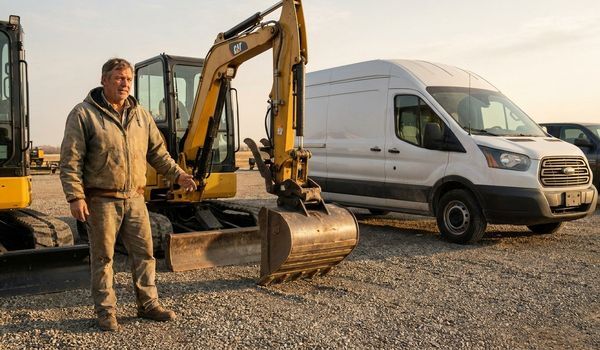
Running a construction company means operating in one of the most capital-intensive industries in the United States. From heavy equipment and materials costs to payroll, permits, insurance, and the ever-present challenge of cash flow gaps between project milestones, knowing how to finance a construction company is not optional - it is fundamental to survival and growth. This guide breaks down every major contractor loan option available to construction businesses, explains how each product works, and helps you identify the right funding strategy for your specific situation.
In This Article
- What It Means to Finance a Construction Company
- Why Contractor Financing Is Different
- Types of Contractor Loans and Financing
- How Construction Financing Works Step by Step
- Construction Financing by the Numbers
- Equipment Financing for Contractors
- Construction Line of Credit
- Invoice Financing and Construction Factoring
- How Crestmont Capital Helps Contractors
- Real-World Scenarios
- Who Qualifies for Contractor Financing
- FAQ
- How to Get Started
What It Means to Finance a Construction Company
Financing a construction company refers to using external capital - loans, lines of credit, equipment financing, or factoring - to cover the costs of running and growing your business. Unlike a retail operation where revenue flows in daily, construction companies often wait 30 to 90 days or more for payment after completing work. That gap creates constant pressure on cash flow, even when your project pipeline is full.
The U.S. Census Bureau reports that construction is one of the largest sectors of the American economy, generating over $2 trillion in annual output. Yet despite that scale, construction businesses consistently rank among the industries with the highest cash flow stress. Materials must be purchased upfront. Workers must be paid weekly. Equipment breaks down without warning. Clients pay late, if at all.
Contractor loans exist specifically to bridge these gaps. They give construction companies the working capital they need to take on more contracts, purchase or lease equipment, hire crews, and manage the day-to-day without watching their checking account run dry mid-project.
Industry Insight: According to the U.S. Small Business Administration, construction businesses represent one of the most common categories of small business loan applicants - reflecting just how financing-dependent this industry truly is. Learn more at SBA.gov.
Why Contractor Financing Is Different from Other Industries
Construction financing carries unique characteristics that set it apart from, say, a retail store or professional services firm taking out a business loan. Lenders who understand the construction industry structure their products accordingly. Here is why construction financing works differently:
- Project-based revenue: Income arrives in draws tied to project milestones, not monthly invoices. Lenders must account for delayed payment cycles.
- High equipment costs: A single excavator can cost $150,000 or more. Equipment financing is often structured as a separate product from a traditional working capital loan.
- Subcontractor relationships: General contractors often extend credit to jobs while waiting on owner payments, and subcontractors face the same delay one layer down.
- Seasonality: Many construction businesses experience seasonal slow periods that can strain cash reserves built up during peak months.
- Retainage: Owners often withhold 5-10% of each payment until project completion, tying up significant capital for months or years.
These realities make standard bank loans a difficult fit for many construction businesses. The most effective financing options for contractors are those designed to accommodate irregular revenue patterns, asset-heavy balance sheets, and extended project timelines.
Types of Contractor Loans and Financing Options
There is no single "construction company loan." The best approach to financing a construction business typically involves combining several different products based on your specific needs at a given time. Below are the most important financing options for contractors.
Term Loans for Construction Companies
A term loan delivers a lump sum of capital that you repay over a set period - typically 6 months to 10 years - with fixed or variable monthly payments. Term loans work well for contractors who need capital for a specific purpose: buying a piece of equipment outright, funding a large project mobilization, or expanding into a new service line.
Qualification typically requires at least 1-2 years in business, consistent revenue, and acceptable personal and business credit. Loan amounts for construction term loans often range from $25,000 to $2 million or more depending on the lender and business financials.
Business Line of Credit
A revolving line of credit gives you access to a pool of funds that you draw from as needed and repay over time. It is the most flexible tool in a contractor's financing toolkit. Use it to cover payroll between payment draws, purchase materials before a project begins, or handle unexpected costs without disrupting cash flow.
Unlike a term loan, you only pay interest on what you actually draw. A construction line of credit can be renewed annually, giving you ongoing access to capital as your business evolves.
Equipment Financing
Equipment financing is a purpose-built product that uses the equipment itself as collateral, making it easier to qualify than unsecured loans. Whether you need a new excavator, boom lift, skid steer, concrete pump, or a fleet of work trucks, equipment financing lets you spread the cost over time while putting the asset to work immediately.
Terms typically range from 24 to 84 months, and approval can happen within 24-48 hours for equipment up to $150,000. Larger or used equipment transactions may require more documentation.
SBA Loans
SBA loans - particularly the 7(a) and 504 programs - offer some of the most favorable terms available to construction businesses, including low interest rates, long repayment periods, and the ability to finance business acquisitions, real estate, and large equipment purchases. The tradeoff is time: SBA loans can take 30-90 days to close and require extensive documentation. They are best suited for established contractors with strong credit who have time to wait for funding.
Invoice Financing and Construction Factoring
When you have outstanding invoices or approved payment applications but cannot wait 60-90 days for payment, invoice financing and construction factoring convert those receivables to cash - often within 24-48 hours. Invoice financing uses your receivables as collateral for a loan; factoring sells them outright to a financing company at a small discount in exchange for immediate cash.
Working Capital Loans
Short-term working capital loans give contractors fast access to cash for operational needs - covering payroll, purchasing materials, or handling emergency expenses. These are typically unsecured loans with repayment terms of 3-18 months, making them ideal for bridging temporary cash flow gaps rather than funding long-term investments.
Pro Tip: Many successful construction companies use multiple financing products simultaneously - a line of credit for day-to-day operations, equipment financing for major asset purchases, and factoring to accelerate receivables during busy periods. Layering products helps you match the right funding tool to each specific need.
Ready to Finance Your Construction Business?
Get fast, flexible contractor financing from the #1 business lender in the U.S. Apply in minutes - no obligation.
Apply Now →How Construction Financing Works - Step by Step
Understanding the process of securing construction financing helps you prepare effectively and avoid delays. Here is a step-by-step breakdown of how most contractor loan applications work:
Step 1: Assess your financing need. Define what you need money for. Is it working capital to cover the next 60 days of payroll and materials? A piece of equipment? A larger project mobilization? Your specific need determines which financing product makes the most sense.
Step 2: Gather your documents. Most lenders require 3-6 months of business bank statements, basic business information, and sometimes recent tax returns. Equipment financing may require equipment quotes or invoices. Higher-value loans will require more documentation.
Step 3: Apply with a lender. Submit your application. Online lenders can return decisions in as little as a few hours. Traditional bank or SBA loans may take weeks. At Crestmont Capital, most decisions come back within 1-2 business days.
Step 4: Review and accept terms. Read the loan agreement carefully. Understand the total repayment amount, payment schedule, any prepayment penalties, and collateral requirements before signing.
Step 5: Receive funding. Once documents are signed, funds are typically deposited directly into your business checking account. Equipment financing may involve payment directly to the vendor.
Step 6: Put capital to work. Use funds for their intended purpose. Maintain your payment schedule to protect your credit profile and preserve access to future financing.
Construction Financing by the Numbers
By the Numbers
Construction Industry Financing - Key Statistics
$2T+
Annual U.S. construction output (Census Bureau)
730K+
Construction firms in the U.S. (95% are small businesses)
60-90
Days average invoice payment cycle for contractors
24hrs
Typical funding time with Crestmont Capital

Equipment Financing for Construction Companies
Heavy equipment is the backbone of any construction business, and it represents one of the largest capital expenditures you will face. Construction equipment financing allows you to spread the cost of acquiring machinery over time while immediately gaining the productivity benefit of that equipment.
Equipment financing is structured as either a loan (you own the equipment outright after repayment) or a lease (you use the equipment for a set term and may have the option to buy at the end). For tax purposes, owning equipment through a financed purchase allows you to claim depreciation, while leasing often qualifies as a deductible operating expense. Your accountant can advise which structure best fits your situation.
Common Equipment Financed for Contractors
- Excavators, mini excavators, and backhoes
- Skid steer loaders and wheel loaders
- Dump trucks and concrete mixer trucks
- Cranes, boom lifts, and scissor lifts
- Bulldozers and motor graders
- Concrete pumps and pavers
- Utility trailers and lowboy trailers
Equipment financing approval is heavily influenced by the value and condition of the equipment being financed rather than relying solely on business credit. This makes it one of the most accessible forms of financing for newer construction businesses that may not yet have extensive credit history.
For more information, our detailed guide on construction equipment financing for contractors covers approval requirements, down payment expectations, and how to get the best rates.
Construction Line of Credit: Your Most Flexible Tool
If you could only have one financing tool as a contractor, most experienced operators would choose a revolving line of credit. Here is why: construction projects are unpredictable. Materials get delayed. Subcontractors need advance payment. A client's payment application gets rejected and requires resubmission. An equipment breakdown hits right in the middle of a critical project phase.
A construction line of credit gives you the flexibility to handle all of these situations without disrupting your operations. Draw what you need when you need it, repay it as payments come in, and draw again on the next project. The revolving nature means you do not need to apply for a new loan every time a need arises.
Lines of credit for construction businesses typically range from $25,000 to $500,000 or more, depending on your revenue and creditworthiness. Qualification requirements generally include:
- Minimum 1 year in business (2+ preferred)
- Annual revenue of $100,000 or more
- Acceptable personal credit score (typically 600+ for most lenders)
- Active business bank account with consistent deposit history
Securing a line of credit before you need it is one of the smartest moves a contractor can make. Many business owners wait until they are in financial distress to apply for credit - at which point approval becomes harder. Establish your credit line during a strong period so it is ready when cash flow gets tight.
Need Fast Capital Between Project Draws?
Crestmont Capital's contractor financing solutions are built for the construction industry. Don't let slow-paying clients stall your growth.
Apply Now →Invoice Financing and Construction Factoring
Construction factoring is one of the most powerful - and underused - financing tools available to contractors. According to Forbes, invoice factoring has become increasingly popular among construction businesses because it converts outstanding receivables into immediate cash without requiring you to take on traditional debt.
Here is how it works: you submit an approved payment application or outstanding invoice to a factoring company. The factor advances you 70-90% of the invoice value within 24-48 hours. When your client pays, the factor remits the remaining balance minus a small fee (typically 1-5% of the invoice value).
For contractors dealing with 60-90 day payment cycles or retainage holdbacks, factoring can make the difference between taking on a new project and being forced to wait. The key advantages include:
- Speed: Funding in 24-48 hours versus weeks or months for traditional loans
- No debt added to balance sheet: Factoring is a sale of receivables, not a loan
- Approval based on client creditworthiness: Easier to qualify for than traditional loans
- Scales with your business: The more invoices you generate, the more capital you can access
Invoice financing works similarly but keeps the receivables on your books while using them as collateral for a short-term loan. Both tools address the same fundamental problem: turning work already done into cash you can use today.
Read our complete guide to construction factoring for contractors for a detailed breakdown of how to evaluate factoring offers and choose the right program for your business.
How Crestmont Capital Helps Construction Companies
Crestmont Capital has been serving U.S. small businesses since 2015, and construction is one of our core specialties. We understand that contractors do not have time to navigate weeks-long bank approval processes or submit 50-page loan packages. Our streamlined application process is designed specifically for business owners who need to stay focused on their projects, not paperwork.
Our construction loans and financing products include working capital loans, equipment financing, lines of credit, invoice financing, and SBA loan assistance. We work with contractors at every stage - from early-stage companies landing their first large contracts to established firms scaling into multi-state operations.
What sets Crestmont Capital apart:
- Fast decisions: Most applications receive a decision within 1-2 business days
- Flexible credit requirements: We work with contractors across the credit spectrum
- Industry expertise: Our advisors understand the construction business cycle and structure financing accordingly
- Multiple products: Access working capital, equipment financing, and more through a single relationship
- Transparent terms: No hidden fees or surprise costs
Whether you are a general contractor, subcontractor, specialty trade contractor, or construction management firm, we have financing solutions designed for your business model.
Real-World Scenarios: How Contractors Use Financing
Scenario 1: The Equipment Upgrade
A mid-sized concrete contractor in Texas has been renting an excavator for every job at $4,500 per month. They apply for equipment financing through Crestmont Capital, purchase a used excavator for $85,000 with 20% down, and reduce their monthly equipment cost to $1,200 in loan payments. Within 18 months, the savings more than cover the down payment, and they now own a depreciating asset free and clear.
Scenario 2: Bridging the Payment Gap
A roofing subcontractor completes a $200,000 commercial project in late October. The general contractor issues payment on net-60 terms, meaning the check does not arrive until late December. Meanwhile, payroll and materials for the next job are due in November. The roofing company uses invoice financing to access $160,000 within 48 hours, pays their crew on time, starts the next project without delay, and repays the advance when the GC payment arrives.
Scenario 3: Landing a Bigger Contract
A small electrical contractor receives an opportunity to bid on a $1.2 million commercial office buildout - the largest job they have ever considered. They win the contract but need $180,000 for upfront materials and the first month of labor before the first draw payment arrives. They secure a working capital loan of $200,000 through Crestmont Capital, mobilize the project, and repay the loan from the first three payment draws over 90 days.
Scenario 4: Seasonal Cash Flow Management
A landscaping and hardscape contractor in the Midwest does 75% of their annual revenue between April and October. By November, cash reserves are running thin. They establish a construction line of credit during peak season and draw on it during the winter months to cover employee salaries, equipment maintenance, and marketing for the upcoming season. The line is repaid by late spring when revenue resumes.
Scenario 5: Business Expansion
A plumbing contractor serving residential clients wants to expand into commercial work. Commercial projects require bonding, additional insurance, and an investment in new tools and equipment. They use a combination of an SBA 7(a) loan for the larger equipment purchase and a short-term working capital loan to cover the bonding and upfront operating costs of the new division.
Scenario 6: Managing Retainage
A general contractor has completed 95% of a $3 million hospital renovation project but is waiting on $300,000 in retainage that will not be released for another 90 days. Meanwhile, their next project requires mobilization funding. They factor their final payment application and use the advance to fund the next job's startup costs, turning a cash flow bottleneck into a growth opportunity.
Who Qualifies for Construction Company Financing
Qualification requirements vary by product and lender, but here is a general framework for what most construction financing programs look for:
| Financing Type | Min. Time in Business | Min. Revenue | Min. Credit Score |
|---|---|---|---|
| Working Capital Loan | 6 months | $100K/year | 550+ |
| Equipment Financing | 6 months | $75K/year | 550+ |
| Line of Credit | 1 year | $150K/year | 600+ |
| Invoice Factoring | 3 months | Varies by invoice | No minimum |
| SBA Loan | 2 years | $250K+/year | 650+ |
Even if you fall below minimum thresholds on one metric, it does not automatically disqualify you. Many lenders - including Crestmont Capital - evaluate the full picture of your business, including revenue trends, contract backlog, customer quality, and time in business, rather than relying on a single number.
According to the U.S. Census Bureau Construction Spending Data, construction spending has been growing consistently, reflecting strong demand and ongoing opportunity for well-financed contractors to expand their market share.
For contractors who want a broader overview of the full range of financing options available, our guide on contractor loans for general contractors covers the topic in depth. CNBC has also reported on why construction remains one of the most challenging industries for cash flow management - making proactive financing critical to long-term survival.
Take the Next Step for Your Construction Business
Apply in minutes. Get a decision fast. Crestmont Capital works with contractors across the U.S. to fund growth, cover cash flow gaps, and acquire equipment.
Apply Now →Frequently Asked Questions
How do I finance a construction company with bad credit?
Options exist for contractors with credit challenges. Invoice factoring has no minimum credit score requirement because approval is based on your client's creditworthiness. Equipment financing is also more accessible because the equipment serves as collateral. Alternative working capital lenders evaluate your bank deposits and revenue trends, not just your credit score. Some contractors also use asset-based lines of credit secured by their equipment or receivables to access capital despite lower credit scores.
What documents do I need to apply for a contractor loan?
Requirements vary by product and loan size, but most contractor loan applications ask for 3-6 months of business bank statements, a completed business loan application, and basic business information (legal name, address, EIN, years in business). Larger loans may also require recent business tax returns, a profit and loss statement, and a brief description of what the funds will be used for. Equipment financing often requires a quote or invoice for the equipment being purchased.
How much can a construction company borrow?
Loan amounts for construction businesses range widely based on revenue, creditworthiness, and the type of financing. Working capital loans typically range from $25,000 to $500,000. Equipment financing can reach several million dollars for large equipment purchases. SBA 7(a) loans go up to $5 million. Lines of credit for contractors are commonly available up to $500,000 or more for well-qualified businesses. The key driver of loan size is typically your monthly and annual revenue - most lenders offer loan amounts based on a multiple of your average monthly deposits.
How fast can a construction company get funded?
Speed depends on the product. Invoice factoring is typically the fastest, with funding possible within 24 hours of submitting an approved invoice. Working capital loans and lines of credit from alternative lenders like Crestmont Capital can fund in 1-3 business days. Equipment financing typically takes 1-5 business days. SBA loans are the slowest, often taking 30-90 days due to the detailed underwriting process. If you need capital urgently, alternative lenders are your best option for speed.
Can a new construction company get a loan?
Yes, though the options narrow for companies with less than 1 year in business. Equipment financing is available to newer construction companies, particularly when the equipment being financed serves as collateral. Invoice factoring is also available to newer businesses based on the quality of their receivables. Most working capital loan programs prefer at least 6-12 months in business. SBA loans typically require 2+ years. If you are just starting out, focus on equipment financing and factoring first, then build toward broader loan eligibility as your revenue history grows.
What credit score do I need to finance a construction company?
Minimum credit score requirements vary by lender and product. Equipment financing often starts at 550. Working capital loans from alternative lenders typically require a 550-580 minimum. Business lines of credit generally require 600 or higher. SBA loans prefer 650+. Invoice factoring has no credit score minimum. The good news is that even with credit scores below 600, many construction companies qualify for meaningful financing through the right lender who evaluates the full business picture rather than focusing exclusively on credit scores.
Is equipment financing or a business loan better for buying construction equipment?
For purchasing equipment specifically, purpose-built equipment financing is almost always the better choice. Equipment financing uses the machinery as collateral, which makes approval easier and rates lower than unsecured business loans. It also preserves your working capital for operational needs. Business loans are better suited for covering operational expenses, payroll, and general working capital - not for financing specific assets. Use the right tool for the right job: equipment financing for equipment, working capital loans for operations.
What is construction factoring and how does it work?
Construction factoring is a financing method where you sell your outstanding invoices or approved payment applications to a factoring company in exchange for immediate cash - typically 70-90% of the invoice value within 24-48 hours. When your client pays the invoice, the factor releases the remaining balance minus a fee of 1-5%. It is not a loan - you are selling a receivable. Factoring is particularly valuable for contractors dealing with 60-90 day payment cycles or retainage holdbacks, as it converts future cash into cash you can use today.
Can I get an SBA loan for my construction company?
Yes. SBA loans are available to qualified construction businesses and offer some of the best terms in the market - low rates, long repayment periods, and loan amounts up to $5 million. The SBA 7(a) loan is the most versatile, suitable for working capital, equipment, and real estate. The SBA 504 is best for major equipment or commercial real estate purchases. The tradeoff is time: SBA loans require extensive documentation and 30-90 days to close. They are best for established contractors with strong credit who do not need capital immediately.
How does a construction line of credit work?
A construction line of credit is a revolving credit facility that gives you access to a predetermined amount of capital. You draw funds as needed, repay them as cash flows in, and draw again. You only pay interest on what you have borrowed, not on the full credit limit. Lines are typically renewed annually. They are ideal for managing the irregular cash flow of construction projects - covering payroll between draws, purchasing materials before project start, or handling unexpected costs. The revolving structure makes it fundamentally more flexible than a term loan for ongoing operational needs.
What is retainage and how does it affect construction financing?
Retainage is a portion of each payment - typically 5-10% - that a project owner withholds until the project is substantially complete. On a $1 million project with 10% retainage, $100,000 is held back and only released after final punch-list completion and sign-off, which can be months after the bulk of the work is done. This creates a significant cash flow burden for contractors. Solutions include factoring retainage receivables once they are formally owed, negotiating for lower retainage percentages in contracts, or using a line of credit to bridge the gap until retainage is released.
Do I need collateral to get a construction company loan?
It depends on the financing type. Equipment financing is secured by the equipment being purchased - so the equipment itself is the collateral, and no additional assets need to be pledged. SBA loans typically require collateral for amounts over $25,000. Some working capital loans and lines of credit are unsecured (no collateral required), though these may carry higher interest rates. Most lenders require a personal guarantee regardless of whether physical collateral is pledged. If you have equipment, vehicles, or other business assets, they may be used to secure better terms on a business loan.
How do I choose between leasing and buying construction equipment?
The lease vs. buy decision depends on how frequently you will use the equipment, how quickly it depreciates, and your current cash position. If you use a piece of equipment daily for core operations, buying - financed through equipment loans - typically makes more financial sense over time. If you only need equipment for specific project types or want to preserve capital flexibility, leasing or short-term rental may be better. Buying through financing builds equity in the asset. Leasing keeps your balance sheet lighter and may allow you to upgrade to newer equipment at lease end. Consult with your accountant to evaluate the financial implications for your specific situation.
Can a subcontractor get financing, or only general contractors?
Subcontractors can absolutely access construction financing, and in many cases face even greater cash flow challenges than general contractors because they bear the cost of labor and materials but must wait on GC payment after the GC has received owner payment. Invoice factoring is particularly valuable for subs because it converts approved payment applications or invoices into immediate cash, regardless of how many layers of payment are above you. Equipment financing, working capital loans, and lines of credit are all accessible to subcontractors with qualifying revenue and business history.
What is the best way to finance growth for a construction company?
The most effective growth financing strategy for construction companies typically combines several products: a revolving line of credit for operational cash flow, equipment financing for asset acquisition, and factoring or invoice financing to accelerate receivables. This layered approach ensures you always have access to capital for day-to-day operations while also enabling strategic investments in equipment and personnel. Contractors who proactively establish credit relationships - before they urgently need capital - are far better positioned to take advantage of opportunities and weather slow periods without disruption.
How to Get Started
Complete our quick application at offers.crestmontcapital.com/apply-now - takes just a few minutes.
A Crestmont Capital advisor will review your construction business needs and match you with the right financing product.
Receive your funds quickly - often within days of approval - and put them to work on your next project.
Conclusion
Understanding how to finance a construction company is one of the most critical business skills a contractor can develop. The construction industry rewards those who can move quickly, take on larger projects, and maintain stable operations through the inevitable ups and downs of the project cycle. Financing gives you that capability.
Whether you need a working capital loan to bridge a payment gap, equipment financing to acquire the machinery that will drive your next phase of growth, a line of credit to smooth out seasonal fluctuations, or construction factoring to convert receivables into immediate cash, the right financing product can transform how your business operates. The key is matching the right tool to the right need at the right time.
Crestmont Capital specializes in construction business financing and works with contractors at every stage of growth. Our streamlined application process, fast decisions, and deep understanding of the construction industry make us a trusted partner for contractors across the U.S.
Ready to take the next step? Apply now and find out what financing is available for your construction company.
Disclaimer: The information provided in this article is for general educational purposes only and is not financial, legal, or tax advice. Funding terms, qualifications, and product availability may vary and are subject to change without notice. Crestmont Capital does not guarantee approval, rates, or specific outcomes. For personalized information about your business funding options, contact our team directly.