
 (800) 949-0401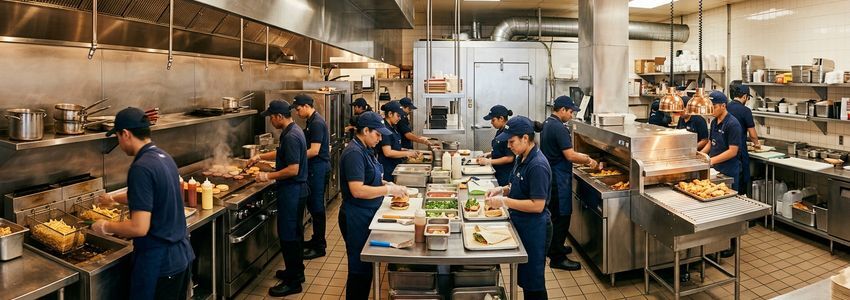
QSR Business Loans: The Complete Financing Guide for Quick-Service Restaurant Owners
Quick-service restaurants operate in one of the most competitive and capital-intensive segments of the food industry. Whether you own a single burger location or a growing franchise chain, access to the right QSR business loans can determine whether you stay ahead of the market or fall behind. Equipment breaks, leases come up for renewal, new competitors open nearby, and technology upgrades demand constant investment. The question is never if you will need capital, but when and how to get it on the best possible terms.
This guide covers every major financing option available to quick-service restaurant owners, from SBA loans and equipment financing to merchant cash advances and business lines of credit. You will learn what lenders look for, how to qualify, what rates to expect, and how Crestmont Capital can help you move fast when opportunity appears.
In This Article
Types of QSR Business Loans
Quick-service restaurant owners have more financing options today than at any point in history. The challenge is not finding a lender. The challenge is identifying which loan product matches your specific use case, timeline, and financial profile. Below are the most common and useful loan types for QSR operators.
SBA Loans
Small Business Administration loans remain one of the most attractive options for QSR owners who can meet the requirements. SBA 7(a) loans can fund up to $5 million and are commonly used for expansion, working capital, equipment, and leasehold improvements. The SBA 504 loan is well-suited for real estate purchases and large fixed-asset investments like building a drive-through or acquiring a property. According to SBA.gov, food service businesses consistently rank among the top industries for SBA loan approvals. Rates are typically lower than alternative lenders, but the approval process takes longer.
Equipment Financing
Commercial kitchen equipment is expensive. Fryers, grills, refrigeration units, drive-through systems, POS hardware, and ventilation equipment can cost tens of thousands of dollars each. Restaurant equipment financing allows QSR owners to acquire the hardware they need without depleting working capital. The equipment itself typically serves as collateral, which often makes approval easier even for operators with limited credit history.
Business Line of Credit
A business line of credit functions like a financial safety net. You draw funds only when needed, repay the balance, and your credit line resets. For QSR operators managing fluctuating food costs, seasonal rushes, and unexpected repair bills, revolving credit provides flexibility that a standard term loan cannot match. Lines of credit are also useful for bridging payroll gaps during slow weeks without disrupting operations.
Working Capital Loans
Working capital loans are designed to cover day-to-day operating expenses rather than long-term investments. Payroll, food supplies, cleaning services, utilities, and marketing costs are all legitimate uses. These loans tend to have shorter repayment terms of six to twenty-four months and fund quickly, sometimes within 24 hours of approval.
Term Loans
Term loans provide a lump sum that is repaid over a fixed schedule at a set interest rate. They are ideal for planned capital expenditures like restaurant renovations, kitchen expansions, or opening a second location. Lenders offering traditional term loans typically want to see at least two years in business and consistent monthly revenue. For established QSR operators, term loans often offer the lowest cost of capital outside of SBA products.
Merchant Cash Advances
A merchant cash advance (MCA) delivers capital in exchange for a percentage of future credit card and debit card sales. Because repayment scales with your daily receipts, this option is popular among QSR operators who need fast funding but may not qualify for traditional products. The tradeoff is cost. MCAs carry higher factor rates than conventional loans and should generally be used for short-term needs rather than long-term investment.
Franchise Financing
Many QSR operators run franchise locations under national brands. Franchise financing is a specialized product that accounts for the value of the franchise agreement, brand recognition, and the built-in customer base when underwriting the loan. Some lenders have dedicated franchise lending programs that simplify the approval process for operators with strong brand affiliations.
Ready to Fund Your QSR Growth?
Get fast, flexible QSR financing from the #1 business lender in the U.S. No obligation - apply in minutes.
Apply Now ->How QSR Financing Works
Understanding how the lending process works helps QSR owners approach applications with realistic expectations and stronger documentation. The process typically follows a predictable sequence, though timelines vary significantly by lender type and loan product.
Step 1: Assess Your Capital Needs
Before approaching any lender, define what you need the money for. Lenders ask this question early, and your answer influences which product they recommend and how much they offer. A clear purpose, whether that is upgrading your fryer line, opening a new drive-through lane, or covering payroll through a slow January, demonstrates to the underwriter that you have a plan for the capital.
Step 2: Gather Financial Documentation
Most lenders will request some combination of bank statements, tax returns, profit and loss statements, a business plan or financial projections, and documentation about your existing debt obligations. QSR operators with clean books and consistent monthly deposits process faster and qualify for better terms. If your bookkeeping is disorganized, investing time in cleaning up financial records before applying can meaningfully improve your offer.
Step 3: Submit and Underwrite
After submission, the lender's underwriting team evaluates your risk profile. They review revenue, cash flow, credit scores, debt obligations, and the collateral you are pledging if applicable. Traditional banks may take several weeks. Alternative lenders and online platforms can complete underwriting in as little as one business day.
Step 4: Review Your Offer
When an offer arrives, review the full terms carefully. Pay attention to the annual percentage rate (APR), the repayment schedule, any origination fees or prepayment penalties, and whether a personal guarantee is required. Compare multiple offers before accepting to ensure you are getting the most favorable terms available given your profile.
Step 5: Funding and Deployment
After signing, funds are typically deposited directly into your business checking account. Some lenders fund within the same business day. Others take two to five days. Have a deployment plan ready so you can put the capital to work immediately without it sitting idle.
Industry Insight: According to the National Restaurant Association, the U.S. restaurant industry generates over $1 trillion in annual sales, with quick-service restaurants accounting for the largest share. QSR operators who leverage financing strategically consistently outpace competitors who rely solely on cash flow for growth.
How QSRs Use Business Loans
QSR loans are not one-size-fits-all tools. The best operators match the financing product to the specific use case. Here are the most common ways quick-service restaurant owners deploy borrowed capital.
Opening a New Location
Expanding from one unit to multiple locations is one of the most powerful growth levers available to a QSR operator. A new location requires leasehold improvements, equipment, initial inventory, staffing, marketing, and working capital to sustain the unit through its ramp-up period. Term loans and SBA 7(a) loans are the most common financing choices for multi-unit expansion because they provide the large lump sums needed and offer multi-year repayment schedules that align with the time it takes a new unit to reach profitability.
Kitchen Equipment Upgrades
Commercial kitchen equipment does not last forever. Fryers wear out, refrigeration systems lose efficiency, and POS hardware becomes obsolete. Upgrading equipment with financing lets you replace aging assets without draining cash reserves. Newer equipment often reduces energy costs and food waste while improving food quality and speed of service, all of which have a measurable impact on your bottom line.
Technology and Ordering Systems
Digital ordering kiosks, mobile app integration, loyalty program platforms, and drive-through technology have become critical competitive tools in the QSR space. According to Forbes, QSRs that deployed self-ordering kiosks reported a measurable increase in average ticket size. These technology investments require upfront capital that a line of credit or equipment loan can provide efficiently.
Renovations and Remodels
Franchise agreements often include mandatory renovation schedules. Even independent QSR operators periodically need to refresh dining areas, update signage, improve drive-through flow, or comply with updated safety codes. Renovation loans or SBA 7(a) funds are the most common choice for this purpose, with repayment terms that spread the cost over several years.
Seasonal Working Capital
Many QSR locations experience significant seasonal swings. Summer months may bring a surge in traffic, while January and February can be slower. Using a business line of credit to smooth payroll and supply costs during slow periods protects your team and maintains service quality year-round without requiring you to dip into emergency reserves.
Franchise Acquisition
Acquiring an existing franchise unit from another operator can be a faster path to growth than building a new location from scratch. Acquisition financing for QSR franchises typically combines a term loan for the purchase price with working capital for the transition period. Lenders familiar with major quick-service brands often expedite this process because the brand's track record reduces underwriting uncertainty.

By the Numbers
QSR Industry Financing - Key Statistics
$1T+
U.S. restaurant industry annual sales
60%
of QSR operators cite capital access as a top growth barrier
$500K
Average cost to open a QSR franchise location
24 Hrs
Typical funding time with alternative lenders
QSR Industry Financing: What the Data Shows
The quick-service restaurant industry is one of the most resilient segments of the U.S. economy. Even during economic downturns, consumers tend to trade down from full-service dining to QSRs, which provides a degree of recession resistance that lenders recognize and value. This resilience often translates into favorable underwriting for qualified operators.
According to data from the Small Business Administration, food service businesses including quick-service restaurants receive SBA 7(a) loan approvals at competitive rates because of their established cash flow patterns and tangible asset base. Equipment values provide collateral, and daily credit card sales create transparent revenue documentation that underwriters can verify quickly.
The average cost to open a new QSR franchise unit ranges from $250,000 to over $1 million depending on the brand, market, and real estate strategy. Renovation obligations often run $100,000 to $500,000. These capital requirements make financing not just useful but essential for most QSR growth strategies.
Lending Trends in the QSR Space
The rise of alternative lending platforms has significantly improved access to capital for QSR operators who fall outside traditional bank criteria. Operators with credit scores in the 580-650 range, newer businesses with less than two years of history, or franchisees with complex ownership structures have more financing pathways than ever before. Online lenders and specialty restaurant finance companies have emerged as serious alternatives to conventional bank products for this segment.
Key Fact: Quick-service restaurants generate an estimated 45% of all restaurant industry sales in the United States, making QSR operators among the most attractive borrowers in the food service sector for commercial lenders.
Who Qualifies for QSR Business Loans
Lender requirements vary depending on the loan type and the institution. However, most lenders evaluate the same core factors when underwriting a QSR loan application. Understanding these factors before applying helps you strengthen your profile and target the right products.
Credit Score
Personal credit scores above 680 open the door to the broadest range of products including SBA loans and traditional bank term loans. Scores in the 580-679 range qualify for many alternative lending products including working capital loans, equipment financing, and certain lines of credit. Some alternative lenders will work with scores as low as 500 if other factors are strong. Restaurant loan specialists understand that QSR owners sometimes carry personal debt from initial franchise investments, and many underwriters adjust their credit analysis accordingly.
Annual Revenue
Most lenders want to see at least $100,000 in annual gross revenue for working capital products. Larger loans such as SBA 7(a) or term loans typically require $250,000 to $500,000 in annual revenue or more. Your revenue figures should be documented in bank statements and tax returns. Operators with multiple units can often aggregate revenue across locations to qualify for larger loan amounts.
Time in Business
Traditional lenders typically prefer two or more years in business. Alternative lenders may work with operators who have been open for as little as six months. New franchise units sometimes benefit from the franchisor's established credit history, which can partially offset the lack of individual operating history at the unit level.
Debt Service Coverage
Lenders calculate your Debt Service Coverage Ratio (DSCR) to assess whether your cash flow is sufficient to support new loan payments on top of existing obligations. A DSCR of 1.25 or higher is generally considered acceptable for most commercial lending. In simple terms, for every dollar of debt service you owe, lenders want to see at least $1.25 in operating income available to cover it.
Collateral
Many QSR loans, particularly SBA products, require collateral. Kitchen equipment, real estate, and other business assets are common forms of collateral. Some lenders also accept accounts receivable or inventory. Unsecured loans are available but typically carry higher interest rates to compensate for the increased risk.
Not Sure If You Qualify?
Talk to a Crestmont Capital specialist. We help QSR owners find the right loan product for their situation - even with complex ownership structures or less-than-perfect credit.
Get a Free Consultation ->How Crestmont Capital Helps QSR Operators
Crestmont Capital is a leading business lender with deep experience funding quick-service restaurant operators across the United States. Whether you own an independent fast-casual concept or operate multiple franchise units under a national brand, Crestmont offers a range of products tailored to the QSR capital cycle.
Our restaurant business loans are designed for the specific challenges that QSR operators face, including equipment-heavy balance sheets, seasonal revenue patterns, high daily transaction volumes, and the need to move quickly on expansion opportunities before competitors do. We fund working capital, equipment, renovations, new locations, franchise acquisitions, and everything in between.
Crestmont has funded hundreds of restaurant operators and understands the difference between a slow week in February and a business in trouble. Our underwriters look at the full picture, not just a single number. For operators who have been through a rough patch but have a clear path forward, that context matters enormously in the approval process.
Through our SBA loan programs, we can offer QSR operators access to some of the most favorable long-term financing available in the market. For operators who need capital faster, our working capital and equipment financing programs can close in as few as 24 to 48 hours after document submission.
If you are evaluating options across multiple lenders, our team is happy to walk through the numbers with you and help you identify which product best fits your situation. We operate on a no-obligation basis because we believe the best client relationships start with honest, transparent conversations about what financing can and cannot do for your business.
Real-World Scenarios: QSR Loans in Action
Abstract financing concepts become clearer when viewed through the lens of specific business situations. Below are several scenarios illustrating how QSR operators have deployed business loans to achieve concrete results.
Scenario 1: Multi-Unit Expansion for a Regional Fast Casual Chain
A regional fast-casual burger chain with four locations in the Southeast identified an opportunity to open three additional locations in new markets over eighteen months. The owner had solid credit, four years of operating history, and consistent monthly revenue across existing units. Working with Crestmont Capital, the owner secured an SBA 7(a) loan for $1.2 million at a competitive rate with a ten-year term. The loan covered leasehold improvements, initial equipment, and six months of working capital for each new location. All three opened on schedule.
Scenario 2: Equipment Replacement for a Struggling Operator
A franchise operator with a single QSR unit faced a failing refrigeration system and outdated fryer line at the same time. Both needed immediate replacement. With personal credit in the mid-600s and two years of operating history, the owner did not qualify for a traditional bank loan but was approved by Crestmont for equipment financing using the new equipment as collateral. The transaction closed in 72 hours, and the operator avoided a costly shutdown during peak summer sales.
Scenario 3: Technology Investment to Compete with Larger Chains
An independent QSR operator with two locations recognized that digital ordering kiosks, a loyalty app, and upgraded drive-through communication systems had become table stakes in the local market. The investment totaled $85,000 across both units. A business line of credit from Crestmont provided the capital needed, with the operator drawing only the amount required at each phase of the technology rollout. The flexibility to draw in stages saved money on interest compared to taking a lump-sum term loan.
Scenario 4: Working Capital to Survive a Slow Quarter
A pizza QSR concept experienced a sharp drop in sales during a road construction project near its primary location. For three months, vehicle traffic to the area was severely disrupted. A working capital loan from Crestmont covered payroll and supplier invoices during the disruption period, allowing the operator to retain trained staff and maintain supplier relationships. When construction ended, the business rebounded with the same team in place and without any supply chain disruptions.
Scenario 5: Franchise Acquisition at Below-Market Price
An experienced franchise operator learned that a struggling competitor operating under the same national brand was looking to sell. The acquisition price was below market because the seller needed to exit quickly. Moving fast required having financing in place within two weeks. Crestmont facilitated an acquisition loan covering the purchase price plus working capital to stabilize the acquired unit during the transition. The operator integrated the location into their existing operations within 30 days.
Scenario 6: Mandatory Renovation Compliance
A long-standing QSR franchise operator received notice from the franchisor that the location's dining room and drive-through needed renovation to meet updated brand standards within twelve months. The estimated cost was $220,000. Rather than drain reserves, the operator secured a term loan structured with a five-year repayment schedule. Monthly loan payments were offset by improved sales at the refreshed location, making the renovation effectively self-financing.
Comparing QSR Loan Options
Different loan products are right for different situations. The comparison below is meant to help QSR operators quickly identify which financing type fits their current needs and profile.
| Loan Type | Best For | Typical Amounts | Funding Speed |
|---|---|---|---|
| SBA 7(a) Loan | Expansion, multi-purpose | Up to $5M | 30-90 days |
| Equipment Financing | Kitchen and tech upgrades | $10K-$500K | 1-5 days |
| Working Capital Loan | Payroll, supplies, operations | $25K-$500K | 24-72 hours |
| Business Line of Credit | Ongoing flexibility | $25K-$1M | 1-7 days |
| Merchant Cash Advance | Fast capital, lower credit | $10K-$250K | Same day |
| Term Loan | Planned capital projects | $50K-$2M | 3-10 days |
The QSR Loan Application Process
Applying for a QSR business loan does not need to be overwhelming. Most lenders follow a similar process and ask for the same core documentation. Here is what to prepare and what to expect.
Documents You Will Typically Need
For most QSR loan applications, lenders request three to six months of business bank statements, the most recent two years of business and personal tax returns, a current profit and loss statement, and a brief description of the loan purpose. For SBA loans and larger term loans, additional documentation including a business plan, rent rolls, franchise agreements, and equipment appraisals may also be required.
How Long the Process Takes
Timeline varies dramatically by lender and loan type. Alternative lenders and online platforms can approve and fund a working capital loan in as little as 24 hours. Equipment financing with an established lender typically closes within three to five business days. SBA loans require the most preparation and the longest timeline, often running four to twelve weeks from application to funding.
What Happens During Underwriting
Underwriters evaluate your risk profile by analyzing revenue trends, cash flow patterns, existing debt load, and the purpose of the loan. For restaurant operators, they also consider location stability, lease terms, and whether the brand or concept you operate has demonstrated durability. Lenders who specialize in restaurant financing understand these nuances and apply them favorably in their underwriting.
Read our guide on food truck loans for related insights on how food service operators of all types navigate the financing landscape - many of the qualification principles overlap with QSR lending.
Pro Tip: Before applying, review your last three months of bank statements from the lender's perspective. Look for consistent deposits, low overdrafts, and a clear pattern of revenue. Lenders are looking for the same signals. Addressing any irregularities before submitting your application strengthens your approval odds significantly.
How to Get Started
Complete our quick application at offers.crestmontcapital.com/apply-now - it takes just a few minutes and there is no obligation.
A Crestmont Capital advisor will review your operation's specifics and match you with the right financing product for your goals.
Receive your funds quickly and put capital to work on the expansion, equipment upgrade, or operational improvement that drives your next phase of growth.
The Bottom Line on QSR Business Loans
Quick-service restaurant operators face a constant stream of capital demands. Equipment ages. Competitors invest in technology. Franchise agreements require renovations. Growth opportunities appear and disappear quickly. Having reliable access to QSR business loans is not a luxury for ambitious operators - it is a fundamental component of running a competitive restaurant business.
The right loan product depends on your specific situation, timeline, credit profile, and growth objectives. SBA loans offer the lowest long-term cost for operators who qualify and can wait. Equipment financing and working capital products provide speed for operators who need to move quickly. A well-structured line of credit provides the flexibility to manage both the predictable and the unpredictable.
Crestmont Capital has the experience, the product range, and the industry knowledge to help QSR operators find the financing they need at terms that support long-term business health. Whether you are funding your first expansion or your tenth, our team is ready to help you get there.
Start Your QSR Financing Application Today
Crestmont Capital is rated #1 in the U.S. for small business lending. Apply in minutes and get a decision fast.
Apply Now ->Frequently Asked Questions
Disclaimer: The information provided in this article is for general educational purposes only and is not financial, legal, or tax advice. Funding terms, qualifications, and product availability may vary and are subject to change without notice. Crestmont Capital does not guarantee approval, rates, or specific outcomes. For personalized information about your business funding options, contact our team directly.








