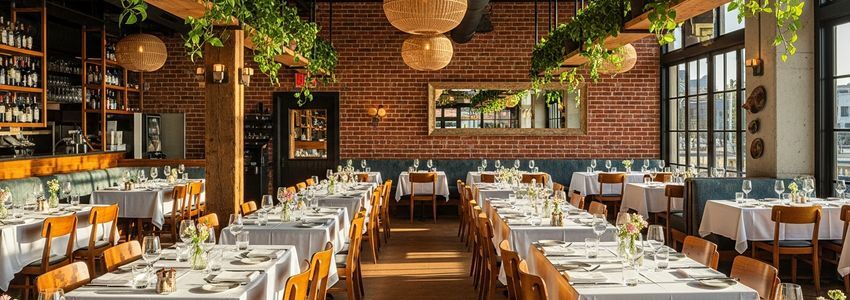
The California restaurant scene is one of the most vibrant and competitive in the world. From Michelin-starred establishments in San Francisco to trendy food trucks in Los Angeles and charming cafes in San Diego, the Golden State is a culinary paradise. However, running a successful restaurant here comes with significant financial challenges, including high real estate costs, demanding labor regulations, and intense competition. To thrive, restaurant owners need access to stable, affordable capital for growth, operations, and unforeseen expenses. This is where government-backed financing can be a game-changer.
For California restaurateurs seeking to expand, renovate, or simply stabilize their cash flow, Small Business Administration (SBA) loans offer a powerful solution. These are not direct loans from the government; instead, the SBA guarantees a significant portion of the loan provided by a lending partner like Crestmont Capital. This guarantee reduces the lender's risk, making it easier for them to offer larger loan amounts, longer repayment terms, and lower interest rates than most conventional financing options. Understanding how to leverage these programs can be the key ingredient for long-term success in California's dynamic food and beverage industry.
In This Article
- What Are SBA Loans for Restaurants?
- Types of SBA Loans for California Restaurants
- Key Benefits for Restaurant Owners
- How to Apply Step by Step
- Who Qualifies?
- Common Uses of SBA Loans for Restaurants
- How Crestmont Capital Helps
- Real-World Scenarios
- SBA Loans vs. Other Financing
- Frequently Asked Questions
- Get Started
What Are SBA Loans for Restaurants?
At its core, an SBA loan is a form of small business financing facilitated by the U.S. Small Business Administration. It is a common misconception that the SBA lends money directly to business owners. In reality, the SBA acts as a guarantor, promising to repay a portion of the loan to the financial institution (like a bank or a specialized lender such as Crestmont Capital) if the borrower defaults. This federal guarantee significantly mitigates the lender's risk, which is particularly important in industries perceived as high-risk, such as the restaurant sector. The high failure rate and tight margins in the food service industry often make traditional lenders hesitant to approve loans. The SBA's backing changes this dynamic, opening doors to capital that would otherwise be inaccessible.
For restaurant owners in California, this is especially crucial. The state's high operating costs mean that substantial capital is often needed for everything from securing a lease in a prime location to purchasing state-of-the-art kitchen equipment. SBA loans are designed to support these exact needs, providing the financial foundation for businesses to launch, operate, and grow. The government's goal in offering these programs is to stimulate the economy by empowering small businesses, which are the backbone of local communities. Restaurants, in particular, are vital economic engines, creating jobs and enriching neighborhoods.
The structure of an SBA loan makes it uniquely suited for the restaurant industry's financial landscape. The repayment terms are often much longer than those of conventional loans, extending up to 10 years for working capital and equipment, and up to 25 years for real estate. This results in lower, more manageable monthly payments, which is a massive relief for businesses with fluctuating seasonal revenue. Furthermore, interest rates are typically capped and pegged to the Prime Rate, making them highly competitive and predictable. This financial stability allows a California restaurateur to focus on what they do best: creating exceptional dining experiences, rather than worrying about a looming balloon payment or a sudden spike in their interest rate. Whether you're a startup or an established enterprise, understanding these government-backed restaurant business loans is the first step toward securing your venture's financial future.
Types of SBA Loans for California Restaurants
The SBA offers several distinct loan programs, each tailored to different business needs. For a California restaurant owner, choosing the right program is critical to achieving their specific goals. The three most common and relevant programs are the SBA 7(a) loan, the SBA 504 loan, and the SBA Microloan. Each has its own set of rules, loan amounts, and ideal use cases.
The SBA 7(a) Loan Program: The Versatile Workhorse
The SBA 7(a) loan is the most popular and flexible of the SBA's offerings, making it a top choice for many restaurant owners. Its versatility is its greatest strength; funds can be used for a wide range of business purposes.
- Loan Amounts: Up to $5 million. The average 7(a) loan size is typically in the hundreds of thousands, but the high ceiling is ideal for major projects.
- Use of Funds: This is where the 7(a) shines. You can use it for working capital to cover payroll and inventory, refinancing existing high-interest business debt, purchasing equipment, buying out a partner, or even acquiring another restaurant. For a restaurant in a high-cost area like the Bay Area, a 7(a) loan can provide the crucial capital needed for a major renovation or to secure a long-term lease.
- Repayment Terms: Terms are generous, which helps keep monthly payments affordable. Expect up to 10 years for working capital and equipment, and up to 25 years for real estate.
- Interest Rates: Rates can be fixed or variable and are tied to the Prime Rate plus a lender spread. The SBA sets maximums for this spread, ensuring rates remain competitive. For example, for loans over $50,000 with terms under 7 years, the maximum rate is Prime + 2.25%.
The SBA 504 Loan Program: For Major Asset Acquisition
The SBA 504 loan program is designed specifically for financing major fixed assets, such as real estate or heavy equipment. It's an excellent tool for established restaurants looking to make a significant long-term investment, like buying the building they currently lease.
- Loan Structure: A 504 loan has a unique structure. Typically, a conventional lender (like a bank) provides 50% of the project cost. A Certified Development Company (CDC), which is a nonprofit partner of the SBA, provides up to 40% of the cost (backed by a 100% SBA guarantee). The business owner contributes the remaining 10% as a down payment.
- Loan Amounts: The CDC portion of the loan generally goes up to $5 million, but can be as high as $5.5 million for certain manufacturing or energy-related projects. There is no cap on the total project size.
- Use of Funds: The use is more restrictive than the 7(a) program. Funds must be used for purchasing land or buildings, constructing new facilities, modernizing or renovating existing buildings, or acquiring long-term machinery and equipment. It cannot be used for working capital or inventory. For a Los Angeles restaurant, this could mean purchasing a property to avoid escalating rent prices.
- Repayment Terms: Terms are long and fixed, typically 10, 20, or 25 years, providing incredible stability for financial planning.
- Interest Rates: The rates on the CDC portion are below-market and fixed for the life of the loan, making it one of the most affordable ways to finance major assets.
The SBA Microloan Program: For Startups and Smaller Needs
For new restaurants, food trucks, or those with smaller capital requirements, the SBA Microloan program is an accessible entry point into business financing. These loans are administered by nonprofit, community-based intermediaries.
- Loan Amounts: These are smaller loans, ranging from a few thousand dollars up to a maximum of $50,000. The average microloan is around $13,000.
- Use of Funds: Similar to the 7(a), these funds are flexible and can be used for working capital, inventory, supplies, furniture, fixtures, and equipment. However, they cannot be used to purchase real estate or refinance existing debt. A new food truck owner in San Diego could use a microloan to purchase their vehicle and initial cooking equipment.
- Repayment Terms: Terms are shorter, with a maximum repayment period of six years.
- Interest Rates: Interest rates vary depending on the intermediary lender but are generally considered reasonable, often falling between 8% and 13%.
Key Benefits for Restaurant Owners
Securing an SBA loan can be a transformative event for a California restaurant, providing a host of advantages that directly address the industry's most pressing challenges. The benefits extend far beyond simply receiving a check; they create a foundation for sustainable growth and long-term stability in a notoriously volatile market.
1. Lower Interest Rates and Favorable Terms
Perhaps the most significant benefit is the cost of capital. Because the SBA guarantees a large portion of the loan, lenders can offer interest rates that are often several percentage points lower than conventional small business loans or alternative financing products like merchant cash advances. The SBA also caps the interest rates lenders can charge. This translates into substantial savings over the life of the loan. Coupled with long repayment terms (up to 25 years for real estate), the monthly payments are significantly lower and more manageable. For a restaurant in California, where margins are constantly squeezed by high food and labor costs, a lower monthly debt service can be the difference between profitability and closure.
2. Higher Loan Amounts
Restaurants are capital-intensive businesses. A full-scale renovation, a kitchen equipment overhaul, or the purchase of a commercial property in a major California city can easily run into the hundreds of thousands, if not millions, of dollars. Many traditional lenders are unwilling to extend this level of credit to a single restaurant. SBA loan programs, particularly the 7(a) and 504, offer high borrowing limits of up to $5 million. This allows ambitious restaurateurs to fully fund their vision without cutting corners or piecing together multiple, more expensive forms of financing.
3. Flexible Use of Capital
The SBA 7(a) loan, in particular, offers incredible flexibility. Unlike some loans that are earmarked for a single purpose, 7(a) funds can be used for a wide array of business needs. A California restaurant owner could use a single SBA loan to:
- Renovate their dining room and expand their outdoor patio.
- Purchase new point-of-sale (POS) systems and kitchen appliances.
- Boost working capital to navigate a slow season.
- Launch a major marketing campaign to attract new customers.
- Refinance high-interest credit card debt accumulated during startup.
This versatility allows owners to address multiple business needs simultaneously, leading to more comprehensive and impactful growth.
4. Access to Capital for Underserved Entrepreneurs
The SBA's mission is to help small businesses that might otherwise be overlooked by traditional lenders. This includes startups, businesses in high-risk industries (like restaurants), and businesses owned by women, minorities, and veterans. While strong credit and a solid business plan are still required, the SBA guarantee makes lenders more willing to work with applicants who don't fit the perfect "bankable" profile. For a first-time restaurant owner in California, an SBA loan can be the only viable path to securing the necessary startup funding.
5. Building Business Credit and Credibility
Successfully managing and repaying an SBA loan is a powerful way to build a strong business credit history. This establishes your restaurant as a reliable and credible business in the eyes of future lenders, suppliers, and partners. Having a government-backed loan on your books demonstrates a level of financial vetting and stability that can open up even more opportunities down the road, making it easier to secure financing for future expansions or ventures.
Ready to Fund Your California Restaurant?
Access SBA loans and alternative financing from the #1 business lender in the U.S. Apply in minutes, get funded fast.
Apply NowHow to Apply Step by Step
The SBA loan application process is known for being thorough and document-intensive, but it is manageable with proper preparation and guidance. Working with an experienced lender like Crestmont Capital can significantly streamline the process. Here is a detailed breakdown of the steps a California restaurant owner should expect to take.
Step 1: Initial Assessment and Preparation
Before you even fill out an application, you need to get your financial house in order. This is the foundational stage where you assess your eligibility and prepare for the lender's scrutiny.
- Review Your Credit: Lenders will look at both your personal FICO score and your business credit history. Generally, a personal credit score of 680 or higher is recommended for the best chances of approval. Pull your credit reports, check for errors, and address any outstanding issues.
- Analyze Your Financials: Gather at least three years of business and personal tax returns. Prepare up-to-date financial statements, including a profit and loss (P&L) statement, balance sheet, and cash flow statement. Lenders want to see a history of profitability and responsible financial management.
- Develop a Strong Business Plan: This is especially critical for startups or businesses seeking expansion capital. Your business plan should be comprehensive, detailing your concept, target market, marketing strategy, management team, and, most importantly, detailed financial projections. Clearly explain how the loan will be used and how it will generate the revenue needed to repay it.
Step 2: Choose the Right SBA Loan Program
As detailed earlier, not all SBA loans are the same. Based on your needs, determine whether the SBA 7(a), 504, or Microloan program is the best fit.
- For versatile needs like working capital and equipment, the SBA 7(a) is likely the best choice.
- If you plan to buy or build your restaurant's property, the SBA 504 loan is ideal.
- For a small startup food truck or cafe needing less than $50,000, the SBA Microloan is the most appropriate.
Consulting with a financing expert can help you make the right decision for your specific situation.
Step 3: Gather Required Documentation
This is often the most time-consuming part of the process. Lenders require a substantial amount of paperwork to verify your identity, financial health, and business viability. While the exact list can vary by lender, you should be prepared to provide:
- SBA Form 1919 (Borrower Information Form)
- SBA Form 413 (Personal Financial Statement for all owners with 20% or more equity)
- Business Financial Statements (P&L, Balance Sheet) for the last 3 years
- Business and Personal Federal Income Tax Returns for the last 3 years
- A detailed Business Plan with financial projections
- Business licenses, articles of incorporation, and other legal documents
- A detailed list of how you plan to use the loan funds (e.g., equipment quotes, construction bids)
- Lease agreements for your restaurant location
Organizing these documents in a clear, professional package will make a strong impression on the lender.
Step 4: Find an SBA-Approved Lender and Submit Your Application
You don't apply directly to the SBA. You must work with an SBA-approved lender. These can be large national banks, community banks, or specialized non-bank lenders like Crestmont Capital. It's highly beneficial to work with a lender that has extensive experience with both SBA loans and the restaurant industry. They will understand the unique challenges and financial profiles of restaurants. Once you've chosen a lender, you will submit your complete application package to them. The lender will review your package, perform their due diligence (a process called underwriting), and decide whether to approve the loan.
Step 5: SBA Approval and Closing
If the lender approves your application, they will then submit it to the SBA for final approval of the guarantee. For lenders in the SBA's Preferred Lender Program (PLP), this step is much faster, as they have the authority to make the final credit decision themselves. Once the SBA gives its final sign-off, you'll move to the closing stage. You will review and sign all the final loan documents. After closing, the funds will be disbursed according to the loan agreement, and you can begin putting the capital to work for your California restaurant.
Quick Guide
How to Apply for an SBA Restaurant Loan in California
Review your credit score, revenue history, and collateral before applying.
Select between SBA 7(a), SBA 504, or SBA Microloan based on your needs.
Prepare tax returns, financial statements, business plan, and SBA forms.
Partner with an SBA-approved lender like Crestmont Capital to submit your application.
Once approved, funds are deposited and you can start deploying capital immediately.
Who Qualifies?
While the SBA guarantee makes it easier for restaurants to get approved, there are still strict eligibility criteria that both the SBA and the lender will enforce. Meeting these qualifications is essential for a successful application. Lenders will evaluate what is often called the "Five C's of Credit": Character, Capacity, Capital, Collateral, and Conditions.
Core SBA Eligibility Requirements
Before a lender even looks at your financials, your business must meet the SBA's fundamental requirements. These include:
- For-Profit Business: The business must be a for-profit entity. Non-profits are generally not eligible.
- U.S. Based: The business must be physically located and operate within the United States or its territories.
- Owner's Equity: The business owner must have invested a reasonable amount of their own equity into the business.
- Exhausted Other Options: You must have sought and been unable to obtain financing from other non-SBA sources on reasonable terms.
Lender-Specific Financial Qualifications
Beyond the basic SBA rules, each lender will have its own credit and financial standards. Here's what they typically look for in a restaurant applicant:
Credit Score: This is a primary indicator of your financial responsibility. Most lenders look for a personal FICO score of at least 680. A score above 700 will significantly improve your chances and may lead to better terms. They will also review your business credit profile if one is established.
Time in Business: Lenders prefer to work with established businesses. A minimum of two years in operation is a common requirement. This history provides concrete financial data to assess the restaurant's stability and profitability. Startups can still qualify, but they will face much higher scrutiny and will need an exceptionally strong business plan, significant owner equity, and relevant industry experience.
Annual Revenue: There isn't a universal minimum revenue requirement, as it varies by lender and loan size. However, lenders need to see sufficient and consistent revenue to be confident that you can comfortably handle the new loan payments. They will analyze your debt-to-income ratio and debt service coverage ratio (DSCR). A DSCR of 1.25x or higher is often required, meaning your business's annual net operating income is at least 1.25 times its total annual debt payments.
Collateral: While the SBA guarantee reduces risk, most SBA loans are not unsecured. Lenders will typically require collateral to secure the loan. This can include business assets such as equipment, inventory, and accounts receivable. For larger loans, they may also require real estate (commercial or personal) as collateral. If you lack sufficient business collateral, the lender may place a lien on your personal residence.
Character and Experience: Lenders are not just investing in a business; they are investing in the owner. They will look at your background, experience in the restaurant industry, and overall character. A clean financial history, no recent bankruptcies or foreclosures, and a proven track record of managing a successful restaurant (or a related business) will go a long way in building a lender's confidence.
Key Stat: According to the SBA, the Food Services and Drinking Places sector is consistently one of the top industries receiving SBA 7(a) loans, demonstrating the program's vital role in supporting restaurants across the country.
Common Uses of SBA Loans for Restaurants
The flexibility of SBA loans, particularly the 7(a) program, allows California restaurant owners to finance a wide spectrum of projects that are essential for growth and operational efficiency. The capital can be deployed strategically to address immediate needs and invest in long-term success. Here are some of the most common and impactful ways restaurants use SBA loan proceeds.
1. Purchasing or Improving Commercial Real Estate
For many restaurants, rent is the largest or second-largest monthly expense. In California's pricey real estate markets, this can be a crippling burden. An SBA 504 loan or a 7(a) loan with a real estate component allows a restaurant to purchase its own building. This stabilizes occupancy costs, builds equity, and provides a valuable long-term asset. Funds can also be used for ground-up construction of a new restaurant or a major renovation of an existing space, such as adding a new dining area, building a state-of-the-art kitchen, or creating an attractive outdoor patio to take advantage of California's climate.
2. Acquiring New Kitchen and Dining Equipment
The restaurant industry relies on specialized equipment that is often expensive to purchase and maintain. An SBA loan can be used for comprehensive equipment financing. This could include a full kitchen overhaul with new ovens, ranges, walk-in coolers, and dishwashing systems. It can also finance front-of-house upgrades like a new POS system, modern furniture, or an advanced reservation management platform. Investing in efficient, reliable equipment can improve food quality, increase staff productivity, and reduce energy costs.
3. Working Capital and Operational Expenses
Cash flow is the lifeblood of any restaurant. Even profitable businesses can face cash crunches due to seasonal dips, unexpected repairs, or rising food costs. An SBA 7(a) loan can provide a crucial injection of working capital to smooth out these fluctuations. This capital can be used to cover day-to-day expenses like:
- Payroll for kitchen and front-of-house staff
- Purchasing food and beverage inventory
- Paying rent, utilities, and insurance
- Funding marketing and advertising campaigns
Having a healthy working capital reserve provides a safety net and allows owners to make strategic decisions without being constrained by short-term cash flow issues.
4. Expansion and Opening New Locations
When a restaurant concept proves successful, the next logical step is expansion. Opening a second or third location is a massive undertaking that requires significant capital. An SBA loan is an ideal financing tool for this purpose. The funds can cover everything from securing the new lease and renovating the space to hiring and training a new team. This allows successful California brands to scale their operations and capture a larger market share, whether it's expanding from Los Angeles to Orange County or opening a sister restaurant across town.
5. Refinancing Existing Business Debt
Many restaurants accumulate debt during their startup phase, often through high-interest credit cards, short-term loans, or expensive merchant cash advances. These financing products can come with crippling daily or weekly payments and exorbitant interest rates. An SBA 7(a) loan can be used to consolidate and refinance this existing debt into a single loan with a lower interest rate and a much longer repayment term. This can dramatically reduce monthly debt payments, freeing up cash flow that can be reinvested back into the business for growth.
How Crestmont Capital Helps
Navigating the complexities of the SBA loan process can be daunting, especially for busy restaurant owners who need to focus on their daily operations. This is where partnering with a specialized lender like Crestmont Capital provides a significant advantage. Crestmont Capital is not just a lender; we are a strategic financing partner dedicated to helping California restaurants secure the capital they need to succeed. Our expertise in both SBA lending and the unique financial landscape of the food service industry streamlines the entire process from application to funding.
Expertise in the Restaurant Industry
We understand that a restaurant is not just any small business. We recognize the challenges of seasonal revenue, high turnover, and thin profit margins. Our team of financing specialists has years of experience working with restaurateurs across California, from San Diego to Sacramento. We know what lenders look for in a restaurant's financial statements and business plan. This industry-specific knowledge allows us to help you position your application for the highest chance of success. We can help you craft a compelling narrative that highlights your strengths and mitigates any perceived weaknesses, ensuring your story is told effectively to underwriters.
Streamlined Application and Underwriting Process
Time is money in the restaurant business. You can't afford to be bogged down in paperwork for months on end. Crestmont Capital has refined the SBA application process to be as efficient as possible. We provide you with a clear checklist of required documents and guide you through each form, ensuring your submission is complete and accurate the first time. As a preferred lending partner, we have a deep network of SBA-approved financial institutions, which allows us to match your application with the lender best suited for your specific needs. This can significantly accelerate the approval and funding timeline compared to approaching a traditional bank on your own.
Personalized Guidance and Support
When you work with Crestmont Capital, you are assigned a dedicated account executive who will be your single point of contact throughout the entire process. You won't be passed around a call center or left waiting for answers. Your representative will take the time to understand your unique business goals, whether you're looking to open a new location in the Inland Empire or upgrade the kitchen in your established Beverly Hills eatery. We provide tailored advice on which SBA program is the right fit and help you structure your loan request to align with your long-term vision. This personalized approach demystifies the process and provides the peace of mind that comes from having an expert in your corner. For more in-depth information, our restaurant financing guide is an excellent resource.
Beyond SBA Loans: A Full Suite of Financing Options
We recognize that an SBA loan may not be the perfect fit for every situation. Sometimes you need capital faster than the SBA process allows, or perhaps you don't meet all the strict eligibility criteria. Crestmont Capital offers a wide range of alternative financing solutions, including working capital loans, equipment financing, and business lines of credit. If an SBA loan isn't the right path for you, we can quickly pivot and find another solution that meets your immediate needs, ensuring you never miss an opportunity due to a lack of funding.
Get Expert Restaurant Financing Guidance
Our team specializes in SBA loans for California restaurants. No obligation - speak with a specialist today.
Get FinancedReal-World Scenarios
To better illustrate the power of SBA loans, let's explore four hypothetical scenarios of how different types of California restaurants could leverage this financing for transformative growth.
Scenario 1: The Los Angeles Cafe Expansion
The Business: "The Daily Grind," a popular and profitable coffee shop in Silver Lake, Los Angeles. They have a loyal customer base but are limited by their small indoor space. The owner, Maria, wants to build out a large outdoor patio and purchase a new, high-capacity espresso machine to reduce wait times.
The Challenge: The total project cost is estimated at $150,000. Maria has excellent credit but doesn't have enough cash on hand for the project and needs to maintain her working capital for payroll and inventory.
The Solution: Maria works with Crestmont Capital to secure a $150,000 SBA 7(a) loan. The loan has a 10-year term, which keeps the monthly payments low and manageable. She uses $90,000 for the patio construction, $20,000 for the new espresso machine and grinders, and keeps the remaining $40,000 as working capital to hire an additional barista and cover initial marketing for the new space. The expanded seating capacity immediately increases her daily revenue by 40%, allowing her to easily cover the new loan payment and significantly boost her overall profitability.
Scenario 2: The San Francisco Fine-Dining Restaurant Buys its Building
The Business: "Bayview Bistro," a well-established fine-dining restaurant in San Francisco's Marina District that has been leasing its location for 15 years. The building's owner is retiring and has offered to sell the property to the restaurant's chef-owner, David, for $4 million.
The Challenge: David's landlord has been increasing the rent by 10% each year, and he fears a new owner would raise it even more. A conventional commercial real estate loan would require a 25-30% down payment ($1 million or more), which is beyond his reach.
The Solution: David utilizes the SBA 504 loan program. A bank provides a conventional loan for 50% of the project cost ($2 million). A CDC provides a 40% loan ($1.6 million) with a fixed, below-market interest rate for 25 years. David is only required to provide a 10% down payment ($400,000). His new total monthly mortgage payment is nearly identical to his previous rent payment. He has now stabilized his largest operating expense for the next 25 years, built significant equity, and secured the future of his restaurant in its iconic location.

Scenario 3: The San Diego Food Truck Startup
The Business: "Taco Tide," a startup food truck concept created by two culinary school graduates, a brother-and-sister team named Carlos and Sofia. They have a unique concept for sustainable, gourmet tacos but lack the initial capital to get started.
The Challenge: They need $45,000 to purchase a used food truck, outfit it with the necessary cooking equipment, and cover initial licensing, permits, and inventory. As a new business with no revenue history, they are immediately rejected by traditional banks.
The Solution: Carlos and Sofia apply for an SBA Microloan through a local community-based intermediary. Because of their strong business plan, relevant culinary experience, and excellent personal credit, they are approved for a $45,000 loan with a 6-year term. The funds allow them to launch their business and start generating revenue immediately at local breweries and farmers' markets. The manageable payments allow them to reinvest profits back into the business, and they plan to apply for a larger SBA 7(a) loan in a few years to open a brick-and-mortar location.
Scenario 4: The Sacramento Family Restaurant Refinancing
The Business: "Nonna's Table," a family-owned Italian restaurant in a Sacramento suburb that has been in business for 30 years. During a recent slow period, the owners took out a $75,000 merchant cash advance (MCA) to cover payroll and make urgent kitchen repairs.
The Challenge: The MCA comes with a high factor rate and requires large daily payments to be debited directly from their bank account. This is severely straining their cash flow and preventing them from making other needed investments.
The Solution: The owners secure a $125,000 SBA 7(a) loan. They use $75,000 to pay off the toxic MCA in full, immediately stopping the daily debits. They use the remaining $50,000 to purchase new, more efficient ovens and a modern POS system. Their new SBA loan has a single, affordable monthly payment and a much lower interest rate. This single move frees up thousands of dollars in monthly cash flow, reduces their financial stress, and allows them to invest in equipment that will improve their operations for years to come.
SBA Loans vs. Other Financing
While SBA loans are a fantastic option, they are not the only source of capital available. It's important for California restaurant owners to understand the full landscape of financing to make an informed decision. Here’s a comparison of SBA loans against other common funding types.
| Feature | SBA Loans | Traditional Bank Loans | Online Lenders | Merchant Cash Advance (MCA) |
|---|---|---|---|---|
| Interest Rates | Very Low (Prime + small spread) | Low to Moderate | Moderate to High | Very High (Factor Rates) |
| Repayment Terms | Very Long (7-25 years) | Medium (3-10 years) | Short (6 months - 5 years) | Very Short (3-18 months) |
| Loan Amounts | High (up to $5 million) | Varies, can be high | Low to Moderate (up to $500k) | Low (based on revenue) |
| Funding Speed | Slow (30-90 days) | Slow (30-60 days) | Fast (1-3 days) | Very Fast (24-48 hours) |
| Credit Requirements | Strict (680+ FICO) | Very Strict (700+ FICO) | Flexible (550+ FICO) | Very Flexible (500+ FICO) |
| Best For | Major long-term investments, real estate, debt consolidation, expansion | Established, highly profitable businesses with strong collateral | Quick access to capital for opportunities or short-term needs | Emergency funding for businesses that can't qualify elsewhere |
Deep Dive into the Alternatives
Traditional Bank Loans: These are similar to SBA loans in their rigorous application process and preference for strong, established businesses. However, without the SBA guarantee, banks are often more risk-averse, especially with restaurants. They may require more collateral, a higher credit score, and offer shorter repayment terms. For a highly profitable, multi-location restaurant group in California, a conventional loan can be a great option, but it's often out of reach for smaller, independent establishments.
Online Lenders: The fintech revolution has produced a new class of online lenders who offer term loans and lines of credit. Their primary advantage is speed. You can often apply online in minutes and receive funding in a matter of days. This is ideal for seizing a time-sensitive opportunity, like buying inventory at a bulk discount. However, this convenience comes at a cost. Interest rates are typically higher than SBA or bank loans, and repayment terms are much shorter, leading to higher monthly payments. For a quick guide on options, Forbes provides a solid overview of SBA loans and their alternatives.
Merchant Cash Advances (MCAs): An MCA is not a loan but rather a sale of future credit card receivables at a discount. A provider gives you a lump sum of cash in exchange for a percentage of your daily credit card sales until the agreed-upon amount is repaid. The primary benefits are speed and accessibility; approval is easy even with poor credit. However, MCAs are an extremely expensive form of financing. When the factor rate is annualized, it can be equivalent to a triple-digit APR. They should only be considered as a last resort for a genuine emergency, as the daily payments can quickly cripple a restaurant's cash flow.
Key Takeaway: For planned, strategic investments in your California restaurant, the low costs and long terms of an SBA loan are almost always superior to faster, more expensive alternatives.
Your California Restaurant Deserves Better Financing
Join thousands of business owners who found the right funding with Crestmont Capital. Apply in minutes, no obligation.
Start Your ApplicationFrequently Asked Questions
1. Can I get an SBA loan for a new restaurant startup in California?
Yes, it is possible, but it is challenging. Startup loans are considered higher risk, so you will need a very strong application. This includes a highly detailed business plan with realistic financial projections, significant personal investment (equity injection), relevant industry experience, and excellent personal credit. Lenders will scrutinize your plan to ensure it's viable in California's competitive market.
2. What is the minimum credit score needed for a restaurant SBA loan?
Most SBA lenders look for a personal FICO score of 680 or higher. Some may consider scores as low as 650, but a score above 700 will give you the best chance of approval and more favorable terms. A strong overall financial profile can sometimes compensate for a slightly lower score.
3. How long does the SBA loan process take for a restaurant?
The timeline can vary significantly depending on the lender, the complexity of your application, and the loan type. On average, you should expect the process to take between 30 and 90 days from application submission to funding. Working with an experienced lender like Crestmont Capital can help expedite this timeline.
4. Do I need collateral to secure an SBA loan for my restaurant?
Yes, most SBA loans require collateral. The SBA requires lenders to take all available business assets as collateral, such as equipment, inventory, and real estate. If business assets are insufficient to fully secure the loan, the lender may also require personal collateral, including a lien on your home.
5. What is the difference between an SBA 7(a) and an SBA 504 loan?
The main difference is the use of funds. The SBA 7(a) is highly versatile and can be used for working capital, equipment, debt refinancing, and real estate. The SBA 504 loan is specifically for financing major fixed assets, primarily commercial real estate and long-term heavy equipment. The 504 loan also has a different structure involving a bank and a CDC.
6. Can I use an SBA loan to buy an existing California restaurant?
Absolutely. An SBA 7(a) loan is an excellent tool for business acquisitions. The funds can be used to cover the purchase price of the restaurant, and you can often roll in additional funds for working capital or initial renovations into the same loan.
7. Are the interest rates on SBA loans fixed or variable?
It depends on the program. SBA 7(a) loans can have either fixed or variable rates, though variable rates tied to the Prime Rate are more common. SBA 504 loans (the CDC portion) have long-term, below-market fixed rates, which is one of their main attractions.
8. What are the typical down payment requirements for a restaurant SBA loan?
Down payment requirements vary. For an SBA 504 loan, the standard down payment is 10%. For a 7(a) loan to acquire an existing business or purchase real estate, a down payment of 10-20% is typical. For startups, lenders may require a larger equity injection of 20-30%.
9. Can I refinance my existing restaurant debt with an SBA loan?
Yes, the SBA 7(a) program allows you to refinance existing business debt, provided the original debt was not on unreasonable terms. This is a popular use for the loan, as it can consolidate high-interest debt (like from credit cards or merchant cash advances) into a single, affordable, long-term loan.
10. What are SBA loan guarantee fees?
The SBA charges a guarantee fee to the lender, which is typically passed on to the borrower. The fee is a percentage of the guaranteed portion of the loan and varies based on the loan amount and term. For example, on a 7(a) loan over $1 million, the fee can be around 3.5% to 3.75%. This fee can often be rolled into the total loan amount.
11. Does my restaurant have to be profitable to qualify for an SBA loan?
For an existing business, lenders will want to see a history of profitability or at least a clear trend toward profitability. They will analyze your cash flow to ensure you can afford the new loan payments. A restaurant that is consistently losing money will have a very difficult time getting approved without a clear and convincing plan for a turnaround.
12. Can I get an SBA loan if I have a past bankruptcy?
A past bankruptcy does not automatically disqualify you, but it does make the process more difficult. Most lenders will want to see that the bankruptcy was discharged at least 3-7 years ago and that you have re-established a strong credit history since then. You will need to provide a written explanation of the circumstances surrounding the bankruptcy.
13. Are there any restrictions on how I can use SBA working capital funds?
SBA working capital from a 7(a) loan is quite flexible and can be used for most normal operating expenses, such as payroll, rent, inventory, and marketing. However, you cannot use the funds for non-business purposes, to invest in real estate that is not for your business's use, or to repay delinquent taxes.
14. What makes getting a restaurant loan in California unique?
California's unique challenges include extremely high real estate and labor costs, complex regulations, and intense market competition. Lenders are aware of these factors and will want to see a business plan that specifically addresses how your restaurant will succeed in this environment. They will look for strong management, a unique concept, and a solid financial footing to overcome these hurdles.
15. How can Crestmont Capital help if I don't qualify for an SBA loan?
If you don't meet the strict criteria for an SBA loan, Crestmont Capital can still help. We offer a wide portfolio of other financing products, including short-term loans, equipment financing, and business lines of credit that have more flexible qualification requirements and faster funding times. Our goal is to find the right financing solution for your restaurant's specific situation.
Get Started: Your Next Steps to Funding
For California restaurant owners, an SBA loan is more than just financing; it's a strategic tool for building a resilient and thriving business. With their low rates, long terms, and flexible uses, these loans provide the stable capital needed to navigate the challenges and seize the opportunities of the Golden State's dynamic culinary landscape. While the application process requires diligence and preparation, the long-term benefits are well worth the effort. Explore all the SBA loan programs to see what fits you best, and keep up with small business trends on sites like CNBC.
The key to success is preparation and partnership. By working with an experienced financing advisor like Crestmont Capital, you can streamline the process, avoid common pitfalls, and position your restaurant for a successful funding outcome. Ready to take the next step? Here's how to begin:
-
1Assess Your Needs: Clearly define how much capital you need and what you will use it for. This will determine the best loan program for your goals.
-
2Gather Your Documents: Start organizing your financial statements, tax returns, and business plan now. Being prepared will significantly speed up the process.
-
3Speak with a Specialist: Contact the team at Crestmont Capital for a no-obligation consultation. We’ll review your situation and provide expert guidance on your best path forward for securing a restaurant business loans california.
Don't let a lack of capital hold your California restaurant back. Take control of your financial future and build the business of your dreams. Apply with Crestmont Capital today!
Disclaimer: The information provided in this article is for general educational purposes only and is not financial, legal, or tax advice. Funding terms, qualifications, and product availability may vary and are subject to change without notice. Crestmont Capital does not guarantee approval, rates, or specific outcomes. For personalized information about your business funding options, contact our team directly.