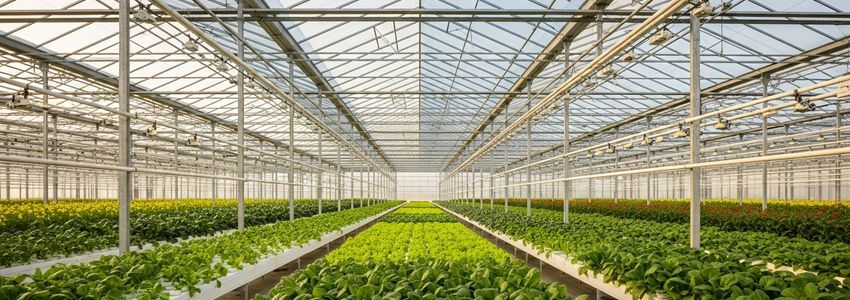
Running a greenhouse is capital-intensive from the start. Between automated irrigation systems, commercial HVAC units, grow lighting, structural coverings, and the land itself, the upfront costs of launching or scaling a greenhouse operation can reach six figures before you sell your first plant. Greenhouse business loans give growers access to the working capital and equipment financing they need to build a thriving, year-round growing operation.
Whether you are a commercial flower grower supplying florists, a wholesale vegetable producer serving local restaurants, or a retail nursery operator looking to expand your growing space, the right financing can accelerate your growth and smooth out the cash flow volatility that comes with seasonal growing cycles. This guide covers every financing option available to greenhouse businesses, how to qualify, what lenders look for, and how Crestmont Capital can help you fund your next phase.
In This Article
- What Are Greenhouse Business Loans?
- Types of Financing for Greenhouse Operations
- How Greenhouse Financing Works
- What Can You Finance?
- Key Numbers for the Greenhouse Industry
- Who Qualifies for Greenhouse Business Loans?
- How Crestmont Capital Helps Greenhouse Businesses
- Real-World Scenarios
- Frequently Asked Questions
- How to Get Started
What Are Greenhouse Business Loans?
Greenhouse business loans are commercial financing products designed to fund the specific capital needs of greenhouse operations. These include purchasing or upgrading greenhouse structures, acquiring specialized equipment, covering seasonal cash flow gaps, buying seed and growing supplies in bulk, or expanding to a new growing facility.
Unlike traditional personal loans, greenhouse business loans are underwritten based on your business revenues, profitability, credit profile, and the viability of your operation. Depending on the type of financing, terms can range from a few months to 10 years or more. Loan amounts can range from as little as $10,000 for a small retail greenhouse to over $1 million for a large commercial growing operation looking to build a new greenhouse complex.
Greenhouse operators face a unique challenge when it comes to financing: lenders sometimes view agriculture-adjacent businesses as higher risk because of weather dependency, seasonal revenue volatility, and crop-specific market conditions. The right lender - one with experience in agricultural and specialty business financing - will understand the true revenue potential and asset value of your greenhouse business.
Industry Context: According to the USDA, greenhouse and nursery production represents one of the fastest-growing segments of American agriculture, generating over $14 billion in annual sales. Year-round growing demand for fresh produce, flowers, and specialty plants continues to drive capital investment in controlled-environment agriculture.
Types of Financing for Greenhouse Operations
Greenhouse businesses can draw from a broad range of business financing products. Understanding which product fits your situation is the first step toward getting the right loan at the right terms.
Term Loans
A traditional term loan provides a lump sum of capital that you repay over a fixed period at a fixed or variable interest rate. For greenhouse businesses, term loans work well for larger purchases - constructing a new greenhouse bay, installing an automated irrigation system, or acquiring adjacent property. Repayment terms typically range from 1 to 10 years depending on loan size and purpose.
Equipment Financing
Equipment financing is one of the most practical tools for greenhouse operators. Rather than paying the full price of a commercial HVAC system, automated growing racks, LED grow lighting arrays, or irrigation infrastructure upfront, equipment financing allows you to spread the cost over time - often 3 to 7 years. The equipment itself typically serves as collateral, which can make it easier to qualify even if your business credit profile is still developing. If you have an existing credit challenge, equipment financing from Crestmont Capital offers flexible approval pathways for operators at all credit levels.
Business Line of Credit
A revolving business line of credit gives greenhouse operators flexible access to cash they can draw from as needed. This is ideal for managing seasonal cash flow gaps, buying transplants and seedlings in volume ahead of a busy planting season, or covering operating expenses between sales cycles. You only pay interest on what you draw, and as you repay, the line refreshes. Many greenhouse operators keep a line of credit available even when they are not using it.
SBA Loans
The U.S. Small Business Administration backs several loan programs that are available to greenhouse businesses. SBA loans generally offer the most competitive interest rates and the longest repayment terms. The SBA 7(a) loan can provide up to $5 million for working capital, equipment, or real estate, while the SBA 504 loan is specifically designed for major capital assets like land and building purchases. The tradeoff is that the application and approval process is more rigorous and time-consuming compared to alternative lenders.
Working Capital Loans
Short-term working capital loans provide fast access to cash for immediate operational needs. These are particularly useful for greenhouse businesses dealing with seasonal income fluctuations. If spring demand surges faster than you anticipated and you need to bring in additional labor, supplies, or packaging materials quickly, a working capital loan from a direct lender can fund in as little as 24-48 hours.
Agricultural Equipment Financing
For greenhouse businesses with significant equipment needs - tractors, forklifts, spray equipment, flatbed vehicles for delivery - specialized agricultural equipment financing may offer better terms and faster approvals than a traditional bank loan.
Ready to Fund Your Greenhouse Growth?
Get fast, flexible financing from the #1 business lender in the U.S. Apply in minutes with no obligation.
Apply Now →How Greenhouse Financing Works
The financing process for a greenhouse business follows the same general path as other commercial loans, with a few agriculture-specific considerations worth knowing upfront.
Step 1: Define Your Capital Need
Before applying, identify exactly what you need funding for. Equipment purchases, working capital, expansion construction, and debt refinancing are all valid uses - but each may be better served by a different product. Being clear about your purpose helps lenders underwrite your application more accurately and match you with the right product.
Step 2: Gather Your Financials
Lenders will typically ask for 3-6 months of business bank statements, your most recent tax returns, and a brief description of your business. Larger loan requests may require profit and loss statements, a business plan, or a balance sheet. If your business is seasonal, be prepared to explain your revenue cycle - a good lender will understand growing season income patterns.
Step 3: Apply and Receive Offers
With an alternative lender like Crestmont Capital, the application takes just a few minutes online. Once submitted, you can typically receive an offer within hours and funding within days. SBA loans and bank loans take longer but may offer better rates for qualifying businesses.
Step 4: Review Terms and Fund
Review your offer carefully - including interest rate or factor rate, repayment term, prepayment penalties, and any fees. Once accepted, funds are deposited directly to your business account. From there, you use the capital to execute your growth plan.
What Can You Finance?
Greenhouse operators have a wide range of capital expenditures and operating expenses that qualify for business financing. Some of the most common uses include:
- Greenhouse structures: Glass or polycarbonate glazing panels, steel framing systems, A-frame or Venlo-style structures, shade cloth systems
- Climate control systems: Commercial HVAC units, heating boilers, evaporative cooling pads, exhaust fans, automated climate controllers
- Irrigation and fertigation: Drip irrigation systems, automated fertigation controllers, water recirculation and treatment systems
- Grow lighting: LED grow lights, HPS fixtures, light deprivation systems for controlled photoperiods
- Propagation equipment: Commercial propagation trays, misting systems, heat mats, germination chambers
- Benching and growing systems: Flood-and-drain tables, rolling benches, vertical grow racks, hydroponic NFT or DWC systems
- Delivery and transport vehicles: Flatbeds, refrigerated vans, forklifts, pallet jacks
- Seasonal working capital: Seeds, plugs, growing media, fertilizers, pesticides, packaging, labor
- Land and real estate: Acquiring adjacent parcels, purchasing a leased growing facility
- Technology upgrades: Environmental monitoring sensors, greenhouse management software, automation systems
Pro Tip: If you are growing both food crops and ornamental plants, consider segmenting your loan by purpose. Equipment financing for your LED lighting system and a working capital line for seed purchasing can keep your loan structure clean and avoid mixing long-term assets with short-term operational needs.
Key Numbers for the Greenhouse Industry
By the Numbers
Greenhouse Industry - Key Statistics
$14B+
U.S. greenhouse and nursery sales annually (USDA)
6%+
Average annual industry growth rate (IBIS World)
30,000+
Commercial greenhouse operations in the U.S.
$250K
Average equipment cost for a 10,000 sq ft commercial greenhouse
Who Qualifies for Greenhouse Business Loans?
Lender requirements vary by loan type and lender, but most greenhouse businesses can qualify for at least some form of commercial financing. Here is a general breakdown of qualification criteria:
For Alternative Lenders (Crestmont Capital and Similar)
- Time in business: 6+ months (1+ year preferred)
- Annual revenue: $100,000+ (higher for larger loan amounts)
- Credit score: 550+ for basic working capital; 620+ for equipment financing; 650+ for term loans
- Bank account: Active business checking account with regular deposits
- No severe derogatory: No recent bankruptcy or active tax liens in most cases
For SBA Loans
- 2+ years in business (preferred)
- 650+ credit score (minimum; 700+ is more competitive)
- Demonstrated profitability or clear path to profitability
- U.S.-based for-profit business
- Owner must have equity in the business
For Equipment Financing
Equipment loans are generally easier to obtain than unsecured loans because the equipment serves as collateral. Even greenhouse operators with imperfect credit may qualify for equipment financing, particularly when the equipment being purchased has strong resale value.
If your greenhouse business is newer or your credit profile is still developing, starting with a smaller equipment loan and making consistent on-time payments is an excellent way to build the credit history that unlocks larger loans down the road. You can also read Crestmont's guide to agricultural business loans for a broader look at how farms and growing operations approach commercial financing.
Check Your Greenhouse Business Loan Options
No obligation to apply. Our advisors specialize in agriculture and specialty business financing.
See My Options →How Crestmont Capital Helps Greenhouse Businesses
Crestmont Capital is a direct lender - not a broker - which means we make lending decisions internally and fund your loan from our own capital. That translates to faster approvals, more flexible underwriting, and a direct relationship with the people who make the decision on your application.
We have funded greenhouse operations of all sizes - from small retail nurseries expanding their retail growing space to large commercial flower growers upgrading to automated planting and irrigation systems. Our underwriters understand seasonal revenue patterns and do not penalize you for income that naturally dips in winter months if your summer and spring revenue is strong.
Our core products for greenhouse businesses include:
- Term loans from $25,000 to $5,000,000+ for construction, major equipment, or acquisition
- Equipment financing for any piece of growing infrastructure - greenhouse structures, climate systems, lighting, irrigation
- Business lines of credit for seasonal working capital flexibility
- Working capital loans with approvals in as little as 24 hours for urgent cash needs
- SBA loan facilitation for qualifying businesses that need the best possible rates and longest terms
You can learn more about how we help agricultural operations in our detailed guide to farm equipment financing, which covers many of the same considerations greenhouse operators face when financing heavy capital equipment. For operators with credit challenges, our equipment financing with bad credit guide explains how to qualify even when your credit history is imperfect.
Real-World Scenarios
Understanding how other greenhouse businesses have used financing can help you see what is possible for your own operation.
Scenario 1: Small Retail Greenhouse Expanding Capacity
Maria runs a 5,000 square foot retail greenhouse in the Midwest selling annuals, perennials, and seasonal vegetables to local customers. Spring demand consistently outpaces her growing capacity, and she turns away business every March through May. She uses a $75,000 equipment loan to add 3,000 square feet of polycarbonate growing space and install new LED supplemental lighting. The expansion increases her spring revenue by 40%, and the loan payment is fully covered by the incremental sales.
Scenario 2: Commercial Cut Flower Grower Bridging a Cash Flow Gap
James grows specialty cut flowers year-round for local florists and wedding planners. His winter sales are slower, but he needs to hire three seasonal workers and purchase bulk cuttings and growing media starting in January to supply his peak spring season in March and April. He takes a $50,000 working capital line of credit in January, draws $30,000 for supplies and labor, and fully repays it by late April once spring orders are fulfilled. The flexibility of the line means he only pays interest on what he uses.
Scenario 3: Vegetable Grower Upgrading to Hydroponic Systems
A commercial greenhouse operation growing tomatoes and cucumbers in soil wants to convert to deep water culture hydroponic systems to improve yields and reduce labor costs. The conversion requires new growing channels, pumps, nutrient delivery systems, and upgraded water filtration - a total capital investment of approximately $180,000. The operator qualifies for an SBA 7(a) loan with a 7-year repayment term at a competitive rate, keeping monthly payments manageable while the upgraded system pays for itself through reduced input costs and higher yields.
Scenario 4: Wholesale Nursery Acquiring Adjacent Land
A wholesale nursery growing containerized landscape shrubs wants to purchase the 2-acre parcel adjacent to their existing operation to build two new glass greenhouse structures. They apply for a commercial real estate loan through Crestmont Capital covering both the land purchase and the greenhouse construction, totaling $950,000. A 10-year term keeps the monthly debt service affordable relative to their projected revenues from the expanded growing capacity.
Scenario 5: New Greenhouse Operator Starting Up
An experienced horticulturist leaves corporate greenhouse management to launch her own 3,000 square foot specialty herb greenhouse supplying local restaurants and co-ops. As a new business, she does not qualify for SBA financing, but she qualifies for a startup equipment loan through an alternative lender, covering $60,000 of her initial infrastructure - grow benches, climate controls, LED lighting, and irrigation. Combined with a personal investment and a small business grant from her state agriculture department, she launches with minimal personal debt exposure.
Scenario 6: Multi-Site Expansion Using Blended Financing
A regional greenhouse group operating three facilities in the Southeast wants to open a fourth location in a new market. They use a combination of an SBA 504 loan for the real estate and construction, a separate equipment financing line for outfitting the new greenhouse, and an existing revolving line of credit to cover the working capital ramp-up period before the new location reaches profitability. This blended approach matches each capital need with the most appropriate financing product rather than trying to fund everything with a single loan.
Frequently Asked Questions
What credit score do I need to get a greenhouse business loan?
Credit score requirements vary by lender and loan type. For working capital loans and merchant cash advances, scores as low as 550 may be acceptable. Equipment financing typically requires 580-620+. Term loans generally need 620-650+, and SBA loans prefer 650-700+. Crestmont Capital evaluates the full picture of your business, not just your credit score, so even borrowers with credit challenges may qualify for greenhouse financing.
Can I get a greenhouse business loan if my business is seasonal?
Yes. Most commercial lenders who understand agriculture-adjacent businesses are accustomed to seasonal revenue patterns. When you apply, be prepared to show bank statements that capture your full annual cycle, including both peak and off-peak periods. Lenders will typically annualize your revenue based on your strongest months and may consider seasonal working capital lines as particularly appropriate for greenhouse operations.
How much can I borrow for my greenhouse business?
Loan amounts depend on your business revenue, credit profile, time in business, and the loan purpose. Working capital loans typically range from $10,000 to $500,000. Equipment loans can go up to the purchase price of the equipment, commonly $50,000 to $2,000,000+. SBA loans go up to $5 million. Commercial real estate and construction loans can be even larger for established operations with significant assets and revenue.
What is the difference between a greenhouse equipment loan and a working capital loan?
An equipment loan is used specifically to purchase or finance a physical asset - a greenhouse structure, irrigation system, HVAC unit, or grow light array. The equipment typically secures the loan, and the term usually aligns with the equipment's useful life. A working capital loan is for operational expenses like seeds, supplies, labor, payroll, or utility bills. It is typically shorter-term and unsecured. Both serve different purposes and are often used together by growing businesses.
Do I need collateral to get a greenhouse business loan?
Not always. Equipment loans are typically secured by the equipment itself. SBA loans may require a general lien on business assets. Unsecured working capital loans and lines of credit often do not require specific collateral, though the lender may still file a blanket UCC lien on your business assets as a precaution. Some lenders may request a personal guarantee, especially for newer businesses. Crestmont Capital offers both secured and unsecured options depending on the loan type and your profile.
How fast can I get funded for a greenhouse business loan?
With an alternative lender like Crestmont Capital, you can often receive an offer within hours and funding within 1-3 business days for working capital loans or equipment financing. SBA loans typically take 30 to 90 days from application to funding. Bank term loans typically take 2-6 weeks. If you have a time-sensitive need, working with a direct lender like Crestmont is the fastest path to funding.
Can I use a greenhouse business loan to purchase land?
Yes. SBA 504 loans are specifically designed for purchasing real estate and making major capital improvements, including land for a new greenhouse facility. Commercial real estate loans from private lenders can also fund land acquisitions. If you are purchasing both land and constructing a greenhouse structure on it, you will generally need a commercial real estate lender or an SBA 504 loan rather than a standard working capital or equipment product.
What documents do I need to apply for a greenhouse business loan?
For an alternative lender application, you typically need 3-6 months of business bank statements, your most recent business tax returns (1-2 years), a completed application form, and basic business identification (EIN, business license). For larger loans or SBA applications, you may also need a profit and loss statement, balance sheet, business plan or use-of-funds narrative, accounts receivable aging report, and personal financial statements from business owners with 20%+ ownership.
Are greenhouse business loan interest payments tax deductible?
The interest paid on a business loan is generally a deductible business expense. Equipment financed through a loan may also be eligible for depreciation deductions under applicable IRS rules. Because tax treatment varies based on your specific situation, business structure, and current law, always consult a qualified tax professional or CPA before making decisions based on potential tax treatment of your financing.
Can a new greenhouse business qualify for financing?
Yes, though the options are more limited than for established businesses. Some alternative lenders offer startup equipment financing for businesses with as little as 3-6 months of operating history. SBA Microloan programs and USDA Farm Service Agency programs also provide pathways for newer agriculture-related businesses. If you are launching a new greenhouse, combining modest external financing with your own equity investment and potentially state or local agricultural grants can be a sound approach to controlling startup risk while still accessing growth capital.
How does equipment financing compare to leasing for greenhouse infrastructure?
Equipment financing generally makes more sense for greenhouse infrastructure because the assets have long useful lives - a commercial greenhouse structure can last 20-30 years, and grow lighting and irrigation systems often last 10-15 years. Leasing can be appropriate for equipment with rapid technology obsolescence or where you prefer to keep capital available for other uses. For most permanent greenhouse infrastructure, buying through an equipment loan gives you ownership equity and reduces long-term operating costs compared to perpetual leasing payments.
Can I refinance my existing greenhouse debt?
Yes. Debt refinancing is a common and smart move for greenhouse businesses that initially took on high-cost financing and now want to reduce monthly payments or overall cost of capital. If your business has grown, your credit has improved, and you have built a track record of on-time payments, you may qualify for significantly better rates. Crestmont Capital can help you evaluate whether refinancing your existing greenhouse debt makes financial sense.
Is there government financing available for greenhouse businesses?
Yes. The SBA offers multiple programs applicable to greenhouse businesses, including the 7(a) and 504 loan programs. The USDA Farm Service Agency offers Operating Loans and Ownership Loans specifically for farmers and agricultural producers. Some state departments of agriculture also offer loan guarantee programs or grant opportunities for controlled-environment agriculture. These government programs often have lower interest rates than market alternatives but come with more paperwork and longer processing times.
How do I choose between a line of credit and a term loan for my greenhouse?
Use a term loan when you have a specific, one-time capital need with a known dollar amount - like building a new greenhouse wing or purchasing a complete climate control system. Use a line of credit when your capital needs are recurring, variable, or hard to predict in advance - like seasonal supply purchases, fluctuating payroll, or bridging cash flow gaps between growing seasons. Many greenhouse businesses maintain both: a term loan for fixed capital assets and a revolving credit line for operational flexibility.
What interest rates can greenhouse businesses expect on business loans?
Interest rates depend heavily on the loan type, your credit score, time in business, and revenue strength. SBA loans generally carry rates in the 6-11% range. Bank term loans for established businesses may be in the 7-12% range. Alternative lender rates vary more widely - typically 10-35% APR depending on risk profile and term length. Equipment financing rates often fall in the 8-20% range. Crestmont Capital will give you a clear picture of your options and the true cost of each product before you commit.
How to Get Started
Complete our quick application at offers.crestmontcapital.com/apply-now - it takes just a few minutes and there is no obligation.
A Crestmont Capital advisor with experience in agricultural and specialty business financing will review your needs and match you with the right product.
Receive your funds - often within days of approval - and put them to work in your greenhouse operation.
Ready to Finance Your Greenhouse Operation?
Apply in minutes. Get an offer fast. No obligation to accept.
Apply Now →Conclusion
Greenhouse business loans give operators at every stage of growth the capital they need to expand their production capacity, upgrade aging equipment, manage seasonal cash flow, and compete in an increasingly dynamic market for controlled-environment agriculture products. From small retail nurseries adding a single new growing structure to large commercial operations financing multi-million-dollar hydroponic facilities, the right financing can be the difference between watching an opportunity pass and seizing it.
The key is matching your financing product to your specific need. Equipment loans for major capital purchases. Lines of credit for seasonal flexibility. Term loans for structured, longer-term growth investments. SBA programs when you qualify and the time is right. Working capital loans when you need speed above all else.
Crestmont Capital specializes in greenhouse business loans and agricultural financing. We are a direct lender, not a broker, which means faster decisions, more personalized service, and a long-term relationship with an institution that understands your growing operation. Apply today and find out what your greenhouse qualifies for.
Disclaimer: The information provided in this article is for general educational purposes only and is not financial, legal, or tax advice. Funding terms, qualifications, and product availability may vary and are subject to change without notice. Crestmont Capital does not guarantee approval, rates, or specific outcomes. For personalized information about your business funding options, contact our team directly.