
Greek restaurant business loans give owners the capital they need to open new locations, upgrade kitchens, hire staff, and manage the seasonal cash flow swings that every food service business faces. Whether you are launching your first gyro spot or expanding a successful Mediterranean dining room, the right financing makes the difference between staying stuck and scaling smart. This guide covers every financing option available to Greek restaurant owners, how to qualify, and how Crestmont Capital can help you get funded fast.
In This Article
- What Are Greek Restaurant Business Loans?
- Benefits of Financing Your Greek Restaurant
- Types of Financing Available
- How Greek Restaurant Financing Works
- How Greek Restaurant Owners Use Financing
- Who Qualifies for a Greek Restaurant Loan?
- How Crestmont Capital Helps Greek Restaurant Owners
- Real-World Scenarios
- Frequently Asked Questions
- How to Get Started
What Are Greek Restaurant Business Loans?
Greek restaurant business loans are financing products specifically used by restaurant owners to fund the operational and growth needs of their food service businesses. The term covers a wide range of products - from traditional term loans and SBA loans to equipment financing, business lines of credit, and merchant cash advances. Any funding that a Greek restaurant owner uses to run or grow the business falls into this category.
The Greek restaurant industry occupies a distinct and growing niche in American dining. Greek cuisine blends bold flavors, fresh ingredients, and a communal dining culture that has built loyal customer bases across the country. From fast-casual gyro concepts to upscale taverna-style restaurants, the category spans multiple business models, each with unique capital needs.
Restaurant businesses are capital-intensive by nature. The equipment alone - commercial ovens, rotisserie units, refrigeration, prep stations, and point-of-sale systems - can cost tens of thousands of dollars. Add to that the cost of leasehold improvements, staffing, food inventory, and marketing, and it becomes clear why access to financing is critical for Greek restaurant owners at every stage of their business.
Industry Insight: According to the National Restaurant Association, the U.S. restaurant industry generates more than $1 trillion in annual sales, with Mediterranean and Greek concepts among the fastest-growing ethnic food segments. Access to capital is the single biggest barrier to growth for independent restaurant operators.
Benefits of Financing Your Greek Restaurant
Securing the right financing unlocks real, measurable benefits for Greek restaurant owners. Here is what well-structured capital can do for your business:
- Fund kitchen upgrades without depleting cash reserves needed for payroll and inventory
- Bridge seasonal revenue gaps - Greek restaurants often see slower periods in winter that require working capital to maintain operations
- Accelerate expansion - open a second location, add catering services, or launch a food truck without waiting years to save enough
- Upgrade technology - modern POS systems, online ordering platforms, and reservation software improve revenue and efficiency
- Manage supplier payments - bulk purchasing of key ingredients like olive oil, lamb, feta, and phyllo dough often comes with better pricing for larger orders
- Hire and train staff - build the team needed to deliver consistent, high-quality service during busy periods
- Invest in marketing - digital advertising, local SEO, and community partnerships drive new customers through the door
Ready to Fund Your Greek Restaurant?
Get the capital your restaurant needs to grow. Apply in minutes - no obligation, no hassle.
Apply Now →Types of Financing Available to Greek Restaurant Owners
Greek restaurant owners have access to a wide variety of financing products. Understanding the differences helps you match the right funding tool to your specific need.
Term Loans
A term loan provides a lump sum of capital that you repay over a fixed period with regular payments. Terms typically range from one to five years for short-term products and up to ten years or more for long-term loans. Term loans work well for large, defined expenses like renovation projects, kitchen buildouts, or buying out a partner.
SBA Loans
The Small Business Administration guarantees loans made by approved lenders, which reduces lender risk and allows for lower interest rates and longer terms than conventional loans. The SBA 7(a) loan is the most common option for restaurants, with loan amounts up to $5 million and repayment terms up to 25 years for real estate. SBA loans require strong documentation and take longer to close, but they offer the most favorable terms in the market.
Business Line of Credit
A business line of credit gives you a revolving pool of capital you can draw from as needed and repay on your schedule. This is ideal for managing the unpredictable cash flow of a restaurant - covering payroll during slow weeks, buying extra inventory before a holiday rush, or handling unexpected repairs without disrupting operations.
Equipment Financing
Equipment financing lets you acquire the specialized equipment your Greek restaurant needs without paying the full cost upfront. The equipment itself serves as collateral, which often makes these loans easier to qualify for than unsecured products. Common financed items include commercial ovens, rotisserie units, refrigeration systems, display cases, and point-of-sale systems.
Working Capital Loans
Working capital loans are short-term funding solutions designed to cover day-to-day operational costs. They are faster to fund than term loans or SBA products and work well for covering payroll, utilities, food costs, and other recurring expenses during low-revenue periods.
Merchant Cash Advances
A merchant cash advance (MCA) provides upfront capital in exchange for a percentage of future credit and debit card sales. Repayments automatically adjust to your daily revenue, which makes MCAs useful for restaurants with seasonal or variable income. They fund faster than almost any other product but carry higher costs, so they are best used strategically for short-term needs.
Revenue-Based Financing
Similar to an MCA, revenue-based financing ties repayment to a percentage of your monthly revenue. This structure is more flexible than fixed payment loans and can be a good fit for restaurant owners who want predictable, revenue-proportional repayments.
By the Numbers
Greek Restaurant Financing - Key Statistics
$60K
Average cost to open a small Greek restaurant concept
71%
of restaurant operators say access to capital is a top growth barrier
24-48hrs
Time to funding with alternative lenders for approved applicants
$500K+
Maximum funding available for established restaurant operators
How Greek Restaurant Financing Works
The process of securing financing for a Greek restaurant follows a similar path regardless of the product type. Here is a step-by-step breakdown of what to expect:
Step 1: Determine Your Funding Need
Start by defining exactly what you need the capital for and how much you require. Equipment purchases have defined costs. Renovation budgets can be estimated with contractor quotes. Working capital needs can be calculated from your monthly operating expenses. Being specific about your need helps you choose the right product and borrow the right amount.
Step 2: Review Your Financial Profile
Lenders evaluate your personal credit score, business credit history, annual revenue, time in business, and existing debt obligations. Before applying, review your credit reports and address any errors. Pull together your last 3-6 months of bank statements, your most recent tax returns, and your profit and loss statement.
Step 3: Choose the Right Financing Product
Match the product to the need. Use equipment financing for kitchen equipment. Use a working capital loan or line of credit for operational expenses. Use a term loan or SBA loan for large renovation or expansion projects. Using the wrong product type can cost you more money or create repayment structures that strain your cash flow.
Step 4: Apply with a Lender
Submit your application with supporting documents. Online lenders and alternative financing companies like Crestmont Capital can often approve applications within hours and fund within days. Traditional bank loans and SBA loans take longer - typically four to eight weeks - but may offer better rates for well-qualified borrowers.
Step 5: Receive Funds and Deploy Capital
Once approved, funds are typically deposited directly into your business bank account. You can immediately begin using the capital for its intended purpose. Keep detailed records of how funds are used, particularly if you have an SBA loan, which may have restrictions on fund deployment.
Pro Tip: Apply for a line of credit before you urgently need it. Lenders evaluate creditworthiness more favorably when there is no financial distress signal. Having a line of credit in place gives you a ready source of capital for unexpected expenses or opportunities.
How Greek Restaurant Owners Use Financing
The uses of capital in a Greek restaurant business are as varied as the menu. Here are the most common ways owners put financing to work:
Kitchen Equipment and Buildout
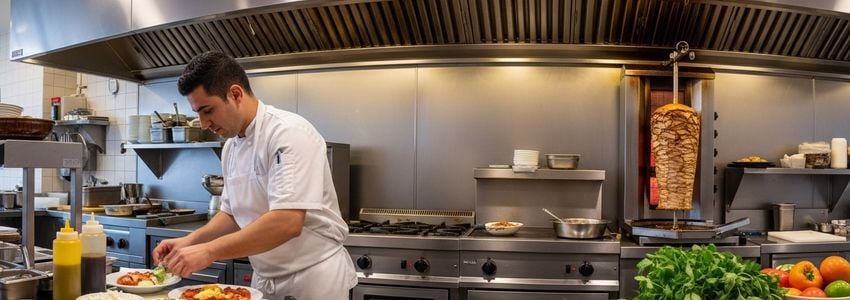
A proper Greek restaurant kitchen requires specialized equipment. Rotisserie units for slow-roasting whole lamb or chicken, commercial flat-top grills for souvlaki and gyro meat, high-capacity ovens for baking pita and spanakopita, large refrigeration and cold storage units for fresh produce, and commercial dishwashers are just the beginning. A fully equipped Greek restaurant kitchen can cost anywhere from $30,000 to well over $150,000 depending on scale and concept.
Leasehold Improvements and Renovation
Creating the right dining atmosphere is important for any restaurant concept, and Greek restaurants particularly benefit from warm, Mediterranean-inspired interiors. Financing can cover the cost of dining room renovations, bar buildouts, outdoor patio construction, signage, and the customer-facing elements that define your brand and drive repeat visits.
Inventory and Food Cost Management
Key ingredients for Greek cuisine - high-quality olive oil, imported feta and other cheeses, fresh lamb, chicken, and seafood, fresh herbs, and specialty items like phyllo dough - can be expensive. Buying in larger quantities often means better pricing from suppliers, but requires more upfront capital. A working capital loan or line of credit can fund these bulk purchases.
Staffing and Payroll
Restaurants are labor-intensive businesses. A Greek restaurant with table service might need cooks, prep staff, servers, bussers, a host, and management. The payroll costs during the first months of operation, or during a slow seasonal period, can strain cash flow. Financing bridges these gaps and ensures you can keep your best people on staff through slower periods.
Marketing and Customer Acquisition
Growing a restaurant requires reaching new customers. A well-funded marketing budget covers digital advertising, local SEO optimization, food delivery platform fees, social media content creation, event sponsorships, and loyalty program development. Financing your marketing investment can generate a strong return when done strategically.
Technology Upgrades
Modern POS systems, online ordering integrations, kitchen display systems, and reservation management platforms improve efficiency and customer experience. These technology investments often pay for themselves through reduced waste, better table management, and increased order accuracy.
Who Qualifies for a Greek Restaurant Loan?
Qualification criteria vary by lender and product type, but here are the general benchmarks you should understand before applying:
Credit Score
Most traditional lenders require a personal credit score of 650 or higher. Alternative lenders and working capital providers may approve borrowers with scores as low as 550, though the cost of capital will be higher. Your business credit score (if you have one established) is also evaluated, though it is typically weighted less heavily than personal credit for small operators.
Time in Business
Established restaurants with at least two years of operating history have the widest access to financing products, including SBA loans and conventional term loans. Restaurants with 6-24 months of history can access many alternative lending products. Brand-new restaurants or pre-revenue concepts have more limited options but can still access startup equipment financing, personal business loans, and some SBA startup programs.
Annual Revenue
Most lenders want to see annual revenue of at least $100,000 to $150,000 for standard working capital products. Higher-ticket financing - SBA loans, large term loans - typically require $250,000 or more in annual revenue. Some alternative lenders will work with revenues as low as $50,000 per year for short-term products.
Cash Flow and Profitability
Lenders evaluate whether your business generates enough cash flow to service the new debt. The Debt Service Coverage Ratio (DSCR) is a key metric - most lenders want to see a DSCR of at least 1.25, meaning your operating income covers debt payments with a 25% buffer. Even moderately profitable restaurants with consistent revenue can often qualify for financing.
Collateral
Unsecured loans require no collateral but carry higher rates. Secured products like SBA loans or equipment financing use the financed assets or other business/personal assets as collateral, which typically results in lower rates and higher approved amounts. Many restaurant owners are surprised to learn that business equipment, fixtures, and even future receivables can serve as collateral.
Check Your Qualification in Minutes
No hard credit pull required to see your options. Get a fast quote from the #1 business lender in the U.S.
Get My Quote →How Crestmont Capital Helps Greek Restaurant Owners
Crestmont Capital is the #1 rated business lender in the United States, and we have worked with hundreds of restaurant owners to find the right financing solution for their specific situation. Our approach is straightforward: we understand the restaurant business, we move fast, and we match each client with the product that makes the most sense for their goals.
For Greek restaurant owners, we offer:
- Working capital loans from $10,000 to $500,000 with funding in as little as 24-48 hours
- Business lines of credit for flexible, revolving access to capital when you need it
- Equipment financing for commercial kitchen equipment, rotisserie units, and technology upgrades
- SBA loan assistance for qualified borrowers seeking the lowest available rates and longest terms
- Revenue-based financing for restaurants with strong sales but variable monthly revenue
Our specialists understand the unique rhythm of the restaurant business. We know that cash flow gaps are not signs of a failing business - they are a normal part of operations that smart financing can smooth out. We evaluate your full financial picture, not just a credit score, and we work to find solutions for restaurant owners at every stage of growth.
You can explore our restaurant business loans page for more details, or read our guide on restaurant equipment financing if you are focused on kitchen upgrades. Our complete restaurant financing guide covers every product type in detail.
When you are ready, the application is available at offers.crestmontcapital.com/apply-now and takes only a few minutes to complete.
Key Advantage: Unlike many lenders, Crestmont Capital does not require you to have perfect credit or years of tax returns before getting a decision. Our underwriting team evaluates your business holistically - revenue trends, bank statements, business type, and growth trajectory all factor into the decision.
Real-World Scenarios: Greek Restaurant Financing in Action
The best way to understand how financing works is through concrete examples. Here are six scenarios that illustrate how Greek restaurant owners put capital to work.
Scenario 1: Opening a Fast-Casual Gyro Concept
Aris, a first-generation Greek-American, has been working in restaurants for 15 years and is ready to open his own fast-casual gyro shop. He has secured a lease on a small retail space in a busy commercial district. His buildout and equipment costs total $85,000. He applies for a term loan through Crestmont Capital, qualifies based on his strong personal credit and a detailed business plan, and receives $85,000 at a competitive rate. He completes the buildout on schedule and opens his doors with full equipment and a trained staff.
Scenario 2: Upgrading a Dining Room
Maria runs a 40-seat Greek taverna that has been profitable for three years. The dining room is dated, and she has noticed that newer competitors with more modern spaces are drawing some of her customers away. She uses a $45,000 working capital loan to renovate the dining room - new flooring, fresh paint, updated lighting, and a small bar area. Within six months, her average check and table turns have both increased, and she is seeing more social media mentions from customers sharing photos of the new space.
Scenario 3: Expanding to a Second Location
Stavros owns a well-reviewed Greek restaurant that has been generating $800,000 in annual revenue for the past two years. He has identified a second location opportunity and estimates he needs $120,000 for the initial buildout and first three months of operating costs at the new location. He applies for an SBA 7(a) loan through Crestmont Capital and qualifies for $150,000 at a rate significantly below market alternatives, with a 10-year repayment term that keeps monthly payments manageable while the new location ramps up.
Scenario 4: Managing a Slow Season
Elena's Greek restaurant in a vacation destination area generates 70% of its annual revenue in May through September. Every October, she faces a three-month period where revenue drops sharply but fixed costs remain. She sets up a $50,000 line of credit with Crestmont Capital during a strong summer month. When October arrives, she draws $25,000 from the line to cover payroll, lease payments, and utilities, then repays it in full when spring traffic picks up. The line costs her a fraction of what it would cost to lay off and rehire trained staff every year.
Scenario 5: Adding a Catering Operation
Nikos has operated a Greek restaurant for five years and sees strong demand for catering - weddings, corporate events, and community festivals. Launching a catering operation requires a commercial van, additional equipment, and working capital for the first several events before receivables come in. He uses a $65,000 equipment financing arrangement to acquire a refrigerated van and additional prep equipment, then supplements with a $15,000 line of credit for the first 90 days of catering operations.
Scenario 6: Technology and Marketing Investment
Sophia's Greek restaurant has strong word-of-mouth but limited digital presence. She secures a $30,000 working capital loan to implement a new POS system with integrated online ordering, update her website, run a six-month digital advertising campaign targeting Greek food searches in her area, and create a loyalty program. The investment results in a 23% increase in monthly revenue over the following year.
Frequently Asked Questions
How much can I borrow for my Greek restaurant?
Loan amounts vary by product type and your financial profile. Working capital loans typically range from $10,000 to $250,000 for established restaurants. SBA loans can go up to $5 million. Equipment financing is sized to the cost of the specific equipment being purchased. The best way to find out your specific limit is to apply and let a lending specialist review your file.
What credit score do I need for a Greek restaurant business loan?
Most traditional lenders require a personal credit score of 650 or higher. Alternative lenders and working capital providers may approve applicants with scores as low as 550, though higher credit scores unlock better rates and more product options. SBA loans generally require scores of 680 or above.
Can I get a loan if my Greek restaurant just opened?
New restaurants have more limited options than established ones, but financing is still available. Equipment financing is often accessible to new businesses because the equipment serves as collateral. Some SBA programs are specifically designed for startups. Personal business loans, backed by the owner's personal credit and assets, are another option for pre-revenue or very early-stage restaurant operators.
How fast can I get funding for my restaurant?
Speed depends on the product and lender. Working capital loans and merchant cash advances from alternative lenders like Crestmont Capital can fund within 24-48 hours of approval. Equipment financing typically takes 2-5 business days. SBA loans require 30-90 days from application to funding. If you need capital quickly, alternative lending products are your fastest option.
What documents do I need to apply?
For most alternative lending products, you need 3-6 months of business bank statements, a government-issued ID, and basic information about your business. For SBA and conventional bank loans, you will also need business tax returns (typically 2 years), a profit and loss statement, a balance sheet, and sometimes a business plan with financial projections.
Can I use a business loan to buy a franchise Greek restaurant?
Yes. SBA loans are particularly well-suited for franchise restaurant acquisitions because the SBA has pre-approved many franchise brands, which speeds up underwriting. Conventional business acquisition loans and term loans can also be used. The key factor is that the franchise must be generating sufficient revenue to service the debt.
What interest rates can I expect on a Greek restaurant loan?
Rates vary significantly by product, lender, and your creditworthiness. SBA loans typically carry rates tied to the prime rate plus a margin, often resulting in rates of 6-12% for well-qualified borrowers. Conventional term loans range from 8-25%. Working capital loans from alternative lenders may have effective rates of 20-50% or more when annualized. Merchant cash advances are quoted as factor rates (e.g., 1.2-1.5) rather than interest rates. The best way to compare products is to calculate the total cost of capital for each option.
Does Crestmont Capital work with restaurant owners who have bad credit?
Yes. Crestmont Capital evaluates borrowers holistically, not just by credit score. Restaurant owners with credit challenges can often still qualify for working capital products, merchant cash advances, or equipment financing if they have consistent revenue and healthy bank statement activity. Demonstrating strong daily deposits and low non-sufficient funds occurrences can significantly improve your chances of approval even with a lower credit score.
Can I finance Greek restaurant equipment with no money down?
Some equipment financing programs offer 100% financing with no down payment, particularly for well-qualified borrowers or when purchasing new equipment from established manufacturers. Other programs require 10-20% down. The terms depend on the lender, your credit profile, and the type of equipment being financed. Equipment leasing is another option that typically requires no down payment and preserves more of your working capital.
What is the difference between a restaurant loan and a restaurant line of credit?
A restaurant loan provides a lump sum upfront that you repay over a fixed schedule. A line of credit provides a maximum credit limit you can draw from as needed, repay, and draw again - similar to a credit card. Loans are better for defined, one-time expenses. Lines of credit are better for managing ongoing operational cash flow needs where the exact amount and timing of expenses is unpredictable.
How does revenue-based financing work for restaurants?
Revenue-based financing provides upfront capital in exchange for a percentage of future monthly revenue until a predetermined total is repaid. For example, you might receive $50,000 and agree to repay $65,000 over time at 8% of monthly revenue. In months when revenue is strong, you repay more. In slower months, you repay less. This flexibility makes it well-suited for seasonal restaurants or concepts with variable monthly income.
Can I get a restaurant loan if my business is structured as an LLC?
Yes. Most lenders work with all business entity types, including sole proprietorships, LLCs, S corporations, and C corporations. In fact, operating as an LLC often helps with lending applications because it demonstrates a level of business formality and separates personal and business finances. Some lenders may have minimum time-in-business requirements that apply from the date of LLC formation or the date the business first generated revenue.
Are there SBA loans specifically designed for restaurant businesses?
There are no SBA loan programs exclusively for restaurants, but restaurants are eligible borrowers under the SBA 7(a) program (working capital, equipment, real estate) and the SBA 504 program (commercial real estate and major equipment). Restaurant businesses have strong track records with SBA lenders, and the industry's high revenue density - meaning restaurants generate significant revenue relative to their square footage - often makes for solid loan applications. The key is demonstrating consistent revenue and a solid plan for repayment.
How do I improve my chances of getting approved for a Greek restaurant loan?
Several steps improve your approval odds: maintain a credit score of 650 or higher by paying obligations on time, keep your business bank account active with consistent daily deposits, minimize overdrafts and NSF occurrences on your bank statements, separate business and personal finances, maintain organized financial records including profit and loss statements and tax returns, and apply for an amount that is proportional to your revenue - most lenders cap loan amounts at 10-20% of annual revenue for working capital products.
What happens if I apply and do not qualify right away?
If your application is declined, ask the lender for specific reasons. Address each concern systematically - improve your credit score, increase revenue, or wait until you meet the minimum time-in-business requirement. Crestmont Capital works with applicants who are not quite ready by helping them understand exactly what needs to improve before reapplying. We would rather help you get ready and fund you successfully than decline you without guidance.
How to Get Started
Complete our quick application at offers.crestmontcapital.com/apply-now - takes just a few minutes and there is no obligation.
A Crestmont Capital restaurant financing advisor will review your application and match you with the right funding solution for your Greek restaurant.
Receive your funds and put them to work - often within 24-48 hours for approved applicants. Expand, upgrade, and grow your Greek restaurant with confidence.
Conclusion
Greek restaurant business loans are one of the most powerful tools available to restaurant owners who want to grow without draining their cash reserves. Whether you need working capital to cover a slow January, equipment financing for a new rotisserie setup, or a term loan to open your second location, the right financing product exists for your situation. Crestmont Capital has helped hundreds of food service operators access the capital they need quickly and on favorable terms.
The Greek restaurant industry continues to thrive across the United States. Consumers are increasingly drawn to Mediterranean cuisine for its bold flavors, fresh ingredients, and reputation for healthy eating. Now is an excellent time to invest in your Greek restaurant - and with the right financing partner, the capital you need is within reach.
Start today by visiting our application page or exploring your options at crestmontcapital.com. Our team is ready to help you find the right greek restaurant business loans for your specific goals.
Take the First Step Today
Apply for a Greek restaurant business loan with Crestmont Capital - the #1 business lender in the U.S. Fast approvals, flexible terms, no obligation to accept.
Apply Now →Disclaimer: The information provided in this article is for general educational purposes only and is not financial, legal, or tax advice. Funding terms, qualifications, and product availability may vary and are subject to change without notice. Crestmont Capital does not guarantee approval, rates, or specific outcomes. For personalized information about your business funding options, contact our team directly.