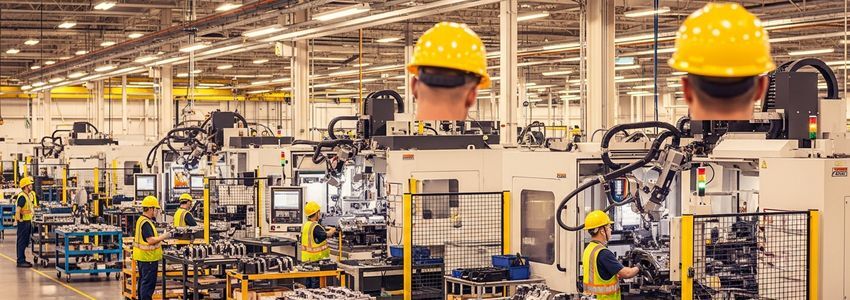
Michigan manufacturing businesses form the backbone of the state's economy, producing everything from automotive components and aerospace parts to food products and industrial machinery. Yet even the most productive manufacturing operations face a persistent challenge: securing the capital needed to buy equipment, manage cash flow, hire workers, and seize growth opportunities. Michigan manufacturing business loans give plant owners and production managers a path to funding without sacrificing ownership or waiting years for organic capital accumulation.
This guide covers every major financing option available to Michigan manufacturers, the qualification requirements lenders actually look at, real-world scenarios that show how funding works in practice, and a clear roadmap to apply with Crestmont Capital.
In This Article
- Why Michigan Manufacturing Is Unique
- Types of Manufacturing Business Loans
- Equipment Financing for Michigan Manufacturers
- SBA Loans for Michigan Manufacturers
- Working Capital and Lines of Credit
- Michigan Manufacturing Financing by the Numbers
- How to Qualify
- Loan Options Comparison
- How Crestmont Capital Helps Michigan Manufacturers
- Real-World Scenarios
- How to Get Started
- Frequently Asked Questions
Why Michigan Manufacturing Is Unique
Michigan has been a manufacturing powerhouse for more than a century. The state is home to approximately 12,000 manufacturing establishments employing over 600,000 workers, according to the U.S. Bureau of Labor Statistics. The automotive sector alone accounts for a significant share of output, but Michigan manufacturers also serve aerospace, defense, furniture, food processing, plastics, and advanced technology industries.
What makes Michigan manufacturing financing distinctive is the scale of capital requirements. A small auto supplier might need $500,000 to retool a production line. A food processor expanding into co-packing might require $1.5 million in refrigeration and packaging equipment. These amounts exceed what most banks will extend without substantial collateral and a proven repayment track record.
Key Insight: Michigan ranks among the top five states in the nation for manufacturing output, contributing over $100 billion annually to the state's GDP. Access to capital directly determines which manufacturers can grow and which stagnate.
Michigan also has a strong network of economic development agencies - including the Michigan Economic Development Corporation (MEDC) and several regional CDFI organizations - that work alongside private lenders to expand financing access. Understanding how to layer these resources with commercial loans from lenders like Crestmont Capital is the key to getting the best terms.
Types of Manufacturing Business Loans Available in Michigan
Michigan manufacturers have access to multiple financing channels. The right option depends on your purpose, credit profile, time in business, and how quickly you need funds.
Term Loans
A term loan provides a lump sum that you repay over a fixed period - typically 1 to 10 years for manufacturing operations. Term loans are ideal for major capital expenditures like facility expansions, large equipment purchases, or acquisitions. Rates vary based on credit quality and loan term, generally ranging from 7% to 25% APR for business term loans from alternative lenders.
Equipment Financing
Equipment loans and leases use the purchased machinery as collateral, which often makes approval easier even for manufacturers with limited credit history. The equipment itself secures the loan, reducing lender risk and allowing financing up to 100% of equipment value with no down payment in many cases.
SBA Loans
The Small Business Administration's 7(a) and 504 programs offer long repayment terms (10 to 25 years) and competitive interest rates. SBA loans are excellent for real estate purchases, large equipment, and business acquisitions. The tradeoff is a longer application and approval process - typically 30 to 90 days.
Business Lines of Credit
A revolving line of credit gives manufacturers flexible access to capital for payroll during slow periods, raw material purchases, or bridging the gap between production runs and customer payments. Draw what you need, repay, and draw again - making it ideal for cyclical manufacturing businesses.
Working Capital Loans
These short-term loans - typically 6 to 24 months - provide immediate cash for operational needs. Michigan manufacturers use working capital loans to cover seasonal staffing surges, unexpected equipment repairs, or inventory stockpiling before major contracts kick in.
Ready to Finance Your Michigan Manufacturing Business?
Get fast, flexible financing from the #1 business lender in the U.S. No obligation - apply in minutes.
Apply Now →Equipment Financing for Michigan Manufacturers
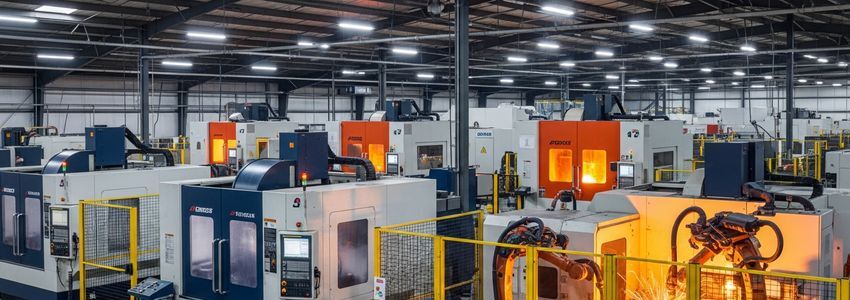
Equipment financing is the most common loan type for manufacturing businesses, and for good reason. Manufacturers are asset-intensive by nature, and lenders readily finance productive equipment because it holds collateral value and generates the revenue needed to repay the debt.
Michigan manufacturers use equipment financing to acquire:
- CNC machining centers, lathes, and milling machines
- Stamping presses, injection molding machines, and die-casting equipment
- Conveyor systems, robotic assembly arms, and automated inspection equipment
- Industrial ovens, kilns, heat treatment systems, and coating equipment
- Commercial refrigeration, freezer tunnels, and food processing lines
- Forklifts, pallet jacks, and warehouse material handling equipment
- Welding stations, plasma cutters, and laser cutting systems
Financing terms typically run 3 to 7 years for standard manufacturing equipment, with interest rates from 5% to 20% depending on the applicant's creditworthiness and the age of the equipment. New equipment generally qualifies for lower rates than used.
Equipment Leasing vs. Financing for Michigan Manufacturers
Some manufacturers prefer leasing because it preserves working capital and provides flexibility at end of term. Under an operating lease, the manufacturer returns the equipment when the lease expires and can upgrade to newer models - particularly valuable in industries where technology evolves rapidly. A capital lease (or equipment loan) transfers ownership to the manufacturer at end of term, building equity in the asset.
Many Michigan manufacturers opt for equipment financing through Crestmont Capital's equipment financing program, which offers competitive rates, fast approvals, and dedicated support for manufacturing companies of all sizes.
SBA Loans for Michigan Manufacturers
The SBA's lending programs are particularly well-suited for Michigan manufacturers because of the program's long repayment terms and relatively low interest rates. The two primary programs are the SBA 7(a) loan and the SBA 504 loan.
SBA 7(a) Loans
The 7(a) program allows manufacturers to borrow up to $5 million for virtually any business purpose - equipment, real estate, working capital, inventory, or refinancing existing debt. Repayment terms extend to 10 years for equipment and working capital, and up to 25 years for real estate. Interest rates are tied to the prime rate plus a lender margin, keeping them competitive with conventional bank loans.
SBA 504 Loans
The 504 program was designed specifically for fixed-asset purchases. A typical 504 transaction combines a conventional first mortgage (50% of project cost) with a Certified Development Company (CDC) loan (40%) and a borrower down payment (10%). This structure makes it possible for Michigan manufacturers to acquire real property or major equipment with a minimal down payment while securing long-term, fixed-rate financing. The official SBA website provides more details on program eligibility.
SBA Advantage: Michigan manufacturers that qualify for SBA loans benefit from longer repayment terms than conventional loans, which lowers monthly payments and improves cash flow - critical for seasonal or project-based production cycles.
Michigan-Specific SBA Resources
Michigan has several SBA District Offices that support local manufacturers, including offices in Detroit and Grand Rapids. The MEDC also partners with SBA-approved lenders to provide technical assistance, making it easier to navigate the application process. For manufacturers in rural Michigan, the USDA Business and Industry loan guarantee program offers a parallel structure to SBA loans for businesses in rural counties.
Working Capital and Lines of Credit for Michigan Manufacturers
Even the most profitable manufacturing operations experience cash flow gaps. Long production cycles, net-30 to net-90 payment terms, and seasonal demand swings can leave manufacturers with insufficient liquidity to meet payroll and pay suppliers - even when order books are full.
A business line of credit addresses this problem by providing a revolving pool of capital that manufacturers can draw on as needed and repay as customer payments arrive. Lines of credit from Crestmont Capital are available from $25,000 to $500,000 or more, with flexible repayment structures designed for manufacturing cash flow realities.
Unsecured working capital loans provide an alternative for manufacturers that need a fixed lump sum for a specific operational need - such as stocking materials for a large contract - without the complexity of a revolving facility. According to the U.S. Census Bureau, Michigan is consistently one of the most manufacturing-dense states in the country, underscoring the ongoing capital needs of the sector.
Michigan Manufacturing Financing by the Numbers
By the Numbers
Michigan Manufacturing — Key Financing Statistics
12,000+
Manufacturing establishments in Michigan
600K+
Manufacturing workers employed statewide
$100B+
Annual manufacturing contribution to Michigan GDP
24 Hrs
Typical time to funding decision with Crestmont Capital
How to Qualify for Michigan Manufacturing Business Loans
Lender requirements vary by loan type, but most Michigan manufacturing businesses will encounter a consistent set of criteria across applications.
Time in Business
Conventional lenders and SBA programs typically require at least 2 years of operating history. Alternative lenders like Crestmont Capital can work with businesses as young as 6 months in certain programs, particularly for equipment financing where the asset provides security.
Annual Revenue
Most lenders want to see annual revenue of at least $100,000 to $250,000 depending on loan size. For larger manufacturing loans ($500,000+), expect revenue requirements of $500,000 or more, with documented proof via tax returns or bank statements.
Credit Profile
Personal credit scores of 600+ are acceptable for many equipment financing programs, while SBA loans typically require 680+. Business credit history - including Dun & Bradstreet PAYDEX scores and payment history with suppliers - is increasingly important for larger credit requests.
Collateral
Equipment loans use the purchased machinery as collateral. For working capital and term loans, lenders may require accounts receivable, inventory, real estate, or a personal guarantee. Many Michigan manufacturers find that their existing equipment and real estate provide ample collateral for significant loan amounts.
Financial Documentation
Prepare the following before applying:
- Two to three years of business tax returns
- Year-to-date profit and loss statement and balance sheet
- Three to six months of business bank statements
- A/R and A/P aging reports
- Equipment invoices or quotes (for equipment financing)
- Business plan or use-of-funds summary for larger loans
Michigan Manufacturer? Let's Talk Funding
Crestmont Capital specializes in manufacturing business loans. Fast approvals, competitive rates, and a team that understands your industry.
Start Your Application →Michigan Manufacturing Loan Options: A Comparison
| Loan Type | Loan Amount | Term | Speed | Best For |
|---|---|---|---|---|
| Equipment Financing | $10K - $5M+ | 3-7 years | 24-72 hours | Machinery, tooling, vehicles |
| SBA 7(a) Loan | Up to $5M | 10-25 years | 30-90 days | General purpose, best rates |
| SBA 504 Loan | Up to $5.5M | 10-25 years | 45-90 days | Real estate and major equipment |
| Business Line of Credit | $25K - $500K | Revolving | 1-5 days | Cash flow management, payroll |
| Working Capital Loan | $10K - $500K | 6-24 months | 24-48 hours | Inventory, staffing, operations |
| Term Loan | $50K - $2M | 1-10 years | 3-7 days | Expansion, facility upgrades |
How Crestmont Capital Helps Michigan Manufacturers
Crestmont Capital has funded hundreds of manufacturing businesses across the United States, including numerous operations in Michigan. As the #1-rated business lender in the country, Crestmont offers a streamlined application process that gets manufacturing companies funded in days - not months.
Michigan manufacturers choose Crestmont for several reasons:
- Industry Expertise: Our advisors understand manufacturing cash flow cycles, production line financing requirements, and the unique challenges of the Michigan industrial economy.
- Fast Approvals: Most equipment financing and working capital applications receive a decision within 24 hours. Many manufacturers receive funding within 48 to 72 hours of completing the application.
- Flexible Criteria: We work with manufacturers at various stages, including those with limited credit history, recent startups, and businesses navigating economic transitions.
- Multiple Products: From equipment loans and SBA programs to lines of credit and term loans, Crestmont can structure the right financing package for your specific needs.
Our manufacturing equipment financing program is particularly popular with Michigan plant operators who need rapid access to capital for equipment acquisitions, line upgrades, or capacity expansions. According to CNBC, U.S. manufacturing investment has accelerated significantly driven by reshoring initiatives and automotive electrification projects - trends that directly increase Michigan manufacturers' capital needs.
Pro Tip: Crestmont Capital's Michigan small business financing page provides state-specific information on programs and rates available to Michigan businesses. Review it before applying to make sure you are selecting the right loan type for your situation.
Real-World Scenarios: Michigan Manufacturing Loans in Action
Understanding how other manufacturers have used financing helps clarify which options might work best for your operation.
Scenario 1: Auto Supplier Retooling for New Platform
A Flint-based Tier 2 automotive stamping supplier received a contract to supply components for a new vehicle platform launching in 18 months. Retooling required $850,000 in new tooling, fixtures, and robotic welding equipment. The company secured equipment financing through Crestmont Capital at a 7-year term, with monthly payments structured around the expected revenue increase from the new contract. The equipment qualified as collateral, reducing the down payment to zero.
Scenario 2: Food Processor Expanding Capacity
A Grand Rapids food manufacturer producing private-label packaged goods needed to double capacity to fulfill a major retail chain contract. The $1.2 million expansion - covering processing equipment, refrigeration, and upgraded packaging lines - was financed through a combination of an SBA 504 loan covering the fixed equipment and a working capital line of credit to bridge the 60-day gap between production and retailer payment terms.
Scenario 3: Small Machining Shop Managing Seasonal Cash Flow
A Warren machining shop serving the defense and aerospace sectors had a predictable seasonal pattern: heavy orders from August through February, with a slower spring. An unsecured working capital loan of $150,000 allowed the shop to maintain full staffing and machine utilization during the slow season, capturing smaller orders that would otherwise have required turning away customers.
Scenario 4: Family Business Purchasing Facility
A Holland, Michigan furniture manufacturer had been leasing its production facility for 15 years. When the owner decided to sell, the business used an SBA 7(a) loan to purchase the property, securing long-term cost predictability and building real estate equity that has since become a valuable business asset.
Scenario 5: Plastics Manufacturer Adding Injection Molding Capacity
A Kalamazoo plastics manufacturer won three new customers but lacked the injection molding capacity to serve all of them. Equipment financing for two new 500-ton presses ($480,000 total) allowed the company to onboard all three accounts, increasing annual revenue by 35% over the following year.
Scenario 6: Startup Manufacturer Building Initial Infrastructure
A Metro Detroit startup developing precision medical device components needed $250,000 in CNC equipment to begin production. Despite being less than 12 months old, the founders' strong personal credit, detailed business plan, and purchase orders from two medical device OEMs secured startup equipment financing, with a personal guarantee supplementing the equipment collateral.
How to Get Started
Complete our quick application at offers.crestmontcapital.com/apply-now - takes just a few minutes. Upload your bank statements and we can often pre-qualify you within hours.
A Crestmont Capital advisor with manufacturing industry knowledge will review your needs, assess your financials, and recommend the loan structure that best fits your operation and goals.
Once approved, funding is typically disbursed within 24 to 72 hours for working capital and equipment loans. SBA loan closings follow the standard timeline of 30 to 90 days depending on program complexity.
Take the Next Step Today
Michigan manufacturers trust Crestmont Capital for fast, reliable business financing. Apply now and get a decision within 24 hours.
Apply Now →Frequently Asked Questions
What types of loans are available for Michigan manufacturing businesses?
Michigan manufacturers can access equipment financing, SBA 7(a) and 504 loans, business lines of credit, working capital loans, term loans, and commercial real estate financing. The best option depends on your specific need, credit profile, and how quickly you need capital.
How quickly can I get financing for manufacturing equipment in Michigan?
With alternative lenders like Crestmont Capital, equipment financing decisions typically come within 24 hours of application, with funding in 48 to 72 hours. SBA loans take longer - typically 30 to 90 days depending on the program and complexity of the transaction.
What credit score do I need for a manufacturing business loan?
Requirements vary by loan type. Equipment financing is often available with personal credit scores as low as 580 to 600, particularly when the equipment itself provides solid collateral. SBA loans generally require 640 to 680 minimum personal credit. Working capital loans may have slightly higher thresholds depending on the lender.
Can a startup Michigan manufacturer qualify for equipment financing?
Yes. Startup equipment financing is available for manufacturers with limited operating history, particularly when the founders have strong personal credit, relevant industry experience, and documented customer demand such as signed purchase orders or letters of intent. A personal guarantee is typically required for startups.
What is the difference between an SBA 7(a) and SBA 504 loan for manufacturers?
The 7(a) program is a general-purpose loan suitable for working capital, equipment, real estate, and business acquisitions. The 504 program is specifically designed for fixed-asset purchases and uses a three-party structure that typically results in a 10% down payment from the borrower.
How do I manage cash flow between production runs and customer payments?
A business line of credit is the most effective tool for managing the gap between production costs and customer payment. You draw on the line to cover payroll and materials during production, then repay when customers pay their invoices. Invoice financing is another option that converts outstanding receivables into immediate cash.
Does Crestmont Capital lend to manufacturers in all parts of Michigan?
Yes. Crestmont Capital finances manufacturing businesses throughout Michigan, including the Detroit metro area, Grand Rapids, Lansing, Flint, Kalamazoo, Ann Arbor, Traverse City, and the Upper Peninsula. Our online application process serves businesses statewide without requiring a local branch visit.
Can I finance used manufacturing equipment?
Yes. Used equipment financing is available for manufacturing machinery, though rates are typically slightly higher than for new equipment due to lower collateral value. Lenders generally require an equipment appraisal or dealer quote for used machinery valued above $50,000. Crestmont Capital's used equipment financing program covers a wide range of manufacturing equipment types.
What documents do I need to apply for a Michigan manufacturing business loan?
Standard documentation includes 2 to 3 years of business tax returns, year-to-date financial statements, 3 to 6 months of business bank statements, a government-issued ID, and details on the intended use of funds. For equipment financing, you will also need an invoice or dealer quote. For larger loans, a business plan and debt schedule may be required.
How much can I borrow for a Michigan manufacturing business loan?
Loan amounts vary widely by program. Equipment financing typically ranges from $10,000 to $5 million or more. SBA 7(a) loans cap at $5 million, while 504 loans can reach $5.5 million. Working capital loans generally range from $10,000 to $500,000. The specific amount you qualify for depends on your revenue, credit profile, existing debt, and collateral.
Are there Michigan-specific programs or grants for manufacturers?
Yes. The Michigan Economic Development Corporation (MEDC) offers programs including the Michigan Business Development Program, Small Business Capital Access Program, and various grant opportunities for manufacturers investing in advanced manufacturing technology. These programs can be layered with commercial loans to reduce overall financing costs.
What is the typical interest rate for Michigan manufacturing loans?
Interest rates vary significantly by loan type and borrower profile. SBA loans typically carry rates of prime plus 2.75% to 4.75%. Equipment financing rates generally range from 5% to 20% APR. Working capital loans may carry higher rates (15% to 35%) due to shorter terms and less collateral. Your actual rate depends on credit score, time in business, revenue, and current market conditions.
Can I use a business loan to hire manufacturing workers?
Yes. Working capital loans and SBA 7(a) loans can be used for payroll and staffing costs. This is a common use of working capital financing for manufacturers ramping up production for a new contract or expanding a shift structure. Financing payroll costs through a loan allows you to hire ahead of revenue rather than waiting for cash flow to catch up.
What happens if my manufacturing business has seasonal cash flow?
Seasonal cash flow is common in manufacturing, particularly for businesses serving the automotive, construction, or agricultural sectors. A business line of credit is the most effective solution for seasonal variability - it provides liquidity during slow periods without locking you into fixed monthly payments.
How does Crestmont Capital compare to a traditional bank for manufacturing loans?
Traditional banks offer competitive rates for manufacturers with strong credit and long operating histories, but their approval processes are lengthy (often 30 to 90 days) and requirements are strict. Crestmont Capital provides faster approvals (often within 24 hours), more flexible qualification criteria, and specialized manufacturing expertise. For time-sensitive opportunities - like landing a major contract that requires immediate equipment investment - Crestmont's speed advantage is often decisive.
Disclaimer: The information provided in this article is for general educational purposes only and is not financial, legal, or tax advice. Funding terms, qualifications, and product availability may vary and are subject to change without notice. Crestmont Capital does not guarantee approval, rates, or specific outcomes. For personalized information about your business funding options, contact our team directly.