In today's competitive agricultural landscape, maximizing profitability means controlling as many variables as possible. For American farmers and ranchers, securing the right farm storage facility financing is a critical step toward gaining that control, allowing you to optimize sales, protect your harvest, and improve your operational bottom line. This guide provides a comprehensive overview of how to finance essential storage structures like grain bins, silos, cold storage units, and barns, empowering you to make strategic investments in your business's future.
In This Article
- What Is Farm Storage Facility Financing?
- Why Farm Storage Is Critical for Agricultural Businesses
- Types of Farm Storage Facilities You Can Finance
- How Farm Storage Facility Financing Works
- Available Financing Programs
- What Financing Can Cover
- Qualification Requirements
- How Crestmont Capital Helps
- Real-World Financing Scenarios
- Comparing Your Financing Options
- How to Get Started
- Conclusion
- Frequently Asked Questions
What Is Farm Storage Facility Financing?
Farm storage facility financing is a specialized category of funding designed specifically for the acquisition, construction, or expansion of on-farm storage structures. Unlike a general business loan or a line of credit, this type of financing is tailored to the unique assets and cash flow cycles of the agricultural industry. It provides the capital necessary to build or purchase facilities like grain bins, silos, cold storage warehouses, hay barns, and multi-purpose pole buildings.
At its core, this financing treats the storage facility itself as a key business asset-one that generates return on investment by protecting commodities, reducing external costs, and enabling strategic market participation. The structure of the financing often reflects this, with the facility serving as the primary collateral for the loan or lease. This can make it more accessible than unsecured loans, which rely solely on the overall financial health of the business.
Financing can come in several forms, including traditional term loans, equipment finance agreements (EFAs), and capital leases. Each product offers different benefits regarding ownership, tax implications, and payment structures. The primary goal is to provide a manageable financial pathway for farmers to invest in infrastructure that might otherwise require a prohibitive upfront cash outlay. By spreading the cost over several years, farm storage facility financing allows you to preserve working capital for other essential operational needs, such as seed, fertilizer, fuel, and labor. It's a strategic tool that bridges the gap between immediate need and long-term profitability.
Why Farm Storage Is Critical for Agricultural Businesses
Investing in on-farm storage isn't just about having a place to put your harvest-it's a fundamental business strategy that directly impacts your revenue and operational resilience. In an industry subject to weather, global market fluctuations, and logistical challenges, controlling your storage is one of the most powerful levers you can pull to secure your financial success.
The most significant advantage is market flexibility. When harvest season arrives, the market is often flooded with supply, driving prices down. Farmers without adequate storage are forced to sell their crops immediately at these lower "harvest prices." With your own storage facility, you gain the power to hold your commodities and wait for more favorable market conditions. This ability to time your sales can lead to substantially higher profits, often more than covering the cost of the financing over the life of the facility.
Key Stat: According to the USDA's National Agricultural Statistics Service, on-farm storage capacity in the United States was 13.3 billion bushels in 2022. This figure underscores the widespread recognition among producers that on-farm storage is a vital component of a modern agricultural operation.
Furthermore, on-farm storage reduces significant operational costs. You eliminate the recurring expense of renting space at commercial elevators or warehouses. You also cut down on transportation costs and time associated with moving grain or produce off-site during the busiest time of the year. Finally, having direct control over your storage environment allows for better quality management, reducing spoilage and post-harvest losses, which protects the value of the commodities you worked so hard to produce.
Types of Farm Storage Facilities You Can Finance
Farm storage facility financing is versatile and can be applied to a wide range of structures, each designed for specific commodities and operational needs. Understanding the types of facilities available is the first step in determining the right investment for your business. Financing can typically cover the purchase of new or used structures as well as the costs of construction.
The most common types of facilities include:
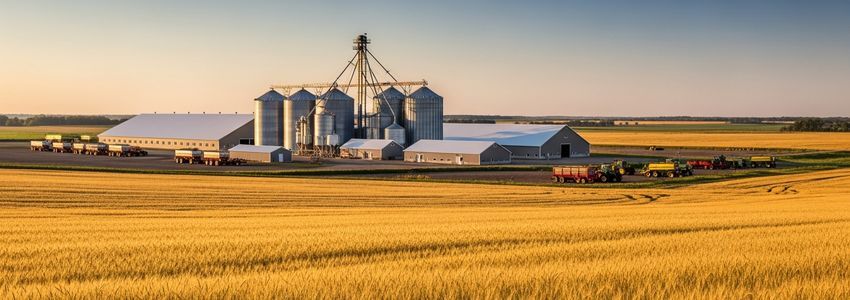
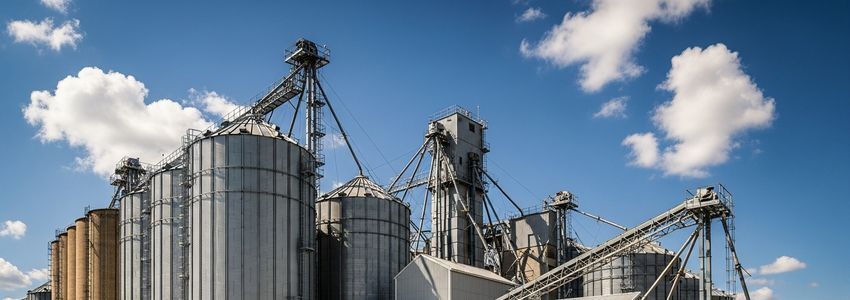
- Grain Bins and Silos: These are the workhorses of commodity crop storage. Essential for farmers growing corn, soybeans, wheat, and other grains, these structures protect the harvest from weather, pests, and moisture. They come in various sizes, from small bins for modest operations to massive silo complexes for large-scale commercial farms. Financing often includes associated equipment like augers, dryers, and aeration systems.
- Cold Storage and Refrigerated Warehouses: Crucial for producers of fruits, vegetables, dairy, meat, and other perishable goods. These climate-controlled facilities extend the shelf life of products, enabling producers to access markets further away and sell produce outside of the immediate harvest window. The financing can cover the insulated building, refrigeration units, and monitoring technology.
- Hay Barns and Commodity Sheds: These simpler structures are vital for livestock operations and diversified farms. A well-built hay barn protects valuable feed from rain and sun, preventing spoilage and preserving nutritional content. Commodity sheds offer flexible, covered storage for bulk items like fertilizer, seed, or equipment.
- Pole Barns and Multi-Purpose Buildings: A pole barn is a cost-effective and highly adaptable structure. While often used for equipment storage or as a workshop, it can easily be configured for commodity storage, livestock housing, or a processing area. Their versatility makes them a popular financing choice for growing farms.
Below is a comparison of these common storage types to help you evaluate which is best for your agricultural business.
| Facility Type | Primary Use | Key Benefits | Typical Cost Consideration |
|---|---|---|---|
| Grain Bins / Silos | Bulk storage of commodity grains (corn, soy, wheat). | Enables market timing, reduces commercial storage fees, protects grain quality. | Moderate to High (Varies by capacity and features like dryers/aeration). |
| Cold Storage Facilities | Storing perishable goods (fruits, vegetables, dairy, meat). | Extends shelf life, expands market reach, maintains product quality and value. | High (Requires insulation, refrigeration systems, and power infrastructure). |
| Hay Barns / Commodity Sheds | Protecting hay, feed, seed, and fertilizer from the elements. | Reduces spoilage, preserves nutritional value of feed, cost-effective shelter. | Low to Moderate (Simpler construction than climate-controlled facilities). |
| Pole Barns / Multi-Purpose | Versatile use for equipment, workshop, or general commodity storage. | Highly flexible, fast to construct, lower cost per square foot. | Low to Moderate (Cost effective for a wide range of uses). |
Ready to Invest in Your Farm's Future?
Secure the financing you need for essential storage facilities. Get a free quote in minutes.
Apply Now →How Farm Storage Facility Financing Works
Navigating the financing process for a new farm storage facility can seem daunting, but reputable lenders have streamlined it to be as efficient as possible. The primary goal is to get your project funded quickly so you can begin construction or take delivery without missing key seasonal windows. While specifics can vary by lender and the complexity of the project, the process generally follows a clear, logical path from application to funding.
The journey begins with a simple application, where you provide basic information about your agricultural business, the type of facility you need, and the estimated project cost. This initial step allows the lender to get a high-level view of your needs and financial situation. From there, you'll typically be asked to provide supporting documents. This may include quotes from the building manufacturer or contractor, recent business bank statements or tax returns, and details about your farm's operational history. For larger, more complex projects like a commercial cold storage warehouse, a more detailed business plan might be required.
Once your file is complete, it moves to underwriting. This is where the lender's team reviews your application and documents to assess risk and determine approval, terms, and rates. With a private lender like Crestmont Capital, this process is often much faster than with traditional banks. Upon approval, you will receive a financing agreement to review and sign. After the signed documents are returned, the funds are disbursed-either directly to you or, more commonly, paid directly to the vendor or contractor on your behalf. This ensures the company building or delivering your facility is paid promptly, allowing your project to move forward without delay.
Quick Guide
How Farm Storage Financing Works - At a Glance
Submit Application
Complete a simple online application in minutes with basic information about your business and the storage facility you need.
Provide Documents
Supply key documents, such as vendor quotes for the structure, recent bank statements, and basic financial information.
Review & Approval
Our underwriting team quickly reviews your file to determine the best financing terms and provides a formal approval.
Funding & Construction
Once you sign the financing documents, we disburse funds to the vendor, and you can begin construction or take delivery of your facility.
Available Financing Programs
When seeking farm storage facility financing, you'll encounter several different programs and product types. While government programs exist, private lenders often provide more speed and flexibility. Here are the most common options:
- Equipment Finance Agreements (EFAs): This is a straightforward loan where you make regular payments for a set term, and you own the facility outright at the end. EFAs are simple to understand and offer the tax benefits of depreciation.
- Capital Leases ($1 Buyout): Functionally similar to an EFA, a capital lease allows you to use the facility for the lease term and then purchase it for a nominal amount (typically $1) at the end. This structure can sometimes offer accounting or tax advantages.
- Private Lenders: Companies like Crestmont Capital specialize in agricultural equipment financing. We work with a wide network of funding sources to find competitive rates and flexible terms, often with a much faster and less bureaucratic process than traditional banks or government agencies. We can finance new and used equipment and structures for a broad range of credit profiles.
- SBA Loans: The Small Business Administration guarantees loans made by partner lenders. Programs like SBA loans can offer long terms and competitive rates but typically involve a more intensive application process and longer wait times. Our experts can help determine if this is the right path for your business.
- USDA Farm Storage Facility Loans (FSFL): This government program offers low-interest loans directly to farmers for storage facilities. While the rates are attractive, the FSFL program has strict eligibility requirements, a lengthy application process, and may not cover all project costs or facility types that a private lender can.
What Financing Can Cover
A common misconception is that farm storage facility financing only covers the cost of the physical structure itself. In reality, comprehensive financing packages are designed to cover the entire scope of the project, from the ground up. This "total project financing" approach is crucial for ensuring you have the capital to complete the job correctly without unexpected out-of-pocket expenses.
Financing can typically be used for:
- Hard Costs: This is the primary expense-the grain bin, pole barn kit, or materials for the cold storage building. It includes the steel, concrete, insulation, and all core structural components.
- Soft Costs: These are the essential, yet often overlooked, expenses. Financing can cover site preparation, excavation, pouring the concrete foundation, and electrical and plumbing work needed to make the facility operational.
- Associated Equipment: A storage facility is more than just a building. Funding can be bundled to include necessary machinery like grain augers, conveyors, drying fans, aeration systems, refrigeration units, and electronic monitoring systems.
- Delivery and Installation: The costs to transport the materials to your farm and pay for the professional labor to construct the facility can also be rolled into the financing agreement.
By financing the entire project, you can preserve your cash flow for daily operations and ensure your new facility is fully equipped and ready to use from day one.
Key Stat: According to market analysis reported by outlets like Bloomberg, grain prices can fluctuate by 20-30% or more within a single year. This volatility makes the ability to store commodities and time sales a critical profit-driving strategy for modern farms.
Qualification Requirements
Qualifying for farm storage facility financing is generally more straightforward than qualifying for other types of business loans, primarily because the facility itself serves as strong collateral. However, lenders will still assess several key factors to determine your creditworthiness and the terms of the financing.
The main qualification criteria include:
- Time in Business: Most lenders prefer to see a history of at least two years in operation. This track record demonstrates stability and an understanding of the agricultural business cycle. However, programs are available for newer farms and startups, especially if the owner has a strong credit history and a solid business plan.
- Credit Score: Both personal and business credit scores are considered. A personal FICO score of 620 or higher is often a good starting point for many programs, though options exist for a wider range of credit profiles. A clean credit history with no recent major delinquencies is beneficial.
- Annual Revenue: Lenders will look at your farm's revenue to ensure there is sufficient cash flow to support the new monthly payment. The specific revenue requirement can vary significantly based on the size of the loan requested.
- Project Viability: For larger or more complex projects, the lender may want to see that the investment makes sense. This can be demonstrated with quotes from reputable suppliers and a clear explanation of how the new storage facility will improve your operation's profitability.
It's important to remember that every situation is unique. Even if you feel you may not meet one of these criteria perfectly, it's worth speaking with a financing specialist who can assess your complete financial picture and explore all available options.
How Crestmont Capital Helps
Navigating the world of farm financing can be complex, but you don't have to do it alone. Crestmont Capital simplifies the process by acting as your dedicated partner, leveraging our industry expertise and extensive network of lenders to secure the best possible financing for your storage facility project. We understand that time is money in agriculture, so our process is built for speed and efficiency.
Our key advantage is flexibility. Unlike a single bank with rigid lending criteria, we have access to a diverse portfolio of funding programs. This allows us to find solutions for a wide spectrum of needs-from a small family farm needing its first hay barn to a large commercial operation building a state-of-the-art cold storage warehouse. We offer a range of farm equipment financing options that can be tailored to your specific cash flow and operational goals.
The Crestmont Capital process is designed with you in mind. Our simple online application takes just a few minutes to complete. From there, a dedicated financing specialist will guide you through every step, helping you gather the necessary documents and answering any questions you have. We specialize in comprehensive equipment financing that covers not just the structure but all associated soft costs and installation. Whether you're looking for a standard EFA or exploring government-backed programs like SBA loans, we have the expertise to structure the right deal. Let us handle the financing, so you can focus on what you do best: running your farm. Explore our small business financing solutions and see how we can help you grow.
Don't Let Financing Be a Hurdle.
Our agricultural financing experts are ready to build a custom solution for your farm. See your options today.
Apply Now →Real-World Financing Scenarios
To better understand how farm storage facility financing works in practice, let's explore a few common scenarios faced by agricultural businesses across the country. These examples illustrate the versatility of financing in solving specific operational challenges and creating new opportunities for growth.
Scenario 1: The Iowa Corn and Soybean Grower
A family farm in Iowa with 1,500 acres has been relying on the local co-op for grain storage, paying significant fees each year and being forced to sell at harvest prices. To gain market control, they decide to invest in two new 50,000-bushel grain bins. The total project cost, including the bins, concrete pads, and an auger, is $180,000. They apply for an Equipment Finance Agreement (EFA). With a strong credit history and over 20 years in business, they are quickly approved for a 7-year term with a fixed monthly payment. The financing allows them to build the bins before harvest, store their entire crop, and wait to sell until market prices rebound in the winter, increasing their revenue by over $75,000 in the first year alone.
Scenario 2: The California Berry Producer
A berry farm in California's Central Valley wants to expand its distribution to out-of-state retailers, but this requires keeping their delicate product fresh for longer. They need a 5,000-square-foot cold storage facility. The project is complex, with a total cost of $450,000 covering the insulated building, a high-efficiency refrigeration system, site prep, and electrical upgrades. They work with a financing specialist to bundle all costs into a single 10-year loan. This "total project financing" prevents them from having to pay for soft costs out-of-pocket. The new facility allows them to reduce spoilage by 15% and secure lucrative contracts with grocery chains in Arizona and Nevada.
Scenario 3: The Texas Cattle Rancher
A rancher in Texas faces challenges with hay spoilage due to unpredictable heavy rains and intense sun. They decide a 60' x 100' pole barn is the most cost-effective solution to protect their winter feed supply. The quoted cost for the delivered and installed barn is $75,000. They secure financing through a capital lease with a 5-year term. The monthly payments are affordable and fit easily within their operating budget. By protecting the hay, they preserve its nutritional quality and eliminate the need to buy expensive replacement feed, saving them over $20,000 annually.
Scenario 4: The New Organic Vegetable Farm in Oregon
An ambitious couple starts a 50-acre organic farm and needs a versatile multi-purpose barn to store their small tractor, processing equipment, and harvested vegetables before they go to the farmers market. As a new business (less than two years old), they struggle to get approval from a traditional bank. They turn to a private lender that specializes in agriculture. Despite their limited time in business, their strong personal credit and solid business plan get them approved for a $50,000 loan to construct a 40' x 60' barn. This essential infrastructure is the key to their operational efficiency and early success.
Key Stat: Reports from sources like AP News have highlighted how supply chain disruptions can delay agricultural inputs. On-site storage for feed, seed, and fertilizer has become more vital than ever for maintaining operational continuity and mitigating risk from external logistical failures.
Comparing Your Financing Options
Choosing the right financing product is as important as choosing the right building. Each option has unique features that may be more or less advantageous depending on your farm's financial structure, tax strategy, and long-term goals. The table below provides a clear comparison of the most common financing programs for farm storage facilities.
| Financing Option | Best For | Typical Term | Ownership | Key Advantage |
|---|---|---|---|---|
| Equipment Finance Agreement (EFA) | Farms wanting direct ownership and the ability to claim depreciation tax benefits. | 3 - 10 years | You own the facility from the start; the lender holds a lien until the loan is paid. | Simplicity and clear path to ownership. Potential tax benefits (Section 179). |
| Capital Lease ($1 Buyout) | Businesses looking for lower initial payments or specific accounting treatment. | 3 - 7 years | Lender owns the facility during the term; you purchase it for $1 at the end. | Often treated like a loan for tax purposes but can have flexible payment structures. |
| SBA Loan (7a or 504) | Well-established businesses with strong financials seeking long terms and low rates. | 10 - 25 years | You own the facility. | Very competitive interest rates and long repayment periods, reducing monthly payments. |
| USDA FSFL Program | Farmers who meet strict government eligibility and are not in a hurry to get funded. | Up to 12 years | You own the facility. | Extremely low, fixed interest rates. |
While government programs like SBA and USDA loans offer attractive rates, they often come with significant paperwork and long approval times. Private lenders specializing in agriculture, like Crestmont Capital, can provide EFA and lease options with funding in a matter of days-not months-making them an ideal choice for projects that need to move forward quickly.
How to Get Started
Taking the first step toward financing your farm storage facility is easier than you might think. Follow this simple, three-step plan to get your project on the fast track to funding.
Assess Your Needs & Get Quotes
Clearly define the type and size of storage facility that will best serve your operation. Contact one or two reputable suppliers or contractors to get detailed price quotes for the entire project, including materials, site prep, and installation. This quote is essential for the financing application.
Gather Key Documents
Prepare for the application by having basic information ready. This typically includes your business's legal name and address, your personal information, and recent business bank statements. Having your project quote handy will also be necessary.
Apply with Crestmont Capital
Complete our secure online application. It takes just a few minutes and requires no hard credit pull to see your options. A dedicated financing expert will contact you shortly after to discuss your project and guide you through the final steps to get your facility funded. Click here to apply now.
Your Farm's Growth Starts Here.
Take control of your harvest and your profits. Let's get your storage facility project funded.
Apply Now →Conclusion
In the modern agricultural economy, on-farm storage is no longer a luxury-it's a strategic necessity. The ability to control when you sell, protect the quality of your harvest, and reduce operational costs provides a powerful competitive edge. While the upfront investment for a grain bin, cold storage unit, or pole barn can be substantial, flexible farm storage facility financing makes these critical assets accessible to operations of all sizes.
By understanding the types of facilities, the financing process, and the available programs, you can make an informed decision that drives profitability and long-term stability for your business. The right financing partner can streamline this process, providing the capital you need quickly and efficiently. Investing in storage is an investment in your farm's independence and financial future. If you are ready to take the next step, the team at Crestmont Capital is here to help you build a financing solution tailored to your unique needs.
Frequently Asked Questions
What is the minimum credit score for farm storage facility financing?
While criteria vary, many programs look for a personal FICO score of 620 or higher. However, Crestmont Capital works with a wide range of credit profiles and can often find solutions for business owners with lower scores, especially if they have strong revenue or have been in business for several years.
Can I finance a used grain bin or barn?
Yes, financing is often available for used storage facilities. Lenders will assess the age, condition, and value of the used structure to determine financing terms. Financing used equipment can be a cost-effective way to expand your storage capacity.
Is a down payment required?
Many financing programs are available with no money down for well-qualified applicants. Some situations, such as weaker credit or financing for a startup business, may require a down payment of 10-20% to secure the loan.
How long does the financing process take?
With a private lender like Crestmont Capital, the process is very fast. After submitting a simple application, you can often receive an approval within a few hours and have your project funded in as little as 24-48 hours. This is significantly faster than traditional banks or government programs.
Can I finance the installation and site prep costs?
Absolutely. We specialize in "total project financing," which means we can roll soft costs like site preparation, concrete foundation work, electrical installation, and labor into a single, convenient loan package. This helps you avoid large out-of-pocket expenses.
What is the difference between a loan (EFA) and a lease?
With an Equipment Finance Agreement (EFA), you are the legal owner of the facility from day one. With a capital lease, the lender technically owns it during the term, and you purchase it at the end for a nominal amount (like $1). Both achieve the goal of ownership and have similar tax treatments for this type of asset.
Can I finance a facility if I lease my farmland?
Yes, it is possible. The lender may require a "landlord waiver" or similar agreement from the property owner, stating that the lender has the right to the financed facility in case of default. This is a common requirement and usually straightforward to arrange.
Are there special financing programs for new farms?
Yes. While having two or more years in business is ideal, we have specific programs designed for startup agricultural businesses. These programs may place more emphasis on the owner's personal credit score and may require a down payment.
What kind of loan terms are available?
Terms typically range from 3 to 10 years, depending on the cost of the project, your credit profile, and the expected useful life of the storage facility. Longer terms result in lower monthly payments, while shorter terms mean you pay less interest over time.
Will applying for financing affect my credit score?
Our initial application process uses a "soft" credit pull, which does not impact your credit score. This allows us to pre-qualify you and discuss your options. A "hard" credit inquiry is only performed later in the process once you decide to move forward with a specific financing offer.
Can I finance a cold storage facility for cannabis or hemp?
Yes. Crestmont Capital works with businesses in the legal cannabis and hemp industries. We have specialized financing programs available for storage, processing, and other essential equipment for these growing sectors.
What if I get a quote from a specific building manufacturer?
That's perfect. Our financing can be used with any manufacturer, supplier, or contractor you choose. Simply provide us with the quote, and we will structure the financing and pay the vendor directly on your behalf once the agreement is finalized.
Are there prepayment penalties?
Most of the financing products we offer do not have prepayment penalties. This gives you the flexibility to pay off the loan early if you have a particularly profitable year, saving you money on future interest payments.
Do you offer seasonal or deferred payment plans?
Yes, we understand the cyclical nature of agricultural cash flow. We can often structure payment plans-such as seasonal, quarterly, or annual payments-that align with your harvest and sales cycles, making cash flow management easier.
What documentation is required to apply?
For most projects under $250,000, the process is very simple. It typically only requires our one-page application, the vendor quote for the facility, and the last three months of your business bank statements. For larger projects, we may ask for tax returns or business financial statements.
Disclaimer: The information provided in this article is for general educational purposes only and is not financial, legal, or tax advice. Funding terms, qualifications, and product availability may vary and are subject to change without notice. Crestmont Capital does not guarantee approval, rates, or specific outcomes. For personalized information about your business funding options, contact our team directly.