In This Article
- What Is Dental Equipment Financing?
- Key Benefits of Financing Dental Equipment
- Types of Dental Equipment You Can Finance
- How Dental Equipment Financing Works: The Step-by-Step Process
- Types of Financing Available for Dentists
- Qualification Requirements for Dental Equipment Financing
- Comparison: Choosing the Right Financing Option
- How Crestmont Capital Streamlines Dental Equipment Financing
- Real-World Scenarios: How Dentists Use Financing
- Next Steps: Securing Your Dental Equipment Funding
- Conclusion
- Frequently Asked Questions
What Is Dental Equipment Financing?
Dental equipment financing is a specialized category of business funding designed specifically for acquiring the tools and technology needed to operate a dental practice. Instead of paying the full, often substantial, cost of equipment upfront, dentists can use a loan or lease to spread the cost over a set period. This financial arrangement allows practices to obtain everything from basic operatories to sophisticated digital imaging systems while preserving cash for other critical business expenses like payroll, marketing, and inventory.
This type of financing is structured to align with the unique financial realities of a dental practice. Lenders who specialize in this field, like Crestmont Capital, understand the value and longevity of dental equipment. The equipment itself typically serves as collateral for the loan, which can simplify the application process and often leads to more favorable terms compared to unsecured business loans. The primary goal is to make essential technology accessible, enabling dentists to enhance patient care, increase procedural offerings, and boost overall practice revenue without facing a major capital drain.
Whether you are starting a new practice, expanding an existing one, or upgrading outdated technology, dental equipment financing provides a predictable, manageable pathway to outfit your clinic with the best tools available. It covers a wide range of assets, including dental chairs, X-ray machines, sterilization units, CAD/CAM systems, and even software. By converting a large capital expenditure into a manageable monthly payment, financing acts as a powerful lever for growth and modernization in the highly competitive dental industry.
Key Benefits of Financing Dental Equipment
Choosing to finance dental equipment instead of purchasing it outright with cash offers a multitude of strategic advantages. These benefits go beyond simple affordability, impacting your practice's cash flow, tax position, and competitive edge.
Preserve Working Capital and Maintain Liquidity
Cash is the lifeblood of any business. Tying up hundreds of thousands of dollars in an outright equipment purchase can severely restrict your practice's financial flexibility. This capital could be used for other growth-oriented activities, such as marketing campaigns to attract new patients, hiring additional staff, expanding your physical office space, or simply covering unexpected operational costs. By financing, you keep your cash reserves intact, ensuring you have the liquidity to navigate day-to-day expenses and seize new opportunities as they arise.
Significant Tax Advantages
Financing equipment can offer substantial tax benefits, most notably through Section 179 of the IRS tax code. This provision allows businesses to deduct the full purchase price of qualifying new or used equipment in the year it is put into service. For 2024, the deduction limit is $1,220,000. This means if you finance a $150,000 CBCT scanner, you may be able to deduct the entire $150,000 from your gross income, potentially lowering your tax liability significantly. Equipment leases may also allow you to deduct the monthly payments as an operating expense. Always consult with a tax professional to understand how these benefits apply to your specific financial situation.
KEY POINT: The Section 179 deduction is a powerful incentive for financing. It allows you to get the immediate tax benefit of a full purchase while still enjoying the cash flow advantages of monthly payments.
Stay Technologically Competitive
Dentistry is a field driven by technological advancement. Patients increasingly expect modern, comfortable, and efficient care, which often requires the latest equipment. Financing makes it feasible to regularly upgrade your technology-from digital X-rays that reduce radiation exposure to intraoral scanners that eliminate messy impressions. This not only improves clinical outcomes and patient satisfaction but also positions your practice as a modern, forward-thinking leader in your community, helping you attract and retain patients.
Predictable and Manageable Monthly Payments
Dental equipment financing structures a large, daunting expense into fixed, predictable monthly payments. This makes budgeting far simpler and more reliable than dealing with variable costs or the financial shock of a massive one-time purchase. You know exactly what your equipment will cost each month, allowing for better long-term financial planning and stability. This predictability is essential for managing the operational finances of your practice effectively.
Build and Strengthen Business Credit
Successfully managing an equipment loan or lease is a positive mark on your business credit history. By making consistent, on-time payments, you demonstrate financial responsibility to credit bureaus. Over time, this can build a strong business credit profile, making it easier and more affordable to secure other types of financing in the future, whether for a practice acquisition, real estate purchase, or line of credit.
Equip Your Practice for Success
Get the latest dental technology with flexible financing. See your options in minutes.
Apply Now ->Types of Dental Equipment You Can Finance
Virtually every piece of equipment within a dental practice can be financed. Lenders understand that a modern clinic is a complex ecosystem of interconnected technologies. Here is a detailed breakdown of the common categories of equipment that dentists finance to build, upgrade, or expand their practices.
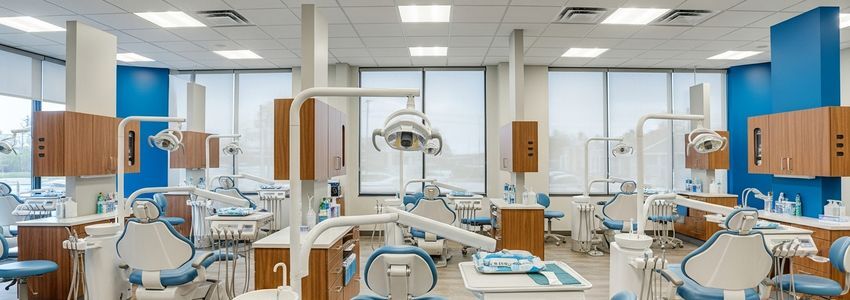
Dental Chairs and Operatory Units
The dental chair is the centerpiece of the operatory. It impacts patient comfort, practitioner ergonomics, and overall workflow efficiency. Modern chairs come with integrated delivery systems, lighting, and advanced positioning features.
- Function: Provides a comfortable and adjustable platform for patients during procedures. Integrated units house essential tools like handpieces, suction, and air/water syringes.
- Typical Cost: $3,000 to $15,000+ per chair, depending on features and brand.
- Financing Insight: When starting a new practice or adding an operatory, financing a complete package (chair, delivery system, light, cabinetry) is a common and efficient strategy. Lenders often bundle these items into a single dental equipment loan.
Dental X-ray and Imaging Machines
Diagnostic imaging is the cornerstone of modern dentistry, allowing for accurate diagnosis and treatment planning. This category has seen the most significant technological evolution.
- Intraoral X-ray Systems: Used for routine bitewings and periapical images. Digital sensors have largely replaced film, offering instant images and lower radiation. (Cost: $5,000 - $15,000 for the unit and sensor)
- Panoramic X-ray Machines: Capture a two-dimensional view of the entire mouth in a single image. Essential for orthodontic and surgical planning. (Cost: $20,000 - $50,000)
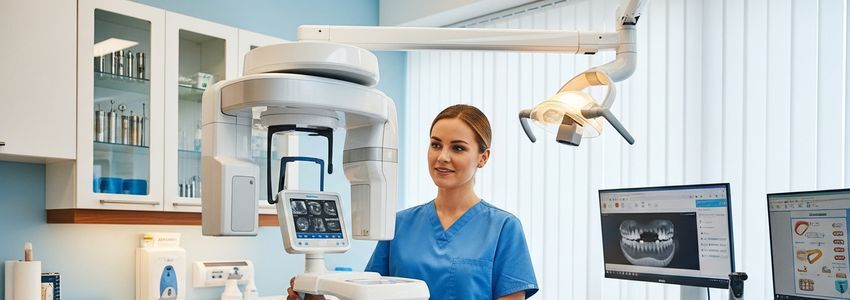
- Cone Beam Computed Tomography (CBCT) Systems: The gold standard for advanced imaging. These machines produce 3D images of teeth, soft tissues, nerves, and bone, critical for implant placement, endodontics, and oral surgery. (Cost: $60,000 - $150,000+)
- Financing Insight: Due to their high cost, CBCT scanners are one of the most frequently financed pieces of equipment. The return on investment-through new procedures like implant placements-often justifies the monthly payment.
Dental Sterilization Equipment
Proper instrument sterilization is non-negotiable for patient safety and regulatory compliance. An efficient sterilization center is vital for a busy practice.
- Autoclaves (Steam Sterilizers): Use high-pressure steam to kill bacteria, viruses, and spores on dental instruments.
- Ultrasonic Cleaners: Use sound waves to remove debris from instruments before sterilization.
- Instrument Washers/Disinfectors: Automate the cleaning and disinfection process, improving efficiency and staff safety.
- Typical Cost: A complete sterilization center can range from $10,000 to $40,000. Individual autoclaves typically cost $5,000 to $15,000.
- Financing Insight: Financing allows you to build a compliant and efficient sterilization workflow from the start, rather than piecing it together over time.
Digital Dentistry Systems
This category represents the cutting edge of dental technology, streamlining workflows and enhancing patient experience.
- Intraoral Scanners: Digital wands that capture precise 3D images of a patient's mouth, eliminating the need for physical impressions. They are used for crowns, bridges, implants, and clear aligners. (Cost: $15,000 - $40,000)
- CAD/CAM Milling Machines: Computer-Aided Design/Computer-Aided Manufacturing systems allow for the in-office creation of restorations like crowns, veneers, and inlays. This enables same-day dentistry, a major competitive advantage. (Cost: $80,000 - $130,000)
- 3D Printers: Used to create surgical guides, models, and night guards from digital scans. (Cost: $5,000 - $25,000)
- Financing Insight: Investing in a full digital workflow (scanner and mill) is a significant capital outlay. Financing makes it accessible, and the increased production and higher case acceptance can quickly offset the monthly cost.
Other Essential Practice Equipment
Beyond the major categories, financing can cover all the other necessary components of a functional dental office:
- Dental Handpieces: High-speed and low-speed drills. (Cost: $500 - $2,000 each)
- Air Compressors and Vacuum Systems: The "engine room" of the practice, powering handpieces and suction. (Cost: $8,000 - $25,000 for a system)
- Operatory Cabinetry and Delivery Systems: Custom cabinets for efficient storage and workflow. (Cost: Varies widely, can be $10,000+ per operatory)
- Practice Management Software & IT Hardware: Computers, servers, and software for scheduling, billing, and patient records.
Dental Equipment Financing: By the Numbers
Investing in a modern dental practice is a significant undertaking. Here's a look at the typical costs and the role of financing in the industry.
$500,000+
Average initial equipment investment for a new dental practice.
$10k - $70k
Typical cost range for a modern digital panoramic or CBCT X-ray system.
$3k - $15k
Cost per operatory for a new, fully-featured dental chair and delivery unit.
99%
Of dental practices utilize some form of financing for equipment or operations, according to the American Dental Association (ADA).
How Dental Equipment Financing Works: The Step-by-Step Process
Securing financing for your dental equipment is a straightforward process, especially when working with a lender experienced in the healthcare sector. Here is a typical step-by-step guide to navigating the journey from identifying a need to installing your new equipment.
- Identify Your Equipment Needs and Budget: First, determine exactly what equipment you need. Are you upgrading a single X-ray machine or outfitting three new operatories? Research different brands and models to understand their features and costs. Create a detailed list and establish a realistic budget for your acquisition.
- Obtain a Quote from a Vendor: Once you have selected the specific equipment, contact the manufacturer or a dental equipment supplier to get a formal quote. This document will include the total cost of the equipment, shipping, installation, and any applicable taxes. The lender will require this quote as part of your application.
- Complete a Financing Application: The next step is to apply for financing. With a lender like Crestmont Capital, this can often be done through a simple online application. You will need to provide basic information about your practice (name, address, time in business), personal details, and information about the equipment you wish to finance. For larger requests, you may also need to provide financial documents like bank statements or tax returns.
- Undergo Credit Review and Receive an Offer: The lender will review your application, which includes assessing your business and personal credit history, practice revenue, and other financial factors. Based on this review, they will extend a financing offer. This offer will detail the approved amount, interest rate, term length (e.g., 36, 60, or 84 months), and the fixed monthly payment.
- Review and Accept the Financing Terms: Carefully review the financing agreement. Ensure you understand all the terms and conditions. If everything aligns with your budget and goals, you will sign the documents electronically. This is your commitment to the financing plan.
- Funding and Vendor Payment: This is a key step that simplifies the process for you. Once the agreement is signed, the lender pays the equipment vendor directly for the full amount on the quote. You do not have to handle the large payment yourself. The lender coordinates with the vendor to ensure the transaction is seamless.
- Receive and Install Your Equipment: With payment handled, the vendor will ship and install your new equipment at your practice. You can put it to use immediately, generating revenue and improving patient care.
- Begin Monthly Payments: Your first payment to the lender will typically be due about 30 days after the equipment has been delivered and the vendor has been paid. You will then continue to make these fixed monthly payments for the duration of the agreed-upon term.
Types of Financing Available for Dentists
When it comes to funding your equipment, dentists have several distinct options. The best choice depends on your practice's financial goals, tax strategy, and desire for ownership. The three primary avenues are equipment loans, equipment leases, and SBA loans.
Dental Practice Equipment Loans
An equipment loan is a straightforward financing product. The lender provides you with the capital to purchase the equipment, and you repay the loan, plus interest, in fixed monthly installments over a set term. The equipment itself serves as collateral for the loan.
- Ownership: You own the equipment from day one. It is an asset on your practice's balance sheet.
- Best For: Dentists who want to own their equipment long-term and take advantage of depreciation and Section 179 tax deductions. It is ideal for equipment with a long useful life, like dental chairs, cabinetry, or compressors.
- Terms: Typically range from 2 to 7 years (24 to 84 months).
- Down Payment: Often, no down payment is required for well-qualified borrowers. Some lenders may ask for 10-20% down.
Equipment Leasing for Dentists
An equipment lease is essentially a long-term rental agreement. You pay a monthly fee to use the equipment for a specific period. At the end of the lease term, you have several options depending on the lease structure: purchase the equipment, return it, or renew the lease.
- $1 Buyout Lease (or Capital Lease): This functions very similarly to a loan. You make payments for the term, and at the end, you can purchase the equipment for a nominal amount, typically $1. This type of lease is often used when you intend to keep the equipment and still want to benefit from Section 179.
- Fair Market Value (FMV) Lease (or Operating Lease): This offers lower monthly payments because you are only paying for the equipment's depreciation during the lease term. At the end, you can buy it for its fair market value, return it and upgrade to newer technology, or extend the lease.
- Best For: Practices that want to regularly upgrade to the latest technology (like CBCT scanners or intraoral scanners) and prefer lower monthly payments. FMV leases are also attractive for those who want to treat the payment as a simple operating expense for tax purposes.
FINANCING TIP: An FMV lease is an excellent strategy for managing technology obsolescence. It allows you to use high-tech equipment during its peak performance years and then easily upgrade when a newer, better model becomes available.
SBA Loans
Loans guaranteed by the U.S. Small Business Administration (SBA) are another powerful option for financing dental equipment. These loans are not issued by the SBA itself, but by partner lenders like banks and financial institutions. The SBA guarantee reduces the lender's risk, often resulting in highly favorable terms.
- SBA 7(a) Loan: This is the most common SBA loan program. It is highly versatile and can be used for a variety of business purposes, including equipment purchases, working capital, and even practice acquisition.
- SBA 504 Loan: This program is designed for major fixed assets, such as real estate and long-term equipment. It involves two lenders-a bank and a Certified Development Company (CDC).
- Best For: Established practices with strong financials seeking the longest repayment terms and lowest interest rates available. They are excellent for large-scale equipment purchases or financing a complete office build-out.
- Terms: Can extend up to 10 years for equipment and 25 years for real estate.
- Downsides: The application process for SBA loans is typically more document-intensive and can take longer to fund compared to direct equipment loans or leases. For more information on requirements, visit the official SBA.gov website.
Explore All Your Financing Options
From fast equipment loans to long-term SBA financing, we have a solution for your practice. Find out what you qualify for today.
Apply Now ->Qualification Requirements for Dental Equipment Financing
Lenders evaluate several key factors to determine your eligibility for dental equipment financing and to set the terms of your offer. While requirements vary between lenders, most will assess the following criteria. Dentists are generally considered low-risk borrowers due to the stability of the profession, which often leads to high approval rates.
Credit Score
Both your personal and business credit scores are important. A strong personal credit score (typically 650 or higher) is often a primary factor, especially for newer practices. Lenders look for a history of responsible credit management and on-time payments. A higher credit score generally leads to better interest rates and more favorable terms.
Time in Business
The length of time your practice has been operating is a key indicator of stability. Most lenders prefer to work with practices that have been established for at least two years. However, specific programs are available for startup practices. New dentists, especially those purchasing an existing practice or with strong personal credit and a solid business plan, can often secure financing.
Annual Revenue
Lenders want to see that your practice generates sufficient revenue to comfortably handle the new monthly payment. They will typically review your recent business bank statements or tax returns to verify your cash flow. While there may not be a strict minimum revenue requirement, higher and more consistent revenues will improve your chances of approval for larger financing amounts.
Industry Experience
As a dentist, you are part of a highly respected and stable profession. Lenders view your professional credentials and experience as a significant positive factor. This industry-specific strength can often help offset weaknesses in other areas, such as a shorter time in business. According to the U.S. Census Bureau, healthcare is one of the most resilient sectors of the small business economy, further bolstering the confidence of lenders.
Down Payment
One of the major advantages of specialized equipment financing is that many programs require little to no down payment for well-qualified applicants. 100% financing is common, allowing you to acquire the equipment without any initial cash outlay. For startups or those with less-than-perfect credit, a down payment of 10-20% may be requested to reduce the lender's risk.
Comparison: Choosing the Right Financing Option
Navigating the different financing structures can be confusing. This table provides a clear, side-by-side comparison of the most common options for dental practices to help you decide which path is best for your specific needs.
| Feature | Dental Equipment Loan | Equipment Lease | SBA Loan | Working Capital Loan |
|---|---|---|---|---|
| Ownership | You own the equipment from the start. It's a business asset. | Lender owns the equipment. You have usage rights and a purchase option at the end. | You own the equipment from the start. | Not tied to a specific asset. You own whatever you purchase with the funds. |
| Down Payment | Often 0% for qualified buyers. Can be 10-20%. | Typically requires first and last month's payment upfront. | Generally requires 10-20%. | Varies, but often no specific down payment is required. |
| Rates | Competitive fixed rates. | Rates are implicit in the payment. FMV leases often have the lowest payment. | Typically the lowest rates available, often variable. | Higher rates due to being unsecured. |
| Term Length | 2 - 7 years | 2 - 5 years | Up to 10 years for equipment. | 6 months - 2 years |
| Best For | Long-life equipment you intend to keep. Maximizing Section 179 tax benefits. | Technology that becomes obsolete quickly (e.g., scanners, computers). Lowering monthly payments. | Large equipment packages, practice acquisitions, or build-outs where low rates and long terms are a priority. | Covering soft costs like training, marketing, or inventory associated with new equipment. |
How Crestmont Capital Streamlines Dental Equipment Financing
Choosing the right financing partner is just as important as choosing the right equipment. At Crestmont Capital, we specialize in providing tailored financing solutions for dentists, understanding the unique challenges and opportunities within your industry. We are recognized as the #1 business lender in the U.S. because we prioritize a seamless, transparent, and efficient funding process.
Here’s how we help dental practices thrive:
- Industry Expertise: We aren't generalist lenders. Our team understands the value of a CBCT scanner versus an autoclave. We know the revenue potential of CAD/CAM technology. This expertise allows us to structure financing that makes sense for your practice's specific goals and cash flow.
- Fast and Simple Application: We know your time is best spent with patients, not filling out paperwork. Our secure online application takes only a few minutes to complete. We provide fast approvals, often within hours, so you can move forward with your equipment purchase without delay.
- Flexible and Competitive Terms: We offer a wide range of financing products, including equipment loans and leases with terms from 24 to 84 months. We work to secure competitive rates and can often provide 100% financing, freeing up your capital for other needs.
- High Approval Rates for Dentists: We view dental practices as premium, low-risk businesses. Our high approval rates reflect our confidence in the dental industry, and we have programs designed for everyone from new graduates starting their first practice to seasoned veterans expanding their operations.
- Dedicated Financing Advisors: When you work with Crestmont Capital, you are assigned a dedicated advisor who will guide you through the entire process. They will help you compare loan versus lease options, understand the financial implications, and ensure you get the best possible structure for your needs. For more reading on this topic, see our comprehensive blog on financing your dental practice.
Real-World Scenarios: How Dentists Use Financing
To better illustrate how dental equipment financing works in practice, here are four common scenarios faced by dentists and how the right funding solution helps them achieve their goals.
Scenario 1: Dr. Evans, The Startup Practice
Situation: Dr. Evans is a recent dental school graduate opening her first practice from scratch. She needs to fully equip two operatories, a sterilization center, and a reception area. Her total equipment cost is estimated at $250,000, and she has limited capital after securing the lease on her office space.
Solution: Dr. Evans applies for a startup dental equipment loan. Despite having no business history, her strong personal credit and detailed business plan make her a good candidate. She secures a 7-year (84-month) equipment loan that covers 100% of the equipment cost. This allows her to preserve her remaining cash for working capital during the crucial first few months of operation. The fixed monthly payment is manageable and built into her financial projections.
Scenario 2: Dr. Chen, The Technology Upgrade
Situation: Dr. Chen has been running a successful practice for 15 years. He wants to offer same-day crowns to compete with a nearby clinic and improve patient convenience. This requires purchasing a $120,000 CAD/CAM system (intraoral scanner and milling machine). He is concerned that the technology will be outdated in 5 years.
Solution: Dr. Chen opts for a 5-year Fair Market Value (FMV) lease. This solution provides a lower monthly payment compared to a loan because he is not paying for the full value of the machine. At the end of the 5-year term, he can return the equipment and lease the newest model, ensuring his practice always has the latest technology. The lease payments are treated as an operating expense, simplifying his accounting.
Scenario 3: Dr. Rodriguez, The Expansion
Situation: Dr. Rodriguez's practice is growing rapidly, and she is expanding into an adjacent office suite. She needs to equip three new operatories and upgrade her aging panoramic X-ray to a modern CBCT unit. The total cost of the project is $350,000.
Solution: Given the large scale of the investment and her practice's strong financial history, Dr. Rodriguez pursues an SBA 7(a) loan. While the application process is more detailed, she is approved for a 10-year term at a very low interest rate. The extended term results in a significantly lower monthly payment than a standard equipment loan, making the expansion's impact on her monthly cash flow very manageable.
Scenario 4: Dr. Williams, The Emergency Replacement
Situation: The primary autoclave in Dr. Williams's busy 5-operatory practice fails unexpectedly on a Monday morning. Repair is not cost-effective, and without it, his practice cannot function safely. He needs a replacement immediately, which costs $12,000.
Solution: Dr. Williams needs speed. He contacts Crestmont Capital and completes a simple one-page application online. Because the amount is relatively small and his practice is well-established, he is approved within two hours. The funds are wired directly to the equipment supplier the same day. The new autoclave is shipped overnight and installed by Tuesday afternoon, resulting in minimal downtime for his practice. He chose a 36-month equipment loan to pay it off quickly.
Next Steps: Securing Your Dental Equipment Funding
You understand the benefits, you know the options, and you have identified the equipment that will take your practice to the next level. Now is the time to take action. Securing the financing you need is a clear and simple process designed to get you funded quickly so you can focus on what you do best: caring for your patients.
Here’s your plan:
- Gather Your Information: Have your equipment quote from your chosen vendor ready. You should also have basic information about your practice, such as your business name, address, and tax ID number.
- Complete the Application: The most efficient way to start is by filling out a secure online application. It is fast, easy, and can be done at your convenience.
- Speak with an Advisor: A dedicated financing expert will contact you to discuss your application, understand your specific needs, and present you with the best available financing options, whether it is a loan or a lease.
Investing in your practice's technology is an investment in its future success. Do not let a large upfront cost stand in the way of growth, efficiency, and superior patient care.
Ready to Upgrade Your Practice?
Our simple application takes just minutes. Get a no-obligation quote and see how affordable your new equipment can be.
Apply Now ->Conclusion
In the dynamic and competitive field of dentistry, staying current with technology is not a luxury-it is a necessity. Modern equipment enhances diagnostic accuracy, improves clinical outcomes, boosts operational efficiency, and elevates the patient experience. Dental equipment financing is the strategic key that unlocks these benefits without compromising your practice's financial health. By converting a prohibitive capital expenditure into a predictable monthly payment, you can preserve your cash flow, leverage powerful tax advantages, and equip your practice for sustainable, long-term growth. Whether you are launching a new clinic, expanding your services, or replacing outdated tools, partnering with a financing expert like Crestmont Capital provides a clear and accessible path to achieving your vision of a state-of-the-art dental practice.
Frequently Asked Questions
What is dental equipment financing?
Dental equipment financing is a type of business loan or lease used specifically to purchase or lease equipment for a dental practice. It allows dentists to acquire necessary technology like chairs, X-ray machines, and sterilization units by making regular payments over time instead of paying the full cost upfront.
How does the financing process work?
The process typically involves getting a quote from an equipment vendor, submitting a simple application to a lender like Crestmont Capital, receiving a financing offer (including rate and term), and signing the agreement. The lender then pays the vendor directly, and the equipment is delivered to your practice. Your payments begin about 30 days later.
Who qualifies for dental equipment financing?
Both new and established dental practices can qualify. Lenders typically look at the dentist's personal credit score (often 650+), time in business, and practice revenue. Dentists are considered strong applicants, and specialized programs exist even for startups and recent graduates.
What are typical interest rates and terms?
Interest rates are competitive and depend on your credit profile, time in business, and the financing term. Terms generally range from 24 to 84 months (2 to 7 years). Longer terms are available through programs like SBA loans. A stronger financial profile will result in lower rates.
Is a down payment required?
For well-qualified, established practices, 100% financing with no down payment is very common. Some situations, such as for startups or those with challenged credit, may require a down payment of 10% to 20% to secure the financing.
Can I finance dental chairs?
Yes, dental chair financing is one of the most common uses of equipment financing. You can finance a single chair or a complete operatory package, including the chair, delivery system, lighting, and cabinetry, often bundled into one convenient monthly payment.
Is financing available for dental X-ray machines?
Absolutely. Dental X-ray machine financing covers all types of imaging equipment, from basic intraoral units to advanced panoramic and CBCT 3D imaging systems. Due to their high cost, financing is the most popular way to acquire these essential diagnostic tools.
Can I finance dental sterilization equipment?
Yes, you can finance all components of a sterilization center, including autoclaves, ultrasonic cleaners, and instrument washers. Financing ensures your practice meets all safety and compliance standards without a large cash outlay.
Can I finance used or refurbished dental equipment?
Yes, most lenders, including Crestmont Capital, offer financing for both new and used equipment. Financing used equipment can be a cost-effective way to get high-quality tools for your practice, especially if you are on a tighter budget.
What credit score do I need for dental equipment financing?
While requirements vary, a personal credit score of 650 or higher is generally preferred for the best rates and terms. However, lenders who specialize in the dental industry often have programs for a wider range of credit profiles, so it is always worth applying.
How long does it take to get approved and funded?
The process is very fast for standard equipment financing. Approval can often happen within a few hours of submitting an application. Funding can occur in as little as 24-48 hours, allowing you to acquire your equipment with minimal delay.
Should I lease or buy my dental equipment?
This depends on your goals. A loan (buying) is great for long-life equipment you want to own and depreciate for tax purposes. A lease is ideal for high-tech equipment that you plan to upgrade every few years, and it often comes with a lower monthly payment.
Are SBA loans a good option for dentists?
SBA loans can be an excellent option, offering very low rates and long repayment terms (up to 10 years for equipment). They are best for large-scale projects like a full practice build-out or major expansion. The tradeoff is a longer, more document-intensive application process compared to direct lenders.
Can I get financing for a new startup dental practice?
Yes. Many lenders have specific financing programs designed for startup dental practices. They understand the initial costs and will often base their decision on the dentist's personal credit strength, a solid business plan, and industry experience.
Why should I choose Crestmont Capital for my financing needs?
Crestmont Capital is the #1 business lender in the U.S., specializing in the dental industry. We offer a fast, simple application, high approval rates, flexible terms, and dedicated advisors who understand your practice's needs. We work to make the financing process seamless so you can focus on patient care.
Disclaimer: The information provided in this article is for general educational purposes only and is not financial, legal, or tax advice. Funding terms, qualifications, and product availability may vary and are subject to change without notice. Crestmont Capital does not guarantee approval, rates, or specific outcomes. For personalized information about your business funding options, contact our team directly.