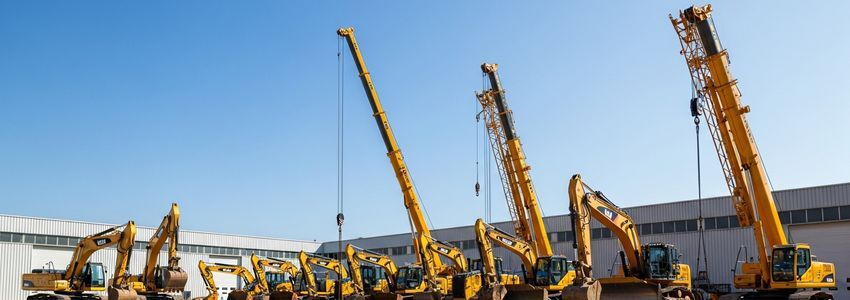
Engineering equipment rental companies sit at the heart of modern infrastructure. Without access to excavators, cranes, bulldozers, drilling rigs, and specialized tools, construction projects grind to a halt. But the capital required to build and maintain a competitive equipment fleet is enormous - and that's where engineering equipment rental business loans become the key to sustainable growth.
Whether you're looking to expand your fleet, upgrade aging machinery, cover operating costs during slow seasons, or enter new service markets, the right financing solution can mean the difference between winning contracts and watching competitors take them. This guide covers every financing option available to engineering equipment rental companies, what lenders look for, and how to position your business for approval.
In This Article
- What Are Engineering Equipment Rental Business Loans?
- Why Financing Is Critical for Equipment Rental Companies
- Types of Business Loans for Equipment Rental Companies
- How the Loan Process Works
- Engineering Equipment Rental Industry: Key Numbers
- What Lenders Look For
- Loan Options Compared
- How Crestmont Capital Helps
- Real-World Scenarios
- Frequently Asked Questions
- How to Get Started
What Are Engineering Equipment Rental Business Loans?
Engineering equipment rental business loans are commercial financing products specifically designed for companies that rent heavy machinery, construction equipment, and specialized engineering tools to contractors, municipalities, and industrial firms. These loans provide capital to purchase fleet assets, manage working capital gaps, fund facility expansions, or cover operational needs during off-peak periods.
Unlike standard small business loans, financing for equipment rental companies often takes into account the value of the rental fleet itself as collateral - which can make qualification significantly more achievable compared to service businesses with few tangible assets. Lenders evaluate both the financial health of the business and the market value of the equipment it owns and rents.
Engineering equipment rental businesses typically need financing for one or more of these purposes: acquiring new machinery to meet growing demand, replacing equipment that has reached the end of its useful life, expanding into new geographic markets, hiring additional staff, marketing to attract larger commercial clients, or bridging cash flow gaps during seasonal slowdowns.
Ready to Finance Your Equipment Rental Fleet?
Get fast, flexible financing from the #1 business lender in the U.S. Pre-qualify in minutes with no obligation.
Apply Now →Why Financing Is Critical for Engineering Equipment Rental Companies
Running an engineering equipment rental business requires massive upfront capital. A single excavator can cost $100,000 to $500,000. A large crane can exceed $1 million. Maintaining a competitive fleet that can handle the full spectrum of client requests - from small excavation jobs to major infrastructure projects - requires millions of dollars of asset investment. Very few rental companies can self-fund all of this growth from operating cash flow alone.
There's also the ongoing challenge of fleet depreciation. Heavy equipment wears down with use, and older machinery becomes less reliable, more expensive to maintain, and less attractive to clients who want modern, efficient tools. Without access to financing, many equipment rental companies fall behind on fleet renewal and lose contracts to better-equipped competitors.
Seasonality creates additional financial pressure. Construction and engineering projects often slow during winter months in colder climates, reducing rental revenue while fixed costs like insurance, loan payments, storage, and maintenance continue. Business loans - particularly lines of credit - help rental companies manage these seasonal cash flow gaps without selling assets or defaulting on obligations.
Industry Insight: According to the American Rental Association, the equipment rental industry in the United States generates over $60 billion in annual revenue. Companies that invest strategically in fleet growth and modernization consistently outperform competitors that rely solely on aged equipment.
Market opportunities are also time-sensitive. When a large infrastructure contract becomes available in your region, winning that business often requires demonstrating fleet capacity before the bid deadline. Rental companies with access to fast capital can acquire the necessary equipment to qualify for large bids - those without financing must pass on opportunities that could transform their business.
Types of Business Loans for Engineering Equipment Rental Companies
Engineering equipment rental businesses have access to a wide range of commercial financing products. Understanding the strengths and limitations of each helps you choose the right tool for your specific situation.
Equipment Financing Loans
Equipment financing is the most common loan type for equipment rental companies. This product is specifically designed for purchasing machinery and heavy equipment. The equipment itself serves as collateral, which typically makes these loans easier to qualify for and often results in lower interest rates than unsecured loans. Terms generally range from 2 to 7 years, aligned with the equipment's useful life.
For an engineering equipment rental company, equipment financing can be used to purchase excavators, cranes, bulldozers, aerial lifts, concrete equipment, generators, and virtually any other rental inventory asset. Because lenders are secured by the asset value, they often approve financing for 80% to 100% of the equipment purchase price.
Working Capital Loans
Working capital loans provide immediate cash to cover operational expenses - payroll, insurance, maintenance, marketing, and other day-to-day costs. These loans are typically unsecured and funded quickly, making them ideal for bridging seasonal cash flow gaps or capitalizing on unexpected business opportunities.
For rental companies experiencing rapid growth, working capital loans can fund the operational side of the business while equipment financing handles fleet expansion. Combined, these two loan types provide a comprehensive capital structure.
Business Lines of Credit
A business line of credit provides flexible, revolving access to capital up to an approved limit. Unlike a traditional loan, you draw only what you need and repay it over time - interest accrues only on the outstanding balance. Lines of credit are particularly valuable for engineering equipment rental companies that face unpredictable seasonal revenue patterns.
Use a line of credit to cover insurance renewals, unexpected repair costs, staff wages during slow months, or as a deposit bridge when a large equipment purchase opportunity arises. The revolving nature means funds replenish as you repay, giving you permanent liquidity.
SBA Loans
Small Business Administration (SBA) loans offer some of the most favorable terms available to small businesses - low interest rates, long repayment periods (up to 25 years for real estate, 10 years for equipment), and competitive qualification criteria. The SBA 7(a) loan and SBA 504 loan are particularly well-suited for engineering equipment rental companies looking to make significant fleet investments or real estate purchases.
The tradeoff is time - SBA loans typically take 30 to 90 days to close, which makes them unsuitable for urgent capital needs. However, for planned, strategic purchases, an SBA loan can save a rental company hundreds of thousands of dollars in interest costs compared to faster alternative financing.
Commercial Real Estate Loans
Many equipment rental businesses operate from dedicated storage and maintenance facilities. Commercial real estate loans enable rental companies to purchase these facilities rather than paying rent indefinitely. Owning your facility eliminates rent risk, builds equity, and can actually reduce monthly costs compared to leasing over the long term.
Revenue-Based Financing
Revenue-based financing (RBF) provides capital in exchange for a percentage of future revenue. Repayments flex with your cash flow - you pay more when revenue is high and less when business slows. This structure is ideal for engineering equipment rental companies with strong seasonal fluctuations. There is no fixed monthly payment that creates hardship during slow winter months.
By the Numbers
Engineering Equipment Rental Industry - Key Statistics
$60B+
U.S. equipment rental industry annual revenue
4.5%
Projected annual growth rate through 2027
$500K
Typical cost to add a large crane to a rental fleet
65%
Of construction companies prefer renting over buying equipment
How the Loan Process Works for Equipment Rental Companies
Understanding the lending process helps you prepare efficiently and avoid delays. Here is a step-by-step overview of how engineering equipment rental companies typically secure business financing.
Quick Guide
How Equipment Rental Business Loans Work - At a Glance
Determine exactly what you need: fleet purchase, working capital, facility, or operational bridge. This determines which loan product fits best.
Compile 3-6 months of bank statements, business tax returns (2-3 years), financial statements, and equipment appraisals if applicable.
Apply with a lender that specializes in construction and equipment industries. Specialized lenders understand rental business models and approve more efficiently.
Compare loan terms, interest rates, and repayment structures. Accept the best offer and fund typically within 1-5 business days for alternative lenders or 30-90 days for SBA.

What Lenders Look For in Equipment Rental Business Loan Applications
Understanding lender evaluation criteria helps you prepare a stronger application and increases your probability of approval at favorable terms.
Annual Revenue
Most commercial lenders require a minimum of $100,000 to $250,000 in annual revenue for working capital products. Equipment financing lenders often have lower revenue requirements since the equipment itself secures the loan. Rental companies with strong, documented rental income are viewed very favorably.
Time in Business
Traditional lenders typically require at least 2 years of operating history. Alternative lenders and some equipment financing programs are available to businesses operating for as little as 6 months, though rates will be higher for newer businesses. The longer your track record, the better your terms.
Credit Profile
Your personal credit score matters - particularly for business owners of companies that haven't yet established a strong business credit profile. Most conventional lenders prefer scores of 680 or higher. Alternative lenders can work with scores as low as 500-550, particularly when the equipment itself provides strong collateral.
Fleet and Asset Value
For equipment rental companies, the market value of your existing fleet is a significant factor. Lenders view established rental fleets with appraised values as security against default. A company with $2 million in equipment assets has a much stronger collateral position than a service business with no tangible assets.
Cash Flow Consistency
Lenders examine your bank statements to verify consistent deposit activity and positive cash flow. They want to see that your rental income covers your existing obligations and the proposed new loan payment. Companies with diversified client bases - serving multiple contractors, municipalities, and industries - are considered lower risk than those dependent on one or two clients.
Pro Tip: Before applying for any business loan, pull your business credit report from Dun & Bradstreet, Experian Business, and Equifax Business. Errors on these reports can reduce your approval odds and increase your rate. Give yourself 30-60 days to dispute any inaccuracies before submitting a major loan application.
Loan Options Compared: Which Is Right for Your Equipment Rental Business?
| Loan Type | Best For | Funding Speed | Typical Terms | Credit Required |
|---|---|---|---|---|
| Equipment Financing | Fleet acquisition | 2-7 days | 2-7 years | 580+ |
| Working Capital Loan | Operations, payroll, seasonal gaps | 24-72 hours | 3-18 months | 500+ |
| Business Line of Credit | Flexible revolving capital | 1-5 days | Revolving | 600+ |
| SBA 7(a) Loan | Large purchases, lowest rates | 30-90 days | Up to 10 years | 650+ |
| Revenue-Based Financing | Seasonal businesses, flexible repayment | 24-72 hours | Flexible | 500+ |
| Commercial Real Estate Loan | Yard, warehouse, service facility | 30-60 days | 10-25 years | 650+ |
How Crestmont Capital Helps Engineering Equipment Rental Companies
Crestmont Capital is rated the #1 business lender in the United States, and we specialize in financing for capital-intensive industries - including engineering equipment rental and construction. We understand the unique financial dynamics of rental businesses: the seasonal cash flow patterns, the asset-heavy balance sheets, and the capital requirements that come with fleet growth and maintenance.
Our team works with equipment rental businesses of all sizes - from single-owner operators with a handful of machines to mid-size rental yards with multi-million dollar fleets. We offer equipment financing to help you acquire the specific machinery your clients demand, working capital loans to keep operations smooth, and business lines of credit for maximum financial flexibility.
We've helped construction equipment rental companies secure financing to win large municipal contracts, expand into adjacent service markets, and survive economic downturns without liquidating core assets. Our advisors understand that your equipment is your business - and they work to structure loans that protect your fleet while giving you the capital you need to grow.
For companies considering large, strategic investments - a new facility, a major fleet expansion, or a long-term equipment package - our team can also explore SBA loan options that offer the lowest available rates and the longest repayment terms. And for companies dealing with complex capital structures or significant growth plans, our commercial financing solutions provide institutional-grade capital from a lender that knows your industry.
Expand Your Rental Fleet Today
Crestmont Capital offers same-day approvals for equipment rental businesses. Tell us what you need - we'll find the right financing structure.
Get Approved →Real-World Scenarios: How Equipment Rental Companies Use Business Loans
Understanding how business loans work in practice helps you identify the financing strategy that best matches your situation.
Scenario 1: Winning a Large Municipal Contract
A mid-size engineering equipment rental company in Ohio was invited to bid on a two-year municipal infrastructure contract worth $4 million annually. The problem: the contract required a specific fleet of specialized excavating and grading equipment the company didn't own. With standard purchase time of 8-12 weeks for delivery, and a bid deadline in 30 days, the owner needed to demonstrate fleet capacity immediately. Crestmont Capital provided a $900,000 equipment financing line in five business days. The company submitted its bid, won the contract, and the loan was fully serviced within 18 months from rental revenue generated by that single contract.
Scenario 2: Surviving a Seasonal Cash Flow Gap
A construction equipment rental yard in Minnesota faced a regular challenge: rental revenue dropped by 60% from November through February as outdoor construction projects paused. Despite strong annual profitability, the company struggled to cover fixed costs - insurance premiums, warehouse lease, staff wages, and loan payments - during those four months each year. A $250,000 revolving business line of credit from Crestmont Capital gave the owner year-round financial stability. The line was drawn down during winter months and repaid in full each spring as rental activity resumed.
Scenario 3: Fleet Modernization
An engineering equipment rental company in Texas had an aging fleet averaging 12 years old. Maintenance costs were consuming 22% of rental revenue - significantly above the healthy benchmark of 8-12%. Clients were increasingly requesting newer models with better fuel efficiency and GPS tracking. The owner secured $1.8 million in equipment financing to replace 60% of the fleet with new machinery. Maintenance costs dropped to 9% of revenue within 18 months, and client satisfaction scores improved. The new fleet also commanded higher daily rental rates, improving overall profitability.
Scenario 4: Geographic Expansion
A California-based equipment rental company with strong regional market share saw an opportunity to open a second yard 90 miles away to serve a new industrial corridor. The expansion required $500,000 for facility improvements, $750,000 for a starter fleet of 15 machines, and $150,000 in working capital. Crestmont Capital structured a multi-product solution: an equipment financing package for the fleet, a commercial real estate loan for the facility, and a working capital line for operational costs. The second yard was profitable within eight months of opening.
Scenario 5: Emergency Repair Coverage
A crane rental company in Florida experienced a catastrophic hydraulic system failure on its largest piece of equipment. Repair estimate: $185,000. The crane was generating $28,000 per month in rental revenue - offline, it was costing the company nearly that much per month in lost income while the repair was pending. A rapid working capital loan from an alternative lender provided the repair funds within 48 hours, and the crane was back in service within three weeks. Total cost of the loan was far less than the revenue loss from an extended downtime.
Scenario 6: Hiring a Service Team
A growing equipment rental company in the Southeast was handling all equipment maintenance and delivery with an outsourced team, which was creating scheduling delays and quality inconsistencies that were frustrating clients. The owner wanted to hire five full-time staff: two mechanics, two delivery drivers, and a dispatch coordinator. A $200,000 working capital loan funded the first six months of expanded payroll while the in-house team was trained and integrated. Within nine months, the company reduced maintenance costs, improved delivery reliability, and saw a measurable increase in customer retention and repeat bookings.
Frequently Asked Questions
How to Get Started
Complete our quick application at offers.crestmontcapital.com/apply-now - takes just a few minutes and requires no commitment.
A Crestmont Capital advisor will review your equipment rental business needs and match you with the right financing product - equipment financing, working capital, SBA, or a custom combination.
Receive your funds and put them to work immediately - purchase that excavator, cover your winter payroll, or win the contract your competitors can't finance. Often funded within 24-72 hours of approval.
Conclusion
Engineering equipment rental business loans are not just about buying machinery - they are the strategic capital that allows rental companies to compete, grow, and win contracts in one of America's most capital-intensive industries. Whether you need to expand your fleet to qualify for a major bid, manage seasonal cash flow with a flexible line of credit, or modernize aging machinery that is eating into your margins, the right financing product can transform your business trajectory.
The engineering equipment rental industry continues to grow as infrastructure investment increases and construction companies increasingly prefer the flexibility of renting over buying. The rental companies positioned to capture this growth will be those with strong capital access, modern fleets, and the financial agility to move fast when opportunities arise. Crestmont Capital is here to help you secure that position.
Ready to get started with engineering equipment rental business loans? Apply today and speak with a specialist who understands your industry.
Disclaimer: The information provided in this article is for general educational purposes only and is not financial, legal, or tax advice. Funding terms, qualifications, and product availability may vary and are subject to change without notice. Crestmont Capital does not guarantee approval, rates, or specific outcomes. For personalized information about your business funding options, contact our team directly.