
The foundation repair industry sits at the intersection of housing, construction, and consumer finance, and the numbers behind it tell a story that matters to homeowners, real estate investors, and contractors alike. Whether you are evaluating a property with visible settling, budgeting for a repair project, or running a foundation repair company, current foundation repair statistics give you the context needed to make confident decisions. This 2026 roundup collects the most important data on market size, repair costs, damage causes, regional patterns, and industry outlook in one place.
Every figure below is drawn from public data, industry surveys, and widely cited market estimates. Where numbers represent estimates rather than exact counts, we say so plainly. The goal is a practical, honest reference you can actually use.
In This Article
- The Foundation Repair Industry in 2026
- Market Size and Growth Statistics
- Foundation Repair Cost Statistics
- Common Causes of Foundation Damage
- Regional Statistics
- Contractor and Industry Statistics
- Impact on Property Value
- What the Data Means for Contractors
- How Crestmont Capital Helps
- Real-World Scenarios
- FAQ
- How to Get Started
The Foundation Repair Industry in 2026
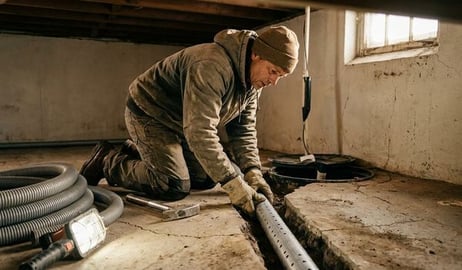
Foundation repair is a specialized segment of the construction and home services economy focused on diagnosing and correcting problems with residential and commercial building foundations. Work ranges from minor crack injection and slab leveling to major structural underpinning, pier installation, wall stabilization, and full drainage correction. The industry serves two distinct customer bases: homeowners protecting their largest asset, and commercial property owners maintaining structural integrity.
Several forces make this industry unusually resilient. First, foundations age regardless of economic cycles. A slab poured in 1985 does not care whether the stock market is up or down. Second, the United States has an enormous and aging housing stock. According to the U.S. Census Bureau, the country has more than 140 million housing units, and the median age of owner-occupied homes has climbed past 40 years. Older homes mean older foundations, and older foundations mean steady demand for repair work.
Third, soil and climate conditions across much of the country actively work against foundations. Expansive clay soils, drought cycles, freeze-thaw patterns, and intense rainfall events all create the ground movement that cracks slabs and shifts piers. These are structural forces of nature, not trends that fade. For contractors, that translates into a durable, need-based market. For property owners, it means foundation problems are a matter of when, not if, in many regions.
Foundation Repair Market Size and Growth Statistics
How large is the foundation repair market in the United States? Industry estimates consistently place annual revenue for dedicated foundation repair services at more than $4 billion, with some analyses putting the figure closer to $5 billion once waterproofing and drainage work are included. The broader concrete and foundation contracting sector, which includes new construction work, is dramatically larger, generating tens of billions of dollars annually across residential and commercial projects.
Key market size statistics for 2026:
- The U.S. foundation repair services market is estimated at more than $4 billion in annual revenue, according to industry market research.
- Analysts project steady annual growth in the low-to-mid single digits through the end of the decade, roughly tracking with overall home improvement spending.
- The U.S. housing stock exceeds 140 million housing units, per Census Bureau data, and roughly two-thirds are owner-occupied.
- The median age of an owner-occupied American home is now over 40 years, meaning tens of millions of foundations are well past their original design expectations.
- Private residential construction spending runs at an annualized rate in the hundreds of billions of dollars, per the Census Bureau's construction spending reports, and repair and improvement work represents a growing share of that activity.
- Industry surveys suggest roughly one in four U.S. homes will experience some form of foundation distress during its lifetime.
- In regions with expansive clay soils, distress rates climb dramatically higher, with some estimates suggesting up to 60 percent of homes built on these soils will experience noticeable foundation movement.
Key Stat: Expansive soils cause an estimated $2.3 billion or more in property damage across the United States every year. By some industry accounts, that exceeds the combined annual damage from floods, hurricanes, and earthquakes, making soil movement one of the costliest and least insured natural hazards in the country.
Growth is not evenly distributed. Sun Belt states with expansive soils, rapid population growth, and aging suburban housing built during the 1970s through 1990s construction booms see the strongest demand. Meanwhile, climate volatility has become a genuine demand driver: drought years shrink clay soils away from foundations, and the heavy rains that follow re-saturate them, creating a damaging swell-shrink cycle that shows up clearly in contractor call volumes.
Foundation Repair Cost Statistics
Cost is the first thing most homeowners ask about, and the data shows an enormous spread depending on the problem and the repair method. Here is what the numbers look like heading into 2026:
- The typical homeowner pays between $2,200 and $8,100 for foundation repair, with a national average near $5,000, according to cost guides published by outlets such as Forbes Home.
- Minor crack repair with epoxy or polyurethane injection runs $250 to $800 per crack.
- Mudjacking, the traditional method of lifting sunken slabs with cement slurry, typically costs $500 to $1,300 per project, or roughly $3 to $6 per square foot.
- Polyurethane foam injection (polyjacking) costs more, generally $5 to $25 per square foot, but cures faster and resists water intrusion better than cement slurry.
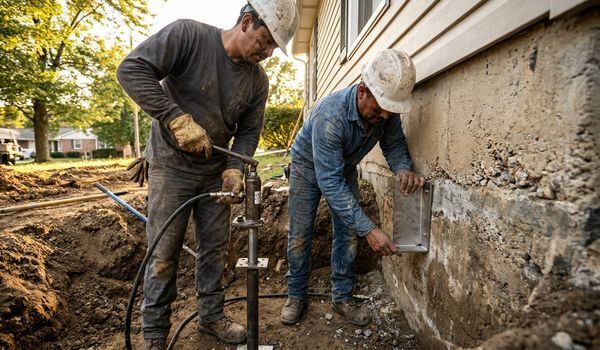
- Steel push piers and helical piers, the standard solutions for settling foundations, run $1,000 to $3,000 per pier, and a typical home needs 6 to 12 piers. Total project costs of $10,000 to $30,000 are common for moderate to severe settlement.
- Wall anchors for bowing basement walls cost $400 to $600 per anchor, with most walls requiring several anchors spaced along their length.
- Interior or exterior waterproofing and drainage correction runs $2,000 to $7,000 for typical residential projects, and French drain installations can reach $10,000 or more on larger properties.
- A professional foundation inspection costs $300 to $800, though many repair contractors offer free inspections. Independent structural engineer reports carry the most credibility in real estate transactions.
- Full foundation replacement, the rarest and most extreme intervention, ranges from $20,000 to more than $100,000 depending on home size and foundation type.
Costs have also moved meaningfully higher in recent years. Material inflation, labor shortages, and fuel costs pushed foundation repair prices up an estimated 15 to 20 percent between 2020 and 2025, and prices have largely stayed at those elevated levels rather than retreating.
| Repair Method | Typical Cost Range | Best For |
|---|---|---|
| Crack injection | $250 to $800 per crack | Non-structural shrinkage and settling cracks |
| Mudjacking | $500 to $1,300 | Sunken driveways, patios, and garage slabs |
| Polyjacking (foam) | $5 to $25 per square foot | Slab lifting where moisture is a concern |
| Steel push piers | $1,000 to $3,000 per pier | Settling foundations on heavier structures |
| Helical piers | $1,500 to $3,500 per pier | Lighter structures and new construction support |
| Wall anchors | $400 to $600 per anchor | Bowing or leaning basement walls |
| Waterproofing and drainage | $2,000 to $7,000 | Moisture intrusion and hydrostatic pressure |
| Full foundation replacement | $20,000 to $100,000+ | Severe structural failure beyond repair |
Run a Foundation Repair Business?
From piering rigs to work trucks, Crestmont Capital funds the equipment and working capital foundation contractors need. Apply in minutes.
Apply Now →Common Causes of Foundation Damage: The Data
Understanding why foundations fail explains where the repair demand comes from. The statistics point to a clear hierarchy of causes:
Water and moisture imbalance lead the list. Industry surveys consistently attribute the majority of foundation problems, by some estimates around 60 percent, to water-related issues. That includes poor surface drainage, negative grading that slopes toward the house, clogged or missing gutters, downspouts that discharge at the foundation line, and plumbing leaks beneath slabs. Water is the trigger that makes almost every other soil problem worse.
Expansive clay soils are the single biggest structural culprit. Certain clay minerals absorb water and swell, then shrink dramatically when they dry. The American Society of Civil Engineers has estimated that expansive soils cause billions of dollars in damage to U.S. structures annually, more than floods, hurricanes, and earthquakes combined in many years. Roughly 60 percent of homes built on expansive soils experience some level of distress, and damage claims related to soil movement are largely excluded from standard homeowners insurance policies.
Poor construction and soil preparation remain persistent contributors. Foundations poured over inadequately compacted fill soil settle unevenly. Industry inspectors report that a meaningful share of foundation problems in homes less than 20 years old trace back to construction-era soil prep failures rather than environmental conditions.
Drought is an underappreciated demand driver. During major drought years, clay soils shrink and pull away from foundations, causing sudden settlement. After the severe Texas drought of 2011 and again during the 2022 drought, foundation repair companies across the state reported call volume surges of 30 to 50 percent. The pattern repeats wherever extended dry periods meet shrink-swell soils.
Tree roots, freeze-thaw cycles, and seismic activity round out the list. Mature trees within 20 feet of a foundation can extract enough soil moisture to cause localized settlement. In northern states, freeze-thaw cycles drive frost heave. In California and the Pacific Northwest, seismic events add episodic demand on top of chronic soil issues.
Pro Tip: Insurance industry data suggests 98 percent of basements will experience some form of water damage during their lifetime. Since moisture is the leading driver of foundation problems, proper drainage correction is often the highest-return investment a property owner can make, frequently preventing repairs that would cost five to ten times more.
By the Numbers
Foundation Repair in 2026: Key Statistics
$4B+
Estimated annual U.S. foundation repair market revenue
~$5,000
National average cost of a foundation repair project
1 in 4
U.S. homes that will experience foundation distress
$2.3B+
Annual U.S. property damage attributed to expansive soils
Regional Foundation Repair Statistics
Foundation problems are not evenly distributed across the map. Soil chemistry, climate, and housing age combine to create clear regional hotspots.
Texas is the undisputed capital of foundation repair. Much of the state sits on expansive clay soils, including the notorious Houston black clay and the Dallas-Fort Worth region's Eagle Ford shale formations. Combine that soil with a housing stock built heavily on slab-on-grade construction, extreme summer heat, and periodic severe droughts, and you get the highest per-capita foundation repair demand in the country. Houston, Dallas, San Antonio, and Austin all support dense ecosystems of foundation repair contractors, and drought years reliably produce statewide surges in repair calls.
The broader South and Southwest face similar conditions. Oklahoma, Louisiana, Arkansas, Mississippi, Alabama, and Arizona all have significant expansive soil exposure. Oklahoma City and Tulsa, in particular, have foundation repair markets that rival Texas metros on a per-capita basis.
The Midwest battles freeze-thaw and drainage issues. States like Illinois, Missouri, Kansas, and Nebraska see foundation damage driven by frost heave, spring saturation, and basement hydrostatic pressure. Basement foundations dominate here, so wall bowing and water intrusion claims are more common than slab settlement.
California combines seismic risk with localized expansive soils. While earthquake retrofits dominate headlines, much of inland California, including the Central Valley and parts of the Bay Area, sits on expansive clays. Post-drought years reliably produce settlement waves.
The Southeast adds high rainfall to the equation. Georgia, Tennessee, and the Carolinas mix clay-heavy soils with intense rain events, making drainage correction a core service line for regional contractors.
For contractors, the practical takeaway is that demand follows soil maps more closely than population maps. A mid-size metro with the wrong soil can support more foundation repair work than a larger metro with stable ground.
Foundation Repair Contractor and Industry Statistics
The supply side of the industry tells its own story. Foundation repair is a classic fragmented home services market: thousands of small and mid-size businesses, a handful of national franchise brands, and very little market concentration.
Key industry statistics for 2026:
- The United States is home to thousands of dedicated foundation repair businesses, plus tens of thousands of concrete and masonry contractors who perform related work. Industry databases count foundation repair and waterproofing establishments in the mid-thousands nationally.
- The sector is overwhelmingly made up of small businesses. According to the U.S. Small Business Administration's Office of Advocacy, the country has more than 33 million small businesses, and construction consistently ranks among the largest small business sectors by firm count.
- The typical foundation repair project carries a average ticket of $5,000 to $10,000, with commercial and multi-structure projects running far higher.
- Construction faces a well-documented skilled labor shortage. Industry associations have estimated the sector needs hundreds of thousands of additional workers to meet demand, and specialty trades like foundation piering crews are among the hardest positions to fill.
- Foundation repair is a need-based, non-discretionary purchase, which makes the industry historically recession-resistant compared to discretionary remodeling.
- Most residential foundation repairs are completed in one to three days, though pier installation projects often run a full week.
- Contractor demand is highly seasonal and weather-correlated, spiking after droughts, floods, and freeze-thaw winters.
The equipment side of the business represents a serious capital commitment. A professional piering crew typically runs hydraulic rams and power packs, pier material inventory, skid steers or mini excavators, concrete breakers, and one or more crew trucks. A foam injection rig alone can cost $50,000 to $100,000 or more when fully equipped. That capital intensity is exactly why so many foundation repair contractors rely on financing to grow, and it is a theme we return to below.
How Foundation Problems Affect Property Value
For homeowners and investors, the financial stakes of foundation damage extend well beyond the repair bill. The resale data is sobering:
- Untreated foundation problems typically reduce a home's market value by 10 to 15 percent, and severe structural issues can push that discount to 20 percent or more.
- Buyer surveys consistently show that a large majority of homebuyers, often cited around 70 percent, would either walk away from a property with known foundation issues or demand substantial price concessions.
- Homes with disclosed, unrepaired foundation problems sit on the market measurably longer than comparable homes, and many conventional buyers cannot finance them at all because FHA and VA appraisals flag structural deficiencies.
- Most states legally require sellers to disclose known foundation problems, which means ignoring the issue is rarely a viable strategy.
- On the positive side, completed repairs with transferable lifetime warranties largely restore buyer confidence, and appraisers generally treat professionally repaired foundations very differently from untreated damage.
Key Stat: On a $400,000 home, a 10 percent foundation-related value discount equals $40,000 in lost equity. With the average repair costing around $5,000, the math on acting early is overwhelmingly favorable, which is why real estate professionals consistently advise addressing foundation issues before listing rather than discounting around them.
What These Statistics Mean for Foundation Repair Contractors
If you run a foundation repair business, the data paints a favorable picture with a few important caveats. Demand fundamentals are strong: an aging housing stock, worsening soil moisture extremes, and need-based purchasing give the industry durable tailwinds that most home services segments would envy. Average tickets are rising with material and labor costs, and the competitive landscape remains fragmented enough for well-run local operators to build defensible positions.
The challenges are operational. Revenue is lumpy and weather-driven, which makes cash flow management genuinely difficult. Crews and equipment represent large fixed costs against variable call volume. Customer acquisition costs have climbed as local search becomes more competitive. And scaling, whether that means adding a second piering crew, buying a foam rig, or expanding into waterproofing, requires capital precisely when the bank balance is most committed to payroll and materials.
The contractors who grow through these cycles share a pattern: they secure financing before they need it, they match the financing product to the asset (equipment financing for rigs and trucks, lines of credit for seasonal gaps), and they treat marketing spend as an investment to be funded rather than an expense to be cut during slow months. If you are weighing your options, our guide to foundation repair business loans walks through the financing structures contractors use most.
How Crestmont Capital Helps Foundation Repair Businesses
Crestmont Capital is the #1 rated business lender in the United States, and construction and specialty trade contractors are among the businesses we serve most. For foundation repair companies, the financing fit is direct:
- Equipment financing for piering rigs, foam injection systems, skid steers, and crew trucks through our equipment financing programs, including dedicated construction equipment financing structures that match payments to the useful life of the asset.
- Working capital to cover payroll, materials, and marketing between customer payments, with approvals based on business performance rather than perfect credit.
- Business lines of credit for the seasonal swings that define this industry, letting you draw when call volume dips and repay when the busy season hits. Our business line of credit is built for exactly this cycle.
- Fast decisions. Applications take minutes, and funding often arrives in days, which matters when a drought breaks and phones start ringing.
Contractors exploring broader financing options for their operation can also review our page on construction company business loans for structures tailored to general and specialty contractors.
Ready to Grow Your Foundation Business?
Get fast, flexible financing from the #1 business lender in the U.S. Equipment, working capital, and lines of credit built for contractors.
Apply Now →Real-World Scenarios: How the Numbers Play Out
Scenario 1: The drought surge. A three-person foundation repair company in central Texas watches call volume triple in the fall of a drought year. The owner has one piering crew and a waiting list stretching six weeks. Rather than turn away work, he finances a second used piering rig and a crew truck, hires two experienced installers, and books enough incremental revenue in one quarter to cover the equipment payments for two years. The statistics about drought-driven demand spikes are not abstract to him; they are the entire growth plan.
Scenario 2: The pre-listing repair. A homeowner in the Dallas suburbs discovers stair-step cracks while preparing to sell. A structural engineer quotes $11,000 for eight steel piers. The alternative, disclosing unrepaired damage, would cut an estimated $45,000 off the expected sale price based on a 12 percent discount. The repair takes four days, the warranty transfers to the buyer, and the home sells at full asking within two weeks.
Scenario 3: The seasonal bridge. A Midwest foundation contractor does 70 percent of annual revenue between April and October. Winter payroll and insurance still come due. A business line of credit covers the gap each January through March, gets repaid each summer, and has renewed annually for four years. The owner's alternative was laying off crew members each winter and rehiring, a cycle that was costing him his best people.
Scenario 4: The commercial add-on. A residential foundation repair company wins its first commercial contract, a warehouse floor leveling project. The job requires a foam injection rig the company does not own. Equipment financing covers the $78,000 rig with payments sized to the new commercial revenue stream, and the company adds a service line that now represents 30 percent of revenue.
Scenario 5: The investor calculation. A real estate investor evaluates a rental property priced $35,000 below comps due to foundation settling. A $9,500 helical pier job, verified by an engineer's post-repair report, brings the property to standard. The investor captures the discount as instant equity, and the repaired foundation carries a transferable warranty that protects future resale. For more on how businesses fund exactly this kind of structural project, see our post on financing a costly structural foundation repair.
Frequently Asked Questions
How big is the foundation repair industry in the United States? +
Industry estimates place the U.S. foundation repair market at more than $4 billion in annual revenue, with the broader concrete and foundation contracting sector generating tens of billions more when new construction is included. Demand is driven by aging housing stock, expansive soils, and increasingly volatile weather patterns.
What is the average cost of foundation repair in 2026? +
Most homeowners pay between $2,200 and $8,100 for foundation repair, with a national average near $5,000. Minor crack repairs can cost as little as $250 to $800, while major structural projects such as pier installation commonly reach $10,000 to $30,000.
What percentage of homes have foundation problems? +
Industry estimates suggest roughly 25 percent of U.S. homes will experience some form of foundation distress during their lifetime. Homes built on expansive clay soils face the highest risk, with distress rates estimated as high as 60 percent in those regions.
What is the most common cause of foundation damage? +
Water is the leading cause of foundation damage, accounting for the majority of cases by most industry estimates. Poor drainage, plumbing leaks, and soil moisture swings are the main mechanisms. Expansive clay soils that swell when wet and shrink when dry amplify every moisture problem.
How much does foundation crack repair cost? +
Minor crack repair with epoxy or polyurethane injection typically costs $250 to $800 per crack. Structural cracks requiring reinforcement or monitoring can run $1,000 to $3,000 or more, depending on width, location, and the underlying soil conditions causing the movement.
Does foundation repair increase home value? +
Yes, primarily by removing a discount rather than adding a premium. Untreated foundation problems typically reduce market value by 10 to 15 percent. Completed repairs with transferable warranties restore buyer confidence and recover most of that lost value, often far exceeding the repair cost itself.
Which states have the most foundation problems? +
Texas leads the nation due to widespread expansive clay soils and slab-on-grade construction. Oklahoma, Louisiana, Arkansas, Mississippi, Alabama, and Arizona also rank high. Drought cycles across the South and Southwest drive sharp periodic spikes in repair demand.
How long does a typical foundation repair take? +
Most residential foundation repairs are completed in one to three days. Larger projects involving multiple piers, extensive leveling, or drainage correction can take one to two weeks. Crack injection jobs are often finished in a single day.
What is the difference between mudjacking and polyjacking? +
Mudjacking pumps a cement-based slurry beneath a sunken slab and costs roughly $500 to $1,300 per project. Polyjacking uses expanding polyurethane foam at $5 to $25 per square foot. Foam costs more but is lighter, cures in minutes rather than days, and resists water erosion better.
Are foundation repairs covered by homeowners insurance? +
Standard homeowners policies typically exclude damage from soil movement, settling, and earth movement. Coverage may apply when foundation damage results directly from a covered peril such as a sudden plumbing leak. Review your policy language carefully, since exclusions vary significantly by insurer and state.
How much does a foundation inspection cost? +
A professional foundation inspection generally costs $300 to $800. Many foundation repair contractors offer free inspections to homeowners, though an independent structural engineer's report carries more weight in real estate transactions and disputes because the engineer has no stake in selling the repair.
Is the foundation repair industry growing? +
Yes. Analysts project steady annual growth in the low-to-mid single digits through the end of the decade. Aging housing stock, climate-driven soil moisture extremes, and sustained home improvement spending all support demand, and the need-based nature of the work makes the industry relatively recession-resistant.
What are the most common foundation repair methods? +
The most common methods are steel push piers and helical piers for settlement, concrete pressed pilings in some regions, slabjacking and polyjacking for sunken slabs, wall anchors and carbon fiber straps for bowing walls, crack injection for non-structural cracks, and drainage correction to address root causes.
How much does a full foundation replacement cost? +
Full foundation replacement is rare and expensive, typically ranging from $20,000 to more than $100,000 depending on home size, foundation type, and access. The vast majority of foundation problems, even severe-looking ones, can be resolved with repair methods costing a fraction of replacement.
How do foundation repair companies finance equipment and growth? +
Most foundation repair contractors use equipment financing for piering rigs, foam systems, and trucks, and pair it with working capital loans or lines of credit to cover payroll and materials between customer payments. Crestmont Capital specializes in this financing, with fast approvals designed around contractor cash flow cycles.
How to Get Started
Complete our quick application at offers.crestmontcapital.com/apply-now. It takes just a few minutes and does not obligate you to anything.
A Crestmont Capital advisor will review your business and match you with the right financing structure, whether that is equipment financing, working capital, or a line of credit.
Receive your funds and put them to work, often within days of approval. Many contractors time applications ahead of their busy season so capital is ready when call volume spikes.
Put These Trends to Work for Your Business
The foundation repair market rewards contractors who can scale when demand spikes. Crestmont Capital makes sure capital is never the bottleneck.
Apply Now →Conclusion
The foundation repair statistics for 2026 describe an industry built on durable, structural demand. A market exceeding $4 billion annually, a national average repair cost near $5,000, one in four homes experiencing foundation distress, and billions in annual damage from expansive soils all point the same direction: foundations keep failing, and skilled contractors keep getting called. For homeowners, the data argues for acting early, since repair costs are almost always smaller than the property value at stake. For contractors, the numbers describe a fragmented, growing market where the constraint on growth is usually capital, not demand. Crestmont Capital exists to remove that constraint. When you are ready to add a crew, buy a rig, or smooth out the seasonal swings, the application takes minutes and the funding can arrive in days.
Disclaimer: The information provided in this article is for general educational purposes only and is not financial, legal, or tax advice. Funding terms, qualifications, and product availability may vary and are subject to change without notice. Crestmont Capital does not guarantee approval, rates, or specific outcomes. For personalized information about your business funding options, contact our team directly.

About the author and reviewer
Allan GarfinkleMBA (Finance), JD
Chief Revenue Officer, Crestmont Capital
Allan Garfinkle is the Chief Revenue Officer at Crestmont Capital, where he has spent more than a decade leading revenue strategy, business development, and operational growth. With 28 years of experience building and advising startups and small businesses, Allan has helped more than 10,000 business owners navigate financing decisions, growth opportunities, and changing economic conditions. He earned a Bachelor of Science in Economics and an MBA with a concentration in Finance from Northeastern University, as well as a Juris Doctor from New England Law, where his studies focused on contracts and business law. His writing draws on extensive practical experience in small-business lending, equipment financing, business credit, and commercial finance.