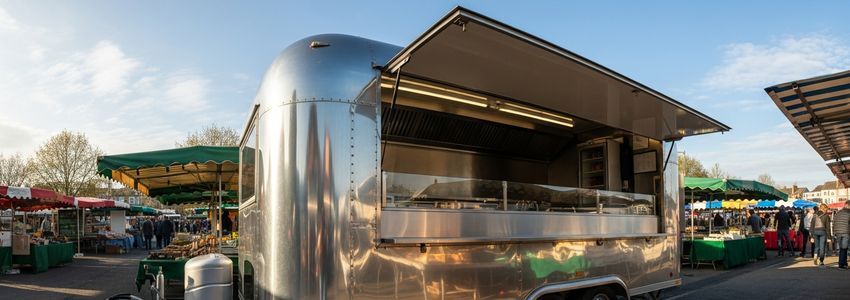
Food trailer financing gives mobile food entrepreneurs the capital they need to purchase, upgrade, or expand their trailer-based businesses without draining cash reserves. Whether you are launching your first concession trailer or adding a second unit to a growing operation, the right financing structure can mean the difference between a thriving mobile food brand and a missed opportunity.
In This Article
What Is Food Trailer Financing?
Food trailer financing is a lending arrangement designed specifically to help business owners purchase, build out, or refinance mobile food units. Unlike traditional real estate or vehicle loans, food trailer financing treats the trailer itself as a business asset - one that generates revenue through direct sales, events, catering contracts, and franchise-style routes.
These financing products are offered by equipment lenders, alternative business lenders, and specialty vehicle financing companies. The trailer can serve as collateral in most cases, which makes approval more accessible than unsecured business loans - even for newer operators with limited credit history.
Industry Context: According to the Food Truck Association, the mobile food industry generates over $1.2 billion in annual revenue in the United States, with food trailers representing one of the fastest-growing segments - driven by lower overhead compared to brick-and-mortar restaurants.
Food trailers range from bare-bones concession units costing $10,000 to fully custom kitchen trailers priced above $150,000. Most financing options accommodate this wide range, with lenders structuring terms based on the trailer's value, the operator's revenue history, and intended use.
Ready to Finance Your Food Trailer?
Get fast, flexible equipment financing from the #1 business lender in the U.S. Apply in minutes with no obligation.
Apply Now →How Food Trailer Financing Works
The financing process for a food trailer follows the same basic structure as equipment financing, with a few nuances specific to mobile food units. Here is how the process typically unfolds from application to funding:
Step 1 - Application: You submit a financing application detailing your business history, credit profile, and the specific trailer you want to purchase (or the value you want to refinance against). Some lenders also request recent bank statements and proof of revenue.
Step 2 - Underwriting: The lender reviews your creditworthiness, the trailer's value, and your ability to repay. Equipment lenders focus heavily on the asset value since the trailer secures the loan. This makes approval more accessible than unsecured options.
Step 3 - Approval and Terms: Once approved, the lender presents loan terms including the interest rate, repayment period, monthly payment amount, and any fees. Food trailer financing typically comes with terms ranging from 24 to 84 months, with fixed monthly payments.
Step 4 - Funding: Upon signing the agreement, funds are disbursed directly to the seller or to your business account. Many alternative lenders can fund within 24 to 72 hours, while traditional bank loans may take several weeks.
Step 5 - Repayment and Ownership: You make monthly payments according to the schedule. Once the loan is fully repaid, you own the trailer outright. During the loan period, you retain possession and use of the trailer to generate revenue.
Types of Food Trailer Financing Available
Multiple financing products can be used to fund a food trailer, and the best option depends on your credit profile, business age, trailer cost, and cash flow situation. Here are the main types:
Equipment Financing: This is the most common and cost-effective structure for food trailers. The trailer serves as collateral, reducing risk for the lender and often resulting in lower rates. Loan-to-value ratios typically range from 80 to 100 percent, meaning you may finance the entire purchase price with little or no down payment. Terms range from 2 to 7 years with fixed monthly payments.
Equipment Leasing: Rather than purchasing the trailer outright, you lease it for a fixed period. At the end of the lease, you can buy the trailer at a predetermined price, return it, or renew the lease. Leasing preserves capital and may offer tax advantages, but the total cost over time is often higher than a purchase loan. Equipment leasing is ideal for operators who want lower monthly payments or anticipate upgrading their trailer frequently.
SBA Loans: The Small Business Administration's 7(a) loan program can be used for food trailer purchases as part of a broader business financing package. SBA loans offer competitive long-term rates and are particularly beneficial for established businesses with strong credit histories. The trade-off is a longer approval timeline, typically 30 to 90 days, and more extensive documentation requirements.
Business Line of Credit: A revolving credit line gives you on-demand access to capital without requiring a separate application each time you need funds. This works well for operators who need to purchase trailer accessories, repair equipment, or bridge cash flow gaps between events. A business line of credit is best used alongside a trailer purchase loan rather than as a primary financing source for the unit itself.
Working Capital Loans: If you already own a trailer and need capital to launch, restock, or handle slow seasons, a working capital loan provides a lump sum with short repayment terms. Unsecured working capital loans do not require the trailer as collateral, which means approval is based primarily on your revenue and credit profile.
Revenue-Based Financing: This product advances capital against your projected future sales, with repayments structured as a percentage of daily or weekly revenue. It is ideal for seasonal operators who have strong peak-season income but irregular year-round cash flow.
| Financing Type | Best For | Typical Terms | Speed |
|---|---|---|---|
| Equipment Financing | Trailer purchase | 2-7 years, fixed | 1-5 days |
| Equipment Leasing | Low monthly payments | 2-5 years | 2-7 days |
| SBA Loan | Established businesses | 5-10 years | 30-90 days |
| Working Capital | Operating costs | 3-24 months | Same day - 3 days |
| Revenue-Based Financing | Seasonal operators | % of daily revenue | 1-3 days |
Who Qualifies for Food Trailer Financing?
Qualification requirements vary by lender and product type. Equipment financing has some of the most accessible approval criteria in the business lending space, particularly when the trailer serves as collateral. Here is what most lenders evaluate:
Credit Score: Most equipment lenders approve food trailer financing for borrowers with credit scores of 600 or above. Scores above 680 unlock better rates and terms. Some specialty lenders work with scores as low as 550, though rates will be higher. If your personal credit score needs improvement, review the strategies for improving your business credit score quickly before applying.
Time in Business: Many equipment lenders require at least 12 months of operating history, though startup-friendly lenders work with businesses as new as 6 months. For brand-new businesses, down payment requirements may be higher - typically 10 to 20 percent of the trailer's value.
Annual Revenue: Revenue requirements depend on the loan amount. For trailers priced under $50,000, lenders often approve businesses generating $100,000 or more annually. Larger loan amounts require proportionally higher revenue to demonstrate repayment ability.
Business Structure: Food trailers operating as sole proprietorships, LLCs, S-Corps, or partnerships are all eligible. Having a properly registered business entity with a separate business bank account improves your application substantially.
Down Payment: Equipment financing sometimes requires no money down, particularly for strong credit applicants. In other cases, lenders may require 10 to 20 percent. The larger your down payment, the lower your monthly payment and total interest cost.

Food Trailer Financing at a Glance
By the Numbers
Food Trailer Financing - Key Statistics
$1.2B+
Annual mobile food industry revenue in the U.S.
24-84
Typical loan term in months for equipment financing
600+
Minimum credit score for most equipment lenders
1-5 Days
Average funding time with alternative equipment lenders
Rates, Terms, and Costs to Expect
Understanding the full cost of food trailer financing helps you compare offers effectively and choose the structure that maximizes your profitability.
Interest Rates: Equipment financing rates for food trailers typically range from 6 to 24 percent APR, depending on your credit profile, loan term, and lender type. Borrowers with strong credit (680+) and established business history can often secure rates in the single digits from traditional lenders. Alternative lenders charge more but move faster and have lower approval thresholds.
Loan Amount: Most lenders finance food trailers from $10,000 to $500,000. The upper range accommodates custom-built commercial kitchen trailers with full cooking equipment packages. Trailer cost is the primary driver of the loan amount, though some lenders also factor in the cost of initial inventory, branding, and equipment inside the trailer.
Down Payment: Down payment requirements typically range from zero to 20 percent. Applicants with credit scores above 700 and at least two years of business history often qualify for 100 percent financing. First-time buyers or those with limited credit may be asked for 10 to 20 percent down.
Fees: Common fees include an origination fee (1 to 3 percent of the loan amount), documentation fees ($150 to $500), and prepayment penalties (some lenders charge a fee if you pay off early). Always ask for the full fee schedule before signing.
Pro Tip: When comparing food trailer loans, focus on the total cost of financing - not just the monthly payment. A lower monthly payment from a longer term often means paying significantly more interest over the life of the loan. Calculate the total repayment amount for each offer before deciding.
New vs. Used Food Trailers: Financing Considerations
Whether you are financing a new custom build or purchasing a used unit, the financing landscape differs in a few key ways.
New food trailers typically qualify for higher loan amounts, lower interest rates, and longer repayment terms because the asset value is clear and depreciates in a predictable pattern. Lenders feel more confident extending credit against a new unit because it comes with a manufacturer warranty and no unknown maintenance history.
Used food trailers can present more friction. Lenders may require an independent appraisal, cap the loan at a lower percentage of the trailer's value, or charge slightly higher rates to compensate for the added risk. That said, used trailer financing remains widely available, particularly through alternative lenders and equipment finance companies that specialize in food service assets. Crestmont Capital's used equipment financing program covers food trailers and other mobile food service units.
How Crestmont Capital Helps Food Trailer Operators
Crestmont Capital works with food trailer owners at every stage of business growth - from first-time buyers picking up a starter concession unit to established operators adding a second or third trailer to their fleet. As the #1 rated business lender in the U.S., Crestmont brings speed, flexibility, and genuine expertise in equipment financing.
Our equipment financing program offers loan amounts from $10,000 to $500,000 with terms from 24 to 84 months and fixed monthly payments. The application process takes minutes, and many borrowers receive approval the same business day. For operators exploring leasing as an alternative to purchase, our equipment leasing options provide flexible end-of-term choices including purchase, renewal, or return.
Beyond the trailer itself, Crestmont helps food trailer operators access working capital for inventory, catering supplies, event permits, marketing, and staff costs through our unsecured working capital loans. This ensures you have the liquidity to operate smoothly between the trailer financing milestone and your first profitable season.
Fund Your Mobile Food Business Today
Crestmont Capital specializes in food trailer financing for operators at all stages. Fast approvals, flexible terms, and a team that understands your business.
Apply Now →Real-World Scenarios: Food Trailer Financing in Action
Scenario 1 - First-Time Buyer: Maria operates a small catering business and wants to purchase a 20-foot food trailer to expand her reach. She finds a custom-built unit priced at $65,000. With a 680 credit score and 18 months of business history, she qualifies for equipment financing at 9.5 percent APR over 60 months. Her monthly payment is approximately $1,365. The trailer starts generating revenue at local farmers markets and corporate events within two weeks of funding.
Scenario 2 - Fleet Expansion: Carlos runs a successful taco trailer operation with one paid-off unit. He wants to add a second trailer to staff a new permanent location. Because his first trailer is free and clear, he can use it as additional collateral, resulting in a lower rate (7.8 percent APR) on the new $85,000 unit over 72 months. Monthly payments are approximately $1,450, easily covered by the projected revenue from the new location.
Scenario 3 - Used Trailer Upgrade: Jennifer purchased a used 16-foot trailer three years ago from personal savings. The trailer has been fully operational but needs a commercial-grade hood system installed. She applies for a $22,000 equipment loan to cover the hood, installation, and new cooking equipment. With a 640 credit score and two years of consistent revenue, she is approved at 13.5 percent APR over 48 months, with payments of approximately $595 per month.
Scenario 4 - Startup Operator: David is launching his first food trailer business and has no existing revenue history. He puts 20 percent down ($12,000) on a $60,000 trailer build and finances the remaining $48,000 over 60 months at 14.9 percent APR. His monthly payment is approximately $1,140. A startup equipment lender approves the loan based on his personal credit score (705) and the trailer's value as collateral.
Scenario 5 - Seasonal Business: A family-run snow cone trailer in Texas generates 90 percent of its revenue between April and September. The owner applies for revenue-based financing to purchase a second trailer and expand to a new location. Repayments are structured as a percentage of daily card sales, meaning payments drop automatically during the off-season without penalties or refinancing paperwork.
Scenario 6 - Working Capital Bridge: A well-established BBQ trailer operator receives a large catering contract for a corporate event series - but needs to purchase $15,000 in supplies and hire two part-time staff before the first payment arrives. A working capital loan from Crestmont Capital provides the bridge funding, repaid within 90 days once the catering deposits come in.
Frequently Asked Questions
What is the minimum credit score to finance a food trailer?
Most equipment lenders require a minimum credit score of 600 for food trailer financing. Borrowers with scores between 600 and 650 will typically face higher interest rates and may need a down payment of 10 to 20 percent. Scores above 680 unlock better rates and terms. Some specialty lenders work with scores as low as 550 for established businesses with strong revenue.
Can I finance a food trailer with no money down?
Yes, in many cases. Equipment financing for food trailers often requires little or no down payment for borrowers with good credit (680+) and at least one to two years of business history. Startups and borrowers with lower credit scores may be required to put 10 to 20 percent down. The trailer's value as collateral reduces the lender's risk, making 100 percent financing more accessible than with unsecured loans.
How long does it take to get approved for food trailer financing?
Alternative equipment lenders like Crestmont Capital can approve food trailer financing in as little as a few hours to one business day. Traditional banks and SBA loan programs take significantly longer - typically 30 to 90 days. Most food trailer operators use alternative lenders for the speed and flexibility, particularly when purchasing from a private seller where timing matters.
What documents do I need to apply for food trailer financing?
Typical requirements include: a completed loan application, government-issued ID, three to six months of business bank statements, a business license or registration, and information about the trailer (invoice, listing price, or specs). Larger loan amounts or SBA applications may also require tax returns, profit and loss statements, and a business plan. Many alternative lenders approve smaller loans based on bank statements alone.
Can a startup business get food trailer financing?
Yes. Startup equipment financing is available for food trailers, though the terms differ from established business loans. Startups typically need a stronger personal credit score (680+), a larger down payment (10 to 20 percent), and may face higher interest rates. Some lenders specialize in startup equipment financing and evaluate business plans and personal financial history rather than requiring existing revenue records.
What is the difference between a food truck loan and a food trailer loan?
Food trucks are self-propelled vehicles registered with the DMV, so they often qualify for commercial vehicle financing in addition to equipment financing. Food trailers are non-motorized units towed by a separate vehicle, which means they are financed purely as equipment. Trailer financing typically has fewer documentation requirements than vehicle financing and does not require a CDL or commercial vehicle policy. The two products are handled by different underwriting departments at some lenders.
Can I finance a used food trailer?
Yes. Used food trailer financing is widely available through alternative lenders and equipment finance companies. The lender may cap the loan at 80 to 90 percent of the appraised value, charge a slightly higher rate, and require a condition appraisal or inspection. Trailers more than 10 years old may face restrictions at some lenders. Crestmont Capital's used equipment financing program covers food trailers regardless of whether they are purchased from a dealer or private seller.
How much can I borrow for a food trailer?
Most lenders finance food trailers from $10,000 to $500,000. Entry-level concession trailers often fall in the $15,000 to $40,000 range, while custom kitchen trailers with full commercial equipment packages can exceed $100,000. The amount you qualify for depends on the trailer's value, your credit profile, and your business revenue. Some lenders also include the cost of cooking equipment and trailer accessories in the financed amount.
Does financing a food trailer affect my personal credit?
Yes, in most cases. Most food trailer financing products require a personal guarantee, which means the lender will pull your personal credit during underwriting. This creates a hard inquiry that may temporarily lower your score by a few points. As you make on-time payments, the loan often reports positively to business credit bureaus, helping build your business credit profile over time.
What interest rates should I expect on food trailer financing?
Interest rates on food trailer equipment financing range from approximately 6 percent to 24 percent APR depending on your credit score, business history, loan term, and lender type. Borrowers with strong credit and established revenue histories qualify for rates in the 6 to 12 percent range from traditional lenders. Alternative lenders typically charge 12 to 24 percent but approve applications faster and with less documentation. Rates also vary by the loan term - shorter terms generally carry lower rates but higher monthly payments.
Is it better to buy or lease a food trailer?
Buying is generally better if you plan to operate the same trailer for five or more years, want to build equity in the asset, or plan to modify the unit extensively. Leasing is better if you want lower monthly payments, plan to upgrade equipment regularly, or need to preserve capital for other parts of the business. Many food trailer operators start with a purchase to build equity, then transition to leasing for expansion units.
Can I refinance my food trailer to get a lower rate?
Yes. Equipment refinancing allows you to replace your existing loan with a new one at a lower rate, extended term, or improved structure. This works particularly well if your credit score has improved since you originally financed the trailer, or if interest rates in the broader market have dropped. Crestmont Capital's equipment refinancing program covers food trailers and other mobile food service assets.
Do I need a business plan to get food trailer financing?
Not always. Many alternative equipment lenders do not require a formal business plan for food trailer loans under $100,000. They focus primarily on your credit score, revenue history, and the value of the trailer. SBA loan applications typically require a business plan as part of the package. For startup operators with no revenue history, a business plan can strengthen your application significantly even when not required.
What types of food trailers qualify for financing?
Most equipment lenders finance a wide variety of food trailers including concession trailers, BBQ smoker trailers, taco trailers, dessert trailers, produce trailers, mobile bar trailers, coffee trailers, and custom kitchen trailers. The key requirement is that the trailer is used for legitimate business purposes. Cannabis-related food trailers may face restrictions depending on jurisdiction and lender policy.
How does food trailer financing compare to a merchant cash advance?
Equipment financing and merchant cash advances (MCAs) serve different purposes. Equipment financing is purpose-built for purchasing physical assets like food trailers - it uses the asset as collateral, carries lower rates, and comes with fixed monthly payments over a defined term. An MCA provides a lump sum of working capital repaid as a percentage of daily card sales, making it better for cash flow needs rather than equipment purchases. For buying a trailer, equipment financing is nearly always the more cost-effective choice. For operating capital once the trailer is running, a line of credit or working capital loan typically beats an MCA on cost.
How to Get Started
Complete our quick application at offers.crestmontcapital.com/apply-now - takes just a few minutes with basic business information and trailer details.
A Crestmont Capital equipment financing advisor will review your application, discuss the best loan structure for your situation, and walk you through your options without pressure.
Once approved and signed, funds are disbursed quickly - often within one to three business days. You can then purchase your trailer and start generating revenue immediately.
Conclusion
Food trailer financing opens the door to mobile food entrepreneurship without requiring you to drain savings or wait years to save the full purchase price. Whether you are buying your first concession trailer, upgrading to a custom kitchen unit, or expanding a successful operation with additional units, the right financing structure makes the difference between moving fast and missing opportunity.
The most important step is choosing a lender that understands the mobile food industry - one that moves quickly, structures deals that match your revenue patterns, and provides the flexibility growing food trailer businesses need. Crestmont Capital specializes in exactly this kind of financing, with a team experienced in equipment loans for mobile food operations of every type.
Apply today and take your food trailer financing from concept to funded in days, not months.
Start Your Food Trailer Financing Application
Join thousands of business owners who have funded their growth with Crestmont Capital. Fast decisions, flexible terms, real results.
Apply Now →Disclaimer: The information provided in this article is for general educational purposes only and is not financial, legal, or tax advice. Funding terms, qualifications, and product availability may vary and are subject to change without notice. Crestmont Capital does not guarantee approval, rates, or specific outcomes. For personalized information about your business funding options, contact our team directly.