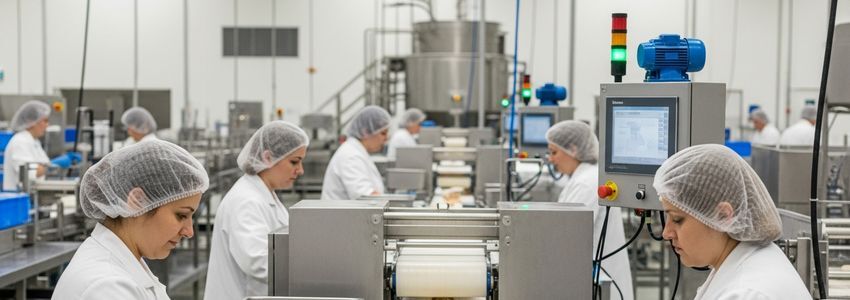
The food manufacturing industry is a cornerstone of the American economy, a dynamic sector that demands significant capital for growth and innovation. From sourcing raw ingredients to investing in state-of-the-art processing equipment, maintaining a competitive edge requires consistent access to funding. This guide provides a comprehensive overview of food manufacturing business loans, exploring the various financing solutions available to help you scale your operations, manage cash flow, and meet consumer demand. Understanding your options is the first step toward securing the capital your food production business needs to thrive.
In This Article
- What Are Food Manufacturing Business Loans?
- Types of Financing Available for Food Manufacturers
- How Food Manufacturing Loans Work
- Who Qualifies for Food Manufacturer Financing?
- Common Uses for Food Manufacturing Business Loans
- How Much Can Food Manufacturers Borrow?
- Real-World Scenarios for Food Manufacturer Financing
- How Crestmont Capital Helps Food Manufacturers
- Comparing Your Financing Options
- How to Get Started
- Frequently Asked Questions
- Conclusion

What Are Food Manufacturing Business Loans?
Food manufacturing business loans are specialized financial products designed to meet the unique capital requirements of companies involved in the production, processing, and packaging of food and beverage products. Unlike generic business loans, these financing solutions are structured to address the specific challenges of the industry, such as high equipment costs, seasonal cash flow fluctuations, stringent regulatory compliance, and the need for large-scale inventory purchases.
Whether you operate a commercial bakery, a beverage bottling plant, a specialty sauce company, or a large-scale packaged goods facility, accessing the right type of capital is critical. These loans provide the necessary funds to invest in growth opportunities, navigate operational hurdles, and maintain a healthy financial footing. From food production loans that help you buy raw materials in bulk to equipment financing for a new packaging line, the goal is to provide targeted capital that fuels your business forward.
The food manufacturing sector is capital-intensive. You might need to upgrade a walk-in freezer to meet new food safety standards, purchase a high-speed industrial mixer to increase output, or simply need extra working capital to cover payroll while waiting on payments from large grocery chains. Food manufacturer financing provides the liquidity to handle these expenses without disrupting your daily operations.
Types of Financing Available for Food Manufacturers
Food manufacturers have a diverse range of financing options, each suited for different business needs and goals. Understanding these types is crucial for selecting the most effective and affordable solution for your company.
Equipment Financing
Equipment is the lifeblood of any food production facility. Equipment Financing is a type of loan specifically designed to fund the purchase of new or used machinery. The equipment itself typically serves as collateral for the loan, which can make this option easier to qualify for than some other types of financing. This is an ideal solution for acquiring essential assets without depleting your cash reserves.
Common equipment financed in the food industry includes:
- Industrial ovens, mixers, and blenders
- Conveyor belts and automated sorting systems
- Packaging, bottling, and labeling machines
- Commercial refrigerators, freezers, and cold storage units
- Food processing and preparation equipment (slicers, grinders, etc.)
- Pasteurization and sterilization systems
- Quality control and testing instruments
Working Capital Loans
Cash flow is a constant concern for food manufacturers, especially those dealing with seasonal demand or long payment cycles from distributors. Working capital loans provide a lump sum of cash to cover day-to-day operational expenses. These are often short-term loans designed to bridge revenue gaps and ensure smooth operations.
Working capital for food manufacturers can be used for:
- Purchasing raw ingredients and packaging materials
- Covering payroll and hiring seasonal staff
- Paying for utilities, rent, and other overhead costs
- Funding marketing campaigns for new product launches
- Managing unexpected repairs or maintenance
SBA Loans
Backed by the U.S. Small Business Administration, SBA loans are a popular choice for their long repayment terms and competitive interest rates. While the application process can be more intensive and take longer than other options, the favorable terms make them an excellent choice for major investments. The two most common types for manufacturers are:
- SBA 7(a) Loan: A versatile loan that can be used for a wide range of purposes, including working capital, equipment purchases, and real estate acquisition.
- SBA 504 Loan: Specifically for purchasing major fixed assets like real estate or heavy machinery. It involves a partnership between a conventional lender and a Certified Development Company (CDC).
These government-backed SBA loan programs can provide substantial capital for significant expansion projects.
Business Line of Credit
A business line of credit offers flexibility that a standard term loan does not. It provides access to a preset amount of capital that you can draw from as needed. You only pay interest on the funds you use, and as you repay the balance, the credit becomes available again. This is perfect for managing ongoing, unpredictable expenses or seizing opportunities as they arise without needing to apply for a new loan each time.
Invoice Financing and Factoring
If your business sells to large distributors, grocery chains, or wholesalers, you may face long net-30, net-60, or even net-90 payment terms. This can strain your cash flow. Invoice financing allows you to borrow against your outstanding invoices, receiving a large percentage of their value upfront. A related option, manufacturing factoring, involves selling your invoices to a third party (a factor) at a discount. The factor then collects payment from your customer. Both are powerful tools for converting unpaid invoices into immediate cash.
Inventory Financing
For food manufacturers, inventory is a significant asset. Inventory financing is a type of asset-backed loan where your current stock of raw materials or finished goods serves as collateral. This can be an effective way to secure funding to purchase the large quantities of ingredients needed to meet a big order or prepare for a busy season.
Ready to Fund Your Food Production Growth?
Don't let capital hold you back. Access flexible food manufacturer financing options to purchase equipment, manage cash flow, and scale your operations.
Apply Now →How Food Manufacturing Loans Work
Securing a business loan for your food manufacturing company follows a straightforward process, though the specifics can vary by lender and loan type. At Crestmont Capital, we aim to make the process as transparent and efficient as possible.
The journey typically involves four key stages:
- Application: The process begins when you submit an application. Modern lenders like Crestmont Capital offer a simple online application that can often be completed in minutes. You will provide basic information about your business, its financial health, and the amount of funding you are seeking.
- Documentation: After the initial application, you will need to provide supporting documents. This usually includes recent bank statements, financial statements (profit and loss, balance sheet), and business tax returns. For equipment financing, you may also need a quote or invoice for the machinery you intend to purchase.
- Underwriting and Approval: Once your documentation is submitted, the lender's underwriting team reviews your application. They assess your business's creditworthiness, cash flow, revenue history, and overall financial stability to determine your eligibility and the terms of the loan offer. This process can take anywhere from a few hours to several weeks, depending on the loan complexity.
- Funding: If your application is approved, you will receive a loan offer detailing the amount, interest rate, term, and any fees. After you review and accept the terms, the funds are disbursed directly into your business bank account. For some loan types, like working capital, this can happen in as little as 24 hours.
The key is to be prepared. Having your financial documents organized ahead of time can significantly speed up the underwriting and funding process, getting you the capital you need faster.
By the Numbers
Food Manufacturing Business Loans - Key Statistics
$929.8B
Total value of shipments from U.S. food manufacturers in 2021, showcasing the industry's massive scale. (Source: U.S. Census Bureau)
39,972
Number of food manufacturing establishments operating in the United States in 2021. (Source: U.S. Census Bureau)
1.7M+
Number of people employed in the food manufacturing sector, highlighting its importance to the workforce. (Source: U.S. Bureau of Labor Statistics)
$4.8B+
In SBA 7(a) loan approvals for the broader manufacturing sector in FY 2023, a key source of capital. (Source: U.S. Small Business Administration)
Who Qualifies for Food Manufacturer Financing?
While qualification criteria vary between lenders and specific loan products, most lenders look at a similar set of factors to assess risk and determine eligibility. For most food processing business loans, you will generally need to meet the following minimum requirements:
- Time in Business: Most lenders, including those offering alternative financing, prefer to work with businesses that have been operational for at least one year. For more traditional options like SBA loans, a minimum of two years is often required.
- Annual Revenue: Lenders need to see that your business generates consistent income to support loan repayments. A common minimum threshold is $100,000 in annual gross revenue, though some programs may require $250,000 or more.
- Credit Score: Both your personal and business credit scores will be evaluated. For many alternative loans, a personal credit score of 600 or higher is sufficient. For bank loans or SBA loans, a score of 680 or higher is typically necessary to secure the best rates.
- Cash Flow: Lenders will analyze your business bank statements to verify that you have healthy, consistent cash flow and can handle the additional debt payment. They look for positive daily balances and a lack of non-sufficient funds (NSF) events.
- Industry Compliance: As a food manufacturer, you must demonstrate compliance with all local, state, and federal regulations, including FDA and USDA guidelines. Lenders may want to see proof of necessary licenses and certifications.
Meeting these baseline criteria is the first step. A stronger financial profile-higher revenue, a longer operating history, and a better credit score-will generally unlock more favorable financing options with lower interest rates and longer repayment terms.
Key Stat: According to the U.S. Census Bureau, the total value of shipments for the Food Manufacturing sector (NAICS 311) was over $929 billion in 2021. This demonstrates the immense economic footprint and capital needs of the industry.
Common Uses for Food Manufacturing Business Loans
The capital from a business loan can be deployed in numerous ways to strengthen and grow your food manufacturing company. The flexibility of modern financing allows you to address both immediate needs and long-term strategic goals. Here are some of the most common uses:
- Purchasing and Upgrading Equipment: This is one of the most frequent uses. Funds can be used to buy a new bottling line, upgrade to a more efficient oven, or invest in automated packaging systems to increase throughput and reduce labor costs.
- Expanding Facilities: As your business grows, you may need more space. A loan can help you finance the expansion of your current plant, lease a larger facility, or even purchase commercial real estate to build a new production center.
- Hiring and Training Staff: Meeting increased demand often requires a larger workforce. Loans can provide the capital to hire skilled production line workers, quality control specialists, and sales staff, as well as cover the costs of training.
- Launching New Product Lines: Introducing a new product involves significant upfront costs for research and development, ingredient sourcing, package design, and marketing. A loan can provide the necessary funding to bring your next big idea to market.
- Managing Inventory and Seasonal Demand: Many food products have seasonal peaks. A loan or line of credit can help you purchase the raw materials needed to build up inventory ahead of your busy season, ensuring you don't miss out on sales.
- Refinancing Existing Debt: If you have existing high-interest debt, you may be able to consolidate it into a new loan with a lower rate and more manageable monthly payment, improving your overall cash flow.
- Marketing and Branding: To compete in crowded grocery aisles, strong branding is essential. Funds can be used for digital marketing campaigns, trade show participation, and developing new packaging that stands out on the shelf.
How Much Can Food Manufacturers Borrow?
The amount of financing a food manufacturer can secure ranges widely, typically from $25,000 to $5 million or more. The final loan amount depends on a combination of factors related to your business's financial health and the type of loan you are applying for.
Key factors that influence your borrowing capacity include:
- Annual Revenue: This is often the most significant factor. Lenders typically offer a loan amount that is a percentage of your annual or monthly revenue, ensuring the repayment is manageable.
- Loan Type: Different loan products have different limits. For example, a short-term working capital loan might max out at $500,000, while an SBA 7(a) loan can go up to $5 million. Equipment financing is directly tied to the cost of the machinery being purchased.
- Creditworthiness: A strong business and personal credit history can increase a lender's confidence, potentially leading to higher loan offers.
- Cash Flow: Lenders will analyze your bank statements to determine how much free cash flow is available after covering existing expenses. This debt service coverage ratio (DSCR) is a critical metric in determining how much new debt your business can handle.
- Collateral: For secured loans, the value of the collateral (such as equipment, real estate, or inventory) will be a primary determinant of the loan amount.
At Crestmont Capital, we work with you to understand your needs and financial profile to connect you with the maximum funding amount you can responsibly manage.
Upgrade Your Production Line
Secure dedicated equipment financing for food production. Fund new mixers, ovens, packaging systems, and more with competitive rates.
Get a Quote Today →Real-World Scenarios for Food Manufacturer Financing
To better understand how these loans work in practice, let's explore a few hypothetical scenarios that are common in the food manufacturing industry.
Scenario 1: The Artisan Bakery Scaling Up
The Challenge: A successful artisan bakery that supplies local cafes and markets lands a contract with a regional grocery chain. To meet the demand, they need a larger, more efficient spiral mixer and a new commercial oven, costing a total of $80,000.
The Solution: The bakery applies for equipment financing. Because the new equipment serves as its own collateral, the application process is streamlined. They are approved for an $80,000 loan with a 5-year term. This allows them to acquire the necessary machinery immediately without a large cash outlay, and the predictable monthly payments are easily covered by the revenue from the new grocery contract.
Scenario 2: The Beverage Company's Seasonal Cash Crunch
The Challenge: A craft soda company experiences a massive sales spike during the summer months. To prepare, they need to purchase a large volume of bottles, sugar, and flavorings in the spring. However, their cash flow is tight during this off-season period.
The Solution: The company secures a $150,000 business line of credit. They draw $100,000 in April to purchase inventory and hire temporary bottling staff. As sales revenue pours in during June and July, they pay back the balance. They keep the line of credit open with a zero balance, ready to use for any future unexpected expenses or opportunities.
Scenario 3: The Packaged Foods Producer Waiting on Payments
The Challenge: A company producing organic snack bars has several large orders fulfilled for national health food distributors. However, these distributors operate on net-60 payment terms, leaving the company with $200,000 in outstanding invoices and a pressing need for cash to cover payroll and order new packaging materials.
The Solution: The snack company uses invoice financing. They receive an advance of 85% of their outstanding invoices, getting $170,000 in cash within a couple of days. This immediately solves their cash flow problem. Once their customers pay the invoices 60 days later, the financing company releases the remaining 15%, minus a small fee.
Scenario 4: The Specialty Sauce Maker Buying a Facility
The Challenge: A family-owned business making a popular line of BBQ sauces has been operating out of a rented commercial kitchen. Their rent is increasing, and they want the stability and equity of owning their own property. They find a suitable small industrial building for sale.
The Solution: With a strong business history and good credit, they qualify for an SBA 504 loan. This loan allows them to purchase the building with a low down payment and a long-term, fixed-interest rate. They gain control over their production environment and build valuable real estate equity for the future of their business.
Industry Insight: According to a Forbes article, automation and technology adoption are key trends shaping the future of food manufacturing. Financing new equipment is no longer just about expansion-it's about staying competitive.
How Crestmont Capital Helps Food Manufacturers
At Crestmont Capital, we understand that the food manufacturing industry isn't one-size-fits-all. A beverage producer has different needs than a commercial bakery, and a startup snack company faces different challenges than an established frozen foods distributor. That's why we offer a tailored approach to financing.
We specialize in providing a wide array of Small Business Loans designed to meet the specific demands of your sector. Our team of funding experts works directly with you to understand your goals, whether it's scaling production, improving efficiency, or managing cash flow. We leverage our extensive network of lending partners to find the most competitive rates and flexible terms available for your business.
Our streamlined application process and commitment to quick turnarounds mean you can get the capital you need without the lengthy delays often associated with traditional banks. We offer a full suite of products, including:
- Fast and flexible working capital loans to manage daily operations.
- Specialized equipment financing for all types of food production machinery.
- Accessible business lines of credit for ongoing financial flexibility.
- Guidance and support for securing long-term SBA loans.
For a deeper dive into financing for the entire industrial sector, you can also explore our comprehensive Manufacturing Business Loans guide. Our mission is to be more than just a lender; we aim to be a strategic financial partner dedicated to your growth.
Comparing Your Financing Options
Choosing the right loan is critical. This table provides a quick comparison of the most common financing options for food manufacturers to help you decide which path is best for your specific needs.
| Loan Type | Best For | Typical Amount | Repayment Term | Funding Speed |
|---|---|---|---|---|
| Equipment Financing | Purchasing new or used machinery and production assets. | $25,000 - $2M+ | 2 - 7 years | 2 - 5 days |
| Working Capital Loan | Covering operational costs, inventory, payroll, and bridging cash flow gaps. | $25,000 - $750,000 | 6 - 24 months | 1 - 3 days |
| SBA Loan | Major investments like real estate, large-scale equipment, or business acquisition. | Up to $5 Million | 10 - 25 years | 3 - 8 weeks |
| Business Line of Credit | Managing ongoing or unexpected expenses and seasonal cash flow needs. | $20,000 - $500,000 | Revolving | 1 - 5 days |
How to Get Started
Taking the first step toward securing a food manufacturing business loan is easier than you might think. Follow this simple, four-step process to get started on the right foot.
Step 1: Assess Your Needs and Goals
Before you apply, clearly define why you need the funding and how much you require. Are you buying a specific piece of equipment? Do you need to cover a seasonal cash shortfall? Having a precise plan will help you and your lender identify the best loan product for your situation.
Step 2: Gather Your Documents
Prepare your financial paperwork in advance to speed up the process. Most applications will require at least the last 3-6 months of business bank statements, your most recent business tax return, and basic information about your business structure and ownership.
Step 3: Consult with a Funding Specialist
Speak with an expert who understands the nuances of food manufacturer financing. At Crestmont Capital, our specialists can review your situation, explain your options in plain language, and guide you toward the solution that best fits your business's financial profile and objectives.
Step 4: Apply and Review Your Offers
Complete our simple online application. Once submitted, our team will get to work finding the best possible offers for you. You can then review the terms, rates, and payment structures with no obligation, ensuring you make a fully informed decision for your business.
Find Out What You Qualify For in Minutes
Our simple application process is fast, secure, and won't impact your credit score. See your food production loan options today.
Apply Now →Frequently Asked Questions
What's the difference between food production and food processing loans?
The terms are often used interchangeably. Both refer to financing for businesses that transform raw agricultural products into food items. "Food production loans" might encompass a broader range, including farming, while "food processing business loans" specifically target companies that cook, mix, package, or otherwise alter raw ingredients. At Crestmont Capital, we serve the entire spectrum of food manufacturing.
Can I get a loan for a new food manufacturing startup?
Financing a startup can be challenging, as most lenders require at least one year of operating history and proven revenue. However, some options like SBA microloans, certain equipment financing programs (if you have strong personal credit), or loans based on a solid business plan and personal collateral may be available. It is best to consult with a funding specialist to explore options for new businesses.
How fast can I get funded?
Funding speed depends on the loan type. Working capital loans and lines of credit can often be funded in as little as 24-48 hours after approval. Equipment financing typically takes 2-5 days. SBA loans are the longest, usually requiring several weeks to a couple of months from application to funding.
Do I need collateral for a food manufacturing business loan?
It depends. Some products, like unsecured working capital loans, do not require specific collateral. Others are inherently secured. For example, in equipment financing, the equipment itself is the collateral. For SBA loans, a personal guarantee and sometimes other business assets or real estate may be required as collateral.
What documents are typically required to apply?
For most applications, you will need your last 3-6 months of business bank statements, your business's Employer Identification Number (EIN), and your driver's license. For larger loans or SBA financing, you may also need to provide business tax returns, profit and loss statements, a balance sheet, and a debt schedule.
How does my personal credit score affect my application?
Your personal credit score is a significant factor, especially for small and medium-sized businesses. Lenders view it as an indicator of your financial responsibility. A higher score (typically 650+) improves your chances of approval and helps you qualify for lower interest rates. While some options exist for scores below 600, they often come with higher costs.
Can I use a loan to buy ingredients and raw materials?
Absolutely. This is a primary use for working capital loans, lines of credit, and inventory financing. These products are designed to give you the cash on hand to purchase the necessary inputs for your production process, especially when buying in bulk to get better pricing or preparing for a seasonal rush.
What are typical interest rates for food manufacturer loans?
Interest rates vary widely based on the loan type, your credit profile, time in business, and overall market conditions. SBA loans and some bank loans can have rates starting around 6-9%. Equipment financing and term loans often range from 7% to 25%. Short-term working capital products may have higher rates due to their speed and shorter terms.
Are there loans specifically for organic or specialty food manufacturers?
While there aren't many loan products exclusively labeled for "organic" manufacturers, the financing options available (like working capital, equipment loans, etc.) are perfectly suited for them. Lenders are very familiar with the needs of specialty sectors, including the costs associated with organic certification and sourcing.
Can I get financing if I have a bad credit score?
Yes, options may still be available. Lenders will place more emphasis on your business's recent revenue and cash flow. If you have strong, consistent daily bank deposits, you may qualify for certain types of working capital loans or a merchant cash advance, even with a lower credit score. However, the costs will likely be higher.
What's the difference between invoice financing and invoice factoring?
With invoice financing, you take out a loan using your invoices as collateral, and you are still responsible for collecting payment from your customers. With invoice factoring, you sell your invoices to a factoring company at a discount. The factoring company then owns the invoices and takes over the collection process.
How do seasonal sales affect my loan application?
Lenders who specialize in your industry understand seasonality. They will typically look at your full year of revenue rather than just the most recent few months to get an accurate picture of your business's health. It is important to explain your seasonal trends to your loan specialist so they can present your file accurately to underwriters.
Can I use a loan for marketing my food products?
Yes. A working capital loan or business line of credit is an excellent tool for funding marketing initiatives. You can use the funds to launch a new website, run digital ad campaigns, attend industry trade shows, or hire a marketing agency to help grow your brand's presence.
Are there prepayment penalties?
This varies by loan product. Many modern financing options, including those offered through Crestmont Capital, do not have prepayment penalties, allowing you to pay off your loan early and save on interest. However, some traditional loans or SBA loans might have penalties if you pay them off within the first few years. Always confirm the prepayment terms before signing a loan agreement.
What if my food manufacturing business is home-based?
Home-based food businesses operating under cottage food laws can still qualify for financing, provided they are structured as a formal business entity (like an LLC or corporation) and have a separate business bank account. Lenders will evaluate your business based on its revenue and cash flow, just like any other company.
Conclusion
The food manufacturing industry is both rewarding and incredibly demanding. Growth requires strategic investment, and having the right financial tools at your disposal is non-negotiable. Whether you need to invest in a state-of-the-art packaging line, manage seasonal inventory, or expand your facility to meet growing demand, a well-chosen food manufacturing business loan can provide the fuel for your success.
By understanding the different types of financing available-from equipment loans and working capital to SBA loans and lines of credit-you can make an informed decision that aligns with your business goals. The key is to partner with a lender who understands the unique rhythm and requirements of the food production sector.
If you're ready to take the next step in growing your food manufacturing business, the team at Crestmont Capital is here to help. We are committed to providing fast, flexible, and transparent financing solutions to help you achieve your ambitions.
Disclaimer: The information provided in this article is for general educational purposes only and is not financial, legal, or tax advice. Funding terms, qualifications, and product availability may vary and are subject to change without notice. Crestmont Capital does not guarantee approval, rates, or specific outcomes. For personalized information about your business funding options, contact our team directly.