
 (800) 949-0401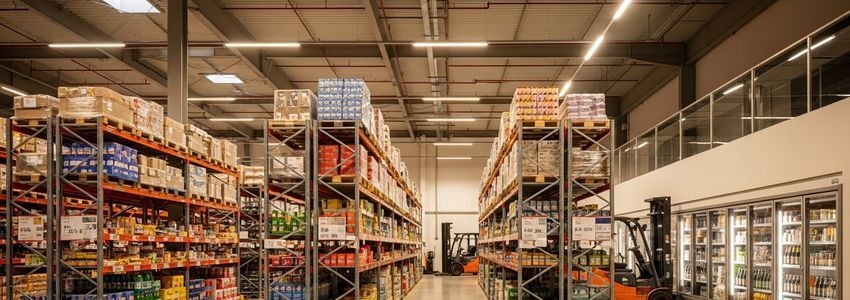
Food and Beverage Distributor Business Loans: The Complete Financing Guide for Food and Beverage Distributor Owners
The food and beverage distribution industry is the essential, high-velocity backbone of the nation's supply chain. You are the critical link connecting producers, manufacturers, restaurants, and retailers, ensuring that shelves are stocked and consumers are fed. This vital role, however, comes with immense financial pressure. Operating on thin margins, managing perishable inventory, and navigating complex logistics create a unique set of challenges where cash flow is king.
For food and beverage distributor owners, managing capital is a constant balancing act. You must invest heavily in inventory and infrastructure before seeing a return, often waiting 30, 60, or even 90 days for customer payments. This inherent gap between expenses and revenue can stifle growth, prevent opportunistic purchases, and even threaten day-to-day operations. This is where strategic financing becomes not just a tool for growth, but a necessity for survival and success.
This comprehensive guide will explore the world of food and beverage distributor business loans. We will break down why you need financing, the specific types of funding available, what lenders look for, and how to navigate the application process. As the #1 rated business lender in the country, Crestmont Capital understands the unique demands of your industry and is dedicated to providing the flexible, fast capital you need to thrive.
In This Article
- Why Food and Beverage Distributors Need Business Loans
- Top Financing Options for Food and Beverage Distributors
- Qualifying for a Food and Beverage Distributor Business Loan
- How to Choose the Right Lender for Your Distribution Business
- Step-by-Step Guide to Applying for a Food and Beverage Distributor Loan
- Overcoming Seasonal Cash Flow Challenges in Food Distribution
- Frequently Asked Questions (FAQs) about Food and Beverage Distributor Financing
Why Food and Beverage Distributors Need Business Loans
The financial landscape for a food and beverage distributor is fundamentally different from that of a typical retail or service business. Your operations are capital-intensive, requiring significant upfront investment in assets and inventory. Here are the most common reasons distributors seek financing to maintain liquidity and fuel growth.
Funding Large Inventory Purchases
Inventory is both your greatest asset and your biggest expense. To secure favorable pricing from manufacturers and producers, you need to purchase in bulk. This ties up a massive amount of capital in products sitting in your warehouse. Furthermore, the perishable nature of many food items adds a layer of risk; you need to move products quickly to avoid spoilage and financial loss. Inventory financing allows you to make large, strategic purchases without draining your working capital, ensuring you have the stock to meet demand, especially ahead of peak seasons.
Acquiring and Maintaining a Commercial Fleet
Your fleet of trucks and vans is the lifeblood of your operation. Whether you're delivering dry goods, refrigerated items, or frozen products, you need reliable vehicles. A single new refrigerated truck (a "reefer") can cost well over $150,000. Add to that the ongoing costs of fuel, insurance, maintenance, and repairs, and it's clear that fleet management is a major financial undertaking. Commercial fleet financing enables you to acquire new vehicles or upgrade existing ones, reducing downtime and improving efficiency without a crippling upfront cash outlay.
Investing in Cold Storage and Warehouse Infrastructure
Proper storage is non-negotiable in the food and beverage industry. This means investing in or leasing large warehouse spaces equipped with sophisticated refrigeration and freezer systems. Beyond the structure itself, you need essential equipment to manage inventory efficiently: forklifts, pallet jacks, conveyor systems, and advanced shelving. A loan can fund the build-out of a new cold storage facility, the expansion of an existing warehouse, or the purchase of critical material handling equipment, improving your operational capacity and product integrity.
Bridging Cash Flow Gaps from Accounts Receivable
This is perhaps the most persistent challenge for distributors. You typically pay your suppliers on terms of net-15 or even upon delivery. However, your customers - supermarkets, restaurants, and other retailers - often operate on net-30, net-60, or even net-90 payment terms. This creates a significant cash flow gap where your money is tied up in unpaid invoices. Invoice financing or a business line of credit provides the immediate cash you need to cover payroll, purchase more inventory, and meet other operational expenses while you wait for customers to pay.
Managing Seasonal Demand and Fluctuations
The food and beverage industry is highly seasonal. Demand surges around major holidays like Thanksgiving, Christmas, and the Fourth of July, as well as events like the Super Bowl. To capitalize on these peaks, you need to ramp up inventory and staffing well in advance, which requires significant capital. A short-term working capital loan or a line of credit provides the flexibility to prepare for these busy periods and navigate the slower months that follow without financial strain.
Expanding Routes and Market Reach
Growth often means entering new territories. Expanding your distribution routes requires investment in additional vehicles, hiring and training new drivers and sales representatives, and increasing your marketing budget. A business loan can provide the necessary capital to fund this expansion, allowing you to capture new markets and grow your customer base without stretching your existing resources too thin.
Upgrading Technology and Software
Modern distribution is driven by technology. To stay competitive, you need to invest in systems that optimize efficiency and reduce errors. This includes Warehouse Management Systems (WMS) for tracking inventory, route planning software to minimize fuel costs and delivery times, and inventory management software to forecast demand and reduce waste. Financing can help you adopt these technologies, leading to long-term cost savings and a stronger competitive edge.
The U.S. Food & Beverage Distribution Industry: By the Numbers
- Market Size: The wholesale food distribution market in the United States is valued at over $1.1 trillion. (IBISWorld)
- Number of Businesses: There are approximately 55,000 food and beverage wholesaling and distribution businesses operating in the U.S.
- Key Driver: Per capita disposable income is a primary driver of industry demand, as consumers with more money tend to spend more on food, both at home and at restaurants.
- Employment: The industry employs over 1.2 million people across the country, highlighting its critical role in the national economy.
Top Financing Options for Food and Beverage Distributors
No two distribution businesses are exactly alike, and neither are their financing needs. The right type of loan depends on what you're funding, your financial profile, and how quickly you need the capital. Here’s a breakdown of the most effective financing solutions for food and beverage distributors.
SBA Loans
Backed by the U.S. Small Business Administration, SBA loans are a gold standard in small business financing. The two most common types for distributors are the 7(a) loan, for general business purposes like working capital and expansion, and the 504 loan, for major fixed assets like real estate and heavy equipment.
- Pros: SBA loans offer some of the lowest interest rates and longest repayment terms available, often up to 10 years for working capital and 25 years for real estate. This results in lower, more manageable monthly payments.
- Cons: The application process is notoriously lengthy and document-intensive, often taking several weeks or even months. The qualification criteria are also very strict, requiring strong credit, solid financials, and significant time in business.
- Best For: Large, planned investments such as purchasing a warehouse, a major fleet expansion, or refinancing existing high-interest debt.
Equipment Financing and Leasing
Equipment financing is a loan used specifically to purchase business equipment, from refrigerated trucks and forklifts to conveyor systems and commercial freezers. The equipment itself serves as collateral for the loan, making it one of the most accessible forms of financing.
- Pros: Because the loan is secured by a hard asset, it's often easier to qualify for than an unsecured loan, even with less-than-perfect credit. You can often finance 100% of the equipment cost, preserving your cash for other needs. Terms typically match the expected lifespan of the equipment.
- Cons: The funds can only be used for the specific equipment purchase.
- Best For: Acquiring any physical asset needed for your operations, including delivery vehicles, warehouse machinery, and refrigeration units.
Business Line of Credit
A business line of credit provides access to a revolving pool of funds up to a set limit. You can draw from it as needed and only pay interest on the amount you've used. Once you repay the borrowed funds, your credit limit is restored and available to use again.
- Pros: It offers incredible flexibility, acting as a financial safety net for your business. It's perfect for managing unpredictable cash flow, covering unexpected expenses (like an emergency truck repair), or seizing time-sensitive opportunities (like a discounted bulk inventory deal).
- Cons: Interest rates can be variable, and credit limits might be lower than what you could get with a traditional term loan.
- Best For: Ongoing cash flow management, covering seasonal dips, and handling unexpected operational costs.
Inventory Financing
This type of asset-based lending uses your existing or newly purchased inventory as collateral for a loan or line of credit. A lender provides capital specifically so you can purchase stock from your suppliers.
- Pros: It directly solves one of the biggest capital drains for distributors. It allows you to stock up for peak seasons or take advantage of bulk discounts without depleting your operating cash.
- Cons: Interest rates can be higher than traditional loans. Lenders will closely scrutinize your inventory management systems and turnover rates, as the value of the collateral (especially perishable goods) can fluctuate.
- Best For: Making large, strategic inventory purchases to meet predictable seasonal demand.
Invoice Financing (Accounts Receivable Financing)
Invoice financing allows you to turn your unpaid invoices into immediate cash. You sell your outstanding accounts receivable to a financing company at a discount. The company advances you a large percentage of the invoice value (typically 80-95%) upfront and gives you the remainder, minus their fees, once your customer pays the invoice.
- Pros: It is the fastest way to solve the cash flow problem caused by long net payment terms. Funding can happen in as little as 24 hours. Approval is based more on the creditworthiness of your customers than on your own credit score.
- Cons: The fees (known as a factor rate) can make it a more expensive form of financing compared to a traditional loan. Some customers may not be comfortable paying a third-party company.
- Best For: Businesses with reliable, but slow-paying, commercial clients that need to unlock cash tied up in receivables.
Working Capital Loans
A working capital loan is a short-term loan designed to cover day-to-day operational expenses. Unlike equipment financing, the funds are not restricted to a specific purchase and can be used for anything from payroll and rent to marketing campaigns and utility bills.
- Pros: The application and funding processes are typically very fast, often within a few business days. The use of funds is highly flexible, and these loans can be unsecured, meaning you may not need to put up specific collateral.
- Cons: Because they are often short-term and higher-risk for the lender, they usually come with higher interest rates and more frequent payments (sometimes daily or weekly) than long-term loans.
- Best For: Covering short-term cash shortfalls, managing seasonal business dips, or funding small, immediate growth projects.
Revenue-Based Financing
Also known as a merchant cash advance, revenue-based financing provides a lump-sum of capital in exchange for a percentage of your future sales. Repayments are made automatically as a small, fixed percentage of your daily or weekly credit card sales or bank deposits.
- Pros: Repayments are flexible and align with your cash flow; you pay back more when sales are strong and less when they are slow. The approval process is very fast and relies heavily on your sales history rather than your credit score.
- Cons: The cost of capital, expressed as a factor rate, can be significantly higher than a traditional APR. It's crucial to understand the total payback amount before agreeing to terms.
- Best For: Distributors with high-volume sales but fluctuating daily revenue, or those who may not qualify for traditional loans due to credit history or time in business.
Ready to Fund Your Distribution Business?
Get the capital you need for inventory, fleet, and growth. Crestmont Capital offers fast, flexible financing solutions tailored for food and beverage distributors.
Apply Now - Free, No CommitmentQualifying for a Food and Beverage Distributor Business Loan
Lenders evaluate several key factors to assess the risk and viability of providing capital to your distribution business. Understanding these criteria will help you prepare a stronger application and increase your chances of approval for the best possible terms.
Credit Score (Business and Personal)
Your personal and business credit scores are primary indicators of your financial responsibility. For traditional bank loans and SBA loans, lenders typically look for personal credit scores of 680 or higher. Alternative lenders and online platforms are often more flexible, with some programs accepting scores as low as 550. A higher score demonstrates a history of reliable debt repayment and will unlock lower interest rates and more favorable terms.
Time in Business
Lenders want to see a track record of stability and success. Most traditional lenders require at least two years in business to consider an application. This history provides them with financial data to analyze and demonstrates that your business model is sustainable. Newer businesses (6 months to 2 years) can still find financing options, but they are often limited to products like revenue-based financing or equipment loans where there is tangible collateral.
Annual Revenue
Your company's annual revenue is a direct measure of its market traction and ability to generate the cash flow needed to support loan repayments. Lenders have minimum revenue requirements, which can range from $100,000 per year for some online lenders to over $500,000 for larger bank loans. More important than the top-line number is the consistency and trend of your revenue. Lenders want to see stable or, ideally, growing sales.
Financial Statements
Be prepared to provide comprehensive financial documents. This is how lenders get a detailed look at the health of your business. Key documents include:
- Profit and Loss (P&L) Statement: Shows your revenues, costs, and profitability over a period.
- Balance Sheet: Provides a snapshot of your assets, liabilities, and equity at a specific point in time.
- Cash Flow Statement: Tracks the movement of cash in and out of your business, which is critically important for distributors.
- Bank Statements: Lenders typically want to see the last 3 to 6 months of business bank statements to verify revenue and assess your average daily balance.
Business Plan and Use of Funds
For larger loans, especially SBA or term loans, lenders will want to see a solid business plan. This should outline your business model, market analysis, management team, and financial projections. Crucially, you must clearly articulate how you plan to use the loan proceeds. A specific, well-reasoned plan - such as "purchase two new refrigerated trucks to expand into the neighboring county" or "build out a 5,000 sq. ft. cold storage unit to increase inventory capacity by 40%" - instills much more confidence than a vague request for "working capital."
Collateral
Collateral is an asset that you pledge to a lender to secure a loan. If you default on the loan, the lender can seize the collateral to recoup their losses. For food and beverage distributors, common forms of collateral include:
- Equipment: Your fleet of trucks, forklifts, and warehouse machinery.
- Accounts Receivable: Your outstanding customer invoices.
- Inventory: The products you have in your warehouse.
- Real Estate: Commercial property owned by the business.
Secured loans with strong collateral typically have lower interest rates because they represent less risk to the lender.

How to Choose the Right Lender for Your Distribution Business
The lender you partner with is just as important as the loan product you choose. A good lending partner can be a valuable asset for your business's growth. Here’s what to look for when evaluating your options.
Experience in the Food and Beverage Industry
Choose a lender that understands the unique rhythm and challenges of your industry. A lender familiar with food distribution will grasp concepts like seasonality, perishable inventory, and the cash flow crunch caused by net-90 terms. They won't be surprised by a request for a large inventory loan before the holiday season or an equipment loan for a specialized refrigerated truck. This industry expertise translates into a smoother application process and loan products that are better tailored to your actual needs.
Loan Products Offered
Ensure the lender offers a diverse portfolio of small business financing options. Your needs may change over time. Today you might need equipment financing, but in six months you might need a line of credit to manage cash flow. A lender that offers a full suite of products - from SBA loans and term loans to invoice financing and working capital - can serve as a long-term financial partner, saving you the hassle of searching for a new lender every time a new need arises.
Speed of Funding
In the distribution business, opportunities and emergencies arise quickly. A supplier might offer a significant discount on a bulk purchase that's only available for 48 hours. A critical delivery truck could break down, halting your operations. In these situations, you can't afford to wait weeks for a bank's decision. Evaluate lenders on their funding speed. Many online lenders, like Crestmont Capital, can provide decisions in hours and funding in as little as 24 hours, giving you the agility to act fast.
Interest Rates, Fees, and Total Cost of Capital
It's crucial to look beyond the headline interest rate and understand the total cost of the loan. Ask for a full breakdown of all fees, including origination fees, application fees, and prepayment penalties. For short-term products like a merchant cash advance, understand the difference between a factor rate and an Annual Percentage Rate (APR). A transparent lender will clearly explain all costs and help you calculate the total payback amount, allowing you to make a true apples-to-apples comparison between offers.
Customer Service and Reputation
Financing is a significant business decision. You want a partner who is responsive, knowledgeable, and supportive. Look for online reviews and testimonials from other business owners. Does the lender have a high rating on platforms like Trustpilot or the Better Business Bureau? Will you be assigned a dedicated funding advisor who can answer your questions, or will you be routed through a generic call center? Crestmont Capital prides itself on its #1 national rating and its commitment to providing personalized, expert guidance to every client.
Don't Let Cash Flow Hold You Back
From refrigerated trucks to warehouse expansions, we have a financing solution for you. See your options in minutes without impacting your credit score.
Apply Now - Free, No CommitmentStep-by-Step Guide to Applying for a Food and Beverage Distributor Loan
Navigating the loan application process can seem daunting, but breaking it down into manageable steps makes it much clearer. A methodical approach will ensure you present the strongest possible case to lenders.
Step 1: Assess Your Financial Needs and Goals
Before you approach any lender, you need to have a precise understanding of your needs. Ask yourself: How much capital do I need? What exactly will I use it for? How will this investment generate a return for my business? Create a detailed budget for the use of funds. Whether it's a spreadsheet detailing the cost of a new truck, an inventory purchase order, or a quote for a warehouse refrigeration system, having specifics demonstrates that you are a serious, well-prepared borrower.
Step 2: Gather Required Documentation
Organize your financial paperwork in advance to streamline the process. While requirements vary by lender and loan type, a typical document checklist includes:
- 3-6 months of business bank statements
- 2-3 years of business and personal tax returns
- Profit & Loss statements and Balance Sheets
- A detailed list of outstanding business debts
- Business licenses and articles of incorporation
- Driver's license or government-issued ID for all owners
- For equipment purchases: quotes or invoices from the vendor
- For real estate purchases: a copy of the purchase agreement
Step 3: Research and Compare Lenders
Don't jump at the first offer you see. Compare different types of lenders, including traditional banks, credit unions, SBA-preferred lenders, and online lenders like Crestmont Capital. Evaluate them based on the criteria discussed earlier: industry experience, product offerings, speed, cost, and reputation. Create a shortlist of 2-3 lenders that seem like the best fit for your specific needs.
Step 4: Complete the Application
Most modern lenders offer a simple online application that can be completed in minutes. Be prepared to provide basic information about your business (name, address, tax ID), personal information (name, address, social security number), and financial details (annual revenue, time in business, desired loan amount). Be thorough and accurate in your responses. A complete and honest application is the fastest path to a decision. Crestmont Capital's streamlined application takes just a few minutes and has no impact on your credit score.
Step 5: Underwriting and Review
Once you submit your application, it goes to the lender's underwriting team. This is where they review your documentation, verify your information, analyze your credit and financial history, and assess the overall risk of the loan. An underwriter may reach out with follow-up questions or a request for additional documentation. Respond promptly to keep the process moving.
Step 6: Receive and Review Offers
If you are approved, the lender will present you with one or more loan offers. This document will detail the loan amount, interest rate or factor rate, repayment term, payment amount and frequency, and any associated fees. Review the offer carefully. Do not be afraid to ask your funding advisor to clarify any terms you don't understand. Make sure the repayment schedule fits comfortably within your business's cash flow projections.
Step 7: Accept the Offer and Receive Funding
Once you have selected the best offer for your business, you will sign the loan agreement electronically. After the final contracts are signed, the lender will disburse the funds. With fast-moving lenders, the capital can be wired directly to your business bank account in as little as 24 hours from the time of approval.
Overcoming Seasonal Cash Flow Challenges in Food Distribution
Seasonality is an unavoidable reality in the food and beverage industry. Your cash flow can swing dramatically between the pre-holiday rush and the post-holiday lull. Managing these peaks and valleys requires proactive financial strategies and the right funding tools.
Proactive Financial Planning and Forecasting
The best way to manage seasonality is to anticipate it. Use your historical sales data to create a detailed 12-month cash flow forecast. This will help you identify when you can expect cash surpluses and, more importantly, when you are likely to face cash shortfalls. Knowing your lean months in advance gives you time to secure financing or build up a cash reserve, so you're not scrambling for funds when you need them most.
Utilizing a Business Line of Credit for Flexibility
A business line of credit is an ideal tool for managing seasonal fluctuations. You can get approved for a credit line during a strong sales period and leave it untouched. Then, when cash flow tightens during a slow season, you can draw on the funds to cover payroll, rent, and other fixed costs. As business picks back up, you can repay the balance, restoring your credit limit for the next time you need it. It’s a flexible safety net that provides peace of mind.
Leveraging Inventory Financing for Peak Seasons
To maximize profits during peak seasons like summer barbecues or the winter holidays, you need to have ample inventory on hand. This requires a large capital outlay weeks or even months before you see the revenue. Inventory financing allows you to make these large purchases without tying up all your operating capital. You can acquire the stock you need to meet demand, and the loan can be structured so that repayments align with your peak sales period.
Negotiating Better Terms with Suppliers and Customers
While not a direct financing solution, optimizing your payment cycles can have a huge impact on your cash flow. If possible, try to negotiate slightly longer payment terms with your key suppliers. Even an extension from net-15 to net-30 can make a significant difference. On the customer side, consider offering a small discount (e.g., 2% off) for early payment on invoices. This can incentivize your customers to pay faster, closing your cash flow gap without the cost of invoice financing.
Partner with the #1 Rated Business Lender
Join thousands of business owners who trust Crestmont Capital for reliable and transparent financing. Our experts are ready to help you grow.
Apply Now - Free, No CommitmentFrequently Asked Questions (FAQs) about Food and Beverage Distributor Financing
Can I get a loan for a new food distribution business?
Financing a startup is challenging, as most lenders want to see at least 1-2 years of business history. However, it's not impossible. Options for new distributors include SBA microloans, equipment financing (where the new equipment secures the loan), or using personal loans or funds from friends and family. A very strong business plan and personal credit score are essential.
What's the fastest type of financing I can get?
The fastest funding options are typically invoice financing, revenue-based financing (merchant cash advance), and online working capital loans. With these products, you can often complete an application online in minutes and receive funds in your bank account within 24 to 48 hours, making them ideal for urgent needs.
How much can I borrow for my distribution business?
The amount you can borrow depends on several factors, including your annual revenue, time in business, credit score, and the type of loan. A business line of credit might range from $10,000 to $250,000, while an SBA 7(a) loan can go up to $5 million. Lenders typically approve amounts based on your historical cash flow and ability to comfortably make repayments.
Do I need perfect credit to qualify for a loan?
No, you do not need perfect credit. While traditional bank and SBA loans often require credit scores of 680+, many alternative lenders work with business owners with scores in the 550-650 range. Asset-based options like equipment financing or invoice financing rely more on the value of the collateral or your customers' creditworthiness than your personal score.
Can I use a business loan to buy out a partner?
Yes, a business acquisition loan can be used to buy out a partner. An SBA 7(a) loan is a very common and effective tool for this purpose, as it offers long repayment terms and low rates, making the buyout more affordable. You will need a formal buyout agreement and a business valuation as part of the application process.
What's the difference between invoice financing and invoice factoring?
They are similar but have a key difference. With invoice financing, you receive an advance on your invoices but remain in control of collecting payments from your customers. With invoice factoring, the factoring company buys your invoices and takes over the collections process themselves. Factoring can be simpler but may feel more intrusive to your customer relationships.
Are there specific loans for buying refrigerated trucks?
Yes. This is a perfect use case for equipment financing. Lenders offer specific loan products designed for the acquisition of commercial vehicles, including specialized assets like refrigerated trucks ("reefers"). The truck itself serves as the collateral for the loan, making it a straightforward and accessible form of financing.
How does seasonality affect my loan application?
Lenders who understand the food distribution industry expect to see seasonality in your financials. They will look at your full-year performance rather than just a single slow month. It's helpful to provide year-over-year financial comparisons to show a consistent pattern of seasonal peaks and valleys, demonstrating that you can successfully manage these fluctuations.
What documents are most essential for my application?
For most online and alternative lenders, the most critical documents are your last 3 to 6 months of business bank statements. These provide a real-time view of your revenue and cash flow. For larger, more traditional loans like SBA loans, your most recent business tax returns and internal financial statements (P&L, Balance Sheet) will also be essential.
Can I get a loan if my business has a tax lien?
It is more difficult but not impossible. If you have an outstanding tax lien, many lenders will require that you are on a formal payment plan with the IRS or state agency and have been making consistent payments. Some loan proceeds may even be required to go toward paying off the lien. Full transparency with the lender is key.
How do lenders value my inventory for a loan?
For inventory financing, lenders typically use the "Net Orderly Liquidation Value" (NOLV), which is an estimate of the gross proceeds they could get if they had to sell the inventory in a liquidation scenario. For food and beverage distributors, lenders will pay close attention to the type of inventory (shelf-stable vs. perishable) and your historical turnover rates when determining its value.
What is a UCC lien and how does it relate to business loans?
A UCC (Uniform Commercial Code) lien is a legal notice that a lender files to publicize their interest in the assets you've pledged as collateral for a loan. It gives the lender a secured interest and priority claim on those assets if you default. Nearly all business loans, except for some small, unsecured loans, will involve a UCC filing.
Can I refinance an existing business loan?
Yes, many businesses choose to refinance existing debt. Common reasons include securing a lower interest rate, extending the repayment term to lower monthly payments, or consolidating multiple high-interest debts (like from credit cards or merchant cash advances) into a single, more manageable term loan. An SBA loan is often a great tool for this.
What are the typical repayment terms for a distributor loan?
Repayment terms vary widely by loan type. Short-term working capital loans may have terms of 6 to 24 months. Equipment financing terms often match the useful life of the asset, typically 3 to 7 years. SBA 7(a) loans can have terms of up to 10 years for working capital and 25 years for real estate.
How can I improve my chances of getting approved?
To improve your approval odds, focus on maintaining a healthy daily bank balance, paying all your bills on time to improve your credit score, and keeping your financial records clean and organized. When applying, have a clear and specific plan for how you will use the funds to grow your business and generate a return on the investment.
What is the difference between a secured and an unsecured loan?
A secured loan is backed by a specific piece of collateral, such as equipment, inventory, or real estate. If you default, the lender can seize that asset. An unsecured loan does not require specific collateral, though it may require a personal guarantee from the owner. Because they are riskier for lenders, unsecured loans typically have higher interest rates and are harder to qualify for.
Disclaimer: The information provided in this article is for general educational purposes only and does not constitute financial, legal, or professional advice. Crestmont Capital is not a financial advisor. Loan products, rates, and eligibility requirements vary by lender and are subject to change. Always consult with qualified financial and legal professionals before making financing decisions. Loan approval is not guaranteed and is subject to underwriting criteria.








