
 (800) 949-0401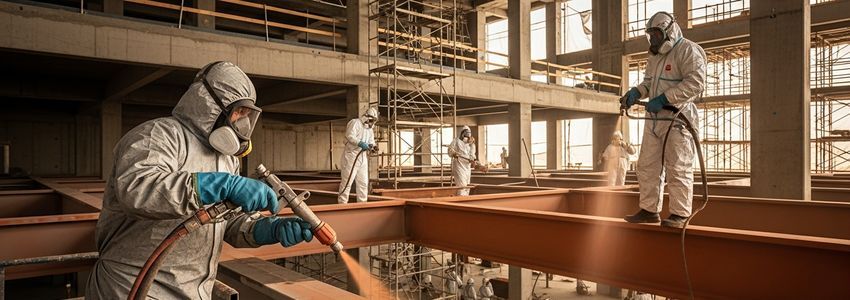
Fireproofing Contractor Business Loans: The Complete Financing Guide for Fireproofing Contractors
Fireproofing contractor business loans give fire protection companies the capital they need to take on bigger contracts, upgrade equipment, hire skilled crews, and grow a business that literally saves lives. Whether you apply intumescent coatings to structural steel, install passive fire protection systems, or provide spray fireproofing services for commercial and industrial clients, one thing is certain: the cost of doing this work is high and the timing between contract award and payment can be brutal on your cash flow. This guide covers every financing option available to fireproofing contractors in 2026, how to qualify, what rates to expect, and how Crestmont Capital can help you get funded fast.
Ready to Fund Your Fireproofing Business?
Get matched with financing options built for fire protection contractors. Apply in minutes and hear back fast.
Apply Now - It's Free- What Are Fireproofing Contractor Business Loans?
- Benefits of Business Financing for Fireproofing Companies
- How Business Loans Work for Fireproofing Contractors
- Types of Financing Available
- Fireproofing Equipment Financing
- Who Qualifies for Fireproofing Business Loans?
- How Crestmont Capital Helps Fireproofing Contractors
- Real-World Financing Scenarios
- How to Get Started
- Frequently Asked Questions
- Conclusion
What Are Fireproofing Contractor Business Loans?
Fireproofing contractor business loans are commercial financing products designed to help passive fire protection and fireproofing companies cover the costs of running and growing their operations. These loans can be used for a wide range of business purposes including payroll, materials, equipment, bonding, insurance premiums, vehicle purchases, working capital, and business expansion.
The fireproofing industry sits at the intersection of construction and life safety. Contractors who specialize in spray-applied fire-resistive materials (SFRM), intumescent coatings, firestop systems, and other passive fire protection solutions are often subcontracted on large commercial, industrial, and institutional projects. These projects involve significant upfront costs that can stretch months before the first payment arrives.
According to industry data, the passive fire protection market in the United States was valued at approximately $2.9 billion in 2023 and is projected to grow at a compound annual growth rate (CAGR) of around 5.8% through 2030. That growth creates opportunity, but also demands capital to seize it. Fireproofing contractors who have access to business financing are positioned to bid on larger contracts, win more work, and grow at a pace that outpaces the competition.
Unlike general-purpose small business loans, the best lenders for fireproofing contractors understand the construction industry cycle: long project timelines, retainage holdbacks, draw schedules, and payment delays that are common in commercial construction. Small business loans from specialized lenders like Crestmont Capital are structured to accommodate these realities.
Benefits of Business Financing for Fireproofing Companies
Fireproofing is a capital-intensive trade. Materials alone - including SFRM products, intumescent paints, firestop caulks, wrap strips, and specialty coatings - can represent tens of thousands of dollars per job. Add in labor, insurance, bonding, equipment, and compliance costs and it becomes clear why even well-established contractors frequently turn to business financing to keep their operations moving.
Key Benefits of Fireproofing Business Loans
- Bridge cash flow gaps: Get paid for work you have already done while waiting for draw payments, retainage release, or slow-paying GCs.
- Bid on larger contracts: Meet the financial requirements needed to qualify for bigger commercial and government projects.
- Purchase or upgrade equipment: Finance spray rigs, compressors, mixers, lifts, and safety equipment without draining your reserves.
- Hire and retain skilled crews: Cover payroll even during slow seasons or during the ramp-up period for a new contract.
- Buy materials in bulk: Negotiate better pricing from suppliers by purchasing in volume rather than job by job.
- Cover bonding and insurance costs: Performance bonds and commercial insurance are expensive - financing helps spread those costs.
- Invest in certifications and training: Stay compliant with UL-listed systems and maintain certifications that open doors to specialized work.
- Expand into new markets: Enter new geographic markets or specialty segments like high-rise residential or petrochemical facilities.
Fireproofing contractors working on steel-frame commercial buildings must often pre-purchase hundreds of bags of SFRM per project. With 50-pound bags running $20 or more each, a single mid-size project can require $30,000 to $80,000 in materials before the first invoice is even submitted.
Access to business capital also gives fireproofing contractors the ability to negotiate from a position of strength. When you are not cash-strapped, you can decline low-margin jobs, invest in better estimating tools, and take the time to build lasting relationships with general contractors who pay fairly and on time.
How Business Loans Work for Fireproofing Contractors
The process of securing a business loan for your fireproofing company follows a straightforward path when you work with the right lender. Here is what to expect at each stage.
Step 1: Application
Most alternative lenders require only basic documentation to start the process. You will typically provide your business name and EIN, three to six months of bank statements, basic financial information, and a summary of how you plan to use the funds. Traditional bank applications require significantly more documentation including tax returns, financial statements, and detailed business plans.
Step 2: Underwriting and Approval
Lenders review your revenue, time in business, credit profile, and industry. Alternative lenders can issue decisions in as little as 24 to 48 hours. Banks and SBA lenders may take weeks or months. The underwriting process evaluates your ability to repay the loan, your business health, and the level of risk involved.
Step 3: Funding
Once approved, funds are deposited directly into your business bank account. With fast lenders like Crestmont Capital, fireproofing contractors can access capital in as little as 24 to 72 hours after approval. Fast business loans are especially valuable when you need to mobilize quickly on a new job or cover an unexpected expense.
Step 4: Repayment
Repayment terms vary by loan type. Term loans typically feature fixed monthly payments over a defined period of 1 to 10 years. Lines of credit allow you to draw and repay as needed. Equipment loans are usually tied to the useful life of the equipment. Revenue-based products may involve daily or weekly remittances tied to a percentage of your bank deposits.
Fireproofing Industry at a Glance
Sources: Market research industry reports, lender data. Numbers are approximate and for educational purposes.
Types of Financing Available to Fireproofing Contractors
Not every fireproofing business has the same needs or qualifications. The right type of financing depends on your business stage, credit profile, the purpose of the funds, and how quickly you need capital. Below is a breakdown of the most common financing options used by fire protection contractors.
1. Term Loans
Term loans provide a lump sum of capital repaid over a fixed period at a set interest rate. They work well for large, one-time investments like opening a new branch, purchasing a spray rig, or funding a significant payroll increase ahead of a big project. Small business term loans are among the most widely used financing tools in the construction and specialty contractor space.
2. Business Lines of Credit
A business line of credit functions like a revolving credit card for your company. You are approved for a maximum credit limit and can draw funds as needed, repay, and draw again. This flexibility is ideal for fireproofing contractors who deal with unpredictable cash flow, varying project timelines, and seasonal fluctuations in workload. Lines of credit are commonly used for payroll, materials purchases, and bridging payment gaps between draw requests.
3. Equipment Financing
Fireproofing contractors rely on expensive, specialized equipment including pneumatic spray systems, volumetric mixers, scaffold systems, aerial lifts, and compressors. Equipment financing allows you to purchase or lease this equipment using the equipment itself as collateral. This means lower rates and longer terms than unsecured loans, and your cash stays in the business.
4. Working Capital Loans
Working capital loans are short-term financing products designed to cover day-to-day operational expenses. They are not intended for long-term investments but are excellent for covering payroll during a slow billing period, purchasing materials to mobilize on a new job, or handling unexpected expenses that arise mid-project.
5. SBA Loans
The U.S. Small Business Administration (SBA) backs loans through approved lenders, offering some of the lowest interest rates and longest terms available to small businesses. According to the SBA, 7(a) loans can go up to $5 million with terms up to 10 years for working capital. However, SBA loans require strong credit, at least two years in business, solid financials, and can take 30 to 90 days to close. They are best for established fireproofing contractors with strong credit histories who can afford to wait.
6. Invoice Financing and Factoring
Fire protection contractors who invoice general contractors or owners often wait 30 to 90 days for payment. Invoice financing (also called accounts receivable financing) allows you to access up to 80 to 95 percent of your outstanding invoices immediately, then receive the balance (minus fees) when your client pays. This is one of the most efficient tools for managing cash flow in a business that is fundamentally healthy but constantly waiting on slow-paying clients.
7. Merchant Cash Advance (MCA)
An MCA provides an upfront lump sum in exchange for a percentage of future daily or weekly bank deposits. MCAs are fast and accessible - even for contractors with lower credit scores - but they carry higher effective costs than most other loan types. They should be used selectively and for short-term needs only.
8. Construction-Specific Financing
Some lenders offer financing specifically designed for the construction industry, including construction loans that account for draw schedules, retainage, and the project-based nature of contractor revenue. These programs can be an excellent fit for fireproofing subcontractors with active project pipelines.
Fireproofing Financing Options Compared
| Loan Type | Best For | Typical Amount | Speed to Fund | Repayment |
|---|---|---|---|---|
| Term Loan | Growth, large purchases | $25K - $500K+ | 1-5 days | Monthly, fixed |
| Line of Credit | Cash flow, materials, payroll | $10K - $250K | 1-3 days | Revolving |
| Equipment Financing | Spray rigs, lifts, mixers | $10K - $500K+ | 2-5 days | Monthly, fixed |
| Working Capital | Operational expenses | $10K - $200K | 24-72 hrs | Daily/weekly |
| SBA Loan | Major expansion, real estate | Up to $5M | 30-90 days | Monthly, long-term |
| Invoice Financing | Outstanding invoices | 80-95% of invoices | 24-48 hrs | When clients pay |
| MCA | Emergency capital, bad credit | $5K - $250K | 24-48 hrs | Daily/weekly % |
Fireproofing Equipment Financing
One of the largest capital needs for fireproofing contractors is specialized equipment. Whether you are outfitting a new crew or replacing aging machinery, equipment financing is often the most cost-effective way to acquire the tools of your trade without depleting your working capital.
Common Equipment Financed by Fireproofing Contractors
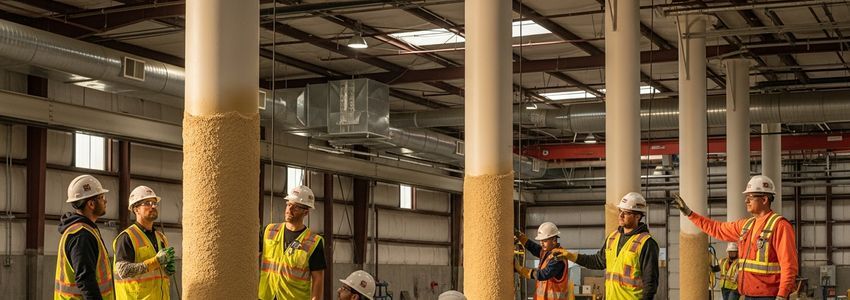
- SFRM spray systems: Pneumatic spray rigs and pumps for applying cementitious and gypsum-based fireproofing materials. Quality systems can cost $20,000 to $80,000 or more.
- Volumetric mixers: Self-loading mixers that allow on-site batching of fireproofing materials, critical for large-volume commercial projects.
- Intumescent spray systems: Specialized airless spray equipment for thin-film intumescent coatings used on exposed structural steel in architecturally sensitive applications.
- Aerial work platforms and scissor lifts: Required for high-elevation work on structural steel beams, decks, and columns.
- Compressors and generators: Supporting equipment for spray operations on job sites without adequate power supply.
- Service trucks and cargo vans: For transporting equipment, materials, and crew to commercial job sites.
- Safety and containment systems: Spray enclosures, dust collectors, negative air machines, and personal protective equipment for crew compliance.
With equipment financing, the equipment itself typically serves as collateral, which means lenders are often willing to offer lower rates and longer repayment terms compared to unsecured loans. Many fireproofing contractors finance equipment with 5-year terms, keeping monthly payments manageable while preserving cash for operations.
Fireproofing contractors who finance equipment may be eligible to deduct the full purchase price under IRS Section 179 or bonus depreciation rules, even if the equipment was financed rather than purchased outright. Consult your tax professional to see how this applies to your specific situation. This can result in significant tax savings in the year of purchase.
Who Qualifies for Fireproofing Business Loans?
One of the most common questions fireproofing contractors ask is whether they can qualify for business financing, especially if they have less-than-perfect credit or a relatively short time in business. The good news is that qualifications vary significantly by lender and loan type, and many contractors who are rejected by traditional banks can still secure funding through alternative lenders.
General Qualification Requirements
Requirements vary by lender and loan product, but here are typical thresholds across common loan types:
- Time in Business: Most alternative lenders require at least 6 months to 1 year in business. SBA loans typically require 2+ years of operating history.
- Annual Revenue: Many lenders look for a minimum of $100,000 to $150,000 in annual revenue. Higher revenue unlocks larger loan amounts.
- Credit Score: Alternative lenders may approve borrowers with scores as low as 550 to 600. Banks and SBA lenders typically want scores above 680 to 700. Bad credit business loans are available for contractors working to rebuild their credit.
- Bank Statements: 3 to 6 months of business bank statements showing consistent deposits and manageable overdraft history.
- Industry: Fireproofing and fire protection contracting is generally viewed favorably by lenders because it involves essential, compliance-driven work with steady demand from commercial construction.
Factors That Strengthen Your Application
- Active contracts or signed letters of intent from GCs or project owners
- Strong business credit profile with established trade lines
- Positive cash flow trends (even if revenue fluctuates seasonally)
- Low existing debt relative to revenue
- Proof of licenses, certifications, and insurance
- History of completing projects on time and within budget
According to reporting from Forbes and CNBC, small business loan approval rates have been improving for specialty contractors as alternative lenders develop more sophisticated underwriting models that account for project-based revenue patterns rather than just traditional financial ratios.
Find Out What You Qualify For
Every fireproofing business is different. Let us review your situation and find the best financing fit - no commitment required.
Check My OptionsHow Crestmont Capital Helps Fireproofing Contractors
Crestmont Capital is a leading U.S. business lender that specializes in fast, flexible financing for contractors and specialty trade businesses. We understand the unique financial pressures fireproofing contractors face - from material costs and crew payroll to bonding requirements and equipment needs - and we have built our lending programs to address them.
What Sets Crestmont Capital Apart
- Fast approvals: Many clients receive funding decisions within 24 hours and funding within 1 to 3 business days.
- Flexible qualification: We work with fireproofing contractors who have credit scores from 550 and up, not just borrowers with perfect credit histories.
- Multiple loan products: From working capital loans and lines of credit to equipment financing and construction-specific programs, we match you with the right product for your needs.
- High loan amounts: Funding up to $5 million or more for qualified fireproofing businesses.
- Dedicated advisors: Real people who understand your industry and can walk you through options without jargon.
- No prepayment penalties on many products: Pay off early and save on interest if your cash flow improves.
If you work in fire suppression or fire restoration alongside fireproofing, Crestmont Capital also has resources specifically for those related fields. Check out our guides on fire suppression business loans and fire restoration business loans for more industry-specific financing information.
Financial publications including Bloomberg and Reuters have highlighted the growing role of alternative lenders in filling gaps left by traditional banks, particularly for contractors and construction businesses that traditional lenders historically underserved. Crestmont Capital is at the forefront of this shift, bringing contractor-friendly terms and fast execution to businesses that need capital now, not in 90 days.
When you apply at Crestmont Capital, your initial inquiry typically involves only a soft credit pull, meaning your credit score is not affected. You can explore your options and see what you qualify for with no obligation and no impact to your credit until you decide to move forward.
Real-World Financing Scenarios for Fireproofing Contractors
Understanding how other fireproofing contractors have used business financing can help you identify which solution fits your situation best. Here are several realistic scenarios that illustrate how different financing products apply to this industry.
Scenario 1: Winning a New Commercial Project
A fireproofing contractor in Atlanta wins a subcontract to apply SFRM on a 200,000-square-foot Class A office building. The contract is worth $380,000 but requires the contractor to mobilize immediately with $60,000 in materials and two weeks of crew payroll before submitting the first draw request. The contractor uses a working capital loan of $85,000 to cover mobilization costs, knowing the first draw payment will arrive within 45 days. The loan is repaid quickly and the contractor completes the project with strong margins.
Scenario 2: Equipment Upgrade to Win High-Rise Work
A mid-size fireproofing company in Chicago has been awarded a spot on the approved vendor list for a major general contractor doing high-rise work in the downtown market. However, their aging spray rig is not reliable enough for a project of this scale. They finance a new SFRM spray system and a scissor lift for a combined $110,000 over 60 months, keeping their monthly payment at approximately $2,200. The new equipment allows them to complete the project efficiently and build a long-term relationship with the GC.
Scenario 3: Managing Slow Season Cash Flow
A fireproofing contractor in the Midwest experiences a seasonal slowdown each winter as commercial construction activity slows. Rather than laying off experienced crew members and rehiring and retraining in the spring, the owner secures a $75,000 business line of credit to cover payroll and overhead during the slow months. The line is repaid as projects resume in March and April, and the contractor retains the team that took years to build.
Scenario 4: Expanding to a Second Market
After building a strong reputation in the Dallas-Fort Worth market, a fireproofing contractor identifies significant demand in Houston. Opening a second operational base requires purchasing a second spray rig, hiring a project manager, and covering the ramp-up period while building GC relationships in the new market. An SBA 7(a) loan of $250,000 provides the runway needed to establish the new operation without cannibalizing cash flow in the existing market.
How to Get Started
Complete our quick application at offers.crestmontcapital.com/apply-now - takes just a few minutes.
A Crestmont Capital advisor will review your needs and match you with the right financing option.
Receive your funds and put them to work - often within days of approval.
Frequently Asked Questions
What are fireproofing contractor business loans?
Fireproofing contractor business loans are commercial financing products that provide capital to companies specializing in passive fire protection, spray fireproofing, intumescent coatings, and related services. These loans can cover equipment, payroll, materials, bonding, working capital, and business expansion.
How much can a fireproofing contractor borrow?
Loan amounts vary widely based on your revenue, time in business, credit profile, and lender type. Fireproofing contractors typically borrow anywhere from $25,000 to $500,000 or more through alternative lenders. SBA loans can go up to $5 million for qualified borrowers.
What credit score do I need to qualify?
Alternative lenders like Crestmont Capital may work with fireproofing contractors with credit scores as low as 550 to 600. Traditional banks and SBA lenders typically require scores above 680 to 700. Higher scores generally result in better rates and terms.
How fast can I get funded?
With alternative lenders, fireproofing contractors can often receive approval within 24 hours and funding within 1 to 3 business days. Traditional bank loans may take several weeks, and SBA loans can take 30 to 90 days from application to funding.
Can I get a business loan if my fireproofing company is newer?
Yes. Some lenders work with fireproofing businesses that have been operating for as little as 6 months. Startup-stage contractors may need to provide more documentation or collateral, or may qualify for smaller loan amounts. As your business grows and demonstrates a track record, you can typically access larger amounts and better rates.
What documents do I need to apply?
For alternative lenders, the application is typically straightforward and requires your business name and EIN, 3 to 6 months of business bank statements, basic revenue information, and the loan amount and purpose. More formal lenders and SBA programs may require two years of tax returns, a profit and loss statement, a balance sheet, and a business plan.
Can fireproofing contractors finance spray equipment?
Yes. Fireproofing spray systems, volumetric mixers, intumescent spray equipment, aerial lifts, compressors, and service vehicles are all commonly financed through equipment financing programs. The equipment itself serves as collateral, which typically results in lower rates and longer repayment terms than unsecured loans.
What is invoice financing and can fireproofing contractors use it?
Invoice financing allows businesses to access cash tied up in unpaid invoices. Fireproofing contractors who invoice GCs or owners and wait 30 to 90 days for payment can use invoice financing to receive up to 80 to 95 percent of the invoice value immediately. This is an excellent tool for managing cash flow on active projects with slow-paying clients.
Is collateral required for fireproofing business loans?
It depends on the loan type. Equipment financing uses the equipment as collateral. SBA loans often require collateral when available. Many alternative term loans and working capital products are available on an unsecured basis, meaning no collateral is required - though a personal guarantee is typically still expected.
What interest rates can I expect on fireproofing business loans?
Interest rates vary significantly by loan type, lender, and your qualifications. SBA loan rates typically range from 6 to 12 percent annually. Alternative term loans may range from 10 to 40 percent APR depending on risk. Equipment financing often ranges from 5 to 20 percent. Working capital loans and MCAs may carry higher effective rates. The stronger your business profile, the better the rates you can access.
Can I use a business loan to cover bonding and insurance costs?
Yes. Working capital loans and lines of credit can be used to cover performance bonds, bid bonds, general liability insurance, workers compensation, and other insurance premiums that are required to operate and win commercial fire protection contracts. Some lenders also offer insurance premium financing as a specific product.
What is a business line of credit and how can fireproofing contractors use it?
A business line of credit is a revolving credit facility that allows you to borrow up to a set limit, repay, and borrow again as needed. For fireproofing contractors, lines of credit are commonly used to cover payroll between draw payments, purchase materials for a new project, and manage seasonal cash flow gaps. They are more flexible than term loans because you only pay interest on what you use.
How does bad credit affect my ability to get a fireproofing business loan?
Bad credit makes it harder to qualify for traditional bank loans and SBA products, but alternative lenders assess your overall business health rather than relying solely on credit score. Revenue, time in business, cash flow patterns, and active contracts all factor into the approval decision. Bad credit may result in higher rates or smaller loan amounts, but it does not necessarily disqualify you.
Can a fireproofing contractor qualify for an SBA loan?
Yes, fireproofing contractors can qualify for SBA loans including the SBA 7(a) and SBA 504 programs. SBA loans offer low rates and long terms, making them ideal for significant investments. However, they require strong credit (680 or higher), at least 2 years in business, solid financial statements, and can take 30 to 90 days to process. They are best suited for established fireproofing companies with a proven track record.
What should I look for when choosing a lender for my fireproofing business?
Look for a lender who understands the construction and specialty contractor industry, offers fast and transparent approvals, provides flexible repayment terms, has experience with project-based revenue patterns, and charges fees and rates that are clearly disclosed upfront. Avoid lenders who are vague about total cost of capital or who pressure you to sign quickly without giving you time to review terms.
Conclusion: Grow Your Fireproofing Business with the Right Financing
The fireproofing industry is growing rapidly, driven by increasing construction activity, stricter building codes, and a greater emphasis on life safety across commercial, industrial, and institutional sectors. For fireproofing contractors, this growth presents significant opportunities - but seizing those opportunities requires capital.
Whether you need a working capital loan to bridge a cash flow gap, equipment financing to purchase a new spray system, or a business line of credit to keep your crew paid between draw requests, the right financing solution can be the difference between bidding on a $500,000 project and having to pass. It can mean the difference between retaining your best crew members through a slow season and starting from scratch in the spring.
At Crestmont Capital, we are committed to helping fireproofing contractors access the funding they need to win more work, invest in better equipment, and build the kind of business that lasts for generations. We are not just a lender - we are a financial partner who understands your industry and is invested in your success.
If you are ready to explore your financing options, applying takes just a few minutes and there is no obligation. Our team will review your application, discuss your needs, and present you with options that make sense for your fireproofing business. Do not let cash flow constraints hold your company back when the solutions are right here.
Get Funded. Grow Your Fireproofing Business.
Apply now and a Crestmont Capital specialist will reach out within one business day. Fast approvals, flexible terms, and financing built for contractors.
Apply for Financing TodayDisclaimer: The information provided in this article is for general educational purposes only and is not financial, legal, or tax advice. Funding terms, qualifications, and product availability may vary and are subject to change without notice. Crestmont Capital does not guarantee approval, rates, or specific outcomes. For personalized information about your business funding options, contact our team directly.








