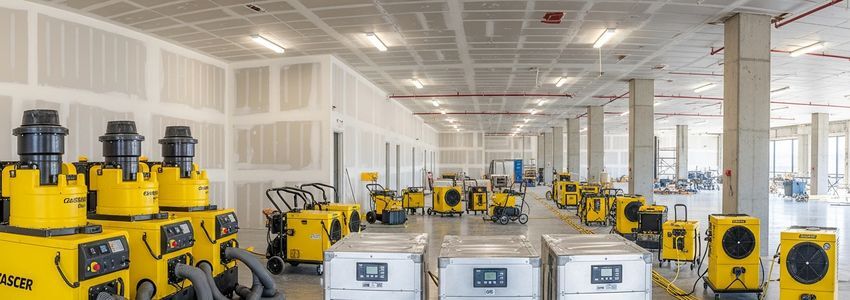
The fire restoration industry is a critical, high-stakes field where speed, expertise, and specialized equipment are non-negotiable. When disaster strikes, property owners rely on skilled contractors to mitigate damage, restore safety, and rebuild lives. However, the operational demands of this industry-from maintaining a fleet of advanced equipment to managing payroll while waiting on insurance payouts-create significant cash flow challenges. This is where fire restoration business loans become an indispensable tool. These specialized financing solutions are designed to provide the immediate capital necessary to handle any job, scale operations, and ensure your company is always ready to respond when the call comes in.
For fire restoration contractors, access to reliable funding is not just a benefit; it is a core component of a successful business strategy. The gap between completing a project and receiving payment from an insurance company can stretch for weeks or even months, straining resources and hindering growth. Without adequate capital, you might have to turn down large-scale projects, delay equipment upgrades, or struggle to meet payroll obligations. Securing fire restoration business loans from a trusted lender like Crestmont Capital provides the financial stability to bridge these gaps, invest in cutting-edge technology, and confidently expand your service area. This guide will explore everything you need to know about financing your fire restoration business, from the types of loans available to how you can qualify and put the capital to work for your company.
Navigating the world of commercial financing can seem complex, but understanding your options is the first step toward unlocking your business's full potential. Whether you are a startup looking to purchase your first set of air scrubbers and dehumidifiers or an established firm aiming to acquire a competitor, the right funding is essential. This comprehensive guide breaks down the specifics of fire restoration business loans, helping you make informed decisions that will fuel your company's growth and solidify its reputation as a leader in the community. With the right financial partner, you can focus on what you do best: helping people recover and rebuild after a fire.
In This Article
- What Are Fire Restoration Business Loans?
- Key Benefits of Fire Restoration Financing
- Types of Fire Restoration Business Loans
- How Fire Restoration Business Loans Work
- Who Qualifies?
- How Crestmont Capital Helps
- Real-World Scenarios
- Comparing Loan Options
- How to Apply
- Frequently Asked Questions
- How to Get Started
- Conclusion
What Are Fire Restoration Business Loans?
Fire restoration business loans are a category of commercial financing products specifically structured to meet the unique needs of fire and smoke damage restoration contractors. Unlike generic business loans, these financial tools are designed with a deep understanding of the industry's project-based nature, high upfront costs, and unpredictable revenue cycles. When a fire occurs, restoration companies must deploy teams and equipment immediately, often incurring substantial expenses before a contract is even finalized or an insurance claim is processed. These loans provide the necessary liquidity to cover these immediate costs and ensure seamless operations.
The fire restoration industry is a demanding sector that provides a wide range of essential services. These services go far beyond simple cleanup. A professional fire restoration company handles everything from initial damage assessment and securing the property to complex tasks like fire damage cleanup, soot and smoke removal, structural repairs, and water damage mitigation from firefighting efforts. Additionally, contractors manage contents restoration for personal belongings, advanced odor elimination using thermal foggers or ozone generators, and often coordinate with insurance adjusters. Each of these services requires specialized equipment, trained personnel, and significant working capital to execute effectively.
The necessity for financing becomes clear when you consider the business model. A single residential fire restoration project can involve tens of thousands of dollars in labor, materials, and equipment rental. A larger commercial project can easily run into the hundreds of thousands. Most of this capital is spent upfront, while payment from the property owner's insurance company may not arrive for 30, 60, or even 90 days. This significant gap between expenditure and revenue can cripple a business without a strong financial backstop. Fire restoration business loans are the bridge over this gap, allowing contractors to maintain positive cash flow, take on multiple projects simultaneously, and invest in the growth of their company without being constrained by delayed payments.
Essentially, these loans are the lifeblood of a modern restoration business. They empower contractors to purchase or lease state-of-the-art equipment like negative air machines, industrial-grade dehumidifiers, and specialized cleaning agents. They cover payroll for certified technicians, fund marketing efforts to secure new contracts, and provide the flexibility to respond to large-scale disasters like wildfires, which require a rapid and significant mobilization of resources. Without access to this type of dedicated financing, many otherwise successful restoration companies would find it impossible to scale or even survive the inherent financial volatility of the industry.
Key Benefits of Fire Restoration Business Financing
Securing dedicated financing brings a multitude of strategic advantages to a fire restoration business, transforming its operational capabilities and growth trajectory. The most immediate benefit is the significant improvement in cash flow management. With access to a reliable source of capital, contractors are no longer at the mercy of slow insurance payouts. They can pay suppliers on time, meet payroll without stress, and cover unexpected operational costs with confidence. This financial stability allows business owners to shift their focus from day-to-day survival to long-term strategic planning, such as market expansion and service diversification.
Another key benefit is the ability to invest in advanced equipment and technology. The fire restoration industry is constantly evolving, with new tools and techniques emerging that improve efficiency and deliver better results. Financing allows a company to acquire the latest air scrubbers, thermal imaging cameras, and ultrasonic cleaning systems without depleting its cash reserves. This investment not only enhances the quality of work but also positions the company as a market leader, attracting more lucrative contracts and discerning clients. A well-equipped team can complete jobs faster and more effectively, boosting profitability and customer satisfaction.
Furthermore, fire restoration business loans empower companies to scale their operations and take on larger, more profitable projects. A small contractor might have the expertise to handle a major commercial fire but lack the capital to mobilize the necessary crew and equipment. A business line of credit or a working capital loan can provide the funds needed to bid on and execute these larger jobs, which can fundamentally change the company's revenue potential. This scalability is also crucial for responding to widespread disasters, where the demand for restoration services surges, presenting a massive opportunity for well-prepared firms.
Ultimately, strategic financing is about building a more resilient and competitive business. It provides a safety net for unforeseen circumstances and the fuel for deliberate growth. By leveraging external capital, fire restoration contractors can build a stronger, more agile, and more profitable enterprise.
- Improved Cash Flow: Bridge the gap between job completion and insurance payments, ensuring smooth day-to-day operations.
- Equipment Upgrades: Purchase or lease state-of-the-art restoration technology to improve efficiency and service quality.
- Business Scalability: Take on larger and more complex projects that offer higher profit margins.
- Emergency Readiness: Maintain a "war chest" of capital to rapidly deploy resources for large-scale disaster response.
- Competitive Advantage: Invest in marketing, certifications, and employee training to stand out in a crowded market.
- Expansion Opportunities: Fund the acquisition of a competitor, open a new location, or add complementary service lines like mold remediation.
Types of Fire Restoration Business Loans
When seeking financing for a fire restoration company, it is crucial to understand that there is no one-size-fits-all solution. Different business needs call for different types of funding. The best loan for purchasing a new fleet of service vans is not necessarily the best option for covering payroll during a slow month. Fortunately, lenders like Crestmont Capital offer a diverse portfolio of financing products, each tailored to a specific business purpose. By familiarizing yourself with these options, you can select the most effective and cost-efficient tool for your company's immediate and long-term goals.
For day-to-day operational needs and managing the cash flow gap caused by insurance payment delays, a Working Capital Loan or a Business Line of Credit is often the ideal choice. Working capital loans provide a lump sum of cash that can be used for any business purpose, from buying cleaning supplies to funding a marketing campaign. A line of credit, on the other hand, offers more flexibility. It provides access to a revolving pool of funds that you can draw from as needed and pay back over time, only paying interest on the amount you use. This is perfect for covering unexpected expenses or fluctuating project costs.
For major investments, more structured financing is appropriate. Equipment Financing is specifically designed for purchasing new or used machinery, such as dehumidifiers, air movers, and thermal foggers. The equipment itself typically serves as collateral for the loan, which can make these loans easier to qualify for and often come with favorable terms. For long-term strategic initiatives like buying a new facility, acquiring another business, or significant expansion, a traditional Term Loan or an SBA 7(a) Loan might be the best fit. SBA loans are partially guaranteed by the U.S. Small Business Administration, allowing lenders to offer larger amounts with longer repayment terms and competitive interest rates, though they typically have a longer application process. Finally, for immediate cash flow needs tied directly to outstanding invoices, Invoice Factoring allows you to sell your unpaid insurance receivables to a factoring company for an immediate cash advance.
| Loan Type | Best For | Typical Amount | Speed |
|---|---|---|---|
| Working Capital Loan | Payroll, supplies, immediate operating costs | $25,000 - $500,000 | 1-5 business days |
| Equipment Financing | Air scrubbers, dehumidifiers, restoration tools | $10,000 - $2M+ | 2-5 business days |
| Business Line of Credit | Revolving funds for variable job costs | $10,000 - $500,000 | Same day to 3 days |
| SBA 7(a) Loan | Long-term growth, acquisitions, real estate | $50,000 - $5M | 30-90 days |
| Term Loan | Predictable expansion, vehicle purchases | $50,000 - $1M | 3-10 business days |
| Invoice Factoring | Insurance claim receivables gaps | 80-90% of invoice value | 24-48 hours |
Ready to Fund Your Next Fire Restoration Project?
Get fast, flexible financing from the #1 business lender in the U.S. No obligation - apply in minutes.
Apply Now →By the Numbers
Fire Restoration Industry - Key Statistics
$210B+
U.S. property damage restoration market annual revenue
$83K+
Average fire damage insurance claim per incident
350K+
U.S. residential structure fires reported annually
4-6%
Annual growth rate of the property restoration industry
How Fire Restoration Business Loans Work
The process of securing a fire restoration business loan, especially with a modern lender like Crestmont Capital, is designed to be fast, straightforward, and minimally disruptive to your business operations. The goal is to get you the capital you need as quickly as possible so you can get back to managing your projects and serving your clients. The journey from application to funding typically involves a few clear, well-defined steps that prioritize efficiency and transparency. Gone are the days of weeks-long waits and mountains of paperwork associated with traditional bank lending.
The process begins with a simple application, which can often be completed online in a matter of minutes. You will provide basic information about your business, such as its legal name, years in operation, estimated annual revenue, and the amount of funding you are requesting. You will also need to provide some personal information as the business owner. This initial step allows the lender to get a high-level overview of your company's financial health and funding needs. It is a low-commitment way to see what options might be available to you without impacting your credit score.
After you submit your application, it moves into the review and approval stage. A dedicated funding specialist will be assigned to your case. They will review the information you provided and will likely request a few supporting documents, such as recent bank statements or profit and loss statements, to verify your revenue and business activity. This specialist understands the nuances of the fire restoration industry and will work with you to identify the best possible financing solution for your specific situation. They will present you with clear, easy-to-understand offers, detailing the loan amount, interest rate, and repayment terms.
Once you accept an offer that aligns with your business goals, the final step is receiving your funds. For many types of loans, such as working capital or lines of credit, the capital can be deposited directly into your business bank account in as little as 24 to 48 hours after approval. This rapid funding is a critical advantage in the restoration industry, where immediate access to cash can be the difference between securing a major contract and losing it to a competitor. With the funds in hand, you are free to deploy the capital as needed-purchasing equipment, covering payroll, or investing in any other area that will drive your business forward.
Apply
Complete a simple online application in minutes with basic business information.
Review & Approval
Our specialists review your application and present you with clear, tailored loan offers.
Receive Funds
Once approved, capital is deposited directly into your account, often within 24 hours.
Deploy Capital
Use your funds to buy equipment, manage payroll, and grow your restoration business.
Who Qualifies for Fire Restoration Business Loans?
Qualifying for a fire restoration business loan is often more accessible than many business owners assume, especially when working with alternative lenders who specialize in small to medium-sized businesses. Unlike traditional banks that may have rigid, outdated criteria, lenders like Crestmont Capital focus on the overall health and potential of your business, not just a single metric. The primary goal is to partner with viable, growing companies, so the qualification requirements are designed to be flexible and reflect the realities of the service industry.
One of the most important factors lenders consider is your time in business. Most lenders prefer to see a track record of at least six months to one year of operation. This history demonstrates that your business is established and has a proven concept. While startups can find funding, the options and terms generally become more favorable as your business matures. A consistent history of projects and revenue generation provides confidence to the lender that you have the experience to manage your operations and repay the loan.
Your business's revenue is another key consideration. Lenders will want to see evidence of consistent cash flow, which is typically verified through recent bank statements or financial records. While there might be a minimum annual or monthly revenue requirement, it is often more about the consistency than the sheer volume. A business with steady, predictable income is seen as a lower risk. For fire restoration companies, whose revenue can be lumpy due to the project-based nature of the work, lenders will often look at a trailing average over several months to get a clear picture of financial health.
Finally, while personal and business credit scores are part of the evaluation, they are not always the deciding factor. Many modern lenders have options for business owners with less-than-perfect credit. A minimum credit score in the 550+ range can often be sufficient to qualify for certain types of financing, particularly if the business has strong revenue and has been operating for a reasonable period. The required documentation is also streamlined. Typically, you will need to provide your business license, government-issued ID, a voided business check, and the last three to six months of business bank statements. For larger loans or SBA products, more extensive documentation like tax returns and a full business plan may be required.
Key Stat: According to the SBA, over 33 million small businesses operate in the U.S. - and access to capital is consistently cited as the #1 barrier to growth for service businesses like fire restoration contractors.
How Crestmont Capital Helps Fire Restoration Businesses
As the #1 business lender in the U.S., Crestmont Capital has a deep and proven understanding of the unique challenges and opportunities within the fire restoration industry. We recognize that your business operates on the front lines of disaster recovery, requiring immense flexibility, speed, and financial agility. Our entire lending process is built to support these needs, providing fast, reliable access to capital so you can focus on restoring properties and communities. We go beyond simply providing funds; we act as a strategic financial partner dedicated to fueling your growth.
Our comprehensive suite of financing products is tailored to every aspect of your operation. If you need to invest in the latest technology, our Equipment Financing solutions can help you acquire everything from advanced air scrubbers and dehumidifiers to new service vehicles, often with 100% financing. For managing the unpredictable ebb and flow of project costs and payroll, a Business Line of Credit offers the perfect on-demand financial tool. You can draw funds whenever you need them and only pay interest on what you use, making it an ideal safety net for cash flow management.
For more immediate or general business needs, our Working Capital Loans provide a quick infusion of cash to cover any expense, from marketing to material purchases. And for those with long-term ambitions, such as acquiring a competitor or purchasing commercial real estate, our team can guide you through the process of securing favorable, long-term SBA Loans. The core principles that drive our support for fire restoration contractors are very similar to what we covered in our guide to water damage restoration business loans, as both industries face comparable challenges with insurance billing cycles and high operational costs.
At Crestmont Capital, we pride ourselves on a streamlined application and approval process. We know that in your industry, time is money. That is why our online application takes just minutes to complete, and we often provide decisions and funding within 24 to 72 hours. Our team of experienced funding advisors is here to understand your specific goals and structure a financing package that makes sense for your business. Do not let capital constraints hold you back. Apply Now and discover how a partnership with Crestmont Capital can help you build a more resilient and profitable fire restoration company.
Pro Tip: Many fire restoration contractors qualify for multiple financing products simultaneously - such as an equipment loan for new air scrubbers and a working capital line for day-to-day operations. Crestmont can help you structure the right combination for your business.
Real-World Scenarios
To better understand the practical application of these loans, let's explore some common situations where fire restoration contractors leverage financing to overcome challenges and seize opportunities.
Scenario 1: The Urgent Residential House Fire Project
A local family's home suffers significant fire and smoke damage. Your company, "Phoenix Restoration," gets the call. The project requires an immediate outlay of $35,000 for labor, materials, and specialized equipment rental to start the mitigation process. However, the insurance payment is not expected for at least 60 days. Instead of draining your operating account, you use your pre-approved $100,000 business line of credit. You draw $35,000 to cover all upfront costs, allowing your team to begin work immediately. This quick response impresses the homeowners and the insurance adjuster, leading to more referrals. Once the insurance check arrives, you pay back the draw, and the line of credit is fully available for the next job.
Scenario 2: The Large-Scale Commercial Restaurant Fire
"Inferno Responders Inc." lands a major contract to restore a popular restaurant gutted by a kitchen fire. The total project is valued at $250,000, requiring extensive structural repair, soot removal from commercial-grade appliances, and complete odor elimination. To manage the scale of this job without disrupting your other projects, you secure a $150,000 working capital loan. This capital is used to hire temporary skilled labor, purchase bulk cleaning supplies at a discount, and rent heavy-duty scaffolding. The loan ensures you have the resources to complete the job on schedule and to the highest standard, solidifying your reputation for handling large commercial losses.
Scenario 3: Upgrading Equipment for a Multi-Family Building Project
"Apex Restoration Services" is bidding on a contract for a 50-unit apartment building that experienced a fire affecting an entire wing. To be competitive and efficient, you realize your current fleet of dehumidifiers and air movers is outdated. You apply for a $75,000 equipment financing loan. You are quickly approved and use the funds to purchase 20 new high-efficiency dehumidifiers, 50 industrial air movers, and two thermal fogging machines. The new equipment allows you to promise a faster project completion time in your bid, which helps you win the lucrative contract. The loan payments are structured over five years, making the investment affordable and immediately profitable.
Scenario 4: Scaling Up for Wildfire Disaster Response
A series of wildfires sweeps through a region 100 miles from your primary service area. The demand for restoration services is overwhelming. To seize this opportunity, "Statewide Recovery Specialists" needs to rapidly scale up. You use a combination of financing: you draw $50,000 from your line of credit to set up a temporary command center and cover travel and lodging for your crews. Simultaneously, you get a short-term working capital loan of $100,000 to hire and train 15 new technicians and purchase personal protective equipment (PPE) in bulk. This strategic use of capital allows you to service dozens of homes and businesses in the disaster zone, generating significant revenue and establishing a new market presence.
Scenario 5: Acquiring a New Franchise Location
You are a successful operator of a fire restoration franchise and have the opportunity to purchase an adjacent territory from a retiring owner. The acquisition cost is $400,000. To fund this expansion, you work with Crestmont Capital to secure an SBA 7(a) loan. The favorable long-term repayment schedule (10 years) and competitive interest rate make the monthly payments manageable. The loan covers the purchase price and provides additional working capital to integrate the new territory's operations and marketing into your existing business. This strategic acquisition doubles your company's size and revenue potential in a single move.
Scale Your Fire Restoration Company with Smart Financing
Equipment, working capital, and growth loans available. Get a decision in as little as 24 hours.
Apply Now →
Comparing Fire Restoration Financing Options
Choosing the right financing product for your fire restoration business requires a careful comparison of the available options, weighing factors like speed, cost, flexibility, and loan purpose. Each type of loan serves a distinct function, and the optimal choice depends entirely on your specific business scenario. A rushed decision can lead to taking on debt that is mismatched with your needs, so understanding the key tradeoffs is paramount for making a smart financial move.
The most significant tradeoff is often between speed and terms. Faster financing options, like working capital loans and invoice factoring, are designed for immediate needs and can provide cash in as little as 24 hours. This speed is invaluable when you need to start a project immediately. However, this convenience may come with shorter repayment periods and potentially higher interest rates compared to slower options. On the other end of the spectrum, SBA loans offer some of the most favorable terms available-long repayment periods and low rates-but the application and approval process can take several weeks or even months, making them unsuitable for urgent cash flow problems.
Another critical comparison is between flexibility and purpose. A business line of credit offers maximum flexibility. It is a revolving source of funds that you can use for any business need, repay, and use again. This makes it a powerful tool for managing the unpredictable nature of the restoration business. In contrast, equipment financing is highly specific. The funds are used exclusively to purchase equipment, and the equipment itself collateralizes the loan. While less flexible, this specificity often results in better rates and terms than an unsecured loan for the same amount, as the lender's risk is lower.
Many savvy business owners find that the best strategy is not to choose just one option but to "stack" multiple financing products to create a comprehensive financial toolkit. For example, a company might maintain a business line of credit for day-to-day cash flow management, use an equipment loan for a major technology upgrade, and pursue an SBA loan for a long-term goal like acquiring a new facility. By layering these products, you can use the most cost-effective tool for each specific need, optimizing your capital structure for both stability and growth. A financial partner like Crestmont Capital can help you analyze your business needs and devise the ideal combination of financing solutions.
How to Apply for a Fire Restoration Business Loan
Applying for a fire restoration business loan has become a streamlined and user-friendly process, thanks to modern online lenders. The first step is to gather the necessary documentation. Being prepared will expedite the process and demonstrate to lenders that you are an organized and serious applicant. While requirements can vary slightly between lenders and loan types, a standard set of documents will be needed for most applications.
Typically, you should have the following on hand:
- Business Bank Statements: The most recent three to six months of statements to verify your revenue and cash flow.
- Business Registration and Licenses: Proof that your company is a legally registered entity in good standing.
- Government-Issued Photo ID: For all owners with 20-25% or more stake in the business.
- Voided Business Check: To set up the direct deposit of funds into your business account.
- Financial Statements: For larger loan amounts, you may need to provide a profit and loss statement and a balance sheet.
- Business Tax Returns: Often required for SBA loans and larger term loans.
Once you have your documents organized, the next step is to complete the application. Most lenders, including Crestmont Capital, offer a simple online application that can be finished in minutes. Be prepared to provide basic details about your business, including its legal name, address, tax ID number, years in operation, and annual revenue. You will also need to specify the loan amount you are requesting and the intended use of the funds. This information helps the lender quickly assess your eligibility and match you with the most suitable loan products. As noted by business experts at Forbes, having a clear purpose for the loan strengthens your application.
After submission, a funding advisor will typically contact you to discuss your application and any next steps. This is your opportunity to ask questions and ensure you fully understand the terms of any offers you receive. For certain loan types, like those backed by the U.S. Small Business Administration, the process is more in-depth. You can find detailed information on the requirements for these programs directly on the official SBA.gov website. The service sector, which includes fire restoration, is a massive part of the U.S. economy, a fact underscored by data from sources like Census.gov, and lenders are eager to support its growth. By being prepared and working with a reputable lender, you can navigate the application process smoothly and secure the capital you need.
Frequently Asked Questions
What types of loans work best for fire restoration companies?
The best loans depend on the specific need. Working capital loans and business lines of credit are excellent for managing day-to-day cash flow and bridging the gap from insurance payments. Equipment financing is ideal for purchasing new machinery like air scrubbers and service vehicles. For long-term growth or acquisitions, SBA loans or term loans are often the most suitable options.
How quickly can I get funded?
Funding speed varies by loan type. With Crestmont Capital, working capital loans, lines of credit, and equipment financing can often be funded in as little as 24-72 hours after approval. Term loans may take a few days longer, while SBA loans have a more extensive process that can take 30-90 days.
What is the minimum credit score required?
While requirements vary, many lenders like Crestmont Capital can work with business owners who have a personal credit score of 550 or higher. We look at the overall health of your business, including revenue and time in operation, not just your credit score.
Can I get a loan if my business is new?
Most lenders require a minimum of six months in business to show a track record. While it can be more challenging for brand-new startups, options may be available, especially for equipment financing where the asset serves as collateral. The more business history and revenue you can show, the more options will be available.
Do I need to provide collateral for a loan?
Not always. Working capital loans and business lines of credit are often unsecured, meaning they do not require specific collateral. However, they may require a personal guarantee from the business owner. Equipment loans are self-collateralized by the machinery being purchased. Larger loans like SBA loans may require collateral.
How can I use the funds from a fire restoration business loan?
The funds can be used for nearly any legitimate business purpose. Common uses include purchasing specialized equipment, covering payroll, buying materials and supplies, investing in marketing, hiring new employees, managing cash flow during slow periods, or funding an expansion.
Will applying for a loan affect my credit score?
Most initial applications with lenders like Crestmont Capital involve a "soft" credit pull, which does not impact your credit score. This allows you to see what offers you might qualify for without any negative effect. A "hard" credit pull is typically only performed once you decide to move forward with a specific loan offer.
What is the difference between a term loan and a line of credit?
A term loan provides a lump sum of cash upfront, which you repay in fixed installments over a set period. It's great for planned, one-time investments. A line of credit provides access to a revolving pool of funds that you can draw from as needed. It's ideal for ongoing, unpredictable expenses and cash flow management.
Can I pay off my loan early?
This depends on the specific loan product. Many loans offered by Crestmont Capital do not have prepayment penalties, allowing you to pay off the loan early and save on future interest. It's always important to confirm the prepayment terms before signing any loan agreement.
What revenue do I need to qualify?
Minimum revenue requirements vary, but many lenders look for businesses generating at least $10,000 to $25,000 in monthly revenue or $150,000+ annually. The key is demonstrating consistent and verifiable income through your business bank statements.
How is my interest rate determined?
Your interest rate is determined by a combination of factors, including your personal and business credit scores, time in business, annual revenue, the loan amount, and the type of loan product you choose. Stronger financial profiles typically qualify for lower rates.
Is invoice factoring a good option for fire restoration?
It can be. Invoice factoring provides immediate cash for your unpaid invoices from insurance companies. It's a very fast way to solve cash flow issues caused by slow payments. However, it can be more expensive than traditional loans. It's best used for short-term, urgent cash needs rather than as a long-term financing strategy.
Can I apply for more than one type of loan?
Yes, absolutely. Many successful restoration businesses use a combination of financing products. For example, you might use an equipment loan for a new truck and a line of credit for operational expenses. A Crestmont Capital advisor can help you determine the right mix of financing for your company's needs.
What documents are needed for the application?
For a basic application, you'll typically need your driver's license, a voided business check, and your last 3-6 months of business bank statements. For larger or more complex loans like SBA loans, you may also need to provide tax returns, profit and loss statements, and a balance sheet.
How do loan payments work?
Most loans are repaid through automated daily, weekly, or monthly ACH payments directly from your business bank account. This automated process is convenient and helps ensure you never miss a payment. The specific frequency and amount will be clearly outlined in your loan agreement.
How to Get Started
Complete our quick application at offers.crestmontcapital.com/apply-now - takes just a few minutes.
A Crestmont Capital advisor will review your restoration business needs and match you with the right financing solution.
Receive your funds - often within 24-72 hours of approval - and put them to work on your next restoration project.
Get the Capital Your Restoration Business Deserves
Crestmont Capital has helped thousands of contractors access the funds they need to grow. Apply online in minutes.
Apply Now →Conclusion
For fire restoration contractors, managing capital effectively is just as critical as managing a job site. The inherent delays in insurance payments, coupled with the high upfront costs of labor and equipment, create a challenging business environment. Strategic use of fire restoration business loans is the key to overcoming these hurdles, transforming potential cash flow crises into opportunities for growth and investment. By securing the right financing, you can ensure your company is always prepared, well-equipped, and financially stable enough to take on any project, no matter the scale.
This guide has provided a comprehensive overview of the financing landscape for your industry, from the specific loan types available to the straightforward application process. The path to securing funding is more accessible than ever, especially when partnering with a lender that understands your business. Fire restoration business loans are not just a debt instrument; they are a powerful tool for building a more competitive, resilient, and profitable company. They empower you to invest in the technology, talent, and resources needed to deliver exceptional service and solidify your market leadership.
As the #1 business lender in the U.S., Crestmont Capital is committed to the success of fire restoration contractors nationwide. We offer a diverse range of flexible, fast financing solutions designed to meet your unique needs. Our team of experts is ready to help you navigate your options and secure the capital that will propel your business to the next level. Do not let financial constraints limit your potential. Take the next step today and discover how a partnership with Crestmont Capital can help you achieve your business ambitions.
Disclaimer: The information provided in this article is for general educational purposes only and is not financial, legal, or tax advice. Funding terms, qualifications, and product availability may vary and are subject to change without notice. Crestmont Capital does not guarantee approval, rates, or specific outcomes. For personalized information about your business funding options, contact our team directly.