
 (800) 949-0401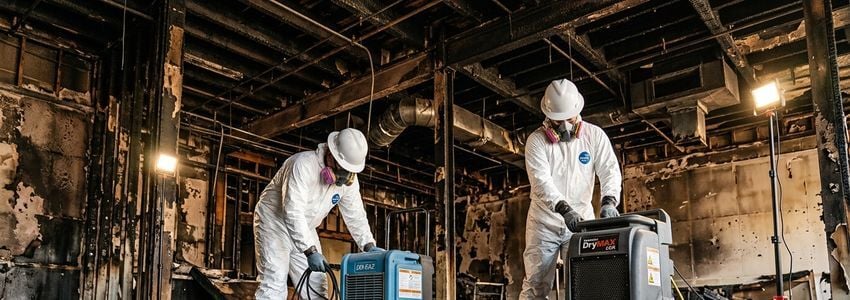
Fire Restoration Equipment Financing: The Complete Guide for Business Owners
Fire restoration equipment financing gives restoration company owners a fast way to acquire industrial dehumidifiers, air scrubbers, ozone generators, thermal fogging machines, and specialty drying equipment without draining working capital. This guide breaks down how financing works, what it costs, and how to choose the right funding path for your restoration business.
In This Article
What Is Fire Restoration Equipment Financing?
Fire restoration equipment financing is a funding arrangement that lets a restoration company purchase or lease the specialized machines needed to respond to fire, smoke, and soot damage jobs. Instead of paying tens of thousands of dollars up front for a single piece of equipment, an owner spreads the cost over a fixed monthly payment while putting the equipment to work on paying jobs immediately.
This type of financing is distinct from a general working capital loan because the equipment itself typically secures the transaction. That structure often makes qualification easier and terms more favorable than an unsecured loan, since the lender has collateral value tied to the machine rather than relying purely on the business's cash flow history.
Fire and smoke damage jobs move fast. Insurance adjusters expect mitigation crews on site within hours, and a restoration company without the right equipment on the truck loses the job to a competitor who shows up ready. Financing closes that equipment gap without forcing an owner to choose between growth and cash reserves.
Key Stat: The U.S. disaster restoration services market was valued at approximately $12.48 billion in 2025 and is projected to climb toward $19.16 billion by 2034, driven heavily by fire, smoke, and wildfire-related restoration demand.
Key Benefits of Fire Restoration Equipment Financing
- Preserve working capital. Cash stays available for payroll, fuel, insurance billing gaps, and unexpected job costs instead of being tied up in a single equipment purchase.
- Respond to more jobs. Additional dehumidifiers, air movers, and negative air machines mean your crews can run multiple fire and smoke jobs at once instead of turning down work.
- Predictable monthly payments. Fixed payment structures make it easier to budget against expected insurance reimbursement timelines.
- Access to newer technology. Ozone generators, hydroxyl generators, and thermal fogging equipment continue to improve. Financing makes it realistic to upgrade every few years instead of running outdated units.
- Tax and accounting flexibility. Depending on structure, financed equipment may be depreciated or expensed according to your accountant's guidance, and lease payments can sometimes be treated as an operating expense.
- Faster approval than many bank products. Equipment-secured financing at specialty lenders frequently moves in days, not weeks, which matters when a fire loss job needs equipment on site immediately.
Ready to Equip Your Restoration Crews?
Get fast, flexible equipment financing built for restoration contractors. No obligation - see your options in minutes.
Apply Now →How Fire Restoration Equipment Financing Works
The process for financing restoration equipment is more streamlined than most business owners expect. Here is the typical path from application to equipment delivery.
Quick Guide
How Fire Restoration Equipment Financing Works - At a Glance
Get a quote from a supplier for dehumidifiers, air scrubbers, ozone generators, or a full trailer package.
Most restoration equipment applications require basic business details and recent bank statements, not a full loan package.
Equipment-secured financing decisions often come back within 24 to 48 hours.
Once documents are signed, funds are released to the supplier or directly to your business, and equipment ships or is picked up.
Underwriters generally look at time in business, personal and business credit history, and recent bank statements to gauge cash flow. Restoration companies with even six to twelve months of operating history and consistent deposits from insurance carriers or property management clients are often approvable, even without perfect credit, because the equipment itself provides collateral value.
Equipment Types Covered Under Fire Restoration Financing
Fire and smoke damage restoration requires a specific equipment loadout that differs from a standard water mitigation setup. Financing programs typically cover:
- Industrial dehumidifiers (LGR and desiccant units) for drying structures after fire suppression water is used
- Air scrubbers and negative air machines with HEPA filtration to capture soot and smoke particulates
- Ozone generators and hydroxyl generators for odor neutralization in structures with heavy smoke penetration
- Thermal fogging machines that apply deodorizing agents into porous materials
- Soda blasting and dry ice blasting equipment for cleaning soot from structural surfaces without chemical damage
- Air movers and axial fans to accelerate structural drying after suppression
- Content cleaning and pack-out equipment, including ultrasonic cleaning tanks for salvageable belongings
- Enclosed trailers and cargo vans outfitted to transport and store equipment between job sites
- Generators to power equipment at fire-damaged properties where utilities have been shut off
- Moisture meters, thermal imaging cameras, and hygrometers used for documentation and insurance reporting
Most financing structures allow bundling several equipment categories into a single transaction, which simplifies paperwork and often improves pricing compared to financing each piece separately.
Who Fire Restoration Equipment Financing Is Best For
This type of financing tends to make the most sense for:
- Established restoration contractors expanding capacity - companies already doing fire and smoke jobs who need a second or third equipment set to run concurrent projects
- Water damage restoration companies adding fire services - operators expanding their service line to capture fire and smoke jobs referred by the same insurance adjusters and property managers
- General contractors and disaster recovery firms building an in-house restoration division instead of subcontracting equipment-heavy work
- Franchise restoration operators required to maintain a specific equipment standard by their franchisor
- Companies replacing aging equipment after years of heavy field use, where downtime from equipment failure is costing jobs
It is generally a poor fit for brand-new businesses with no operating history and no equipment quotes in hand, since most lenders want to see at least a few months of business bank activity before extending equipment-secured credit.
Financing vs. Leasing vs. Cash Purchase
| Feature | Equipment Financing | Equipment Leasing | Cash Purchase |
|---|---|---|---|
| Upfront cost | Low to none | Low to none | Full purchase price |
| Ownership at end | Yes, once paid off | Depends on lease type (may require buyout) | Immediate |
| Best for | Equipment you'll use long-term | Equipment that may need frequent upgrades | Businesses with strong cash reserves |
| Cash flow impact | Fixed monthly payment | Often lower monthly payment | Large one-time cash outflow |
Most restoration companies choose financing over leasing when they expect to keep the equipment in active rotation for its full useful life, since ownership at the end of the term builds equity into the business. Leasing can make sense for technology-forward equipment categories, like certain sensor and monitoring tools, where newer models arrive frequently.
How Crestmont Capital Helps Restoration Companies
Crestmont Capital works with restoration contractors across the country to structure equipment financing that matches the pace of the restoration business. Rather than a one-size-fits-all bank product, Crestmont evaluates each application based on the realities of the industry, including seasonal storm and fire activity and typical insurance reimbursement timelines.
For companies that need flexibility on the type of equipment they finance over time, Crestmont also offers equipment leasing options and used equipment financing for contractors looking to acquire reliable, field-tested machines at a lower entry cost. For larger fleet or facility-level purchases, the commercial equipment financing program supports higher transaction sizes with terms structured around the equipment's useful life.
Restoration companies already running water mitigation crews can review Crestmont's dedicated guide on water damage restoration equipment financing for a side-by-side look at how the two equipment categories are typically financed together. Owners exploring broader funding options beyond equipment, including working capital to bridge insurance payment delays, can also review Crestmont's fire restoration business loans resource for a complete picture of available financing.
Applications typically take a few minutes to complete, and Crestmont's underwriting team reviews restoration industry applications with an understanding of how insurance-driven revenue timing affects monthly cash flow.
Don't Let Equipment Gaps Cost You Jobs
Crestmont Capital helps restoration contractors finance the equipment they need to respond faster and take on more work.
Apply Now →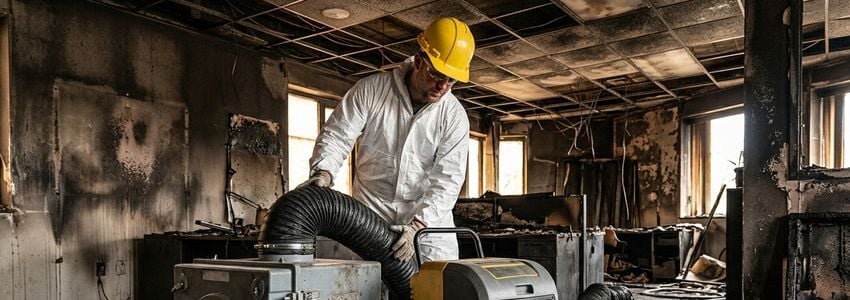
Real-World Scenarios
Scenario 1: The two-truck operator scaling to five. A restoration company running two response vehicles was regularly turning away second and third simultaneous fire calls during wildfire season spikes. Financing three additional equipment packages, including air scrubbers and negative air machines, let the company respond to multiple jobs at once instead of subcontracting overflow work to competitors.
Scenario 2: Water mitigation company adding fire services. An established water damage company wanted to capture fire and smoke referrals from the same insurance adjusters they already worked with. Equipment financing covered an ozone generator, thermal fogger, and soot-cleaning supplies without requiring the owner to draw down the line of credit reserved for payroll.
Scenario 3: Replacing equipment after a total loss. A restoration contractor lost several dehumidifiers and an enclosed trailer in a shop fire. Fast equipment financing allowed the company to replace the loadout within days rather than waiting on an insurance settlement, keeping crews working through the claims process.
Scenario 4: Franchise compliance upgrade. A restoration franchisee needed to meet an updated equipment standard set by the franchisor, including specific HEPA-rated air scrubbers. Financing spread the compliance cost over 36 months instead of requiring a lump-sum payment before the deadline.
Scenario 5: Seasonal capacity building ahead of wildfire season. A restoration company in a wildfire-prone region financed additional smoke odor remediation equipment each spring ahead of peak fire season, timing payments to align with the revenue increase expected during the following months.
By the Numbers
Fire Restoration Equipment Financing - Key Statistics
$12.5B
U.S. disaster restoration services market size, 2025
39%
Share of the global restoration market held by fire and smoke damage services
24-48 Hrs
Typical underwriting turnaround for equipment-secured financing
31%
Share of small businesses with a formal disaster preparedness plan in place
The scale of fire-related property loss underscores why restoration capacity matters. According to Forbes' coverage of the January 2025 Los Angeles wildfires, total estimated property damage from that single disaster event exceeded $53 billion, generating enormous downstream demand for restoration contractors equipped to handle large-scale fire and smoke remediation. Restoration companies that can mobilize quickly after events like these are positioned to capture significant work that under-equipped competitors cannot handle.
Beyond large-scale disasters, day-to-day residential and commercial fire losses continue to sustain steady demand nationwide. Data from the U.S. Census Bureau's County Business Patterns program shows a growing base of specialty trade and building services establishments nationally, reflecting the broader footprint of contractors, including restoration specialists, operating in local markets across the country.
Frequently Asked Questions
Get Equipped Before the Next Call Comes In
Crestmont Capital makes it simple to finance the dehumidifiers, air scrubbers, and trailers your restoration crews need. Apply in minutes.
Apply Now →Next Steps
Get equipment quotes. Contact your preferred restoration equipment supplier for pricing on the machines you need.
Gather recent bank statements. Have three to six months of business bank statements ready to speed up underwriting.
Apply with Crestmont Capital. Submit a simple application to get a financing decision, typically within one to two business days.
Put equipment to work. Once funded, get your new equipment on the truck and ready for the next fire or smoke damage call.
Conclusion
Fire restoration equipment financing gives restoration contractors a practical way to keep pace with demand without tying up cash reserves in dehumidifiers, air scrubbers, and trailers. With fire and smoke damage jobs continuing to represent a substantial share of the broader restoration market, having the right equipment financed and ready to deploy can be the difference between winning a job and referring it to a better-equipped competitor. Whether you are scaling an existing fire restoration operation or adding fire services to an established water damage business, matching the right financing structure to your equipment needs keeps your crews working and your cash flow steady.
Disclaimer: The information provided in this article is for general educational purposes only and is not financial, legal, or tax advice. Funding terms, qualifications, and product availability may vary and are subject to change without notice. Crestmont Capital does not guarantee approval, rates, or specific outcomes. For personalized information about your business funding options, contact our team directly.








