
 (800) 949-0401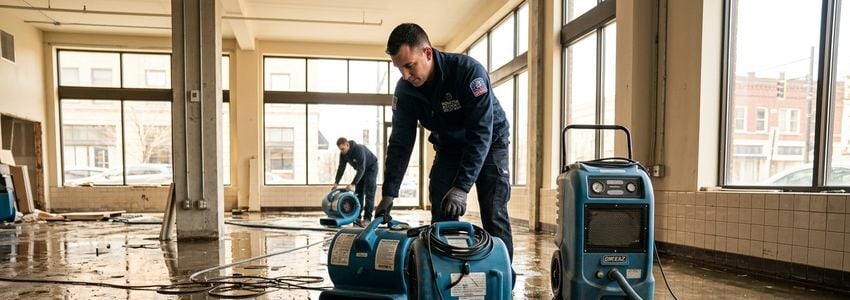
Water Damage Restoration Equipment Financing: The Complete Guide for Business Owners
Water damage restoration equipment financing gives restoration contractors a way to acquire truck-mount extraction units, industrial dehumidifiers, air movers, and moisture-detection tools without draining working capital. For a restoration company, being under-equipped during peak flood season is not just an inconvenience, it is lost revenue walking out the door to a competitor who answered the phone faster and showed up with the right gear.
In This Article
What Is Water Damage Restoration Equipment Financing?
Water damage restoration equipment financing is a type of commercial equipment loan or lease structured specifically to help restoration contractors purchase the machinery they need to extract water, dry structures, and prevent mold growth after a flood, pipe burst, storm, or plumbing failure. Rather than paying cash for a truck-mount extraction system or a fleet of commercial dehumidifiers, a restoration business owner spreads the cost over a fixed monthly payment while putting the equipment to work immediately.
This type of financing typically covers everything from portable extraction units and low-grain refrigerant (LGR) dehumidifiers to axial air movers, moisture meters, thermal imaging cameras, air scrubbers with HEPA filtration, and the specialty vehicles used to transport it all. Because the equipment itself often serves as collateral, lenders can move faster and with less friction than they would on a general-purpose business loan.
The core idea behind water damage restoration equipment financing is simple: match the cost of the equipment to the revenue it generates. A dehumidifier that gets deployed on job after job pays for itself many times over during its useful life, so financing it over 24, 36, or 60 months usually makes more financial sense than tying up a large lump sum of cash that could otherwise cover payroll, marketing, or emergency response costs.
Unlike a general-purpose term loan, restoration equipment financing is asset-specific. The lender underwrites the transaction with the equipment's value and useful life in mind, not just the borrower's overall balance sheet. That distinction matters in an industry like water damage restoration, where cash flow can swing dramatically between a slow month with only a handful of routine leaks and a catastrophic month following a regional storm system. A lender familiar with this cyclicality is far more likely to structure a payment schedule that fits how restoration companies actually get paid, including the reality that insurance reimbursements can take weeks to arrive after a job is completed.
It is also worth understanding that restoration equipment financing is not a single rigid product. Depending on the lender, it can take the form of a traditional equipment loan (where the business owns the equipment once the loan is paid off), a capital lease (which functions similarly to a loan for accounting purposes), or an operating lease (which may offer lower payments in exchange for the lender retaining ownership at the end of the term). Understanding which structure fits your long-term equipment strategy, whether you plan to run the machine into the ground or upgrade every few years, is an important conversation to have with your funding specialist before signing.
Key Stat: The U.S. restoration and remediation services industry has grown steadily as severe weather events and aging plumbing infrastructure drive consistent demand for emergency mitigation services, according to Forbes Advisor reporting on the equipment financing market.
Key Benefits of Financing Restoration Equipment
Restoration is a business built on response time. The faster a crew can arrive on-site with functioning extraction and drying equipment, the better the outcome for the property owner and the stronger the reputation for the contractor. Financing helps make that speed possible without sacrificing cash reserves.
- Preserve working capital. Keep cash on hand for payroll, insurance, fuel, and unexpected emergency callouts instead of tying it up in a single large equipment purchase.
- Predictable monthly payments. Fixed payments make it easier to budget and forecast, even during slower months between major weather events.
- Access to newer, more efficient equipment. LGR dehumidifiers and modern air movers dry structures faster than older units, which means shorter job cycles and the ability to take on more work.
- Tax and accounting flexibility. Depending on how the financing is structured, equipment loans and leases can offer different treatment for depreciation and expense recognition (consult your accountant for specifics relevant to your business).
- Fast approval and funding. Because equipment financing is asset-backed, many restoration contractors can get approved and funded in a matter of days, not weeks.
- Scale ahead of demand. Storm season and flood events do not wait for a business owner to save up cash. Financing allows a contractor to add capacity proactively.
How Water Damage Restoration Equipment Financing Works
The mechanics of restoration equipment financing are straightforward, but understanding each step helps a business owner move through the process quickly and with fewer surprises.
- Identify the equipment need. Determine exactly what you need to purchase, whether it is a single truck-mount unit, a batch of air movers, or a complete mobile extraction trailer.
- Get a quote from your equipment vendor. Most lenders finance both new and used equipment from any reputable dealer, not just a preferred vendor list.
- Submit a financing application. This usually requires basic business information, time in business, monthly revenue, and the equipment quote or invoice.
- Underwriting and approval. Because the equipment secures the loan or lease, underwriting can move faster than an unsecured loan. Many restoration contractors receive a decision within 24 to 48 hours.
- Sign your agreement and receive funding. Once approved, funds are typically sent directly to the equipment vendor, or in some cases directly to your business account for immediate purchase.
- Put the equipment to work. Deploy your new extraction units, dehumidifiers, or air movers on your next job while making fixed monthly payments over the agreed term.
Types of Equipment You Can Finance
Restoration contractors rely on a wide range of specialized equipment, and most of it qualifies for financing. Common categories include:
- Water extraction equipment - truck-mount extraction units, portable extractors, and submersible pumps
- Drying equipment - LGR dehumidifiers, desiccant dehumidifiers, and axial or centrifugal air movers
- Air quality equipment - HEPA air scrubbers, negative air machines, and odor control equipment
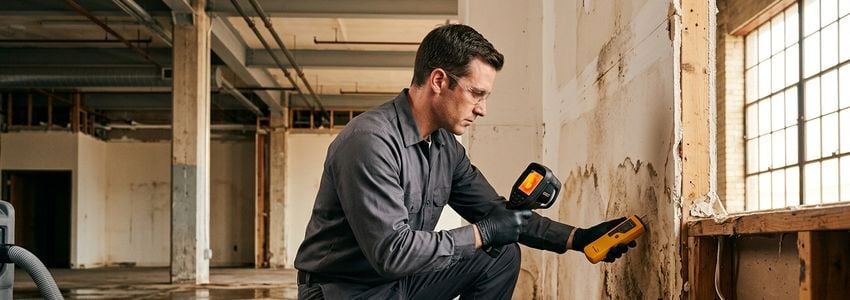
- Detection and monitoring tools - moisture meters, thermo-hygrometers, thermal imaging cameras, and remote monitoring systems
- Mold remediation equipment - containment barriers, HEPA vacuums, and antimicrobial application equipment
- Fleet vehicles - cargo vans, box trucks, and trailers used to transport equipment and crews to job sites
- Software and technology - job management, moisture-mapping, and documentation software licensed alongside hardware
Financing is not limited to brand-new equipment. Many restoration contractors finance certified pre-owned equipment from dealers, which can significantly lower the monthly payment while still delivering reliable performance on the job site.
Beyond the core drying and extraction equipment, many restoration companies also bundle in ancillary items when they finance, such as generators for job sites without power, portable heaters for cold-weather drying, ozone or hydroxyl generators for odor treatment, and content-pack-out equipment used to store and clean a homeowner's belongings during a large loss. Rolling these secondary purchases into a single financing package, rather than handling each as a separate transaction, often simplifies bookkeeping and can improve the overall terms offered by a lender who sees the full scope of the equipment investment.
By the Numbers
Water Damage Restoration Equipment Financing - Key Data Points
24-48
Hours to begin extraction before mold risk rises sharply
1-2 Days
Typical time to approval on asset-backed equipment financing
24-60 Mo
Common term lengths for restoration equipment loans and leases
33M+
Small businesses operating in the U.S. that may need emergency financing access
Ready to Equip Your Restoration Crew?
Get fast, flexible equipment financing from the #1 business lender in the U.S. No obligation - apply in minutes.
Apply Now →Who This Financing Is Best For
Water damage restoration equipment financing works well for a range of business situations, including:
- Established restoration companies replacing aging extraction units or dehumidifiers with more efficient models
- Growing contractors who are winning more jobs than their current equipment fleet can handle
- Companies expanding service lines into mold remediation, fire and smoke restoration, or reconstruction
- Multi-crew operations that need to outfit several trucks simultaneously ahead of storm season
- New restoration businesses that need a full initial equipment package but want to preserve startup capital for marketing and staffing
It is a particularly strong fit for contractors who work with insurance carriers, since faster response times and modern equipment often translate directly into more referral volume from adjusters and property managers.
Financing vs. Buying Restoration Equipment Outright
Paying cash for equipment feels simple, but it is not always the smartest move for a growing restoration business. Here is how the two approaches compare:
| Factor | Financing | Cash Purchase |
|---|---|---|
| Upfront cost | Low (often little to no down payment) | Full purchase price due immediately |
| Cash flow impact | Minimal - fixed monthly payment | Significant - large lump sum removed from reserves |
| Speed to deploy equipment | Fast - often 24-48 hours after approval | Depends on how quickly cash can be freed up |
| Ability to scale fleet quickly | High - can outfit multiple crews at once | Limited by available cash reserves |
| Total cost over time | Includes interest/fees, but spread over time | Lower total cost if cash is truly surplus |
For many restoration contractors, the deciding factor is opportunity cost. Cash sitting in equipment could instead be deployed toward marketing that generates more jobs, or held in reserve for payroll during a slow stretch between weather events.
There is also a risk-management dimension to this decision that is easy to overlook. Restoration equipment, particularly truck-mount extraction systems and dehumidifiers, sees heavy wear and tear and periodically needs major repairs or replacement. A business owner who pays cash for equipment is fully exposed to that maintenance risk with no offsetting flexibility. A business owner using financing has, in effect, spread that risk over the life of the loan and can plan equipment refresh cycles around the end of financing terms rather than around unpredictable breakdowns.
Factors That Affect Your Financing Terms
Not every restoration contractor gets the same rate, term, or payment structure, even for identical equipment. Lenders weigh several factors when structuring an offer, and understanding them ahead of time can help a business owner present a stronger application.
- Time in business. Established companies with two or more years of operating history typically qualify for more favorable terms than brand-new businesses, though startup-friendly programs exist.
- Monthly and annual revenue. Consistent revenue, even with seasonal peaks and valleys, demonstrates the ability to service a fixed monthly payment.
- Personal and business credit profile. Stronger credit generally unlocks lower rates and reduced or waived down payment requirements.
- Equipment age and type. Brand-new equipment from established manufacturers often qualifies for longer terms than older used equipment, which may carry shorter maximum terms to match its remaining useful life.
- Total financing amount. Larger transactions may involve more documentation, such as tax returns or financial statements, while smaller transactions often move through streamlined, lower-documentation approval paths.
Presenting organized financials, a clear equipment quote, and a straightforward explanation of how the equipment will be used to generate revenue all help speed up the underwriting process and can meaningfully improve the offer a restoration contractor receives.
It also helps to think ahead about how the new equipment will affect your insurance and bonding requirements. Some commercial general liability policies and performance bonds require updated equipment schedules whenever a business adds significant assets. Looping in your insurance agent early, at the same time you are applying for financing, avoids a coverage gap the first time a financed truck-mount unit or trailer is deployed on a job site.
How Crestmont Capital Helps Restoration Contractors
Crestmont Capital works with restoration business owners across the country to structure equipment financing that matches the seasonality and unpredictability of the restoration industry. Rather than a one-size-fits-all loan product, Crestmont looks at how your business actually generates revenue and structures payment terms accordingly.
For contractors who need extraction trailers, dehumidifiers, or specialty drying equipment right away, Crestmont's commercial equipment financing and leasing programs are designed to move quickly, often with same-week funding once documentation is complete. If your restoration company also needs a work van or box truck to transport crews and gear, Crestmont's construction and heavy equipment financing options can be bundled into the same application process.
For restoration companies dealing with used or refurbished equipment purchases, Crestmont also offers used equipment financing, which can significantly reduce monthly payments while still delivering reliable extraction and drying capacity. And if cash flow between jobs is tight, an unsecured working capital loan can supplement equipment financing to cover payroll and materials while waiting on insurance reimbursement.
Contractors who are just getting their restoration business off the ground and worried about qualifying with limited credit history should also look at Crestmont's startup equipment financing program, which is built specifically for newer businesses that still need reliable, professional-grade equipment from day one. Restoration companies looking for a broader overview of funding options for the trade can also review Crestmont's guide on restoration company business loans for context on how equipment financing fits into a larger capital strategy, and the guide on mold remediation business loans for contractors expanding into that adjacent service line.
Don't Let a Slow Response Cost You the Job
Finance the extraction and drying equipment your crews need to respond fast. Apply in minutes with no obligation.
Apply Now →Real-World Scenarios
Scenario 1: Storm Season Fleet Expansion
A regional restoration company in the Gulf Coast noticed that every hurricane season, they were turning away jobs because they only had enough truck-mount extraction units to run three crews at once. By financing two additional truck-mount systems and a batch of LGR dehumidifiers before the season started, the company was able to run five crews simultaneously during a major storm event, capturing revenue that would have otherwise gone to a larger competitor.
Scenario 2: Solo Contractor Scaling Up
A one-truck mitigation contractor had been using a single portable extractor and a handful of air movers for two years. After landing a contract with a local property management company that required faster turnaround on multi-unit water losses, the contractor financed a mobile extraction trailer and a dozen additional air movers, allowing him to bid on and win larger commercial jobs he previously had to decline.
Scenario 3: Multi-Location Company Standardizing Equipment
A restoration company operating across three metro locations had a mismatched fleet of dehumidifiers from different manufacturers, making maintenance and parts sourcing inefficient. By financing a standardized fleet of 40 LGR dehumidifiers across all three locations in a single transaction, the company simplified maintenance contracts and reduced average job completion time by improving drying efficiency.
Scenario 4: New Business Avoiding a Cash Crunch
A newly licensed restoration business needed roughly $85,000 in initial equipment, including a cargo van, extraction unit, dehumidifiers, and air movers, but had only budgeted $20,000 in startup capital. By financing the equipment package instead of paying cash, the owner preserved working capital for insurance, licensing, marketing, and the first few months of payroll while still launching with a fully equipped, professional-grade crew.
Scenario 5: Insurance-Preferred Vendor Status
A restoration contractor pursuing preferred vendor status with two national insurance carriers discovered that response time benchmarks and equipment redundancy requirements were part of the vendor qualification checklist. By financing a backup set of extraction and drying equipment to ensure no single point of failure could delay a job, the contractor met the carrier's requirements and was added to the preferred vendor network, generating a steady stream of referral work that would not have been available otherwise.
Frequently Asked Questions
Get Your Restoration Crew Job-Ready
From extraction units to dehumidifier fleets, finance the equipment that keeps your crews responding fast. Apply in minutes.
Apply Now →Next Steps
Identify extraction units, dehumidifiers, air movers, or vehicles required to fill your current capacity gap.
New or used, most vendors can provide a formal invoice within a day or two.
Submit your application online and get a decision fast, often within 24 to 48 hours.
Once funded, put your new equipment to work and start responding to more jobs, faster.
Conclusion
Water damage restoration equipment financing gives restoration contractors a practical way to build out a fully equipped fleet without draining the cash reserves they need for payroll, insurance, and day-to-day operations. Whether you are replacing an aging truck-mount unit, adding a dozen more air movers before storm season, or launching a brand-new restoration business from scratch, financing lets you match the cost of your equipment to the revenue it generates over time. With fast approvals, flexible terms, and options for both new and used equipment, there is rarely a good reason to let cash constraints keep your crews under-equipped when the next job call comes in.
Disclaimer: The information provided in this article is for general educational purposes only and is not financial, legal, or tax advice. Funding terms, qualifications, and product availability may vary and are subject to change without notice. Crestmont Capital does not guarantee approval, rates, or specific outcomes. For personalized information about your business funding options, contact our team directly.








