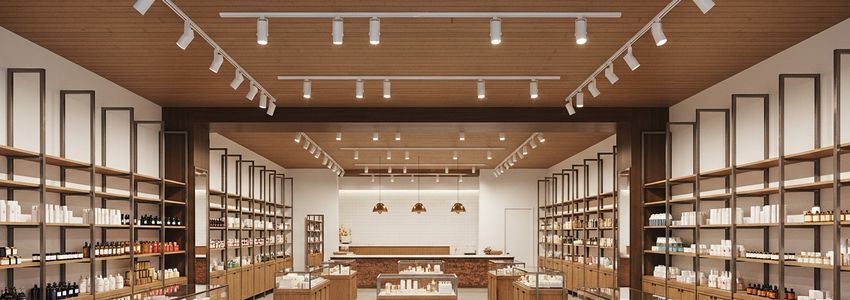
Your retail store is more than a place to sell products — it is the physical face of your brand. A well-designed, modern space attracts more customers, increases average purchase size, and builds the kind of loyalty that keeps shoppers coming back. But retail store renovation financing is what makes those improvements possible without exhausting your operating cash.
Whether you are planning a full build-out for a new location, refreshing an outdated layout, upgrading your lighting and fixtures, or adding technology like digital displays and updated POS systems, the cost adds up fast. Retail renovations typically run anywhere from $20,000 to over $500,000 depending on square footage and scope. Paying out of pocket is rarely the smartest move — financing lets you preserve cash flow while investing in growth.
This guide walks you through every aspect of retail store renovation financing: what it is, why it matters, which financing options are available, how to qualify, and how Crestmont Capital helps retail businesses fund the upgrades they need to compete and win.
In This Article
- What Is Retail Store Renovation Financing?
- Why Finance Your Store Renovation?
- Types of Financing Options Available
- Retail Renovation Financing By the Numbers
- How Retail Renovation Financing Works
- Financing Options Compared
- Who Qualifies for Renovation Financing?
- Real-World Scenarios
- How Crestmont Capital Helps
- How to Get Started
- Frequently Asked Questions
What Is Retail Store Renovation Financing?
Retail store renovation financing refers to business funding specifically used to pay for improvements, upgrades, and build-outs of a retail space. This can include anything from cosmetic refreshes like new paint and signage to structural projects like expanding square footage, installing new flooring, updating HVAC systems, or building out an entirely new store location.
Unlike personal home improvement loans, retail renovation financing is structured around business cash flow, revenue projections, and commercial lending criteria. You can access these funds through term loans, equipment financing, business lines of credit, SBA loans, or working capital programs — each with different repayment terms and use cases.
The key distinction from general business loans is that renovation financing can often be secured against the improvements themselves or your existing business assets, which gives lenders more comfort approving larger amounts. For most retailers, the renovation investment pays back through increased sales volume — making financed upgrades a strategic business decision, not just an expense.
Industry Insight: According to the U.S. Census Bureau, retail trade accounts for over $7 trillion in annual sales. Retailers who invest in modern store environments consistently outperform peers in foot traffic and conversion rates.
Ready to Upgrade Your Store?
Get fast retail renovation financing from Crestmont Capital — the #1 business lender in the U.S. Apply in minutes with no obligation.
Apply Now →Why Finance Your Store Renovation Instead of Paying Cash?
Many retail business owners instinctively want to avoid debt — but paying for renovations entirely out of pocket is often the wrong financial decision. Here is why financing frequently delivers a better outcome than cash payment:
Preserve Operating Capital. Your cash reserves are the lifeblood of day-to-day operations. Depleting them on a renovation project leaves you exposed to cash flow gaps during seasonal slowdowns, supplier payment demands, or unexpected expenses. Financing lets you spread renovation costs over 24 to 60 months, keeping your reserves intact.
Act Faster. Retail opportunities are time-sensitive. A competitor opens nearby, your lease expires and you need to commit to a new build-out, or a peak season is approaching. Waiting to save enough cash can mean missing the window entirely. Financing gives you access to the full project budget immediately.
Leverage Revenue Generated by the Renovation. A well-executed store renovation typically increases revenue. Financing your renovation means you can start generating returns from the improved space before you have fully repaid the loan — effectively using the renovation's own revenue to repay the debt.
Maintain Credit Flexibility. Businesses that keep cash reserves and use structured financing for capital projects tend to maintain stronger financial ratios, which improves access to credit in the future. Paying cash for renovations reduces your liquidity buffers and can actually hurt your creditworthiness with future lenders.
- Retail renovation financing typically covers: flooring, fixtures, lighting, signage, shelving, dressing rooms, checkout counters, HVAC upgrades, security systems, POS technology, and full build-outs
- Repayment terms range from 12 to 84 months depending on loan type and amount
- Interest rates vary widely: SBA loans offer 6.5-11%, equipment loans 5-15%, working capital lines 8-25%
- Funding timelines: equipment loans and working capital can close in 24-72 hours; SBA loans take 2-6 weeks
Types of Retail Store Renovation Financing Available
No single financing product fits every renovation project. The right choice depends on your project scope, how quickly you need funds, your credit profile, and how long you plan to repay the debt. Here are the primary options:
1. Equipment Financing
Equipment financing is ideal for retailers purchasing specific hard assets: new shelving systems, display cases, HVAC units, POS hardware, LED lighting fixtures, security camera systems, and similar items. The equipment itself serves as collateral, which means lenders can often approve higher amounts with more favorable terms than unsecured loans.
Loan amounts typically range from $5,000 to $500,000. Terms run 24 to 72 months. Because the equipment secures the loan, approval rates are higher even for businesses with less-than-perfect credit. Crestmont Capital's equipment financing programs cover a wide range of retail assets from display cases to technology installations.
2. SBA Loans
SBA 7(a) loans are among the most cost-effective financing options for retail renovations, offering low interest rates (typically prime plus 2.25-4.75%) and long repayment terms up to 10 years for working capital and 25 years for real estate. The SBA does not lend directly — instead, it guarantees a portion of the loan through an approved lender like Crestmont Capital.
SBA loans are best suited for renovations of $50,000 or more where the longer repayment term keeps monthly payments manageable. The tradeoff is a longer approval process (typically 30-90 days) and more documentation requirements. Crestmont's SBA loan programs help retail businesses navigate this process efficiently.
3. Business Line of Credit
A business line of credit is a revolving credit facility that you draw from as renovation expenses arise. This is particularly useful for phased renovation projects where costs occur over several months rather than all at once. You only pay interest on what you actually draw, and as you repay, the available credit replenishes.
Lines of credit typically range from $10,000 to $500,000. They work well for retailers managing multiple renovation phases or needing flexibility on spend timing. The drawback is that rates are typically higher than term loans, and lenders may require stronger credit profiles for larger facilities.
4. Working Capital Loans
Unsecured working capital loans provide fast access to renovation funding without requiring collateral. Approval is based primarily on your business bank statements and revenue history — no equipment or real estate needed as security. For retailers with strong monthly revenue but limited hard assets, this is often the fastest path to renovation capital.
Crestmont Capital's working capital programs can fund retail renovations within 24 to 48 hours of approval. Loan amounts typically range from $10,000 to $250,000 with terms of 6 to 24 months.
5. Commercial Real Estate Financing
For retailers who own their building and plan major structural renovations, commercial real estate financing allows you to borrow against the equity in your property. These loans carry the lowest interest rates but require property ownership and longer processing times. They are most appropriate for substantial renovation projects exceeding $200,000.
Retail Renovation Financing — Key Statistics
By the Numbers
Retail Store Renovation Financing — Key Statistics
$7T+
Annual U.S. retail trade volume (U.S. Census Bureau)
40%
Revenue lift retailers report after major store renovation
$150K
Average mid-size retail build-out cost per location
48hrs
Typical approval time for working capital renovation funding
How Retail Store Renovation Financing Works — Step by Step
Quick Guide
How Retail Renovation Financing Works — At a Glance
Get contractor bids and a detailed budget. Know exactly what you're financing before you apply.
Match your project scope, timeline, and cash flow to the best loan product.
Apply online or with your lender. Provide bank statements, revenue records, and project details.
Funds are deposited to your account. Pay contractors, purchase materials, and begin your renovation.
Make fixed monthly payments from your operating income. Watch the improved store generate the revenue to cover the loan.
Pro Tip: Many retailers make the mistake of underestimating renovation costs by 15-30%. Always build a 20% contingency buffer into your financing request. Lenders expect it and it protects your cash flow from surprise project overruns.
Retail Renovation Financing Options Compared
| Financing Type | Best For | Typical Amount | Term | Speed |
|---|---|---|---|---|
| Equipment Financing | Fixtures, displays, POS, HVAC | $5K-$500K | 24-72 months | 2-5 days |
| SBA 7(a) Loan | Large renovations, low rate priority | $50K-$5M | Up to 10 years | 30-90 days |
| Business Line of Credit | Phased renovations, flexible spend | $10K-$500K | Revolving | 5-10 days |
| Working Capital Loan | Fast funding, no collateral | $10K-$250K | 6-24 months | 24-48 hours |
| Commercial RE Loan | Owned property, major structural | $100K+ | 5-25 years | 30-60 days |
Who Qualifies for Retail Store Renovation Financing?
Qualification requirements vary by financing type, but here are the general benchmarks most lenders use:
For Equipment Financing and Working Capital Loans: Most programs require at least 6-12 months in business, minimum monthly revenue of $10,000-$15,000, and a business bank account. Credit requirements are flexible — scores as low as 550 may qualify for certain programs, though better credit unlocks better rates.
For Business Lines of Credit: Lenders typically want 12+ months in business, consistent monthly revenue, and a personal credit score of at least 600. Strong revenue history is weighted heavily.
For SBA Loans: These have the strictest requirements: typically 2+ years in business, strong credit (680+), demonstrated ability to repay, and complete financial documentation including tax returns and profit/loss statements.
Key Point: Even if your credit score is below ideal, strong monthly revenue and consistent bank statements can often overcome credit challenges. Crestmont Capital works with retail businesses across the credit spectrum to find the right financing fit.
What Strengthens Your Application:
- Consistent monthly revenue deposits showing business stability
- A clear renovation plan with contractor bids and project timeline
- Tax returns showing business profitability
- Existing customer base and demonstrated sales history
- Lease agreement if renovating a leased commercial space (lenders want to confirm remaining lease term covers repayment period)
Not Sure What You Qualify For?
Our financing specialists review your situation in minutes and match you with the best renovation funding option. No obligation, no hard credit pull to get started.
Check My Options →Real-World Scenarios: Retail Renovation Financing in Action
Scenario 1 — The Boutique Fashion Retailer: A women's clothing boutique in Atlanta had occupied its 2,000-square-foot space for eight years. The store's layout was dated, the lighting was inadequate, and the fitting rooms needed complete replacement. Total renovation estimate: $85,000. The owner used a combination of equipment financing ($45,000 for new fixtures, display units, and lighting) and a working capital loan ($40,000 for construction labor and fitting room build-out). Both loans were approved within five business days. After reopening with the new design, the store reported a 28% increase in average transaction value within the first quarter.
Scenario 2 — The Hardware Store Build-Out: A hardware store operator secured a second location in a suburban strip mall. The raw space required a complete build-out: shelving, flooring, checkout counters, electrical work, and signage. Project cost: $220,000. The owner used an SBA 7(a) loan with a 10-year term, keeping monthly payments at $2,400 — well within the location's projected monthly revenue of $55,000. The longer repayment term meant cash flow remained positive from day one of opening.
Scenario 3 — The Electronics Retailer Refresh: A regional electronics retailer needed to modernize its store technology: new LED digital displays, updated POS terminals, security system overhaul, and refreshed product display cases. Total cost: $65,000. Because most of the spend was on financed hardware and equipment, the owner used equipment financing. Approval came in 48 hours, with the equipment supplier paid directly by the lender. Fixed monthly payments of $1,300 over 60 months made budgeting simple.
Scenario 4 — The Pharmacy Expansion: A family-owned pharmacy that had operated for 12 years decided to add a wellness consultation room and expand its OTC product area. The renovation required permits, construction labor, new cabinetry, and updated pharmacy counters. The owner used a business line of credit to draw funds as each phase of the project was completed, only paying interest on what was drawn at any given time. This approach saved thousands in interest compared to a lump-sum term loan.
Scenario 5 — The Sporting Goods Remodel: A sporting goods store preparing for a major expansion of its outdoor recreation section used working capital financing to fund the project quickly. The store's strong monthly revenue of $85,000 qualified them for $120,000 in 18-month financing. The remodel added 600 square feet of dedicated outdoor gear space, which contributed to a 35% increase in that product category's revenue within six months.
Scenario 6 — The Franchise Retail Build-Out: A franchise operator opening a third location used a combination of SBA financing for leasehold improvements and equipment financing for furniture, fixtures, and equipment. This blended approach minimized the total cost of capital while maximizing the amount available — giving the franchise owner full flexibility to complete the build-out on time without compromise.
How Crestmont Capital Helps Retail Businesses Fund Renovations
Crestmont Capital is the #1 rated business lender in the U.S. for a reason: we provide fast, flexible financing designed specifically for business owners who need capital to grow. Our retail renovation financing programs are built around your needs — not rigid bank criteria.
Here is what sets Crestmont Capital apart for retail renovation financing:
Speed: Traditional banks take 30-90 days to approve renovation loans. At Crestmont, working capital approvals happen in 24-48 hours and equipment financing closes in 2-5 business days. When you need to start construction, waiting weeks is not an option.
Flexibility: We offer multiple financing structures — equipment loans, working capital programs, SBA loans, commercial lines of credit — so we can match the right product to your specific renovation project.
Revenue-Based Qualification: Our programs evaluate your actual business revenue, not just your credit score. Strong monthly deposits and consistent sales history matter more to us than a perfect credit number.
No Collateral Required (Working Capital Programs): Our unsecured working capital financing does not require you to pledge store equipment, real estate, or personal assets. Your business revenue is the primary qualification.
Whether you are a single-location boutique or a growing multi-location chain, Crestmont Capital has the programs and expertise to help you finance your next renovation project. Explore your options through our small business financing hub or apply directly to speak with a specialist.

How to Get Started
Get 2-3 contractor quotes for your renovation. Know your total project cost and timeline before you apply.
Complete our quick application at offers.crestmontcapital.com/apply-now — most retailers qualify with just 3 months of bank statements.
A Crestmont Capital advisor will review your project scope and match you with the right financing structure.
Funds are deposited to your business account. Pay contractors, buy materials, and start building the retail space your customers deserve.
Frequently Asked Questions
Ready to Start Your Retail Renovation?
Crestmont Capital funds retail renovations in as little as 24 hours. Apply now and speak with a specialist about the right financing structure for your project.
Apply Now →Conclusion
Retail store renovation financing is not just a way to upgrade your space — it is a strategic business investment that can meaningfully increase revenue, improve the customer experience, and position your store for long-term growth. The right financing structure lets you act quickly, preserve your working capital, and leverage the revenue your renovated store generates to repay the investment over time.
From equipment loans that fund fixtures and displays in days to SBA loans that support major structural build-outs with long repayment terms, there is a financing solution for every retail renovation scenario and budget. The key is working with a lender who understands retail businesses, moves quickly, and offers flexible programs designed around your specific needs.
Crestmont Capital has helped hundreds of retail businesses across the country finance renovations that transform their spaces and accelerate their growth. Whether you are refreshing a boutique, building out a franchise location, or expanding your showroom, our team is ready to help you find the right retail store renovation financing for your project.
Apply today and get a decision in hours — not weeks.
Disclaimer: The information provided in this article is for general educational purposes only and is not financial, legal, or tax advice. Funding terms, qualifications, and product availability may vary and are subject to change without notice. Crestmont Capital does not guarantee approval, rates, or specific outcomes. For personalized information about your business funding options, contact our team directly.