
 (800) 949-0401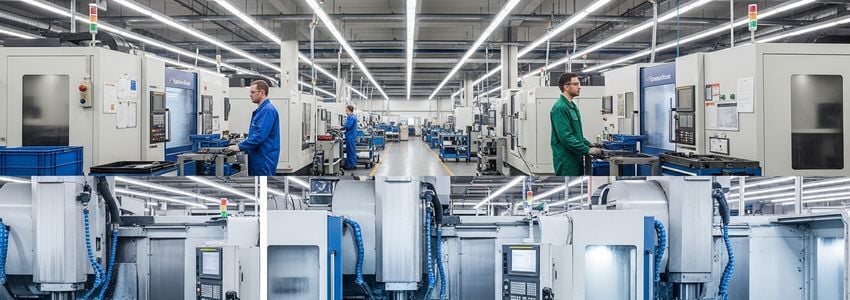
Financing Equipment That Reduces Labor Costs: A Smarter Way to Grow Without Hiring More Staff
Rising wages, worker shortages, and relentless pressure to do more with less have pushed business owners across every industry to rethink how they grow. Hiring more staff is expensive, time-consuming, and not always practical. The smarter play? Investing in equipment that does the heavy lifting for you. And with the right financing in place, you can acquire that equipment today while spreading the cost over manageable monthly payments.
This guide covers everything you need to know about financing equipment that reduces labor costs, from which machines deliver the biggest ROI to how to qualify and apply with Crestmont Capital.
In This Article
- Why Equipment Is the Smarter Alternative to Hiring
- Types of Labor-Saving Equipment Worth Financing
- How Equipment Financing Works
- Key Statistics: Equipment Financing and Labor Costs
- Industries Benefiting Most from This Strategy
- How Crestmont Capital Can Help
- Real-World Scenarios
- How to Qualify for Equipment Financing
- Equipment Financing vs. Equipment Leasing
- How to Get Started
- Frequently Asked Questions
Why Equipment Is the Smarter Alternative to Hiring
The average annual cost of a full-time employee in the United States now exceeds $58,000 when you factor in salary, payroll taxes, health insurance, workers compensation, and paid time off. That number climbs even higher in skilled trades, manufacturing, and healthcare. For most small and mid-sized businesses, adding headcount is one of the largest financial commitments they can make.
Equipment that automates or accelerates tasks works differently. You pay for it once (or finance it over time), it does not call in sick, does not require benefits, and it operates at consistent output regardless of staffing fluctuations. Businesses that invest strategically in labor-saving technology often see payback periods as short as 12 to 24 months.
Key Insight: According to the U.S. Bureau of Labor Statistics, labor costs represent more than 70% of total business costs for most service industries. Equipment that reduces even a fraction of that burden can dramatically improve margins.
The challenge is upfront cost. Industrial automation equipment, commercial kitchen appliances, CNC machines, and fleet management systems often carry six-figure price tags. That is where equipment financing becomes a critical tool. Instead of draining working capital or delaying the investment indefinitely, financing lets you put the equipment to work immediately while paying for it from the savings and revenue it generates.
Types of Labor-Saving Equipment Worth Financing
Almost any industry has access to equipment that can meaningfully reduce the number of labor hours required per unit of output. Here are some of the most impactful categories:
Manufacturing and Production
CNC machines, robotic arms, automated assembly lines, and laser cutters can replace multiple manual positions while dramatically increasing precision and throughput. A single CNC router can produce in an hour what might take a skilled operator an entire shift by hand. Manufacturers are also investing in packaging automation equipment that handles sealing, labeling, and palletizing with minimal human oversight.
Restaurant and Food Service
Commercial dishwashers, automated prep equipment, conveyor ovens, and advanced POS systems all reduce the number of staff hours needed per service period. Some fast-casual concepts have deployed automated fry stations and drink dispensers that cut the need for a dedicated position entirely. For a restaurant operating on thin margins, every labor hour saved goes directly to the bottom line.
Construction and Contracting
Excavators, skid steers, concrete pumps, and advanced surveying tools allow smaller crews to complete work that would previously require significantly more manpower. A single excavator operator can do the work of dozens of laborers per day. Financing this type of heavy equipment turns each piece into a direct labor cost reduction.
Healthcare and Medical Practices
Automated appointment scheduling systems, digital imaging equipment, and laboratory automation reduce administrative and clinical support time. Medical offices that invest in electronic records technology and automated billing systems often cut administrative staff requirements by 20% to 40%, according to healthcare management research published by Forbes.
Logistics and Warehousing
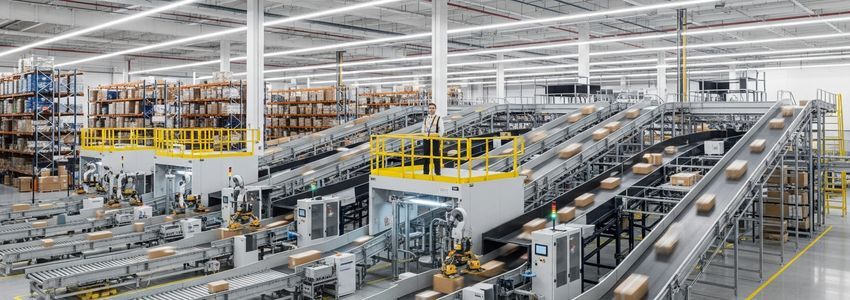
Conveyor systems, automated picking machines, inventory management software integrated with robotics, and loading dock automation all reduce the number of warehouse workers required per volume of throughput. Companies like Amazon have demonstrated at scale that robotics investments produce compounding returns over time.
Landscaping and Agriculture
Zero-turn mowers, automated irrigation systems, GPS-guided planters, and harvest equipment reduce the crew sizes needed for large-scale operations. A landscaping company that invests in commercial zero-turn mowers can dramatically reduce the number of hours billed per job while maintaining or improving quality.
Ready to Cut Labor Costs with Better Equipment?
Crestmont Capital offers fast, flexible equipment financing for businesses in every industry. Get funded in as little as 24 hours.
Apply Now and See Your Options →How Equipment Financing Works
Equipment financing is a loan or lease structure specifically designed to fund the purchase of business equipment. The equipment itself serves as collateral, which typically makes it easier to qualify for and results in lower interest rates compared to unsecured business loans.
Here is how the process typically works:
- Application: You submit basic financial information about your business, including revenue, time in business, and credit profile.
- Approval: The lender evaluates your application and the value of the equipment being purchased. Many lenders approve applications within 24 to 48 hours.
- Funding: Once approved, the lender pays the vendor or seller directly. You receive the equipment and begin making monthly payments.
- Repayment: Loan terms typically range from 24 to 84 months, depending on the equipment type and loan amount.
- Ownership: At the end of the loan term, you own the equipment outright with no remaining obligation.
With equipment financing from Crestmont Capital, businesses can access up to 100% of the equipment purchase price with no large down payment required in many cases. This preserves your working capital for other operational needs while still putting the labor-saving technology in place immediately.
Key Statistics: Equipment Financing and Labor Costs
By the Numbers
Equipment Financing and Labor Reduction in the U.S.
$1.16T
Equipment financed annually in the U.S. (Equipment Leasing and Finance Association)
80%
Of U.S. businesses use some form of equipment financing to acquire assets
20-40%
Labor cost reduction reported by businesses deploying automation equipment
12-24 Mo
Average payback period for labor-saving equipment in manufacturing and food service
According to data published by the U.S. Small Business Administration, businesses that invest in capital equipment are significantly more likely to maintain profitability during periods of wage inflation compared to those that rely solely on expanding headcount. This pattern holds across nearly every sector of the economy.
Industries Benefiting Most from This Strategy
While any business that employs people can benefit from smart equipment investments, several industries have seen the most dramatic results from the combination of labor-saving technology and strategic financing.
Manufacturing
The manufacturing sector has the longest track record of replacing manual tasks with machinery. Modern CNC equipment, injection molding machines, and robotic welders allow manufacturers to compete on cost and quality without expanding payroll. Manufacturing equipment financing makes these investments accessible to businesses of all sizes, not just large enterprises with deep capital reserves.
Food Service and Hospitality
Labor is consistently the largest variable cost for restaurants and hotels. Automated dishwashing systems, commercial prep machines, and intelligent scheduling software have allowed forward-thinking operators to maintain service quality with leaner teams. A commercial dishwasher that processes 1,000 racks per hour can replace the output of multiple manual dishwashers per shift.
Healthcare
Medical practices that finance imaging equipment, automated lab analyzers, and patient check-in kiosks routinely report reductions in administrative overhead. A single high-throughput lab analyzer can process samples at a rate that would require four or five laboratory technicians working manually. The cost of financing that equipment is typically recouped within one to two years through reduced staffing costs and increased patient throughput.
Logistics and Warehousing
Third-party logistics providers and e-commerce fulfillment operations have invested heavily in conveyor systems, automated picking robots, and inventory management technology. These investments allow facilities to process higher order volumes without proportional increases in headcount, which is critical given the ongoing tightness in warehouse labor markets. As reported by Bloomberg, automation spending in warehousing increased significantly every year since 2020.
Agriculture
Farm operators are financing GPS-guided planters, automated irrigation systems, and harvest machines that allow smaller crews to manage larger acreages. The economics are compelling: a single operator with the right equipment can perform work that once required ten or more seasonal laborers, with greater consistency and less weather risk.
Pro Tip: When evaluating equipment for its labor-saving potential, calculate the full cost of the labor it replaces, including wages, payroll taxes, insurance, and supervision time. Compare that annual figure against the monthly financing payment to determine your actual ROI timeline.
How Crestmont Capital Can Help
Crestmont Capital is a leading provider of equipment financing for small and mid-sized businesses across the United States. We work with companies in manufacturing, food service, healthcare, construction, logistics, agriculture, and dozens of other sectors to structure financing solutions that match their cash flow and growth objectives.
Here is what sets Crestmont Capital apart:
- Fast approvals: Most applications receive a decision within 24 to 48 hours.
- Flexible terms: Loan terms from 24 to 84 months based on equipment type and your business needs.
- Competitive rates: Because the equipment serves as collateral, rates are typically lower than unsecured business loans.
- No large down payment required: Many businesses qualify for 100% financing on the equipment purchase price.
- Wide range of equipment types: We finance new and used equipment across virtually every industry category.
- Dedicated advisors: Our team of financing specialists understands your industry and can help structure the right solution.
If you have been hesitant to invest in labor-saving equipment because of the upfront cost, Crestmont Capital can eliminate that barrier. You can put the equipment to work immediately, reduce your labor expenses, and pay for the equipment over time from the savings it generates.
You can also explore equipment leasing as an alternative, which offers even lower monthly payments and the flexibility to upgrade equipment at the end of the lease term. Our team can help you compare both options to find the right fit for your business model.
See Your Equipment Financing Options in Minutes
No obligation, no hard credit pull for your initial inquiry. Crestmont Capital works with businesses at every stage of growth.
Get a Fast Quote →Real-World Scenarios: Equipment Financing to Reduce Labor Costs
Abstract concepts are useful, but concrete examples are better. Here are six scenarios showing how businesses in different industries have used equipment financing to meaningfully reduce their reliance on labor.
Scenario 1: A 30-Person Manufacturing Company
A family-owned metal fabrication shop with 30 employees was struggling to meet demand without adding workers. Labor costs had risen 22% in three years. The owner financed a CNC plasma cutter and robotic welding station for $180,000. Monthly payments came to $3,800 over 48 months. Within the first year, the shop eliminated the equivalent of three full-time positions through attrition rather than layoffs. Annual labor savings exceeded $145,000, creating a payback period of just over 15 months.
Scenario 2: A Regional Restaurant Group
A restaurant operator running three casual dining locations financed commercial dishwashers and automated prep equipment at each location for a total of $95,000. The financing payment was approximately $2,100 per month over 48 months. Each location reduced its back-of-house labor hours by roughly 300 hours per month, generating combined monthly savings of $8,700 at an average hourly labor cost of $29. The investment paid for itself in under 11 months.
Scenario 3: A Landscaping Company
A landscaping company with 12 crew members financed four commercial zero-turn mowers for $48,000. Monthly payments were $1,050 over 48 months. With faster mowing capability, the company could service 40% more properties per week with the same number of crews, generating additional revenue without adding a single employee. The equipment freed up enough time to take on two additional commercial contracts worth $6,000 per month in new revenue.
Scenario 4: A Medical Practice
A multi-physician practice financed a high-throughput hematology analyzer for $62,000. The machine processed lab work in-house that had previously been sent to an outside lab, eliminating the cost of external lab services and reducing the time needed from medical assistants for specimen preparation. Annual savings in outsourced lab fees and staff time totaled $48,000. The equipment financing cost $1,350 per month over 48 months.
Scenario 5: A Bakery Operation
A commercial bakery financed automated dough mixing and portioning equipment for $74,000. The equipment replaced two full-time positions involved in manual mixing and portioning. Monthly labor savings were $7,200. Monthly financing cost was $1,620 over 48 months. Net monthly savings after the payment: $5,580, with the equipment becoming fully owned after four years.
Scenario 6: A Fulfillment Center
A regional e-commerce fulfillment operation financed a conveyor and automated sorting system for $220,000. The system allowed the facility to process 40% more orders per day with the same 18-person picking team. Rather than hiring 7 additional workers to handle a growing order volume, the business invested in the technology. Net labor cost avoidance: approximately $320,000 per year. Payback period: under nine months.
How to Qualify for Equipment Financing
Qualifying for equipment financing is generally easier than qualifying for unsecured business loans because the equipment itself serves as collateral. Lenders are taking on less risk, which translates to more flexible underwriting standards.
Most lenders, including Crestmont Capital, evaluate the following factors:
- Time in business: Most programs require at least 6 to 12 months of operating history, though startup options exist for newer businesses.
- Credit score: A personal or business credit score of 600 or higher is generally sufficient for many programs. Scores above 680 typically unlock the best rates.
- Annual revenue: Most lenders want to see at least $100,000 to $150,000 in annual revenue, though exceptions apply for equipment with strong collateral value.
- Down payment: Many programs require little to no down payment, especially for equipment with strong resale value.
- Equipment type and age: New equipment is easier to finance than older machinery. Most lenders will finance equipment up to 10 to 15 years old depending on condition and market value.
If your credit profile is less than ideal, do not let that stop you from exploring your options. Crestmont Capital works with businesses across a wide range of credit profiles, and the collateral value of the equipment often compensates for a lower credit score. You can also read our guide on equipment financing with bad credit for more specific guidance.
Equipment Financing vs. Equipment Leasing
Many business owners use the terms "financing" and "leasing" interchangeably, but they work differently and serve different goals. Understanding the distinction will help you choose the right structure for your situation.
| Feature | Equipment Financing (Loan) | Equipment Leasing |
|---|---|---|
| Ownership | You own the equipment at end of term | Lender owns; option to purchase at end |
| Monthly Payments | Higher (building equity) | Lower (no equity building) |
| Best For | Long-term use equipment | Equipment that needs upgrading frequently |
| Balance Sheet Impact | Asset and liability recorded | May be treated as operating expense |
| Flexibility | Fixed term, fixed payment | End-of-term upgrade or return options |
For most labor-saving equipment, financing (a loan structure) tends to be the better choice because the equipment will retain value and continue to serve your operations for many years. For technology-driven equipment that may become obsolete quickly, leasing offers more flexibility. Our detailed comparison guide on equipment leasing vs. equipment financing can help you decide which is right for your situation.
Did You Know? According to CNBC reporting on small business capital spending, businesses that regularly reinvest in equipment upgrades through financing consistently outperform peers that rely on aging equipment and expanding headcount to grow output.
How to Get Started
Determine which piece of equipment will deliver the greatest labor cost reduction in your operation. Calculate the full annual cost of the labor it replaces to build your ROI case.
Submit your application at offers.crestmontcapital.com/apply-now. The process takes just a few minutes and most decisions come back within 24 to 48 hours.
A Crestmont Capital financing specialist will review your application, discuss your options, and help structure the right loan or lease for your cash flow and growth objectives.
Once approved, funds are disbursed directly to the vendor. Your new equipment gets delivered, installed, and generating labor savings from day one.
Conclusion
Financing equipment that reduces labor costs is one of the most effective strategies available to small and mid-sized businesses in today's high-cost labor environment. Instead of growing your payroll to grow your output, you invest in machines that deliver consistent, scalable performance at a predictable monthly cost. The ROI is often measurable within the first year, and the equipment you finance continues to deliver value long after the loan is paid off.
Crestmont Capital makes equipment financing to reduce labor costs accessible to businesses across every industry. Whether you need a CNC machine, commercial kitchen equipment, agricultural automation, warehouse technology, or any other labor-saving asset, we have programs designed to get you funded quickly and on terms that work for your business. Explore your options through our small business financing hub or apply directly today.
Start Reducing Labor Costs with Equipment Financing
Apply today and get a fast decision from the #1 business lender in the U.S. No obligation required.
Apply Now →Frequently Asked Questions
Disclaimer: The information provided in this article is for general educational purposes only and is not financial, legal, or tax advice. Funding terms, qualifications, and product availability may vary and are subject to change without notice. Crestmont Capital does not guarantee approval, rates, or specific outcomes. For personalized information about your business funding options, contact our team directly.








