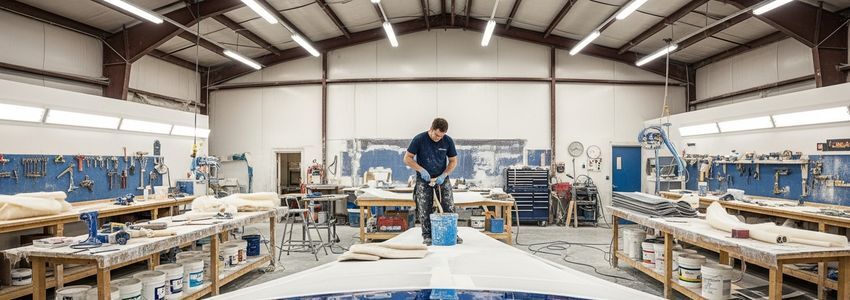
Running a fiberglass repair business means balancing specialized craft with the demands of running a profitable company. Whether you restore boat hulls, patch RV sidewalls, fix cracked bathtubs, resurface swimming pools, or repair vehicle body panels, your business requires skilled labor, specialized materials, and equipment that does not come cheap. When cash flow tightens or growth opportunities appear, fiberglass repair business loans give you the capital to keep operations moving and take on bigger jobs.
This guide covers every financing option available to fiberglass repair business owners - from traditional term loans and SBA programs to equipment financing and working capital lines of credit. You will learn how to qualify, what lenders look for, and how to choose the product that fits your business.
In This Article
- What Are Fiberglass Repair Business Loans?
- Why Fiberglass Repair Businesses Need Financing
- Types of Loans for Fiberglass Repair Businesses
- How the Application Process Works
- How to Qualify
- Financing by the Numbers
- Best Uses for Fiberglass Repair Business Loans
- Real-World Scenarios
- Choosing the Right Lender
- How Crestmont Capital Helps
- How to Get Started
- Frequently Asked Questions
What Are Fiberglass Repair Business Loans?
Fiberglass repair business loans are financing products designed to help companies that repair, restore, and refinish fiberglass materials. These businesses serve a wide range of markets including marine repair, RV service centers, bathtub and shower restoration, pool resurfacing, and auto body work involving composite materials. The financing is structured like any commercial loan - a lender provides a lump sum or revolving credit line that you repay over time with interest.
The fiberglass repair industry sits at the intersection of skilled trades and professional services. According to the U.S. Small Business Administration, skilled trade businesses that provide repair and restoration services consistently rank among the most viable small business categories, with strong demand driven by the high cost of replacement versus repair.
Fiberglass repair businesses typically need financing for three core reasons: equipment and materials investment, working capital to cover gaps between project completion and payment, and growth capital to hire technicians, open additional locations, or expand service offerings.
Why Fiberglass Repair Businesses Need Financing
The economics of fiberglass repair create natural cash flow pressure. Most jobs require significant upfront materials costs - epoxy resins, gelcoat, hardeners, fiberglass cloth, tools and spray equipment - before you ever invoice the customer. When you operate on marine work, RV repairs, or commercial pool resurfacing, a single project can tie up thousands of dollars in materials and labor for weeks.
Seasonality is another driver. Marine repair shops in northern states see most of their revenue compressed into spring and summer months. Bathtub resurfacing businesses often slow in winter when homeowners delay renovation projects. Working capital loans and lines of credit help bridge the slow periods so you can retain staff, pay rent, and be ready to scale up when demand returns.
Industry Insight: The U.S. fiberglass and composites repair market is closely tied to the recreational boating, RV, and swimming pool industries - all of which have seen significant growth since 2020. According to the U.S. Census Bureau, recreational vehicle and boat ownership increased substantially in recent years, driving sustained demand for repair and maintenance services.
Equipment upgrades are also a common trigger for financing. High-quality spray guns, gelcoat application systems, wet-out tables, and curing ovens represent major capital outlays. Many shops finance these purchases through equipment loans rather than depleting working capital, preserving cash flow for day-to-day operations.
Finally, growth opportunities - landing a contract with a marina, partnering with a dealership, or hiring certified technicians - often require more capital than a small shop can generate organically. Business loans let you say yes to growth without waiting months or years to save the necessary funds.
Types of Loans for Fiberglass Repair Businesses
Fiberglass repair business owners have more financing options than most realize. Understanding each product helps you match the right tool to your specific need.
Term Loans
A term loan provides a lump sum that you repay over a fixed period - typically 1 to 5 years for shorter-term products, or up to 10 years for longer-term commercial loans. Small business loans in the form of term loans work well for large, one-time investments: purchasing a competitor, buying a building, or investing in new service equipment. Rates typically range from 7% to 30%+ depending on your credit profile, time in business, and lender type.
Equipment Financing
Equipment financing lets you purchase fiberglass repair equipment - spray systems, pressure pots, infrared curing lamps, polishing machines, and shop tools - with the equipment itself serving as collateral. This means approval is often easier than unsecured loans, and you can preserve working capital while acquiring the assets you need. Loan-to-value ratios can reach 100% on new equipment, making it possible to acquire without a significant down payment.
Business Line of Credit
A business line of credit is a revolving credit facility you draw from as needed and repay as cash comes in. It is ideal for managing the cash flow gaps common in project-based fiberglass work - you draw funds to buy materials, complete the job, invoice the client, collect payment, and repay the line. Lines of credit typically range from $10,000 to $500,000 for established small businesses.
SBA Loans
SBA loans are government-backed loans that offer lower rates and longer repayment terms than conventional products. The SBA 7(a) program is the most common, offering loans up to $5 million with terms up to 10 years for working capital and 25 years for real estate. The tradeoff is a longer approval process and more documentation requirements. The SBA Express loan program can deliver approval faster - sometimes within 36 hours - for amounts up to $500,000.
Working Capital Loans
Working capital loans provide short-term cash to cover operational costs - payroll, rent, materials, and utilities - during slow periods or when you are scaling up. These are typically unsecured, meaning no collateral required, and can fund in as little as 24 to 48 hours through alternative lenders. They are well-suited for seasonal fiberglass repair businesses that need capital bridges between busy seasons.
Short-Term Business Loans
Short-term business loans provide capital for 3 to 18 months and are designed for immediate needs - a materials purchase for a large project, payroll coverage, or a time-sensitive equipment acquisition. These loans fund quickly but carry higher effective rates than long-term products. They work best when you have a clear path to repayment within the short term window.
Bad Credit Business Loans
If your credit history has challenges, bad credit business loans provide options when traditional banks would decline your application. Alternative lenders focus more on business revenue and cash flow than personal credit scores, making it possible to secure funding with scores as low as 500. Rates are higher, but these products can be a stepping stone to building the business credit profile needed to qualify for better terms later.
Ready to Fund Your Fiberglass Repair Business?
Get fast, flexible financing tailored for skilled trade and repair businesses. No obligation - apply in minutes.
Apply Now ->How the Application Process Works
Applying for a fiberglass repair business loan is straightforward when you know what to expect. The process varies by lender type and loan product, but most follow a similar path.
Step 1 - Pre-qualify online: Most alternative lenders offer a quick online pre-qualification that takes 5 to 10 minutes. You provide basic business information - annual revenue, time in business, and loan amount needed - and receive an initial indication of what you may qualify for without a hard credit pull.
Step 2 - Submit your application and documents: A full application typically requires 3 to 6 months of business bank statements, a government-issued ID, proof of business ownership (such as your Articles of Organization or business license), and sometimes recent tax returns. Banks and SBA lenders require more extensive documentation including profit and loss statements, balance sheets, and a business plan.
Step 3 - Underwriting review: The lender reviews your application, verifies your business information, and assesses your creditworthiness based on revenue, cash flow, time in business, and credit history. Alternative lenders can complete this in hours; banks and SBA lenders may take days to weeks.
Step 4 - Receive an offer: Once approved, you receive an offer outlining the loan amount, interest rate, repayment terms, and any fees. Review this carefully and compare it against other offers before accepting.
Step 5 - Fund your account: After you accept the offer and sign documents, funds typically arrive in your business bank account within 1 to 5 business days depending on the lender.
How to Qualify for Fiberglass Repair Business Loans
Lenders evaluate fiberglass repair businesses using a standard set of criteria. Understanding these factors helps you position your application for the best possible outcome.
Time in Business
Most conventional lenders require at least 2 years in business. Alternative lenders may work with businesses as young as 6 months. The longer you have been operating, the more loan options you have access to and the better rates you will receive. Newer businesses with strong revenue can still qualify through alternative channels, though options are more limited.
Annual Revenue
Revenue requirements vary widely. Some alternative lenders work with businesses generating as little as $10,000 per month in revenue ($120,000 annually). Larger loan amounts and better rates typically require $250,000 or more in annual revenue. For SBA loans, lenders want to see that your business generates enough cash flow to service the new debt comfortably - typically a debt service coverage ratio of 1.25x or higher.
Credit Score
Personal credit scores influence loan options significantly. Scores above 700 unlock the best rates and terms. Scores between 600 and 699 qualify for most alternative lender products at moderate rates. Scores below 600 limit options but do not eliminate them entirely - revenue-based products and equipment financing with collateral are still accessible. Building your credit before applying for larger loans pays dividends in reduced borrowing costs.
Business Bank Statements
Lenders use bank statements to verify revenue, assess cash flow patterns, and check for warning signs like frequent overdrafts or large unexplained withdrawals. Consistent positive balances and regular deposits signal a healthy, manageable business to underwriters.
Pro Tip: Keep your business and personal finances completely separate. Lenders evaluating a fiberglass repair business want to see a clean business bank account that clearly reflects business activity. Commingling personal and business funds is a red flag during underwriting and can lead to denial even when your revenue is strong.
Financing Your Fiberglass Repair Business: Key Numbers
By the Numbers
Fiberglass Repair Business Financing - At a Glance
$5K-$500K
Typical loan range for fiberglass repair businesses
24 hrs
Fastest funding time with alternative lenders
6 Mo.
Minimum time in business for most alternative lenders
$120K+
Minimum annual revenue for most working capital loans
Best Uses for Fiberglass Repair Business Loans
Understanding how to deploy borrowed capital is just as important as securing it. Here are the highest-return uses of financing for fiberglass repair businesses.
Equipment and Tools
Professional fiberglass repair requires professional equipment. High-pressure gel coat spray systems, spray booths with proper ventilation, infrared curing stations, and polyester resin dispensing equipment can cost tens of thousands of dollars. Financing these purchases through equipment loans preserves your working capital while giving you access to the tools that help you take on larger, higher-margin work. For more on this approach, see our boat repair business loans guide, which covers similar equipment financing strategies for marine-adjacent businesses.
Materials Inventory
Keeping adequate inventory of resins, hardeners, gelcoat, fiberglass mat and cloth, and finishing compounds reduces turnaround times and lets you handle emergency calls. Buying materials in bulk also reduces per-unit costs. Working capital loans and lines of credit are ideal for funding inventory builds before a busy season.
Hiring Skilled Technicians
Finding trained fiberglass technicians is one of the most challenging aspects of growing a fiberglass repair business. When you find the right people, having capital available to bring them on immediately - before revenue from new work arrives - makes the difference between seizing the opportunity and losing it. A working capital loan bridges the payroll gap while new technicians ramp up their productivity.
Marketing and Customer Acquisition
Fiberglass repair businesses that invest in digital marketing, referral programs, and commercial relationships with marinas, RV dealerships, and auto body shops consistently outperform those that rely on word of mouth alone. Financing a marketing push during slow season positions you for a stronger busy season with a fuller project pipeline.
Facility Improvements
A proper spray booth, dedicated curing area, and organized parts storage significantly improve efficiency and output quality. Many fiberglass repair shops operate in suboptimal conditions because facility upgrades require capital they cannot spare from operations. Long-term business loans can fund these improvements while spreading the cost over time to match the extended benefit of the upgrade.
Fleet and Service Vehicles
Mobile fiberglass repair services - where a technician goes to the boat slip, RV park, or customer site - are increasingly popular. Financing a service van or truck outfitted with your equipment opens new revenue channels with relatively low overhead compared to adding a fixed location. Equipment financing typically covers vehicles and their outfitting.
Real-World Scenarios
These scenarios illustrate how fiberglass repair business owners use financing to solve real problems and capture real opportunities.
Scenario 1 - Spring rush working capital: A marine repair shop in New England has 40 boats queued up for spring commissioning and fiberglass work. Materials costs for the first two weeks exceed $30,000 before the first invoice is paid. The owner draws $35,000 from a business line of credit, completes the first wave of repairs, collects payments, and repays the line within 60 days. Total interest cost: approximately $500. Revenue generated: $85,000.
Scenario 2 - Equipment upgrade for higher-margin work: A small bathtub and shower resurfacing company learns that a gelcoat spray system can reduce material waste by 30% and cut job time by 25%. The equipment costs $18,000. Through equipment financing, the owner acquires it with $0 down and monthly payments of $380. Within 3 months, the efficiency gains cover the payments and add net profit to every job.
Scenario 3 - Hiring ahead of growth: An RV repair business wins a service contract with a regional RV dealership that will triple the volume of fiberglass work. The owner needs to hire two additional technicians before the contract revenue starts. A $40,000 working capital loan covers three months of additional payroll while the new revenue ramps up to cover ongoing costs.
Scenario 4 - Pool resurfacing expansion: A fiberglass pool resurfacing company in Florida wants to expand from residential work to commercial pools. Commercial contracts require larger equipment and more working capital for materials. The owner takes a $75,000 SBA 7(a) loan at a favorable rate, buys the necessary equipment, and lands a contract with a hotel chain within 6 months. The contract alone pays the loan within 18 months.
Scenario 5 - Weathering a slow season: An auto composite repair shop that specializes in supercar fiberglass and carbon fiber work sees a dramatic slowdown in Q1. Revenue drops 60% from Q4. A $25,000 short-term loan covers rent, insurance, and retaining the two key technicians whose skills are hard to replace. When business rebounds in Q2, the owner repays the loan quickly with the resumed cash flow.
Scenario 6 - Opening a second location: A successful fiberglass boat repair shop near a marina wants to open a second location near a lake 40 miles away. Equipment, initial materials, first and last month's rent, and marketing costs total approximately $95,000. A long-term business loan spread over 5 years makes monthly payments manageable while the new location builds its customer base.
Flexible Financing for Every Stage of Growth
From $5,000 to $5 million - Crestmont Capital has funding options designed for skilled trade and repair businesses like yours.
Apply Now ->Choosing the Right Lender for Your Fiberglass Repair Business
Not all lenders understand the fiberglass repair industry. When evaluating options, look for lenders who work regularly with skilled trades, contractors, and service businesses - they will be better equipped to underwrite your application accurately and offer products that fit your cash flow patterns.
Traditional Banks
Banks offer the lowest rates but have the strictest qualification requirements and slowest approval timelines. If you have excellent credit (700+), 2 or more years in business, and strong financials, a bank term loan or SBA product may offer the most favorable total cost. However, many fiberglass repair shops - particularly younger or seasonal businesses - do not qualify for bank products.
Online Alternative Lenders
Alternative lenders evaluate applications using technology-driven underwriting that prioritizes cash flow over credit scores. They fund faster (sometimes same day), accept a broader range of applicants, and offer more flexible products. The tradeoff is higher rates compared to banks. For businesses that need capital quickly or do not qualify for bank products, alternative lenders represent a practical and often ideal solution.
SBA-Approved Lenders
The SBA works through approved lenders - both banks and non-bank institutions - to offer government-guaranteed loans. If you qualify and can wait for the approval process (typically 3 to 8 weeks for standard 7(a) loans), SBA financing offers excellent rates and terms. The SBA also has programs specifically supporting businesses in industries like marine repair and trades. According to SBA.gov, 7(a) loans can be used for nearly any legitimate business purpose including working capital, equipment, and expansion.
Equipment-Specific Lenders
For equipment purchases, specialized equipment finance companies sometimes offer better rates and more flexible terms than general-purpose lenders. They understand residual values of trade-specific equipment, which can work in your favor during underwriting. Consider also reading our small engine repair business loans guide for additional strategies used by related repair businesses when financing specialized equipment.
Key Comparison Factors
When comparing lenders and loan offers, focus on: annual percentage rate (not just the interest rate), total cost of capital over the loan term, prepayment penalties, origination fees, and speed of funding relative to your need. A loan with a slightly higher rate that funds in 24 hours may be more valuable than one that takes 6 weeks when you are trying to land a time-sensitive contract.
How Crestmont Capital Helps Fiberglass Repair Business Owners
Crestmont Capital specializes in providing fast, flexible financing to skilled trade businesses across the United States. We work with fiberglass repair shops, marine service businesses, RV repair companies, pool resurfacing contractors, and auto composite repair specialists to secure the capital they need to operate and grow.
Our lending network includes hundreds of funding sources, which means we can match your application to the product and lender best suited to your profile. Whether you need a quick working capital infusion, equipment financing for a new spray system, or a longer-term loan for expansion, our team has options that work for businesses at every stage.
We understand the seasonal and project-based nature of fiberglass repair work. Our advisors have helped business owners structure loans that align repayment with their revenue cycles, avoiding the cash flow crunches that come with ill-timed payment schedules. Our application process takes minutes, approvals happen in hours, and funding often reaches your account within 24 to 48 hours.
Forbes on Small Business Lending: Forbes Advisor's business loan research consistently highlights the importance of comparing multiple lenders before committing to a financing product. Rates and terms vary significantly between lenders for the same applicant - shopping the market through a lending marketplace like Crestmont Capital can save thousands in total interest costs.
How to Get Started
Complete our quick application at offers.crestmontcapital.com/apply-now. Provide basic business information and tell us what you need funding for - no lengthy paperwork to start.
A business financing specialist will review your application, discuss your needs in detail, and identify the best products available for your fiberglass repair business.
We present you with multiple offers from our lending network so you can choose the rate, term, and product that best fits your business cash flow and goals.
Accept your offer, sign documents, and receive your funds - often within 24 to 48 hours. Put your capital to work and watch your fiberglass repair business expand.
Frequently Asked Questions
What types of fiberglass repair businesses qualify for business loans?
Most types of fiberglass repair businesses qualify, including marine repair shops, RV service centers, bathtub and shower resurfacing companies, pool resurfacing contractors, auto composite repair shops, and fiberglass fabrication businesses. The key qualification factors are time in business (typically 6 months minimum), monthly revenue (usually $10,000 or more), and business bank account history. Specialty or niche fiberglass businesses qualify just like any other trade or service business.
How much can I borrow for my fiberglass repair business?
Loan amounts typically range from $5,000 to $500,000 through alternative lenders, and up to $5 million through SBA programs. The amount you qualify for depends on your annual revenue, credit profile, time in business, and what the loan is for. A general rule of thumb is that working capital loans range from 1 to 3 months of average monthly revenue. Equipment loans can cover up to 100% of the equipment's value. Stronger financial profiles unlock larger amounts and better rates.
What credit score do I need to get a fiberglass repair business loan?
Credit score requirements vary by lender and product. For traditional bank loans and SBA loans, you typically need a personal credit score of 680 or above. Alternative lenders work with scores as low as 500 to 550, particularly when your business revenue is strong. Equipment financing is often more forgiving on credit scores because the equipment serves as collateral. If your score is below 600, focus on demonstrating strong, consistent monthly revenue and a clean business banking history to offset the credit challenge.
How fast can I get funding for my fiberglass repair business?
Funding speed depends on the lender and loan type. Alternative lenders and online lenders can fund working capital loans and short-term loans in as little as 24 hours. Equipment financing typically takes 2 to 5 business days. SBA loans are the slowest, generally taking 3 to 8 weeks from application to funding. If you need capital urgently, an alternative lender is your fastest path. If you can wait for lower rates and better terms, an SBA loan may be worth the timeline.
Do I need collateral to get a fiberglass repair business loan?
It depends on the loan type. Equipment loans are secured by the equipment you purchase, so no additional collateral is required. Many working capital loans and business lines of credit from alternative lenders are unsecured, meaning no specific asset pledge is needed. SBA loans and bank loans typically require collateral such as business assets or a personal guarantee. Some lenders take a blanket lien on business assets as standard practice even for unsecured products. Review the terms carefully and understand what you are agreeing to before signing.
Can a seasonal fiberglass repair business get a loan?
Yes. Many fiberglass repair businesses - especially marine and RV repair shops - are seasonal. Lenders understand this and many alternative lenders evaluate your annual revenue and cash flow patterns rather than just the most recent month. A strong busy-season track record can offset slow-season dips. Lines of credit are particularly well-suited for seasonal businesses because you can draw funds during slow months and repay during busy months. Demonstrating that you have managed seasonal cash flow successfully for two or more years significantly strengthens your application.
What documents do I need to apply for a fiberglass repair business loan?
For alternative lenders, you typically need 3 to 6 months of business bank statements, a government-issued photo ID, and proof of business ownership such as a business license or Articles of Organization. For larger loans, bank loans, and SBA products, you will also need business and personal tax returns (typically 2 years), a profit and loss statement, a balance sheet, and sometimes a business plan with financial projections. The more thorough your documentation, the smoother the underwriting process will be.
Can I use a business loan to buy fiberglass repair equipment?
Absolutely. Equipment financing is one of the most common and effective uses of business loans for fiberglass repair businesses. Spray systems, gelcoat application equipment, infrared curing units, pressure pots, mixing systems, spray booths, and service vehicles all qualify for equipment financing. The equipment serves as collateral, which simplifies approval and often allows for 100% financing with no down payment. Equipment loans typically carry lower rates than unsecured working capital products because of the collateral backing them.
What are typical interest rates for fiberglass repair business loans?
Interest rates vary widely based on the loan product, lender, and your business profile. SBA loans currently range from approximately 10% to 15% APR. Traditional bank term loans range from 7% to 20%. Alternative lender working capital loans and short-term loans range from 15% to 50%+ APR depending on risk profile. Equipment financing rates typically fall between 5% and 25% APR. The best way to ensure competitive rates is to apply through multiple lenders or a marketplace that presents multiple offers, and to improve your credit profile and business financials before applying for larger amounts.
Is it better to use a line of credit or a term loan for a fiberglass repair business?
The right choice depends on what you need the money for. A line of credit is better for recurring, variable needs - materials purchasing, covering cash flow gaps between project payments, or managing seasonal fluctuations. You only pay interest on what you use, which reduces cost when you do not need the full amount constantly. A term loan is better for a specific, one-time investment - equipment, a facility upgrade, hiring staff for a contract - where you know the exact amount needed and can plan repayment. Many businesses maintain both: a line of credit for operational flexibility and a term loan for capital investment.
Can a new fiberglass repair business get a loan?
New businesses face more limited options but are not shut out entirely. Some alternative lenders work with businesses as young as 6 months old if revenue is strong. Startup SBA Microloan programs offer smaller amounts (up to $50,000) for newer businesses with limited history. Equipment financing is also more accessible for startups because the collateral reduces lender risk. If you are brand new (under 6 months), personal credit-based business credit cards or personal loans may serve as a bridge while you establish the business history that opens commercial lending doors. Building a strong bank statement history from day one is critical.
How do I improve my chances of getting approved for a business loan?
The most impactful steps are: maintaining a separate business bank account with consistent deposits, building your personal credit score above 680, demonstrating steady or growing revenue over at least 12 months, avoiding overdrafts and NSF fees on your business account, and keeping your business tax filings current. Having a clear purpose for the loan and being able to explain how it will generate returns or solve a specific business problem also helps. Applying through a lending marketplace that matches you to multiple lenders increases your chances of finding a product that fits your profile.
Are there SBA loans specifically for fiberglass repair businesses?
There are no SBA loan programs exclusively for fiberglass repair businesses, but fiberglass repair shops qualify for the same SBA programs available to all small businesses - primarily the 7(a) loan program and the SBA 504 loan program for real estate and major equipment. The SBA 7(a) program is the most versatile, allowing funding for working capital, equipment, and business expansion. The SBA Microloan program offers up to $50,000 for smaller businesses and startups. Eligibility requires meeting SBA size standards, being a for-profit business, and operating in the United States.
What happens if my fiberglass repair business loan application is denied?
A denial from one lender does not mean you cannot get funding - it means that specific lender's criteria did not match your profile at that moment. Ask the lender for the specific reason for denial, as this gives you a roadmap for improvement. Common denial reasons include insufficient time in business, inadequate revenue, low credit score, or negative bank account patterns. From there, you can either address those factors over 3 to 6 months and reapply, or apply through a different lender type (such as switching from a bank to an alternative lender) that has more flexible criteria. A lending marketplace like Crestmont Capital can help match your profile to lenders most likely to approve your application.
Can I get a business loan for a mobile fiberglass repair operation?
Yes. Mobile fiberglass repair businesses qualify for the same loan products as fixed-location shops. In fact, mobile operations can be particularly well-suited for equipment financing - the service vehicle and installed equipment qualify as assets that can serve as collateral. Working capital loans and lines of credit are just as accessible for mobile businesses as for traditional shops, as long as you can demonstrate consistent revenue and business banking activity. Some equipment lenders specialize in financing mobile service vehicles with custom outfitting, which can simplify the process considerably.
Conclusion
Fiberglass repair businesses operate in a high-skill, high-demand niche with strong economics and loyal customer bases. The right financing strategy turns seasonal cash flow pressure into a manageable planning exercise and transforms growth opportunities from aspirations into actionable plans. Whether you need a quick working capital injection to cover materials costs, equipment financing for a new spray system, or a long-term SBA loan to expand your operation, fiberglass repair business loans give you the leverage to compete and grow.
The key is matching the right product to the right need. Use short-term, flexible products for operational cash flow management and longer-term products for capital investments. Build your business credit profile alongside your customer base. And work with a lender who understands the trade business model rather than trying to fit your seasonal, project-based operation into a one-size-fits-all underwriting framework.
Crestmont Capital works with fiberglass repair businesses across the country to secure fast, practical financing. Apply today and get a response in hours, not weeks.
Get Funded Today
Apply now and get matched with the right fiberglass repair business loan for your needs. Fast approvals, flexible terms, and funding as soon as tomorrow.
Apply Now ->Disclaimer: The information provided in this article is for general educational purposes only and is not financial, legal, or tax advice. Funding terms, qualifications, and product availability may vary and are subject to change without notice. Crestmont Capital does not guarantee approval, rates, or specific outcomes. For personalized information about your business funding options, contact our team directly.