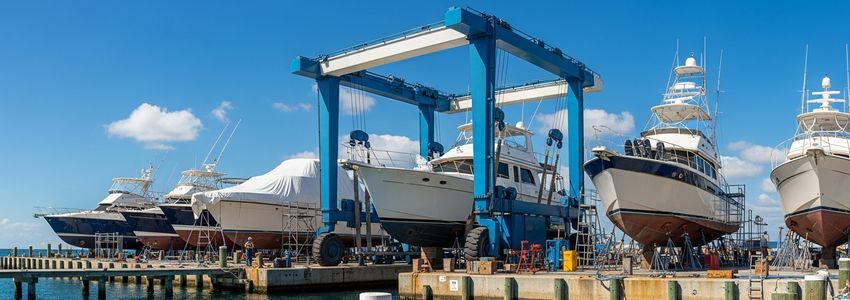
Running a boat repair business means navigating rough financial waters alongside the real ones. Whether you operate a full-service marine yard, a mobile repair operation, or a specialty fiberglass shop, your business requires consistent capital to stay afloat. Equipment costs are high, seasonal cash flow creates gaps, and customers expect fast turnarounds that demand both parts inventory and skilled labor on standby. That is where boat repair business loans come in. The right financing gives you the working capital, equipment, and stability to compete in a growing marine services market.
Why Boat Repair Businesses Need Financing
The U.S. recreational boating market generates over $50 billion in economic activity annually, according to the U.S. Census Bureau. Boats require regular maintenance, seasonal preparation, and eventual repairs that range from engine overhauls to hull restoration. That steady demand creates real opportunity for boat repair businesses, but capturing that opportunity costs money.
Unlike retail businesses that can stock inventory cheaply and sell it quickly, marine repair shops carry expensive parts, specialized tools, and high-cost consumables. A single commercial boat haul-out system can cost $150,000 or more. A well-equipped fiberglass bay, paint booth, and mechanical diagnostic tools add six figures to startup or expansion costs. Even established shops often need outside capital to bridge seasonal payment gaps, hire experienced technicians, or fund the equipment upgrades that keep them competitive.
Boat repair business loans provide that capital in a structured way, allowing you to invest in growth without depleting the reserves you need to operate day to day.
Crestmont Capital offers fast approvals and flexible terms for boat repair businesses nationwide.
Apply NowTypes of Boat Repair Business Loans
Marine service businesses can access several loan products depending on their goals, credit profile, and how quickly they need capital. Understanding each option helps you match the right product to the right need.
Working Capital Loans
Working capital loans are short- to medium-term loans that provide cash for day-to-day operations. For boat repair shops, this often means covering payroll during the off-season, buying parts before a big job, or bridging the gap between project completion and customer payment. These loans are typically unsecured and funded quickly, sometimes within 24 to 48 hours of approval.
Equipment Financing
Equipment financing lets you purchase specific equipment using the equipment itself as collateral. This is ideal for large marine investments like travel lifts, paint booths, hull blasters, engine hoists, and diagnostic systems. Because the loan is secured by the asset, lenders often offer more favorable rates than unsecured products, and you may be able to finance up to 100 percent of the purchase price.
Business Line of Credit
A business line of credit works like a revolving credit account. You draw funds when needed and repay them over time, then draw again. This is especially valuable for marine repair businesses that experience unpredictable revenue spikes during peak boating season. You only pay interest on what you actually use.
SBA Loans
SBA loans are government-backed loans with long repayment terms and competitive rates. The SBA 7(a) program and SBA 504 program both serve marine businesses. These loans are well-suited for purchasing commercial real estate, large equipment purchases, and business acquisitions. Approval takes longer than alternative options, often 30 to 90 days, but the terms are hard to beat for borrowers who qualify.
Merchant Cash Advance
A merchant cash advance provides a lump sum of capital in exchange for a percentage of your future daily sales. This product is fast and accessible even for businesses with challenged credit, but the cost is typically higher than traditional loans. It works best as a bridge solution, not a long-term financing strategy.
Invoice Financing
Marine repair shops that work with marinas, boat fleets, or charter companies sometimes extend net-30 or net-60 payment terms. Invoice financing lets you access up to 85-90 percent of outstanding invoice values immediately, with the lender collecting payment directly from your customers. This eliminates the cash flow gaps that slow-paying commercial clients create.
Boat Repair Business Loan Comparison
| Loan Type | Best For | Funding Speed | Typical Amount |
|---|---|---|---|
| Working Capital Loan | Payroll, parts, operating costs | 1-5 days | $10K - $500K |
| Equipment Financing | Travel lifts, hoists, tools | 3-10 days | $25K - $2M |
| Business Line of Credit | Seasonal cash gaps, emergencies | 1-7 days | $10K - $250K |
| SBA 7(a) Loan | Real estate, large expansion | 30-90 days | Up to $5M |
| Invoice Financing | Commercial clients, slow payments | 1-3 days | Up to 90% of invoices |
| Merchant Cash Advance | Fast cash, challenged credit | 24-48 hours | $5K - $250K |
How Much Can You Borrow?
Loan amounts for boat repair businesses vary widely depending on the lender, loan product, and your financial profile. Here is a realistic range for each stage of business:
- Startup marine shops (under 1 year): $10,000 to $75,000 through alternative lenders or SBA microloans
- Established shops (1-3 years): $25,000 to $300,000 through working capital loans or lines of credit
- Larger marine service centers (3+ years): $100,000 to $2 million or more for equipment and expansion loans
- Commercial marine operators: SBA loans up to $5 million for real estate, acquisition, or major capital projects
The primary factors that determine your borrowing capacity are annual revenue, business credit score, personal credit score, time in business, and the purpose of the loan. Lenders typically offer loans up to 10 to 20 percent of your annual revenue for working capital, and higher amounts for asset-secured loans.
How the Loan Process Works
Understanding the application and approval process helps you prepare effectively and avoid delays. Here is what to expect from start to funded:
Step 1: Assess Your Funding Needs
Before applying, determine exactly how much capital you need and what you will use it for. Lenders want to see a specific purpose, not a vague request for cash. Break down your needs into categories: equipment, inventory, payroll, expansion, or debt consolidation.
Step 2: Check Your Financial Profile
Pull your personal and business credit reports. Review your last 6-12 months of bank statements. Calculate your monthly revenue, operating expenses, and current debt obligations. Know your numbers before a lender asks you for them.
Step 3: Gather Documentation
Most lenders require 3-6 months of bank statements, a completed business loan application, and basic business information. SBA lenders and traditional banks also require 2-3 years of business and personal tax returns, a profit and loss statement, and sometimes a business plan or projections.
Step 4: Apply and Compare Offers
Apply with multiple lenders or work with a financing partner like Crestmont Capital that gives you access to multiple lending products in one application. Compare offers not just on interest rate but on total cost, repayment term, prepayment penalties, and origination fees.
Step 5: Review and Accept
Read the loan agreement carefully before signing. Pay attention to the annual percentage rate (APR), any variable rate clauses, and prepayment terms. Once accepted, most alternative lenders fund within 1-5 business days. SBA loans take 30-90 days to fund after approval.
How to Qualify for a Marine Business Loan
Qualifying requirements vary by lender and product, but most lenders evaluate the same core factors when reviewing a boat repair business loan application.
Credit Score
Personal credit score is still the primary qualifier for most small business loans. Alternative lenders typically accept scores as low as 550-600, while traditional banks and SBA lenders prefer scores above 680-700. Your business credit score also matters, especially for larger loan amounts.
Time in Business
Most alternative lenders require at least 6 months of operating history, while banks typically want 2 or more years. If you are launching a new marine shop, SBA microloans and equipment financing are often the most accessible options.
Annual Revenue
Lenders want to see sufficient revenue to support loan repayment. Many alternative lenders have minimum revenue requirements of $10,000 to $15,000 per month. Banks and SBA lenders evaluate your full income picture, including seasonality patterns.
Collateral
Equipment loans use the financed equipment as collateral. Working capital loans may require a personal guarantee or general business assets as security. SBA 7(a) loans require collateral when available, including real estate, equipment, or other business assets.
Boat repair businesses in northern states often show sharp seasonal revenue swings, with 60-80 percent of revenue concentrated in spring through fall. Many lenders understand this and will annualize your peak-season revenue rather than penalizing you for winter months. Work with a lender who specializes in or is familiar with seasonal marine businesses.
Managing Seasonal Cash Flow in Marine Repair
Seasonality is one of the biggest financial challenges facing marine repair businesses. Revenue spikes in spring when boats come out of storage and again in fall before winterization. The months in between, and especially January through March in colder climates, can produce almost zero income. Without a plan, this creates a dangerous cycle of cash flow stress.
A business line of credit is specifically designed to address this problem. You draw funds in January to cover rent, payroll, and insurance, then repay as spring bookings come in. This revolving structure prevents the need to make desperate decisions like delaying supplier payments or cutting staff when revenue is low.
According to CNBC, cash flow mismanagement is one of the top five causes of small business failure. For marine businesses with predictable seasonal patterns, proactive financing is the most reliable way to smooth those valleys. For more strategies on managing seasonal revenue swings, see our complete guide to seasonal business financing.
Timing Your Loan Application
The best time to apply for a boat repair business loan is before you need the money, not after your cash reserves are depleted. Apply in late fall or early winter, while your summer revenue is still visible on recent bank statements, so lenders see your business at its strongest. Applying in February or March, after several thin months of revenue, makes approval harder and may result in smaller loan offers.
Equipment Financing for Marine Shops
Marine repair businesses are equipment-intensive. The right tools not only let you take on more jobs, they determine which services you can offer at all. Here is a breakdown of common marine equipment investments and typical financing scenarios:
Marine Travel Lifts and Boat Hoists
Travel lifts are the backbone of any full-service marine yard. A new 50-ton travel lift can cost $250,000 to $500,000. Equipment financing allows you to acquire this asset with a down payment as low as zero to ten percent and spread repayments over 5-7 years. The lift generates revenue from every haul-out, making it a self-funding investment when financed properly.
Paint Booths and Spray Equipment
Offering topside painting and gelcoat restoration commands premium rates, but the equipment investment is significant. A commercial spray booth, compressors, and HVLP systems can total $50,000 to $150,000. Equipment loans with terms matched to the equipment's useful life keep monthly payments manageable.
Engine Diagnostic and Repair Tools
Modern marine engines require sophisticated diagnostic tools. Outboard service software subscriptions, multimeters, oscilloscopes, and factory scan tools can easily add up to $25,000 or more for a well-equipped shop. These are ideal for short-term equipment loans or a line of credit draw.
Pressure Washers and Hull Cleaning Systems
Commercial-grade pressure washing systems for hull cleaning, including hot water capability for bottom paint removal, run $5,000 to $30,000. This lower-cost equipment category is easy to finance through working capital loans or a credit line.
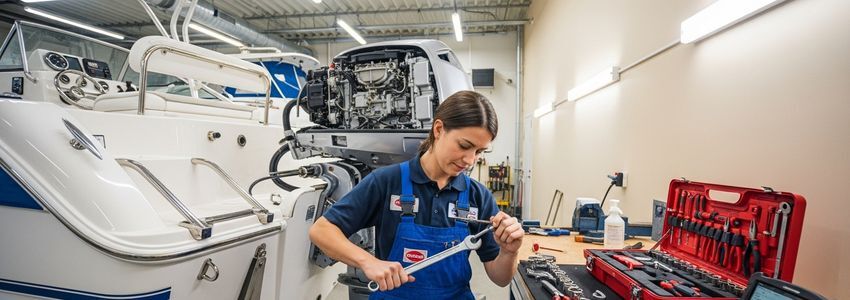
For businesses that need specialized marine equipment but want to preserve cash, equipment financing through Crestmont Capital can cover virtually any piece of marine service equipment, from trailer systems to hydraulic cranes to commercial welding rigs.
Finance travel lifts, paint booths, diagnostic tools, and more. Fast approvals from Crestmont Capital.
Apply NowReal-World Scenarios: How Marine Businesses Use Financing
Understanding how other boat repair businesses have used financing helps you see what is possible for your own operation. Here are realistic examples based on common marine business situations:
Scenario 1: Expanding a Small Mobile Repair Operation
A solo mobile marine technician has been in business for 2 years, earning $180,000 annually from outboard repairs and electrical work. He wants to hire a second technician and buy a second service truck outfitted with tools. A $75,000 working capital loan covers the truck, tools, and 3 months of the new hire's salary while the additional revenue ramps up. Monthly payments of roughly $2,500-$3,500 are easily covered by the additional jobs the second technician generates.
Scenario 2: Adding Fiberglass Services
A marina-based repair shop currently offers engine and mechanical services but wants to add fiberglass and gelcoat repair, which commands $150-$250 per hour compared to $100-$125 for mechanical work. The shop owner finances $45,000 in spray equipment, sandblasting gear, and materials inventory through an equipment loan. The service expansion pays for itself within 18 months.
Scenario 3: Bridging a Slow Winter Season
A boat repair business in the Great Lakes region earns $600,000 per year but sees almost no revenue from December through February. The owner draws $50,000 from a business line of credit in January to cover rent, payroll for two year-round employees, insurance, and supplier minimums. By April, spring haul-outs and engine startup work have generated enough revenue to repay the line in full.
Scenario 4: Acquiring a Competitor's Customer Base
A retirement-age boat repair shop owner in Florida is looking to sell his business. A nearby competitor secures a $200,000 business acquisition loan to purchase the customer list, equipment, and goodwill. The acquired business brings $350,000 in annual revenue, making the debt service easily manageable and the deal immediately profitable.
Scenario 5: Emergency Equipment Replacement
A critical hydraulic pump on a travel lift fails in mid-May, exactly when the spring haul-out rush is peaking. The replacement part and labor costs $18,000. The shop owner applies for an emergency working capital loan, receives approval and funding within 48 hours, and keeps operations running without missing a single day of peak season. See how working capital loans can cover exactly these kinds of urgent business needs.
How Crestmont Capital Helps Boat Repair Businesses
Crestmont Capital is a national business lender specializing in fast, flexible financing for small and medium-sized businesses, including marine service companies. We understand the seasonal patterns, equipment-intensive nature, and cash flow dynamics that make the boat repair industry unique.
Here is what sets Crestmont Capital apart for marine businesses:
- Fast approvals: Many clients receive approval decisions within hours and funding within 1-3 business days.
- Flexible loan amounts: We finance everything from $10,000 working capital draws to multi-million-dollar equipment purchases and real estate acquisitions.
- Multiple product options: One application gives you access to working capital loans, equipment financing, lines of credit, and more.
- Seasonal business expertise: We understand that your summer bank statements tell a different story than your January statements, and we underwrite accordingly.
- No prepayment penalties: Pay off your loan early without penalty and save on interest costs.
Our team works with marine businesses at every stage, from single-person mobile operations to full-service marina yards. We have financed travel lifts, shop expansions, working capital needs, and business acquisitions across the country. Explore your options through our small business financing hub or apply directly to get started.
According to Forbes Advisor, small business owners who partner with specialized lenders rather than general-purpose banks often receive better terms, faster decisions, and more flexibility during repayment. Crestmont Capital brings that specialized focus to every marine business loan we fund.
No obligation. Get matched with the right loan product for your boat repair business today.
Apply NowFrequently Asked Questions
What credit score do I need to get a boat repair business loan?
Most alternative lenders require a minimum personal credit score of 550-600 to qualify for working capital loans or lines of credit. Traditional banks and SBA lenders typically prefer scores of 680 or higher. Your business credit score, revenue history, and time in business also influence approval decisions. Even if your personal credit is less than perfect, strong revenue and consistent cash flow can help you qualify.
Can I get a loan for a new boat repair business with no revenue history?
Startup financing is available but limited. SBA microloans (up to $50,000) are designed for new businesses. Equipment financing using the purchased equipment as collateral is another option, since the lender's risk is secured by the asset. You will likely need a strong personal credit score (680+), a detailed business plan, and personal financial statements.
How do lenders handle seasonal revenue in the marine industry?
Experienced lenders understand that marine businesses have seasonal revenue patterns. Rather than evaluating just the last 3 months of bank statements, they look at 12 months of revenue to understand your full annual picture. Some lenders will annualize peak-season revenue or offer flexible repayment structures that allow lower payments during off-peak months.
What documents do I need to apply for a boat repair business loan?
For alternative lenders, you typically need 3-6 months of business bank statements, a completed loan application, and basic business information (EIN, business address, ownership details). For bank or SBA loans, expect to provide 2-3 years of business and personal tax returns, profit and loss statements, a current balance sheet, and sometimes a business plan with financial projections.
Can I finance specific marine equipment like a travel lift or paint booth?
Yes. Equipment financing is one of the most common loan products for marine service businesses. You can finance travel lifts, boat hoists, paint booths, engine diagnostic systems, pressure washing equipment, trailers, forklifts, and virtually any other business-use marine equipment. The equipment serves as collateral, which often allows for higher loan amounts and lower interest rates than unsecured loans.
How quickly can I get funding for my marine business?
Alternative lenders like Crestmont Capital can often approve and fund working capital loans within 1-3 business days. Equipment financing typically takes 3-7 business days due to equipment documentation and verification. SBA loans take 30-90 days from application to funding. If you need emergency capital for an urgent repair or operational need, alternative lenders are the fastest option.
What interest rates should I expect for a boat repair business loan?
Interest rates depend on your credit profile, loan product, and lender type. SBA loans offer the most competitive rates, currently ranging from roughly 10-14 percent APR. Alternative lenders typically charge 15-45 percent APR for working capital loans, depending on risk profile. Equipment loans generally fall in the 8-25 percent range. Factor rates on merchant cash advances convert to effective APRs of 40-150 percent or more, which is why they are best used as short-term bridges rather than long-term solutions.
Can I use a business loan to buy an existing boat repair shop?
Yes. Business acquisition loans are available for purchasing established marine repair businesses. SBA 7(a) loans are particularly well-suited for acquisitions because they allow longer repayment terms (up to 10 years for working capital, up to 25 years for real estate) and loan amounts up to $5 million. The seller's financial records, customer base, and asset value all factor into the loan underwriting process.
What is a personal guarantee and will I need one?
A personal guarantee is a promise that you, as the business owner, will repay the loan from personal assets if the business cannot. Most small business loans, especially SBA loans and traditional bank loans, require a personal guarantee from anyone owning 20 percent or more of the business. Some alternative lenders waive personal guarantees for smaller loan amounts or for businesses with very strong financial profiles.
How does invoice financing work for marine businesses with commercial clients?
Invoice financing allows you to advance 80-90 percent of the value of outstanding invoices immediately, rather than waiting 30, 60, or 90 days for payment. The lender collects payment directly from your commercial client and returns the remaining balance minus a fee, typically 1-5 percent of the invoice value. This is particularly useful for marine businesses that work on contract with commercial operators who have slow payment terms.
Can I get a business loan if I have been in business for less than a year?
Yes, though options are more limited. SBA microloans (up to $50,000) are designed for startups and newer businesses. Equipment financing is also available to younger businesses when the equipment value supports the loan amount. Some alternative lenders work with businesses as young as 6 months old. Strong personal credit (680+), a solid business plan, and evidence of early revenue will strengthen your application significantly.
What is the difference between a term loan and a line of credit for a marine business?
A term loan provides a fixed lump sum that you repay in scheduled installments over a set period. It is best for one-time investments like equipment, renovations, or acquisitions. A business line of credit is revolving: you draw funds as needed up to your credit limit, repay what you use, and draw again. It is best for ongoing or unpredictable cash flow needs, like seasonal gaps, parts purchases, or emergency repairs. Many marine businesses benefit from having both.
Is there a loan specifically for buying parts inventory?
While there is no loan product called a parts inventory loan, both inventory financing and working capital loans can be used to fund parts purchasing. Inventory financing uses your inventory as collateral and is structured around your inventory turn rate. Working capital loans provide general-purpose cash that can be used for any operating expense, including parts.
Will applying for a boat repair business loan affect my personal credit score?
An initial prequalification with many alternative lenders results only in a soft credit pull, which does not affect your score. A formal loan application typically triggers a hard credit inquiry, which may reduce your score by a few points temporarily. If you apply with multiple lenders within a short period, rate shopping inquiries are often consolidated and counted as a single inquiry. On-time repayment of a business loan can positively impact your credit over time.
How can I improve my chances of loan approval?
The most effective steps to improve your approval odds are: maintain a personal credit score above 650, keep at least 3-6 months of operating expenses in your business bank account, pay down existing business debts, ensure your financial records are accurate and current, and apply for an amount that your revenue can realistically support. Applying with a lender experienced in marine or seasonal businesses also improves your odds, since they understand your business model and underwrite accordingly.
Next Steps: Fund Your Boat Repair Business
Ready to Move Forward?
- Review your financial profile - Pull your business bank statements, credit reports, and revenue figures before applying.
- Determine your specific need - Identify whether you need working capital, equipment financing, a line of credit, or an acquisition loan.
- Gather documentation - Collect 3-6 months of bank statements, your EIN, and basic business information for a fast application.
- Apply with Crestmont Capital - Complete our streamlined online application and receive a decision quickly.
- Review your offer carefully - Compare APR, term length, total repayment cost, and any fees before accepting.
- Use funds strategically - Invest your capital in assets or operations that directly generate more revenue than the loan costs.
Conclusion
Boat repair business loans are a practical, proven tool for marine service companies at every stage of growth. Whether you need working capital to bridge the off-season, equipment financing to expand your service capabilities, or a business line of credit to handle the unexpected, the right financing product can transform your business's trajectory.
The marine industry rewards businesses that invest in quality, speed, and capacity. Customers choose shops with the right equipment, the best technicians, and the financial stability to stand behind their work. Financing those investments is not a sign of weakness; it is smart capital allocation that positions your business to compete and grow.
Crestmont Capital works with marine service businesses across the country to match them with the right loan products at competitive rates. Our streamlined process, seasonal business expertise, and commitment to fast funding makes us a trusted partner for boat repair shop owners who are serious about growth.
Apply today and find out what boat repair business loans you qualify for. Our team is ready to help you chart a course to stronger, more sustainable growth.
Disclaimer: The information provided in this article is for general educational purposes only and is not financial, legal, or tax advice. Funding terms, qualifications, and product availability may vary and are subject to change without notice. Crestmont Capital does not guarantee approval, rates, or specific outcomes. For personalized information about your business funding options, contact our team directly.