- Why Erosion Control Contractors Need Financing
- Types of Business Loans for Erosion Control Companies
- Equipment Financing for Erosion Control Operations
- Working Capital and Seasonal Cash Flow Solutions
- SBA Loans for Erosion Control Businesses
- How to Qualify for Erosion Control Business Loans
- The Loan Application Process Step by Step
- Erosion Control Financing at a Glance
- Best Uses of Loan Funds for Erosion Control Contractors
- Frequently Asked Questions
Erosion control is one of the most in-demand segments of the environmental services and construction industry. From highway construction sites to residential developments, stormwater compliance to post-wildfire land rehabilitation, erosion control contractors play a critical role in protecting land, infrastructure, and water quality across the United States. Yet despite strong market demand, many erosion control businesses struggle with one persistent challenge: cash flow and capital access.
Projects are large, equipment is expensive, crews need to be paid weekly, and clients -- especially government agencies and large general contractors -- often pay on 30-, 60-, or even 90-day cycles. That mismatch between expenses and incoming revenue is exactly why erosion control business loans are such a critical tool for contractors looking to grow, stabilize, or simply keep pace with demand.
This complete financing guide breaks down every loan option available to erosion control businesses, how to qualify, what lenders look for, and how to use capital strategically to build a stronger, more competitive company. Whether you run a two-person hydroseed crew or a multi-state erosion control and stormwater management firm, the right financing can be the difference between winning big contracts and watching opportunities pass by.
Ready to Fund Your Erosion Control Business?
Get fast, flexible financing designed for contractors. Apply in minutes and get a decision the same day.
Apply NowWhy Erosion Control Contractors Need Financing
The erosion control industry is growing. According to data from the U.S. Census Bureau, the environmental services and specialty contractor sector has expanded consistently over the past decade, driven in large part by increased federal and state regulation around stormwater runoff, Clean Water Act compliance, and land disturbance permitting. The global erosion control market is projected to reach several billion dollars in the coming years, fueled by infrastructure investment, wildfire recovery, and intensifying weather events that demand permanent erosion mitigation solutions.
For individual contractors, this growth creates opportunity -- but also capital demands that can strain even well-established businesses:
- High equipment costs: Hydroseeding machines, hydraulic mulch tackifiers, silt fence installation equipment, erosion log staplers, track loaders, and spray trucks can cost tens of thousands to hundreds of thousands of dollars each.
- Material-intensive work: Each project requires significant upfront purchases of seed mixes, bonded fiber matrix, erosion control blankets, silt fencing, wattles, and compost. These costs must be borne before any invoice is paid.
- Slow-pay clients: Government agencies, municipalities, and large GCs frequently operate on net-60 or net-90 payment terms, creating gaps of weeks or months between completing work and receiving payment.
- Seasonal revenue: Many erosion control operations are highly seasonal, with peak activity in spring and fall and slower periods in winter months depending on geography.
- Bonding and insurance requirements: Winning larger contracts often requires performance bonds and higher coverage limits, which require upfront premium payments.
- Crew scaling: Scaling up to handle a large new contract means hiring and training additional field crews, which creates immediate payroll obligations.
These realities mean that access to small business loans is not a luxury for erosion control contractors -- it is often a strategic necessity. Understanding your financing options puts you in a far stronger position to bid confidently, staff appropriately, and deliver on every contract you win.
Types of Business Loans for Erosion Control Companies
There is no single "right" loan for every erosion control business. The best financing solution depends on your company size, credit profile, how quickly you need funds, and what you plan to do with the capital. Here is a breakdown of the most relevant loan types for contractors in this industry:
Term Loans
A term loan provides a lump sum of capital that you repay over a fixed period -- typically anywhere from 1 to 10 years -- with regular payments of principal and interest. Term loans work well for large, planned expenditures like purchasing a major piece of equipment, expanding your fleet, or funding a significant operational expansion. Long-term business loans spread costs over several years, keeping monthly payments manageable while allowing you to make significant investments immediately.
Short-Term Business Loans
Short-term business loans typically have repayment periods of 3 to 18 months and fund faster than traditional bank loans -- sometimes within 24 hours. They are ideal for bridging a temporary cash flow gap, covering a large material purchase for an upcoming project, or handling an unexpected expense without derailing your operations.
Business Line of Credit
A business line of credit gives you revolving access to a set amount of capital that you can draw from, repay, and draw again as needed. This is one of the most flexible financing tools available and is particularly well-suited for erosion control contractors managing multiple projects simultaneously. You only pay interest on what you actually draw, making it an efficient tool for managing unpredictable cash flow cycles.
Equipment Financing
Equipment financing allows you to purchase or lease business equipment using the equipment itself as collateral. This approach typically offers lower interest rates than unsecured loans because the collateral reduces lender risk. For erosion control contractors investing in hydroseeding rigs, track loaders, or spray equipment, equipment financing is often the most cost-effective path to acquiring the tools you need.
SBA Loans
Small Business Administration loans offer some of the most favorable terms available -- lower rates, longer repayment periods, and higher loan amounts -- but require more documentation and longer approval timelines. SBA loans are best suited for well-established erosion control businesses with strong financials looking to fund major expansions or real estate purchases.
Invoice Financing
Invoice financing (also called accounts receivable financing) allows you to borrow against outstanding invoices you are waiting to collect. If you have $150,000 in unpaid invoices from a municipal stormwater project and need cash now, an invoice financing facility can advance 70-90% of that amount immediately, helping you keep operations running while you wait for payment.
Equipment Financing for Erosion Control Operations
Equipment is the backbone of any erosion control company. Whether you are running hydroseeding operations, installing erosion control blankets on highway slopes, deploying silt fencing across a large construction site, or managing a full stormwater management operation, the right equipment is what lets you compete for -- and successfully deliver -- large contracts.
The challenge is that erosion control equipment is expensive. A commercial hydroseeder can cost $50,000 to $150,000 or more. Track loaders and skid steers run $60,000 to $120,000. Spray trucks and tankers represent additional major investments. Purchasing all of this equipment outright from operating cash flow is simply not feasible for most growing businesses.
Equipment financing addresses this by spreading the cost of acquisition over 24 to 84 months, making large purchases affordable while preserving working capital for day-to-day operations. Key advantages include:
- Collateralized by the equipment itself, which typically results in lower rates compared to unsecured loans
- Predictable monthly payments that are easy to budget around
- Ownership at end of term (for financing vs. leasing) builds equity in business assets
- Faster approval than many other loan types since collateral is clear
- Potential tax benefits through depreciation deductions (consult your accountant for specifics)
Equipment leasing is another option worth considering. While you do not own the equipment at the end of the lease term, leasing typically carries lower monthly payments and gives you the flexibility to upgrade to newer equipment as technology evolves. For erosion control contractors whose competitive advantage depends on having modern, reliable equipment, leasing can be a smart strategic choice.
Need Equipment Financing Fast?
Crestmont Capital funds equipment loans for erosion control contractors across the U.S. Get pre-qualified today with no impact to your credit score.
Get Equipment FinancingWorking Capital and Seasonal Cash Flow Solutions
Even highly profitable erosion control businesses face cash flow challenges. The nature of the work -- large projects, upfront material costs, slow-pay clients -- creates a structural cash flow gap that working capital financing is specifically designed to address.
Working capital loans provide short- to medium-term capital to cover operational expenses while you wait for revenue to arrive. Common uses include:
- Purchasing seed, mulch, erosion blankets, and other materials before project start
- Meeting weekly payroll during a large project when client payment is still 60 days away
- Paying insurance premiums, bonding costs, and licensing fees at the start of a new contract season
- Covering overhead during slow winter months so you retain your key crew members
- Bridging gaps when a project is delayed due to weather or permit issues
For contractors dealing with urgent cash needs, fast business loans and same-day business loans can provide capital within hours of approval -- a critical capability when you need to secure materials for a project starting Monday morning or meet payroll at the end of the week.
For contractors who have experienced credit challenges, bad credit business loans remain an option. Many alternative lenders evaluate the overall health of your business -- revenue trends, time in business, and cash flow patterns -- rather than relying solely on credit score. If your business is generating consistent revenue, financing may be within reach even if your personal credit is less than perfect.
In genuine financial emergencies, emergency business loans can provide rapid capital to prevent operational disruptions -- whether that means replacing a critical piece of failed equipment, covering an unexpected liability, or keeping a project on schedule when a supplier issue threatens delivery.
SBA Loans for Erosion Control Businesses
The U.S. Small Business Administration does not lend money directly but guarantees a portion of loans made by participating lenders -- typically banks and credit unions -- which reduces lender risk and allows for more favorable loan terms. According to the SBA's official loan program page, these programs offer some of the most competitive rates available to small businesses.
The two SBA loan programs most relevant to erosion control contractors are:
SBA 7(a) Loans
The SBA 7(a) program is the agency's flagship lending program. Loans up to $5 million are available for a wide range of business purposes, including working capital, equipment, real estate, and business acquisition. For erosion control contractors, SBA 7(a) loans can fund:
- Major equipment purchases (hydroseeders, work trucks, spray rigs)
- Business expansion into new geographic markets
- Acquisition of a competing erosion control company
- Purchase of a commercial facility or yard
- Long-term working capital for large contract mobilization
Interest rates on SBA 7(a) loans are typically prime-based and capped by the SBA, making them highly competitive. Repayment terms extend up to 10 years for working capital and equipment, and up to 25 years for real estate.
SBA 504 Loans
The SBA 504 program is specifically designed for major fixed-asset purchases -- commercial real estate and large equipment. If you are ready to purchase your own facility, a storage yard for materials, or a large capital asset like a specialized mixing plant, the 504 program offers long-term, fixed-rate financing with low down payments.
The main trade-off with SBA loans is time and documentation. SBA loan applications require extensive financial documentation, can take weeks to months to process, and have stricter qualification criteria than many alternative lenders. For contractors with strong finances who can plan ahead, the savings in interest costs over the life of the loan make the extra effort worthwhile.
How to Qualify for Erosion Control Business Loans
Lender requirements vary by loan type, loan amount, and the lender's own underwriting standards. That said, certain factors are universally important across all financing options for erosion control contractors:
Time in Business
Most conventional lenders prefer at least 2 years in business. Alternative lenders may work with businesses as young as 6 months. Startups face the steepest challenge accessing financing, though equipment financing -- where the equipment itself serves as collateral -- is often more accessible to newer businesses.
Revenue and Cash Flow
Lenders want to see consistent revenue and positive cash flow trends. For erosion control companies with seasonal revenue, it helps to document your annualized revenue clearly and show that off-season periods are planned for, not indicative of business distress. Most alternative lenders look for a minimum of $10,000 to $15,000 per month in average monthly revenue.
Credit Score
Personal and business credit scores factor into most loan decisions. For SBA loans, lenders typically want a personal credit score of 680 or higher. For alternative business loans, requirements are more flexible -- some lenders work with scores as low as 550, though lower scores generally mean higher interest rates or lower loan amounts.
Industry and Business Type
Erosion control and environmental services are generally viewed favorably by lenders. The industry is non-cyclical in the sense that regulatory requirements drive demand regardless of the broader economic cycle, and many erosion control contractors work under government contracts, which provides revenue stability lenders appreciate.
Documentation Typically Required
- Business bank statements (most recent 3-6 months)
- Business and personal tax returns (1-3 years for SBA loans)
- Profit and loss statement and balance sheet
- Business license and contractor license copies
- Accounts receivable aging report
- List of active contracts or pending bids (helpful for context)
The Loan Application Process Step by Step
Applying for an erosion control business loan does not have to be complicated. Here is how the process typically works with alternative lenders like Crestmont Capital:
- Complete a short online application: Most alternative lenders have streamlined applications that take 10-15 minutes. You will provide basic business information, estimated monthly revenue, and the loan amount you are seeking.
- Submit supporting documents: Upload 3-6 months of business bank statements, and any other documents the lender requests. For larger loans, you may need tax returns and financial statements.
- Receive a pre-qualification decision: Many alternative lenders can provide same-day decisions. You will receive loan options with proposed amounts, terms, and rates.
- Review and accept your offer: Compare offers carefully. Look at the total cost of capital, not just the interest rate. Factor in fees, repayment schedules, and any prepayment penalties.
- Receive funds: Once you accept an offer and complete any final documentation, funds are typically deposited within 1-3 business days for alternative lenders, or 1-3 weeks for SBA and bank loans.
For contractors who need capital quickly to mobilize for a new project, the speed of alternative lenders is a significant advantage. A traditional bank loan application can take 30-90 days to complete, while alternative lenders routinely fund within 24-48 hours of application.
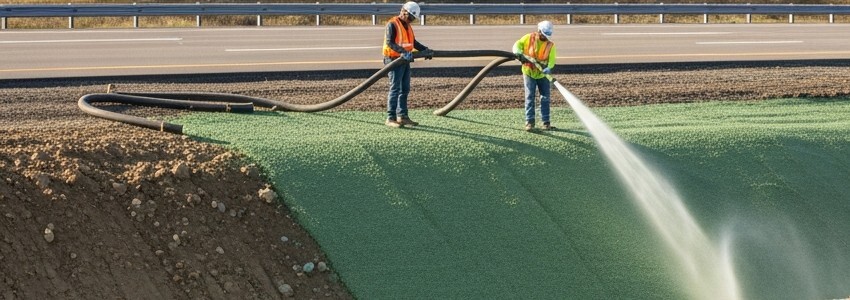
Professional erosion control contractors deploying hydroseeding equipment on a highway embankment project.
Erosion Control Financing at a Glance
Erosion Control Business Loan Options: Quick Reference
Equipment Financing
Amount: $10K - $500K+
Term: 24 - 84 months
Speed: 1 - 5 days
Best for: Hydroseeders, trucks, loaders
Working Capital Loan
Amount: $10K - $500K
Term: 3 - 36 months
Speed: 24 - 48 hours
Best for: Payroll, materials, cash gaps
Business Line of Credit
Amount: $10K - $250K
Term: Revolving
Speed: 1 - 3 days
Best for: Ongoing cash flow management
SBA 7(a) Loan
Amount: Up to $5M
Term: Up to 10 - 25 years
Speed: 4 - 12 weeks
Best for: Major expansion, real estate
Invoice Financing
Amount: 70 - 90% of invoice value
Term: Until invoice paid
Speed: 24 - 48 hours
Best for: Slow-paying clients
Short-Term Loan
Amount: $5K - $250K
Term: 3 - 18 months
Speed: Same day - 2 days
Best for: Urgent project funding
Terms vary by lender and applicant qualifications. Contact Crestmont Capital for personalized options.
Best Uses of Loan Funds for Erosion Control Contractors
Borrowing money is only smart if you are deploying it in ways that generate returns. Here are the highest-ROI uses of business loan funds for erosion control companies:
1. Expand Your Equipment Fleet
More equipment capacity means you can bid on larger contracts, run multiple job sites simultaneously, and reduce the delays and rental costs that come from operating with limited machinery. A hydroseeder that costs $80,000 to finance over 5 years at a manageable monthly payment can generate $300,000 or more in annual revenue if deployed effectively.
2. Pre-Purchase Materials for Large Contracts
Winning a large erosion control contract for a highway project or a subdivision development often requires mobilizing with hundreds of thousands of dollars in materials. Contractors who can pre-purchase materials at scale sometimes qualify for volume discounts that improve project margins. Working capital loans and lines of credit are ideal for this purpose.
3. Hire and Train Additional Crews
Labor is the other major constraint on growth. Qualified erosion control technicians who can operate hydroseeding equipment, install erosion control blankets correctly, and maintain compliance with stormwater permits are not easy to find. Investing loan funds in recruitment, onboarding, and training can significantly increase your capacity to take on new work.
4. Pursue Licensing and Certifications
Many government contracts and regulated projects require Certified Professional in Erosion and Sediment Control (CPESC) credentials, state contractor licenses, or specific OSHA certifications. Investing in certifications for yourself and key employees opens doors to higher-value contract opportunities.
5. Invest in Technology and Software
Project management software, GPS tracking for field crews, estimating tools, and compliance documentation systems can significantly improve profitability by reducing waste, improving scheduling, and making compliance reporting easier. These technology investments are often overlooked but deliver strong long-term returns.
6. Build Your Bonding Capacity
Performance and payment bonds are required for most government and municipal erosion control contracts. Your bonding capacity is directly tied to your company's net worth and financial strength. Using loan funds to strengthen your balance sheet -- through equipment acquisition, accounts receivable management, and reserve building -- can increase the size of contracts you are eligible to bond.
For additional resources on financing contractor operations, see our guides on drainage contractor business loans and land clearing business loans, which cover related financing challenges in the environmental contracting space.
You can also explore our comprehensive construction business loans guide for broader contractor financing strategies.
Choosing the Right Lender for Your Erosion Control Business
Not all lenders understand the erosion control industry, and choosing the wrong financing partner can mean unfavorable terms, misaligned repayment schedules, or a lender who panics at the first sign of seasonal revenue fluctuation. Here is what to look for in a lender:
Industry Experience
Look for lenders who have experience working with specialty contractors, environmental services companies, or construction-adjacent businesses. These lenders understand seasonal revenue patterns and the unique cash flow dynamics of project-based work. According to Forbes Advisor's guide to small business loans, choosing a lender who understands your industry is one of the most important decisions a business owner can make.
Transparency on Costs
Always ask for the Annual Percentage Rate (APR), total repayment amount, and any fees (origination fees, prepayment penalties, maintenance fees) before accepting a loan offer. The lowest stated rate is not always the lowest total cost of capital.
Flexibility on Repayment
Some lenders offer seasonal repayment structures that reduce payments during slow months and increase them during peak seasons. For erosion control contractors with predictable seasonal patterns, this type of flexibility can dramatically improve cash flow management.
Speed of Funding
If you are in a competitive bidding environment, the ability to move quickly when you win a contract is a real advantage. Lenders who can fund within 24-48 hours give you operational agility that slow-moving bank lenders cannot match. CNBC has reported that alternative online lenders have fundamentally changed small business access to capital by dramatically reducing approval times.
Understanding Interest Rates and Loan Costs
Interest rates on business loans vary widely based on loan type, lender, borrower qualifications, and current market conditions. Here is a general framework for understanding what to expect:
- SBA 7(a) loans: Typically prime rate plus 2.25% to 4.75%, depending on loan size and term. As of 2026, effective rates typically range from 8% to 12% APR.
- Bank term loans: Generally 6% to 14% APR for well-qualified borrowers with strong financials and established banking relationships.
- Alternative lender term loans: 10% to 40%+ APR depending on risk profile, term length, and business health. Higher rates reflect faster funding and less stringent qualification requirements.
- Business lines of credit: 8% to 25% APR for draws, with some lenders charging monthly maintenance fees regardless of usage.
- Equipment financing: 5% to 20% APR, with lower rates available for newer equipment and well-qualified borrowers.
- Invoice financing: Often expressed as a factor rate (e.g., 1-3% per 30 days), which translates to higher effective APRs but is justified by the short duration and immediate cash flow relief.
When evaluating loan offers, always calculate the total cost of capital -- the total amount you will repay above the principal -- rather than focusing only on monthly payment size. A loan with lower monthly payments but a longer term may cost significantly more in total interest over its life. Bloomberg has covered how rising interest rates have reshaped the small business lending landscape, making it more important than ever to shop for competitive terms.
Building a Stronger Financial Profile
The better your financial profile, the better your loan terms. Here are practical steps erosion control contractors can take to strengthen their creditworthiness over time:
- Separate business and personal finances: Open a dedicated business checking account and run all business revenue and expenses through it. This creates the clean business banking history lenders need to evaluate your application.
- Build business credit: Establish credit accounts with vendors and suppliers and ensure they report to business credit bureaus. A strong business credit profile can qualify you for better rates independent of your personal credit history.
- Maintain clean books: Accurate, up-to-date financial statements are essential for loan applications. Invest in accounting software or a bookkeeper to ensure your records are reliable.
- Reduce unnecessary debt: High-interest short-term debt on your balance sheet can hurt your debt service coverage ratio. Pay down existing high-cost debt when possible to improve your borrowing profile.
- Document contracts and pipeline: A list of signed contracts and active bids gives lenders confidence in your future revenue, which can be as important as your historical performance.
Regulatory Trends Driving Erosion Control Demand
Understanding the regulatory environment that drives demand for your services helps you make smarter decisions about when and how much to invest in your business. Several key trends are shaping the erosion control market:
Clean Water Act Section 402 (NPDES): The National Pollutant Discharge Elimination System requires Construction General Permits for land disturbance activities over one acre. As construction activity increases and enforcement tightens, the need for qualified erosion control services grows correspondingly.
State and local stormwater regulations: Many states have adopted stormwater regulations that are more stringent than federal minimums, requiring post-construction stormwater management plans and long-term erosion control maintenance. These requirements create recurring service revenue opportunities beyond initial project installation.
Infrastructure Investment and Jobs Act: The federal infrastructure law enacted in 2021 has directed hundreds of billions of dollars into road, bridge, utility, and water infrastructure projects across the country. Each of these projects requires erosion control services, and the pipeline of work will continue for years.
Wildfire recovery and land rehabilitation: Increasingly severe wildfire seasons have created significant demand for post-fire erosion control and hydromulching services across western states. This represents a growing and specialized market segment for qualified erosion control contractors.
These macro trends point to sustained, growing demand for erosion control services -- which makes investing in your business capacity today a well-timed strategic decision. The Associated Press has reported on how climate resilience and infrastructure investment are driving increased funding for environmental protection services across the country.
Take Your Erosion Control Business to the Next Level
Whether you need equipment financing, working capital, or a business line of credit, Crestmont Capital has financing solutions built for contractors. Get your personalized offer today.
Apply for FinancingFrequently Asked Questions About Erosion Control Business Loans
1. What types of loans are best for erosion control contractors?
The best loan type depends on your specific need. Equipment financing is ideal for purchasing hydroseeders, trucks, or loaders. A business line of credit works best for managing ongoing cash flow and covering project material costs. Short-term working capital loans are well-suited for bridging payment gaps between project completion and client payment. SBA loans offer the best rates for contractors with strong financials who can afford to wait 4-12 weeks for funding on large expansion projects.
2. How much can an erosion control business borrow?
Loan amounts vary widely by product and lender. Short-term working capital loans typically range from $5,000 to $500,000. SBA loans go up to $5 million. Equipment financing can cover individual pieces of equipment or entire fleet purchases valued in the hundreds of thousands. A business line of credit might be set at $50,000 to $500,000 depending on your revenue and credit profile. The key driver is typically your monthly or annual revenue -- most lenders will extend credit up to a certain multiple of your monthly revenue.
3. Can a new erosion control business get a loan?
Yes, though options are more limited for startups. Equipment financing is typically the most accessible financing for new businesses because the equipment itself serves as collateral. Some alternative lenders work with businesses that have been operating for as little as 6 months with demonstrated revenue. SBA microloans and SBA 7(a) startup loans are also available for qualified new business owners. Having strong personal credit and collateral to offer significantly improves your chances of obtaining financing as a new business.
4. What credit score do I need to get an erosion control business loan?
Requirements vary by lender and loan type. SBA-preferred lenders typically want a personal credit score of 680 or higher. Traditional bank loans generally require 660 or above. Many alternative lenders work with credit scores as low as 550, though borrowers with scores below 620 should expect higher interest rates and potentially lower loan amounts. Business credit scores (Dun and Bradstreet, Experian Business) are also evaluated for established companies, so building strong business credit is worth prioritizing alongside your personal credit profile.
5. How fast can I get funding for my erosion control business?
Speed varies significantly by loan type. Alternative lenders specializing in small business financing can approve and fund applications in as little as 24 hours. Same-day business loans are available for qualifying borrowers who submit complete applications early in the business day. SBA loans typically take 4-12 weeks from application to funding. Traditional bank loans generally take 2-6 weeks. If you need capital quickly to mobilize for a new contract or address an urgent operational need, alternative lenders are your best option for fast access to capital.
6. Do I need collateral to get an erosion control business loan?
Collateral requirements depend on the loan type. Equipment financing is secured by the equipment being purchased, so no additional collateral is required. SBA loans over $25,000 typically require available collateral, which can include business assets, equipment, or real estate. Many alternative lenders offer unsecured working capital loans and lines of credit that do not require specific collateral, though they may include a blanket lien on business assets. Having available collateral generally improves your terms even when it is not strictly required.
7. How do erosion control contractors handle seasonal cash flow with financing?
Seasonal cash flow management is one of the most important financial skills for erosion control contractors. The most effective tools include: a business line of credit that you draw on during slow months and repay during peak revenue periods; short-term working capital loans to bridge specific seasonal gaps; invoice financing to accelerate cash from outstanding invoices; and building cash reserves during peak season to fund winter months. Some lenders also offer seasonal repayment structures that match your payment obligations to your actual cash flow patterns throughout the year.
8. Can I use a business loan to buy a hydroseeder or erosion control equipment?
Absolutely. Equipment financing is specifically designed for this purpose and is one of the most commonly used financing tools in the erosion control industry. You can finance commercial hydroseeders, hydraulic mulch tackifiers, spray trucks, track loaders, silt fence installation equipment, and virtually any other piece of business equipment. Equipment loans use the equipment itself as collateral, which typically results in competitive interest rates and flexible repayment terms of 24 to 84 months. You can also explore SBA 504 loans for very large equipment purchases at fixed, long-term rates.
9. What documents do I need to apply for an erosion control business loan?
Documentation requirements vary by lender and loan type, but typically include: 3-6 months of business bank statements, a completed loan application, business and personal tax returns for the most recent 1-3 years, a current profit and loss statement, a business balance sheet, business and contractor license copies, and a government-issued ID. SBA loans require more extensive documentation including a business plan, personal financial statements, and sometimes a detailed use-of-funds breakdown. Alternative lenders typically have lighter documentation requirements and streamlined online applications.
10. Are there SBA loans specifically for environmental or erosion control contractors?
There are no SBA loan programs exclusively for erosion control contractors, but erosion control businesses qualify for all standard SBA loan programs. The SBA 7(a) program is the most flexible and widely used, covering equipment, working capital, and expansion. The SBA 504 program is ideal for major fixed-asset purchases. The SBA microloan program offers smaller amounts (up to $50,000) and is accessible to newer or smaller businesses. Environmental services and specialty contractor businesses are well-received by SBA lenders, particularly those with government or utility contracts that provide revenue stability.
11. How does invoice financing work for erosion control projects?
Invoice financing (also called accounts receivable financing or factoring) allows you to receive an advance -- typically 70-90% of the invoice value -- against invoices that are outstanding but not yet paid. For example, if you complete a $200,000 erosion control project and submit an invoice to a municipal client with net-60 terms, invoice financing lets you receive $140,000 to $180,000 immediately rather than waiting two months for payment. When the client pays the invoice, the remaining balance is released to you minus the lender's fee. This is particularly valuable for contractors whose largest clients are government agencies or large general contractors with slow payment cycles.
12. What interest rates should I expect for erosion control business loans?
Interest rates vary significantly based on loan type, lender, and your business qualifications. SBA loans typically carry rates of 8-12% APR in the current interest rate environment. Equipment financing runs 5-20% APR depending on creditworthiness and equipment type. Alternative lender working capital loans range from 10% to 40%+ APR, reflecting faster funding and less stringent qualification requirements. Business lines of credit typically run 8-25% APR. The best way to find your actual rate is to complete a pre-qualification with multiple lenders, which typically has no impact on your credit score and gives you real, competing offers to compare.
13. Can I get a business loan to expand into stormwater management services?
Yes, and this is one of the highest-ROI uses of business loan funds for erosion control contractors. Stormwater management services -- including detention basin maintenance, inlet protection, permanent stormwater control measure installation, and compliance monitoring -- represent growing, recurring revenue streams that command higher margins than basic erosion control installation. A working capital or term loan can fund the additional equipment, training, and certifications needed to enter this service category. Lenders respond positively to expansion plans that demonstrate clear market demand and defined revenue opportunities.
14. What happens if my erosion control business has bad credit?
Bad credit makes financing harder but not impossible. Alternative lenders focus more heavily on business revenue and cash flow trends than on credit scores alone, meaning a business generating consistent monthly revenue may qualify for financing even with a lower credit score. Equipment financing with its built-in collateral is often accessible to borrowers with challenged credit. You can also explore secured financing options using existing business assets as collateral, which can offset credit risk. Bad credit business loans are available, though they typically carry higher interest rates to compensate for increased risk. Working on improving your credit score -- paying down existing debt, correcting errors on your credit report -- while using available financing options is a practical approach to building toward better terms over time.
15. How do I choose between a business loan and a business line of credit for my erosion control company?
The choice between a term loan and a line of credit depends on your specific need. Use a term loan when you have a specific, defined expense -- like purchasing a piece of equipment or funding a single large project mobilization -- and you want a fixed repayment schedule. Use a business line of credit when you need flexible, ongoing access to capital to manage variable cash flow, cover project materials across multiple jobs, or handle seasonal fluctuations. Many erosion control contractors benefit from having both: a term loan for major capital expenditures and a line of credit for day-to-day cash flow management. This combination provides both the lump-sum capital for strategic investments and the revolving flexibility to navigate the unpredictable financial demands of project-based work.
Conclusion: Invest in Your Erosion Control Business with Confidence
The erosion control industry offers exceptional growth opportunities for contractors who are well-positioned to capture them. Regulatory requirements are tightening, infrastructure investment is at historic levels, and the qualified contractor market is not expanding fast enough to meet demand. In this environment, the erosion control contractors who invest strategically in their equipment, crews, and capabilities will win the largest contracts and build the most valuable businesses.
Financing is the enabler of that investment. Whether you need equipment financing to expand your hydroseeding fleet, a working capital loan to bridge a cash flow gap on a large project, a business line of credit to manage seasonal fluctuations, or an SBA loan to fund a major expansion, the right capital at the right time can dramatically accelerate your growth trajectory.
Crestmont Capital specializes in helping contractors across the United States access the financing they need to grow. Our team understands the unique cash flow dynamics of project-based work, the equipment investment requirements of environmental contractors, and the seasonal patterns that make traditional banking relationships challenging. We offer fast, flexible financing with terms designed for contractors -- not corporate borrowers.
Ready to explore your options? Apply today and receive a decision within hours. There is no obligation and applying has no impact on your credit score.
Apply for Erosion Control Business Financing Today
Fast approvals. Flexible terms. Financing designed for contractors. Join thousands of small business owners who trust Crestmont Capital.
Apply Now -- It Takes 10 MinutesDisclaimer: The information provided in this article is for general educational purposes only and is not financial, legal, or tax advice. Funding terms, qualifications, and product availability may vary and are subject to change without notice. Crestmont Capital does not guarantee approval, rates, or specific outcomes. For personalized information about your business funding options, contact our team directly.