
 (800) 949-0401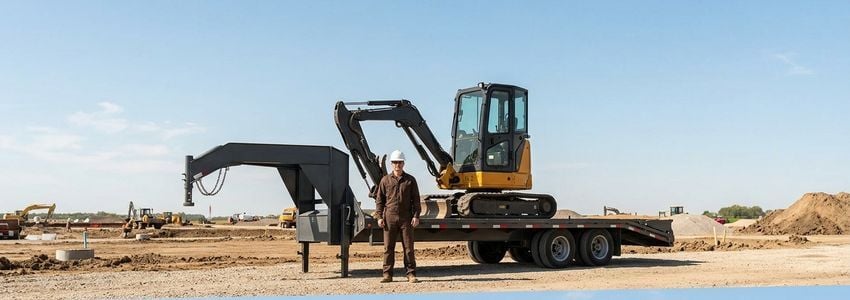
Equipment Trailer Financing: The Complete Guide for Business Owners
Equipment trailer financing is the fastest way for contractors, landscapers, haulers, and equipment-heavy businesses to get a working trailer on the road without draining cash reserves. Whether the need is a gooseneck for hauling skid steers or a utility trailer for daily job site runs, financing lets a business spread the cost over time while the trailer earns its keep from day one.
This guide breaks down exactly how equipment trailer financing works, what lenders look for, how much it typically costs, and how to choose the right structure for your business. By the end, you will know precisely how to move from "I need a trailer" to "I own one" without unnecessary delays or surprise costs.
In This Article
What Is Equipment Trailer Financing?
Equipment trailer financing is a business loan or lease structured specifically to help a company purchase a trailer used to haul equipment, materials, or vehicles. Instead of paying the full purchase price upfront, the business makes fixed monthly payments over an agreed term, typically two to seven years depending on the trailer's cost and expected useful life.
The trailer itself usually serves as collateral, which is one reason approval can move quickly compared to unsecured business loans. Lenders are financing a tangible, resalable asset, so they can extend competitive terms even to businesses that are still building their credit history.
This type of financing covers a wide range of trailer categories, from small utility trailers used by a two-person landscaping crew to heavy-duty gooseneck and lowboy trailers used to transport excavators, skid steers, or other rolling stock between job sites.
Key Benefits of Financing an Equipment Trailer
- Preserve working capital. Keep cash available for payroll, materials, and day-to-day operating expenses instead of tying it up in a single asset.
- Predictable monthly payments. Fixed-rate financing makes it easy to budget and forecast cash flow for the length of the term.
- Fast approval and funding. Because the trailer secures the loan, many applications are approved within 24 to 48 hours, with funding often available in days rather than weeks.
- Flexible terms. Terms can be matched to how long the business expects to use the trailer, keeping payments proportional to the asset's productive life.
- Credit-building opportunity. On-time payments on a financed trailer can help strengthen a company's business credit profile for future financing needs.
- New or used options. Most lenders, including Crestmont Capital, finance both new and quality used trailers, widening the pool of equipment a business can afford.
Ready to Get Your Trailer on the Road?
Get fast, flexible equipment trailer financing from the #1 business lender in the U.S. No obligation, apply in minutes.
Apply Now →How Equipment Trailer Financing Works
The process is more straightforward than most business owners expect. Lenders that specialize in equipment financing, like Crestmont Capital, have streamlined the application so a business can move from inquiry to funded purchase in a matter of days.
Quick Guide
How Equipment Trailer Financing Works — At a Glance
Choose a new or used trailer from a dealer or private seller and get a purchase quote.
Submit a short application with basic business and equipment details, usually taking a few minutes.
Underwriting reviews credit, time in business, and the trailer's value, often returning a decision the same day.
Review the payment schedule, sign the agreement, and the seller is paid directly so the trailer is ready to use.
Approval decisions weigh a combination of factors: personal and business credit history, time in business, annual revenue, and the age and value of the trailer being financed. Businesses with at least six months of operating history and a credit score in the mid-600s or higher typically qualify for the strongest rates, though newer businesses can still be approved with a larger down payment or a co-signer.
Down payment requirements generally range from 0% to 20% of the purchase price. Well-qualified borrowers with strong credit can often secure zero-down financing, while businesses with thinner credit files may be asked to put 10% to 20% down to offset risk. A larger down payment typically results in a lower monthly payment and, in some cases, a better rate.
Key Stat: The U.S. equipment finance industry is a roughly $1.3 trillion sector, and the Equipment Leasing and Finance Association projects new business volume to climb toward $137 billion in 2026, a sign that financing, not cash purchases, is how most businesses acquire working equipment and trailers.
Types of Equipment Trailers You Can Finance
Almost any trailer used for a legitimate business purpose can be financed, provided it has a clear value and a verifiable seller. Common categories include:
- Utility trailers for landscaping crews, small contractors, and general hauling.
- Gooseneck and bumper-pull equipment trailers for transporting skid steers, mini excavators, and compact loaders between sites.
- Lowboy trailers for heavier machinery such as bulldozers, cranes, and full-size excavators.
- Dump trailers for hauling debris, gravel, and demolition material.
- Flatbed trailers for lumber, steel, pipe, and other long or bulky freight.
- Enclosed cargo trailers for tools, inventory, and equipment that needs weather protection or security.
- Specialty trailers built for a specific industry, such as concession, livestock, or refrigerated units.
Because trailer types vary so widely in cost and complexity, lenders typically evaluate each application individually rather than applying a one-size-fits-all approval formula. A $6,000 utility trailer and a $70,000 lowboy will move through underwriting differently, but the core financing mechanics stay the same.
Who Equipment Trailer Financing Is Best For
Equipment trailer financing makes the most sense for businesses that rely on a trailer to generate revenue rather than treat it as an occasional convenience. That includes:
- Construction and excavation companies that move heavy equipment between job sites regularly
- Landscaping and lawn care businesses that haul mowers, skid steers, or debris
- Towing and transport companies that need dedicated hauling capacity
- Agricultural operations moving livestock, feed, or farm equipment
- Event and concession businesses that need a mobile setup
- Any owner-operator or fleet business where an idle trailer means lost jobs and lost revenue
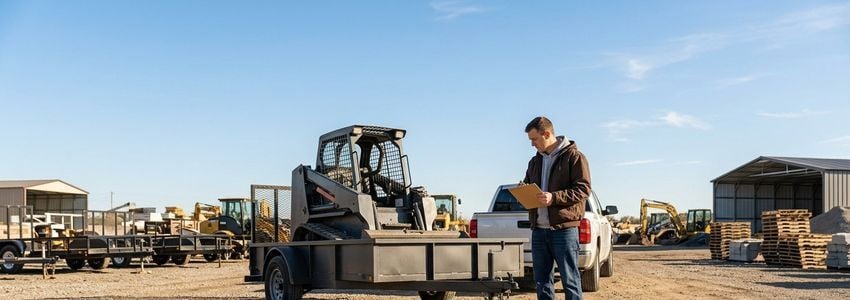
For seasonal businesses, financing terms can sometimes be structured with the trailer's usage pattern in mind, though most lenders default to standard fixed monthly payments. It is worth asking a lender directly whether flexible payment scheduling is available if your business has significant seasonal cash flow swings.
Financing vs. Leasing vs. Paying Cash
Business owners generally have three ways to acquire a trailer: pay cash, lease it, or finance it with a loan. Each option has trade-offs depending on cash position, tax strategy, and how long the trailer will be used.
| Option | Upfront Cost | Ownership | Best For |
|---|---|---|---|
| Cash Purchase | Full price upfront | Immediate | Businesses with strong cash reserves and no need to preserve liquidity |
| Financing (Loan) | 0% – 20% down | Immediate, loan-secured | Businesses that want to own the asset while preserving working capital |
| Leasing | Low or no down payment | At lease end, varies by structure | Businesses that upgrade trailers frequently or prefer lower monthly payments |
Most established businesses that plan to keep a trailer for its full useful life choose financing because it builds equity in the asset and typically costs less over time than a lease. Leasing can make sense for businesses that expect to upgrade trailers every few years or want to keep the option of returning the asset at the end of the term.
Compare Your Options in Minutes
See real financing terms for your business before you commit to a lease or a cash purchase.
Get a Quote →How Crestmont Capital Helps
Crestmont Capital works with businesses across the country to structure equipment trailer financing that fits their operations, not the other way around. Whether you need a single utility trailer or you are financing a growing fleet, the process is built for speed and clarity.
Crestmont's equipment financing program covers new and used trailers of nearly any type, with terms structured around the asset's value and expected useful life. Businesses that prefer to keep the option of upgrading later can also review Crestmont's equipment leasing options side by side with a financing quote.
For businesses hauling heavier machinery, Crestmont's capital equipment financing program can bundle a trailer purchase alongside the equipment it will haul, simplifying the paperwork into a single application. Businesses that need ongoing access to capital for multiple trailers or equipment purchases over time may also want to look at a equipment line of credit, which allows repeat draws without reapplying each time.
If your business relies heavily on transporting equipment between job sites, it is also worth reviewing Crestmont's guide to flatbed trailer financing or its utility trailer financing breakdown, both of which cover trailer-specific considerations in more depth. Construction companies that need both a trailer and the machinery it hauls often benefit from pairing this guide with Crestmont's construction equipment financing resources.
Applications typically take a few minutes to complete, and most businesses receive a decision within one to two business days. There is no obligation to accept an offer, and reviewing your options costs nothing.
Crestmont Capital also works directly with trailer dealers and manufacturers across the country, which means the financing process can often be handled at the point of sale rather than as a separate step after the purchase decision is made. This coordination between dealer and lender helps avoid the back-and-forth delays that sometimes slow down equipment purchases financed through generic small business lenders unfamiliar with trailer valuations.
Pro Tip: Get a written purchase quote from the trailer seller before applying for financing. Lenders move faster when they can see the exact make, model, year, and price of the trailer being financed rather than a rough estimate.
What Determines Your Rate and Terms
Two businesses financing the exact same trailer can receive very different offers depending on a handful of underwriting factors. Understanding these variables helps a business owner know what to expect, and what levers can be adjusted to improve an offer.
- Credit profile. Both personal and business credit history play a role. A stronger credit profile generally unlocks lower rates and reduced or waived down payment requirements.
- Time in business. Lenders view businesses with at least one to two years of operating history as lower risk than brand-new startups, which can translate into better pricing.
- Annual revenue and cash flow. Consistent, healthy cash flow demonstrates the ability to comfortably absorb a new monthly payment.
- Trailer age and condition. Newer trailers with clear resale value typically qualify for longer terms and lower rates than older, higher-mileage units.
- Loan-to-value ratio. A larger down payment reduces the amount financed relative to the trailer's value, which can lower both the rate and the monthly payment.
- Lender type. Banks, credit unions, online lenders, and specialty equipment finance companies each price risk differently. Specialty lenders like Crestmont Capital often move faster and can be more flexible with newer businesses or non-prime credit.
Interest rates on equipment trailer financing generally range from the high single digits to the low twenties in annual percentage rate, depending on the factors above. Businesses with strong credit and at least two years of operating history often land toward the lower end of that range, while newer businesses or those with credit challenges should expect to pay more to offset the lender's added risk.
Common Concerns Business Owners Have
Business owners considering equipment trailer financing for the first time often hesitate for reasons that turn out to be less of an obstacle than expected. Understanding these concerns upfront can save time during the application process.
"My credit isn't perfect."
Many lenders look at the whole picture, not just a single credit score. Time in business, cash flow, and the value of the trailer being financed all factor into the decision. A less-than-perfect credit score does not automatically disqualify an application, though it may affect the down payment or rate offered.
"I'm worried about hidden fees."
Reputable equipment lenders disclose all fees, including any documentation or origination charges, before a business signs an agreement. It is reasonable, and encouraged, to ask for a full breakdown of the total cost of financing before committing.
"What if my business is seasonal?"
Seasonal businesses, such as landscaping companies or agricultural operations, sometimes worry that fixed monthly payments will not match uneven revenue. Some lenders can structure payments around a business's cash flow cycle, so it is worth discussing seasonal patterns directly with a lender during the application process.
"Will financing hurt my ability to get other loans later?"
On-time payments on a trailer loan generally strengthen a business's credit profile rather than weaken it. Lenders reviewing future applications typically view an established, well-managed equipment loan as a positive sign of financial responsibility.
What You'll Need to Apply
Having the right information ready before starting an application can shave days off the approval timeline. Most equipment trailer financing applications require:
- Business information: legal business name, entity type, and time in operation
- Trailer details: make, model, year, condition, and purchase price
- Seller information: dealer invoice or private-party bill of sale
- Financial documentation: recent bank statements, typically the last three to four months
- Personal information: owner's Social Security number and date of birth for a credit check
- Down payment funds: if required based on credit and trailer value
Businesses that gather this information in advance often complete the online application in under ten minutes, which helps keep the overall process moving quickly from quote to funded purchase.
Real-World Scenarios
Scenario 1: The Landscaping Crew Expansion
A landscaping business with three crews needed a second utility trailer to keep up with new commercial contracts. Rather than pull $8,000 from operating cash, the owner financed the trailer over 36 months, keeping enough cash on hand to cover payroll during a slow-paying client's 45-day invoice cycle.
Scenario 2: The Excavation Contractor's Gooseneck Upgrade
An excavation contractor outgrew a bumper-pull trailer that could not safely haul a newly purchased mini excavator. Financing a gooseneck equipment trailer allowed the business to move the excavator between three active job sites without renting a hauling service, paying for itself within four months in avoided rental fees.
Scenario 3: The Towing Company's Fleet Addition
A towing and transport company added a flatbed trailer to handle overflow freight during a busy season. Financing with a modest down payment let the company take on the extra freight contract immediately instead of waiting to save up the full purchase price, generating revenue well before the trailer was paid off.
Scenario 4: The Farm Operation's Livestock Trailer Replacement
A family farm needed to replace an aging livestock trailer that had become unsafe for regular hauling. With seasonal cash flow tight ahead of harvest, financing spread the cost across a 60-month term, matching payments to the farm's revenue cycle instead of requiring a lump-sum purchase.
Scenario 5: The Concession Business Building a Mobile Setup
A mobile food and event vendor needed a specialty concession trailer to expand beyond weekend farmers markets into full catering contracts. Financing the buildout allowed the business to accept a summer festival circuit booking that required a fully equipped mobile unit, generating enough revenue in the first season to comfortably cover the monthly payment with room to spare.
Frequently Asked Questions
Don't Let a Missing Trailer Slow Down Your Business
Apply for equipment trailer financing today and get a decision fast, with no obligation to accept.
Apply Now →Next Steps
Contact a dealer or seller for a written price on the trailer you need.
Have recent bank statements ready so the application moves quickly.
Submit a short application online and review your offer with no obligation.
Conclusion
Equipment trailer financing gives business owners a practical way to acquire the hauling capacity they need without draining cash reserves or delaying a growing operation. With flexible terms, fast approval timelines, and financing available for new and used trailers alike, most businesses can find a structure that fits their budget and their job site needs.
If your business is ready to move forward with a utility, gooseneck, lowboy, or specialty trailer, reviewing your financing options costs nothing and takes just a few minutes. Crestmont Capital is ready to help match the right terms to your operation so the trailer starts working for your business right away, whether that means hauling equipment between job sites, expanding a growing fleet, or finally replacing a trailer that has become unsafe or unreliable.
Every day a business operates without the right trailer is a day of lost productivity, missed contracts, or reliance on costly rental or third-party hauling. Equipment trailer financing removes that bottleneck without requiring a business to sacrifice the cash flow it needs to run day-to-day operations.
Disclaimer: The information provided in this article is for general educational purposes only and is not financial, legal, or tax advice. Funding terms, qualifications, and product availability may vary and are subject to change without notice. Crestmont Capital does not guarantee approval, rates, or specific outcomes. For personalized information about your business funding options, contact our team directly.








