If your business hauls livestock, equipment, or heavy cargo, a gooseneck trailer is one of the most valuable assets you can own. But with new gooseneck trailers routinely costing $15,000 to $80,000 or more, paying cash upfront can drain the working capital your business needs for payroll, fuel, and day-to-day operations. That is where gooseneck trailer financing comes in. It lets you acquire the trailer you need now while spreading the cost into manageable monthly payments that fit your cash flow.
This guide walks through exactly how gooseneck trailer financing works, who typically qualifies, what it costs, and how to choose the right financing structure for your business. Whether you run a livestock hauling operation, a construction company, an equine business, or a commercial transport fleet, understanding your financing options can help you get the equipment you need without disrupting your bottom line.
In This Article
What Is Gooseneck Trailer Financing?
Gooseneck trailer financing is a type of equipment financing designed specifically to help businesses purchase gooseneck trailers without paying the full cost out of pocket. A gooseneck trailer connects to a hitch mounted in the bed of a pickup truck, extending over the bed rather than attaching at the bumper like a standard bumper-pull trailer. This design gives gooseneck trailers a tighter turning radius, better weight distribution, and a significantly higher towing capacity, which is why they are the preferred choice for livestock haulers, equine operations, construction companies, and heavy-cargo transporters.
With gooseneck trailer financing, a lender provides the funds to purchase the trailer, and the business repays the loan over a fixed term, typically two to seven years, with the trailer itself often serving as collateral. This structure means the trailer is generating revenue for your business from day one, while the cost is paid down gradually rather than all at once.
Financing is available for both new and used gooseneck trailers, and lenders typically offer terms based on the age and value of the trailer, the intended use, and the financial strength of the business or owner-operator applying.
Unlike a standard bank loan for general working capital, trailer financing is a secured, asset-based product. That distinction matters because it changes how lenders evaluate risk. Since the trailer itself backs the loan, lenders can often extend financing to businesses that might not qualify as easily for an unsecured line of credit, particularly newer businesses or those with a shorter credit history.
Key Benefits of Gooseneck Trailer Financing
Financing a gooseneck trailer instead of paying cash offers several advantages for businesses of all sizes:
- Preserves working capital. Instead of tying up tens of thousands of dollars in a single asset, your cash stays available for payroll, fuel, insurance, and unexpected expenses.
- Predictable monthly payments. Fixed-rate financing means you know exactly what you owe every month, which makes budgeting and cash flow planning far easier.
- Faster access to equipment. Financing lets you acquire the trailer you need today rather than waiting months to save up the full purchase price.
- Potential tax advantages. Many businesses can deduct trailer-related business expenses; consult a qualified tax professional for guidance specific to your situation.
- Builds business credit. Making on-time payments on a financed trailer can help establish or strengthen your business credit profile, which can help you qualify for better terms on future financing.
- Flexible terms for new and used trailers. Whether you are buying a brand-new gooseneck stock trailer or a well-maintained used flatbed gooseneck, financing options exist for both.
Key Stat: Small-ticket equipment financing, deals of $250,000 or less, has become one of the fastest-growing segments of business equipment finance, driven by small and mid-sized companies seeking faster approvals and predictable payment structures rather than large upfront capital outlays.
Ready to Finance Your Next Trailer?
Get fast, flexible financing from the #1 business lender in the U.S. No obligation, apply in minutes.
Apply Now →How Gooseneck Trailer Financing Works
The financing process for a gooseneck trailer is similar to other types of business equipment financing, but with a few trailer-specific considerations. Here is what to expect from application to funding.
First, you will submit an application that includes basic business information, the trailer you intend to purchase (or a quote from a dealer), and financial documentation such as bank statements or tax returns. Many lenders, including Crestmont Capital, offer streamlined applications that can be completed in minutes for smaller-ticket trailers.
Next, the lender reviews your application, which typically includes a look at time in business, revenue, and credit history. Because the trailer itself often serves as collateral, approval requirements are frequently more flexible than an unsecured loan, especially for established businesses with steady cash flow.
Once approved, you will receive a financing offer outlining the loan amount, term length, interest rate or factor rate, and monthly payment. Terms for gooseneck trailers commonly range from two to seven years depending on the trailer's age, value, and expected useful life.
Finally, funds are disbursed, either directly to the trailer dealer or manufacturer, or to you if you are purchasing from a private seller. Once the transaction closes, the trailer is yours to put to work immediately.
Quick Guide
How Gooseneck Trailer Financing Works, At a Glance
Provide business details, the trailer quote, and basic financial documentation.
The lender reviews time in business, revenue, and credit history.
Compare loan amount, term, rate, and monthly payment before signing.
Funds disburse to the dealer or seller, and your trailer is ready to use.
Types of Gooseneck Trailers You Can Finance
Gooseneck trailer financing is not a one-size-fits-all product. Lenders finance a wide range of trailer types, and understanding which category your trailer falls into can help you anticipate financing terms and expected useful life.
- Livestock and stock trailers. Built for hauling cattle, horses, and other livestock, these trailers are a top choice for commercial livestock operations and gooseneck trailers account for a leading share of the livestock trailer market due to their stability and load capacity.
- Horse trailers. Designed with dividers, ramps, and ventilation for safely transporting horses, these are common among equine businesses, breeders, and competitive riders.
- Flatbed gooseneck trailers. Used for hauling equipment, vehicles, and construction materials, flatbeds are a favorite among contractors and equipment rental companies.
- Enclosed gooseneck trailers. Fully enclosed to protect cargo from weather, theft, and road debris, these are popular for transporting tools, motorcycles, and specialty equipment.
- Dump gooseneck trailers. Hydraulic dump trailers built for hauling and unloading gravel, dirt, debris, and construction material.
- Car and equipment haulers. Heavy-duty gooseneck trailers built specifically for transporting vehicles or industrial equipment between job sites.
Regardless of the type, most lenders will finance both new and used gooseneck trailers, though used trailers may come with slightly shorter maximum terms depending on age and condition.
Who Gooseneck Trailer Financing Is Best For
Gooseneck trailer financing tends to make the most sense for businesses and individuals in the following situations:
- Livestock haulers and ranchers who need a reliable, high-capacity trailer to transport cattle or horses regularly, often across long distances.
- Construction and contracting businesses that need to move heavy equipment, materials, or machinery between job sites on a routine basis.
- Equine businesses including breeding operations, riding academies, and competitive equestrian professionals who need safe, dependable horse transport.
- Owner-operators and small fleets in the transportation and logistics space who need to add hauling capacity without a large capital outlay.
- Agricultural operations that need to move farm equipment, feed, or livestock as part of routine seasonal operations.
- Businesses replacing an aging trailer that has become unreliable or too costly to maintain, and need a newer or higher-capacity replacement quickly.
Gooseneck trailer financing is generally less of a fit for businesses that only need a trailer occasionally, since renting may be more cost-effective for infrequent, one-off hauls. But for any business where trailer use is a regular part of operations, financing is almost always the more capital-efficient path.
Gooseneck Trailer Financing vs. Other Options
Business owners considering a gooseneck trailer purchase typically weigh financing against a few alternatives. Here is how they compare:
| Option | Upfront Cost | Ownership | Best For |
|---|---|---|---|
| Trailer Financing | Low (10-20% down or none) | You own it after final payment | Regular, ongoing hauling needs |
| Trailer Leasing | Often none | Lessor owns it; option to buy at end | Businesses wanting flexibility or frequent upgrades |
| Cash Purchase | Full purchase price | You own it immediately | Businesses with excess cash reserves |
| Renting | Per-use daily/weekly fee | Never own it | Occasional or one-time hauling jobs |
For most businesses that rely on a gooseneck trailer as a core part of daily operations, financing strikes the best balance between preserving cash and building long-term equity in an asset that keeps generating revenue.
Costs, Rates, and Terms to Expect
The exact cost of gooseneck trailer financing depends on several factors: the age and condition of the trailer, the loan amount, the term length, and the strength of the applicant's business and credit profile. Newer trailers with higher resale value tend to qualify for longer terms and more competitive rates, since the trailer holds collateral value for a longer period. Older, high-mileage, or heavily used trailers typically come with shorter maximum terms and may require a larger down payment to offset faster depreciation.
Businesses with strong time in business, healthy cash flow, and solid credit history generally see the most favorable rates and the widest range of term options, sometimes stretching to six or seven years on larger, newer trailers. Newer businesses, or those with credit challenges, may still qualify but should expect shorter terms, a required down payment, or a higher rate to offset the added risk to the lender. This is where working with a lender that looks at the full financial picture, not just a credit score in isolation, can make a meaningful difference in the offer you receive.
It is also worth asking any lender whether the financing structure includes a fixed rate or a variable rate, and whether there are any origination fees, documentation fees, or prepayment penalties built into the agreement. A fixed-rate structure with no prepayment penalty gives your business the most flexibility, since it allows you to pay the trailer off early if cash flow allows without incurring extra costs.
Pro Tip: Before signing any financing agreement, ask for the total cost of financing over the full term, not just the monthly payment. A slightly lower monthly payment on a longer term can sometimes cost significantly more in total interest over the life of the loan.
See What You Qualify For
Crestmont Capital works with businesses across every industry to structure trailer financing that fits your budget and timeline.
Apply Now →How Crestmont Capital Helps
Crestmont Capital is a nationwide business lender that specializes in helping companies acquire the equipment and vehicles they need to grow, including gooseneck trailers for livestock, construction, agriculture, and transportation. Rather than forcing every business into a single rigid loan product, Crestmont structures financing around your actual cash flow, the age and value of the trailer, and how quickly you need funding.
For businesses that need a wider range of equipment beyond a single trailer, Crestmont's equipment financing programs cover everything from heavy machinery to specialty vehicles, while equipment leasing offers an alternative structure for businesses that prefer lower monthly costs or plan to upgrade equipment more frequently.
If your business is looking at a used trailer rather than a new one, Crestmont's used equipment financing programs are built specifically for pre-owned assets, with terms adjusted for the trailer's remaining useful life. And for business owners whose personal or business credit has taken a hit, bad credit equipment financing options exist that focus more on cash flow and time in business than a credit score alone.
Businesses that also haul livestock long distances may find it useful to compare gooseneck financing against options for other trailer types Crestmont covers, including livestock trailer financing and flatbed trailer financing, both of which share underwriting similarities with gooseneck trailers. And if your financing needs extend beyond a single trailer purchase, Crestmont's broader small business financing hub outlines every funding option available for growing operations.
Real-World Scenarios
Seeing how gooseneck trailer financing plays out in practice can help clarify whether it is the right fit for your business. Here are several common scenarios.
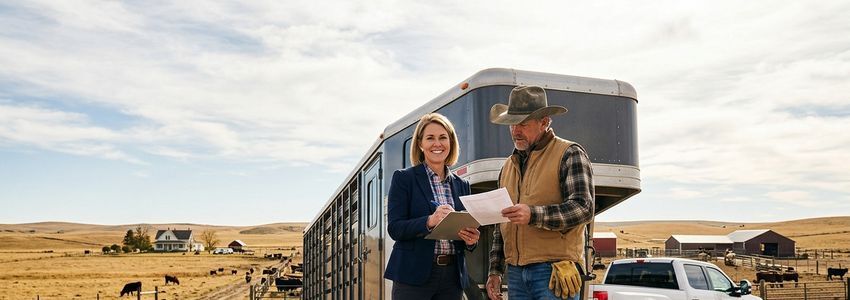
Scenario 1: The Cattle Rancher Expanding Herd Size. A rancher in Texas needed a heavier-duty gooseneck livestock trailer to accommodate a growing cattle herd after purchasing additional grazing land. Rather than draining savings meant for feed and veterinary costs, the rancher financed a new 24-foot gooseneck stock trailer with a five-year term, keeping monthly payments predictable through calving season cash flow swings.
Scenario 2: The Construction Contractor Adding Hauling Capacity. A mid-sized excavation contractor won a larger contract requiring frequent equipment transport between job sites. The company financed a heavy-duty flatbed gooseneck trailer rated for their skid steers and mini excavators, allowing the crew to self-haul equipment instead of paying a third-party hauling service on every job.
Scenario 3: The Equine Breeding Operation Upgrading Transport. A horse breeding operation needed a safer, better-ventilated trailer after an older bumper-pull trailer became unreliable for long trips to competitions. Financing a new enclosed gooseneck horse trailer let the business upgrade immediately without disrupting the show season travel schedule.
Scenario 4: The Owner-Operator Expanding Into Hauling Services. An independent owner-operator wanted to add gooseneck hauling services to an existing trucking business. Financing a used flatbed gooseneck trailer with a shorter three-year term let the owner-operator test the new revenue stream without a large upfront investment.
Scenario 5: The Farm Replacing an Aging Trailer. A family farm's 15-year-old gooseneck trailer needed frequent, costly repairs. Financing a newer used trailer with a lower monthly payment than the ongoing repair bills freed up cash while providing a more dependable asset for hauling feed and equipment.
Get Pre-Qualified in Minutes
Whether you need a new or used gooseneck trailer, Crestmont Capital can structure financing around your business.
Apply Now →Frequently Asked Questions
What is gooseneck trailer financing?
Gooseneck trailer financing is a business loan or lease used to purchase a gooseneck trailer, allowing the buyer to pay for the trailer in fixed monthly installments over a set term rather than paying the full price upfront.
Can I finance a used gooseneck trailer?
Yes. Most lenders, including Crestmont Capital, finance both new and used gooseneck trailers. Terms for used trailers are typically adjusted based on the trailer's age, condition, and remaining useful life.
How much does a gooseneck trailer cost?
Prices vary widely based on size, materials, and features, ranging from around $15,000 for a basic new stock trailer to $80,000 or more for a large, heavy-duty enclosed or livestock gooseneck trailer.
What credit score do I need to finance a gooseneck trailer?
Requirements vary by lender, but many equipment lenders look beyond a single credit score, weighing business revenue and time in business as well. Bad credit equipment financing options exist for business owners with lower credit scores.
How long are gooseneck trailer financing terms?
Terms typically range from two to seven years, depending on the trailer's age and value, the amount financed, and the lender's underwriting guidelines.
Do I need a down payment to finance a gooseneck trailer?
Some lenders require a down payment of 10 to 20 percent, while others offer 100 percent financing depending on the trailer's value, condition, and your business's financial profile.
Can startups finance a gooseneck trailer?
Newer businesses may face more limited options since many lenders prefer at least six months to a year of operating history, but options do exist, especially when the owner has strong personal credit or offers additional collateral.
What is the difference between financing and leasing a gooseneck trailer?
With financing, you own the trailer once the loan is paid off. With leasing, you make payments to use the trailer for a set term and may have the option to purchase it at the end, often for a residual value.
How fast can I get approved for gooseneck trailer financing?
Many lenders, including Crestmont Capital, can provide approval decisions within one to two business days for straightforward applications, with funding often following shortly after.
Can I finance a gooseneck trailer from a private seller?
Yes, many lenders finance private-party purchases as well as dealer purchases, though the trailer may need to pass an inspection or valuation before approval.
Is a gooseneck trailer considered business equipment for financing purposes?
Yes. Trailers used for business purposes, such as hauling livestock, equipment, or cargo, are generally classified as business equipment, which qualifies them for standard equipment financing programs.
What documents do I need to apply for gooseneck trailer financing?
Typical documentation includes a trailer quote or invoice, recent business bank statements, and basic business information. Larger financing amounts may require additional documentation such as tax returns.
Can I pay off gooseneck trailer financing early?
Many lenders allow early payoff, though some may charge a prepayment fee. Always review your financing agreement to understand the terms before signing.
Why should I finance a gooseneck trailer through Crestmont Capital?
Crestmont Capital is rated the #1 business lender in the U.S. and offers flexible terms for new and used trailers, fast approval decisions, and financing structures tailored to your business's cash flow and industry.
Do I need special insurance for a financed gooseneck trailer?
Most lenders require proof of commercial trailer insurance for the life of the loan, since the trailer typically serves as collateral. Coverage requirements and costs vary based on the trailer's value and intended use.
Next Steps
Get a quote from a dealer or private seller, including the trailer's make, model, year, and price.
Have recent bank statements and business details ready to speed up underwriting.
Submit your application and receive a financing decision, often within one to two business days.
Confirm the term, rate, and monthly payment fit your budget before finalizing.
Once funded, your gooseneck trailer is ready to start generating value for your business.
Conclusion
Gooseneck trailer financing gives businesses across agriculture, construction, equine, and transportation industries a practical way to acquire the hauling capacity they need without draining cash reserves. Whether you are buying a new livestock trailer, a used flatbed for job site equipment, or an enclosed horse trailer for competition travel, structured financing lets you spread the cost over time while putting the trailer to work immediately.
Every business has different needs, and the right gooseneck trailer financing structure depends on your cash flow, the age and value of the trailer, and how quickly you need to get moving. Working with an experienced lender that understands trailer financing, rather than a generic loan product, can make the difference between a smooth process and a frustrating one.
According to the National Agricultural Statistics Service, the United States was home to roughly 1.9 million farms as of the 2022 Census of Agriculture, underscoring how significant demand remains for reliable trailer transportation across rural and commercial operations nationwide (Census.gov). For business owners weighing equipment financing more broadly, the SBA's 504 loan program remains a well-established option for long-term equipment purchases at established businesses (SBA.gov), while Forbes has noted that financing equipment rather than paying cash upfront helps businesses preserve working capital while still accessing the tools they need to grow (Forbes).
Choosing the right lender matters just as much as choosing the right trailer. Look for a financing partner that understands the specific demands of your industry, whether that is the seasonal cash flow of a ranching operation, the project-based revenue of a construction company, or the travel schedule of a competitive equine business. A lender that only offers a single rigid product will rarely fit your situation as well as one that structures financing around how your business actually operates.
It also pays to compare more than one offer before committing. Even a small difference in rate, term length, or fees can add up to a meaningful amount over a multi-year financing term. Requesting the full amortization schedule, not just the monthly payment, gives you a clearer picture of the total cost and helps you make an informed decision with confidence.
If your business is ready to move forward with a new or used gooseneck trailer, Crestmont Capital can help you find a financing structure that fits your budget and timeline.
Disclaimer: The information provided in this article is for general educational purposes only and is not financial, legal, or tax advice. Funding terms, qualifications, and product availability may vary and are subject to change without notice. Crestmont Capital does not guarantee approval, rates, or specific outcomes. For personalized information about your business funding options, contact our team directly.