For small businesses in manufacturing, fabrication, and production, multi-purpose tools are game-changers, offering unparalleled efficiency and versatility. However, their high cost can be a significant barrier to entry, which is where strategic equipment financing for small business owners becomes an essential tool for growth and scalability.
In This Article
- What Are Multi-Purpose Production Tools?
- Key Benefits of Equipment Loans for Production Tools
- How Equipment Financing Works
- Types of Equipment Loans Available
- How to Qualify for Equipment Financing
- How Crestmont Capital Can Help
- Real-World Scenarios
- Comparing Your Financing Options
- Frequently Asked Questions
- How to Get Started
What Are Multi-Purpose Production Tools?
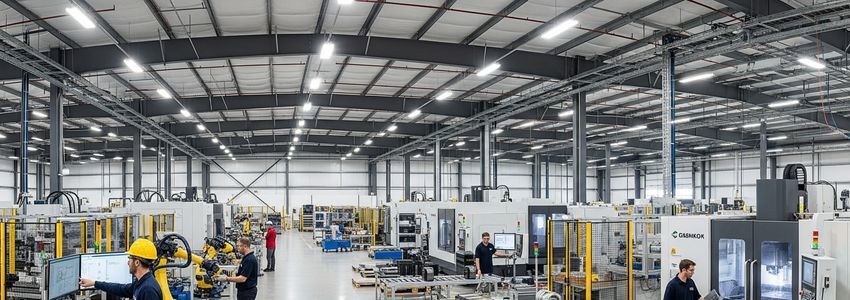
Multi-purpose production tools are sophisticated pieces of machinery designed to perform several different functions that would traditionally require multiple, separate machines. By consolidating capabilities into a single footprint, these tools offer small businesses a powerful way to maximize productivity, save space, and reduce operational complexity. They are the workhorses of modern workshops, labs, and factories, enabling businesses to pivot quickly to meet changing market demands, take on diverse projects, and produce complex parts with precision and speed. Investing in this technology is not just an upgrade; it's a strategic move to build a more agile and resilient operation.
Examples of these versatile assets are abundant across various industries. A CNC (Computer Numerical Control) machine might combine milling, turning, and drilling capabilities, allowing a metal fabrication shop to create intricate components from a single setup. A multi-function laser system can cut, engrave, and mark a wide range of materials, from wood and acrylic to metal and leather, serving everyone from custom sign makers to industrial parts manufacturers. Hybrid 3D printers now integrate additive manufacturing (printing) with subtractive methods (milling) and 3D scanning, creating a complete prototyping and production hub in one machine. Other examples include industrial presses with interchangeable dies for stamping, punching, and forming, or automated fabrication centers that can weld, cut, and finish parts in a continuous workflow. For a small business, acquiring one of these tools through production tool financing can be the equivalent of hiring a team of specialists, dramatically expanding its service offerings and production capacity without a proportional increase in overhead.
The need for these tools is driven by the demand for customization, efficiency, and quality. A business that can produce a complex, multi-stage part on a single machine reduces handling time, minimizes the potential for error between steps, and shortens lead times for customers. This capability is a significant competitive advantage. It allows a small business to compete with larger operations by offering niche services, rapid prototyping, and small-batch production runs that are not economical for massive, single-purpose assembly lines. By using multi-purpose equipment loans, business owners can acquire these transformative assets without depleting their working capital, enabling them to invest in the technology that directly drives revenue and innovation.
Key Benefits of Equipment Loans for Production Tools
When considering a significant capital expenditure like a multi-purpose production tool, the method of acquisition is as important as the equipment itself. While paying cash might seem ideal, it can severely restrict a company's financial flexibility. Opting for equipment financing for small business growth provides a host of strategic advantages that go far beyond simply acquiring the asset. It's a financial tool that preserves liquidity, improves budgeting, and can even offer significant tax benefits, making it one of the most popular methods for business expansion.
The primary benefit is the preservation of working capital. A multi-function CNC machine or industrial 3D printer can cost tens or even hundreds of thousands of dollars. Paying this amount upfront can drain a company's cash reserves, leaving little for payroll, inventory, marketing, or unexpected opportunities. An equipment loan allows you to keep your cash on hand for these critical day-to-day operations while the new equipment begins generating revenue immediately. This revenue can often cover the monthly loan payment and still contribute to your bottom line, creating a self-sustaining investment. This approach transforms a potentially crippling capital expense into a manageable operating expense.
Furthermore, commercial equipment financing provides predictable, fixed monthly payments. Unlike variable-rate lines of credit, a standard equipment loan has a set interest rate and term, meaning your payment is the same every month for the life of the loan. This predictability is invaluable for financial forecasting and budgeting. You know exactly what your equipment costs will be, allowing for more accurate planning and a more stable financial foundation. This stability is crucial for scaling your operations confidently.
Tax Advantages to Consider
One of the most powerful benefits of financing equipment is the potential for significant tax deductions. Under Section 179 of the IRS tax code, businesses can often deduct the full purchase price of qualifying new or used equipment in the year it is put into service. This can substantially lower your taxable income. Always consult with a tax professional to understand how these benefits apply to your specific business situation.
Here are some of the core benefits summarized:
- Preserve Cash Flow: Keep your working capital free for other business needs by avoiding a large, upfront cash payment. Finance 100% of the equipment cost, including soft costs like installation and training.
- Immediate Use and ROI: Get the equipment you need now and start generating revenue with it immediately. The return on investment from increased productivity can often exceed the cost of financing.
- Fixed, Predictable Payments: Budget with confidence. Fixed monthly payments make it easy to manage your cash flow and forecast expenses over the term of the loan.
- Build Business Credit: Making timely payments on an equipment loan helps build a strong credit history for your business, making it easier to secure financing for future needs.
- Gain a Competitive Edge: Access the latest technology without the wait. Modern, multi-purpose tools allow you to produce higher-quality products faster and more efficiently than competitors with outdated equipment.
- Potential Tax Benefits: Take advantage of tax incentives like Section 179 and bonus depreciation to reduce your overall tax liability, effectively lowering the net cost of the equipment.
Ready to Finance Your Production Equipment?
Get fast, flexible equipment financing from the #1 business lender in the U.S. No obligation - apply in minutes.
Apply Now →How Equipment Financing Works
Understanding the process of securing production tool financing can demystify the experience and empower you to make the best decision for your business. At its core, an equipment loan is a straightforward financial product: a lender provides you with the capital to purchase a specific piece of equipment, and you repay that amount, plus interest, over a predetermined period. The key feature that makes this type of financing so accessible is that the equipment itself typically serves as collateral for the loan. This secured nature reduces the lender's risk, often resulting in higher approval rates and more favorable terms compared to unsecured loans.
The journey begins with identifying the multi-purpose production tool your business needs. Once you have a quote from a vendor, you can approach a lender like Crestmont Capital. The application process is typically streamlined, especially with alternative lenders, requiring basic information about your business (time in operation, annual revenue) and the equipment you wish to purchase (make, model, cost). Lenders will review your business's financial health and credit profile to determine your eligibility and the specific terms they can offer. This includes the loan amount, interest rate, and repayment term. It's important to look at the overall cost of the loan, not just the monthly payment, to understand the full financial commitment.
Once you are approved and accept the loan terms, the process moves quickly. The lender will finalize the documentation and, in most cases, pay the equipment vendor directly. This means you don't have to handle the large sum of money yourself. The vendor delivers and installs the equipment, and you can put it to work immediately. Your repayment schedule begins shortly after, with fixed monthly payments that you've already budgeted for. Over the loan term, which typically ranges from two to seven years, you build equity in the equipment. At the end of the term, once the final payment is made, you own the asset outright, free and clear. This straightforward process is designed to get critical production tools into your hands with minimal friction, allowing you to focus on what you do best: running and growing your business.
Quick Guide
How Equipment Financing Works - At a Glance
Complete a quick application with basic business and equipment details. Most approvals take 24-48 hours.
Your lender reviews your application and presents loan terms including rate, term length, and monthly payment.
Funds are issued directly to the equipment vendor. You take immediate possession and begin using your equipment.
Repay over 2-7 years with predictable fixed payments. The equipment itself often serves as collateral.
Types of Equipment Loans Available
When seeking commercial equipment financing, it's important to know that "equipment loan" is a broad term encompassing several different financial products. Each is designed to meet different business needs, cash flow situations, and long-term goals. Understanding the nuances between these options will help you select the most advantageous path for acquiring your multi-purpose production tools. The right choice depends on whether you prioritize ownership, low monthly payments, or flexibility.
The most common option is a standard Equipment Loan (also known as an equipment financing agreement). This functions like a traditional loan where you borrow a lump sum to purchase the equipment and make regular payments until the balance is paid off. From day one, you are the legal owner of the equipment, allowing you to claim depreciation and take full advantage of tax benefits like Section 179. This is ideal for businesses that plan to use the tool for its entire useful life and want to build equity in their assets.
Another popular choice is an Equipment Lease. With a lease, you are essentially renting the equipment for a set period. This often results in lower monthly payments compared to a loan, as you are only paying for the depreciation of the asset during the lease term, not its full value. Leases are excellent for technology that becomes obsolete quickly or for businesses that want to maintain a lower monthly overhead. At the end of the lease, you typically have several options: return the equipment, renew the lease, or purchase the equipment at a predetermined price (this is common with a $1 buyout lease, which functions very similarly to a loan).
For businesses with strong credit and a solid financial history, SBA Loans (like the 7(a) and 504 programs) can be an excellent source for manufacturing equipment loans. These government-backed loans offer some of the lowest interest rates and longest repayment terms available, sometimes up to 25 years. While the application process is more intensive and time-consuming, the favorable terms can make them worth the effort for large, expensive equipment purchases. Finally, an Equipment Line of Credit offers flexibility. Instead of financing a single purchase, you are approved for a revolving credit limit that you can draw from as needed to purchase multiple pieces of equipment over time. This is perfect for businesses that are growing rapidly and anticipate ongoing equipment needs.
| Financing Type | Best For | Typical Terms | Ownership |
|---|---|---|---|
| Equipment Loan | Long-term asset ownership | 2-7 years, fixed rate | Full ownership |
| Equipment Lease | Lower monthly payments, upgrades | 1-5 years, flexible | Lessor owns |
| SBA Loan (7a/504) | Low rates, large purchases | Up to 25 years | Full ownership |
| Equipment Line of Credit | Multiple purchases over time | Revolving, 1-5 years | Full ownership |
Industry Insight
According to the Equipment Leasing and Finance Association (ELFA), the total value of new business volume for equipment finance in the United States is over $1 trillion annually. This highlights how integral financing is to the growth and operations of businesses of all sizes across the country.
How to Qualify for Equipment Financing
Qualifying for equipment financing for small business owners is often more straightforward than qualifying for other types of business loans, primarily because the equipment itself serves as collateral. This built-in security reduces the lender's risk, making them more willing to work with a broader range of businesses, including newer companies and those with less-than-perfect credit. However, lenders still have key criteria they use to evaluate an application and determine the terms of the loan.
Lenders will look at a combination of factors to assess your application. While each lender has its own specific underwriting guidelines, they generally focus on the "Three C's" of credit: Character (your credit history), Capacity (your cash flow), and Collateral (the equipment). By understanding what lenders are looking for, you can prepare your application for the best chance of approval and the most favorable equipment financing rates.
Here are the primary factors that influence qualification for multi-purpose equipment loans:
- Credit Score: While traditional banks often require a personal credit score of 680 or higher, alternative lenders like Crestmont Capital can often work with business owners with scores as low as 580. A higher credit score will generally result in a lower interest rate.
- Time in Business: Most lenders prefer to see at least one to two years of operational history. However, specialized programs are available for startups, often requiring a strong business plan and good personal credit. Some lenders may only require 6 months in business.
- Annual Revenue: Lenders need to see that your business generates enough consistent revenue to comfortably afford the monthly loan payments. Minimum annual revenue requirements can range from $100,000 to $250,000, depending on the lender and loan size.
- Down Payment: While 100% financing is possible, providing a down payment of 10-20% can strengthen your application and may result in better terms. It demonstrates your commitment to the investment and reduces the lender's exposure.
- The Equipment Itself: The value, age (if used), and expected lifespan of the production tool also play a role. Equipment that holds its value well is seen as stronger collateral, which can make financing easier to obtain.
See What You Qualify For Today
Equipment financing from $5,000 to $5 million. Fast approvals, flexible terms, and competitive rates for all industries.
Check Your Rate →How Crestmont Capital Helps You Finance Multi-Purpose Production Equipment
At Crestmont Capital, we specialize in providing tailored financial solutions that empower small and medium-sized businesses to acquire the critical assets they need to grow. We understand that a multi-purpose production tool isn't just a piece of machinery; it's the engine of your company's future productivity and profitability. That's why we've streamlined our Equipment Financing process to be fast, flexible, and transparent. We work with businesses across hundreds of industries, from high-tech manufacturing to custom fabrication shops, to secure the funding they need with terms that fit their budget.
Our deep expertise in Manufacturing Equipment Financing means we understand the value and longevity of assets like CNC machines, 3D printers, and industrial presses. Unlike traditional banks that may be hesitant to finance specialized equipment, we see it as strong collateral and a smart investment in your business's growth. We offer a diverse portfolio of products, including traditional loans for long-term ownership and flexible Equipment Leasing options for businesses that want lower payments or need to upgrade technology frequently. Whether you're investing in your first major piece of Capital Equipment Financing or expanding an entire production line, our team is here to guide you to the right solution.
We pride ourselves on offering a wide array of funding solutions to meet every need. For businesses seeking the most competitive rates and terms, we can facilitate government-backed SBA Loans. For those who need ongoing purchasing power, our Equipment Lines of Credit provide the ultimate flexibility. The principle of using financing to acquire essential assets applies across many business functions; just as a logistics company would finance a new truck to expand its delivery capacity, as detailed in our guide on equipment financing for transportation routes, a manufacturer finances a multi-purpose tool to expand its production capabilities. Our commitment is to make the process of securing equipment financing for small business owners as simple and efficient as possible, with approvals often in as little as 24 hours, so you can get your equipment and get back to business.
By the Numbers
Equipment Financing for Business - Key Statistics
79%
of U.S. businesses use some form of equipment financing
$1.1T
in equipment financed annually in the U.S.
24 Hrs
Average approval time with alternative lenders
$5M+
Maximum equipment loan amount available
Real-World Scenarios: How Businesses Use Equipment Loans for Multi-Purpose Tools
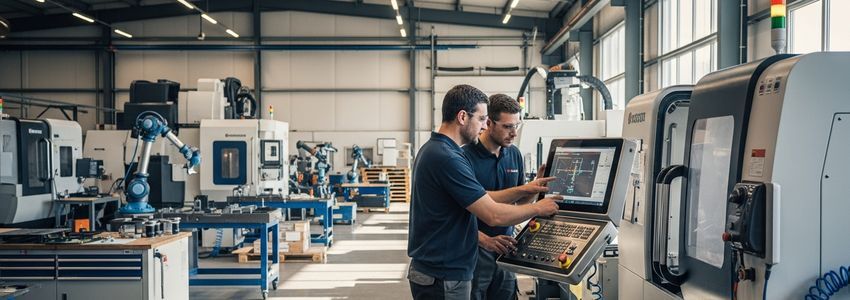
The true value of multi-purpose equipment loans comes to life when you see how real businesses leverage them for tangible growth. Here are five scenarios illustrating how companies across different sectors use financing to acquire transformative production tools.
1. The Metal Fabrication Shop
A small metal fabrication shop specializing in custom parts for the automotive industry wants to expand into the more lucrative aerospace sector. To do this, they need a 5-axis CNC milling machine capable of producing highly complex, precise components. The machine costs $175,000. They secure an equipment loan for the full amount with a 5-year term. Within six months of installation, they land their first aerospace contract. The new machine allows them to produce parts with tighter tolerances and complex geometries, increasing their revenue by 40% in the first year and establishing a new, high-margin revenue stream.
2. The Food Production Company
A growing artisanal snack company is struggling to keep up with demand due to a manual packaging process. They decide to invest in an automated multi-function packaging machine that can weigh, bag, seal, and label their products. The total cost, including installation and training, is $90,000. They use an equipment financing agreement to cover the purchase. The new machine quadruples their packaging speed, reduces labor costs by 30%, and significantly decreases product waste. This allows them to accept larger orders from national distributors, doubling their overall business within 18 months.
3. The Commercial Printing Business
A printing business that primarily produces banners and flyers wants to diversify its services. They identify an opportunity in rigid signage and custom promotional items. To capitalize on this, they need a hybrid UV flatbed printer that can print on both flexible rolls and rigid substrates like wood, metal, and acrylic. The printer costs $130,000. They finance the purchase with a 4-year loan. The new capability allows them to attract a whole new client base, including real estate agencies, event planners, and retail stores. The high-margin jobs from the new printer increase their net profit by 25% and make their business more resilient to market shifts.
4. The Dental Practice
A modern dental practice aims to offer same-day service for crowns and other restorations to improve patient satisfaction and capture more revenue in-house. They decide to purchase a chairside CAD/CAM system, which includes a 3D scanner and a milling machine, for $110,000. They use a specialized form of commercial equipment financing for medical practices. With the new technology, they can design, mill, and fit a permanent crown in a single visit, eliminating the need for temporary crowns and follow-up appointments. This premium service attracts new patients, increases case acceptance rates, and saves thousands of dollars per month previously paid to outside dental labs.
5. The Construction Company
A general contractor frequently rents various heavy machines for different job site tasks, such as digging, grading, and material handling. They calculate that the rental costs are a major drain on their profits. They decide to purchase a new compact track loader with multiple attachments (bucket, auger, forks, grader blade) for $85,000. They secure an equipment loan. By owning this versatile machine, they eliminate over $3,000 per month in rental fees, improve project scheduling and efficiency, and can even generate extra revenue by renting it out to other contractors during downtime. The investment pays for itself in under three years.
Equipment Loan vs. Other Financing Options
When you've decided to acquire a new multi-purpose production tool, an equipment loan is a powerful option, but it's wise to compare it against other methods of funding to ensure it's the right fit for your financial strategy. The main alternatives are paying with cash, using a general business line of credit, or leveraging personal savings. Each has distinct pros and cons that can impact your business's health and flexibility.
Equipment Loan vs. Cash Purchase: The most significant advantage of paying cash is avoiding debt and interest payments. You own the asset outright from day one. However, the downside is substantial. A large cash outlay can deplete your working capital, leaving you vulnerable to unexpected expenses or unable to seize other growth opportunities. This is a massive opportunity cost. An equipment loan preserves your cash for operations, marketing, and inventory. The interest you pay is often a small price for maintaining financial liquidity and stability. Furthermore, the revenue generated by the new equipment can make the loan self-funding, turning the asset into an immediate net positive for your cash flow.
Equipment Loan vs. Business Line of Credit (LOC): A business line of credit offers great flexibility, allowing you to draw funds as needed up to a certain limit. It's excellent for managing short-term cash flow gaps or covering smaller, recurring expenses. However, for a large, single purchase like a production tool, an equipment loan is often superior. LOCs typically have variable interest rates, making your payments unpredictable. Equipment loans have fixed rates, which simplifies budgeting. Moreover, the repayment terms for an equipment loan (2-7 years) are structured to match the useful life of the asset, whereas a line of credit may require faster repayment, putting a strain on cash flow. It's often best to reserve your LOC for working capital and use a dedicated equipment loan for capital assets.
Equipment Loan vs. Personal Savings or Loans: For new business owners, using personal funds or a personal loan can seem like the easiest path. However, this strategy is fraught with risk. It blurs the line between your personal and business finances and puts your personal assets (like your home or savings) on the line if the business struggles. A commercial equipment loan keeps your personal and business liabilities separate, protecting your family's financial security. Furthermore, business financing helps you build a credit profile for your company, which is essential for securing larger loans and better terms in the future. While personal funding might be a last resort, establishing a financial identity for your business through commercial loans is a much healthier long-term strategy.
Frequently Asked Questions
How to Get Started with Equipment Financing
Taking the next step toward acquiring your new multi-purpose production tool is a straightforward process. By following these simple steps, you can move from identifying a need to having new, revenue-generating equipment on your production floor quickly and efficiently.
Select Your Equipment & Get a Quote
First, identify the exact multi-purpose tool that meets your business needs. Research vendors, compare models, and get a formal quote or invoice for the total cost, including any taxes, shipping, and installation fees. This document is essential for your financing application.
Gather Your Business Information
Prepare basic information for your application. This typically includes your business's legal name, address, tax ID number (EIN), time in business, and recent annual or monthly revenue figures. For most applications under $250,000, a few recent bank statements are also helpful.
Complete a Simple Application
Fill out a quick online application with a lender like Crestmont Capital. Our application takes only a few minutes to complete and provides us with the necessary information to find the best financing options for you. There is no cost or obligation to apply.
Review Terms and Get Funded
Once approved, you will receive a set of financing terms outlining the loan amount, interest rate, term length, and monthly payment. After you review and sign the documents, the lender will pay the vendor directly, and your new equipment will be on its way.
Start Financing Your Production Equipment Today
Join thousands of businesses that trust Crestmont Capital for fast, flexible equipment financing. Apply today - no obligation required.
Apply Now →Investing in multi-purpose production tools is a powerful strategy for enhancing efficiency, expanding capabilities, and securing a competitive advantage. By leveraging the right financial tools, you can make this investment without compromising your company's cash flow or financial stability. The strategic use of equipment financing for small business owners is not just about buying machinery; it's about making a smart, manageable investment in your company's long-term growth and success.
Disclaimer: The information provided in this article is for general educational purposes only and is not financial, legal, or tax advice. Funding terms, qualifications, and product availability may vary and are subject to change without notice. Crestmont Capital does not guarantee approval, rates, or specific outcomes. For personalized information about your business funding options, contact our team directly.