Transforming a warehouse into a vibrant retail space is one of the most profitable moves a property owner can make in today's real estate market. But these conversions require serious capital, and understanding your financing options is the first step toward turning that empty square footage into a revenue-generating retail destination. This guide covers every loan type, qualification requirement, and strategy you need to fund your warehouse-to-retail conversion successfully.
In This Article
- What Is a Warehouse to Retail Conversion Loan?
- Why Convert Warehouse Space to Retail?
- Types of Loans for Warehouse Conversions
- Understanding Conversion Costs
- Qualification Requirements
- The Application Process
- Tips for Getting Approved
- Real-World Conversion Examples
- Frequently Asked Questions
- How to Get Started
What Is a Warehouse to Retail Conversion Loan?
A warehouse to retail conversion loan is a financing product specifically structured to fund the renovation, buildout, and repositioning of industrial warehouse space into functional retail environments. These loans cover costs ranging from structural modifications and HVAC upgrades to interior finishing, electrical work, storefront improvements, and Americans with Disabilities Act (ADA) compliance retrofits.
Unlike a standard commercial mortgage, a conversion loan accounts for the property's future income potential rather than only its current assessed value. Lenders evaluate the project's after-renovation value (ARV), projected rental income or business revenue, and the borrower's ability to manage a complex construction project. This makes conversion loans a specialized niche within commercial real estate financing.
Depending on the scope of the project, borrowers can access anywhere from $150,000 for a small boutique conversion to $10 million or more for large-scale adaptive reuse developments. The structure of the financing typically combines a construction phase (interest-only draws) with a permanent phase (standard amortizing loan) once the project is complete and stabilized.
Key Stat: According to the U.S. Census Bureau, e-commerce now accounts for approximately 16% of total retail sales, yet physical retail foot traffic has rebounded strongly post-pandemic, with experiential and boutique retail formats driving warehouse conversion demand across major metros.
Why Convert Warehouse Space to Retail?
The economics of warehouse-to-retail conversion have never been more compelling. Industrial vacancy rates in many suburban and urban markets are tightening, but older Class B and C warehouses often sit underutilized because they lack the ceiling heights and clear spans demanded by modern logistics tenants. These same properties, however, offer tremendous advantages for retail and mixed-use development.
Here are the primary drivers pushing property owners toward retail conversion:
Strong Retail Demand for Unique Spaces
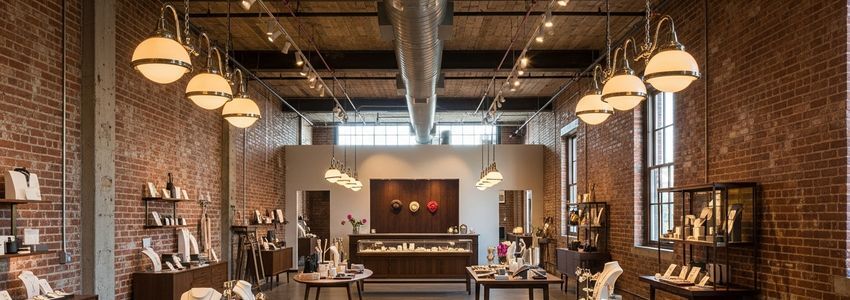
Consumers increasingly seek out experiential retail environments that big-box stores cannot replicate. Exposed brick, high ceilings, open floor plans, and industrial aesthetic features are characteristics that retail tenants actively seek. Converted warehouses naturally provide these attributes, commanding premium rents compared to conventional strip mall retail.
Adaptive Reuse Zoning Incentives
Many municipalities actively encourage warehouse conversion through expedited permitting, reduced impact fees, and historic preservation tax credits. Cities like Detroit, Pittsburgh, and Cleveland have created entire incentive frameworks to support adaptive reuse projects. Federally, the Historic Tax Credit program can offset up to 20% of qualified rehabilitation costs for certified historic structures.
Value Creation Potential
A well-executed warehouse-to-retail conversion can double or triple a property's appraised value. A 20,000-square-foot warehouse purchased for $800,000 in a secondary market can easily appraise at $2.5 million or more after conversion to a multi-tenant retail center, representing significant equity creation for the property owner.
Favorable Cap Rate Compression
Retail cap rates for well-positioned converted properties often run lower than industrial cap rates in the same market, meaning the income stream is valued more highly. A property generating $150,000 in annual net operating income as a warehouse might trade at a 7% cap rate ($2.14M), while the same income from a stabilized retail conversion might trade at a 5.5% cap rate ($2.73M).
Ready to Fund Your Warehouse Conversion?
Get fast, flexible financing from the #1 business lender in the U.S. Apply in minutes.
Apply Now →Types of Loans for Warehouse Conversions
Selecting the right financing structure is critical. The optimal loan type depends on your timeline, credit profile, existing equity, and whether you plan to occupy the space yourself or lease it to retail tenants. Below is a comprehensive breakdown of every major financing option available for warehouse-to-retail conversion projects.
Construction-to-Permanent Loans
Also called "one-time close" loans, construction-to-permanent loans cover both the renovation phase and the long-term ownership of the property in a single financing event. During construction, you draw funds in stages as work is completed and inspected. Once the project is finished, the loan converts automatically to a standard commercial mortgage. This approach minimizes closing costs and eliminates the need to refinance at project completion. These are among the most popular choices for well-capitalized property owners. Learn more about construction loans and financing options at Crestmont Capital.
Commercial Real Estate Bridge Loans
Bridge loans provide short-term capital (typically 12 to 36 months) to fund a conversion project before long-term financing is secured. They are ideal when a property owner needs to act quickly on an acquisition or when the property does not yet qualify for conventional financing due to its transitional status. Bridge loans generally carry higher interest rates (7% to 12%+) but offer speed and flexibility that conventional lenders cannot match. Explore bridge loan options to see if this structure fits your project timeline.
SBA 504 Loans
The Small Business Administration's 504 loan program is one of the most powerful tools available for owner-occupied commercial real estate. Under the 504 structure, a Certified Development Company (CDC) provides 40% of the project cost, a conventional lender covers 50%, and the borrower contributes just 10% as a down payment. For a $2 million conversion project, that means only $200,000 out of pocket. The SBA 504 offers below-market fixed interest rates and terms of 10, 20, or 25 years. Eligibility requires that the borrower occupy at least 51% of the completed space. For full program details and eligibility requirements, visit SBA.gov's 504 loan page. Crestmont Capital can help you navigate SBA loan applications from start to finish.
SBA 7(a) Loans
The SBA 7(a) is the most flexible small business loan program, covering real estate, equipment, working capital, and construction costs under a single loan. For conversion projects up to $5 million, the 7(a) can finance acquisition plus renovation, making it a comprehensive solution for smaller warehouse conversions. Terms run up to 25 years for real estate components, and the government guarantee reduces lender risk, making approval more accessible for borrowers with moderate credit profiles.
Commercial Real Estate Loans (Conventional)
Traditional commercial mortgages from banks and credit unions provide stable, long-term financing for completed conversion projects. These loans typically require a minimum 20% to 30% down payment, strong credit (680+), and documented income history. They are best suited for stabilized properties with existing tenant leases or owner-operated businesses with proven cash flows. Interest rates are generally competitive, and terms of 5 to 25 years are standard. Long-term business loans through Crestmont Capital offer competitive rate structures for qualified borrowers.
Business Lines of Credit
A revolving business line of credit provides flexible capital for smaller renovation expenses, working capital during the transition period, and unexpected costs that arise during construction. While not typically the primary vehicle for large conversions, a line of credit is an excellent supplemental tool that gives you liquidity without requiring you to refinance your primary loan.
Equipment Financing
Many warehouse-to-retail conversions require significant equipment purchases: commercial HVAC systems, display fixtures, point-of-sale systems, refrigeration units, lighting systems, and security infrastructure. Equipment financing allows you to preserve your primary loan capacity for structural work while separately financing long-lived assets at favorable rates, often with the equipment itself as collateral.
Hard Money Loans
Hard money loans are asset-based loans provided by private lenders, valued primarily on the property's collateral value rather than borrower creditworthiness. They carry higher rates (10% to 18%) and short terms (6 to 24 months) but can close in days rather than weeks. Hard money is typically a last resort or bridge solution for borrowers who cannot qualify for institutional financing but have significant equity in the property.
Warehouse Conversion Loan Comparison
| Loan Type | Loan Amount | Term | Rate Range | Best For |
|---|---|---|---|---|
| SBA 504 | $125K - $5.5M | 10-25 years | Below market fixed | Owner-occupied (51%+) |
| Construction-to-Perm | $250K - $10M+ | 15-30 years | 6.5% - 9.5% | Full project funding |
| Bridge Loan | $150K - $5M | 12-36 months | 7% - 12% | Fast closes, transitional |
| Conventional CRE | $500K+ | 5-25 years | 6% - 8.5% | Stabilized properties |
| Hard Money | $100K - $3M | 6-24 months | 10% - 18% | Poor credit, fast capital |
Understanding Conversion Costs
Accurate cost estimation is essential for securing the right loan amount and avoiding costly mid-project financing gaps. Warehouse-to-retail conversions span a wide cost range depending on property condition, local construction costs, intended retail use, and finish quality.
Typical Cost Categories
Structural and Shell Work: Addressing roof repairs, foundation issues, loading dock removal, and exterior facade improvements typically runs $15 to $40 per square foot. If the building requires seismic upgrades or major structural reinforcement, costs can escalate significantly.
MEP Systems (Mechanical, Electrical, Plumbing): Retail requires fundamentally different MEP systems than warehouse use. Commercial HVAC capable of serving customers and staff, upgraded electrical panels to support retail lighting and point-of-sale systems, and plumbing for restrooms and possibly food service can add $25 to $60 per square foot to project costs.
Interior Buildout: Drywall, flooring, ceilings, storefront systems, display infrastructure, and finishes vary enormously by retail concept. A basic tenant-ready shell might cost $30 per square foot; a high-end specialty retailer buildout can reach $150+ per square foot.
Permits and Soft Costs: Architectural fees, engineering, permits, inspections, and environmental studies typically add 10% to 15% to hard construction costs. These costs are often overlooked in initial project budgets and can significantly impact financing requirements.
ADA Compliance: Retail spaces open to the public must meet ADA accessibility standards. Parking reconfiguration, accessible entrances, accessible restrooms, and compliant service counters can add $5 to $20 per square foot depending on the building's existing configuration.
Sample Project Cost Breakdown
For a 15,000-square-foot warehouse conversion to a multi-tenant retail center in a Midwestern market:
- Acquisition cost: $900,000
- Structural and shell work: $225,000
- MEP systems: $450,000
- Interior buildout (shell condition for tenants): $375,000
- Soft costs and permits: $180,000
- ADA compliance: $75,000
- Contingency (10%): $130,500
- Total project cost: $2,335,500
Industry Insight: A 10% to 15% contingency budget is not optional on conversion projects. Older warehouse buildings almost always reveal unexpected conditions once walls are opened or slabs are cut. Build contingency into your loan request from day one.

Qualification Requirements
Understanding what lenders look for puts you in a position to prepare your application strategically and address potential weaknesses before they become deal-killers.
Credit Score Requirements
Minimum credit score requirements vary significantly by loan type:
- SBA 504/7(a): Generally 680 minimum, though some lenders accept 650 with compensating factors
- Conventional commercial mortgage: 680 to 720 minimum
- Bridge loans: 620 minimum; some private lenders focus purely on collateral
- Hard money: No minimum; collateral value drives approval
Debt Service Coverage Ratio (DSCR)
DSCR is the single most important metric for income-producing conversion projects. Lenders require that the property's net operating income (NOI) exceed the annual debt service by a margin of safety, typically 1.20x to 1.35x. If your projected annual debt service is $120,000, you need documented NOI of at least $144,000 to $162,000 to qualify. For projects not yet generating income, lenders will underwrite to projected stabilized NOI based on market rents and comparable properties.
Loan-to-Value (LTV) and Loan-to-Cost (LTC)
Most commercial lenders will lend up to 65% to 75% of the property's after-renovation appraised value (LTV). On a construction basis, lenders may advance up to 80% to 85% of total project costs (LTC) if the borrower has strong credit and relevant experience. A $2.5 million ARV property might support up to $1.875 million in financing at 75% LTV.
Experience and Track Record
Lenders weigh borrower experience heavily on conversion projects because construction risk is real. First-time developers face higher scrutiny and lower LTV offers. If you lack conversion experience, partnering with an experienced general contractor or property manager who can provide track record documentation significantly improves your loan prospects.
Personal Financial Documentation
Expect to provide three years of personal and business tax returns, three to six months of bank statements, a current personal financial statement, and executed letters of intent or leases from prospective retail tenants. Strong pre-leasing is perhaps the single most powerful factor in improving both approval odds and loan terms.
Ready to Fund Your Warehouse Conversion?
Get fast, flexible financing from the #1 business lender in the U.S. Apply in minutes.
Apply Now →The Application Process
Knowing what to expect at each stage of the loan application process reduces stress and helps you move efficiently through underwriting. Here is a step-by-step overview of how commercial renovation loan applications work.
Stage 1: Pre-Application Preparation (2 to 4 Weeks)
Before contacting lenders, assemble your project package. This includes a detailed renovation scope of work with contractor bids, a proforma income statement showing projected rents and expenses, market comparables supporting your rent assumptions, a project timeline, and your personal financial documentation. The more complete your package, the faster and more favorable your loan response will be.
Stage 2: Lender Selection and Term Sheet (1 to 2 Weeks)
Contact multiple lenders to compare terms. Provide each with your project package and request a letter of interest or term sheet. Do not assume the lender offering the lowest rate is necessarily the best choice; evaluate total loan cost, prepayment penalties, recourse vs. non-recourse structure, and lender experience with conversion projects.
Stage 3: Formal Application and Due Diligence (3 to 6 Weeks)
Once you select a lender and accept a term sheet, the formal application triggers underwriting due diligence. The lender will order a commercial appraisal, Phase I environmental assessment, title search, and potentially a property condition report. You will provide extensive financial documentation and answer underwriter questions. This stage typically takes the longest and requires active management to keep moving.
Stage 4: Loan Committee Approval (1 to 2 Weeks)
The lender's credit committee reviews the complete underwriting package and issues a formal commitment letter, often subject to conditions. These conditions might include executed tenant leases, title insurance commitments, proof of hazard insurance, or completion of specific pre-closing repairs. Work through conditions quickly to avoid rate lock expiration or market changes.
Stage 5: Closing (1 to 2 Weeks)
Commercial loan closings involve more documentation and complexity than residential closings. Budget $15,000 to $50,000 in closing costs for a typical commercial conversion loan, including origination fees, legal fees, title insurance, recording fees, and appraisal costs. Some of these costs can be rolled into the loan principal.
Stage 6: Construction Draw Management
For construction or bridge loans, funds are disbursed in draws tied to construction progress rather than in a lump sum. You submit draw requests documenting completed work, the lender inspects progress, and funds are released. Maintain detailed documentation of all expenses and contractor payments to ensure smooth draw processing throughout the project.
Tips for Getting Approved
These strategies can meaningfully improve your approval odds and the terms you receive on a warehouse-to-retail conversion loan.
Secure Pre-Leasing Before Applying
Nothing reduces lender risk more than signed tenant leases or strong letters of intent. Even one anchor tenant commitment can transform an uncertain projection into a fundable deal. Reach out to potential retail tenants early in your process, ideally before finalizing your loan application.
Commission a Pre-Application Appraisal
Understanding your property's ARV before applying prevents misaligned expectations and positions you to negotiate from strength. An independent appraisal also signals to lenders that you are serious and professionally prepared.
Present a Detailed Scope and Budget
Vague renovation budgets make underwriters nervous. Present line-item contractor bids from licensed professionals, a detailed construction timeline, and a clear description of each phase of work. The more specific your plan, the more confidence lenders have in your project.
Work with an Experienced Commercial Loan Broker
Commercial renovation loans are complex, and not every lender handles them. An experienced broker like Crestmont Capital has relationships with dozens of lenders specialized in conversion projects, can match your specific deal to the right capital source, and helps you navigate the process efficiently. Access small business loan options and speak with an advisor who understands your project.
Address Credit Issues Proactively
If your credit score is below 680, take 60 to 90 days to pay down revolving balances and dispute any inaccurate items before applying. A 20-point credit score improvement can meaningfully reduce your interest rate and expand your lender options.
Demonstrate Local Market Knowledge
Lenders want to know that you understand the local retail market where your conversion will operate. Provide market analysis including vacancy rates, average retail rents, comparable properties, and demographic data. According to U.S. Census Bureau retail trade data, retail sales and trends vary significantly by metro area, and lenders in your market will expect you to know these numbers.
Pro Tip: If you already own the warehouse free and clear or with significant equity, consider using a cash-out refinance or equity-based bridge loan to fund the conversion. Leveraging existing equity reduces the lender's risk and simplifies the approval process compared to 100% construction financing.
Real-World Conversion Examples
Understanding how other property owners have financed successful warehouse-to-retail conversions provides practical benchmarks for your own project planning.
Case Study 1: Boutique Market Hall in Denver, Colorado
A Denver property owner acquired a 12,000-square-foot 1960s-era warehouse for $750,000. After securing letters of intent from four food and beverage tenants and two specialty retailers, the owner obtained a $1.6 million construction-to-permanent loan at 7.25% over 20 years. Total renovation cost was $1.1 million ($91 per square foot). Upon stabilization, the property generated $185,000 in annual NOI against $156,000 in debt service, achieving a 1.19x DSCR. The completed center appraised at $2.65 million, creating $900,000 in equity for the owner.
Case Study 2: SBA 504 Retail Conversion in Columbus, Ohio
A family-owned specialty food business wanted to convert a 6,500-square-foot warehouse into their flagship retail store and production facility. Using the SBA 504 program, they financed $1.2 million in acquisition and renovation costs with just $120,000 down (10%). The 25-year term and below-market fixed rate resulted in monthly payments of $6,800, well within the business's capacity. According to Forbes Small Business coverage, SBA-backed real estate loans remain among the most effective ways for small businesses to build equity through ownership.
Case Study 3: Bridge Loan to Permanent Refinance in Atlanta, Georgia
An investor acquired a distressed 25,000-square-foot warehouse at auction for $480,000. The property's condition and lack of tenant leases made conventional financing impossible. The investor used a 24-month hard money bridge loan at 11.5% to fund the acquisition and $600,000 renovation. After leasing 70% of the space to four retail tenants, the investor refinanced into a conventional commercial mortgage at 7.1% over 15 years. The value-add strategy created over $1.2 million in equity in under two years. As Bloomberg has reported, adaptive reuse strategies are increasingly driving commercial real estate returns in secondary markets.
Ready to Fund Your Warehouse Conversion?
Get fast, flexible financing from the #1 business lender in the U.S. Apply in minutes.
Apply Now →Frequently Asked Questions
How much does it typically cost to convert a warehouse to retail space?
Costs vary widely based on building condition, location, and finish level. A basic shell conversion runs $50 to $90 per square foot, while a full high-end retail buildout can reach $150 to $250 per square foot. For a 10,000-square-foot warehouse, expect total renovation costs of $500,000 to $2.5 million, not including acquisition. Always include a 10% to 15% contingency in your budget for unexpected conditions.
What credit score do I need to qualify for a warehouse conversion loan?
Most conventional commercial lenders require a minimum credit score of 680. SBA programs generally accept 650 to 680 with strong compensating factors. Bridge and hard money lenders focus primarily on collateral value and may approve borrowers with scores below 620. A higher credit score typically results in better interest rates and more favorable loan terms.
Can I use an SBA loan for a warehouse-to-retail conversion?
Yes. Both the SBA 504 and SBA 7(a) programs are well-suited for warehouse conversions. The SBA 504 is ideal for owner-occupied properties and offers the lowest down payment (10%) and fixed below-market rates. The SBA 7(a) provides more flexibility for mixed-use projects and can cover acquisition, renovation, and working capital in a single loan. Eligibility requirements include operating as a for-profit U.S. business with demonstrated need and ability to repay.
How long does it take to get a commercial renovation loan approved?
Approval timelines vary by loan type. Bridge and hard money loans can close in 7 to 21 days. Conventional commercial mortgages typically take 45 to 90 days. SBA loans require 60 to 120 days on average due to the government guarantee process. Having your documentation complete and your project package professionally prepared can reduce timelines at every stage.
What is the typical down payment for a warehouse conversion loan?
Down payment requirements depend on loan type and borrower profile. SBA 504 loans require as little as 10%. Conventional commercial loans typically require 20% to 30%. Bridge loans may require 20% to 35% equity in the property. The stronger your credit, income documentation, and tenant pre-leasing, the more favorable your LTV terms will be.
Do I need tenants lined up before applying for a conversion loan?
You do not need fully executed leases before applying, but having letters of intent or pre-lease commitments significantly strengthens your application. Lenders underwrite based on projected stabilized income, and documented demand from real tenants validates your projections. For SBA loans, owner-occupied projects can qualify without pre-leasing. For investor-owned projects, lenders typically want to see a credible leasing plan with market comparables.
What is a construction-to-permanent loan and is it right for my project?
A construction-to-permanent loan combines the construction financing and long-term mortgage into one loan with a single closing, saving you time and closing costs. During construction, you pay interest only on drawn funds. Once construction is complete and the property is occupied, the loan converts automatically to a fully amortizing commercial mortgage. It is best suited for borrowers with strong credit, documented project experience, and a clear construction timeline.
Can I get fast funding for a warehouse conversion opportunity?
Yes. For time-sensitive acquisition opportunities, bridge loans and hard money loans can close in as little as 7 to 14 days. Crestmont Capital also offers fast business loans for qualified borrowers who need expedited processing. Keep your documentation current and property information ready to accelerate any fast-close scenario.
What documents do I need to apply for a commercial renovation loan?
Standard documentation includes three years of personal and business tax returns, three to six months of bank statements, a personal financial statement, a detailed project scope and contractor bids, a proforma income statement, property information and purchase agreement (if acquiring), and any executed letters of intent or tenant leases. Some lenders may also require a business plan, environmental assessment, or property appraisal.
Are there tax benefits to converting a warehouse to retail space?
Yes, several tax benefits may apply. If your warehouse qualifies as a certified historic structure, the Federal Historic Tax Credit provides a 20% credit on qualified rehabilitation expenditures. Many states offer additional historic or adaptive reuse credits. Cost segregation studies can accelerate depreciation deductions on renovation components. Consult a qualified tax professional to identify all applicable benefits for your specific project and jurisdiction.
What is the DSCR requirement for warehouse conversion loans?
Most commercial lenders require a minimum DSCR of 1.20x to 1.35x, meaning the property's net operating income must exceed the annual debt service by 20% to 35%. For example, if your annual loan payments total $100,000, you need a minimum NOI of $120,000 to $135,000. For construction loans, lenders underwrite to the projected stabilized DSCR after the project is complete and leased.
Can I finance both acquisition and renovation costs in one loan?
Yes. Construction-to-permanent loans and SBA 7(a) loans can cover both acquisition and renovation costs in a single financing. Bridge loans can also be structured to fund both components. Combining acquisition and renovation financing simplifies the transaction and reduces the number of closings, but requires higher total loan amounts and typically more rigorous underwriting.
What zoning considerations affect warehouse-to-retail conversions?
Warehouses are typically zoned industrial, while retail requires commercial or mixed-use zoning. A zoning change or variance may be required before lenders will approve financing. Verify your property's current zoning and its eligibility for retail use with your local planning department before proceeding with a loan application. Many municipalities streamline this process for adaptive reuse projects, but plan for 30 to 90 days for zoning approvals in your project timeline.
How do I calculate the after-renovation value (ARV) of my project?
ARV is typically determined by a licensed commercial appraiser using income capitalization, sales comparison, and cost approaches. For retail properties, the income approach (dividing projected stabilized NOI by the local retail cap rate) is most commonly weighted. You can estimate ARV by researching retail cap rates in your market, projecting achievable net rents for your space, calculating NOI, and dividing by the cap rate. An independent appraisal ordered pre-application gives lenders confidence and helps you size your loan appropriately.
What happens if my conversion project goes over budget?
Cost overruns are the most common challenge in commercial renovation projects. To protect yourself: build a 10% to 15% contingency into your initial loan request, use fixed-price contracts with experienced general contractors when possible, obtain a personal guarantee from your GC for cost overruns, and maintain a separate cash reserve outside your loan. If overruns exceed your contingency, you may need to inject additional equity, obtain a supplemental loan, or negotiate with your lender to restructure the loan. Lenders generally prefer to work through cost issues rather than call a loan in default if you communicate proactively.
How to Get Started
Complete our quick application at offers.crestmontcapital.com/apply-now - takes just a few minutes.
A Crestmont Capital advisor will review your needs and match you with the right financing option.
Receive your funds and put them to work - often within days of approval.
Disclaimer: The information provided in this article is for general educational purposes only and is not financial, legal, or tax advice. Funding terms, qualifications, and product availability may vary and are subject to change without notice. Crestmont Capital does not guarantee approval, rates, or specific outcomes. For personalized information about your business funding options, contact our team directly.