
 (800) 949-0401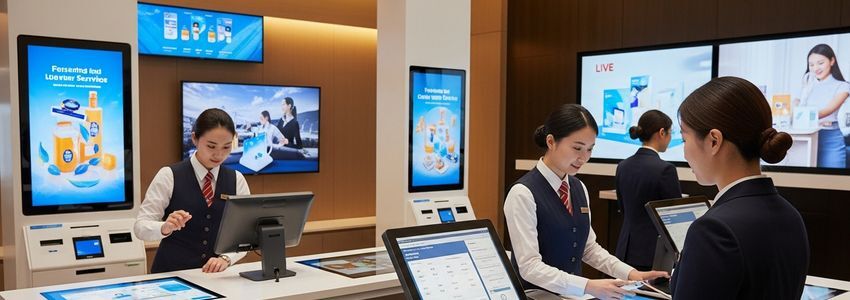
Equipment Financing for Customer Touchpoints: The Complete Guide
Every interaction a customer has with your business -- from the moment they walk through the door to the final transaction -- is shaped by the equipment and technology you have in place. Point-of-sale systems, digital signage, interactive kiosks, waiting room displays, and service delivery tools all define how customers experience your brand. When that equipment is outdated or unreliable, it shows. When it works seamlessly, customers notice that too.
Equipment financing for customer experience is one of the most strategic investments a growing business can make. Rather than depleting cash reserves to fund large purchases, businesses can acquire the tools they need today and pay over time -- keeping cash flow intact while delivering a measurably better experience to every customer who walks through the door.
This guide covers everything you need to know about using equipment financing to upgrade your customer-facing technology, from the types of equipment that qualify to how approval works and how Crestmont Capital can help.
In This Article
- What Is Equipment Financing for Customer Touchpoints?
- Types of Customer-Facing Equipment That Qualify
- Key Benefits of Financing Instead of Buying Outright
- How Equipment Financing Works
- Customer Experience by the Numbers
- Industries That Benefit Most
- How Crestmont Capital Helps
- Real-World Scenarios
- Frequently Asked Questions
- How to Get Started
What Is Equipment Financing for Customer Touchpoints?
Equipment financing is a form of business lending that allows companies to acquire the physical assets and technology they need without paying the full cost upfront. Instead of purchasing equipment outright, you finance it over a set term -- typically 12 to 84 months -- and make fixed monthly payments while using the equipment in your operations.
When applied to customer touchpoints, this type of financing enables businesses to upgrade the tools that directly shape customer perception. A touchpoint is any point of contact between your customer and your brand: the POS terminal at checkout, the self-service kiosk in the lobby, the digital menu board at the counter, or the tablet your sales staff uses to assist shoppers on the floor. All of these are candidate assets for equipment financing.
The appeal is practical: customer-facing upgrades often carry high upfront costs, but they also deliver measurable returns in customer satisfaction, transaction speed, and repeat business. Financing allows you to make that investment strategically, without the cash flow disruption that large lump-sum purchases create.
Key Insight: According to Salesforce research, 80% of customers say the experience a company provides is as important as its products or services. Investing in customer-facing equipment is not cosmetic -- it is competitive.
Types of Customer-Facing Equipment That Qualify
The category of equipment eligible for financing is broader than many business owners realize. Lenders evaluate whether the asset holds value and supports the business operations -- and most customer-experience technology meets that standard easily. Below are the primary types of customer-facing equipment that qualify for financing.
Point-of-Sale (POS) Systems
Modern POS systems go far beyond a simple cash register. They integrate inventory management, customer loyalty tracking, payment processing, and real-time reporting. Upgrading to a current system can shorten checkout times, reduce transaction errors, and create a smoother experience for both customers and staff. Hardware and software bundles for POS systems often run from $3,000 to $30,000 depending on the size of the operation.
Digital Signage and Display Technology
Interactive displays, video walls, menu boards, and promotional signage create a professional retail atmosphere and communicate important information to customers in real time. Digital signage hardware including commercial-grade screens, media players, and mounting infrastructure qualifies for equipment financing. Costs typically range from a few thousand dollars for a single display to six figures for full-scale installations across multiple locations.
Self-Service Kiosks and Interactive Terminals
Self-service kiosks reduce wait times, free up staff for higher-value interactions, and cater to customers who prefer to handle transactions independently. These are common in fast-casual restaurants, banks, healthcare waiting rooms, hotels, and retail environments. A basic kiosk setup may cost $5,000 to $15,000 per unit, making financing a practical choice for businesses deploying multiple units.
Customer Waiting Area Upgrades
Waiting areas in healthcare offices, auto service centers, salons, and financial institutions shape customer perception before any service has even been delivered. Comfortable seating, entertainment systems, charging stations, and ambient technology all contribute to a positive first impression. These assets are eligible for equipment financing, including complete waiting room installation packages.
Staff-Facing Technology That Improves Service Delivery
Tablets, handheld order-taking devices, customer-facing card readers, and mobile POS units all improve the speed and quality of service delivery. When staff have access to accurate, real-time information, they serve customers more effectively. These are all financed as business equipment with standard terms and competitive rates.
Outdoor and Entrance Technology
Drive-through systems, outdoor digital menu boards, intercom and speaker equipment, and automated entrance features are increasingly common even among mid-size businesses. These assets qualify for equipment financing and often have direct measurable impact on throughput and customer satisfaction.
Did You Know? Most lenders consider customer-experience technology as a depreciable business asset eligible for Section 179 expensing and equipment financing -- meaning you may be able to claim deductions while keeping monthly payments low.
Ready to Upgrade Your Customer Experience?
Finance the POS systems, kiosks, and digital displays your business needs today -- with flexible terms and fast approval.
Apply Now →Key Benefits of Financing Instead of Buying Outright
Cash purchases are not always the best financial decision for equipment, even when the capital is available. Equipment financing offers a range of advantages that make it a preferred option for strategic business owners.
Preserve Working Capital
Spending $50,000 on a POS upgrade in a single transaction eliminates cash that could be used for payroll, inventory, marketing, or emergency reserves. Financing spreads that cost over 36 to 60 months, keeping your working capital intact for the daily demands of running the business. Learn more about working capital options at Crestmont Capital.
Predictable Monthly Payments
Fixed-rate equipment financing provides consistent monthly payments that are easy to budget for. Unlike lines of credit that fluctuate, or merchant cash advances that adjust with revenue, equipment loans are straightforward: the same amount leaves your account each month for the term of the agreement.
Upgrade on a Rolling Basis
Technology evolves rapidly, particularly in customer experience tools. With financing, businesses can upgrade more frequently because the cost is spread over time. When a lease term ends, newer technology can be acquired under a fresh agreement -- keeping your customer-facing tools current without large capital outlays.
Tax Advantages
Financed equipment may qualify for accelerated depreciation under Section 179 of the IRS tax code, allowing businesses to deduct the full cost of qualifying equipment in the year it is placed in service. This can significantly reduce the effective cost of the upgrade. Consult with your tax professional for guidance specific to your situation.
Faster Implementation
Saving up to purchase equipment outright can delay implementation by months or years. Financing gets the equipment deployed faster -- which means the revenue impact and customer experience improvements begin sooner. This is especially important in competitive markets where customer experience differentiates similar businesses.
How Equipment Financing Works
Understanding the mechanics of equipment financing helps business owners prepare a strong application and choose the right product for their needs. The process is generally straightforward and faster than traditional business loans.
Step 1: Identify the equipment you need. Get specific quotes from vendors for the equipment and installation costs. Lenders want to know exactly what is being financed -- a clear vendor quote strengthens your application and speeds up approval.
Step 2: Apply with a lender. Submit a financing application with basic business information, time in business, annual revenue, and the equipment details. Most lenders can provide a preliminary approval within 24 to 48 hours for requests under $250,000.
Step 3: Review and accept the terms. Once approved, you will receive a term sheet outlining the loan amount, interest rate, monthly payment, and repayment term. Review these carefully and ask questions before signing.
Step 4: Equipment is ordered or funded. After signing, the lender typically pays the vendor directly, or funds are disbursed to your business account. The equipment is ordered and installation begins.
Step 5: Make monthly payments. Payments begin according to the schedule in your agreement. Most equipment loans are structured as simple interest installment loans with no prepayment penalties from certain lenders -- always confirm this before signing.
By the Numbers
Equipment Financing for Customer Experience
80%
of customers say experience matters as much as products (Salesforce)
$1.3T
in U.S. equipment financing volume annually (ELFA)
24 hrs
typical approval time for equipment financing under $250K
73%
of U.S. businesses use financing to acquire equipment (ELFA)
Customer Experience by the Numbers
The business case for investing in customer experience technology is strong and well-documented. Here is why equipment financing for customer touchpoints is a measurable growth investment rather than a discretionary expense.
According to research from Forbes, companies that prioritize customer experience generate 4 to 8 percent more revenue than competitors in the same industry. The ROI comes from increased repeat purchases, higher average transaction values, and reduced churn. When a customer has a frustrating experience with slow or malfunctioning equipment, they are significantly more likely to take their business elsewhere.
A report from CNBC and SurveyMonkey found that customer experience now outranks price and product quality as the primary driver of customer loyalty for small businesses. This shift means that the equipment your front-line staff uses -- and the technology customers interact with directly -- is central to your competitive position.
The Equipment Leasing and Finance Association (ELFA) reports that equipment financing is the single most common method U.S. businesses use to acquire capital equipment, with over 73 percent of all equipment acquisitions involving some form of financing. This is not a niche option -- it is the dominant method.
Industries That Benefit Most from Customer-Experience Equipment Financing
While virtually any business with customer-facing operations can benefit, certain industries see the most dramatic returns from technology upgrades funded through equipment financing.
Restaurants and Food Service
From digital menu boards to tableside ordering tablets to self-service kiosks, the restaurant industry has been transformed by customer-facing technology. Financing enables even independent restaurants to deploy the same tools used by national chains -- reducing labor costs, improving order accuracy, and creating a more engaging dining experience. Related reading: Restaurant Loans: The Complete Financing Guide.
Retail Stores
Retail businesses use equipment financing to fund POS upgrades, interactive product displays, self-checkout stations, and in-store digital experiences. These investments reduce wait times and improve the shopping experience in ways that directly increase basket size and return visits. Learn more about retail business loans and strategies for success.
Healthcare Practices
Medical offices, dental practices, and outpatient clinics invest heavily in waiting room technology, patient check-in kiosks, and payment processing systems. These tools reduce administrative burden, improve patient satisfaction scores, and streamline the billing and intake processes. Equipment financing preserves the capital these practices need for clinical operations.
Auto Dealerships and Service Centers
Auto dealers and service centers use customer experience technology for digital showroom displays, service status boards, loaner car management systems, and transparent pricing tools. These technologies build trust and reduce perceived wait times -- both major factors in customer retention.
Financial Services and Banking
Banks, credit unions, and financial advisors use customer-facing technology for interactive teller machines, appointment booking kiosks, digital queue management, and personalized content displays. Equipment financing allows these institutions to stay current without the capital disruption of major technology purchases.
Hotels and Hospitality
Hotels use equipment financing to fund self-check-in kiosks, lobby information displays, digital room keys, and contactless payment technology. These amenities are increasingly expected by guests and directly influence online review scores.
Finance Your Customer Experience Upgrade Today
Crestmont Capital offers flexible equipment financing for businesses of every size. Get a decision in as little as 24 hours.
Apply Now →
How Crestmont Capital Helps Businesses Upgrade Customer Touchpoints
Crestmont Capital is a leading U.S. business lender with experience funding equipment purchases across virtually every industry. Our equipment financing programs are designed to be fast, flexible, and accessible -- which means businesses can move from application to funded in days rather than weeks.
We work with businesses ranging from independent retailers and restaurants to multi-location franchises and professional service firms. Our lending team understands that customer experience is not a vanity project -- it is a revenue driver, and we treat it as such when structuring financing terms.
Our equipment financing solutions include direct loans, equipment lines of credit, and equipment leasing options that provide flexibility at the end of term. Depending on your goals -- whether you want to own the equipment outright or upgrade regularly -- we can structure an agreement that fits your strategy.
For businesses with multiple locations or larger installations, our commercial financing programs can fund larger projects with more flexible structures. And if your cash flow needs run broader than a single equipment purchase, our business line of credit products provide flexible capital you can draw on as needed.
We are rated the number one business lender in the United States -- and we earn that reputation by providing straightforward financing, honest communication, and fast approvals for businesses that need capital to grow.
Real-World Scenarios: Equipment Financing in Action
The following scenarios illustrate how businesses across different industries have used equipment financing to upgrade customer touchpoints and deliver measurable results.
Scenario 1: Fast-Casual Restaurant Deploys Kiosks
A fast-casual restaurant chain with five locations wanted to deploy self-service ordering kiosks to reduce wait times during the lunch rush. The total investment for five kiosks with software and installation was $75,000. Rather than depleting the operating reserve, the owner financed the full amount over 48 months at a competitive rate. Within 90 days of installation, average ticket size increased by 12 percent because the kiosks consistently prompted upsell items -- an outcome that more than covered the monthly payment.
Scenario 2: Dental Practice Upgrades Waiting Room and Check-In
A dental practice with two locations invested in patient check-in kiosks, updated the waiting room entertainment system, and added a digital status board to communicate appointment timing. Total equipment cost was $38,000. Equipment financing over 36 months kept the monthly payment under $1,200 -- well within the practice's budget. Patient satisfaction scores improved, and the front desk was freed from manual check-in processes, reducing staffing stress.
Scenario 3: Independent Retailer Modernizes POS
An independent clothing retailer replaced a decade-old cash register system with a modern cloud-based POS platform that included integrated inventory, customer loyalty, and contactless payment. The hardware and implementation cost $18,000. Financed over 24 months, the monthly payment was manageable against the store's average monthly revenue -- and the new system cut checkout time nearly in half during peak holiday shopping periods.
Scenario 4: Auto Dealership Upgrades Digital Showroom
A mid-size auto dealership invested in a digital display network for their showroom, including interactive vehicle configuration stations and a service status board in the waiting area. The total project cost was $125,000. Commercial equipment financing allowed the dealership to complete the installation before a major inventory arrival and see a measurable lift in showroom engagement metrics within the first quarter.
Scenario 5: Regional Hotel Installs Self-Check-In Kiosks
A regional hotel property with 120 rooms installed two self-check-in kiosks and upgraded the lobby information display system. Total cost: $42,000. Financed over 36 months, the monthly payment fit within the property's technology budget. Guest satisfaction scores in the check-in category rose by 18 points in the first six months, and the front desk staff was reallocated to higher-value guest interactions.
Scenario 6: Salon Group Deploys Booking and Payment Tech
A salon with three locations financed a comprehensive client-facing technology upgrade including appointment booking tablets at each station, a digital service menu display, and integrated payment terminals. Total investment: $24,000. The upgrade reduced no-show rates -- tracked via automated appointment reminders -- and increased retail product sales at checkout because the integrated system prompted stylists with personalized product recommendations.
Frequently Asked Questions
How to Get Started
Contact the vendors for the equipment you want to finance and request a formal quote. Having a specific dollar amount and equipment description ready will speed up your application.
Complete our quick application at offers.crestmontcapital.com/apply-now -- it takes just a few minutes and most applicants receive a preliminary decision within 24 hours.
A Crestmont Capital advisor will review your application, discuss your equipment goals, and present financing options that fit your budget and timeline.
Once approved and documents are signed, funding is issued and your vendor can be paid directly. Your new customer-facing equipment is ordered and installed -- typically within days.
Conclusion
Equipment financing for customer experience is one of the highest-leverage investments a growing business can make. By spreading the cost of customer-facing technology upgrades over time, businesses can deploy modern POS systems, digital displays, kiosks, and service tools without disrupting cash flow or depleting reserves.
The competitive advantage of superior customer experience is measurable and sustainable. Businesses that invest in the equipment their customers interact with -- and do so strategically through financing -- consistently outperform those that delay modernization due to capital constraints.
Crestmont Capital is here to help you make that investment confidently. Whether you are financing a single display upgrade or a complete multi-location rollout, our team will structure the right solution for your business. Apply today and take the first step toward delivering the customer experience your business deserves.
Start Your Equipment Financing Application Today
Crestmont Capital -- the #1 rated business lender in the U.S. Fast decisions, flexible terms, and real support.
Apply Now →Disclaimer: The information provided in this article is for general educational purposes only and is not financial, legal, or tax advice. Funding terms, qualifications, and product availability may vary and are subject to change without notice. Crestmont Capital does not guarantee approval, rates, or specific outcomes. For personalized information about your business funding options, contact our team directly.








