For most small business owners, equipment is not just a line item on a balance sheet - it is the foundation of daily operations. Whether you run a restaurant, a construction company, a medical practice, or a manufacturing facility, the right equipment is what allows you to serve customers, fulfill orders, and compete in your market. The challenge is that commercial-grade equipment is expensive, often costing tens or hundreds of thousands of dollars for a single purchase.
Equipment financing for small business owners solves this problem by allowing you to acquire the machinery, vehicles, technology, and tools your business needs without depleting your working capital or draining your cash reserves. Instead of paying for equipment upfront, you spread the cost over time through manageable monthly payments - preserving liquidity for payroll, marketing, inventory, and other day-to-day expenses.
This complete guide covers everything you need to know about equipment financing: how it works, the types available, what qualifies, current rates, how to apply, and how Crestmont Capital can help you get funded fast. Whether you are buying your first piece of commercial equipment or upgrading an entire fleet, this guide will give you the knowledge to make a confident decision.
What Is Equipment Financing?
Equipment financing is a type of business loan or lease arrangement specifically designed to help businesses purchase or use equipment. Unlike general-purpose business loans, equipment financing is tied directly to the asset being acquired. The equipment itself typically serves as collateral, which makes these loans easier to qualify for than unsecured alternatives - and often comes with more competitive rates.
When you finance equipment, you receive the funds (or the lender pays the vendor directly), you take possession of the equipment, and you repay the lender over an agreed-upon term - usually 2 to 7 years. At the end of the term, you own the equipment outright. This differs from equipment leasing, where you pay to use the equipment but do not build ownership equity.
Because the loan is secured by the equipment, lenders can accept borrowers with less-than-perfect credit. The asset reduces their risk, which translates to more approvals and better terms for business owners. This is particularly helpful for startups or businesses with limited credit history.
Types of Equipment That Qualify
Equipment financing applies to a remarkably broad range of assets. In general, if a piece of equipment has a clear business purpose and a reasonable resale value, it can likely be financed. Common categories include:
- Heavy construction machinery (excavators, bulldozers, cranes)
- Commercial vehicles and trucks
- Medical and dental equipment
- Restaurant and food service equipment
- Manufacturing and production equipment
- Agricultural and farm equipment
- IT hardware, servers, and technology systems
- Office furniture and fixtures
- Fitness and gym equipment
- Beauty salon and spa equipment
How Equipment Financing Works
Understanding how equipment financing works from start to finish helps you set expectations and move through the process with confidence. Here is a step-by-step breakdown of a typical equipment financing transaction:
Step 1: Identify the Equipment You Need
Before applying, you should have a clear picture of what you need to buy, who the vendor or seller is, and what the total cost will be. Lenders will want to know the make, model, age, and condition of the equipment. New equipment is generally easier to finance at better rates; used equipment may be financeable but sometimes comes with shorter terms or higher rates.
Step 2: Apply for Financing
You submit an application to a lender - a bank, credit union, online lender, or equipment financing specialist like Crestmont Capital. The application will ask about your business financials, time in business, credit score, and the specific equipment you want to purchase. Many lenders, especially online ones, offer fast approvals in as little as 24 hours.
Step 3: Lender Reviews and Approves
The lender evaluates your creditworthiness, business health, and the value of the collateral (the equipment). Strong applicants receive approvals quickly. If approved, you receive a loan offer detailing the loan amount, interest rate, repayment term, and monthly payment amount.
Step 4: Equipment Is Purchased
Once you accept the terms, the lender either pays the vendor directly or deposits funds in your account so you can complete the purchase. You take delivery of the equipment and put it to work in your business immediately.
Step 5: Repay the Loan
You make fixed monthly payments over the agreed term. Because equipment loans are typically structured with fixed rates and fixed payments, budgeting is straightforward. At the end of the term, the loan is paid off and you own the equipment free and clear.
Loan-to-Value and Down Payments
Most equipment lenders finance between 80% and 100% of the equipment's purchase price. Some programs offer 100% financing with no down payment, while others may require 10% to 20% down. Down payment requirements depend on the lender, your credit profile, the age and type of equipment, and the loan amount.
Types of Equipment Financing
Not all equipment financing works the same way. There are three primary structures to consider: equipment loans, equipment leases, and sale-leaseback arrangements. Each has distinct advantages depending on your situation.
| Type | Ownership | Best For | Key Benefit |
|---|---|---|---|
| Equipment Loan | You own equipment immediately | Long-term assets you plan to keep | Build equity; Section 179 deduction eligible |
| Equipment Lease | Lender owns; you use it | Technology that becomes outdated quickly | Lower payments; easy upgrades |
| Sale-Leaseback | Sell existing equipment; lease it back | Businesses needing cash from existing assets | Unlocks cash while retaining use of equipment |
Equipment Loans
An equipment loan works similarly to a car loan. You borrow money, purchase the equipment, and make fixed monthly payments over a set term. You own the equipment from day one and can take full depreciation deductions, including the Section 179 tax deduction. Equipment loans are ideal when you plan to use the equipment for many years and want to build long-term asset value.
Equipment Leases
With an equipment lease, a lender or leasing company purchases the equipment and rents it to you for a set term. You make monthly payments for the right to use the equipment, but you do not build ownership equity. At lease end, you can return the equipment, renew the lease, or purchase the equipment at fair market value or a predetermined price (in a capital lease). Leases are popular for technology, where obsolescence is a concern.
Sale-Leaseback
In a sale-leaseback, you sell equipment you already own to a lender, who then leases it back to you. This structure allows businesses to unlock capital tied up in equipment while continuing to use it in operations. It is particularly useful for businesses with strong equipment assets but tight cash flow.
For a deeper comparison, see our guide on Equipment Financing vs. Leasing: Which Is Right for Your Business?
Ready to Finance Your Equipment?
Crestmont Capital specializes in fast, flexible equipment financing for small businesses across the U.S. Get approved in as little as 24 hours with no obligation.
Apply Now - It's FreeWhat Equipment Can Be Financed?
One of the biggest advantages of equipment financing is its versatility. Virtually any piece of equipment with a clear business purpose and marketable resale value can be financed. Here is a breakdown by industry:
Medical and Healthcare
MRI machines, X-ray equipment, CT scanners, ultrasound machines, dental chairs, surgical robots, patient monitoring systems, lab equipment, and electronic health record systems. Healthcare equipment financing is one of the most active segments of the market, given the high cost of medical technology.
Construction and Contracting
Excavators, backhoes, bulldozers, cranes, dump trucks, concrete mixers, forklifts, compactors, and scaffolding systems. Construction equipment is a natural fit for financing given its high cost and long useful life.
Restaurant and Food Service
Commercial ovens, refrigeration units, walk-in coolers, dishwashers, food prep stations, fryers, hood systems, POS systems, and catering equipment. Restaurants operate on thin margins, making equipment financing a smart way to preserve cash flow.
Manufacturing and Production
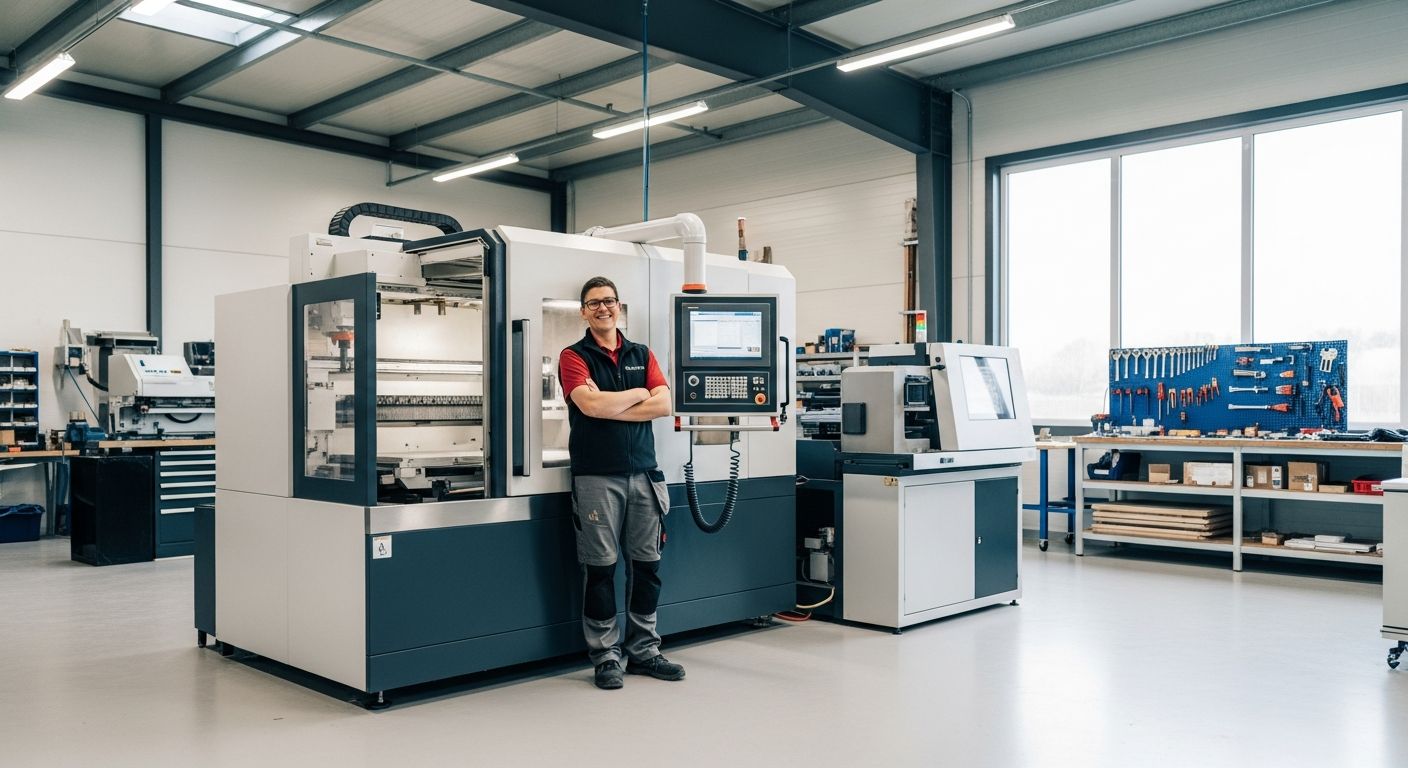
CNC machines, injection molding equipment, conveyor systems, robotics, welding equipment, laser cutting machines, and industrial presses. Manufacturing equipment tends to be expensive and long-lived, making it ideal for term financing.
Trucking and Transportation
Semi trucks, delivery vans, flatbed trailers, refrigerated trucks, and specialty vehicles. Commercial vehicle financing is closely related to equipment financing and follows similar qualification criteria.
Information Technology
Servers, network infrastructure, workstations, POS systems, point-of-sale terminals, and enterprise software systems. IT equipment tends to depreciate quickly, so shorter-term financing or leasing often makes more sense.
Agriculture
Tractors, combines, harvesters, irrigation systems, planting equipment, and storage facilities. Agricultural equipment financing supports farms of all sizes.
Beauty and Fitness
Salon chairs, styling equipment, massage tables, tanning beds, gym machines, exercise equipment, and spa treatment systems.
Equipment Financing Rates and Terms
Equipment financing rates vary widely depending on the lender, your credit profile, the type of equipment, and current market conditions. Here is a general overview of what to expect:
| Credit Profile | Typical APR Range | Typical Term |
|---|---|---|
| Excellent (720+) | 4% - 8% | 3 - 7 years |
| Good (660 - 719) | 8% - 15% | 2 - 5 years |
| Fair (600 - 659) | 15% - 25% | 1 - 3 years |
| Poor (Below 600) | 25% - 45%+ | 1 - 2 years |
According to the U.S. Small Business Administration, equipment financing remains one of the most accessible forms of small business credit because the collateral reduces lender risk. Forbes has reported that equipment financing is among the top funding tools used by small businesses nationwide, with approval rates significantly higher than unsecured loans.
Factors That Affect Your Equipment Financing Rate
- Credit score: Higher personal and business credit scores mean lower rates.
- Time in business: Established businesses (2+ years) receive better rates than startups.
- Revenue and cash flow: Stronger financials demonstrate ability to repay.
- Equipment age and type: New equipment typically gets lower rates than old or specialty equipment.
- Loan amount and term: Shorter terms and smaller amounts often carry lower rates.
- Down payment: A larger down payment reduces lender risk and can improve your rate.
Section 179 Tax Deduction - A Key Benefit for Equipment Buyers
Under Section 179 of the IRS tax code, small businesses can deduct the full purchase price of qualifying equipment in the year it was purchased, rather than depreciating it over many years. In 2024, the deduction limit was $1,160,000. When you finance equipment, you can still claim this deduction on the full equipment value - even if you haven't finished paying off the loan. This can dramatically reduce your tax burden in the purchase year. Always consult a qualified tax advisor for your specific situation. Learn more in our Section 179 Tax Benefits guide.
How to Qualify for Equipment Financing
Equipment financing is generally more accessible than other types of business loans because the equipment serves as built-in collateral. That said, lenders still evaluate your overall creditworthiness. Here is what they look at:
Credit Score
Most traditional lenders prefer a minimum personal credit score of 650 to 680. Alternative lenders and equipment financing specialists may work with scores as low as 550 to 600, especially for well-established businesses with strong revenues. Your business credit score (if established) also matters.
Time in Business
Banks and SBA lenders typically require at least 2 years in business. Many online lenders and alternative lenders will work with businesses as young as 6 to 12 months, though rates may be higher for younger businesses.
Annual Revenue
Most lenders want to see at least $100,000 to $250,000 in annual revenue, though requirements vary. Your revenue demonstrates your ability to make monthly payments. Some lenders focus more on monthly cash flow than annual revenue totals.
Down Payment
Many equipment financing programs offer 100% financing with no down payment required. Others may ask for 10% to 20% down, particularly for older equipment, borrowers with lower credit scores, or large loan amounts. A down payment reduces your monthly payments and the total interest paid over the loan term.
Equipment Age and Type
Newer equipment is generally easier to finance. Some lenders will not finance equipment older than 5 to 10 years, or may offer shorter terms on older assets. Specialty or niche equipment with limited resale markets may be harder to finance or carry higher rates.
Can You Get Equipment Financing with Bad Credit?
Yes - equipment financing is one of the most credit-flexible funding options available to small businesses. Because the equipment itself serves as collateral, lenders take on less risk. Businesses with credit scores as low as 550 may still qualify, especially with strong revenue or a down payment. Read our detailed guide on Equipment Financing with Bad Credit to learn more.
Pros and Cons of Equipment Financing
Like any financial tool, equipment financing has both advantages and limitations. Here is an honest look at both sides:
| Pros | Cons |
|---|---|
| Preserves working capital for daily operations | Interest adds to overall cost of equipment |
| Equipment serves as collateral - easier to qualify | Equipment depreciates; loan may outlast its value |
| Fixed monthly payments simplify budgeting | Lender can repossess equipment if you default |
| You build ownership equity in the asset | Down payment may be required |
| Section 179 tax deduction available | Older or specialty equipment harder to finance |
| Fast approval - often within 24 hours | High-credit borrowers get best rates |
| No blanket lien on all business assets (equipment-secured only) | May require personal guarantee |
For most growing businesses, the advantages of equipment financing far outweigh the downsides. The ability to acquire revenue-generating equipment today - while paying for it over time from the profits it generates - is a core growth strategy used by businesses across every industry.
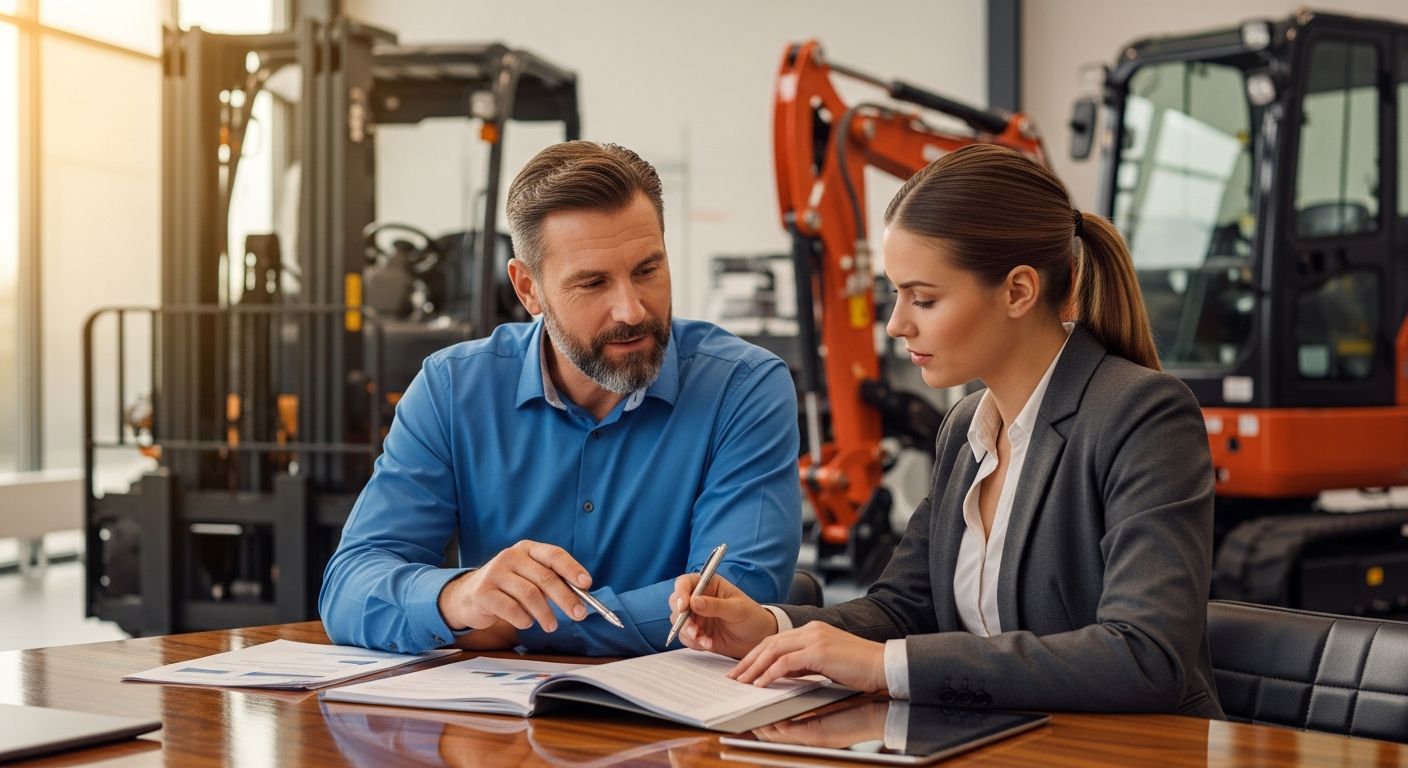
A business owner and advisor review equipment financing options - a key step in acquiring the right assets for growth.
Equipment Financing vs. Leasing: Which Is Better?
The choice between financing (buying) and leasing depends on several factors: how long you plan to use the equipment, whether you want to own it, cash flow needs, and tax strategy. Here is a detailed comparison:
| Factor | Equipment Financing (Loan) | Equipment Leasing |
|---|---|---|
| Ownership | You own it from day one | Lender owns it; you use it |
| Monthly Payments | Higher (building equity) | Lower (no equity buildup) |
| End of Term | Equipment is yours outright | Return, buy, or renew |
| Tax Benefits | Section 179 + depreciation | Lease payments may be deductible |
| Technology Risk | You absorb obsolescence risk | Can upgrade at lease end |
| Balance Sheet | Appears as asset and liability | May be off-balance-sheet |
| Best For | Long-lived, stable equipment | Fast-changing tech, short-term needs |
When to Choose Equipment Financing
- You plan to use the equipment for 5+ years
- The equipment holds its value well (heavy machinery, vehicles)
- You want to take the Section 179 deduction
- You want to build long-term asset value on your balance sheet
When to Choose Equipment Leasing
- The equipment becomes outdated quickly (computers, medical technology)
- You want lower monthly payments
- You prefer flexibility to upgrade at lease end
- You do not want to deal with equipment disposal
For many small businesses, financing is the better long-term choice. Explore more in our detailed comparison: Equipment Leasing vs. Equipment Financing: Which Is Better?
How to Apply for Equipment Financing
Applying for equipment financing is more straightforward than many business owners expect. Here is what you will need and how the process unfolds:
Documents Typically Required
- Completed business loan application
- Government-issued ID (passport or driver's license)
- Business bank statements (last 3-6 months)
- Business tax returns (last 1-2 years, for larger loans)
- Equipment invoice or quote from the vendor
- Basic business information (EIN, business structure, time in business)
- Voided business check
For larger loans (typically over $150,000), lenders may also request profit and loss statements, a balance sheet, business license, and/or articles of incorporation.
Step-by-Step Application Process
- Get an equipment quote. Obtain a formal invoice or quote from your vendor showing the make, model, condition, and price of the equipment.
- Compare lenders. Consider banks, credit unions, and online lenders. Online lenders typically offer faster approval but may charge higher rates. Look at total cost, not just the interest rate.
- Submit your application. Complete the lender's application and upload your documents. Many online applications take less than 10 minutes.
- Review and negotiate your offer. If approved, review the terms carefully. You may be able to negotiate the rate, term, or down payment, especially if you have competing offers.
- Sign and fund. Once you accept the offer, sign the loan documents. Funding typically occurs within 1-5 business days.
- Purchase and put to work. The lender pays your vendor (or funds your account) and you take possession of the equipment.
If you need broader business capital beyond equipment, consider exploring a Business Line of Credit or Working Capital Loan alongside your equipment financing.
How Crestmont Capital Helps with Equipment Financing
Crestmont Capital is a leading small business lender offering flexible, fast equipment financing solutions for businesses across the United States. We work with business owners in every industry - from contractors and manufacturers to restaurant owners and healthcare providers - to help them get the equipment they need without the delays and complexity of traditional bank lending.
Here is what sets Crestmont Capital apart:
- Fast approvals: Get approved in as little as 24 hours. We understand that business moves quickly, and we don't make you wait weeks for a decision.
- Flexible requirements: We work with businesses across the credit spectrum. While strong credit earns better rates, we have solutions for businesses with imperfect credit histories.
- High loan amounts: Finance equipment from $5,000 to over $5 million depending on your needs and qualifications.
- Multiple structures: We offer equipment loans, leases, and sale-leaseback arrangements to match your situation.
- Dedicated advisors: Our team of business financing specialists works with you personally - not just an algorithm. We help structure the right deal for your specific situation.
- Nationwide coverage: We serve businesses in all 50 states.
Whether you are financing your first commercial oven or upgrading an entire fleet of trucks, Crestmont Capital has the products, expertise, and speed to help you close the deal. Explore our full equipment financing options or visit the Small Business Financing Hub to explore all of your funding options.
Get Funded in as Little as 24 Hours
Crestmont Capital's equipment financing specialists are ready to help. Apply online in minutes - no obligation, no hard credit pull on your initial application.
Start Your ApplicationReal-World Equipment Financing Scenarios
Seeing how equipment financing works in practice can help you assess whether it makes sense for your business. Here are three realistic scenarios:
Scenario 1: Restaurant Owner Buys Commercial Kitchen Equipment
Business: A family-owned Italian restaurant in Chicago wants to expand its kitchen capacity to handle catering contracts. They need a commercial convection oven, a walk-in refrigerator, and updated prep stations totaling $85,000.
Situation: The owner has been in business for 4 years, has a 680 credit score, and generates $420,000 in annual revenue. They have $20,000 in savings but do not want to drain it.
Solution: The owner applies for an equipment loan through Crestmont Capital. With strong revenue and a solid credit score, they are approved for $85,000 at a 9.5% APR over 5 years. Monthly payment: approximately $1,775. The restaurant wins two catering contracts within the first month, generating enough new revenue to cover payments multiple times over.
Scenario 2: Contractor Buys an Excavator
Business: A small excavation and grading contractor in Texas needs to purchase a new 20-ton excavator priced at $225,000. Their current machine is aging and causing downtime on jobs.
Situation: The business has been operating for 7 years with $1.2 million in annual revenue. The owner's credit score is 710.
Solution: They secure an equipment loan for $225,000 at 7.2% APR over 6 years with a 10% down payment ($22,500). Monthly payments are approximately $3,850. In the first year, the new excavator eliminates $40,000 in rental costs and repair expenses - a clear win even after financing costs.
Scenario 3: Medical Practice Upgrades Imaging Equipment
Business: An orthopedic practice in Florida needs to replace its aging MRI machine with a new 3T MRI system priced at $1.2 million.
Situation: The practice has been operating for 12 years with $3.8 million in annual revenue. The lead physician has a personal credit score of 740. They want to preserve their credit line for operating expenses.
Solution: The practice secures equipment financing for $1.2 million at 6.5% APR over 7 years. Monthly payment: approximately $17,800. The improved imaging capability allows the practice to expand services, handle more complex cases, and increase per-patient revenue. They also claim the Section 179 deduction, significantly reducing their tax burden for the year.
These examples illustrate a core principle of equipment financing: when done strategically, the equipment pays for itself. For practices and businesses with stable cash flow, the monthly payment is often a fraction of the revenue the equipment generates. If you need financing for SBA-backed loans or traditional term loans, those can also complement your equipment financing strategy.
Frequently Asked Questions
What is the minimum credit score for equipment financing? +
Most traditional lenders prefer a minimum personal credit score of 650 to 680. Alternative lenders and equipment financing specialists like Crestmont Capital may work with scores as low as 550 to 600, particularly when the business has strong revenue or can provide a down payment. The equipment itself serves as collateral, which reduces lender risk and opens the door for lower-credit borrowers.
How long does it take to get approved for equipment financing? +
With online lenders like Crestmont Capital, approvals can come as fast as 24 hours after a complete application is submitted. Funding typically occurs within 1 to 5 business days after approval. Traditional bank and SBA loan approvals take longer - often 2 to 6 weeks - due to more extensive underwriting requirements.
Can I finance used equipment? +
Yes, many lenders finance used equipment. However, the loan terms may be shorter and rates slightly higher than for new equipment, because used equipment carries more uncertainty around condition and resale value. Most lenders impose an age limit on equipment they will finance - commonly 5 to 10 years old, though this varies by lender and equipment type.
What is the difference between an equipment loan and a lease? +
An equipment loan allows you to purchase and own the equipment outright, using it as collateral for the loan. You make payments and build equity. With an equipment lease, a lender or leasing company owns the equipment and rents it to you for a fixed period. Lease payments are typically lower but you do not build ownership. At lease end, you return, buy, or renew the arrangement.
How much can I borrow with equipment financing? +
Equipment financing loan amounts range widely - from as little as $5,000 to over $5 million or more for major industrial or medical equipment. The amount you can borrow depends on the cost of the equipment, your creditworthiness, time in business, and revenue. Most lenders finance up to 80% to 100% of the equipment's appraised or purchase value.
Do I need a down payment for equipment financing? +
Not always. Many equipment financing programs offer 100% financing with no down payment, particularly for borrowers with good credit and established businesses. Other programs may require a down payment of 10% to 20%, especially for borrowers with lower credit scores or older/specialty equipment. A down payment reduces your monthly payments and total interest cost.
What are typical equipment financing interest rates? +
Equipment financing rates typically range from 4% to 45% APR, depending on your credit score, time in business, revenue, equipment type, and lender. Borrowers with excellent credit (720+) and established businesses generally qualify for rates in the 4% to 8% range. Borrowers with fair or challenged credit may see rates of 15% to 30% or higher. Always compare total cost, not just the interest rate.
Can a startup get equipment financing? +
Yes, startups can often access equipment financing even without 2 years of business history. Because the equipment serves as collateral, lenders take on less risk than with unsecured loans. Some lenders specialize in startup equipment financing. You may need a stronger personal credit score, a down payment, or to provide a personal guarantee to compensate for limited business history.
What happens if I can no longer make payments on my equipment loan? +
If you default on an equipment loan, the lender can repossess the equipment, which serves as collateral. Unlike unsecured loans, the risk is contained to the specific asset. If the equipment's resale value does not cover the outstanding loan balance, you may still owe the deficiency. Contact your lender immediately if you anticipate payment difficulties - many lenders offer deferment or restructuring options.
Is equipment financing tax deductible? +
Yes. Interest paid on an equipment loan is generally tax deductible as a business expense. Additionally, the full purchase price of qualifying equipment may be deductible in the year of purchase under Section 179 of the IRS tax code, up to the annual limit. Bonus depreciation may also apply. Consult a qualified tax professional for guidance specific to your situation.
How long are equipment financing terms? +
Equipment loan terms typically range from 1 to 7 years, with the most common terms falling between 2 and 5 years. The term is usually tied to the expected useful life of the equipment - lenders generally don't want the loan to outlast the asset. Major equipment with long useful lives (heavy machinery, medical imaging) may qualify for longer terms of 7 years or more.
What is a sale-leaseback and when should I use it? +
A sale-leaseback involves selling equipment you already own to a lender, then leasing it back so you can continue using it. This structure lets you unlock the cash value of existing equipment assets while maintaining operational continuity. It is useful for businesses that need working capital but want to keep using critical equipment. It can be a smart move when cash flow is tight but assets are strong.
Does equipment financing affect my business credit score? +
Yes, equipment financing can positively impact your business credit when you make timely payments. On-time payments are reported to business credit bureaus (Dun and Bradstreet, Experian Business, Equifax Business) and contribute to a stronger credit profile over time. Conversely, late payments or defaults will negatively affect your score. A strong business credit score can unlock better financing terms in the future.
Can I finance equipment for a new business location? +
Yes. Equipment financing can be used to outfit a new location with everything from kitchen equipment to office technology. In fact, many businesses use equipment financing specifically when expanding to second or third locations to avoid depleting working capital. The equipment at each location serves as collateral, making it easier to finance than unsecured expansion loans.
What is the difference between equipment financing and an SBA loan for equipment? +
Both can be used to finance equipment, but they differ in process and eligibility. Traditional equipment financing (through online lenders or specialty lenders) is faster, often approved in 24 to 72 hours, with less documentation required. SBA loans (particularly the SBA 7(a) and 504 programs) offer longer terms and competitive rates but require more documentation and take weeks or months to close. SBA loans are best for large, long-term equipment purchases; traditional equipment financing wins on speed and flexibility.
Don't Let Equipment Hold Your Business Back
Apply in minutes. Get a decision in as little as 24 hours. Crestmont Capital works with businesses across every industry to make equipment financing simple and fast.
Apply for Equipment FinancingNext Steps: Finance Your Equipment Today
Conclusion
Equipment financing is one of the most powerful and practical tools available to small business owners. It bridges the gap between what you can afford today and what your business needs to grow, compete, and thrive. By spreading the cost of expensive equipment over manageable monthly payments, you preserve your working capital, maintain cash flow, and invest in the assets that directly drive revenue.
Whether you are buying commercial kitchen equipment, a fleet of trucks, medical imaging systems, or manufacturing machinery, equipment financing gives you a clear path to acquisition without financial strain. And with features like the Section 179 tax deduction, competitive APR rates, and fast approvals, the case for financing is compelling for most businesses.
Crestmont Capital is here to help you navigate the process - from choosing the right structure to getting approved and funded fast. Our team works with businesses across every industry, credit profile, and funding need. If your business needs equipment, we are ready to help you get it.
Apply for equipment financing today and get a decision in as little as 24 hours.
Disclaimer: The information provided in this article is for general educational purposes only and is not financial, legal, or tax advice. Funding terms, qualifications, and product availability may vary and are subject to change without notice. Crestmont Capital does not guarantee approval, rates, or specific outcomes. For personalized information about your business funding options, contact our team directly.